
“The question is: who continues to be left out, and why?”
-
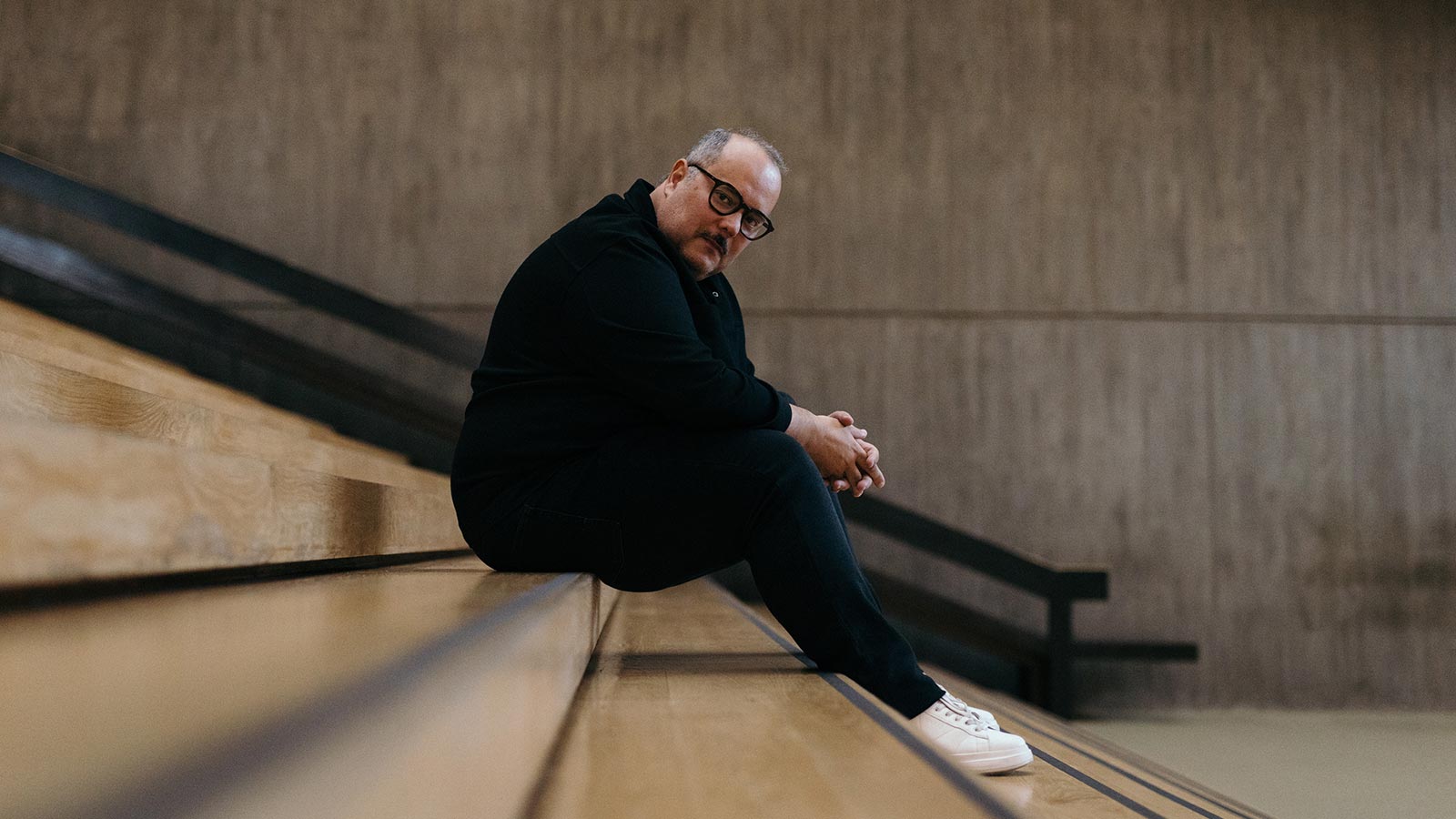
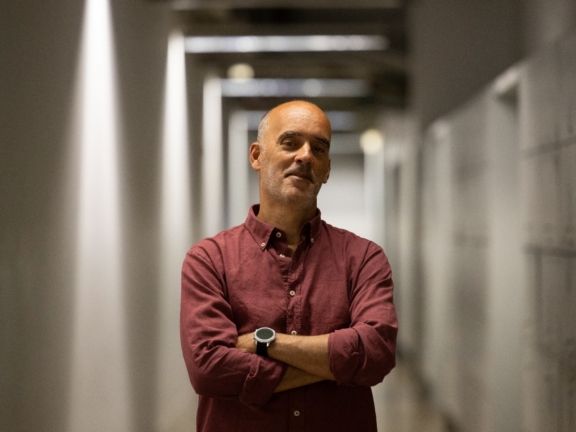
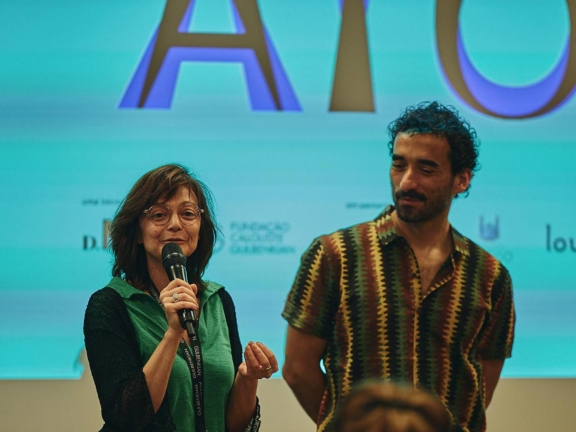
Marco Paiva © Ricardo Lopes
How did the need, or desire, to carry out this mapping project emerge?
Terra Amarela is an artistic creation organisation that, since 2018, has developed its work around two very specific areas: artistic diversity and accessibility practices for artists and audiences. We work with artists from a wide range of geographical backgrounds, artistic disciplines, languages and bodies.
I began working in this field in 2000 with a project called Crinabel Teatro, made up of artists with intellectual disabilities. Since then, I have followed their artistic practice, but I always felt there was very little documentation: how many artists there were, who they were, where they worked, what stories they had to tell and what obstacles they faced.
At a certain point, we realised we needed concrete data and a better understanding of these stories. That is how the idea emerged, in collaboration with the Calouste Gulbenkian Foundation and the study’s coordinator, Patrícia Silva Santos, to develop a national mapping project that would help us understand where these artists are, the fields in which they work and, above all, learn about their experiences first-hand.
From the outset, we wanted this to be a study built on proximity. It is not merely a quantitative study: it tells stories. To achieve this, we built a team spread across the country, involving partners with a deep knowledge of different regions. The study confirmed many perceptions we already had from our work on the ground, particularly regarding difficulties in accessing arts education, the cultural sector, funding and even contact with other artists with disabilities and Deaf artists. But it also opens the door to thinking about what public policies and cultural organisations can do to address these issues.
The mapping project presented today is the result of two years of research. Was there anything that particularly surprised you during the process?
Many things surprised us. In fact, many of the issues that emerged were not entirely unexpected. We already sensed they existed through our work in the field, but we lacked more concrete evidence.
For example, we confirmed that the geographical location where an artist lives continues to have a major impact on the possibilities for developing their work. Portugal is a highly asymmetrical country, and that is reflected here as well.
Other issues emerged relating to access to funding, arts education and information about existing opportunities. Many artists also said they did not know other artists with disabilities or Deaf artists working in the same fields.
At the same time, we were struck by the number of artists we encountered in different regions and artistic disciplines whose work we had never come across before. We found them in the visual arts, photography and cinema, spread across the country. There are many artists working, sometimes for very small audiences, but they are there. “Entre Mapas” helps make that presence more visible. The question now is: we know they exist. What are we going to do about it?
One of the study’s defining features is that it focuses not only on numbers, but also on stories and personal narratives. What does that more human dimension add?
It adds detail. It is one thing to know how many blind people are involved in theatre in a given territory. It is another to know who those people are, what their stories are and what circumstances contributed to their invisibility or the difficulties they faced in building an artistic career.
When we read these stories, we realise that every case is different. Geography, socioeconomic circumstances or proximity to other artists can all determine whether an artistic career continues. And that can only be understood through conversation, proximity and listening.
The people who took part in this study are not just numbers: they have names, histories and expectations. That is what allows us to better understand this reality. At the same time, the process itself was a discovery for the team, enabling us to identify artists, learn about their work and understand how and where they work, as well as what their ambitions are. That is one of the study’s greatest strengths.
The study’s preface states that the goal of this work is to be useful. What impact do you hope this mapping project will have?
The first thing it does is give people a name. For me, that is one of the study’s defining characteristics. By presenting concrete artistic journeys, it can help cultural organisations, arts schools and decision-makers better understand who these artists are and what needs to change so they can participate fully.
If we know there is a significant number of artists with disabilities and Deaf artists interested in attending arts schools, for example, what changes are needed within those schools? What adaptations can cultural organisations make?
The study seeks to present these issues in a humanised way, so that readers encounter not just a set of figures, but very concrete difficulties and challenges. We hope those who receive it will be willing to listen and reflect on what it reveals.
At the same time, we do not want the presentation at the Foundation to be the end of the story. We are preparing new initiatives to share the findings with theatre and performing arts networks, arts schools, the Directorate-General for the Arts, the Ministry of Culture and other relevant bodies. The goal is to keep this conversation going.
Based on these findings, what can cultural organisations do to respond to the needs of these artists?
First of all, it is important to stop seeing these people only as audiences and recognise them as creators and cultural practitioners. Today we hear a great deal about audio description, captioning and Portuguese Sign Language. These services are important, but we also need to ask who takes part, who creates and who programmes. Having these services does not automatically mean that artists with disabilities and Deaf artists are part of cultural organisations.
We need more diverse teams, greater inclusion of these artists in creative and programming processes, and a willingness to challenge established ideas about what theatre, dance or music can be. Their presence also transforms artistic languages themselves.
These changes require structural transformation. It is not simply a matter of adding services, but of rethinking teams, working methods and forms of participation.
Looking at the study, would you say that many of the vulnerabilities it identifies are actually vulnerabilities affecting the Portuguese cultural sector more broadly?
Absolutely. We are not presenting completely unknown problems. What the study does is make long-discussed issues more tangible through data, stories and people.
The difficulty of reaching more marginalised communities, for example, does not stem from organisations being unaware that those communities exist. It often results from ways of working that have remained unchanged for too long.
At the same time, we also found that many organisations operate with very small teams and insufficient resources to develop more consistent work rooted in proximity. This shows that the changes required are not limited to a single group of artists. They are structural changes that can help cultural organisations become more open, more responsive and more closely connected to the territories in which they operate.
Our study focuses on artists with disabilities and Deaf artists, but the broader question remains: who continues to be left out, and why?
How important is it to see a foundation such as Gulbenkian funding this type of research?
The Foundation has a long tradition of supporting different areas of society and promoting connections between different sectors. Terra Amarela developed its first project with support from the Foundation through a PARTIS programme, and over the years that relationship has helped us connect artistic questions with social, economic and environmental concerns.
For us, the Foundation’s greatest strength is precisely its ability to look at the world in an integrated way. That allows a project such as Entre Mapas to be more than a study about artists with disabilities and Deaf artists. It also becomes a contribution to broader discussions about cultural participation, collective well-being and cultural democracy.
You may also like
No results were found for your criteria.