
“Our focus is on the human connections and parallels that connect all of us, across the planet.”
Interview with Jeannette Sorrell
-
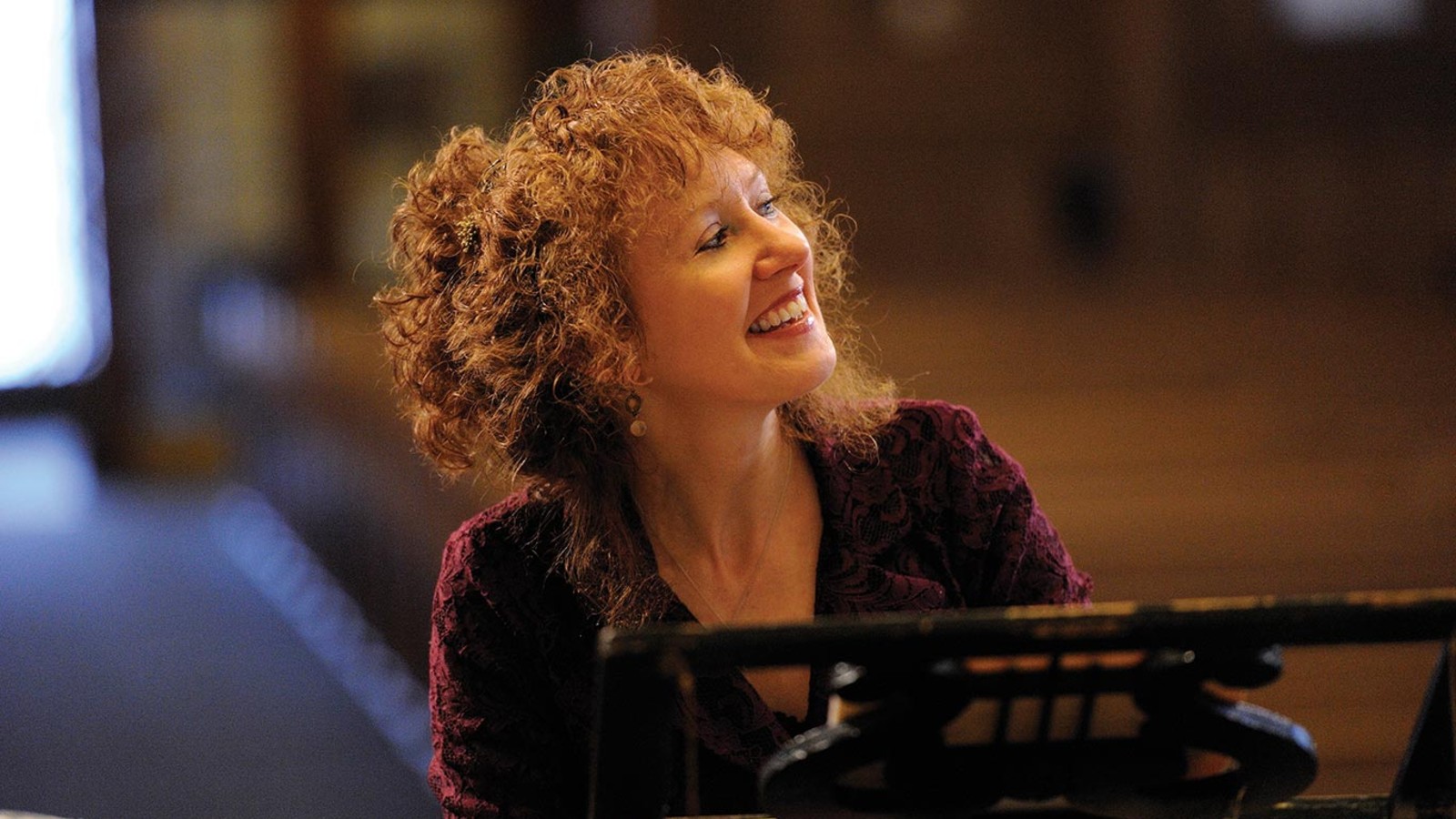
Jeannette Sorrell © Roger Mastroianni
Echoes Across the Atlantic brings together works by Händel, Purcell, Rameau and Vivaldi with the stories and traditions of the Caribbean, including a 1709 funeral oration denouncing the murder of an enslaved man. What inspired you to explore these historical and cultural connections through music?
I love to do historical research! When I found the 1709 funeral oration for the enslaved man in Guadeloupe—which is eloquent and profound—I was fascinated that it came from the same year when Händel premiered his opera Agrippina in Europe. And Jeanine is a brilliant Händel singer, including arias from Agrippina. So I shared the funeral oration with Jeanine, and suggested this concept where we interweave the 3 Caribbean songs and the funeral oration into the program, showing the historical connections between Europe and the Caribbean colonies in the 18th century. She liked this concept, and she provided the three Caribbean songs (which we love to play with her!). She also told me about the Caribbean folk character “La Diablesse”, who resembles the baroque operatic character Alcina. So we included both of those female characters in this concert.
Your collaboration with soprano Jeanine De Bique, who was born in Trinidad and Tobago, is naturally central to this project. How have her background and cultural identity influenced the musical and artistic conception of Echoes Across the Atlantic? How did this collaboration come about and develop?
I love to explore the cross-influences of different world cultures, and I’ve done many programs of this type (exploring Sephardic culture, Celtic/Irish, and Middle Eastern). I was thrilled to find the wonderful soprano Jeanine De Bique a few years ago, on youtube. Two years ago, when Carnegie Hall asked me what program I’d like to do for Apollo’s Fire’s return to their baroque series, I suggested we invite Jeanine as soloist. And since Jeanine is from the Caribbean, I suggested at first that we’d be happy to play a couple of Caribbean songs at the end of the program (as encores), in honor of her homeland, if she wishes. But eventually Jeanine and I decided on a concept where the Caribbean music is more integrated in the program.
Do you believe that a project such as Echoes Across the Atlantic can help us critically revisit history and gain a deeper understanding of what we share as human beings?
Our focus is on the human connections and parallels that connect all of us, across the planet. Despite the great suffering of the enslaved people in the Caribbean colonies of the 18th century, they rose above their sorrows with incredible resilience. And so, experiences of love, loss, and resilience were shared by people on both sides of the Atlantic. In our tour so far (at Carnegie Hall in New York, and in Paris, Brussels, and Germany), audiences seem to be very emotional and appreciative of this program. We try to create an atmosphere of mutual love and respect—where we are acknowledging history with honesty, not in order to blame anyone, but in order to move forward together in a spirit of shared humanity.
With a career spanning more than three decades, Apollo’s Fire is now internationally acclaimed and has received a Grammy Award. How has your artistic vision evolved over the years, and what new directions would you like to explore in the future?
When I founded Apollo’s Fire (at the age of 26), I thought, “I’ll do this for a couple of years until it dies, then I’ll find something else to do.” (laughs) I never imagined that 35 years later, we would be doing our 8th European tour, and with 35 CDs recordings…. The artistic philosophy of Apollo’s Fire from the beginning has been that Music is a form of communication—a language that resonates with people in an emotional and spiritual way, touching people in a way that words cannot. This philosophy remains our guiding star. The treatises from the 17th and 18th centuries all talk about “Affekt”—the emotional character of the music. The performer’s role was to evoke a particular Affekt or emotional state in the listeners—whether that be joy or contemplation or rage or despair or triumph. The baroque performer used every possible means to cast his emotional spell on the audience—rhetoric, gesture, harmony. Apollo’s Fire is a collection of artists who believe passionately that our job is to communicate—to take the listeners with us on an emotional journey. If, at the end of two hours, the audience is moved to tears, or joy, or laughter, or prayer, then we have done a good night’s work.
You may also like

No results were found for your criteria.