
“This work undoubtedly requires life experience and emotional maturity. That’s what makes it so powerful.”
Interview with Diana Tishchenko
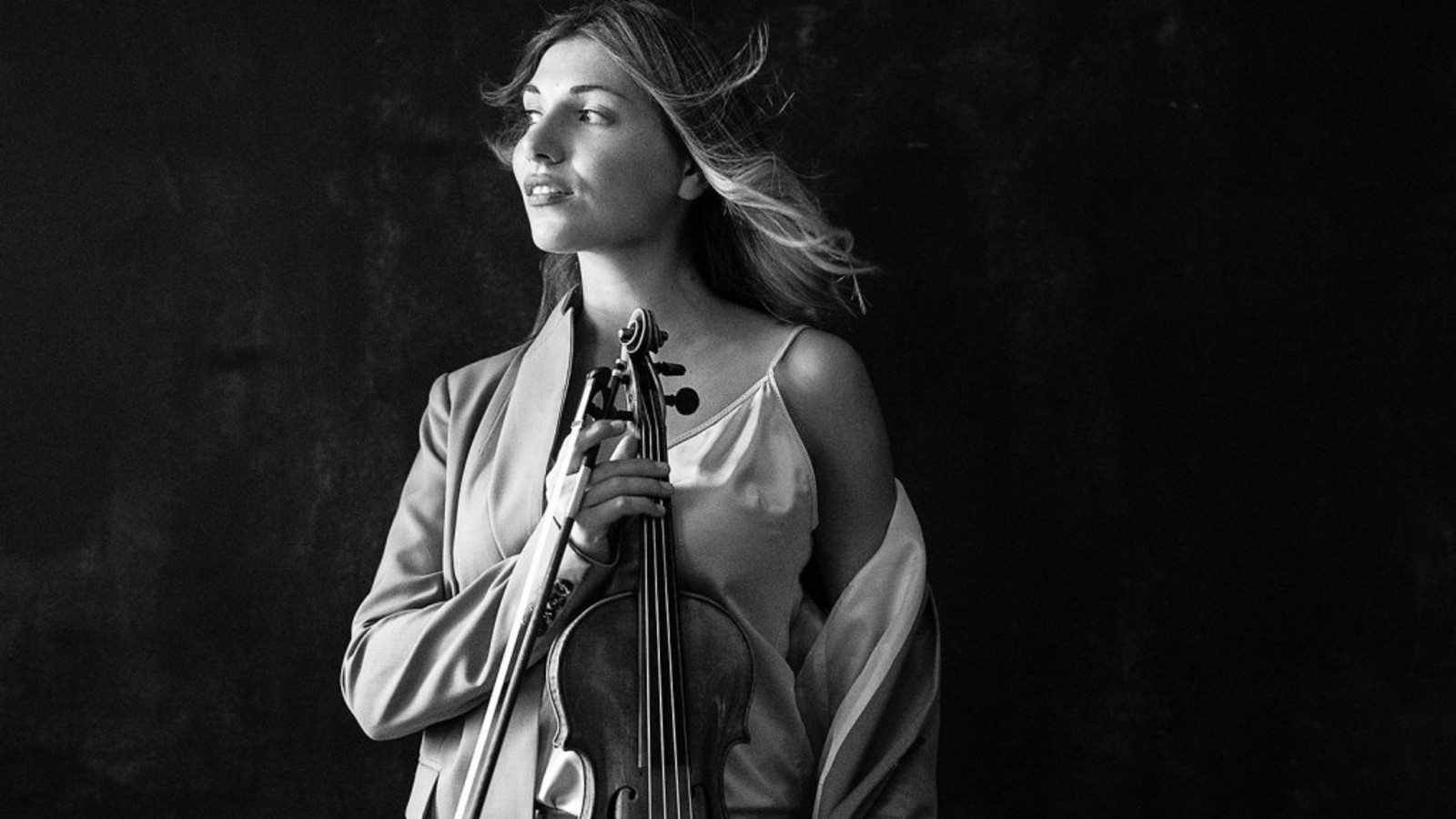
Looking at your artistic journey so far, from major international competitions to collaborations with leading orchestras and conductors, how do these experiences shape your musical identity today, and how do they influence the way you approach a work as complex as this one?
I think the most important aspect of approaching this piece is an understanding of the darker side of our world. I was born in post-Soviet Ukraine in the 1990s – a time of profound “metamorphosis” in society and in the political system. Music education became for me a kind of window into an alternative universe – one that gave me, and still gives me, hope and motivation to move forward in life. Perhaps it is a consequence of having encountered so many remarkable personalities throughout my musical journey that I strongly believe in the power of human collaboration. Dialogue, respect, and goodwill – whether in music or in any other field – are capable of creating true miracles.
Written in the later period of Penderecki’s career, the concerto reflects a very personal musical language. What fascinates you most about this work, and what kind of musical narrative would you like to convey to the audience?
This work undoubtedly requires life experience and emotional maturity. That is what makes it so powerful. I feel especially grateful to be performing this music today, because it reflects the image of our world with striking honesty. It speaks about fragility, inner struggle, transformation, and resilience – themes that feel deeply relevant in our time.
You will be performing with the Gulbenkian Orchestra under the direction of Lorenzo Viotti. How has the artistic dialogue with the conductor been, and in what ways does this collaboration shape your reading of the piece?
Our artistic dialogue has been very natural and deeply intuitive. We share a strong emotional connection to this music and completely agree on its interpretation, characters, and color palette. The musicians of the Gulbenkian Orchestra sense this very clearly and respond with great sensitivity. This mutual understanding creates a powerful energy.
The concert will be presented in Lisbon twice. What do you hope audiences will take away from experiencing Metamorphoses live, particularly those who may be less familiar with Penderecki’s music?
The beauty of live performance lies in the possibility of tuning into a specific wave of vibrations – something that can only be experienced in the shared space of the concert hall. Personally, I feel transformed every time I play this piece. It is almost comparable to a state of hypnosis. I wish for the audience to be drawn into this world as well – to be “hypnotized” by the music and to discover which thoughts, emotions, or inner questions it awakens in them afterwards
Photo © Ars Nova Copenhagen Jeppe Bjoern