
“Music is perhaps the ultimate universal language, transcending borders, cultures and national identities.”
Interview with Amatis Trio
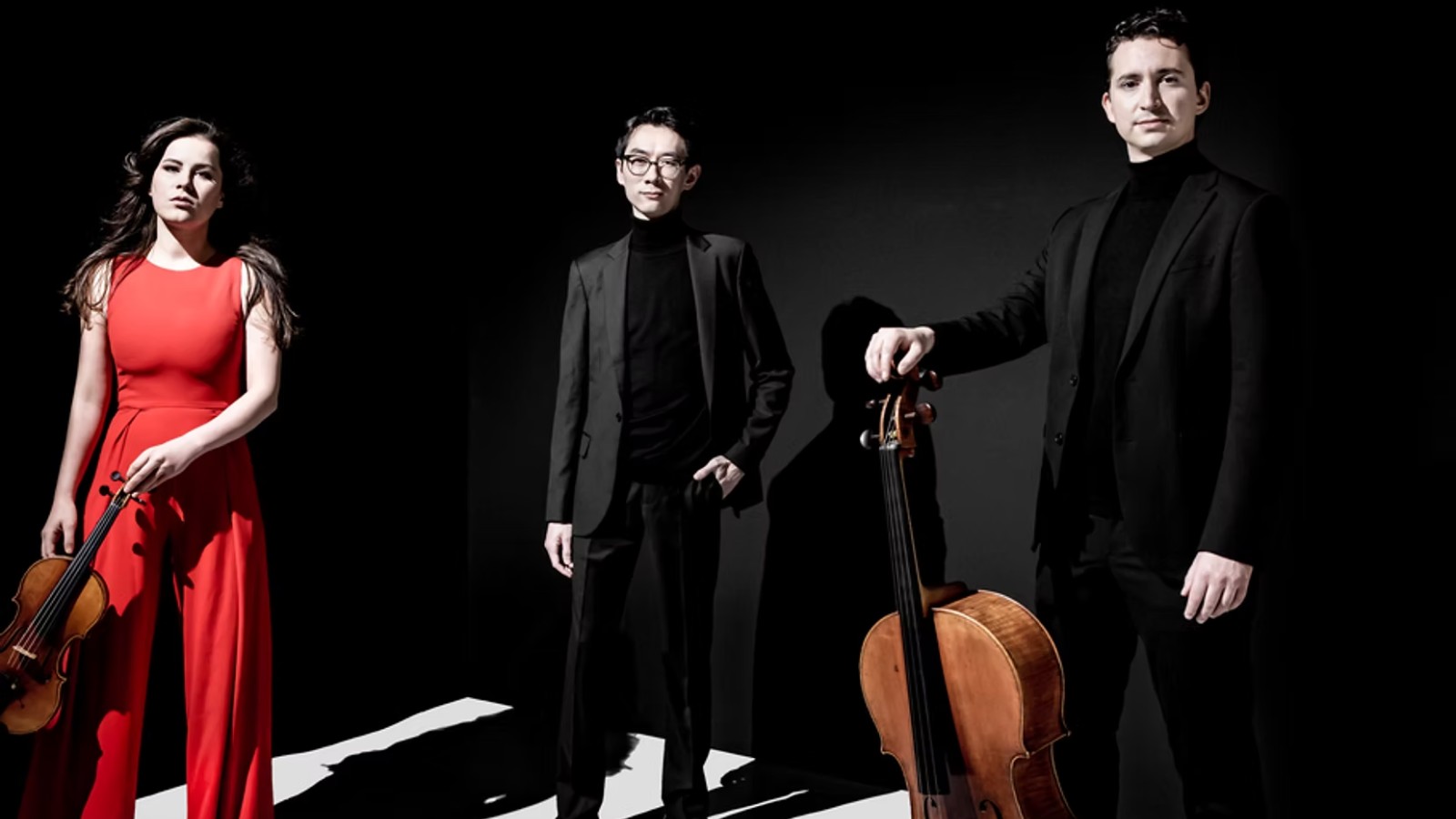
How did the idea for the Humanity in War project come about?
As a piano trio, we have been fortunate enough to travel across the world, sharing our music with audiences from so many different countries and cultures. The outbreak of the war in Ukraine brought with it a profound sense of shock, but also a realisation of just how exceptional our circumstances are. The freedom to cross borders, to meet people, to exchange ideas and to share something as deeply human as music is made possible by a peace and stability that, for much of human history, has been far from the norm.
Watching young men our own age being sent to the front lines to fight a war they had little say in brought this into particularly sharp focus. It reminded us how fortunate we are to live in a part of the world that has enjoyed such a long period of relative peace, and how important it is never to take that for granted.
As we followed the news, we became increasingly struck by how war was communicated through statistics. As the numbers grew, there seemed to be a growing desensitisation, almost as though the scale of human suffering had become too enormous for us to comprehend.
This led us on a journey to find a more human way of confronting these issues, one that could bring the individual lives behind the numbers back into focus. As Sam (cellist of Amatis Trio) wrote in the opening statement of Humanity in War, “One forgets that behind every number and statistic, every nation’s flag, and each battle, there is a person who is someone’s child, parent, spouse, or lover.”
We were particularly drawn to the intimacy of personal letters. They reveal so much of a person’s inner world, their fears, hopes and vulnerabilities, yet often seem written with a desire to shield loved ones from the full horror of what they were experiencing. Even across great distances, amid unimaginable suffering, there remains this simple hope that their words might bring comfort, reassurance or perhaps even a smile to someone waiting at home. For us, this is humanity at its best: the instinct to reach out, to share the experience of being alive with another person, and to preserve that connection even in the darkest of circumstances.
In Humanity in War, the music alternates with readings of real-life testimonies from the First World War. How did you approach the selection and arrangement of the musical works and texts?
Music is perhaps the ultimate universal language, transcending borders, cultures and national identities. With this in mind, we deliberately brought together letters and music from different nations, seeking to reveal the shared humanity that exists beyond the divisions of war.
The relationship between the music and the letters is not always literal. Rather, each work reflects something of the emotional world behind the words. Korngold, at the opening of the programme, captures the youthful, almost naive sense of pride and anticipation felt by those setting off to war. Webern’s Three Little Pieces, with their fragmented and unsettling musical language, evoke the shattering reality of a young man’s first encounter with the front lines, a world in which the familiar structures of life have collapsed and human existence is reduced to the struggle for survival. Kreisler, by contrast, speaks of tenderness, nostalgia and the longing for a loved one far away, while Clarke offers a poignant lament for the suffering and mistakes that humanity continues to repeat.
These are just a few examples of the emotional journey that unfolds throughout the programme. Ultimately, the music is not there simply to illustrate the letters, but to give us the space to absorb and reflect upon them. It becomes a vessel for the emotions these deeply personal accounts awaken within us, allowing us to experience something that words alone cannot fully express.
Your collaboration with Thomas Quasthoff plays a central role in this project. What has it been like working with him, and how does his narration contribute to the project’s aims?
Working with Thomas has been an enormous privilege. We grew up listening to his recordings of Schubert Lieder in particular. What a voice! And although he isn’t singing in Humanity in War, he has an equally extraordinary speaking voice, bringing such depth, warmth and humanity to the letters.
There is also something particularly meaningful about hearing these testimonies spoken in German. A language so deeply intertwined with Europe’s history of conflict is also the language of Goethe, Schubert, Schumann and some of its greatest poetry, philosophy and music. Hearing Thomas give voice to the experiences of people from different nations reminds us that language, like music, can connect us rather than divide us.
If our aim is to keep the memory of these tragedies alive in people’s consciousness, then having someone like Thomas, whose voice carries such authority and emotional honesty, is invaluable. His profound sense of humanity makes him a very special person to share this project with.
Can these accounts from the First World War, revisited in this project, help us reflect on and raise awareness of the dangers posed by today’s conflicts?
Sadly, war has been, and perhaps always will be, part of our complicated human existence. Yet if history teaches us anything, it is how often we have allowed our differences to overshadow the humanity we share.
Laurence Binyon wrote in 1914, “At the going down of the sun and in the morning, we will remember them.” But remembrance must mean more than simply honouring those who have fallen. It must also mean trying to understand the lives they lived, the hopes they carried and the futures they never had the chance to experience.
What is so striking about these letters is how familiar the people behind them feel. Their fears, their love for those waiting at home, their hopes for the future are not so different from our own. They remind us that those who experienced these tragedies were ordinary people whose lives became caught up in extraordinary circumstances, often through decisions entirely beyond their control.
Perhaps this is where remembrance becomes something more meaningful. We may never eliminate conflict from human existence, but by keeping these individual stories alive, we can hope to develop a deeper understanding of the true cost of war, and a greater awareness of the responsibility carried by those whose decisions can have such devastating consequences.
You may also like

No results were found for your criteria.