
The Invention of a Garden
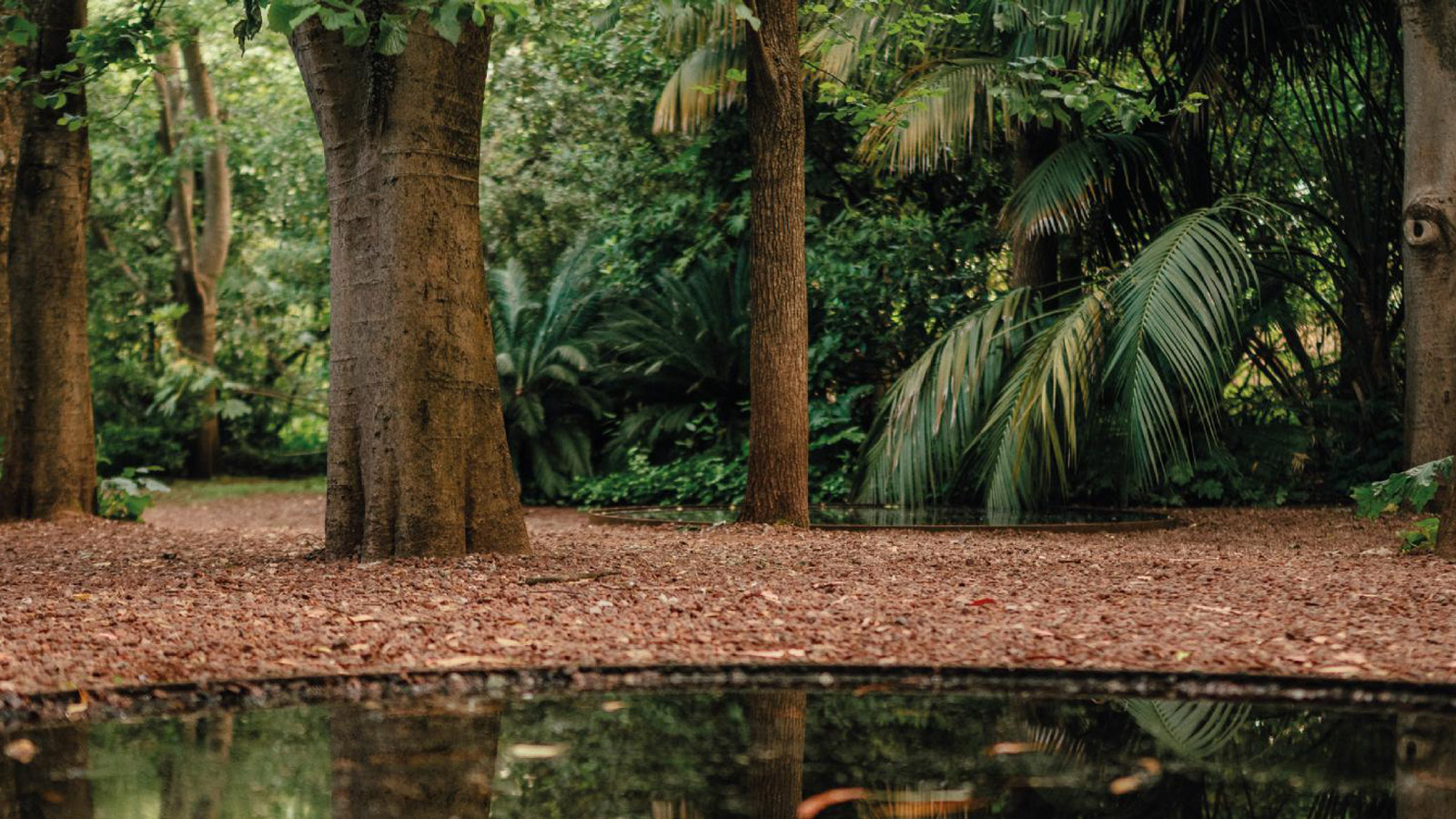
When António Viana Barreto and Gonçalo Ribeiro Telles began working on the Gulbenkian Garden in 1958, they envisioned a project that would push the boundaries of Portugal’s conception of a garden. As two of Portugal’s first generation of landscape architects, they built an urban garden that was more than just an aesthetic green space, it was an intentional oasis that incorporated elements of Portugal’s unique ecological composition.
“They used the geography of the garden and its microclimates and identified which would be the association of plants that would fit perfectly in each part,” says Paula Corte-Real, Coordinator of the Gulbenkian Garden Educative Program. Rather than attempting to dominate the natural landscape, they chose to build with nature, creating the foundation of a living garden that would organically amass biodiversity for decades to come.
Now over 60 years later, their original vision is an inspiration for the new garden project at Yerevan’s Matenadaran Museum, Armenia’s largest research institute and archival collection dedicated to Armenian medieval manuscripts.
Matenadaran and Gulbenkian in Dialogue
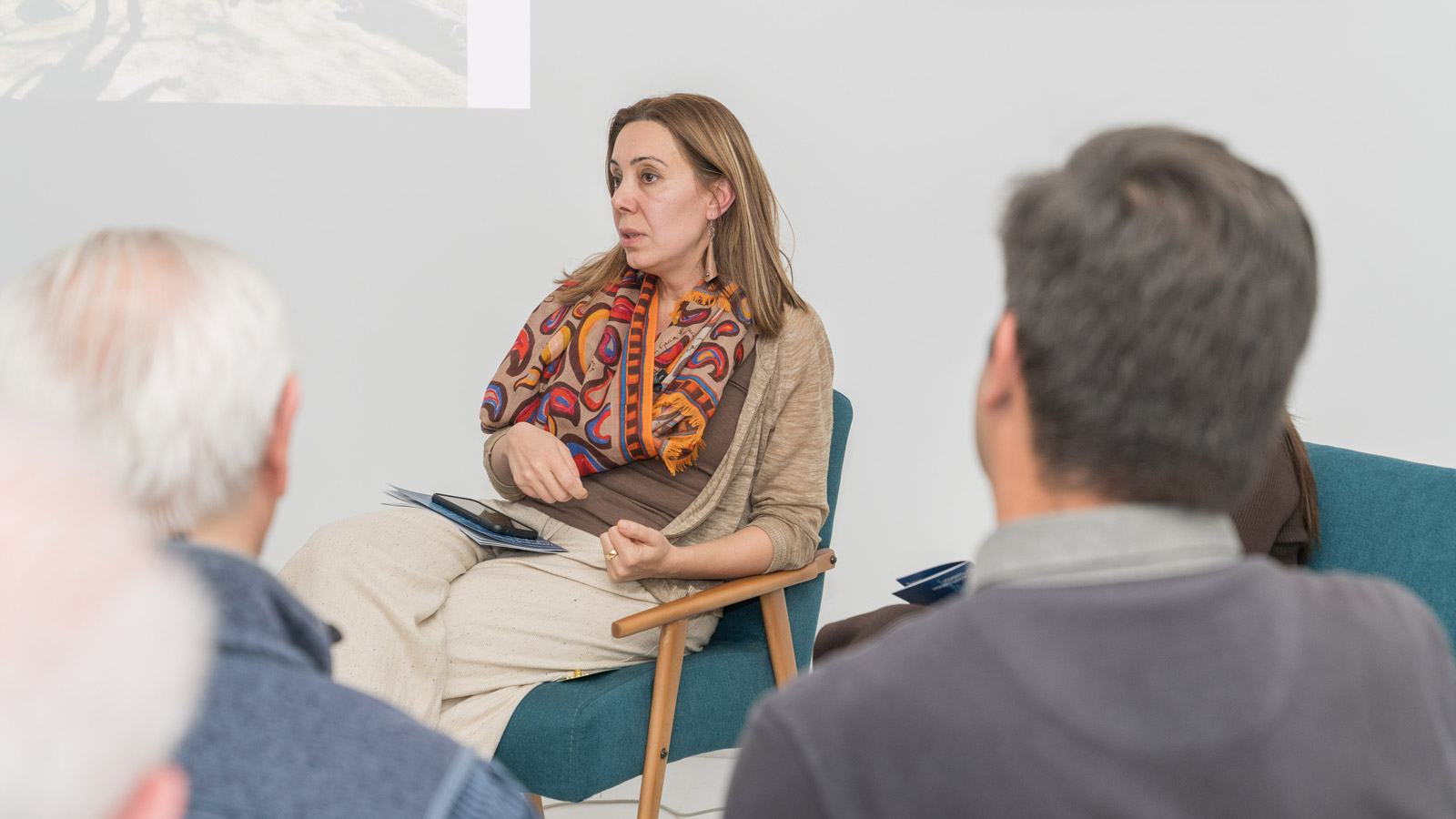
Some 4,500 kilometers from Lisbon, in the Armenian capital of Yerevan, Paula Corte-Real joined partners from the Matenadaran Museum of Manuscripts and the Armenia Tree Project (ATP) to discuss the genesis and future of Yerevan’s newest garden. Built upon a long tradition of collaboration, the seeds of this fruitful dialogue can be traced to the multiple visits to the Gulbenkian Garden in recent years by leaders of the Matenadaran Garden project, where first-hand immersion into the garden yielded deep inspiration.
“I had this experience of getting lost in the garden,” recalls Marina Mkhitaryan, Director for Strategic Partnerships and Impact at Armenia Tree Project, during her visit to the Gulbenkian Garden last summer.
The presence of native fauna and flora, natural lighting and shading, and a labyrinth of winding trails invites visitors to immersively explore the space, which serves as a symbiotic extension of the museum and its extensive cultural programming. In this context, the Gulbenkian Garden reflects the unique Portuguese ecological identity while inspiring guests to engage more deeply with each visit, something which immediately captured the attention of Marina Mkhitaryan. “We’re hoping that this garden will have the same spirit and the same energy for the city of Yerevan,” shares Mkhitaryan. Returning to Yerevan, inspired by the case of the Gulbenkian Garden, Marina connected with her Armenian colleagues with a deeper sense of what an urban garden could represent.
What is the essence of a garden in Armenia?
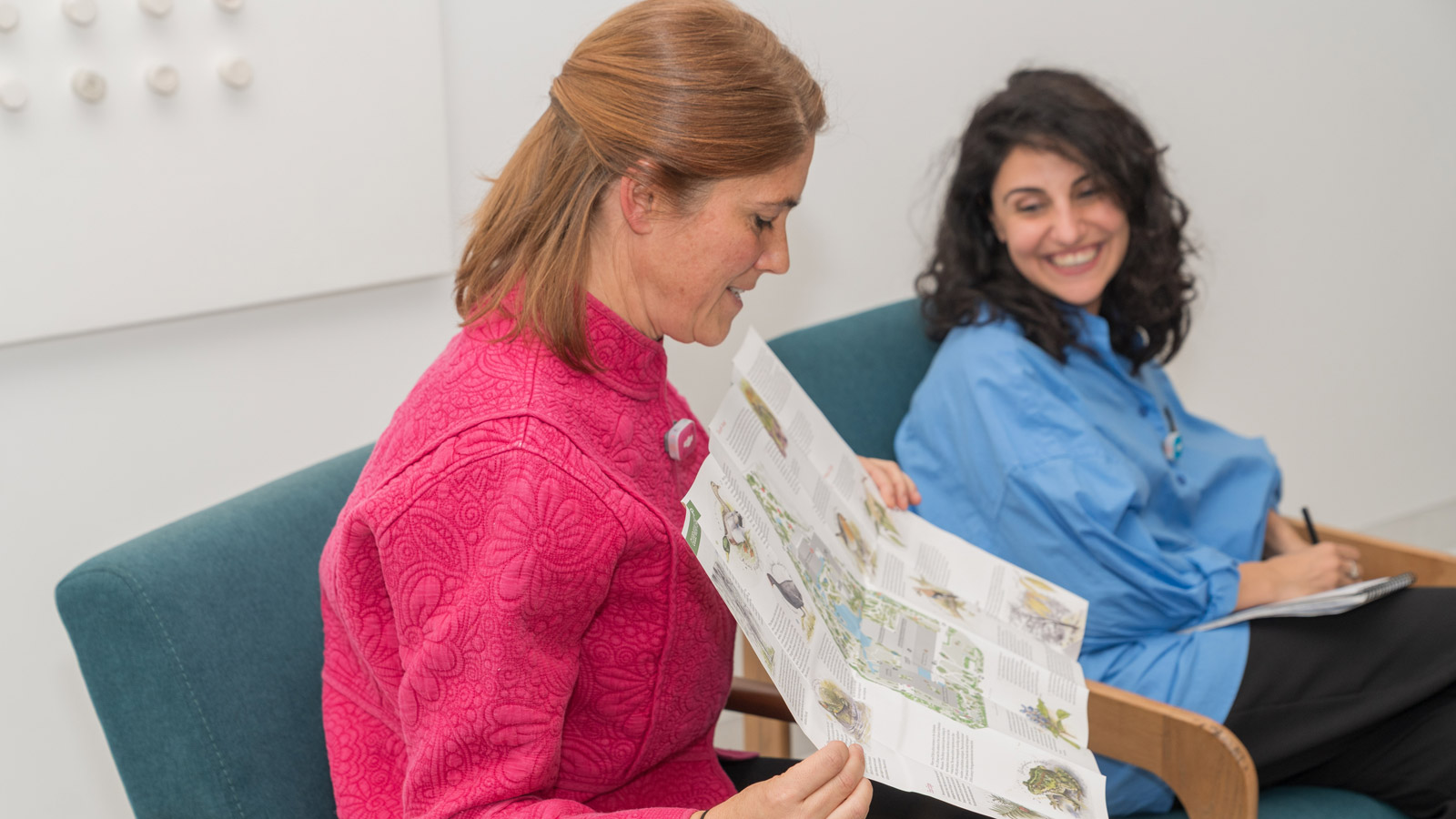
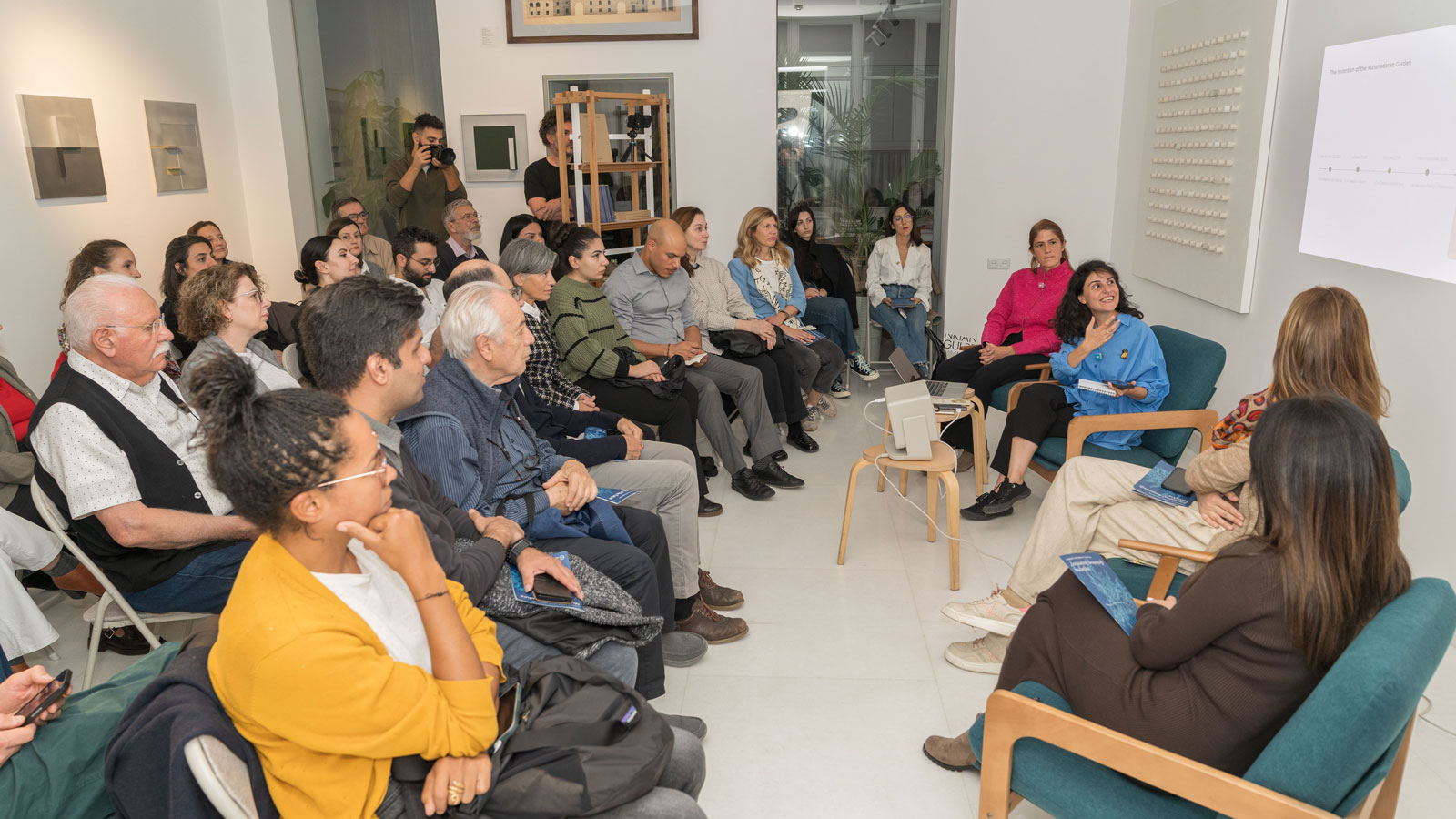
At the heart of the Matenadaran Garden project lies the co-creation process spearheaded by art historian, curator, and Founding Director of AHA Collective, Nairi Khatchadourian. “From the start, the inclusivity and the participatory aspect of thinking of an urban and public space was developed,” explains Nairi Khatchadourian. Beginning in November of 2025, Khatchadourian gathered 36 diverse participants including artists, architects, landscape designers, botanists, environmentalists, independent scholars, museum researchers, and local residents, to conduct a co-creation workshop. The inclusive and collective process explored how best to design a garden that authentically reflects the Armenian manuscript heritage preserved at the Matenadaran Museum while rooting it in local ecology and making it responsive to Yerevan’s wider urban context and green landscape.
Together, they asked key questions. What are our shared values concerning the garden? How should it impact us as residents of Yerevan? What is the essence of a garden in Armenia? The participants were divided into six groups, each developing and presenting a distinct garden proposal. The selected plan—which includes key heritage plants species and water elements organically integrated into a terraced garden following the site’s topography—was then presented to the Belgian landscape architecture firm Kollectif Landscape to inform the project’s landscape masterplan and guide next steps.
Situated on a slope at the northeastern end of Mesrop Mashtots Avenue, a main thoroughfare in central Yerevan, the location of the Garden is deeply symbolic. “The slope itself symbolizes freedom,” shares Nairi Khatchadourian. Connecting other key municipal green spaces and historical landmarks such as Mother Armenia statue and the Yerevan Cascade complex, it rests at a key urban axis that reflects its Soviet era and Armenia’s national independence, making it a powerful symbol within the urban design of Yerevan.
A living archive of Armenian tradition
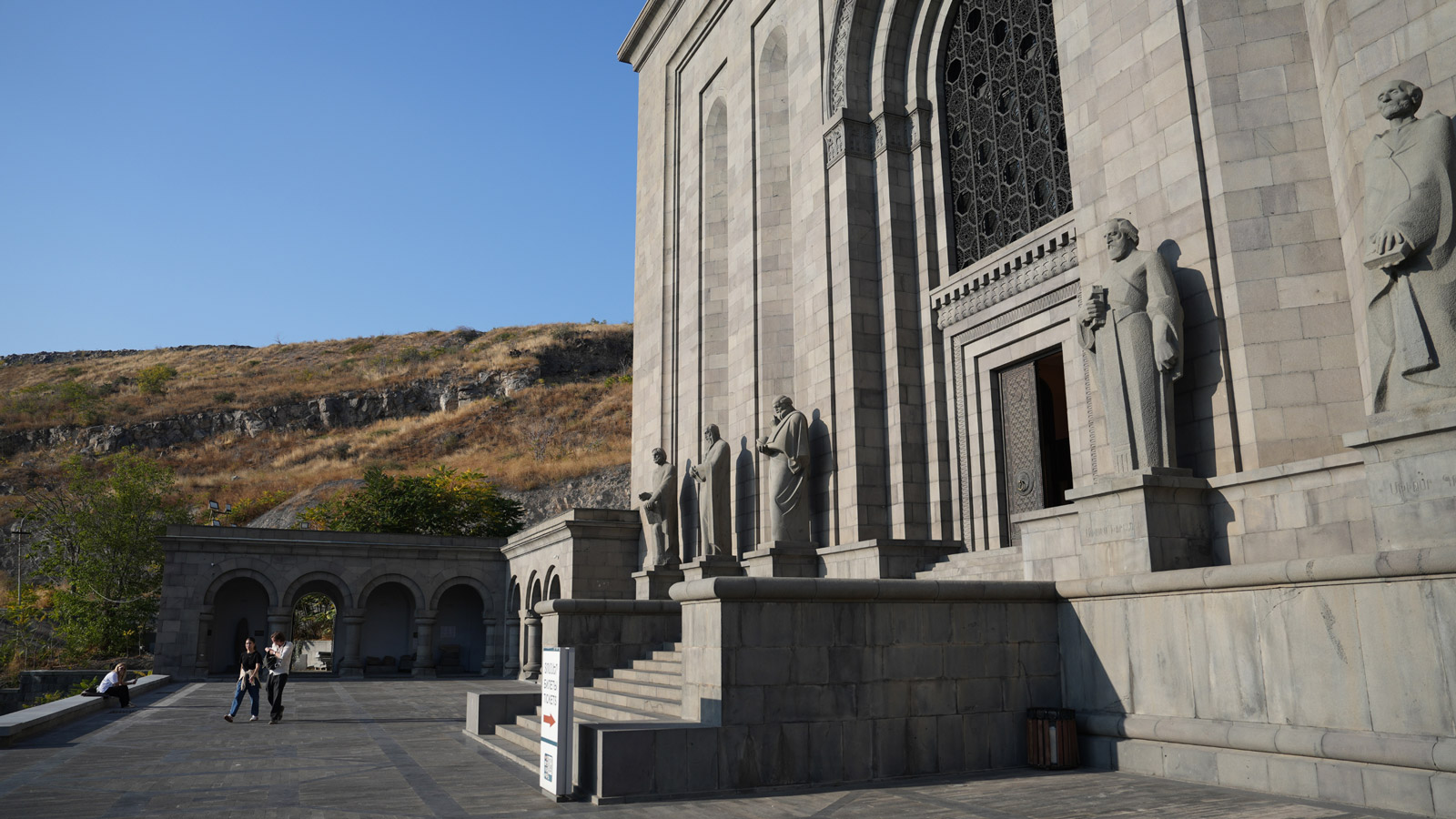
The Matenadaran Museum is a living archive of Armenian history and culture. Home to over 17,000 Armenian manuscripts, the Museum represents the intangible heritage of Armenia’s intellectual identity, captured through centuries of religious, scientific and cultural texts and other relics. Founded in the same decade as the Gulbenkian Foundation, its institutional history is deeply intertwined with the history of Armenia and widely considered the museum of the nation.
The presence of Armenia’s biodiversity is reflected not only in its ancient manuscripts, but physically as part of their composition through parchment, inks and other materials.
Its ancient collection of manuscripts, which are inscribed on the UNESCO Memory of the World register, reveal a deeper connection between Armenia’s history and its rich biodiversity. “Armenia, in its small territory, has a very rich biodiversity, which is also visible in our manuscripts. Because in our illuminated manuscripts, there are, for example, more than 350 species of birds,” says Sona Baloyan, Senior International Relations Specialist at the Matenadaran Mesrop Mashtots Institute of Ancient Manuscripts.
Various manuscripts and medical books hold detailed scientific knowledge and recipes, including a royal elixir from the Middle Ages containing some 54 types of medicinal herbs which was recently decoded by Mantenadaran researchers. “In the garden we want to plant these very herbs which are described in our medieval manuscripts,” explains Sona Baloyan. “So [visitors] will see in the museum these manuscripts…and then they will go out and in the garden they can feel it, they can experience what they have learned inside.”
Bringing ancient heritage to life one seed at a time
On October 21, 2026, during a symbolic tree-planting ceremony, the Armenia Tree Project planted its 10 millionth tree on the grounds of the Matenadaran Museum, directly in front of the Mesrop Mashtots statue.
“The plane tree is one of the most symbolic trees in Armenia,” says Marina Mkhitaryan.
“Mesrop Mashtots is believed to have taught the alphabet of Armenia under the tree, and it’s called a tree of wisdom,” she adds. This symbolic planting is part of a wider collaboration between ATP and the Museum to supply trees to build the new Matenadaran Garden project.
Among the dozens of tree varieties planted by ATP, Marina shares that the plane tree is especially unique in that it can live on average 500 years and up to 2,000 years. This incredible lifespan is another reason plane trees are a living symbol of memory, resilience and hope in the Armenian community.
Another key tree species holds immense significance for the Museum: the mulberry tree. The large Restoration Department at the Matenadaran Museum which once relied on the expensive import of mulberry restoration paper from Japan is now able to sustainably source the material locally thanks to ATP.
“We produce Armenian restoration paper from only the branches of the mulberry tree, which means we don’t cut the tree. So only the branches are used and now already a lot of manuscripts have been restored with Armenian restoration paper. We’re now also little by little starting to export it as well,” shares Sona Baloyan.

Local action, global impact
Taking place within the context of COP17—the UN Biodiversity Conference held in Yerevan from 19-30 of October—the latest dialogue between the Gulbenkian and Matenadaran reflects a shared emphasis on locally-driven action and broader environmental impact. Among the 30 Targets outlined in the Kunming-Montreal Global Biodiversity Framework to be achieved by 2030, Target 12 “Enhance Green Spaces and Urban Planning for Human Well-Being and Biodiversity” is a cornerstone of this conversation. It instructs nations to significantly increase the area and quality, and connectivity of, access to, and benefits from green and blue spaces in urban and densely populated areas sustainably.
Both the Gulbenkian and Matenadaran Garden projects illustrate the power and potential of not only creating new green spaces, but building culturally-informed, ecologically-rich spaces which integrate into a wider network of parks, improving the well-being of native species and human residents in the process. As urban environments increasingly play a larger role in restoring ecological systems, preserving biodiversity and reducing pollution, urban gardens represent a critical feature of resilient cities.
Sixty years after the Gulbenkian Garden’s inception, it continues to evolve alongside Portuguese society and inform international projects. And in the case of the nascent Matenadaran Garden project, newly planted vegetation represents far more than urban greening, but an investment in the future of generations to come, a sentiment expressed by Marina as she says, “you’re planting a seed, which you definitely will not experience as a tree or as a forest, but that’s something that you’re doing for generations.”
You may also like




No results were found for your criteria.