
“’The Art of Criticism’ encapsulates what Colóquio seeks to do: practise criticism as an art”
-
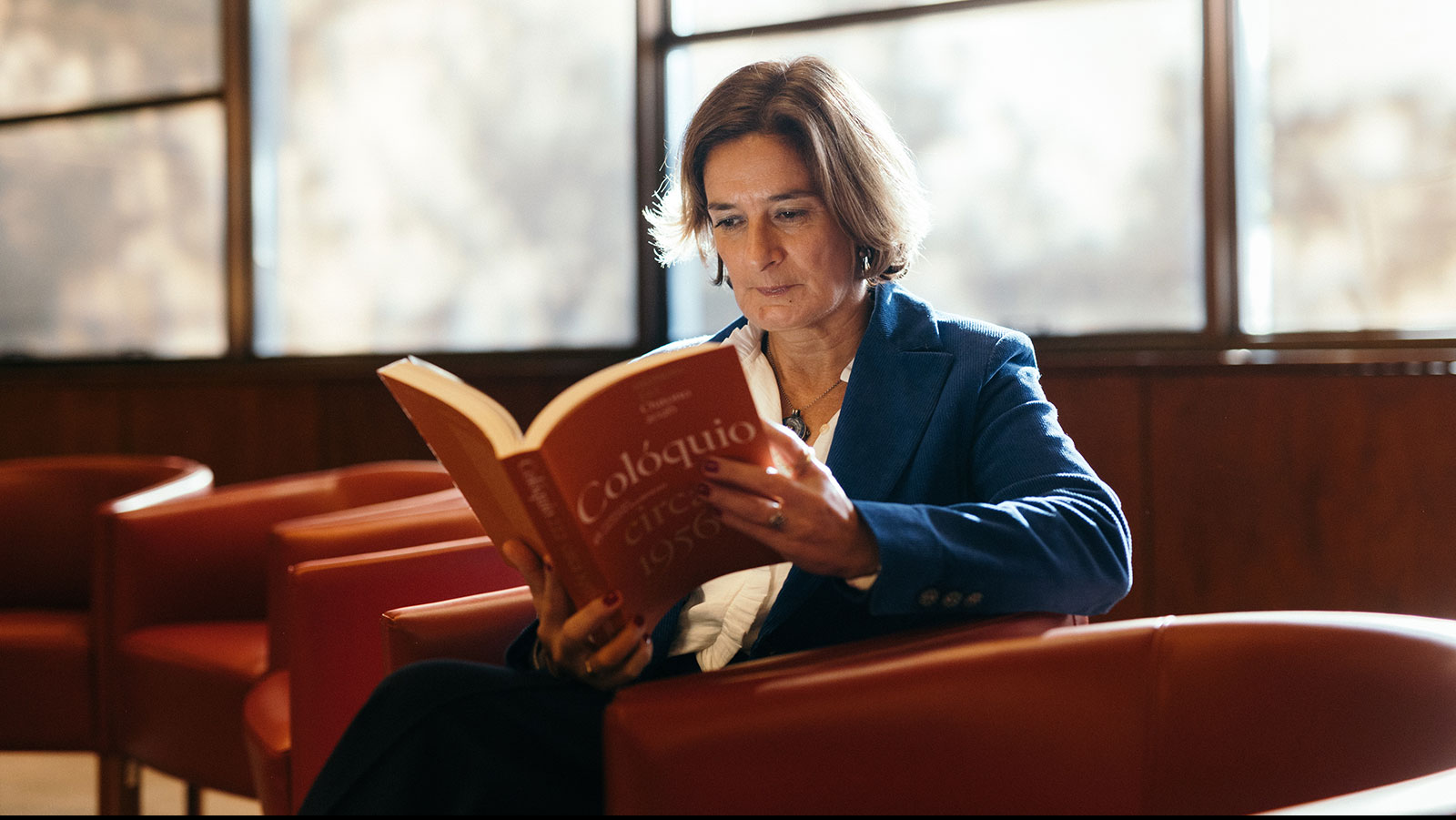
Joana Matos Frias
This is not the first live event organised by Colóquio, but it is the first in quite some time. What motivated the decision to take the journal beyond the printed page?
There were a few gatherings many years ago, perhaps even during the days of Colóquio Artes, as well as several important lecture series in the 1980s. However, it has been some time since an event of this scale connected to the journal has taken place, with two full days of programming structured around a central idea.
There are two main reasons for this decision. The first has to do with the moment the journal is currently experiencing. I would not describe it as a period of radical transformation, but rather one of continuity and renewal. It became very clear that a publication of this nature, if it is to live fully rather than merely survive, must engage with the ways in which similar journals exist today in other countries.
Looking at international publications that share affinities with Colóquio, two dimensions become evident: the coexistence of the printed journal and digital life, and the creation of ways to reach broader audiences through meetings, conversations and other public initiatives. Ultimately, this decision stems from a broader reflection on how Colóquio can maintain an active presence in the twenty-first century.
What is “The Art of Criticism”? What lay behind the programme and the selection of guests?
“The Art of Criticism” is a title that resonates with various books and seminars and neatly encapsulates what Colóquio seeks to do: practise criticism as an art.
From the outset, we wanted this gathering to distinguish itself from the many literary festivals currently taking place, which are usually organised around authors and book launches, because that territory is already well covered. What interested us was creating a space for conversation among people who practise criticism, write essays or collaborate with cultural journals with which Colóquio has clear affinities.
The journal has always been closely connected to Portuguese-language literatures, and that will remain a fundamental focus. At the same time, it is important that it enters into dialogue with publications and critical traditions from other cultural contexts. The programme emerged from this desire to bring together people who share particular ways of thinking about and practising criticism, and to reflect on what distinguishes criticism published in journals such as Colóquio: outside the academic sphere, yet also different from the more immediate criticism associated with cultural journalism.
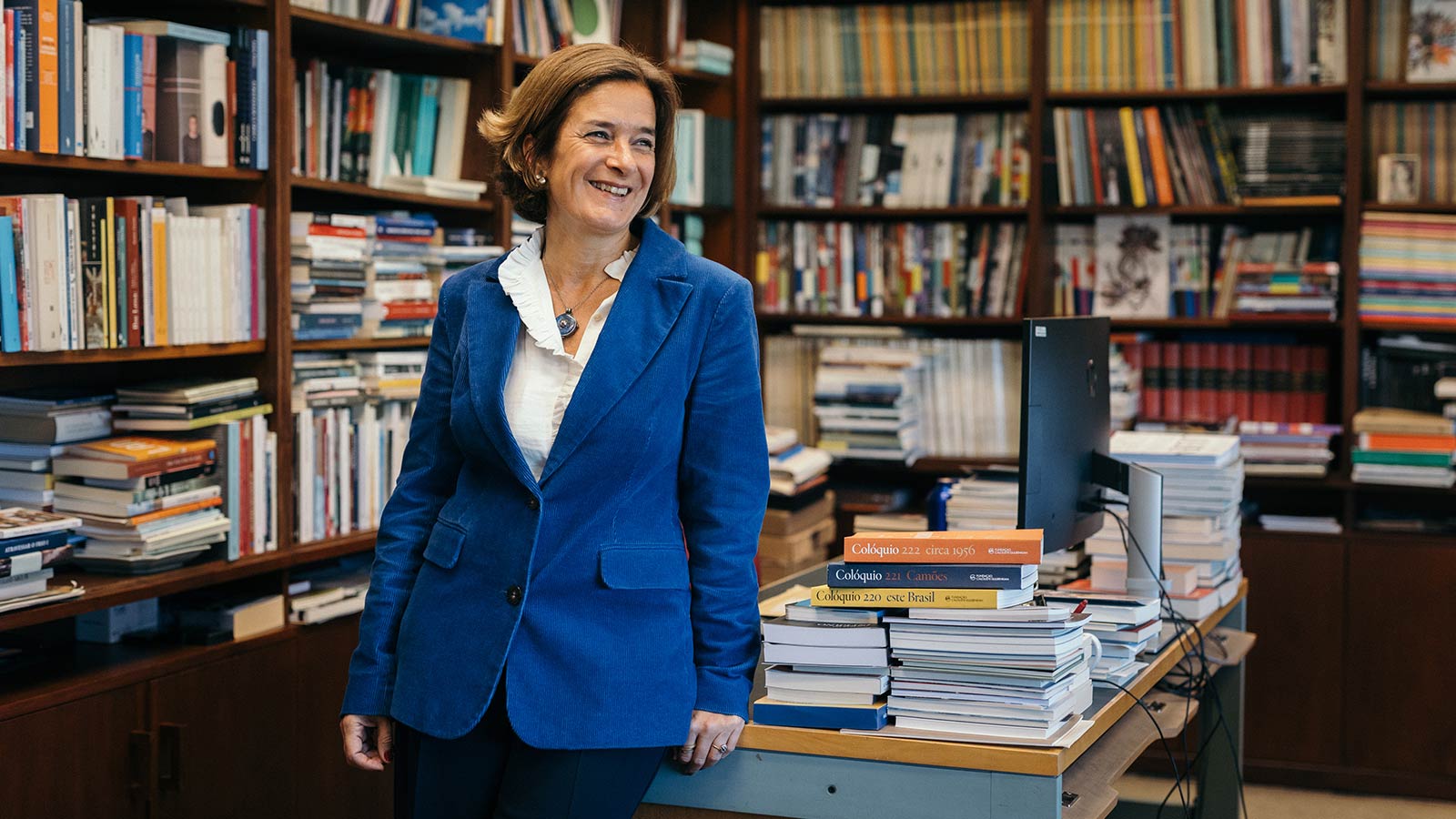
At a time marked by the speed and information overload of social media, what role can a journal such as Colóquio play?
I think Colóquio fulfils, in a way, the same role that literature itself continues to fulfil: giving people the opportunity to linger over something.
It is true that we have sought to adapt some of the journal’s formats to contemporary reading habits. Certain sections have become shorter and more agile, precisely because we know that readers today have less time and are faced with a far greater supply of information. But that adaptation should not mean abandoning what is essential.
I would like Colóquio to continue offering what literature and the arts offer: moments in which people’s relationship with what they are reading, seeing, hearing or thinking about unfolds at a different pace from the generally hurried rhythm that shapes so much of the rest of their lives.
This event will also see the launch of the new issue of the journal, dedicated to 1956, as well as the new Colóquio website. What do these projects say about the future of the journal?
I hope they say good things! The issue dedicated to 1956 reflects two editorial concerns. The first is the desire, whenever it makes sense, to establish a connection between the journal and what is happening within the Foundation. Not because I want to turn Colóquio into an institutional publication, but because it seems natural that such a dialogue should exist. As the Foundation celebrates its 70th anniversary, it felt fitting to return to the year of its founding. And 1956 proved to be an exceptionally rich year from both a cultural and artistic perspective.
At the same time, this issue reflects an openness to other literatures and cultural traditions. While maintaining a focus on Portuguese-language literatures, it also includes essays, previously unpublished translations, and texts connected to other geographies and artistic fields.
As for the website, it has been a priority since I took over the journal’s direction. The reasons are straightforward: to allow readers outside Portugal easier access to Colóquio and to provide the journal with a digital presence that is now indispensable. In 2026, a journal of this kind should be able to exist simultaneously in print and digital formats.
You mentioned that 1956 was a particularly interesting year from a cultural and literary perspective. Could you tell us a little more about that?
In the editorial I wrote to introduce the issue, I found myself writing as much about what had been left out as about what had been included.
In the field of Portuguese-language literatures, we have several essays on important works, including one dedicated to the publication of Pedro Tamen’s first book. Tamen was also closely connected to the Calouste Gulbenkian Foundation. It was also an important year for the publication of works by authors such as Mário Cesariny and for the emergence of a singular literary magazine in which Herberto Helder first appeared. It was also the year of the birth of Ana Luísa Amaral, and the issue includes an unpublished letter by her.
In Brazilian literature, 1956 was the year in which João Guimarães Rosa published Grande Sertão: Veredas, which I consider one of the most astonishing books in literary history. That alone would justify dedicating attention to the year. But it was also the year of Orfeu da Conceição, by Vinicius de Moraes and Tom Jobim, as well as fundamental works by other authors from the Portuguese-speaking world.
We are publishing, for example, a translation of a chapter from a book by Colm Tóibín on Giovanni’s Room, by James Baldwin, a novel first published in 1956. The issue also includes previously unpublished translations of poets such as Mario Benedetti and John Ashbery, whose first poetry collection appeared that year, as well as essays on Eugenio Montale and Pier Paolo Pasolini.
It was also the year of the deaths of Bertolt Brecht and Robert Walser. In cinema and the arts, many significant developments took place as well. In short, it was one of those years in which everything seems to converge. One could easily dedicate several issues of Colóquio to it.
The event brings together international guests such as João Moreira Salles, Brian Dillon, James Elkins and Olivia Elkaim. What is gained from this meeting of ideas and nationalities?
First and foremost, the opportunity to engage with people working in different contexts and bringing different perspectives to questions that are often similar to our own.
We live in a somewhat paradoxical moment: we have the impression of having access to everything, yet we often remain confined within very local concerns. If we do not engage with what is being done beyond our borders, we risk narrowing the horizons of critical reflection.
I am very confident that this mixture will be enriching for everyone involved, not only for the public but also for the participants themselves. What brings them together is not a shared field of expertise, but the fact that they practise criticism within particular spaces and publications. I believe that very interesting conversations can emerge from that diversity.
What are your expectations for this event? What would you highlight from these two days?
We have writers and critics with very different profiles, and I think that is one of the most interesting aspects of the programme. The event opens with Brian Dillon, a British writer of whom, I believe, only one book has been translated into Portuguese. He is an author whose work brings together literature and the visual arts in particularly compelling ways. Several of his books focus precisely on the relationship between writing and visual culture.
We will also welcome Olivia Elkaim, a French writer who will speak about her latest book, La disparition des choses, a kind of biographical fiction based on the story of Georges Perec’s mother. She has worked extensively on themes of memory, often autobiographical memory, and strikes me as a particularly distinctive writer. It is especially interesting to have her with us at a moment when there is renewed attention in France to Perec’s work.
We also have a session marking the centenary of John Berger, which signals Colóquio’s desire to embrace a wider range of themes connected to the visual arts. The conversation will feature Gareth Evans, who knew Berger well, and James Elkins, one of the major international figures in visual culture and art history.
And then there is João Moreira Salles, who perhaps best embodies the spirit of the entire programme. He conceived Piauí, a magazine of enormous importance in Brazil and a publication that bears the imprint of his distinctive vision. At the same time, he has a fundamental relationship with cinema, not only as a producer but also as a documentary filmmaker.
I would say that João Moreira Salles’s cultural and artistic activity is marked by a constant exercise of critical thinking. He works across different fields, and his public interventions have been particularly significant at important moments in Brazil’s recent history. In that sense, he seems to me to be someone who brings together many of the qualities that we would like Colóquio ao Vivo to embody.
You may also like
No results were found for your criteria.