
JAM!: a first step towards change
-
JAM! (Jovens + Artes = Mudança) © DR
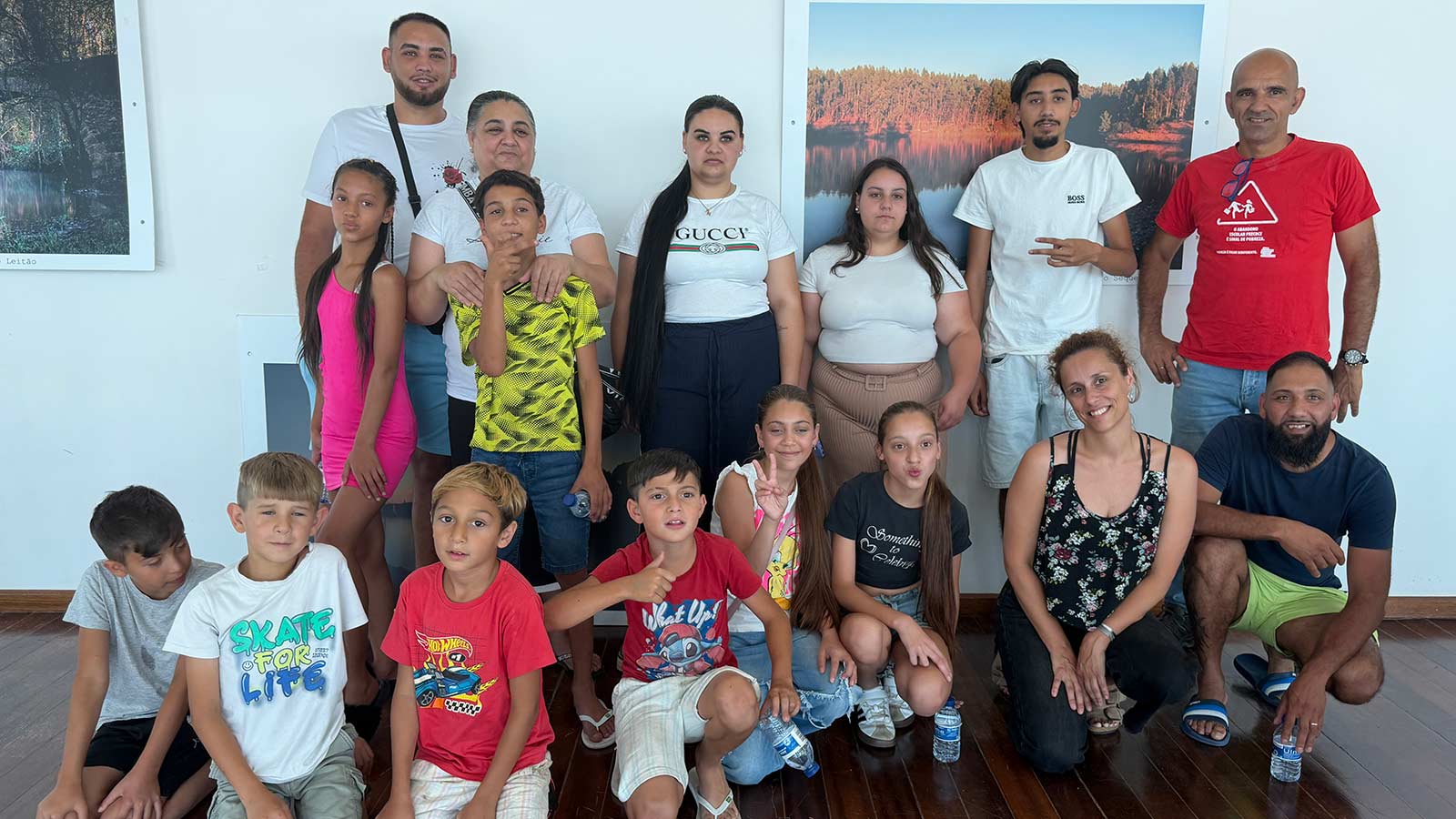
It is a particularly hot Saturday afternoon in June. Outside the Municipal Sports Complex in Tomar, we speak to 16-year-old Sofia, one of the young people leading the SomCultura project, which brings together children every week for dance and music sessions, as well as study support.
The project grew out of the desire of four young people — Nádia, brothers Cristiano and Fernando, and Sofia — to create a space for the children in their community, in the 1º de Maio neighbourhood. “It’s not just a project, it’s a place where children can feel safe, somewhere they want to come back to”, says Sofia. “It’s difficult, though, because the Roma community doesn’t really operate according to rules or fixed schedules.”
On this hot Saturday, the challenge is even greater: because of the heat and the lack of transport, the children stay at home. They have to be picked up one by one, with the help of Cláudia Hortêncio, Artemrede’s project manager, and community mediator Tiago Franco. In the end, eight children, aged between six and 15, take part in the activities.
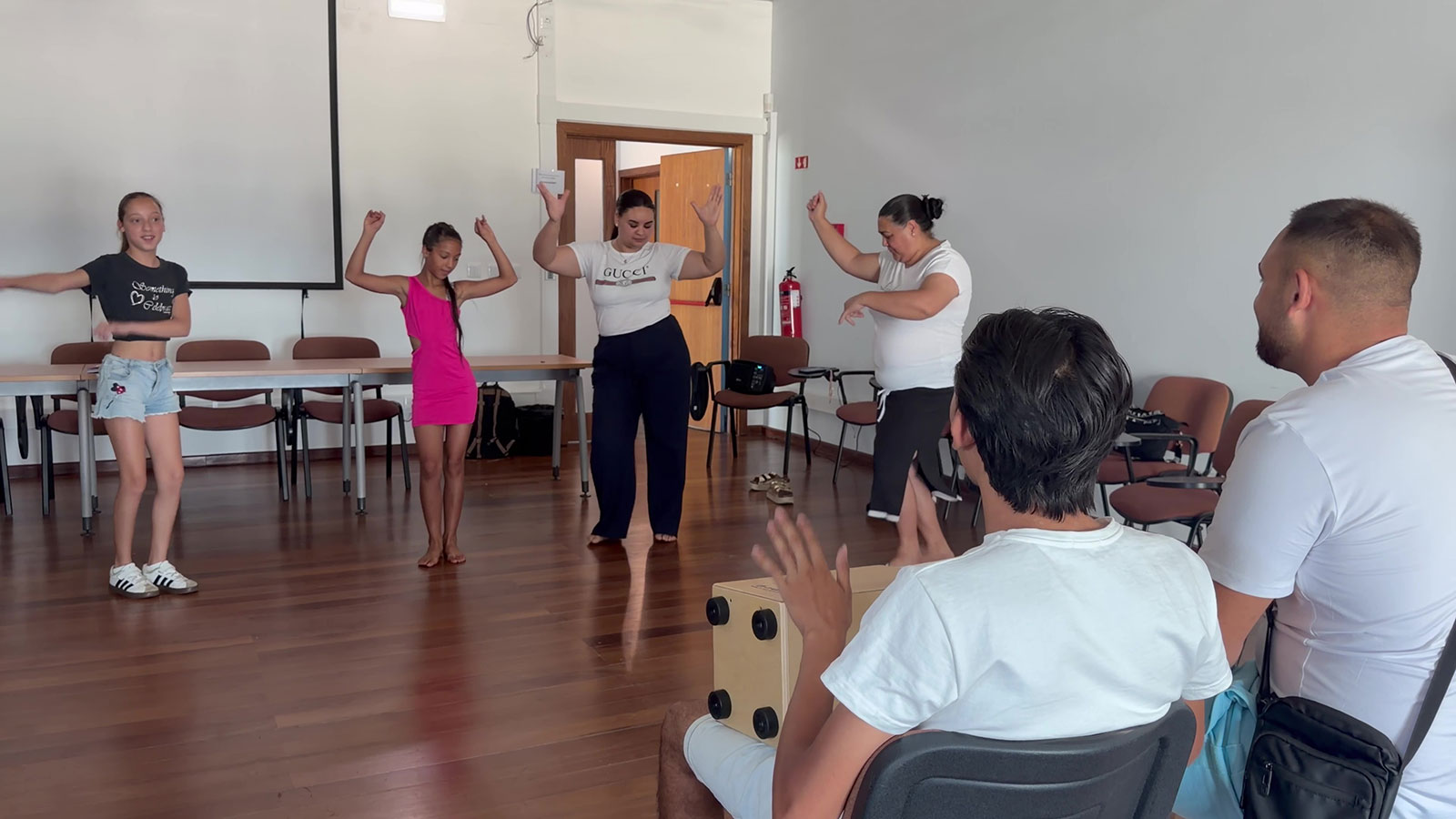
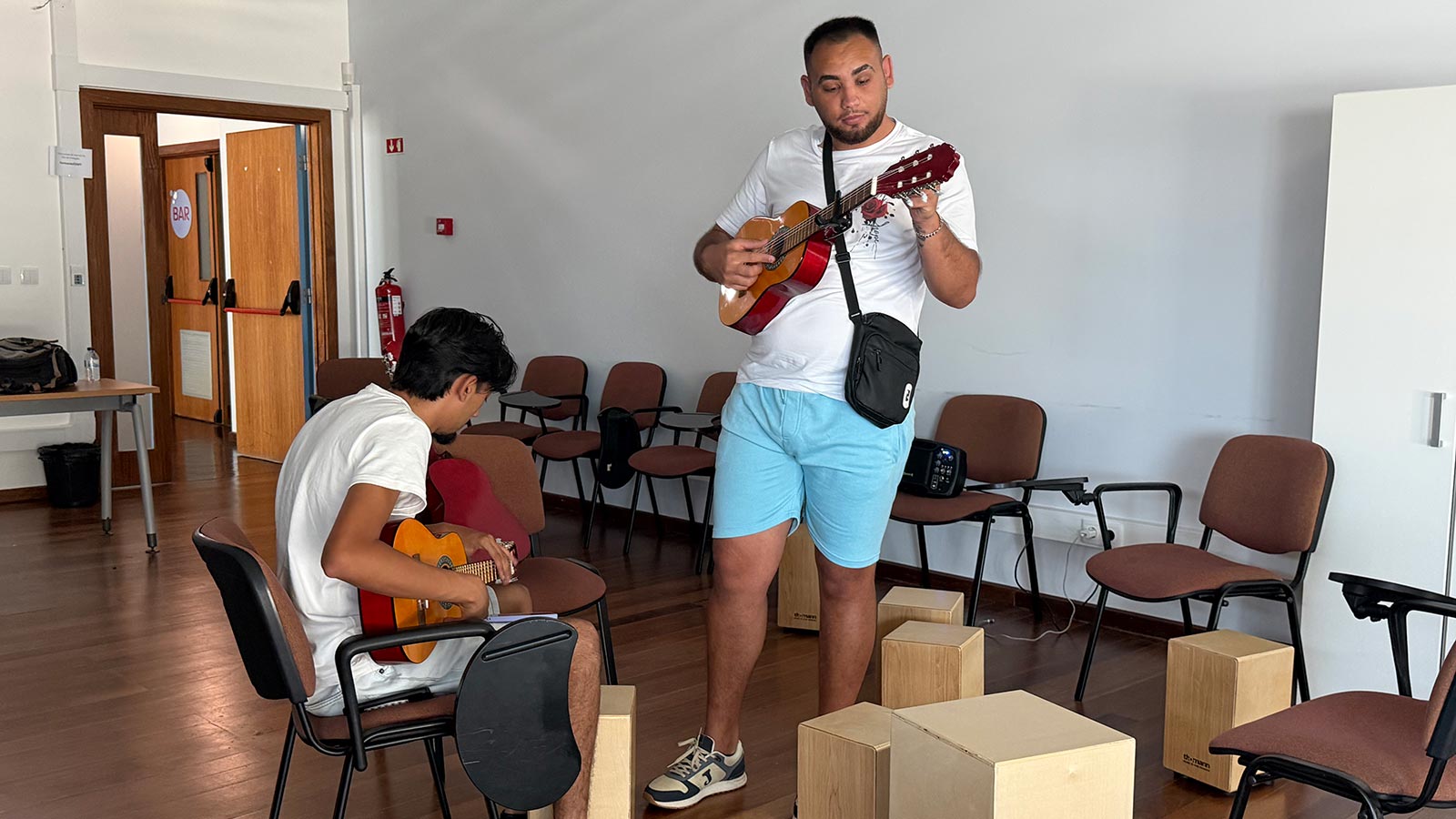
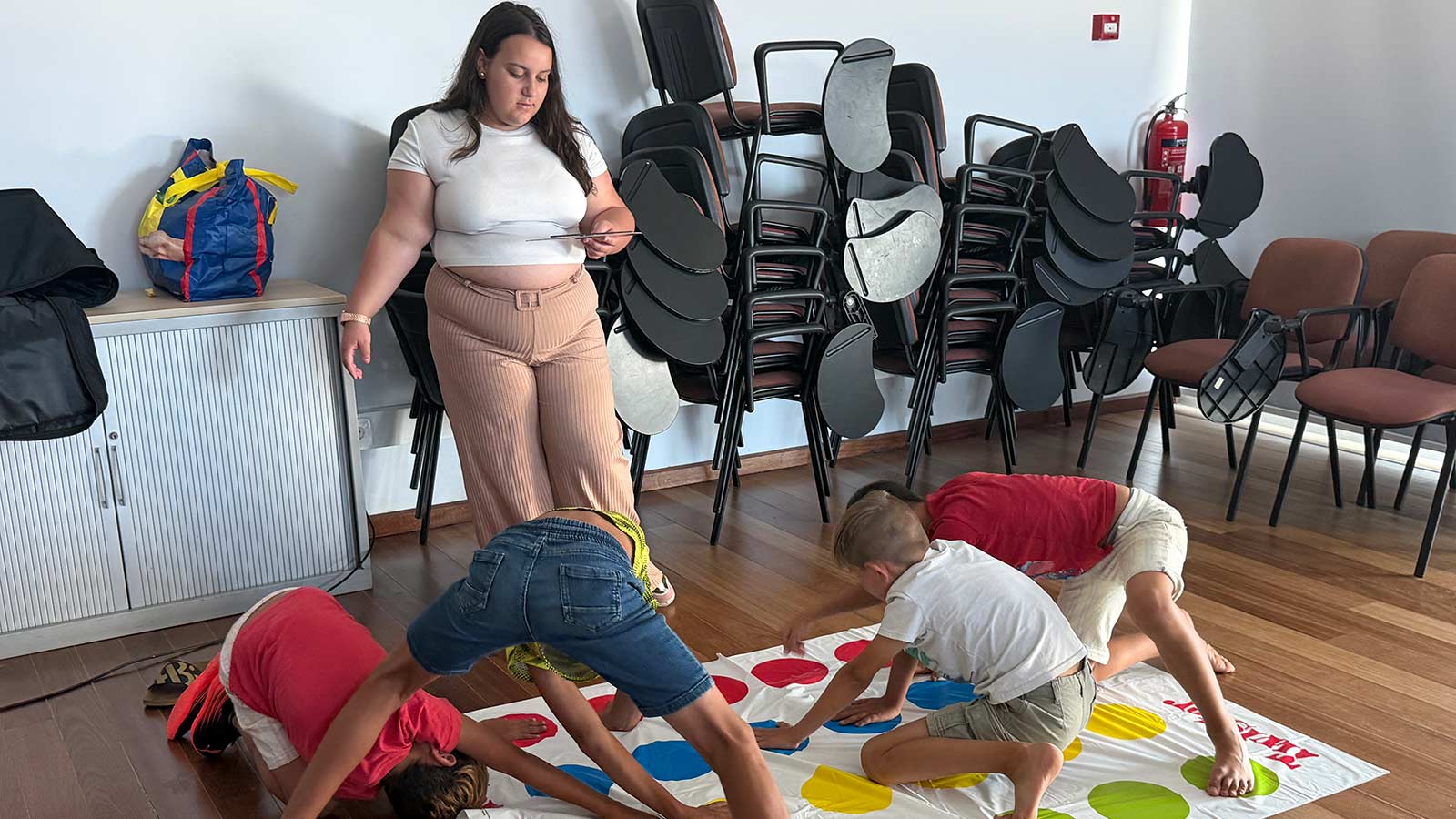
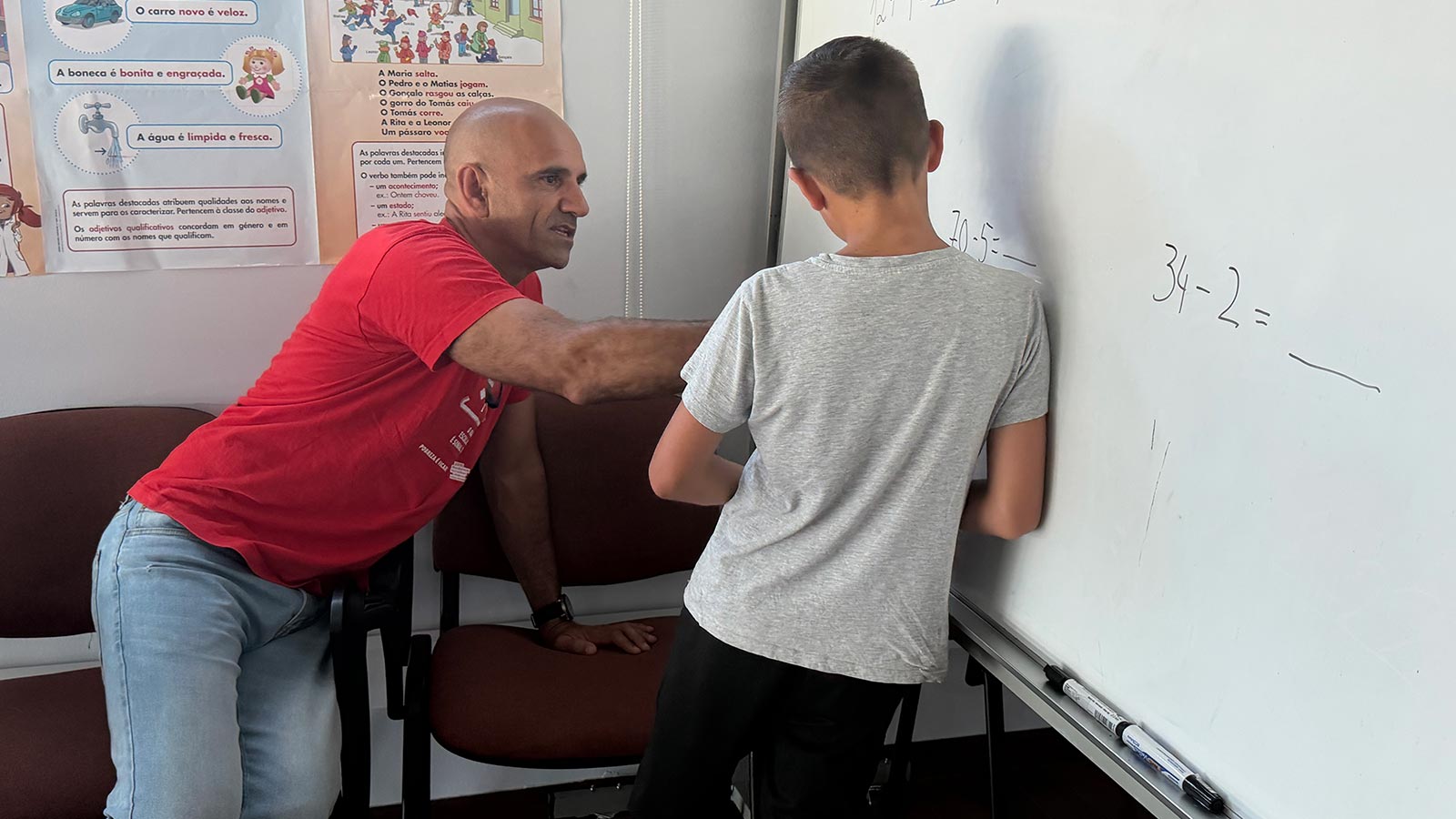
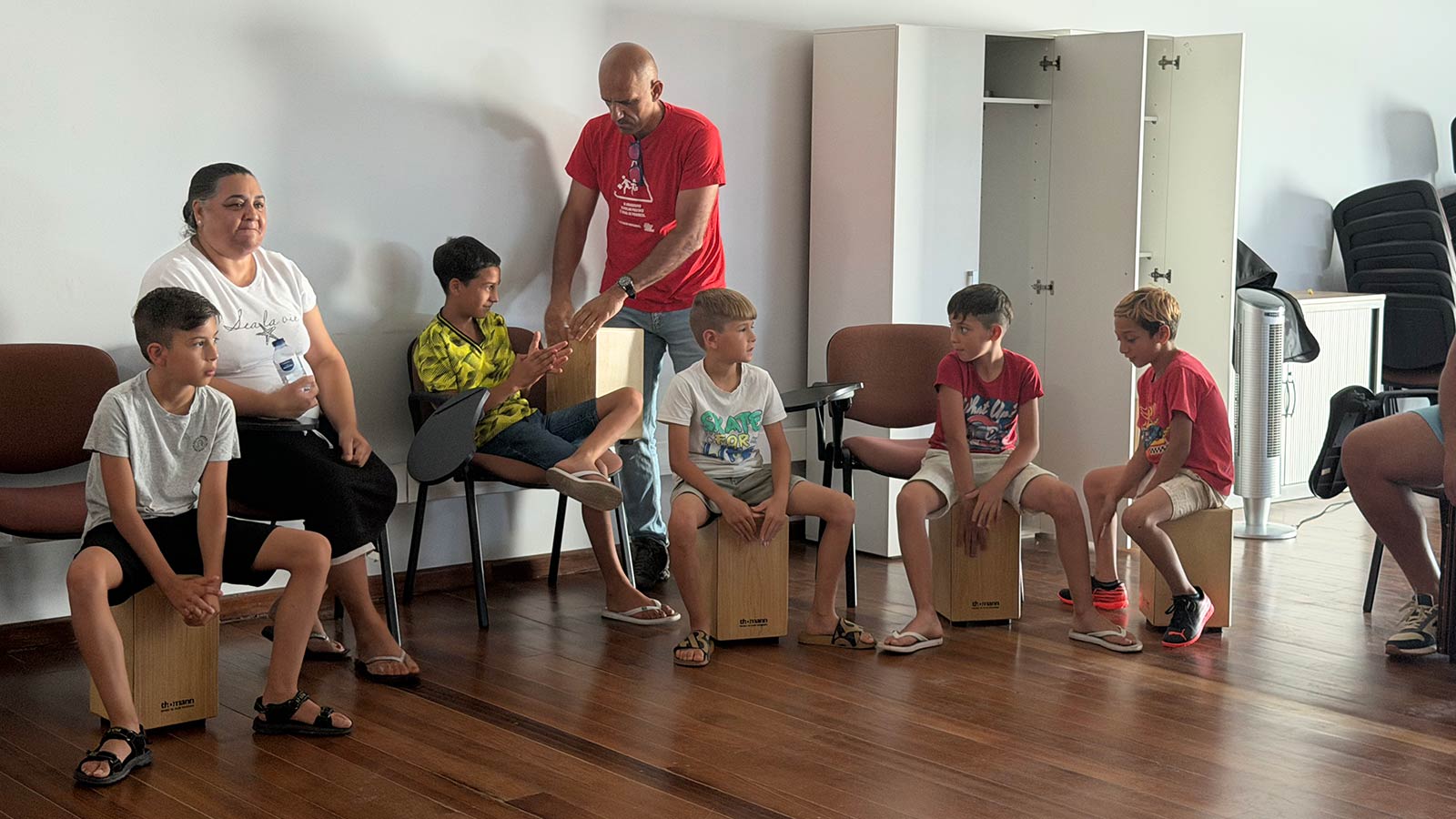
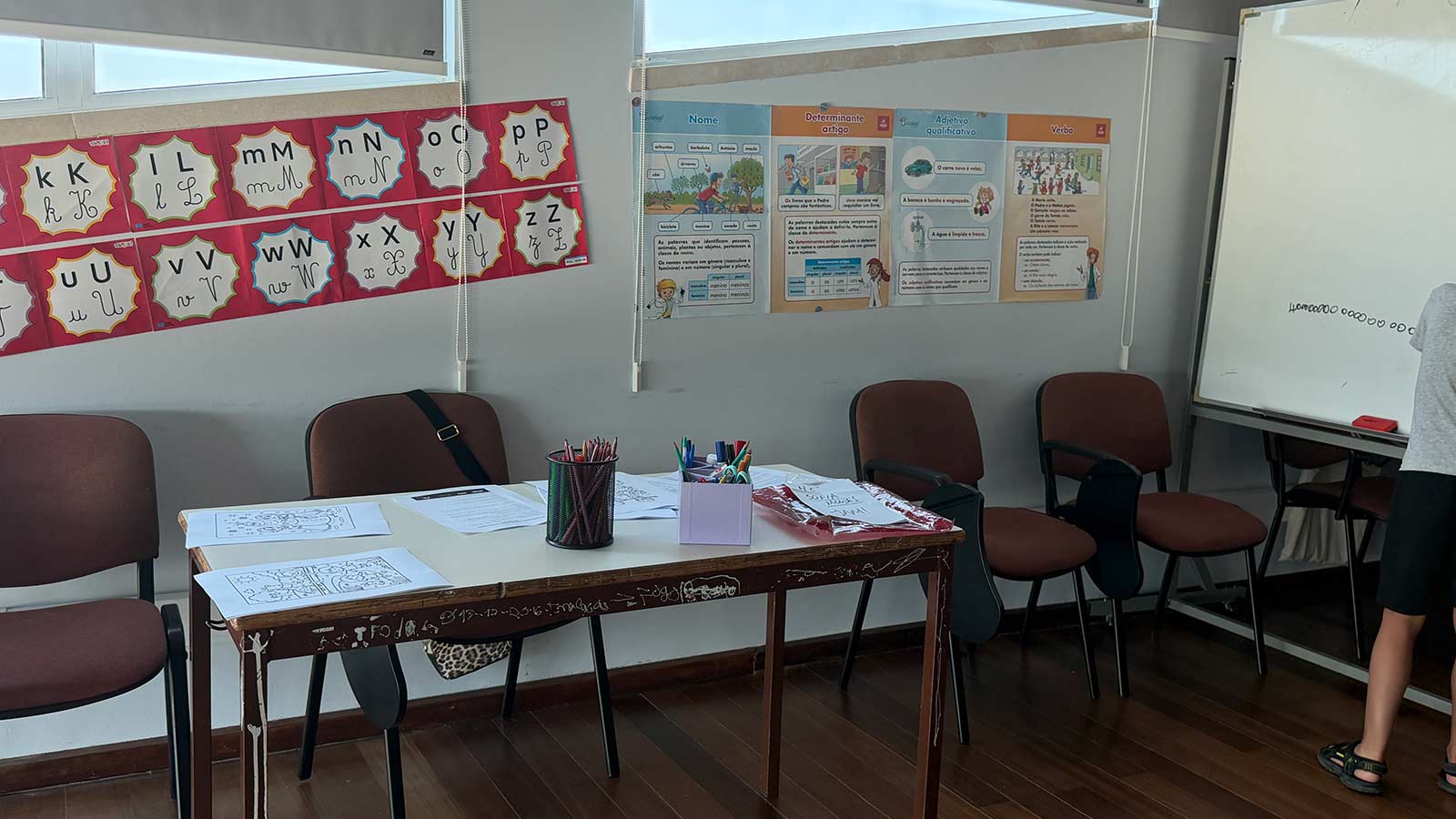
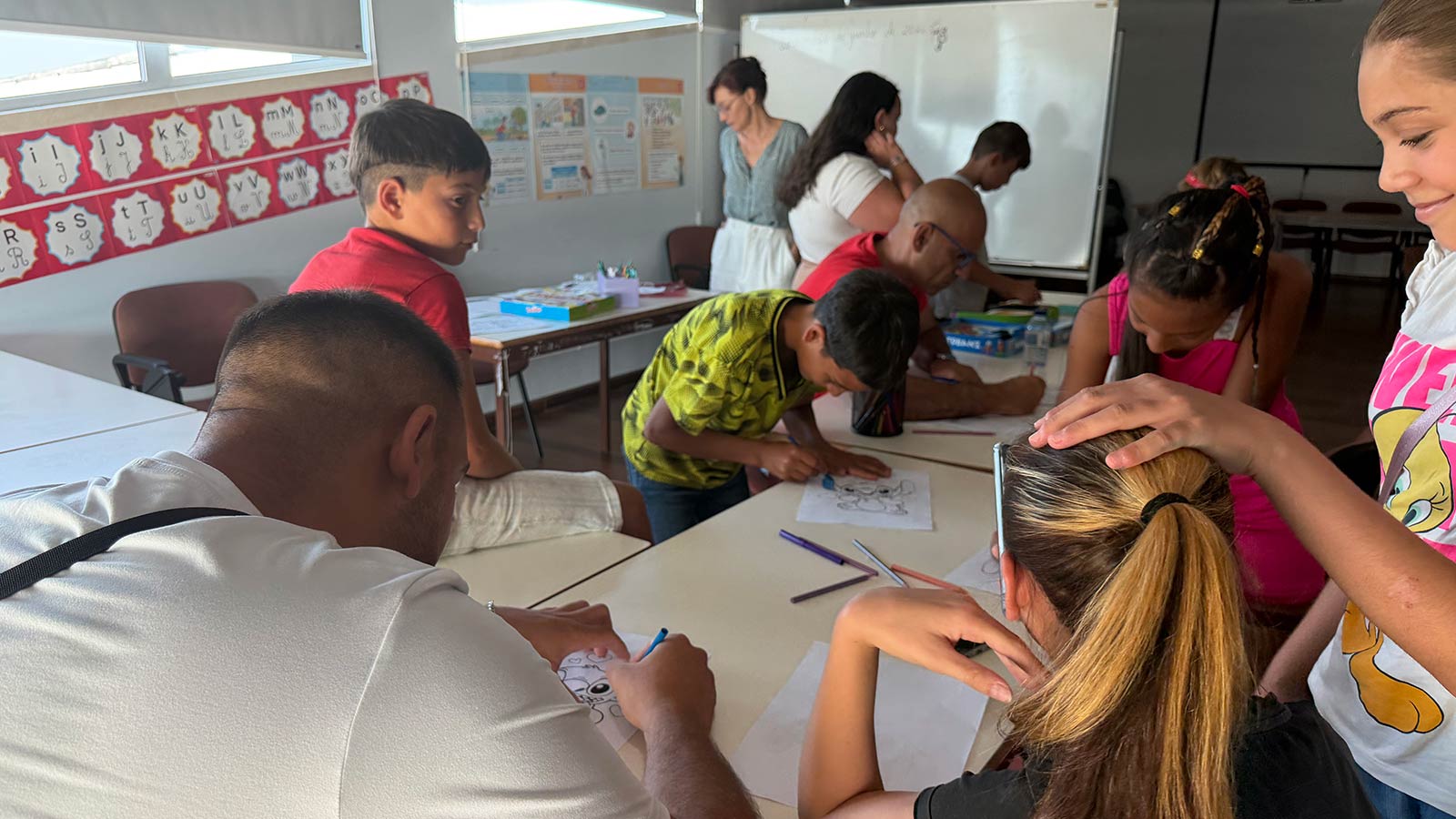
Inside, dance, music and games gradually fill the room. At the back, by the windows, Sofia and Tiago help with exercises on the whiteboard, while some children draw or play games. On the other side, Nádia leads the girls through dance routines, as brothers Cristiano and Fernando keep the rhythm on the cajón and guitar with the boys. It is like this — through unexpected challenges and constant improvisation — that SomCultura takes shape, one of seven projects supported by JAM! (Young People + Arts = Change).
Starting at the beginning
Coordinated by Artemrede, in partnership with the municipalities of Abrantes, Alcanena, Santarém, Sobral de Monte Agraço and Tomar, and with the support of the Calouste Gulbenkian Foundation, JAM! will run from 2024 to 2026 and aims to encourage creative and innovative projects conceived and carried out by young people aged between 18 and 25.
“We were very used to delivering projects that had already been designed, and then looking for people to take part. This time, we wanted to do the opposite: ask people what they wanted to do”, explains Cláudia Hortêncio. That shift in approach led to a demanding process, involving training, experimentation, mentoring and implementation over the course of three years.
In Tomar, that process began with 22-year-old Nádia Alves, one of the few participants who has been involved with JAM! from the very beginning. After completing the different stages of training and the project lab, Nádia put forward the idea of creating a space for the children in her neighbourhood, involving her brothers, Cristiano and Fernando, from the start.
Sofia, 16, joined the project at a later stage, bringing new energy and taking on a central role in its organisation. She is Cristiano’s girlfriend, but despite not being part of the Roma community, Sofia knows that reality well: she has been close to the family since she was 13, giving her a rare level of proximity, built on trust but also on an awareness of the limits involved.
Today, the four of them run SomCultura for around ten children aged between six and 15, almost all of them from the Roma community. The sessions combine study support, music and dance, but the project’s purpose goes beyond the activities themselves. Sofia believes that many of these children grow up “in an isolated bubble”, and sees the project as an opportunity to broaden their experiences and create new ways of interacting. “For example, Nádia is a role model for them: a Roma woman who didn’t get married at 16, who works, who always wants more than what she is told is possible.” This symbolic dimension goes hand in hand with strong family involvement: Nádia’s, Cristiano’s and Fernando’s parents have been present from the beginning, following, supporting and observing the project, with the help of their grandfather.
The desire to change perceptions, both within and beyond the community, exists alongside constant challenges: irregular attendance, logistical constraints (such as a lack of transport), and tensions between tradition and change. Even so, everyone sees SomCultura’s success as something that cannot be measured only by the number of participants or the regularity of the sessions, but by the space it is slowly creating for new possibilities.
Building new connections
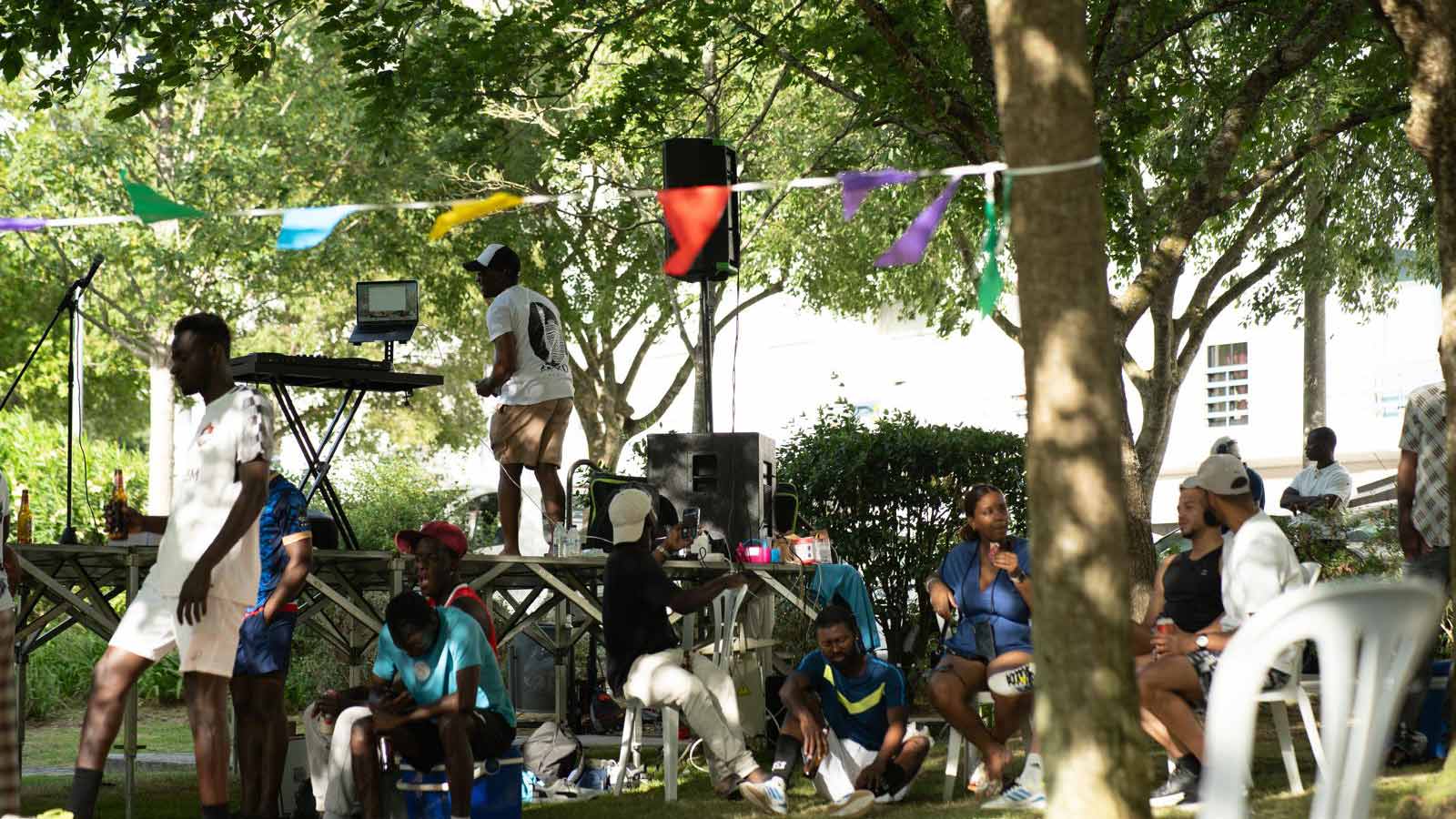
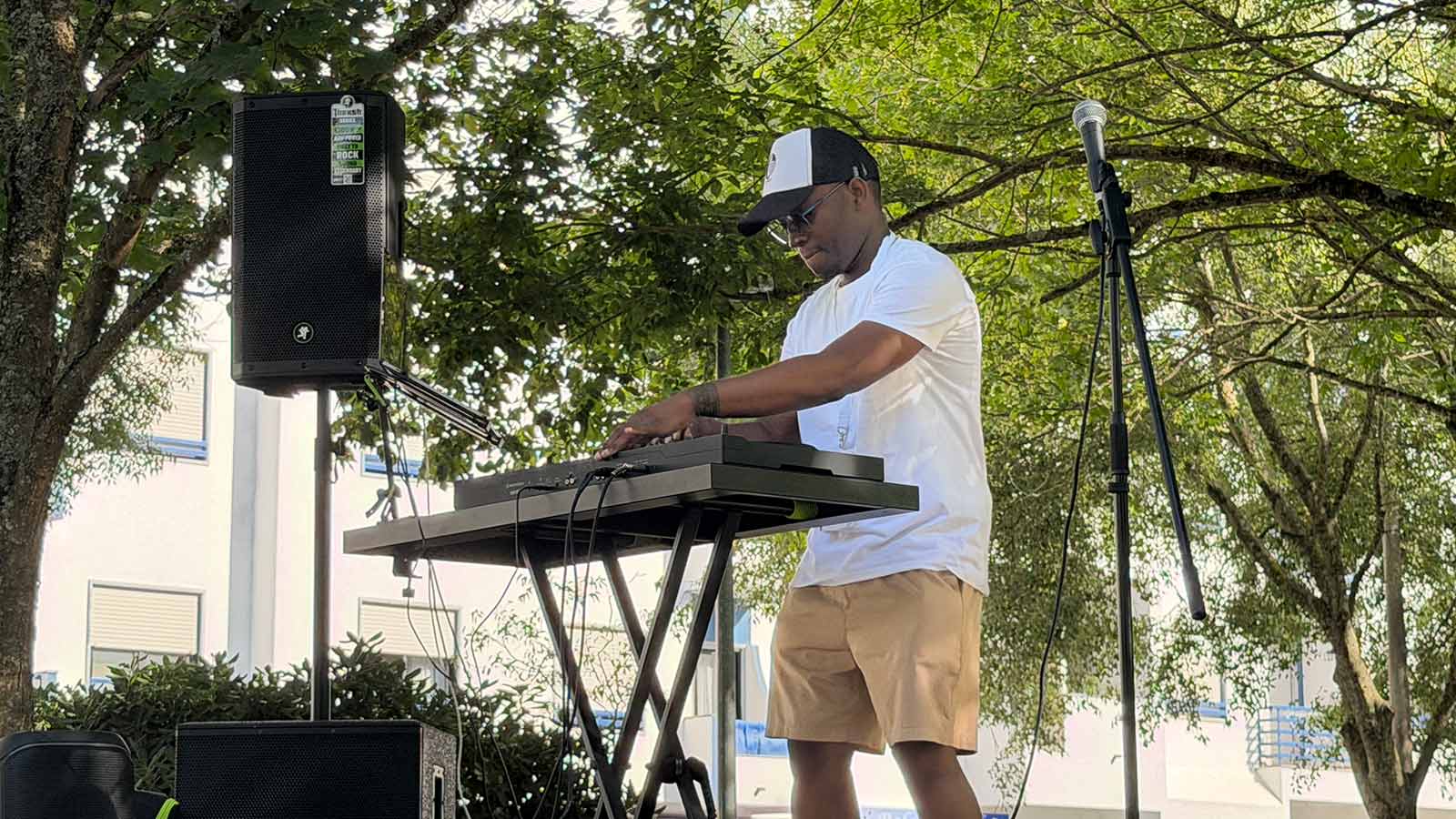
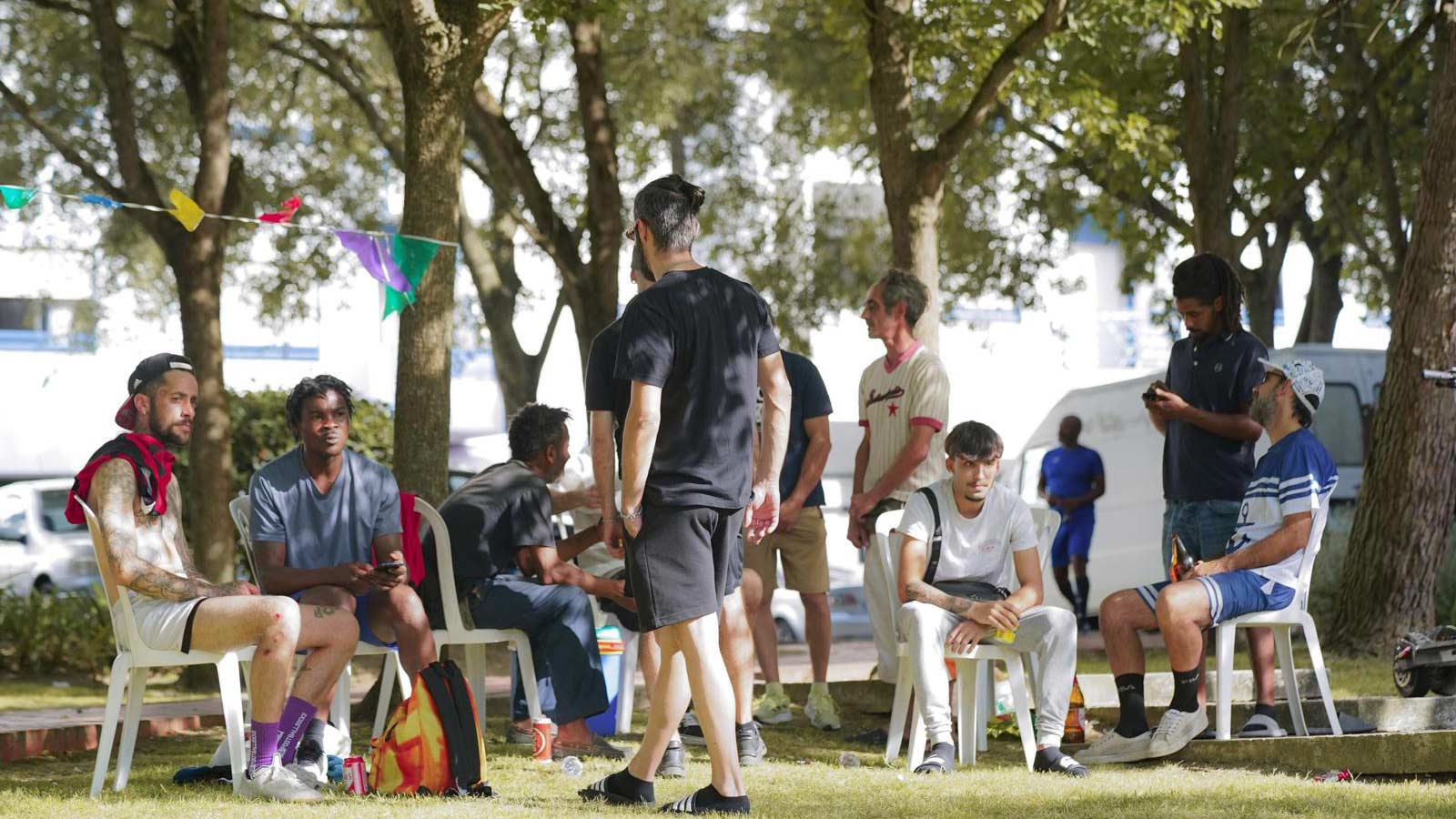
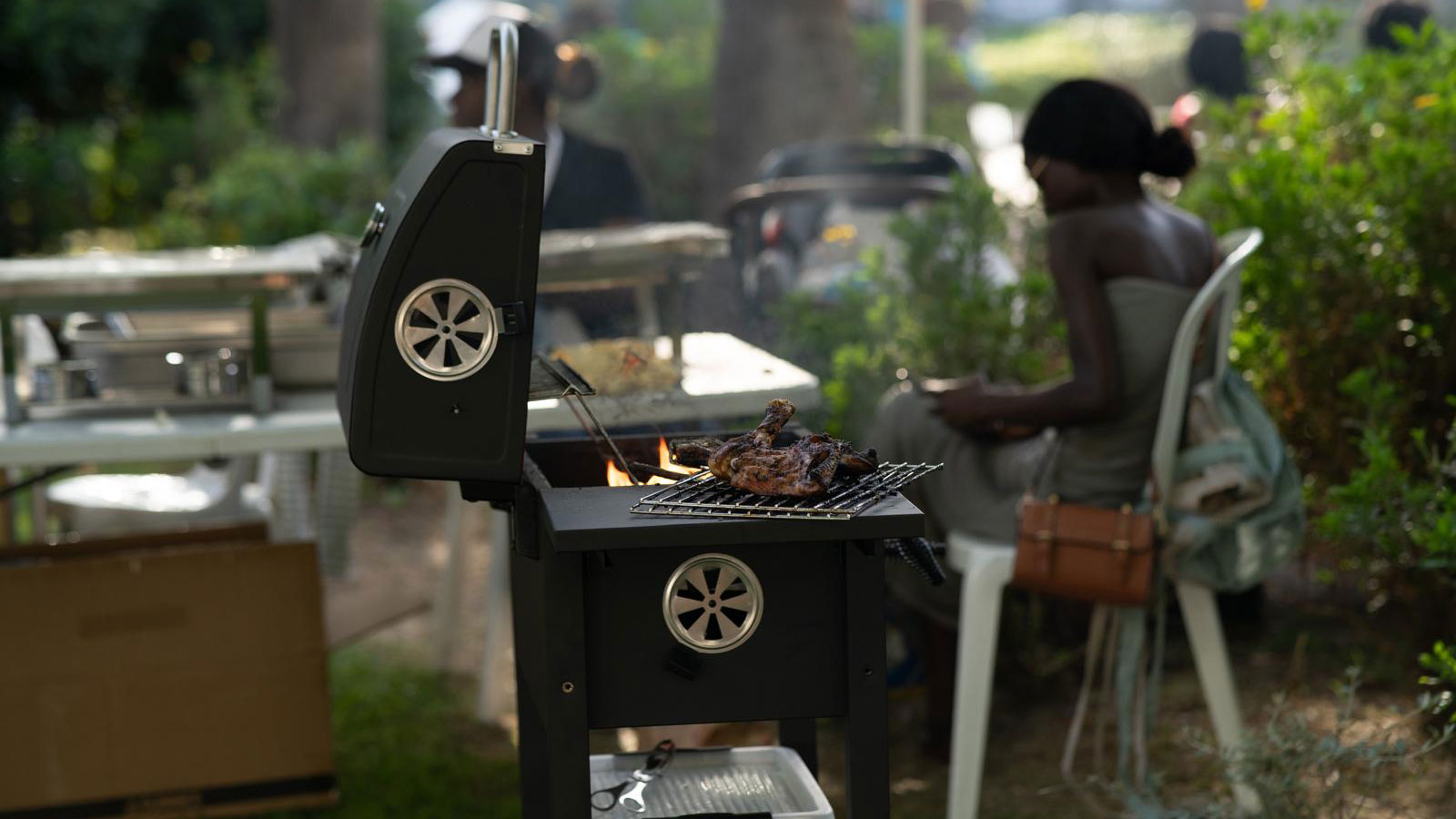
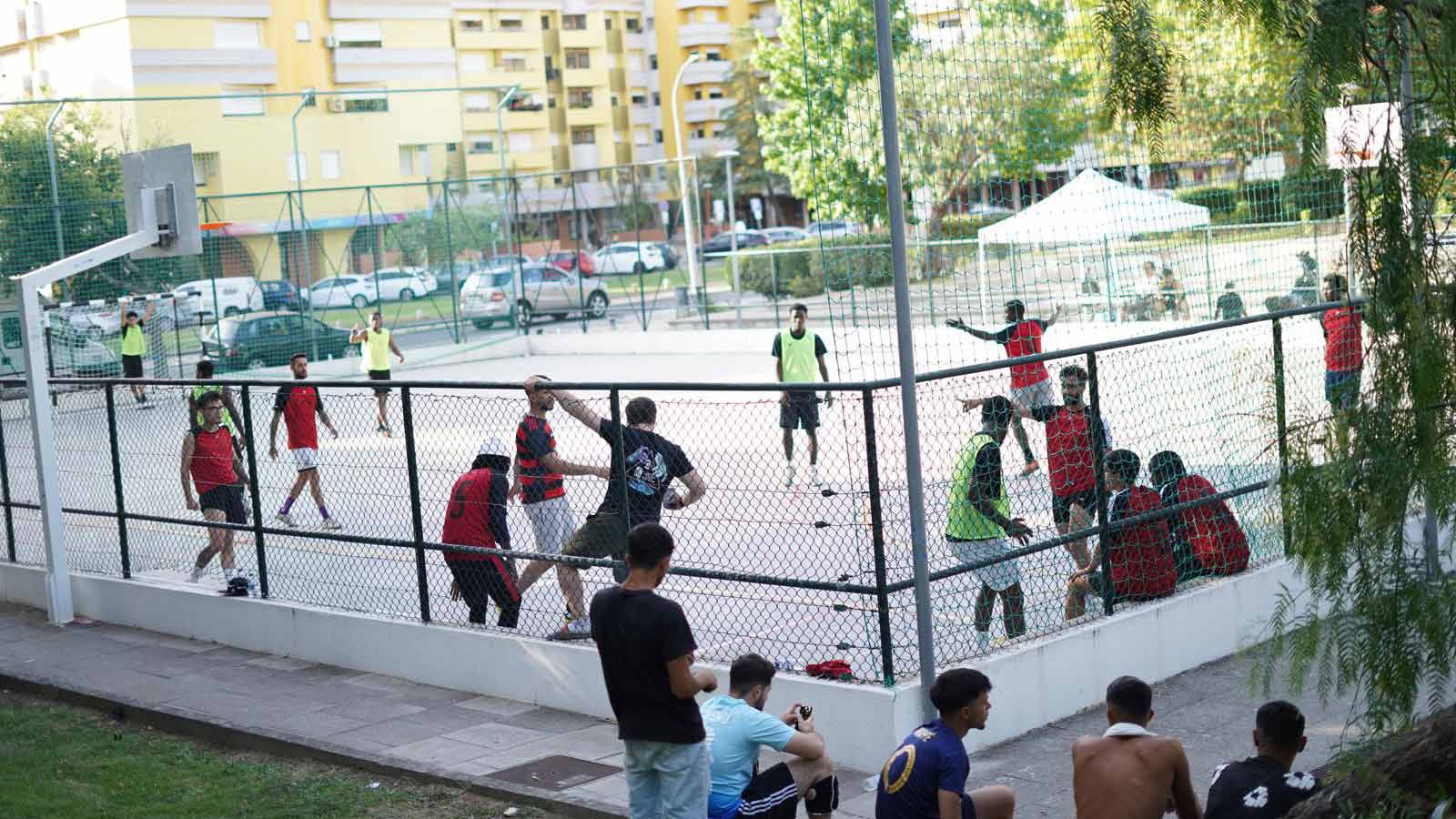
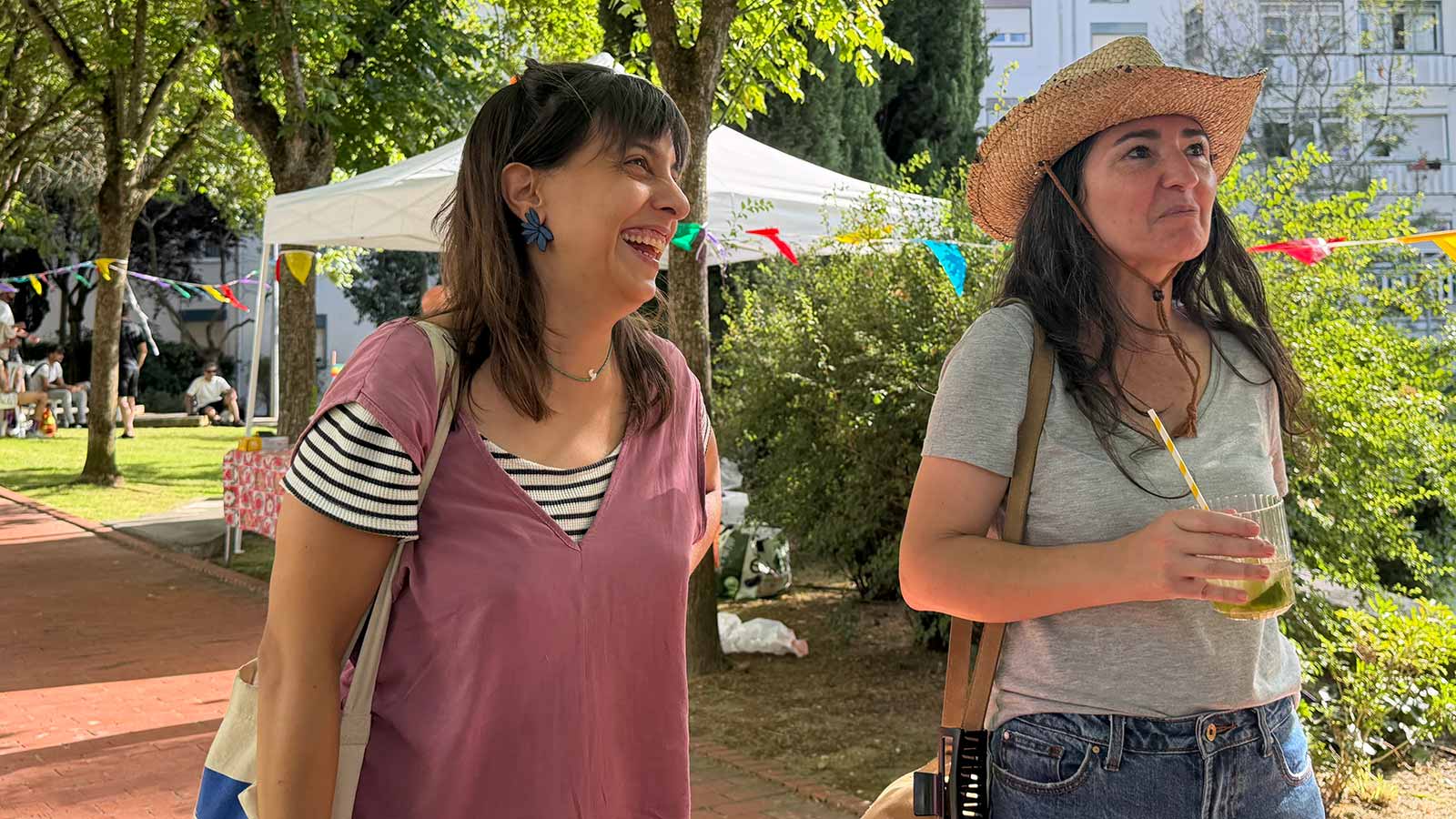
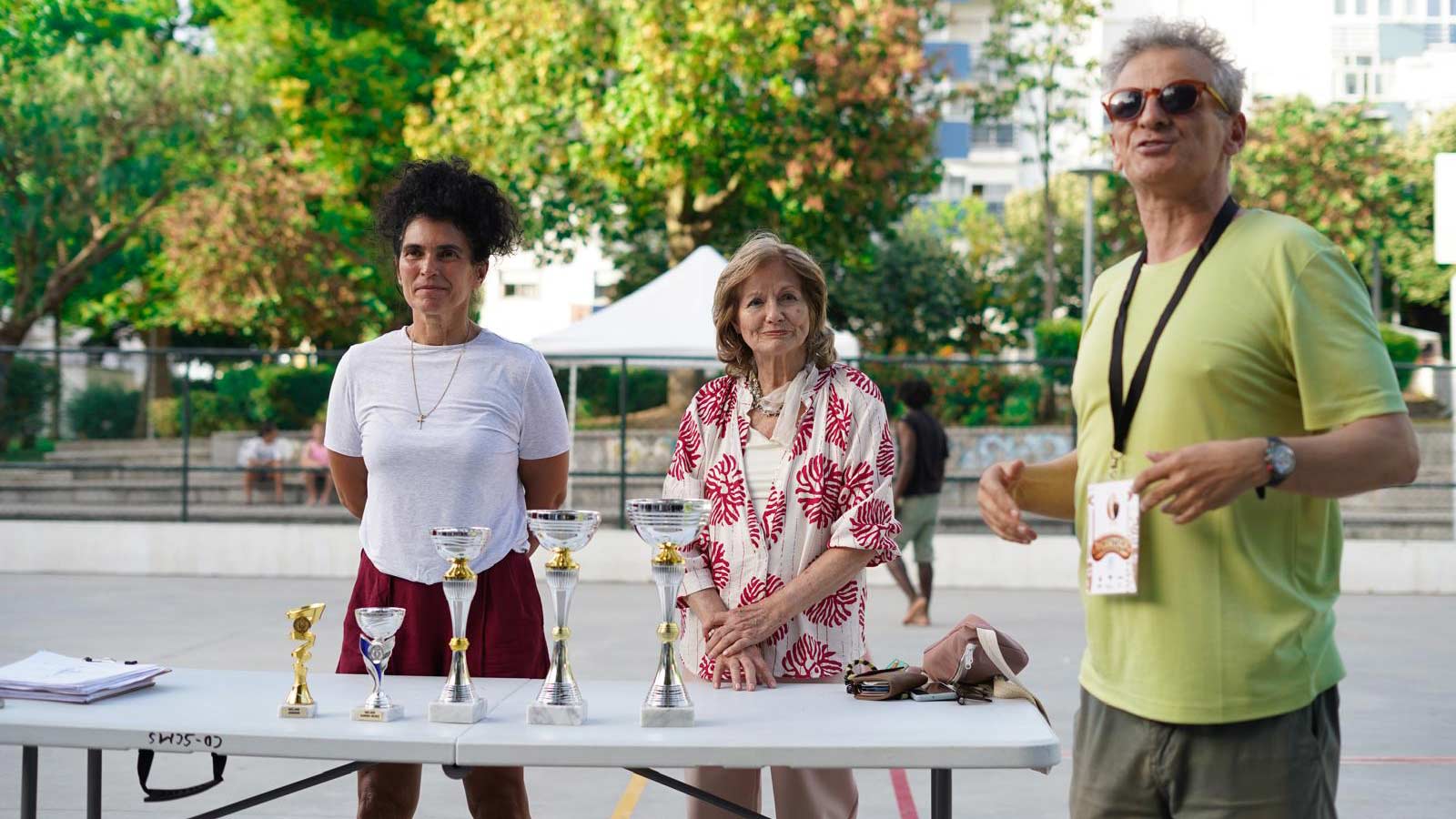
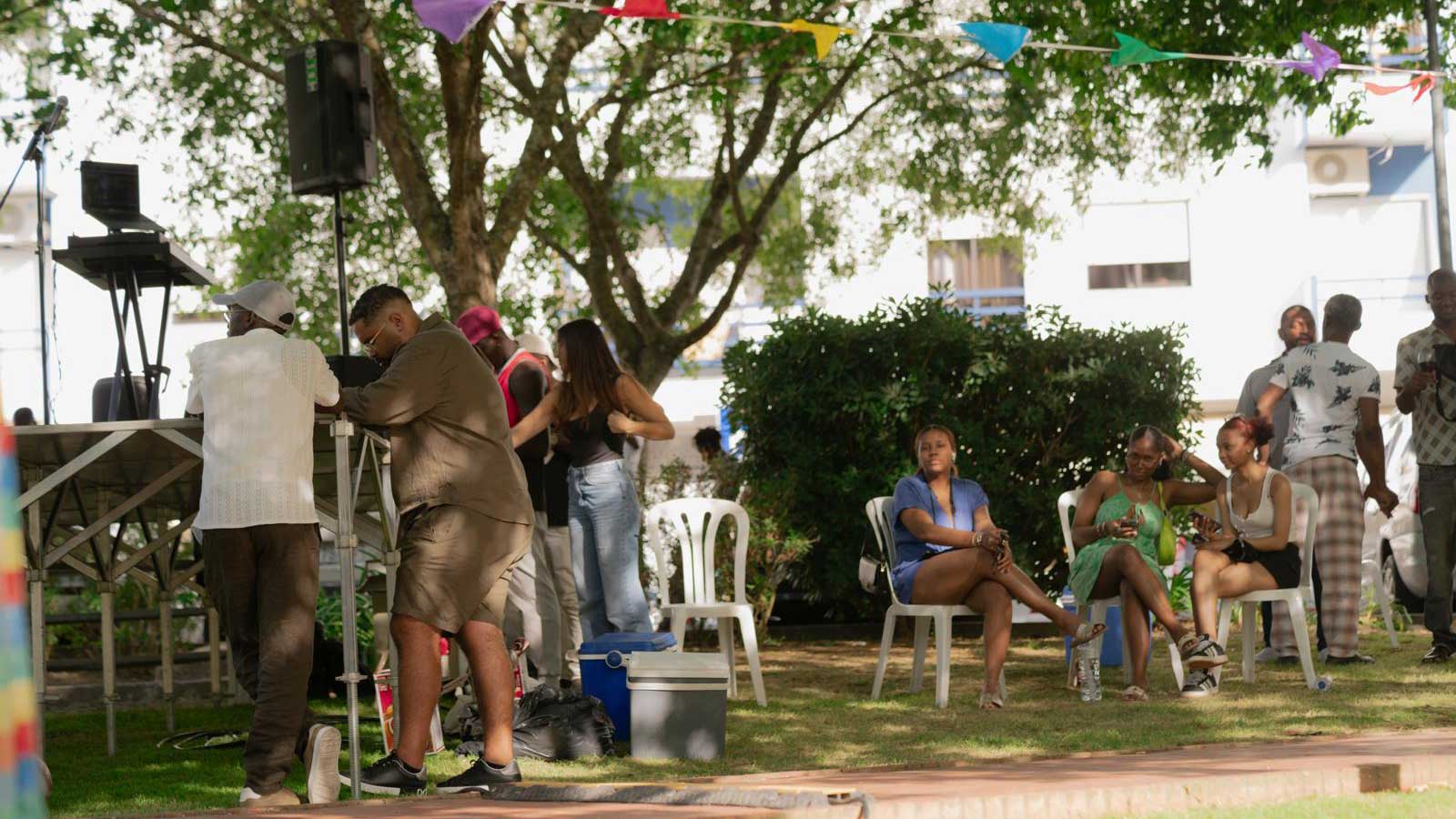
From Tomar, we head to Santarém that same afternoon. In São Domingos Garden, “AfroHouse” is in full swing, with an event that started in the morning and continues throughout the day: a futsal tournament, music, food, a dance workshop and a fair. Under the shade of the trees, groups of young people, families and neighbours gather. Children play, people arrive and stay, while others pass by and return later.
AfroHouse is a project led by Leandro and Antónia (aged 29 and 28), two Angolan immigrants who arrived in Santarém in 2024. “When we arrived in the São Domingos neighbourhood, we felt a strong presence of the African community, but at the same time we missed the energy we were used to in Angola. People were here, but they didn’t communicate. They didn’t even greet each other”, recalls Leandro. “We realised it was a lack of connection, not a lack of interest. We developed the project with the aim of bringing people together through food and music, which we see as tools for building connections.” Within this dynamic, Leandro, who is also a DJ, takes care of the music, while Antónia is responsible for the food.
What is happening in the garden today is the result of that journey, which began with an assessment of the neighbourhood and its needs. “We have a space here that is very underused as a place to bring activity to the neighbourhood, which already carries a reputation and a stereotype of being a neighbourhood of troublemakers. So, to break the ice and bring people from outside in, we first needed to organise ourselves from within, to tell people: come along, come in, you’re welcome here.”
But AfroHouse is about more than the events that take place in São Domingos Garden. Behind the scenes, the project has helped bring together associations, informal groups and residents who rarely worked with one another. Over the past few months, Leandro and Antónia have taken part in initiatives organised by other local organisations, while also involving them in their own activities. “We go to their celebrations, they come to ours. This exchange has been very positive”, says Leandro.
At the June event, this work becomes visible: the Residents’ Association helps with the organisation, youth groups support the setting up of the infrastructure, and several initiatives share the same space. “It wouldn’t have worked if we were on our own”, he acknowledges. “More and more people are interested in getting involved.”
In between enthusiasm and exhaustion
Getting to this point was not easy. Organising an event of this scale proved far more demanding than Leandro had imagined, and the challenge is visible in his exhaustion. “It’s like a child who is under their parents’ care at home: they don’t know what the outside world is like, but they want to go out into the street. That’s exactly what happened”, he says, laughing. “Before, there was always someone there to help: Cláudia, Maria, the mediators. Now we’re the ones who have to sort everything out.”
The list of tasks seems endless: from booking artists and setting up the sound to organising food and handling the most basic logistics. “I mean, I’m talking about everything — even the napkins”, he adds. This invisible side of the work — the production, the bureaucracy, the responsibility — is one of the most significant lessons of the process.
Beyond the project itself, everyday life continues to demand its share. Antónia, who works alongside Leandro on the project, divides her time between work, organising activities, running the household and caring for her young daughter, Winner. Finding that balance is one of the biggest challenges, but it is also part of the growth that JAM! seeks to encourage. Leandro and Antónia joined JAM! a week after settling in Santarém, and can no longer imagine their lives without the project. “It has been a constant presence in our lives, always, always, always. I don’t know if the initiative will continue, but it would be very important for young people like us to have the opportunity we had.”
A safety net for taking risks
If there is one element that Tomar and Santarém have in common, it is the importance of the network that supports these projects. JAM! does more than fund ideas: it provides training, mentoring, ongoing support and a constant presence, even if it is often invisible. Throughout the process — from the initial idea to making it happen — learning takes place together. “They decide what they want to do, but we are always here, following their progress, asking questions, reminding them of things, helping them organise”, explains Cláudia Hortêncio.
This presence helps create a safe space for experimentation. “They feel they have a safety net, and that gives them the confidence to take risks,” adds Maria Cordeiro. “The aim was for them to truly see themselves as independent and capable.”
The Calouste Gulbenkian Foundation also plays a central role in this process, as both funder and partner. Throughout the project, there was close involvement in the development of the activities, participation in key moments and support in adjusting the course whenever needed. “There was always room to rethink things. It wasn’t just about funding; it was a genuine partnership”, emphasises Cláudia.
For the young people involved, this institutional recognition also carries an important symbolic value. As Maria Cordeiro explains, presenting a project to an organisation such as the Calouste Gulbenkian Foundation “is a very powerful thing”: it validates the work and reinforces the responsibility of the young people involved.
Towards a more democratic access to culture
Over the three years, JAM! has established itself as a space where culture is built from within, shaped by the aspirations, needs and experiences of those who live in these communities. The initiative is inspired by the international model The Agency, which was created in 2013 based on the methodology developed by Brazilian theatre director and activist Marcus Faustini in the favelas of Rio de Janeiro, before later being adapted in the UK.
For Maria Cordeiro, cultural democracy is not just about making culture accessible to more people, but also about ensuring that more people have the opportunity to create it. “Cultural production needs to involve more people than those who have traditionally shaped it”, she argues. This requires investment in skills development, support and mediation, so that young people who never imagined leading a project can gain confidence and try it for themselves.
This process is not always linear. There are steps forward and setbacks, moments of enthusiasm and others of doubt. But there are also clear signs of transformation — in the relationships that are built, the bridges that are created, and the way these young people begin to take their place within their communities. “We help give them the initial push. After that, they move forward on their own”, summarises Cláudia.
In Tomar, this can be seen in the enthusiasm of a 16-year-old girl determined to help change perceptions in her community. In Santarém, it can be seen in the way a garden has become a meeting place. There are five other projects underway in 2026, involving different young people, approaches and communities, with the aim of continuing and expanding the initiative in the future.
JAM! is built between improvisation and structure, between support and autonomy, between dreams and hard work. More than projects, it creates lasting processes — and, above all, brings to life a central idea: that culture gains power when it is shaped by the hands and voices of the people themselves, in their communities and in the contexts where they live. That is where real change begins.
You may also like
No results were found for your criteria.