
The International Exhibition of Decorative Arts and Modern Industries
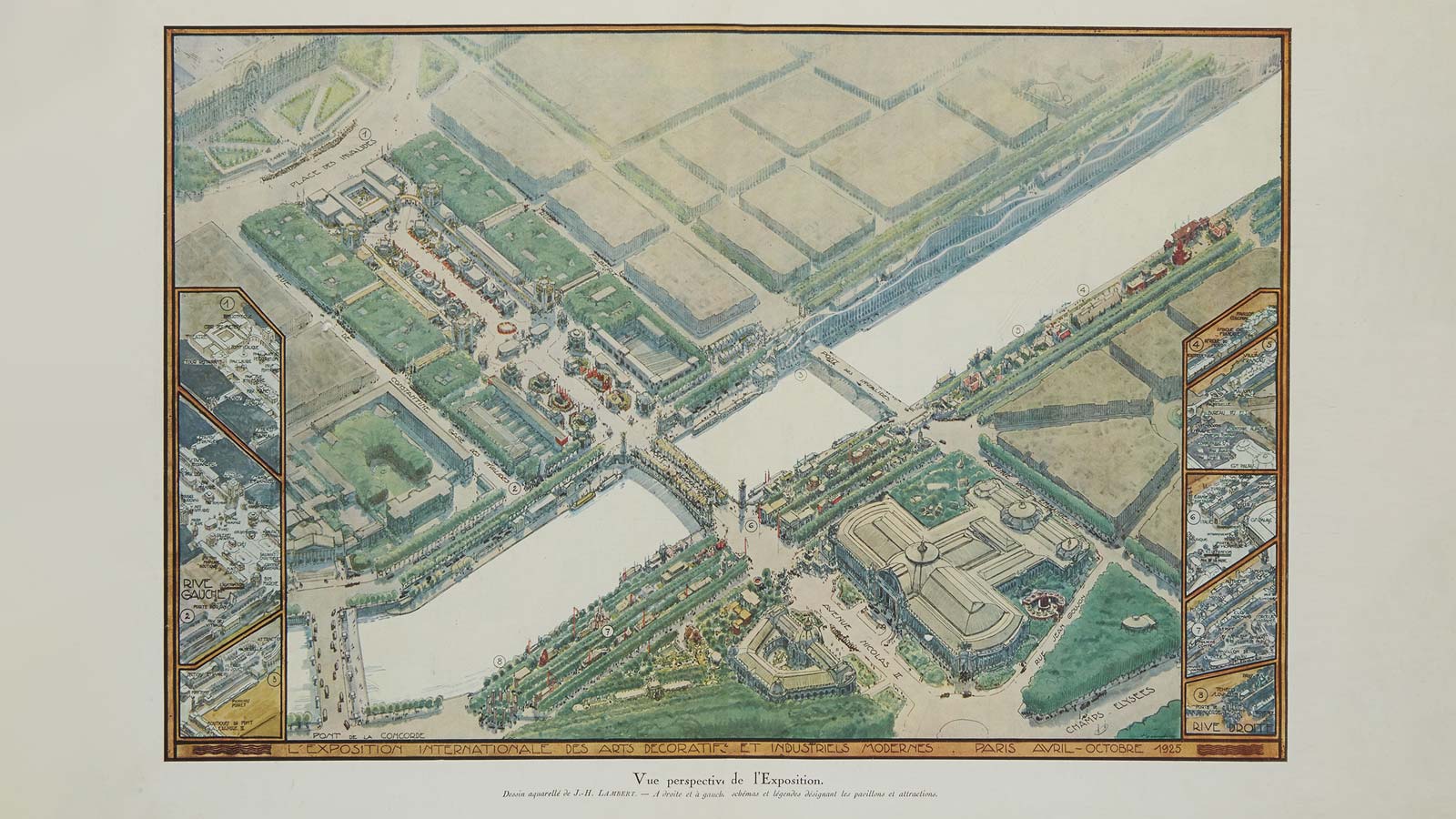
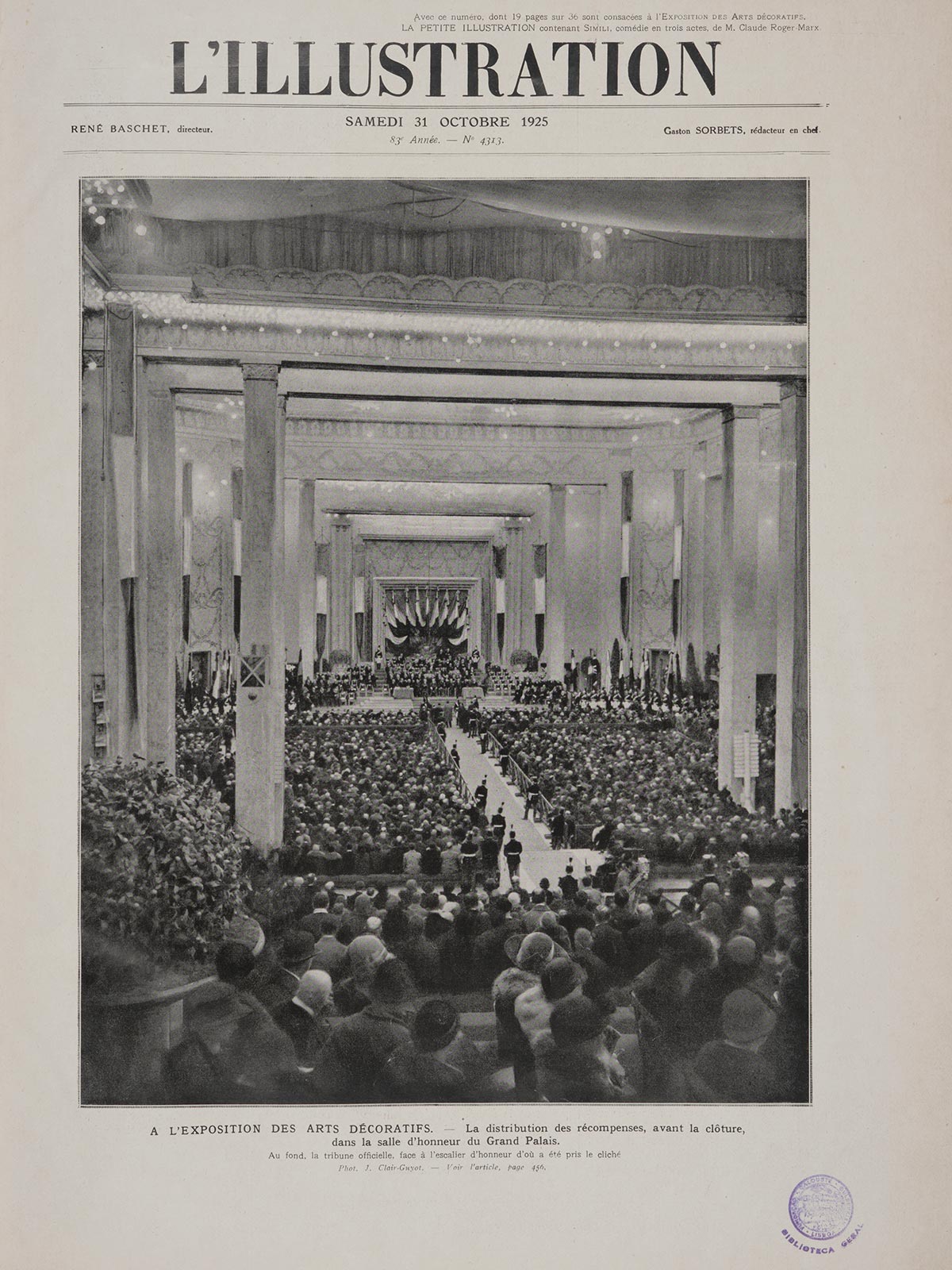
“The success exceeded all predictions”, wrote the journal L’illustration at the closure of the Exposition Internationale des Arts Décoratifs et Industries Modernes in Paris on October 25, 1925.
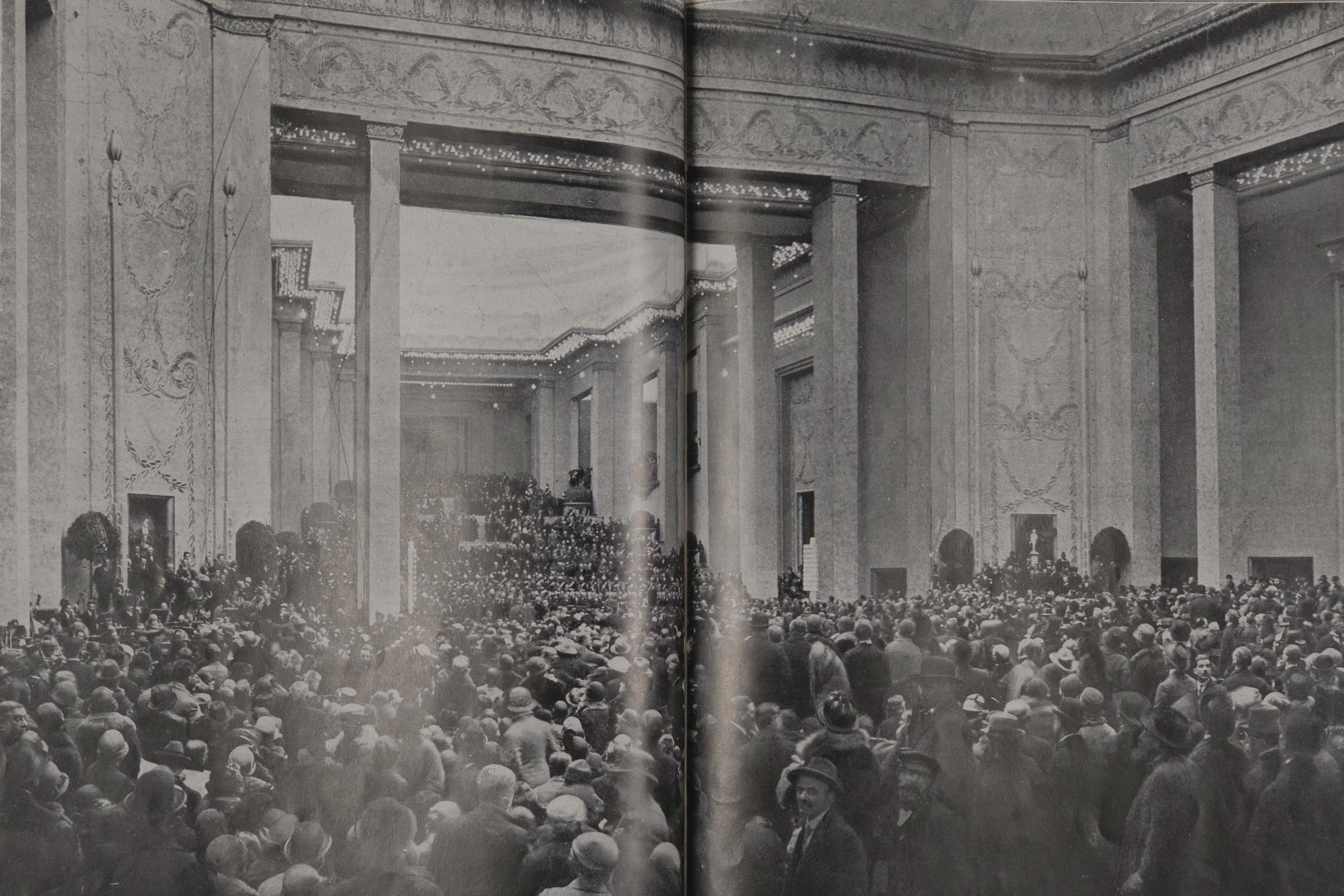
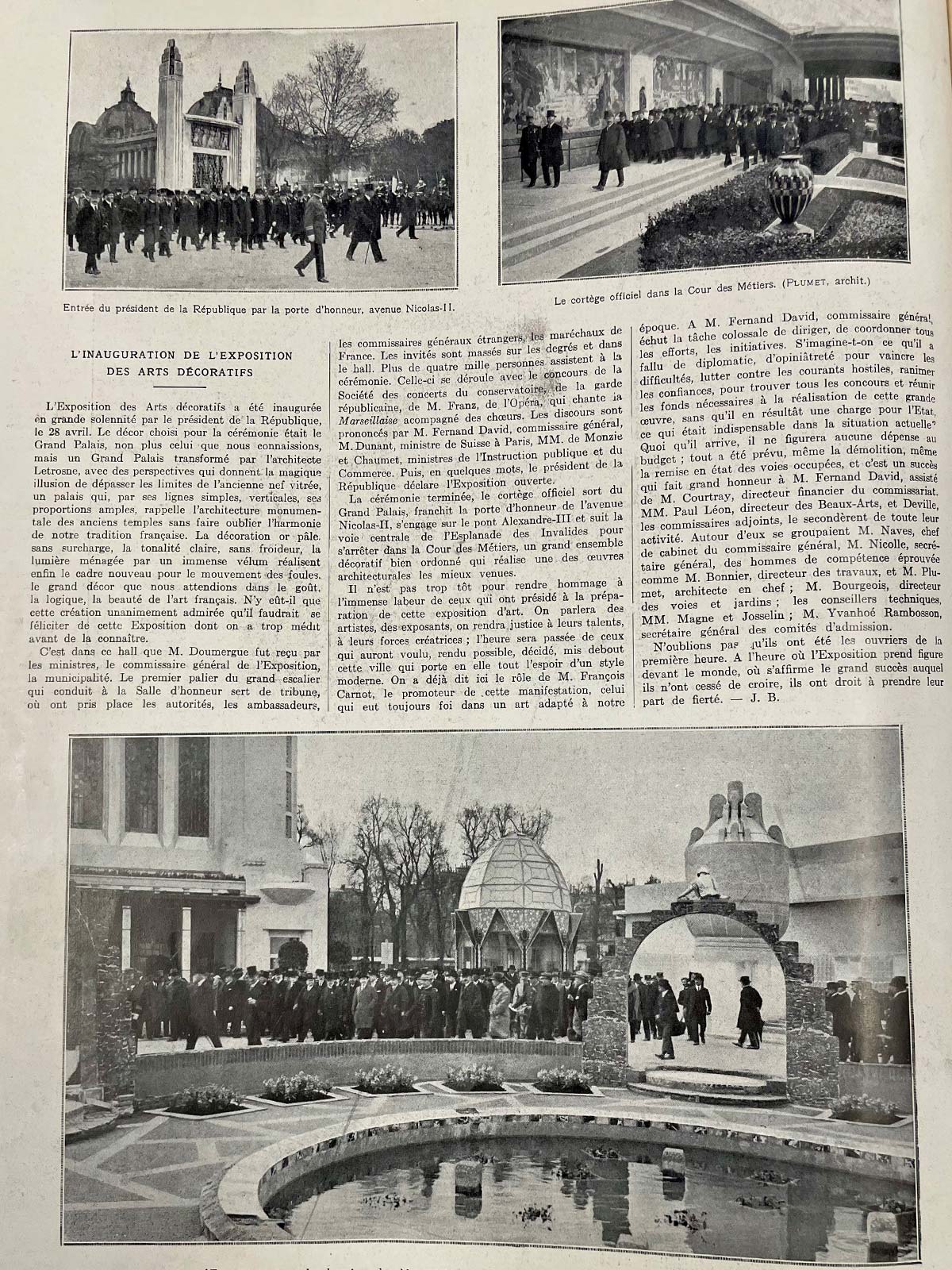
Solemnly inaugurated on April 28, over the course of those six months it received around 15,000 visitors, although international participation was limited to 21 countries, the majority from the European continent, with Portugal being absent.
From Asia came Turkey, China and Japan, while Africa was represented by French colonies and countries under French mandate. The major absentees were Germany – which was invited at the last minute but didn’t accept – and the United States, which declined the invitation because it recognized that it couldn’t satisfy the demanding aesthetic requirements imposed by the organization. And although Portugal was not officially represented, Portuguese art was present through the sculptor Ernesto Canto da Maia (1890-1981) – who lived in Paris for these years – who was awarded the Diploma of Honor for his sculptures Pomona and Flora, which adorned the gardens of the Pavilion of the City of Paris.
“This exhibition must be an experiment, a trial, a demonstration. (...) The 1925 exhibition will not be a fair: it should manifest a conception, an aesthetic: it is a thesis exhibition”.
— Guillaume Janneau in La revue de l’art ancien et moderne (1924)
The wish to organize a new international exhibition in Paris dedicated to the decorative arts began to germinate at the beginning of the century, after the first Exposition internationale d’art décoratif was held in Turin in 1902, but the outbreak of the First World War (1914-1918) made it impossible.
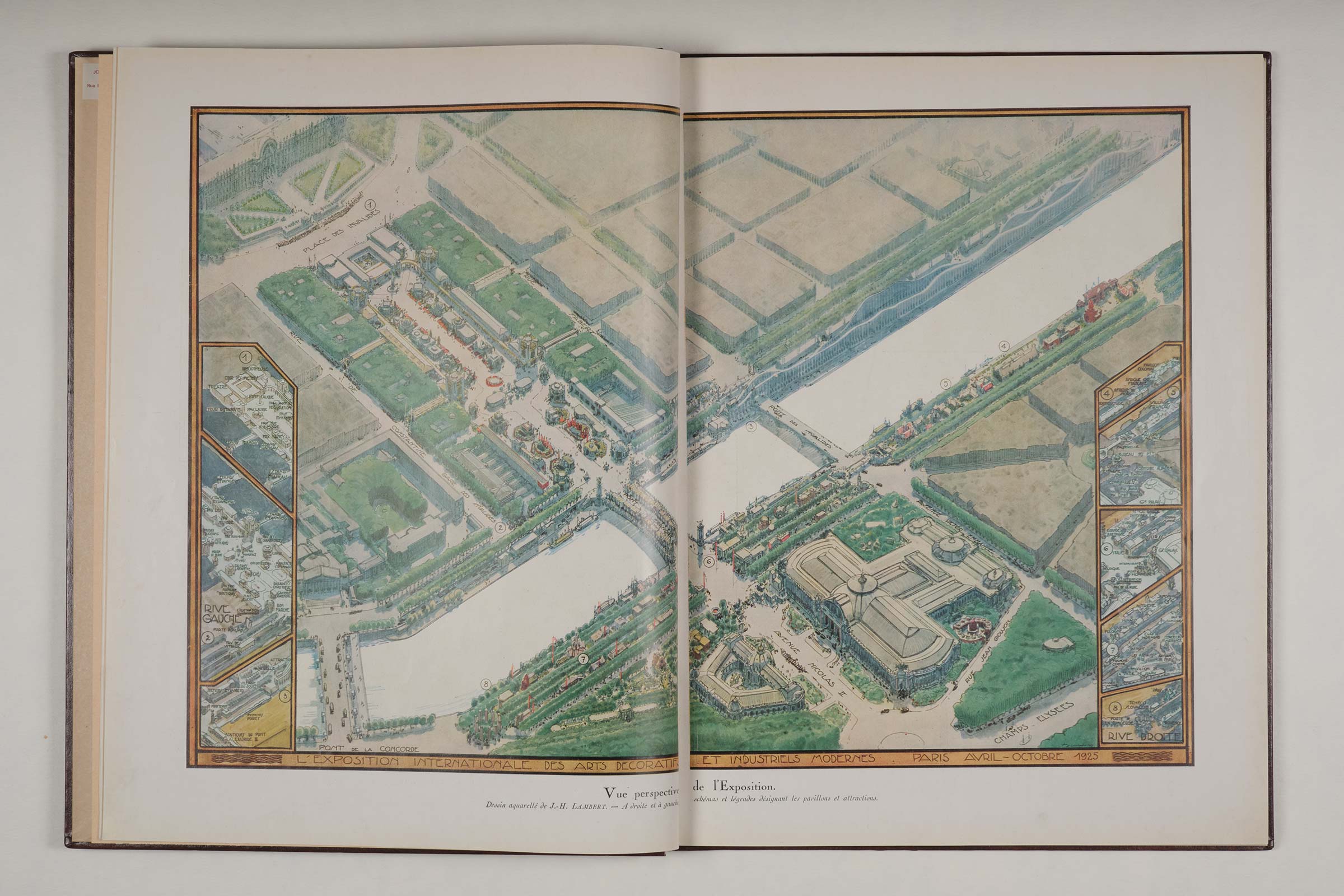
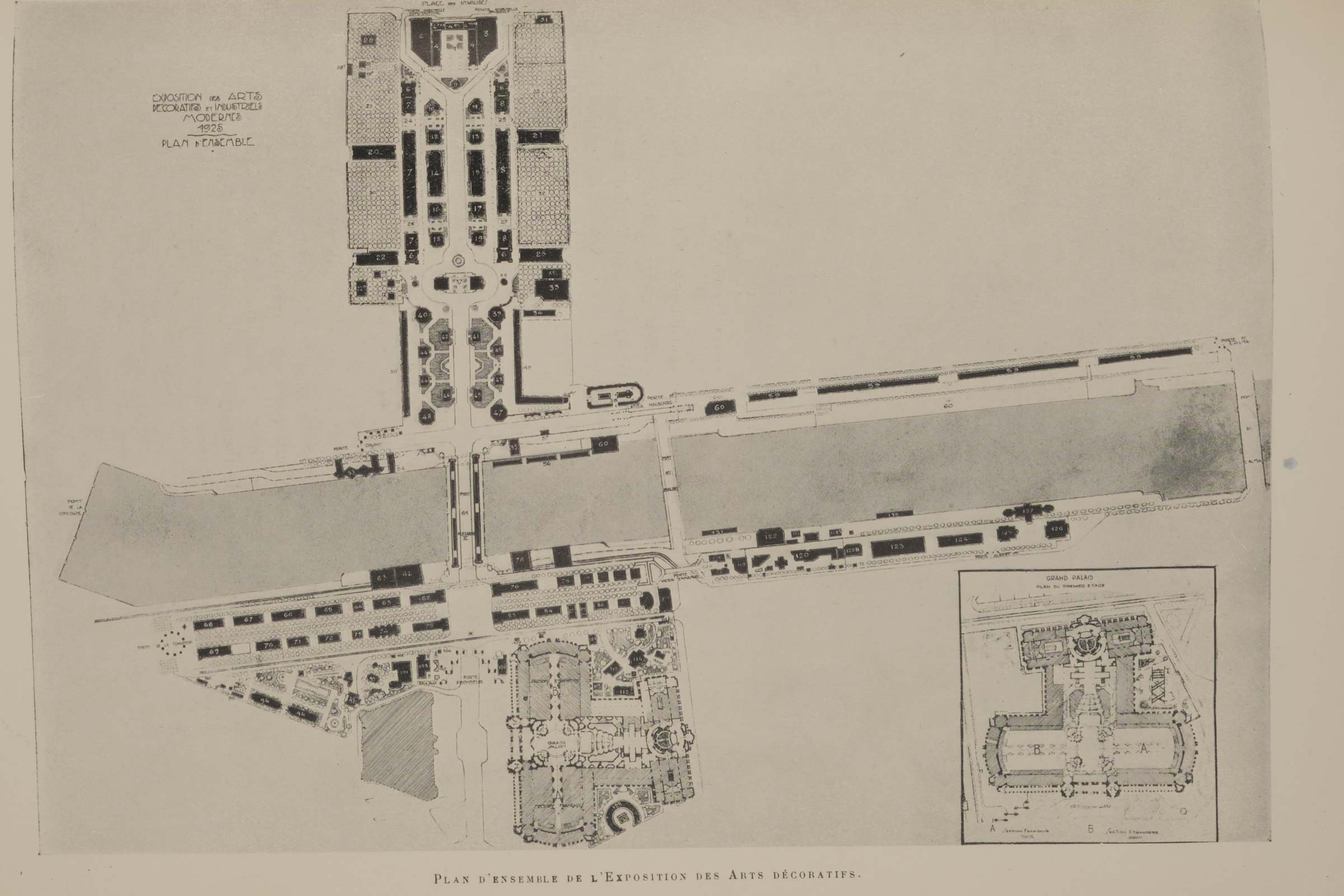
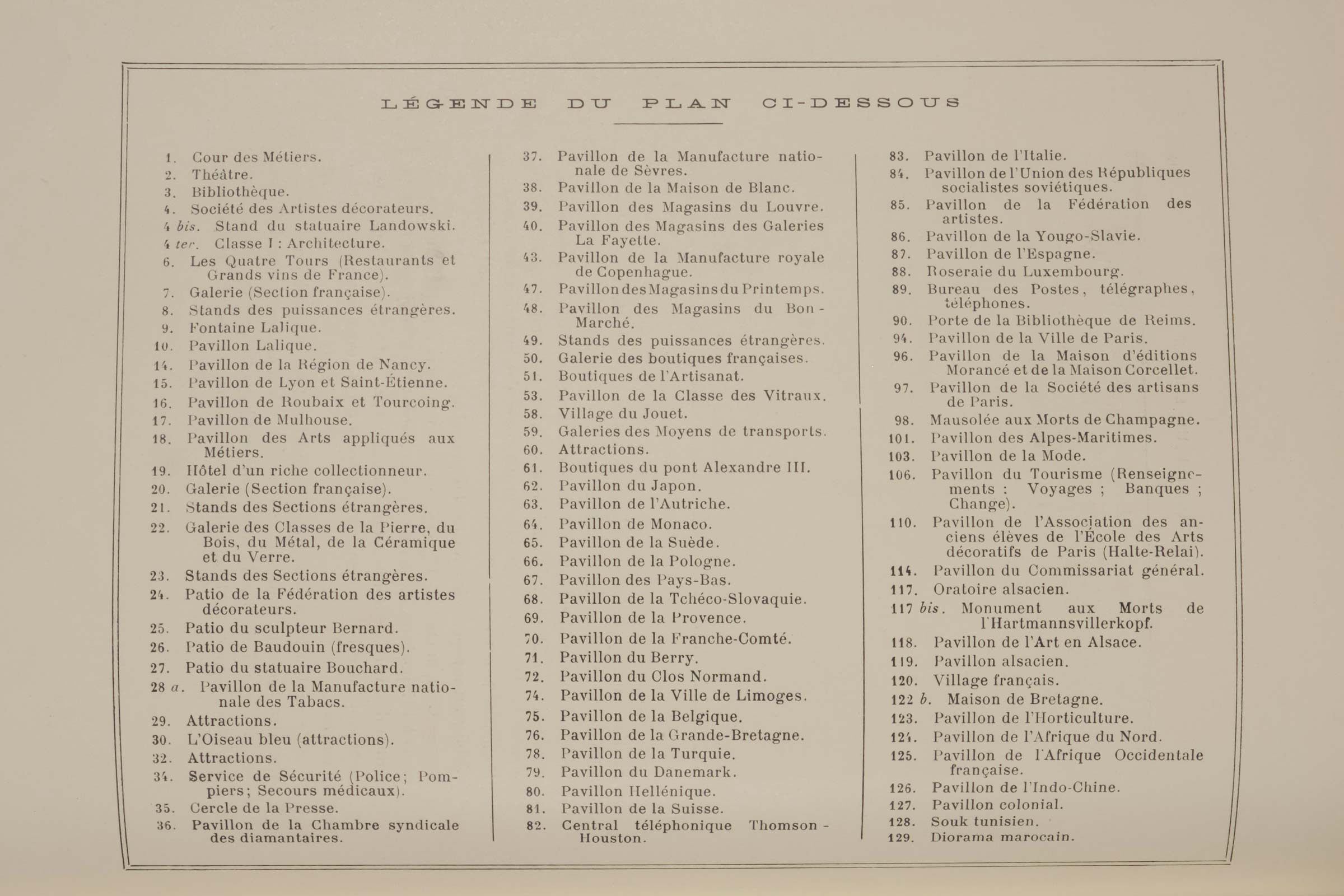
Under the direction of the architect Charles Plumet (1861-1928), on an area of around 60 hectares, which included the esplanade of the Invalides, the Alexandre III bridge, the Place de la Concorde, the Alma bridge and the Grand Palais, an ephemeral city was erected that exalted the luxury and refinement of modern life, in whose pavilions visitors were delighted by a panoply of products and objects whose designs and materials appealed to the senses.
The desire behind France’s intentions, as conveyed by Paul Léon (1874-1962), art historian and curator of the exhibition, was to erase the still vivid memories of the destruction and austerity experienced throughout Europe in the previous decade and to show the world that France was still the main reference in the fields of architecture, decorative arts and fashion.
“The national part of our Exhibition (…) will prove that there is already a modern French style. And that this style is perfectly distinctive. (…) It's rationalist, it's sober, it's clear, it has a horror of convention”.
— André Dezarrois in La revue de l’art ancien et moderne (1925)
One of the French magazines of the time to devote the most exhaustive coverage to the International Exhibition of Decorative Arts and Modern Industries was La revue de l’art ancien et moderne (Paris, 1897-1937), which, from May 1924 – “Ce que sera l’Exposition de 1925” (Tome XLV, janvier-mai 1924, page 316) until its final closing – published several articles profusely illustrated with photographs and drawings.
In the words of André Dezarrois (1889-1979), art historian and director of the magazine, this exhibition was “a beginning, a starting point” and would mark “a date in modern art”. It was, he said, “a manifestation of creation and originality in the field of decorative art and the art of industry, whether of luxury or democratic simplicity” (Tome XLVII, janvier-mai 1925, page 219).
However, this desired alliance ended up falling far short of what was intended. What was on offer in the French pavilions for visitors to admire were, above all, the products of luxury consumption, only available to the purses of a very restricted international elite.
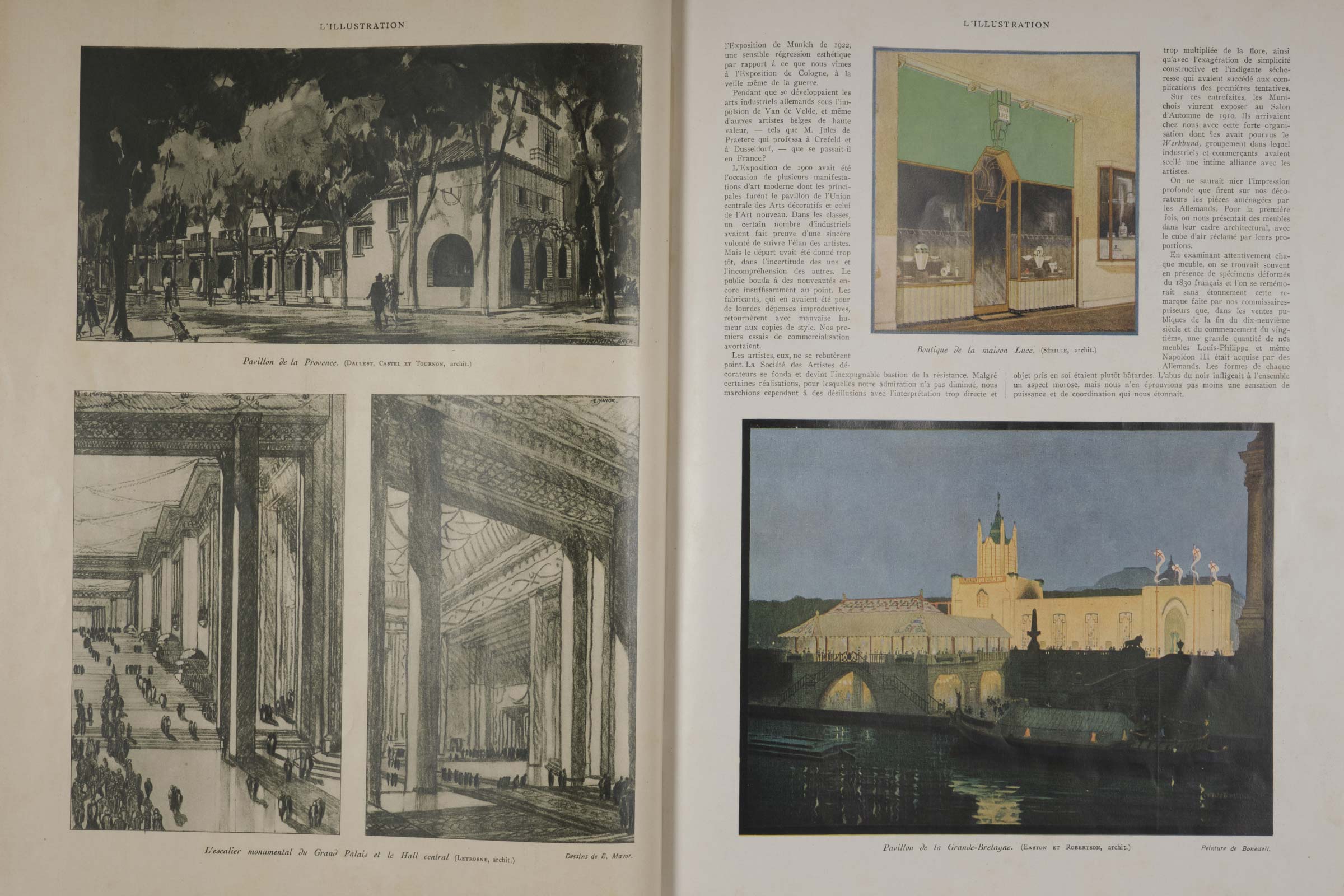
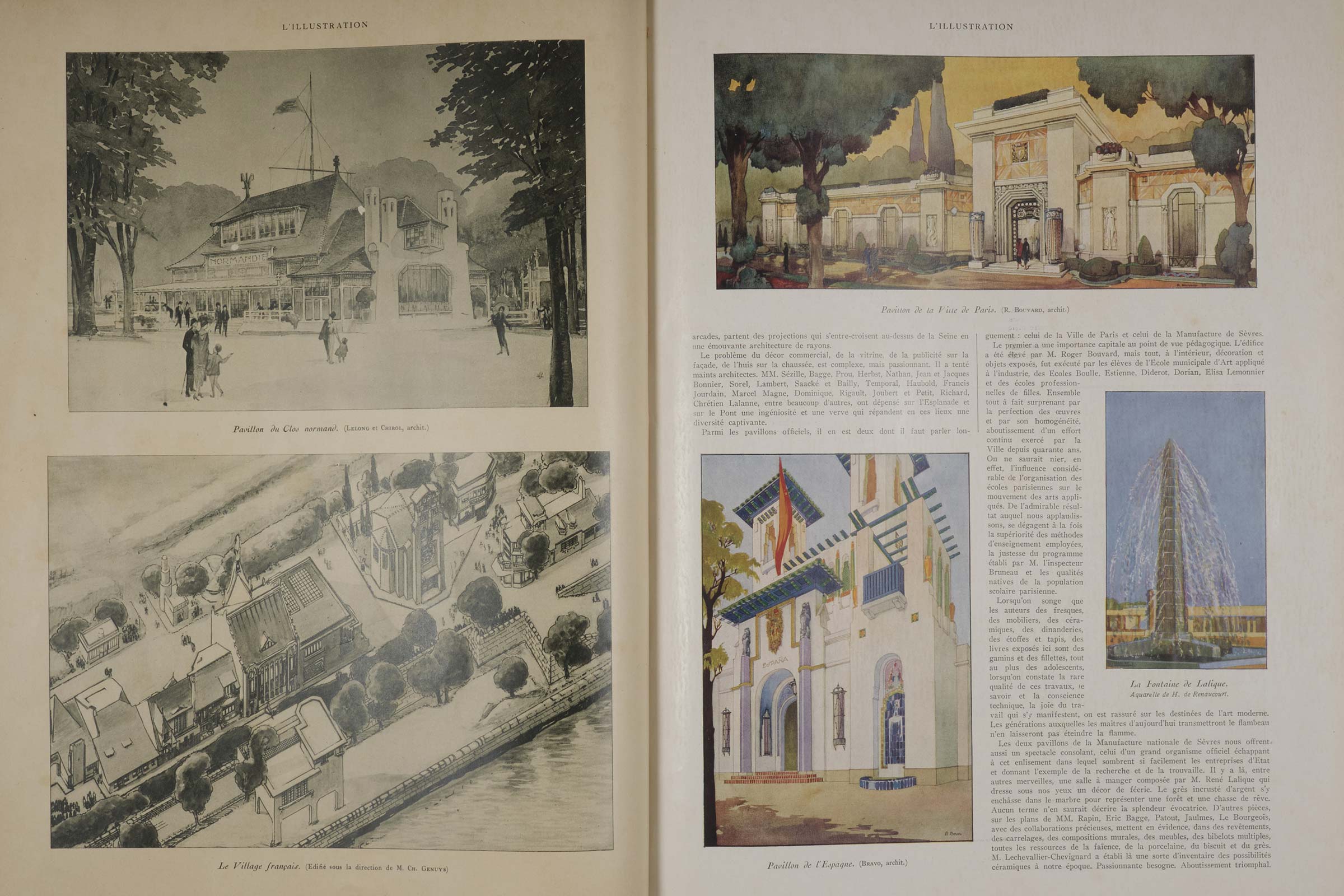
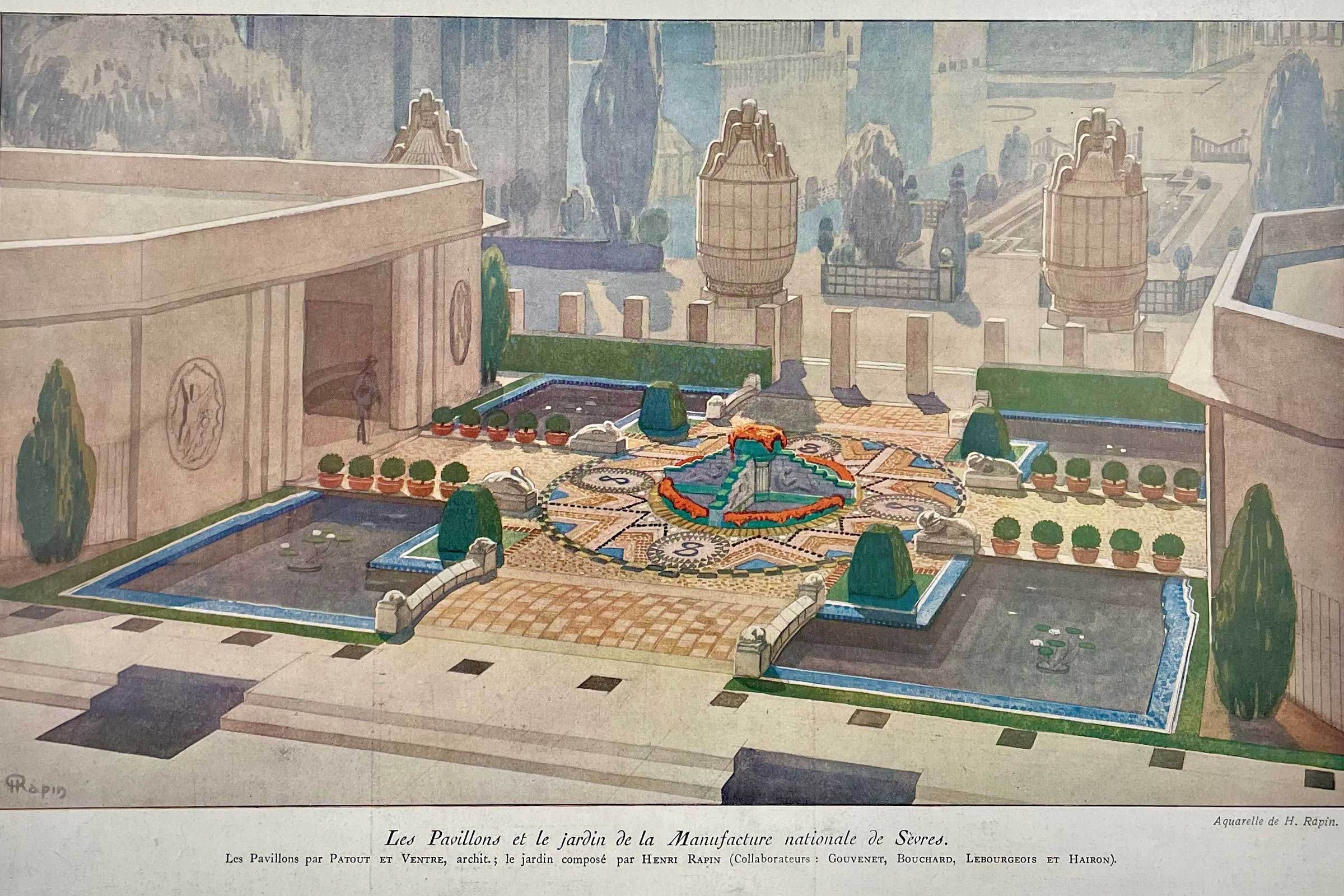
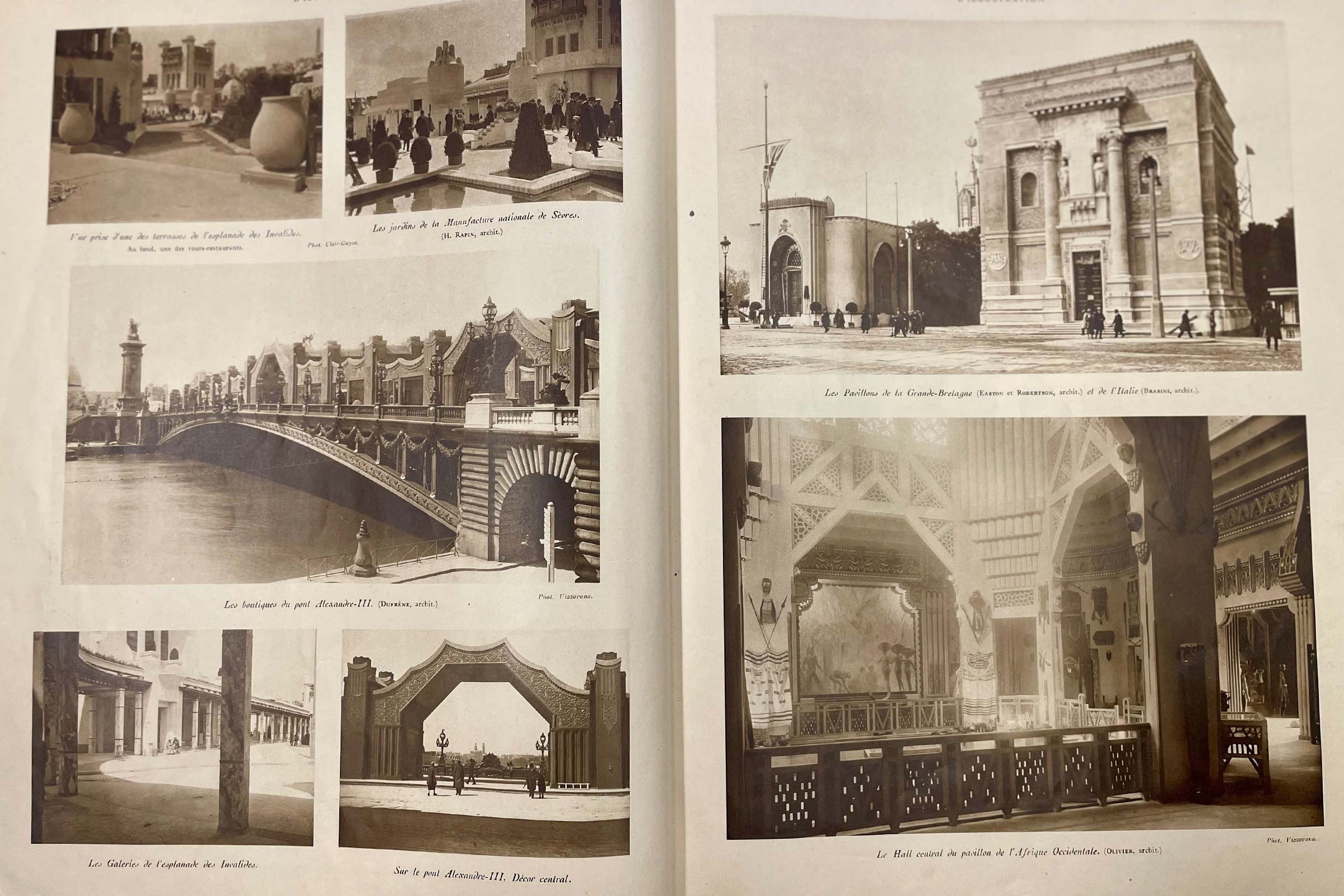
As the organizing country, France was represented with pavilions from various regions, along with pavilions sponsored by Paris department stores such as Galeries Lafayette, Le Bon Marché and Le Printemps, which displayed their products in exquisite settings.
There was also the Hôtel du Collectionneur Pavilion, the Musée d’Art Contemporain Pavilion and the Une Ambassade Française de la Société des Artistes décorateurs Pavilion.
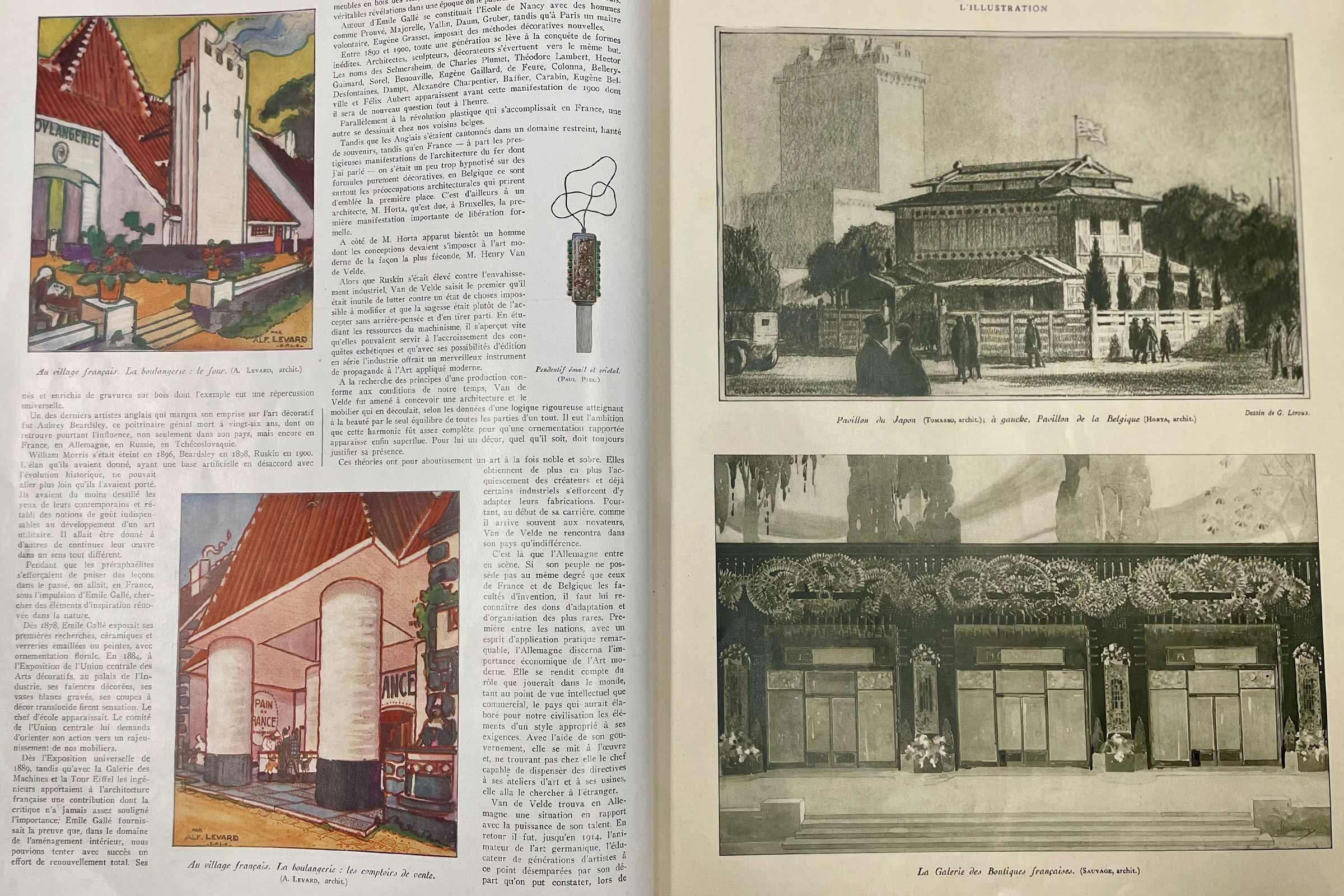
Outside the Hôtel du Collectionneur, with interiors and furniture created by Émile-Jacques Ruhlmann (1879-1933) – the most famous designer and decorator of the Art Deco period – was the sculpture group entitled The Spring or Homage to Jean Goujon, by the French sculptor Alfred-Auguste Janniot (1889-1969), which Calouste Gulbenkian later acquired to decorate the gardens of Les Enclos, his estate in Deauville.
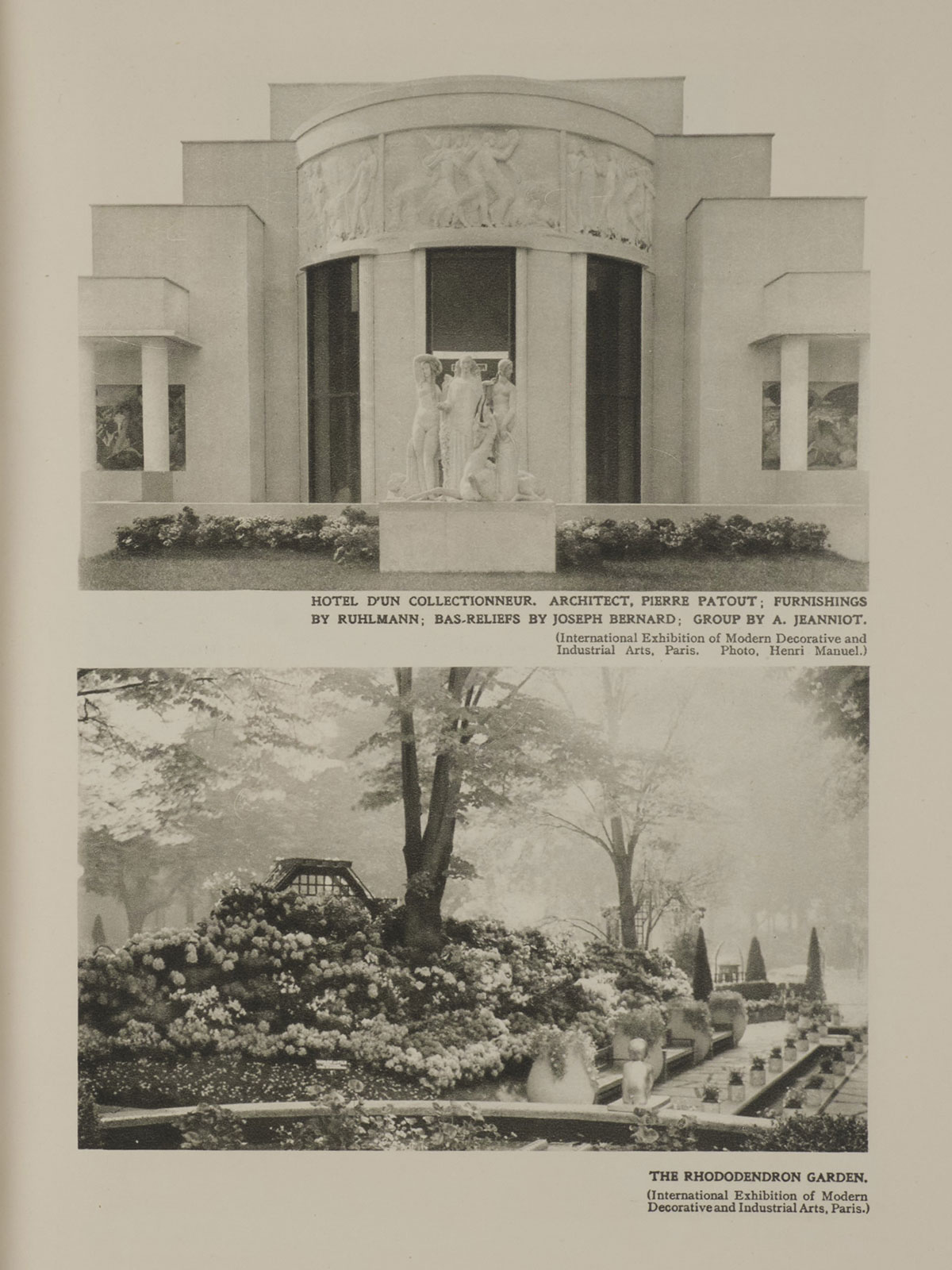
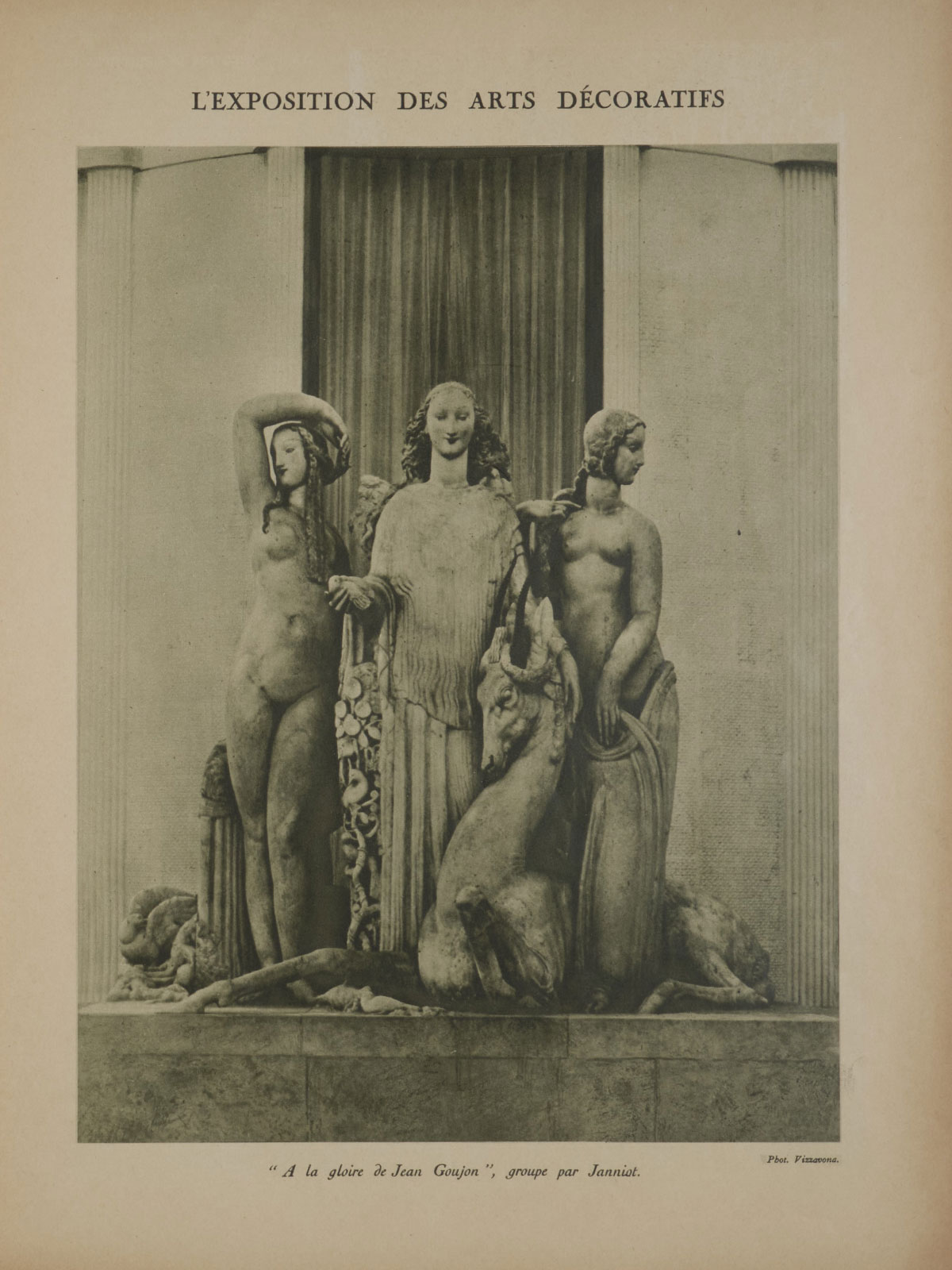
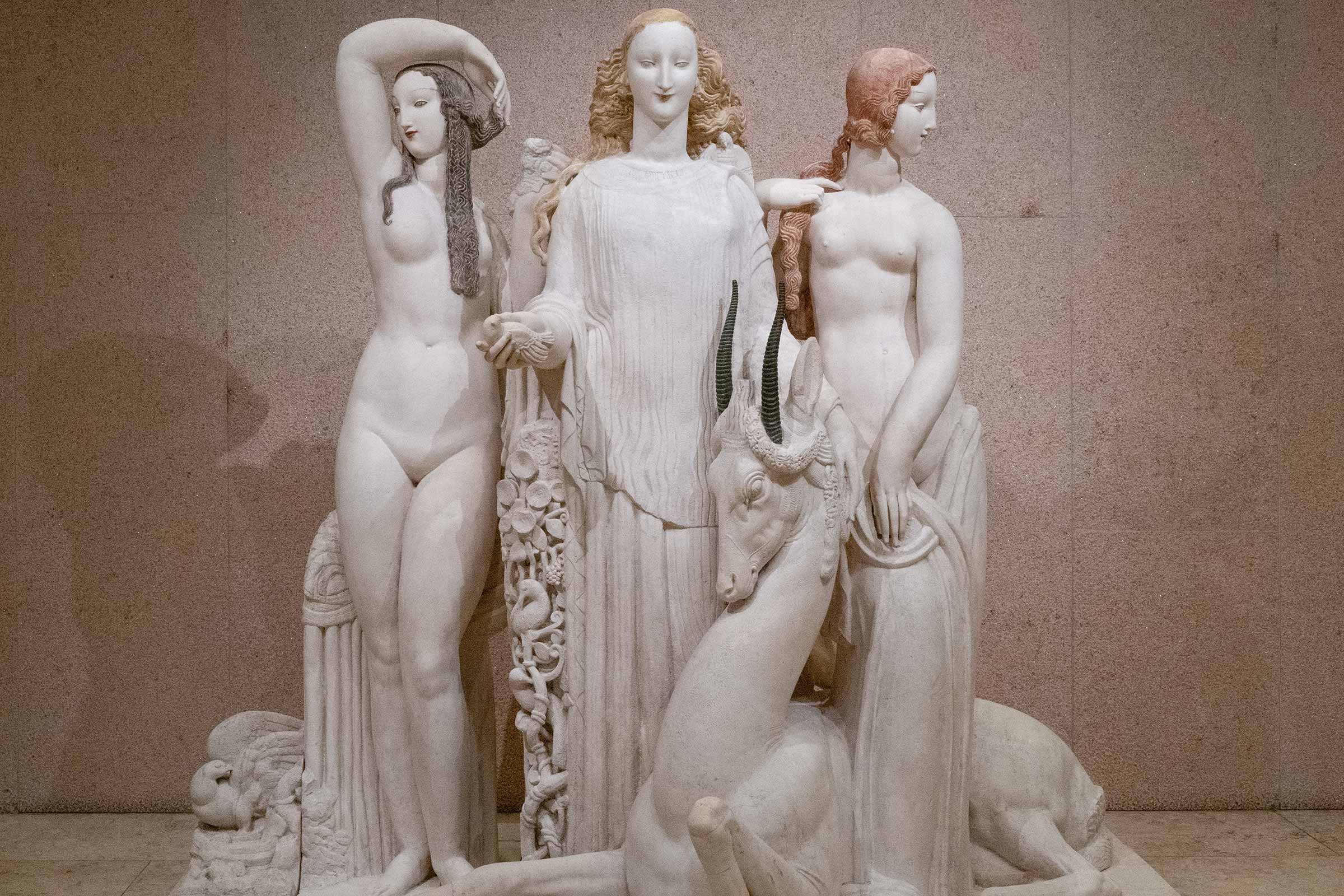
We can imagine that Calouste Gulbenkian probably visited the International Exhibition of Decorative Arts and Modern Industries. In 1925, Gulbenkian was still a distinguished and frequent guest at the Ritz, one of the most luxurious hotels in the city of light, since the edifice at 51 Avenue d’Iéna, in the chic “faubourg de l’Étoile” district, which he had bought in 1922 and which had previously been owned by the French banker and art collector Rodolphe Kann (1845-1905), was still under construction.
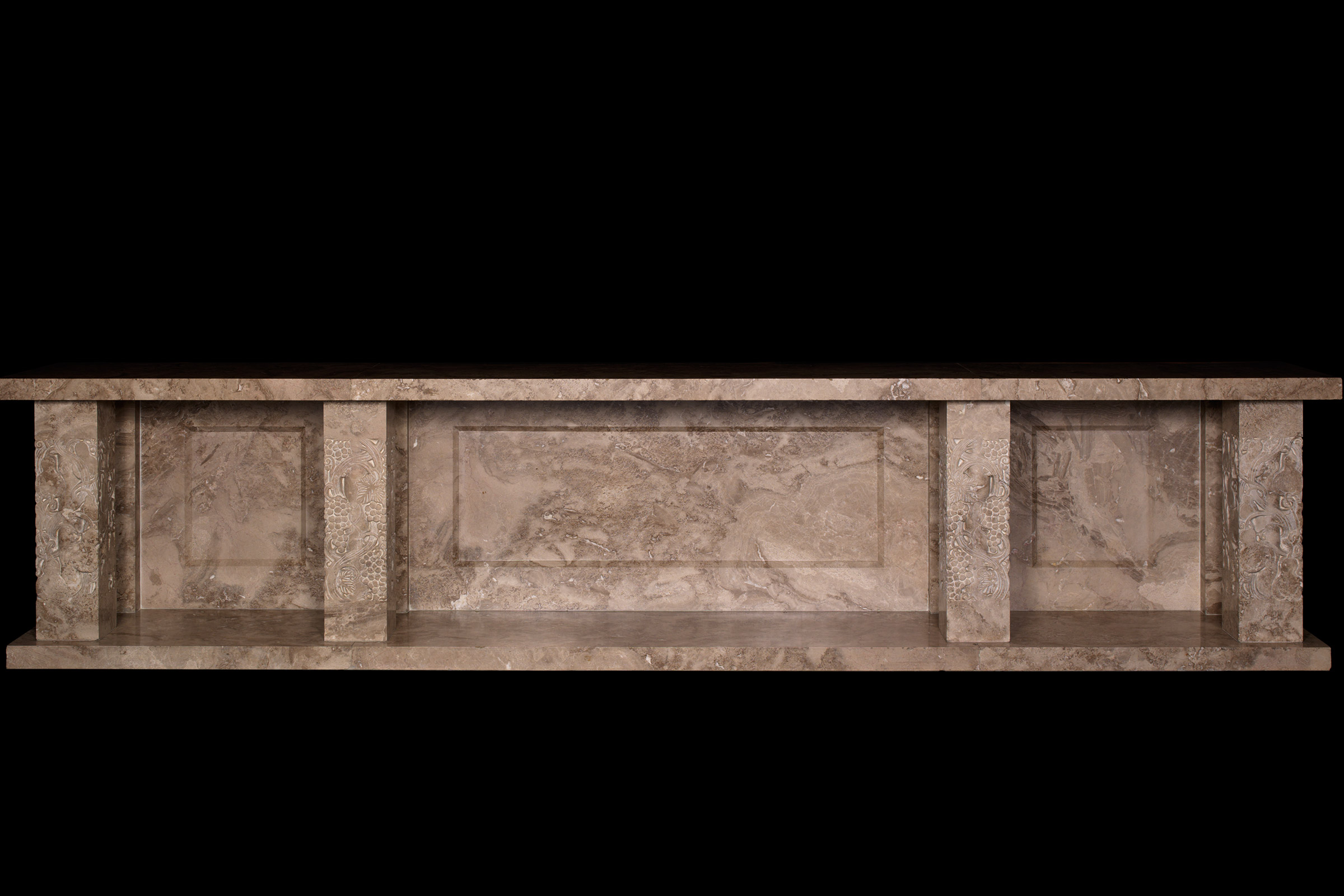
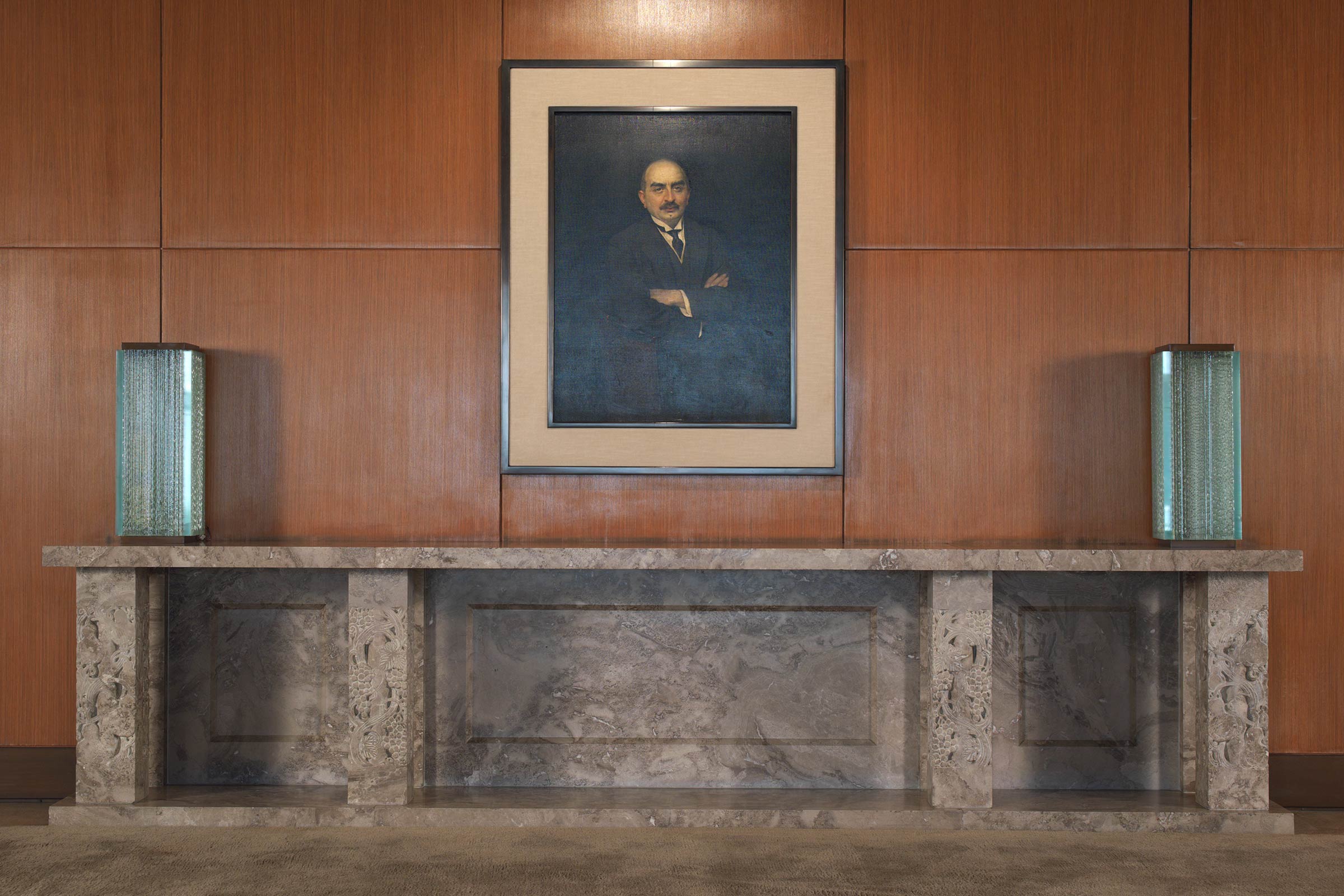
In addition to Janniot’s sculpture, Calouste Gulbenkian bought other pieces for his art collection that were at the Exhibition, such as the marble console with vine and grape leaf motifs by his “very dear friend” René Lalique (1860-1945), presented in the Pavilion of the Sévres Manufactory, now in the Calouste Gulbenkian Foundation’s hall of honour.
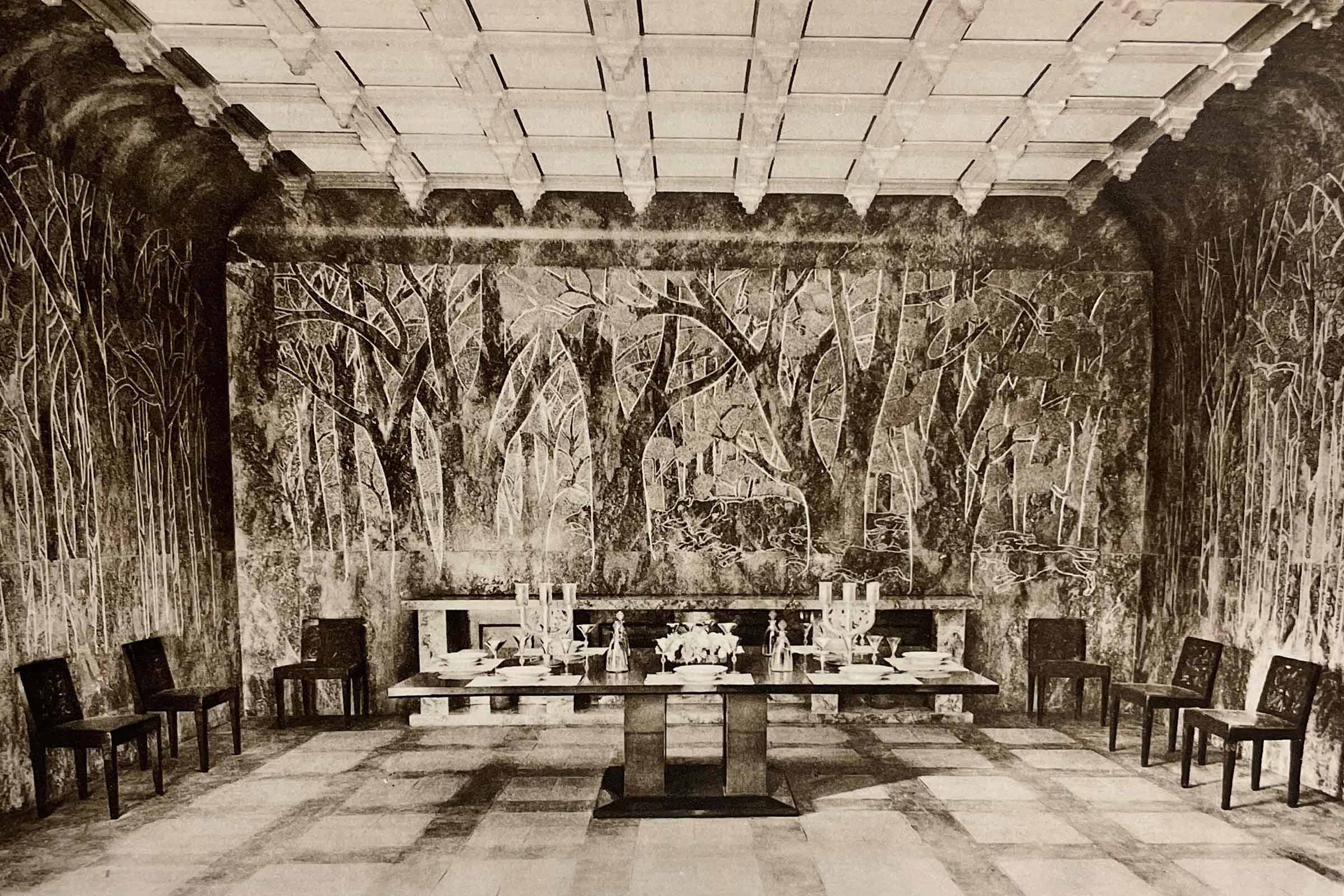
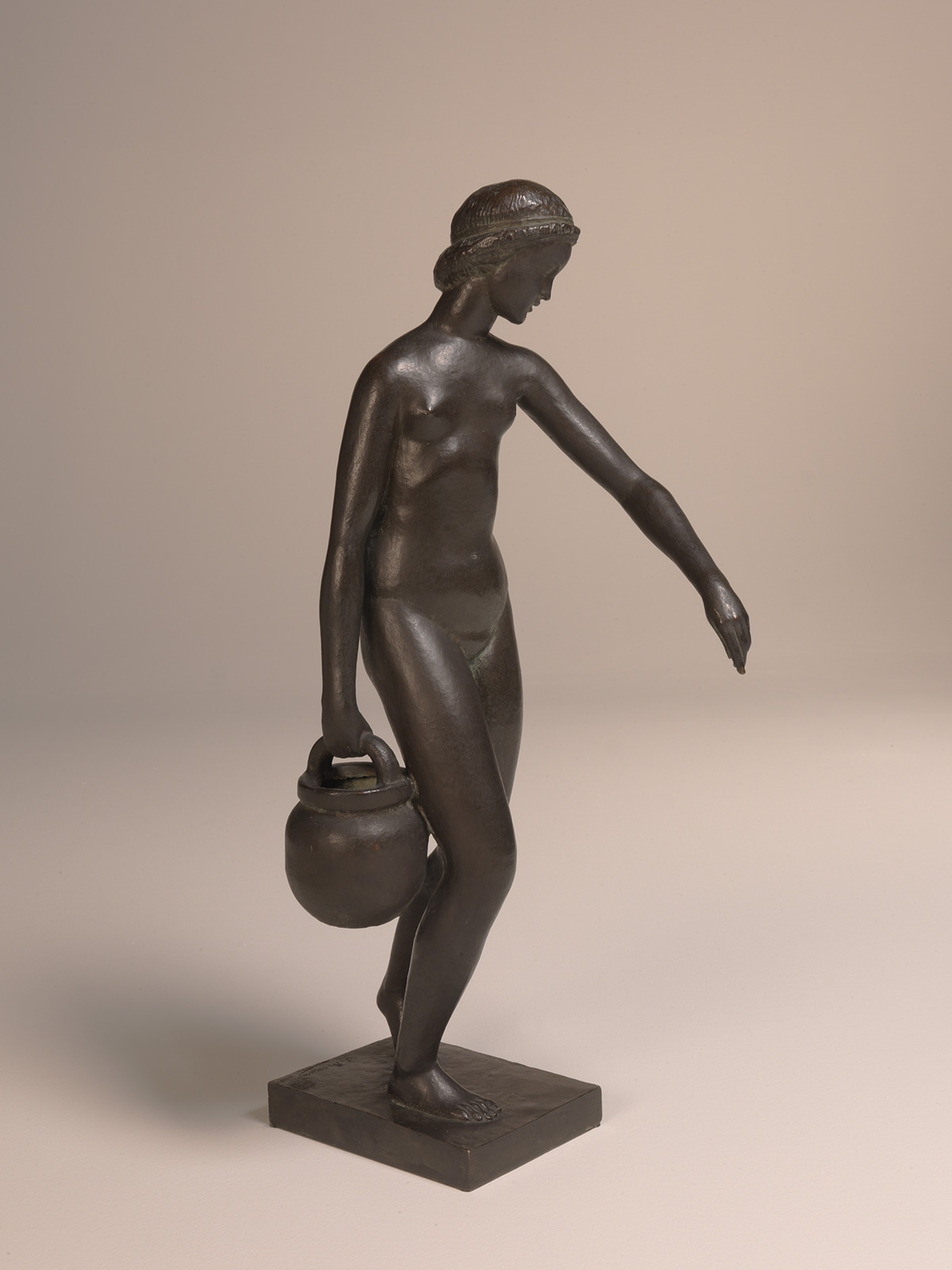
In 1926, he also acquired a smaller replica of the bronze sculpture Young woman with a pitcher by Joseph Bernard (1866-1931), on display at the Hôtel du Collectionneur Pavilion.
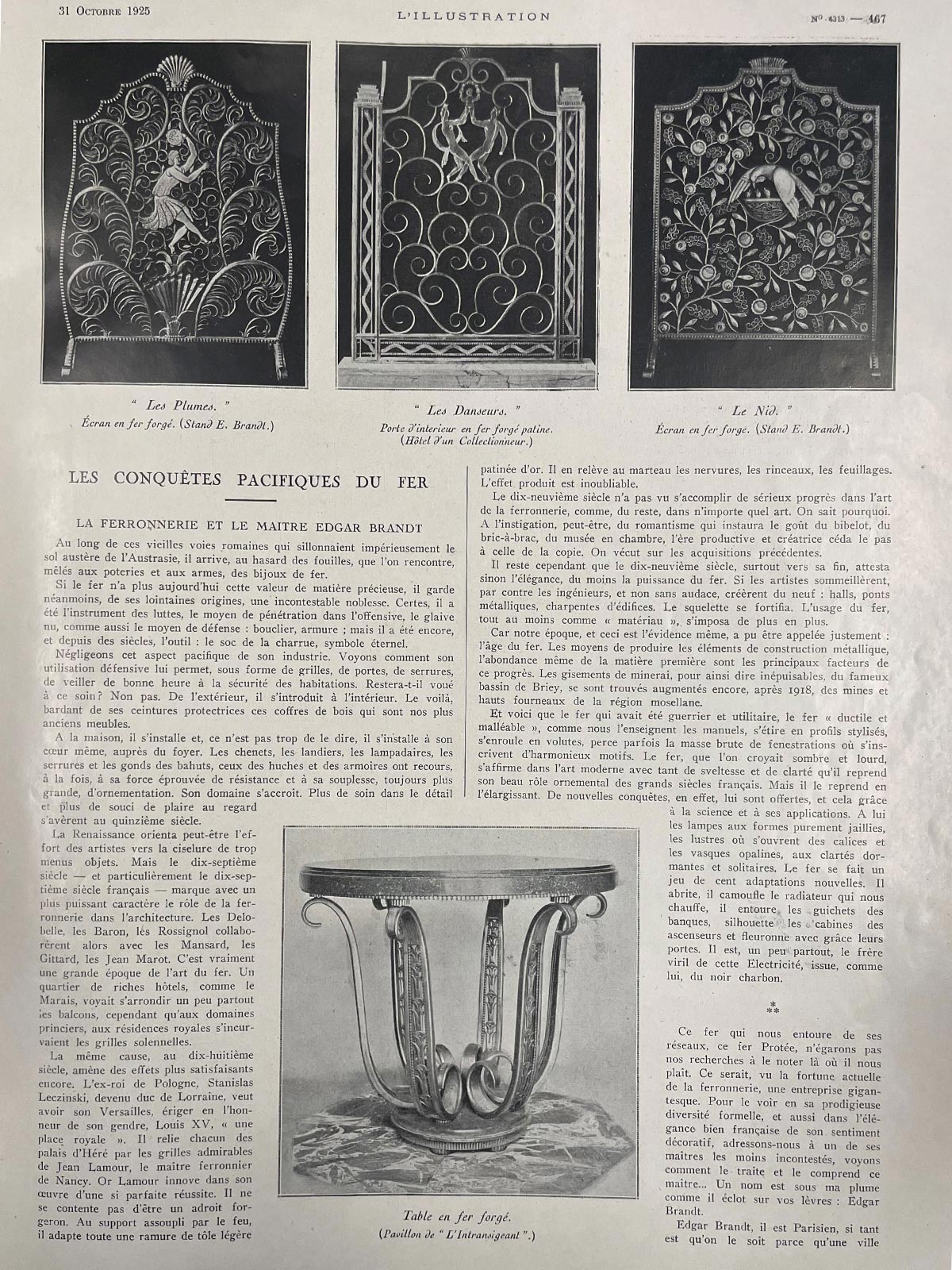
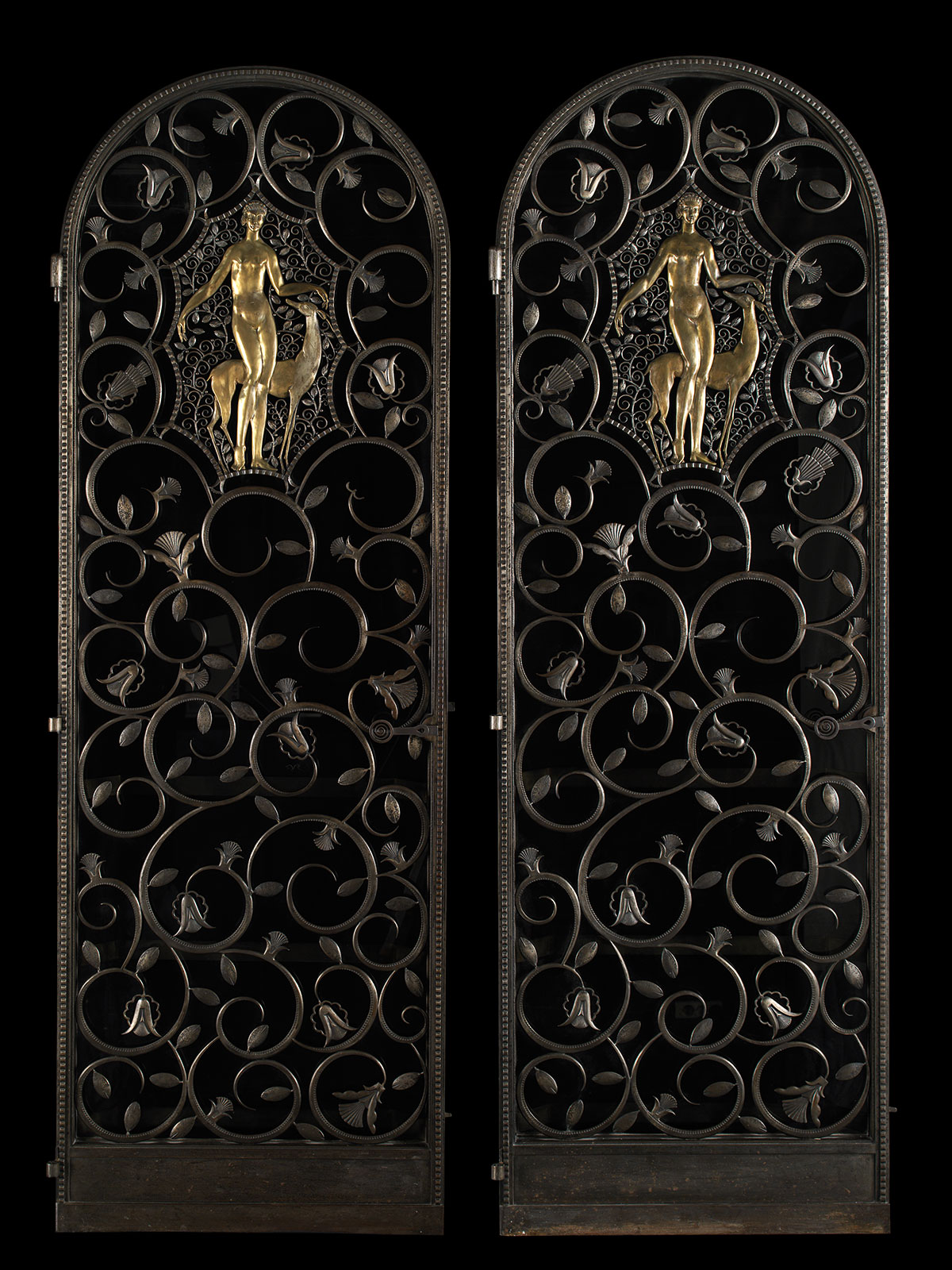
Perhaps it was also at the Exhibition that Gulbenkian saw and admired the creations of Edgar Brandt (1880-1960), a French master in the art of metalwork, from whom he commissioned the elevator doors for the house on the Avenue d’Iéna. Brandt had his own stand in the Furniture Gallery (galerie de l’Ameublement), but his pieces could also be seen in other pavilions, such as Sèvres, and in one of the rooms of the Une Ambassade Française Pavilion, and he was also the author of the door of honor of the Exhibition.
“Generally speaking, they [the pavilions] have serious defects, the main ones being that they are not sufficiently French in character and their proportions are not what you would have wished for”.
— Gabriel Mourey in The studio (1925)
The pavilion of the young USSR (Union of Soviet Socialist Republics), designed by the architect Konstantin Melnikoff (1890-1974) in iron, glass and wood according to the aesthetic principles of Constructivism, with interiors designed by Alexander Rodchenko (1891-1956), did not win the favor of the critics.
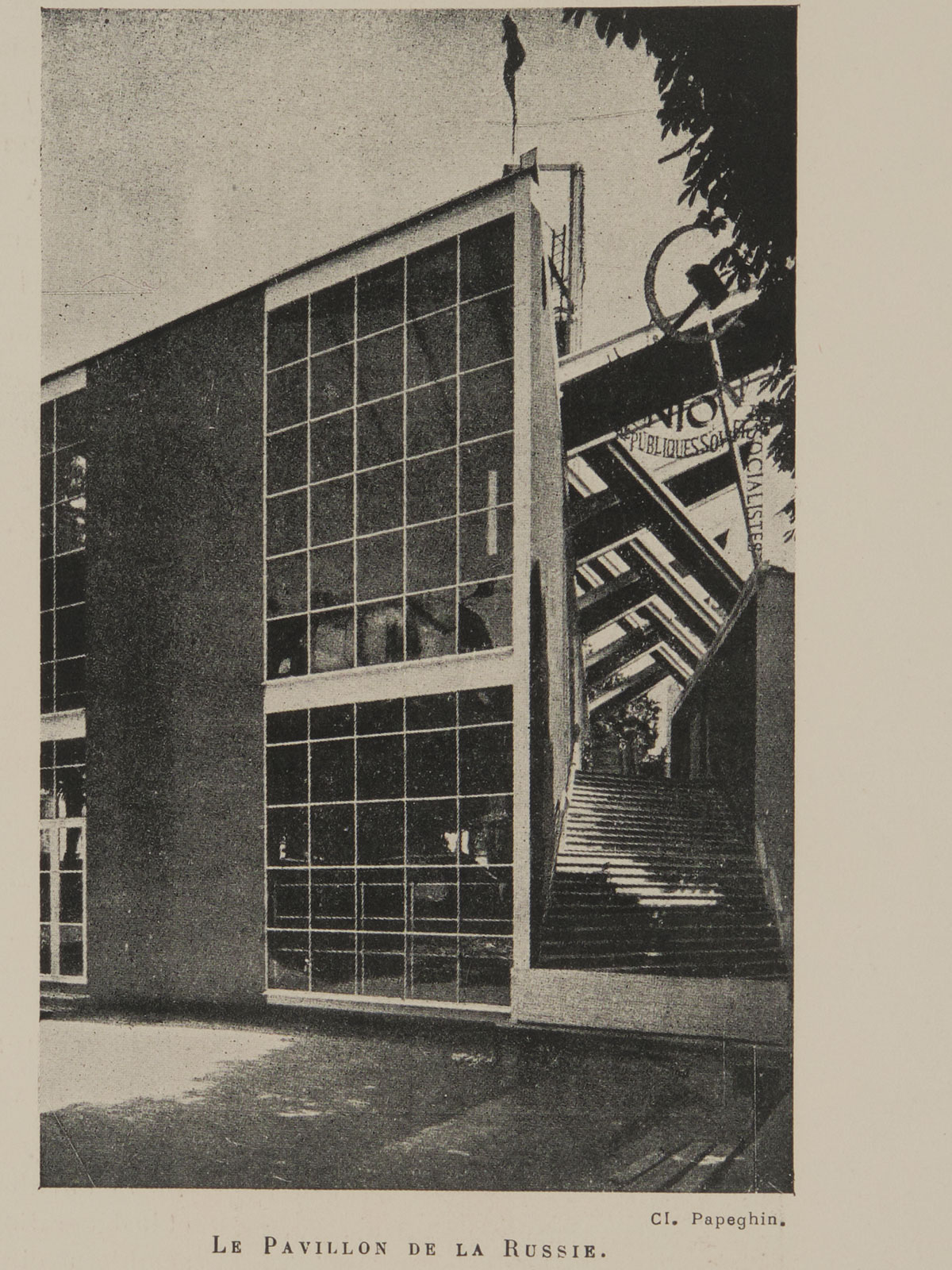
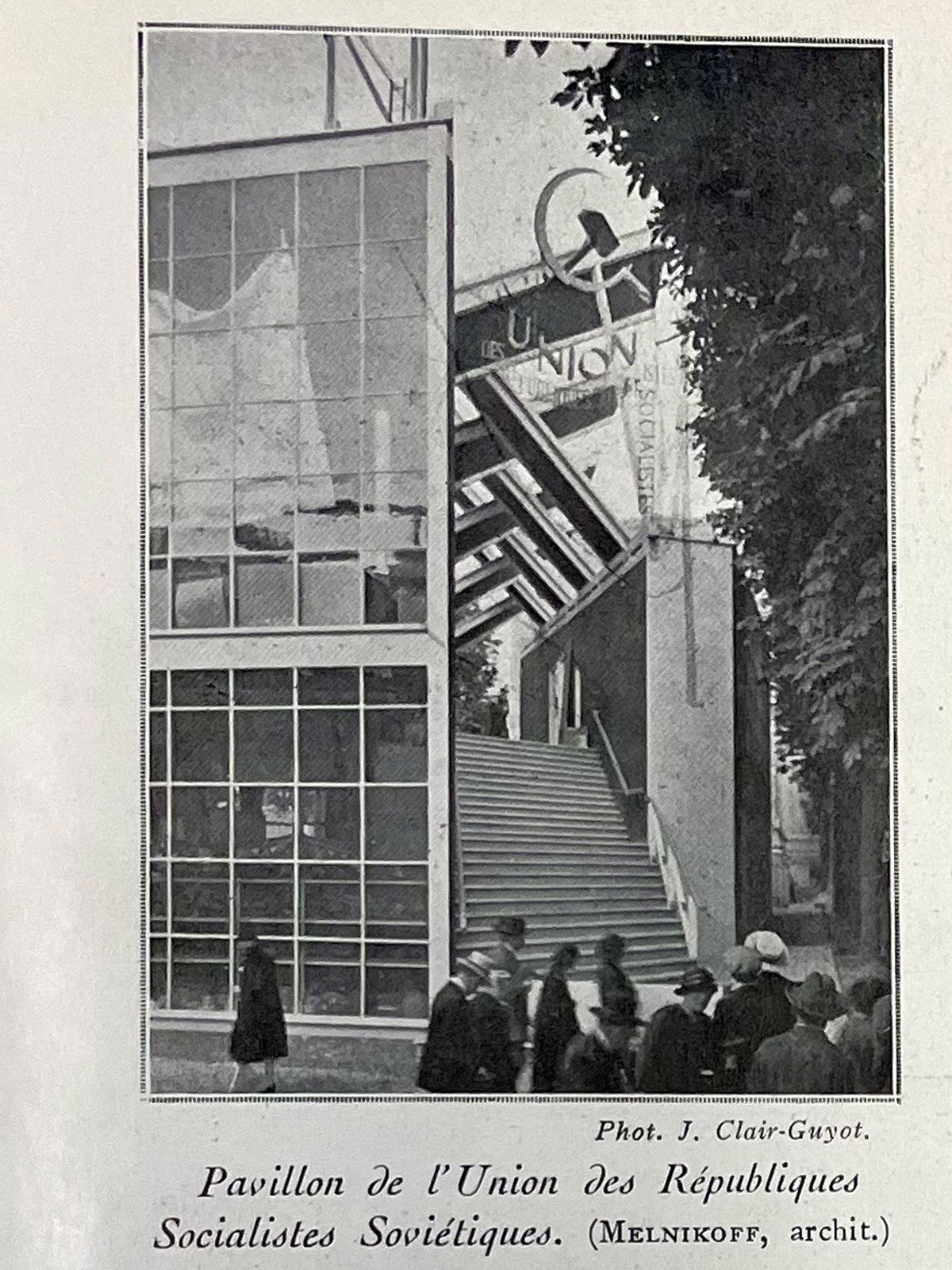
“The Union of Soviet Socialist Republics placed on the banks of the Seine, in the shadow of the red flag, a stylization of the guillotine,” wrote the French art critic Yvanhoé Rambosson (1872-1943) in the La revue de l’art ancien et moderne (Tome XLVIII, juin-décembre 1925, page 172). “Should we see in it, as some have proclaimed, a plastic organism of rare perfection or, as others have said with contempt, a simple challenge to common sense?” he asked and concluded that “if it didn’t stand out either for the power of its architecture or for its external charm”, it did possess “at least one quality that should be appreciated at its fair value in an exhibition building: it is very well an advertising pavilion”.
The Pavillon de l’Esprit Nouveau (New Spirit Pavilion), which was inaugurated in July after the opening of the exhibition, caused a sensation among visitors due to its audacious forms.
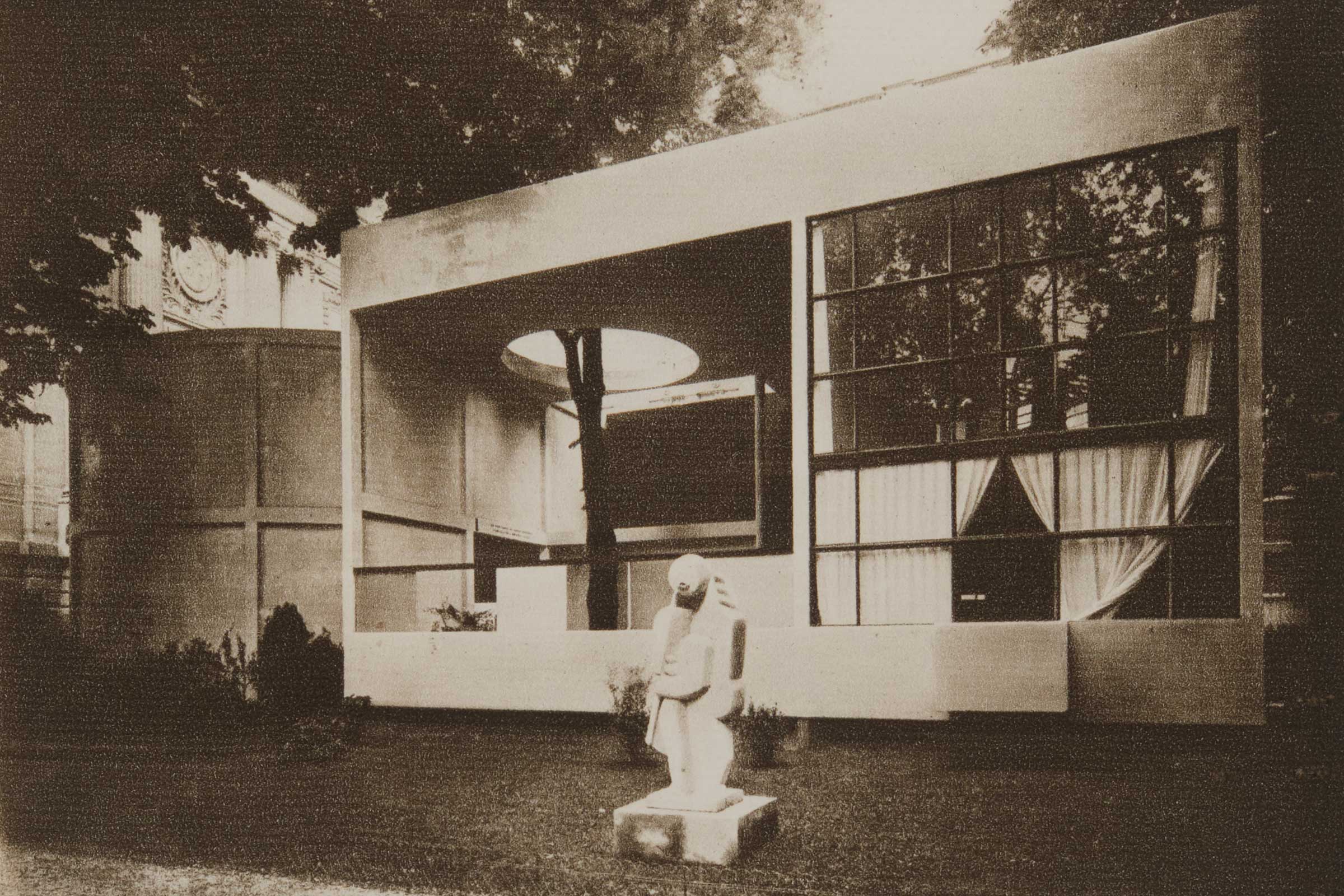
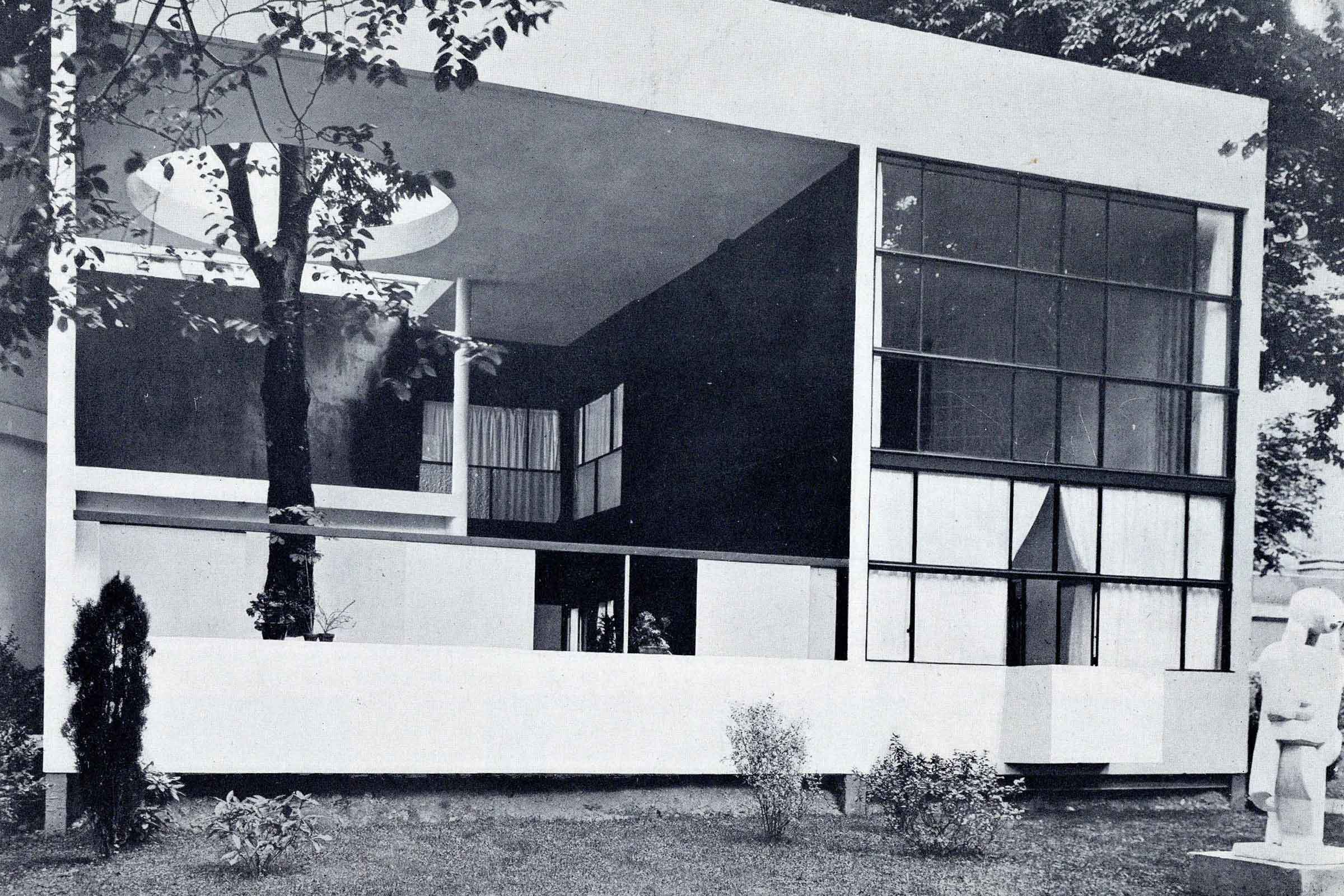
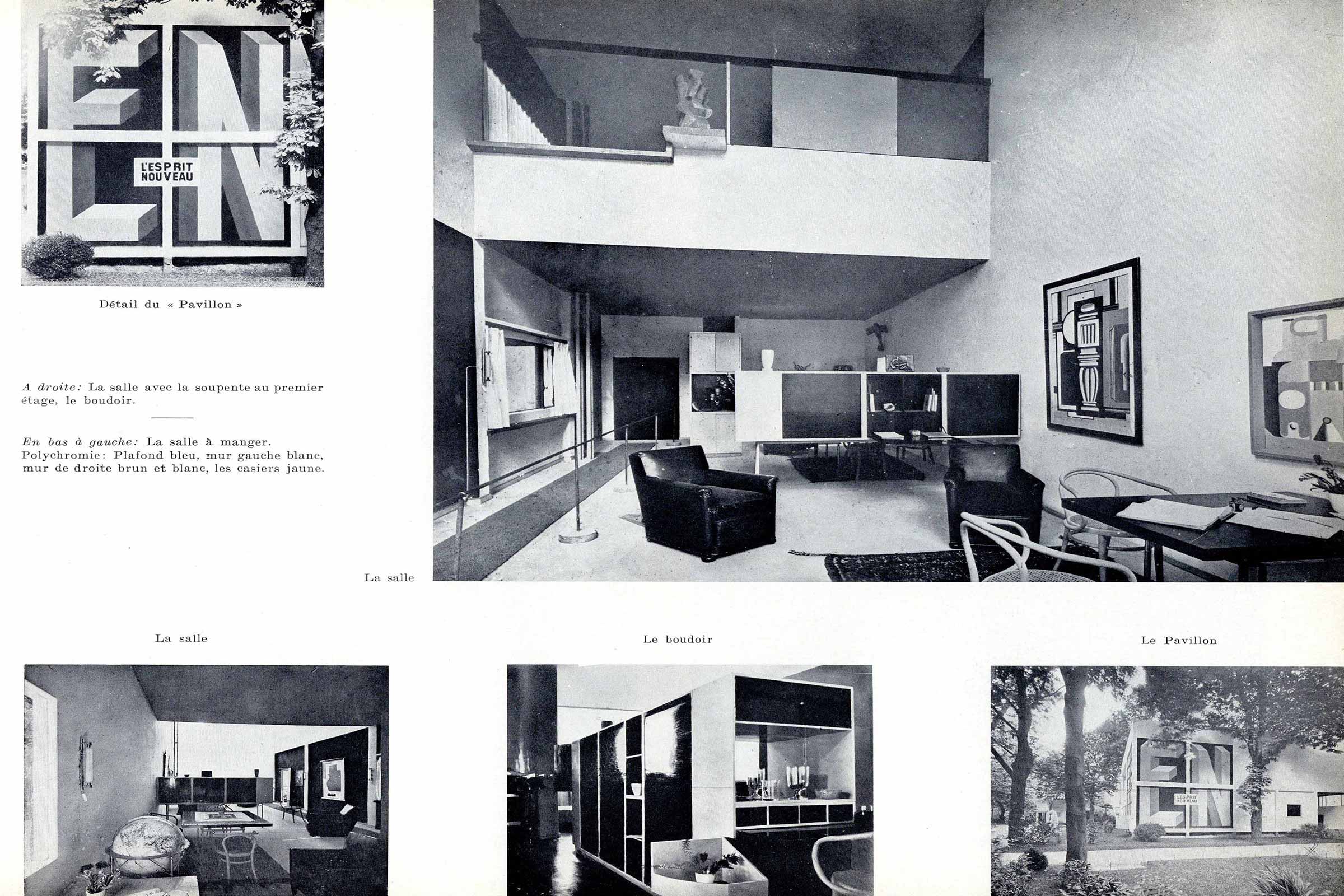
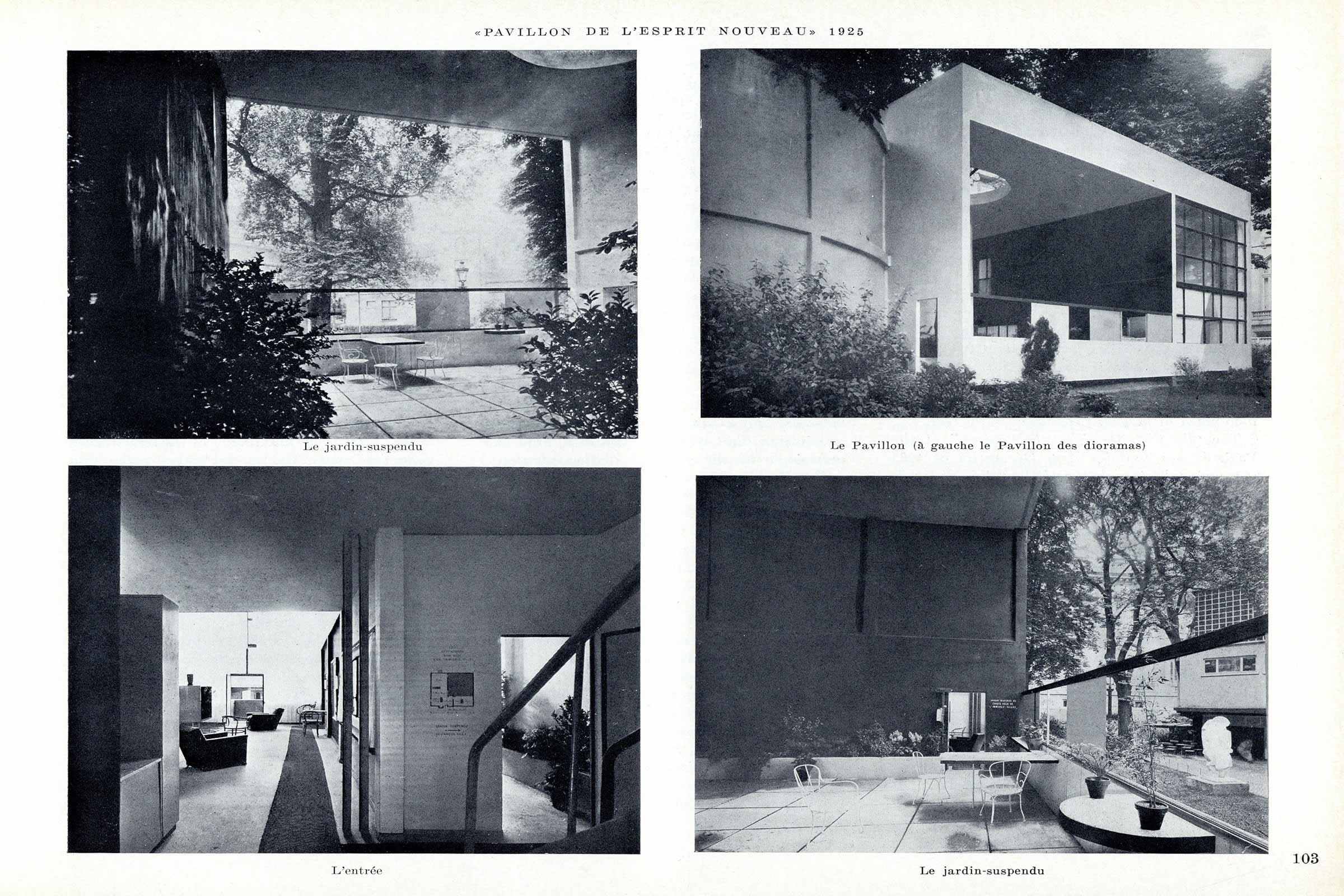
Built at the back of the Grand Palais – taking its name from the revue L’Esprit Nouveau founded by Corbusier and the painter Amédée Ozenfant (1886-1966) in 1920 – it was designed jointly by Le Corbusier (1887-1965) and Pierre Jeanneret (1896-1967) and, together with the Soviet pavilion, was the only one where the designs of a modernity that had been announced but was far from being accomplished in most pavilions could really be appreciated.
“The programme [of the New Spirit Pavilion]: to deny Decorative Art. To affirm that architecture extends from the smallest object of utility to the house, the street, the city, and even beyond”.
— Le Corbusier in 1910-1929. Zurique : Les Éditions d'Architecture, 1967 (Œuvre complète / Corbusier et Pierre Jeanneret ; 1) (página 98)
But his modernist intention was not well understood, on the contrary: “(…) if they want to persuade us with a violence that has nothing persuasive about it that a house is a «living machine», no,” wrote the French critic Léandre Vaillat (1878-1952) in the magazine L’illustration. “A house,” he said, ”is not a factory where you work and where, to earn a little money, you do a few mechanical gestures, always the same. … It [the house] is the place where the needs of the body that are not glorious are satisfied; but it is also the place where one should find recollection, intimacy, sensitivity, sensuality, the satisfaction of a personal preference” (Nr. 4313, 31 octobre 1951, page 459).
The importance of the event meant that the 1925 exhibition was also echoed in specialist magazines outside France. In the British The studio: an illustrated magazine of fine and applied art, for example, the French writer and art critic Gabriel Mourey (1865-1943) made a very harsh criticism of what he had seen.
“Generally speaking, they [the pavilions] have serious defects, the main ones being that they are not sufficiently French in character and their proportions are not what you would have wished for”. Without referring to any pavilion in particular, even the Soviet pavilion and the Esprit Nouveau pavilion, Mourey wrote that they were all “pretentious and at the same time dreary; they bear, in an exaggerated way, the mark of a too conscious search for originality, for novelty at any price, which takes all the charm out of them”. He did, however, acknowledge that “it would be unfair to deny that, even with its defects, this 1925 Exhibition is evidence of great and admirable efforts” (Volume 90, 1925, pages 16-21).
In addtion to the articles that were published between April and October 1925 in various journals and newspapers of the time, the “Rapport général” (General Report), produced by the organizers of the exhibition, and the Encyclopédie des arts décoratifs et industriels modernes au XXème siècle (Encyclopedia of Modern Decorative and Industrial Arts in the 20th Century), which is undoubtedly the best document for a detailed reconstitution of the exhibition nowadays, remain for future reference.
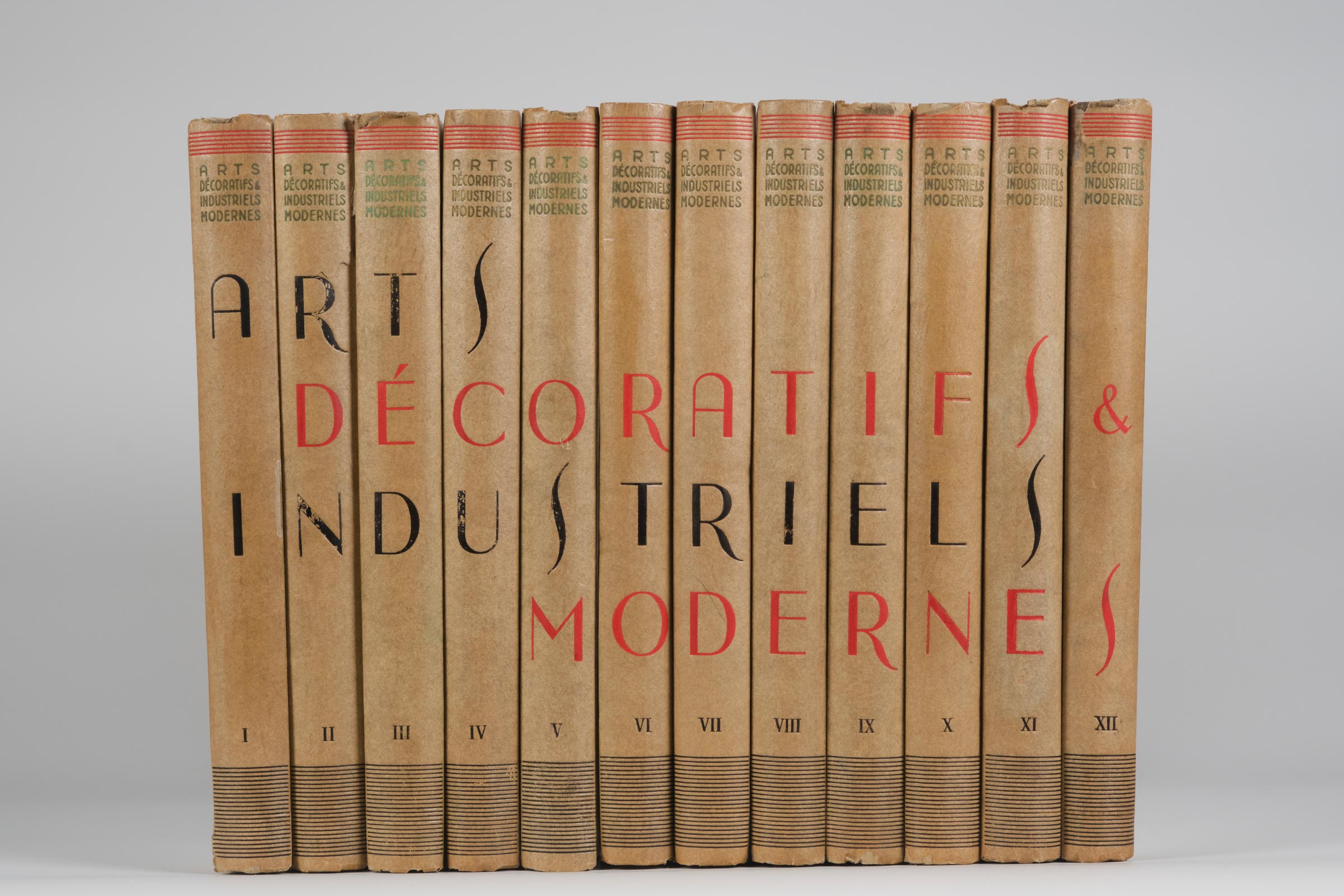
Published in Paris under the imprint of the Imprimerie nationale, it is not possible to determine with certainty when it was published, as none of the volumes have this information. However, given that each volume contains many photographs of the exhibition, it must have been published after it finished, between 1926 and 1930.
Each of the 12 volumes is dedicated to an aspect of modern life – from architecture to fashion to city planning – present at the exhibition, with (unsigned) texts contextualizing the artistic creations, accompanied by numerous photographs and heliogravures, some of which are in color, a bibliography, a thematic index and one of the illustrations. One of the curious aspects of this work is its binding: the sequence of the spines completes its title.
Purchased by the Calouste Gulbenkian Museum for the Art Deco 1925 exhibition held in 2009, the Encyclopédie des arts décoratifs et industriels modernes au XXème siècle has been integrated into the Art Library’s documentary collection.
Works from the Library
Explore the series
No results were found for your criteria.
You may also like


No results were found for your criteria.