
“Habito o Mundo”: creating home through art
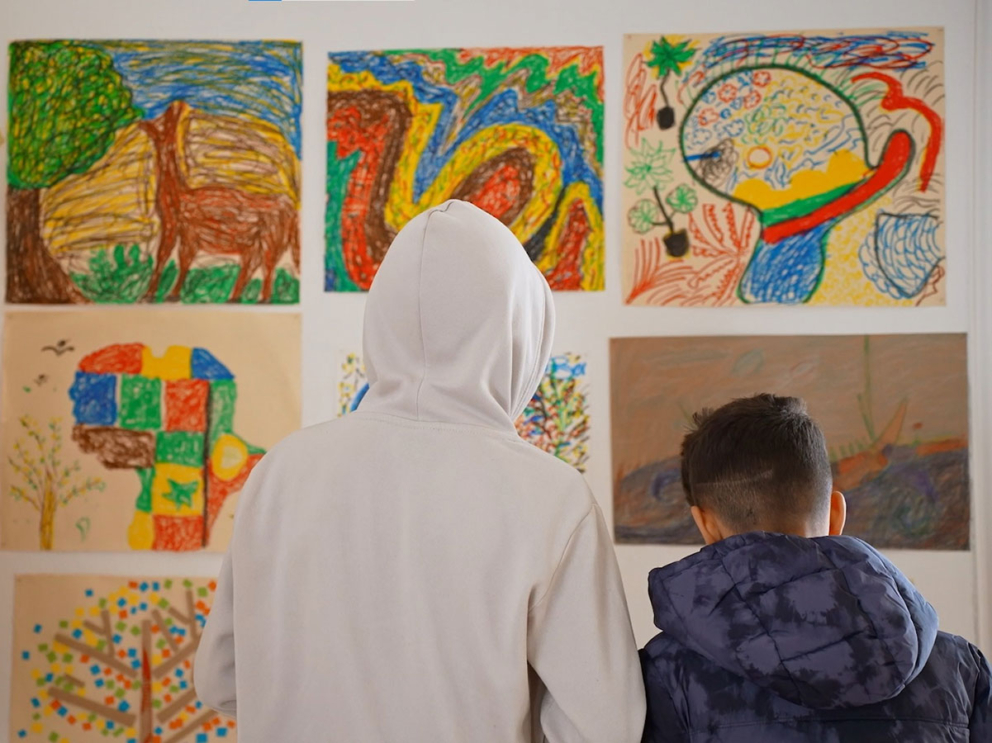
“The project involves and benefits migrant and refugee children and young people from Porto, São João da Madeira and Vila Verde.” explains Inês Granja, social director. Supported by the 2nd edition of the PARTIS & Art for Change initiative, “Habito o Mundo” focuses on developing artistic and socio-emotional skills, with ceramics as a key medium for self-expression and identity building.
The starting point is the concept of “home” — symbolic, emotional, imagined — with the goal of nurturing a sense of belonging in those who have recently arrived and are still building their place in this new territory. “They are children and young people, just like we once were, each with their own sensitivity, a marked past, and a present we want to be worked on so they can have a better future,” emphasizes Marta Terra, artistic director.
For Asmae Boussaidi, one of the young participants who has been living in Portugal for two years, the project was more than just an extracurricular activity. “When I arrived here, I didn’t know the language and didn’t know anyone. I said I had to participate in something to make friends, learn the language, and talk to people.”
Throughout the sessions, artistic languages — from ceramics to graffiti — became bridges between experiences and cultures. For Inês Granja, “the arts are a fundamental tool for intercultural encounters,” as they “enabled them to express emotions, share experiences and get to know each other better”.
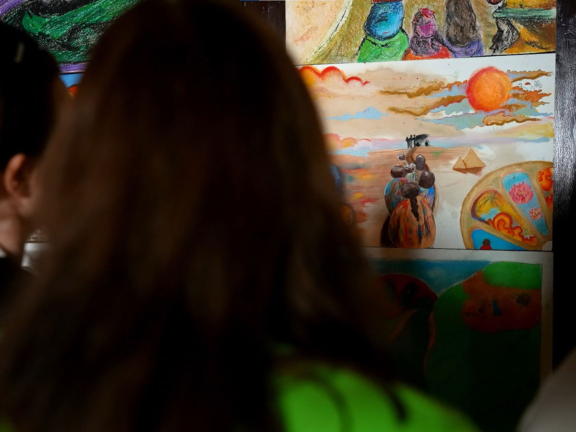
The mural that now decorates a public wall is the result of multiple sessions of sharing and active listening, as artist Godmess (Tiago Gomes) recalls: “It was a process that began with preliminary sessions of brainstorming, debate, sharing, and ideas, thoughts and images were taken”.
According to Inês Granja, the most surprising effect of the project was “the receptiveness of the community, especially in Vila Verde,” which “has been generating a movement of sincere and empathetic acceptance.” Alongside the public graffiti mural, the project also culminates in the presentation of a book and a ceramic panel.
PARTIS & Art for Change
Explore the series

No results were found for your criteria.
You may also like

No results were found for your criteria.