
Rachmaninov: Concerto para Piano n.º 2
Orquestra Gulbenkian / Nuno Coelho / Nikolai Lugansky
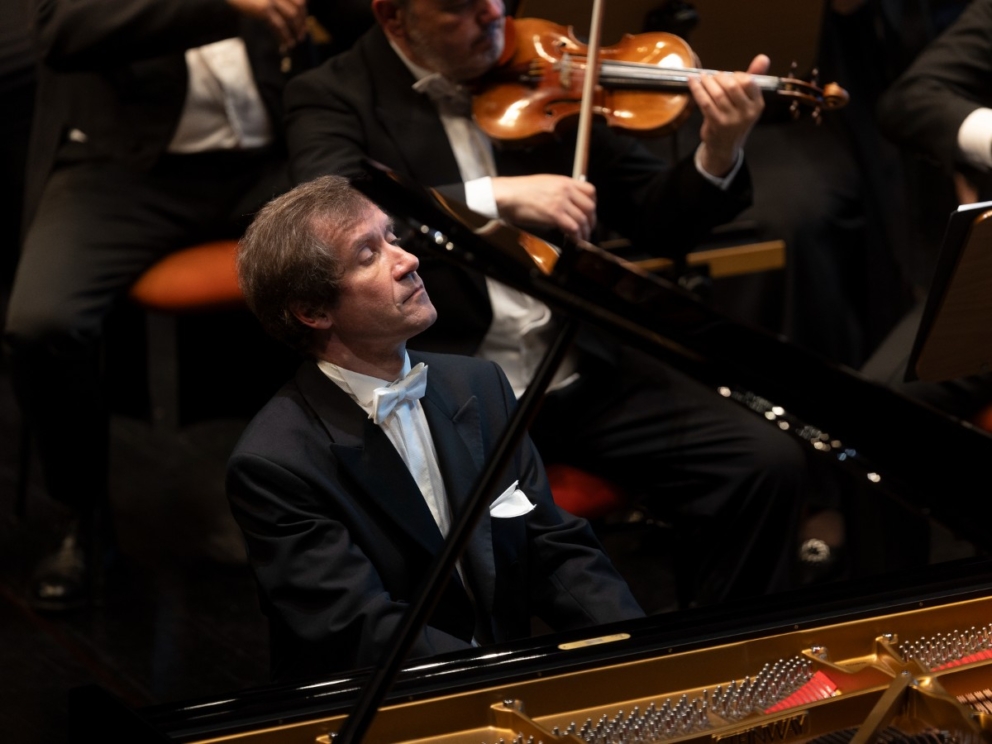
Sergei Rachmaninov iniciou os esboços do seu Concerto para Piano e Orquestra n.º 2, em Dó menor, op. 18, no outono de 1900, após o prolongado período de inatividade criativa que se seguiu à malograda estreia da sua Sinfonia n.º 1, em Ré menor, op. 13, ocorrida em São Petersburgo, a 28 de março de 1897. Talvez como forma de combater o desalento e a tristeza, o músico voltou-se para o seu instrumento de eleição, o piano, nele concentrando novas ideias e conjugando-as com as forças orquestrais. A composição paulatina prolongou-se até abril de 1901, tendo a primeira audição pública do Concerto n.º 2 tido lugar no mês de novembro seguinte, com a Sociedade Filarmónica de Moscovo e o compositor ao piano, sob a direção de Alexander Siloti.
A expectativa impõe-se desde os primeiros compassos do andamento introdutório, Moderato, com a sucessão de majestosos acordes do solista, em crescendo, alternando com nota-pedal na dominante. Por sua vez, as cordas introduzem o primeiro tema da exposição, sobre a teia elaborada de harpejos do piano. O solista intensifica o trabalho virtuosístico, antes do aparecimento do segundo tema, também nas cordas, com perfil breve e nostálgico. Rapidamente o solista intervém, com fragmentos do primeiro tema, agora fundidos na filigrana orquestral, num quadro de beleza ímpar. Surge ainda um terceiro tema, breve arabesco entoado pelas madeiras e retomado, na recapitulação, pelo solista.
No segundo andamento, Adagio sostenuto, o músico reflete toda a sua reconhecida veia expressiva, plasmada nos motivos da flauta e do clarinete, emoldurados pelas harmonias harpejadas do solista. A secção central do andamento, Più animato, faz apelo a um virtuosismo de cariz lisztiano, baseado em segmentos escalares e ornamentação diversa. Existem afinidades entre os primeiros compassos do último andamento, Allegro scherzando, e o terceiro tema do Moderato inicial, o que releva do princípio cíclico herdado do compatriota Piotr Ilitch Tchaikovsky (1840-1893). Não ficam por aqui, de resto, as afinidades entre os dois compositores, como se constata pela textura densamente harmonizada, em tutti orquestral, dos derradeiros compassos do andamento.
Intérpretes
- Maestro
- Piano
-
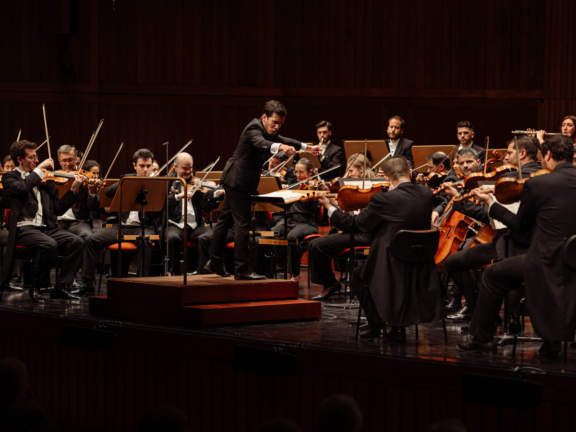
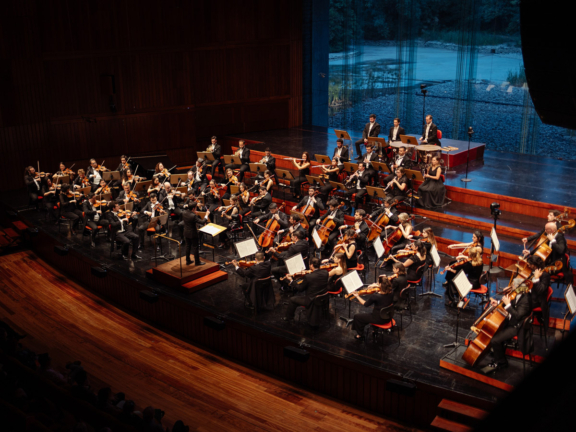
Orquestra Gulbenkian
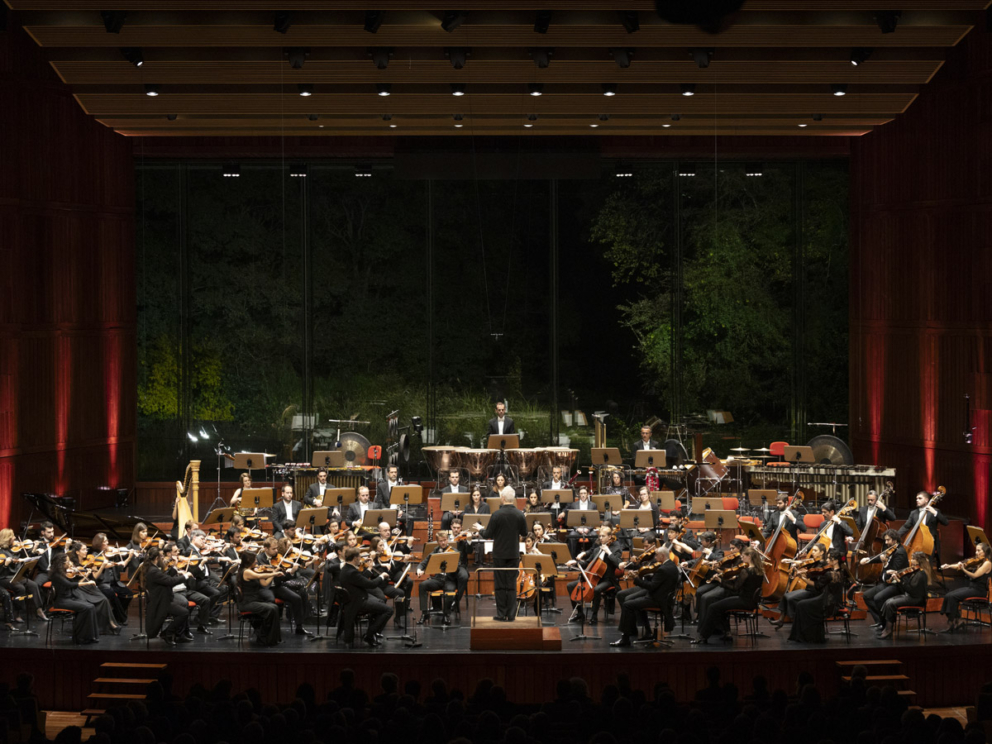
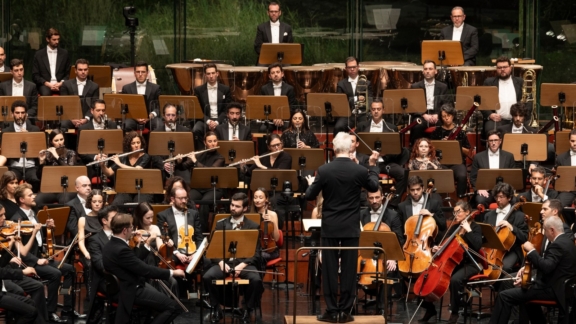
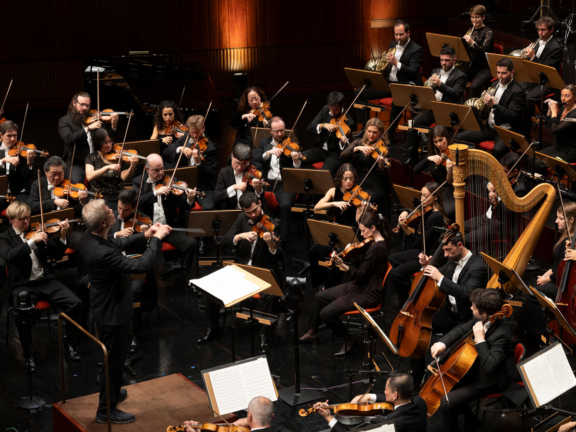
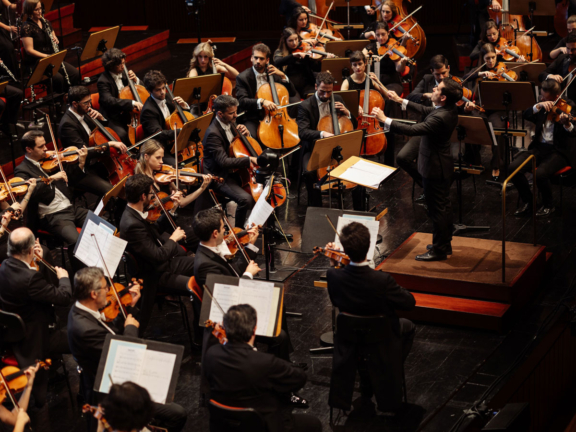
Em 1962 a Fundação Calouste Gulbenkian decidiu estabelecer um agrupamento orquestral permanente. No início constituído apenas por doze elementos, foi originalmente designado por Orquestra de Câmara Gulbenkian. Ao longo de sessenta anos de atividade, a Orquestra Gulbenkian (denominação adotada desde 1971) foi sendo progressivamente alargada, contando hoje com um efetivo de cerca de sessenta instrumentistas, que pode ser expandido de acordo com as exigências de cada programa. Esta constituição permite à Orquestra Gulbenkian interpretar um amplo repertório, do Barroco até à música contemporânea. Obras pertencentes ao repertório corrente das grandes formações sinfónicas podem também ser interpretadas pela Orquestra Gulbenkian em versões mais próximas dos efetivos orquestrais para que foram originalmente concebidas, no que respeita ao equilíbrio da respetiva arquitetura sonora.
Em cada temporada, a Orquestra Gulbenkian realiza uma série regular de concertos no Grande Auditório, em Lisboa, em cujo âmbito colabora com os maiores nomes do mundo da música, nomeadamente maestros e solistas. Atua também com regularidade noutros palcos nacionais, cumprindo desta forma uma significativa função descentralizadora. No plano internacional, a Orquestra Gulbenkian foi ampliando gradualmente a sua atividade, tendo efetuado digressões na Europa, na Ásia, em África e nas Américas. No plano discográfico, o nome da Orquestra Gulbenkian encontra-se associado às editoras Philips, Deutsche Grammophon, Hyperion, Teldec, Erato, Adès, Nimbus, Lyrinx, Naïve e Pentatone, entre outras, tendo esta sua atividade sido distinguida, desde muito cedo, com diversos prémios internacionais de grande prestígio. O finlandês Hannu Lintu é o Maestro Titular da Orquestra Gulbenkian desde 2023.
-
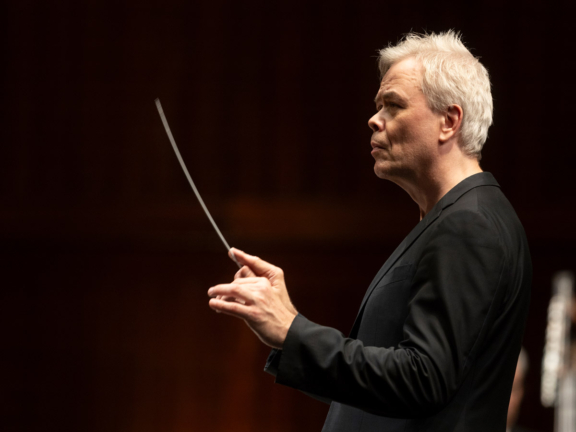
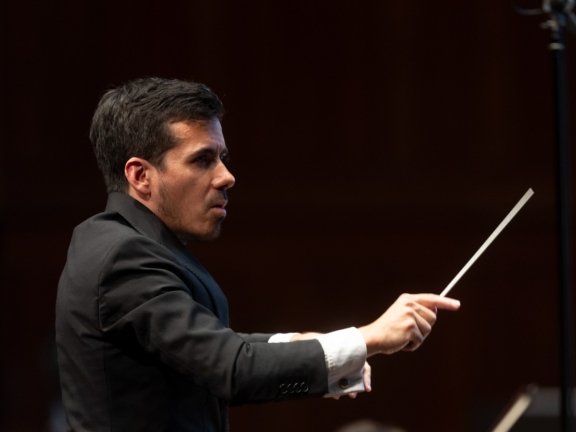
Nuno Coelho
Conductor
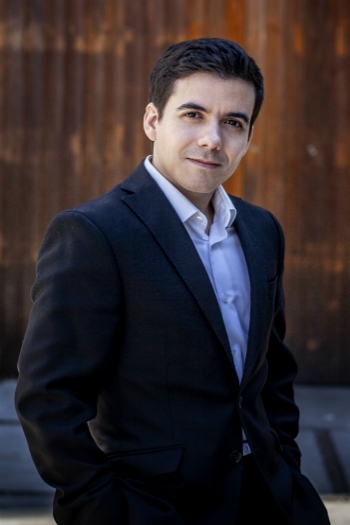
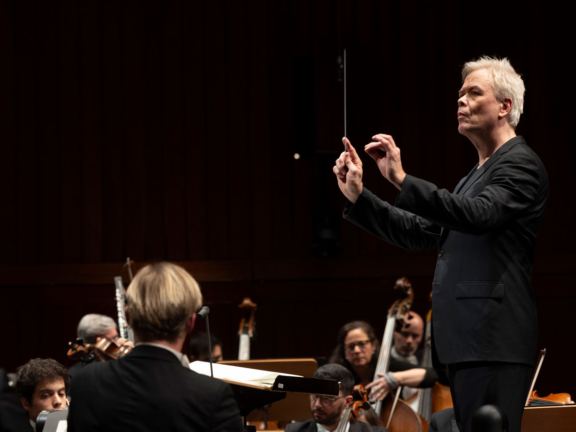
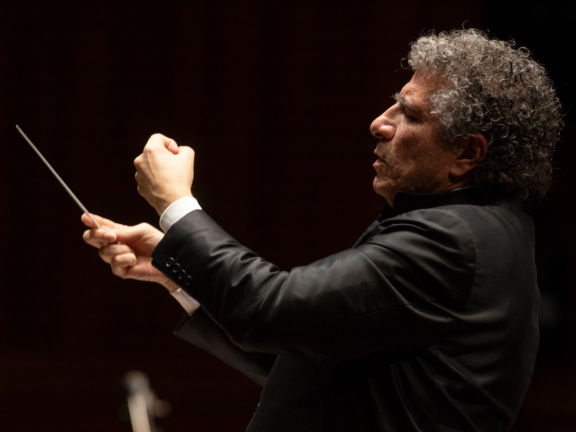
Nuno has been Chief Conductor and Artistic Director of Spain’s Orquesta Sinfónica del Principado de Asturias since October 2022. In addition to concerts in Oviedo, the 2024/25 season sees him return to Antwerp Symphony, Tampere Philharmonic, Gulbenkian Orchestra and Orquesta Sinfónica de RTVE, and debut with Stavanger Symphony, Staatsphilharmonie Nürnberg and Minnesota Orchestra.
Highlights of recent seasons have included concerts with the Royal Concertgebouw Orchestra, BBC Scottish Symphony, Netherlands Radio Philharmonic, Frankfurt’s hr-Sinfonieorchester, Orquestra Sinfônica de São Paulo, Orquesta Nacional de España, Dresden Philharmonie, Orchestre Philharmonique du Luxembourg, Orchestre Philharmonique Royal de Liège, Residentie Orkest, Orchestre philharmonique de Strasbourg, Orquesta Sinfonica de Galicia, and Orquestra Simfónica de Barcelona.
In the opera pit, Nuno has conducted productions of La traviata, Cavalleria rusticana, Rusalka and Manon. In November 2022 he conducted his own staging of José Saramago’s reimagining of Don Giovanni at the Gulbenkian, having previously conducted their semi-staging of Così fan tutte the previous season. 2026 will see Nuno return to Ópera de Oviedo for Manon Lescaut.
Nuno won First Prize at the 2017 Cadaqués International Conducting Competition and has since gone on to conduct the Royal Liverpool Philharmonic, BBC Philharmonic, Symphoniker Hamburg, Orquesta Sinfónica de Castilla y León, Noord Nederlands Orkest and Orchestra Teatro Regio Torino. He was a Los Angeles Philharmonic Dudamel Fellow between 2018-19 and stepped in for Bernard Haitink that same season to make his debut with the Symphonieorchester des Bayerischen Rundfunks.
Born in Porto, Nuno studied conducting at the Zürich University of the Arts with Johannes Schlaefli and won the Neeme Järvi Prize at the Gstaad Menuhin Festival. In 2015 he was admitted into the German Music Council’s Dirigentenforum and for the following two years he was both a Tanglewood Conducting Fellow and Assistant Conductor of the Netherlands Philharmonic.
Literature and tennis occupy his time off-podium.
-
Nikolai Lugansky
Piano
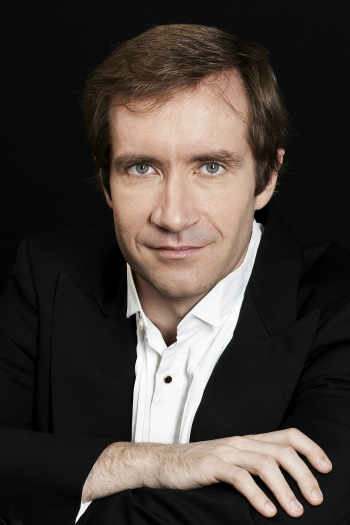
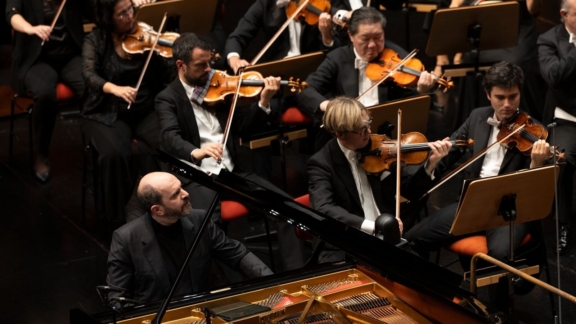
Pianist Nikolai Lugansky is renowned for his interpretations of Rachmaninov, Prokofiev, Chopin and Debussy. He has received numerous awards for recordings and artistic merit.
He collaborates regularly with conductors of the calibre of K. Nagano, Y. Temirkanov, M. Honeck, G. Noseda, S. Kochanovsky, V. Petrenko, L. Shani and he is invited by leading international orchestras, including the Berliner Philharmoniker, the London Symphony Orchestra, the Netherlands Philharmonic Orchestra, the Swedish Radio Symphony Orchestra and the Orquestra Nacional de España.
Described by Gramophone as “the most trailblazing and meteoric performer of all”, Nikolai Lugansky is a pianist of extraordinary depth and versatility. He is invited by some of the world's most distinguished festivals, including the Aspen, Tanglewood, Ravinia and Verbier festivals. Chamber music collaborators include Vadim Repin, Alexander Kniazev, Mischa Maisky and Leonidas Kavakos.
In 2023, he celebrated the 150th anniversary of Rachmaninov's birth by performing cycles of monographic programs at the Théâtre des Champs-Élysées in Paris and the Wigmore Hall in London, along with other performances throughout Europe, including at the Konzerthaus in Vienna and Berlin, the Bozar in Brussels, the Rudolfinum in Prague and the Royal Concertgebouw in Amsterdam.
“Lugansky's mastery of the piano is outstanding: over the years, his sonority has broadened and become denser, his palette of sounds even more diverse as his stature as a musician has asserted itself. […] He is in the moment and in the projection of that moment into the greater whole of a work that he makes accessible: he hears everything and lets us hear it without explaining it, letting the music happen without interfering.” (Bachtrack).
This past season's highlights included orchestras such as the NHK Symphony Orchestra in Tokyo (Dutoit), the St. Louis Symphony Orchestra (Denève), the NDR Radiophilharmonie Hannover (Kochanovsky), the Brussels Philharmonic (Ono), the Orchestre Philharmonique de Radio France (Peltokovsky), the Berlin Konzerthaus Orchester (Valčuha), the Philharmonia London (Rouvali), the Orquestra Sinfônica do Estado de São Paulo (Alsop) and recitals at the Teatro alla Scala, Théâtre des Champs-Élysées, Wiener Konzerthaus, Wigmore Hall, Seoul Arts Center, Zurich Tonhalle, Oxford Piano Festival, Piano à Lyon, among many others.
Highlights of the 2025/26 season include collaborations with the Deutsche Kammerphilharmonie Bremen (Rhorer), the Orchestre National de Lille for the Ravel anniversary (Weilerstein), the Oslo Philharmonic (Stutzmann), the Bern Sinfonieorchester (Petrenko), the Basque National Orchestra (Valčuha), the Berlin DSO (Denève), and the NDR ElbPhilharmonie Hamburg (Kochanovsky). The season also features tours around the world, including with La Filarmonica della Scala (Chung) in Korea, with the Lucerne Symphony (Sanderling) in Italy and a recital tour in China and Italy.
Among recital and festival appearances are engagements at the Tsinandali Festival (Noseda), the Esprit du Piano in Bordeaux, the Boulez Saal in Berlin, the Théâtre des Champs-Élysées, the Auditorio Nacional in Madrid, the Palau de la Música Catalana in Barcelona, the Wigmore Hall, and the Verbier Festival.
Lugansky is Harmonia Mundi's exclusive artist. His latest album dedicated to Robert Schumann was released in February 2026; the recording “Richard Wagner” was Editor's Choice for May 2024, included in The Best Classical Albums of the Year by Gramophone and won the Premio Abbiati del Disco 2024 for solo repertoire. His album “Rachmaninov: Études-Tableaux; 3 Pièces”, was awarded with Choc de l'Année 2023 (Classica) and Gramophone Editor's Choice (March 2023). His “Rachmaninov: 24 Preludes” (2018) received rave reviews, while “César Franck, Préludes, Fugues & Chorals” CD (2020) won the Diapason d'Or.
Among the other awards for his many previous recordings: Diapason d’Or (Rachmaninov's Piano Sonatas) and Gramophone Editor’s Choice (Grieg and Prokofiev with Kent Nagano and the Deutsches Symphonie-Orchester Berlin).
Programa
Sergei Rachmaninov
Concerto para Piano e Orquestra n.º 2, em Dó menor, op. 18
– Moderato
– Adagio sostenuto
– Allegro scherzando
Relacionados

Não foram encontrados resultados.