
Haditha, c. 1933: A Pipeline in the Desert
-
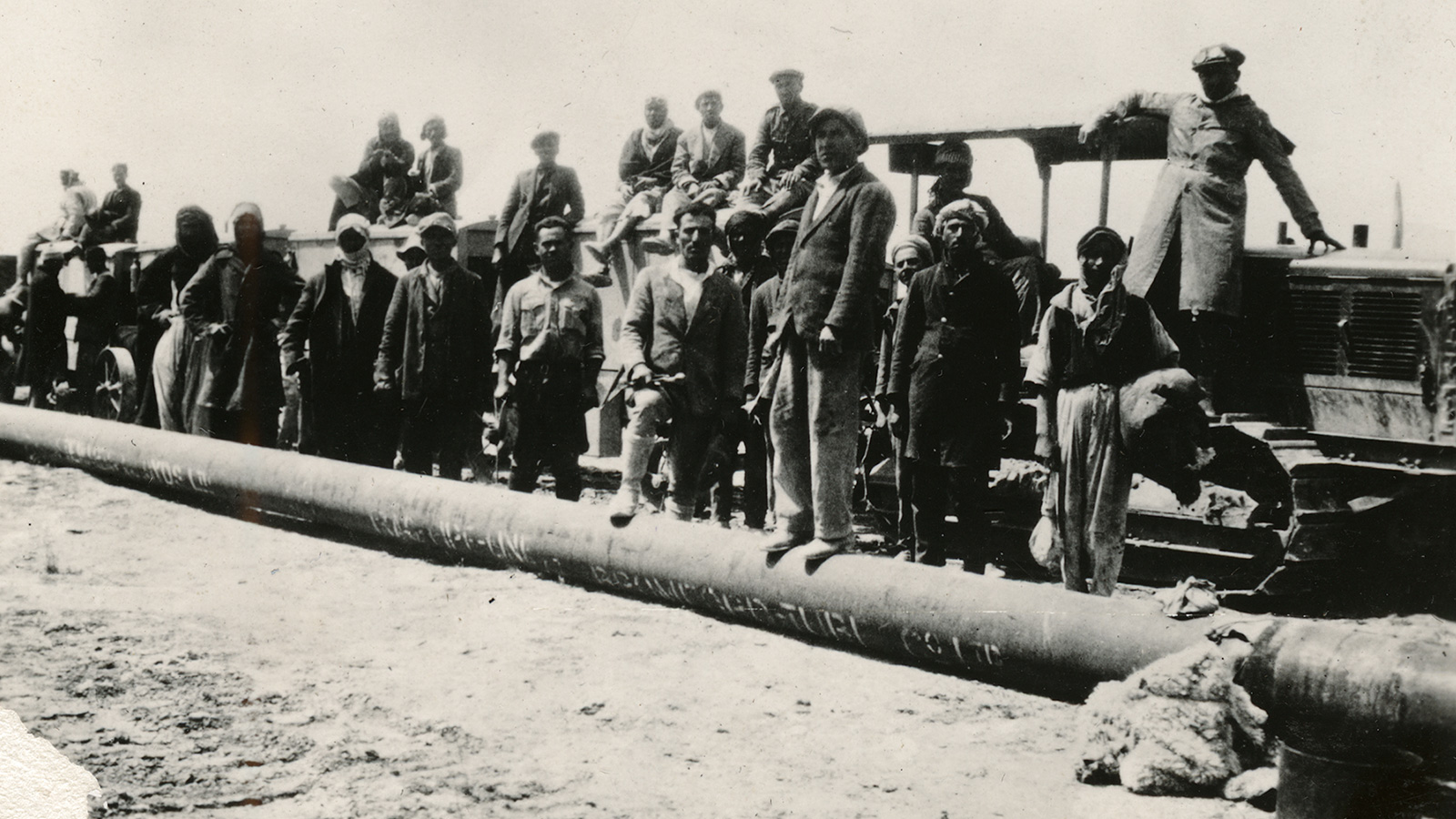
Employees of the Iraq Petroleum Company
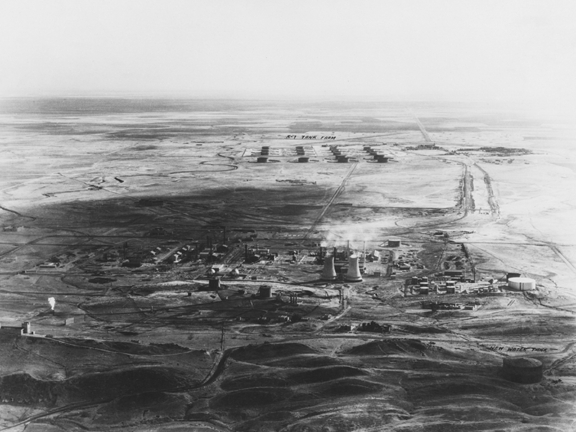
In 1932, Mediterranean Pipe-Lines Limited, a subsidiary of the Iraq Petroleum Company (successor to the Turkish Petroleum Company) began building what was, at the time, the world’s first transnational oil pipeline.
The Turkish Petroleum Company, a company of which Calouste Sarkis Gulbenkian was one of the founding shareholders, had obtained from the Iraqi government in 1925 an exclusive concession to prospect for extract and export oil throughout the country.
Under that concession an agreement signed on 14 March of the same year provided for the construction of a pipeline from Kirkuk to the Mediterranean carrying Iraqi oil to European refineries.
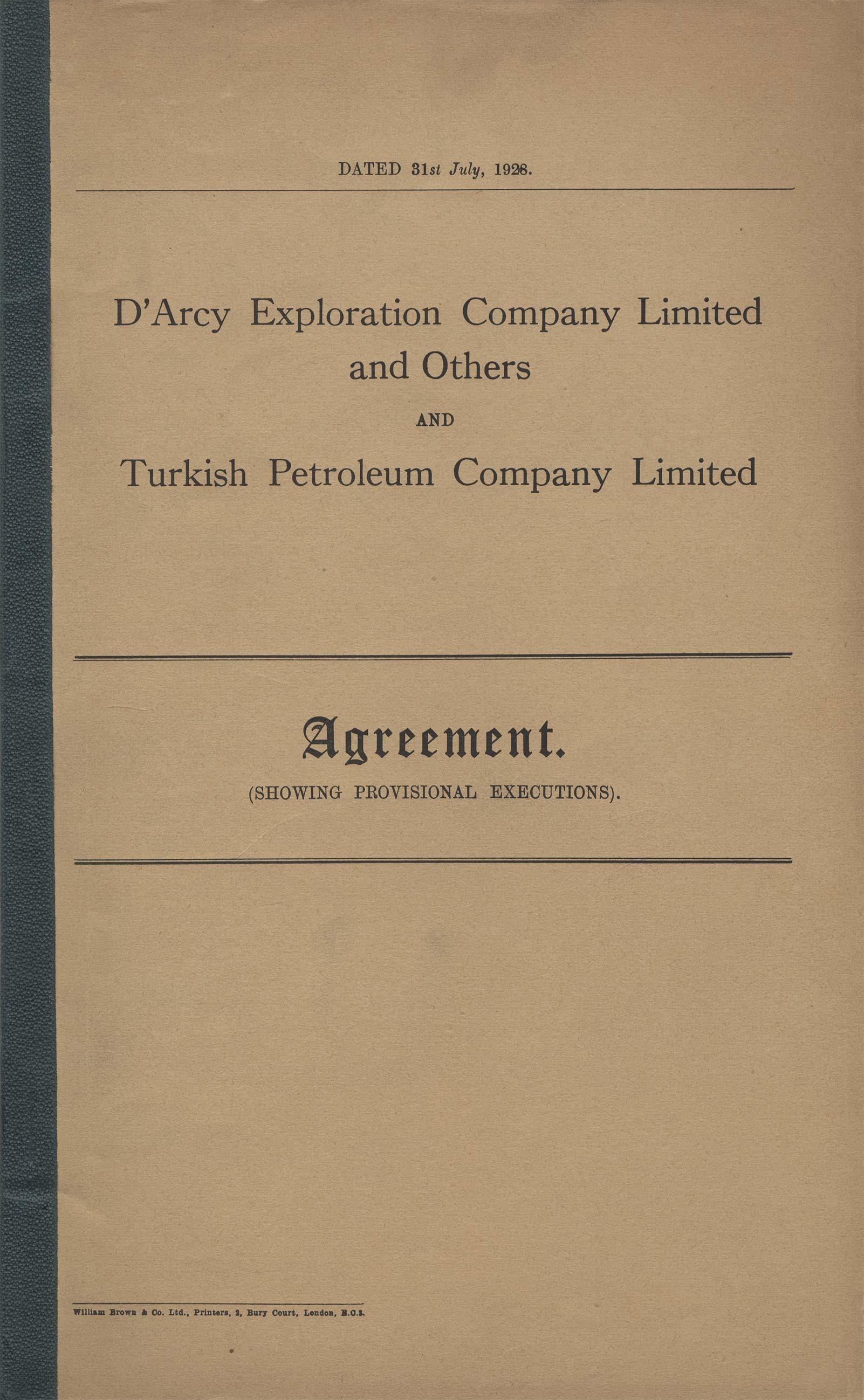
The route had to be negotiated. The company’s British shareholders objected to the pipeline crossing territory under French mandate, while France refused to give up that route, which was shorter than the British alternative.
An American shareholder resolved the dispute, successfully proposing that the pipeline should fork near Haditha, still inside Iraq, so as to accommodate both countries’ interests.
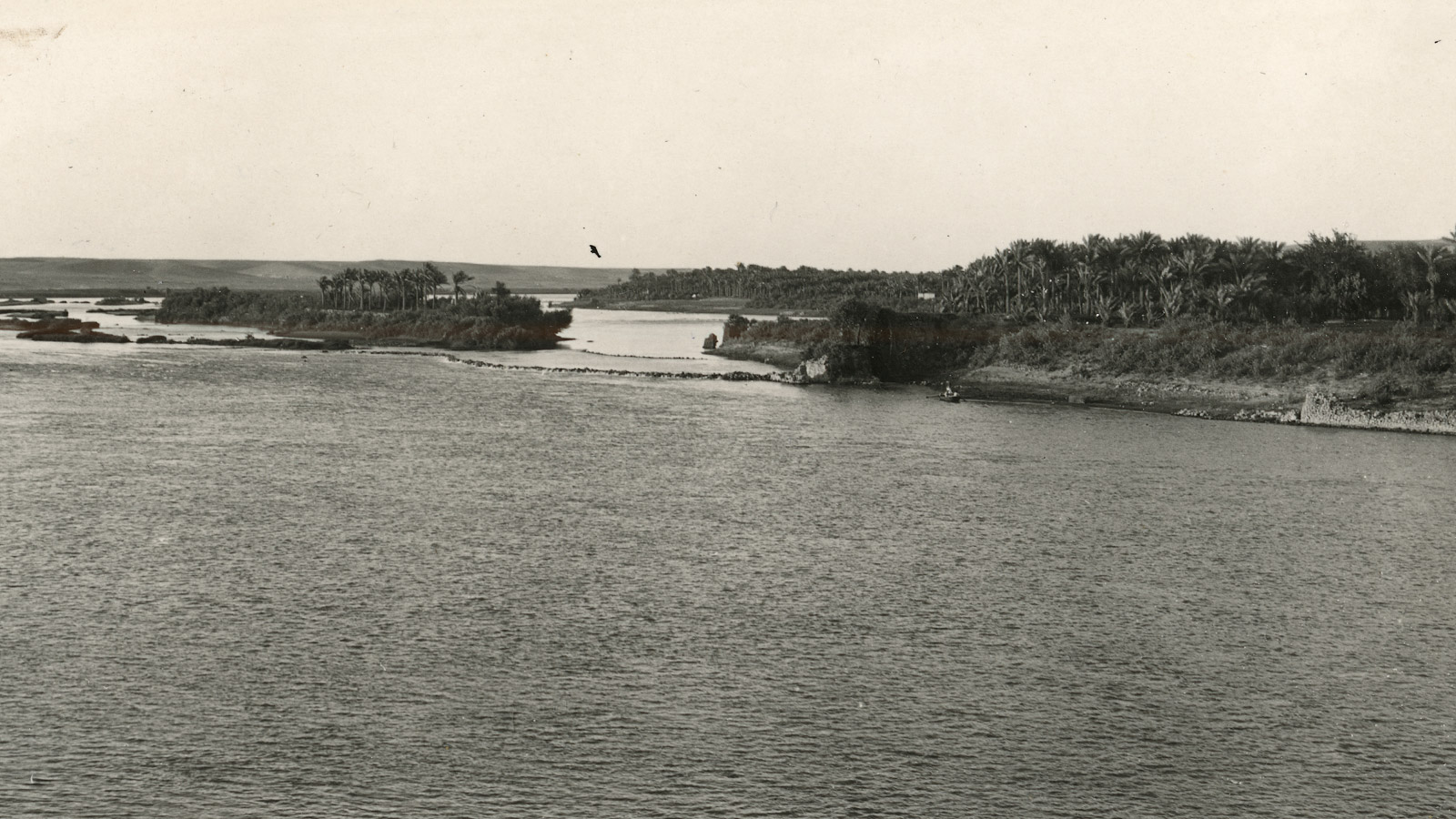
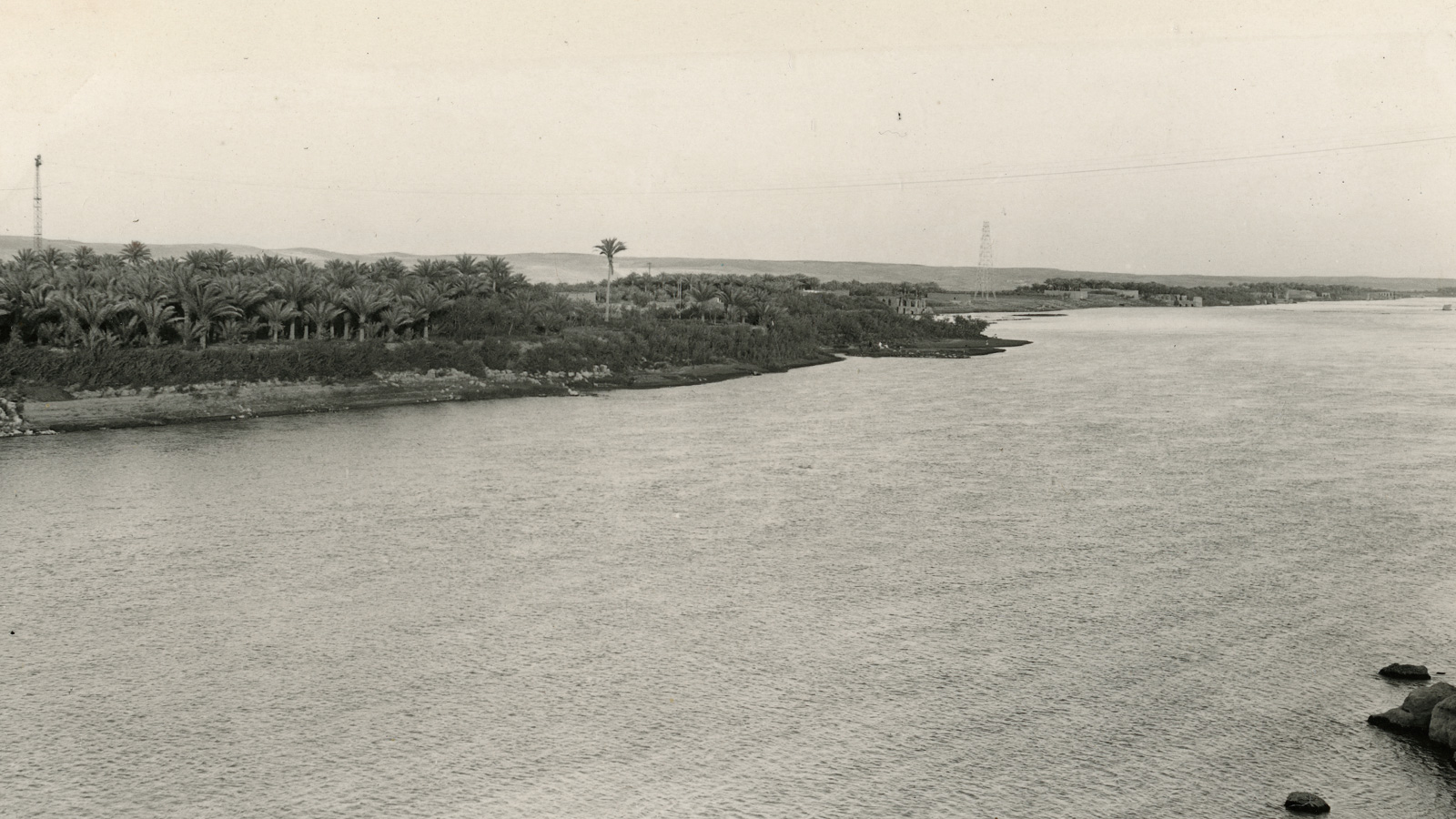
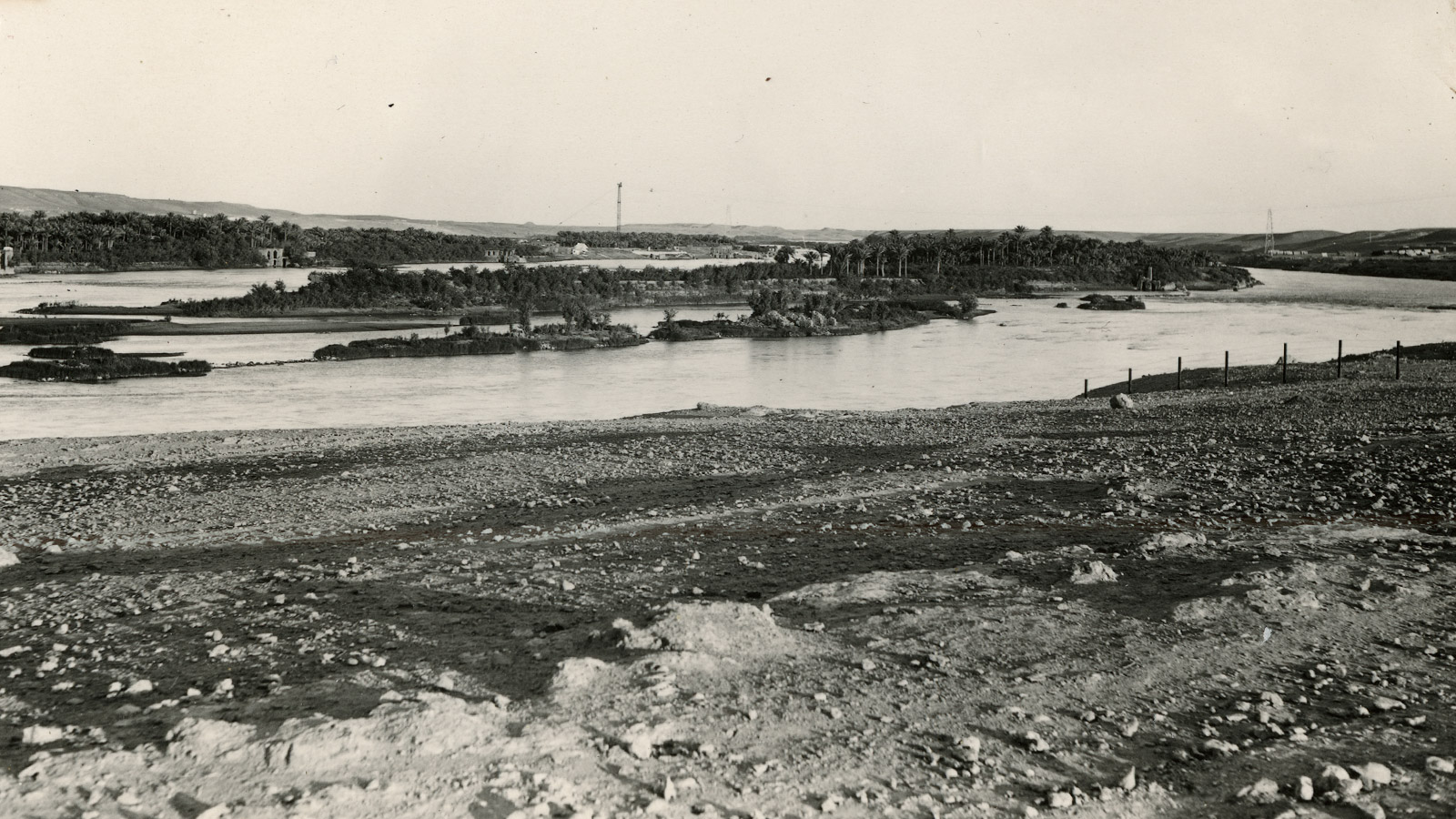
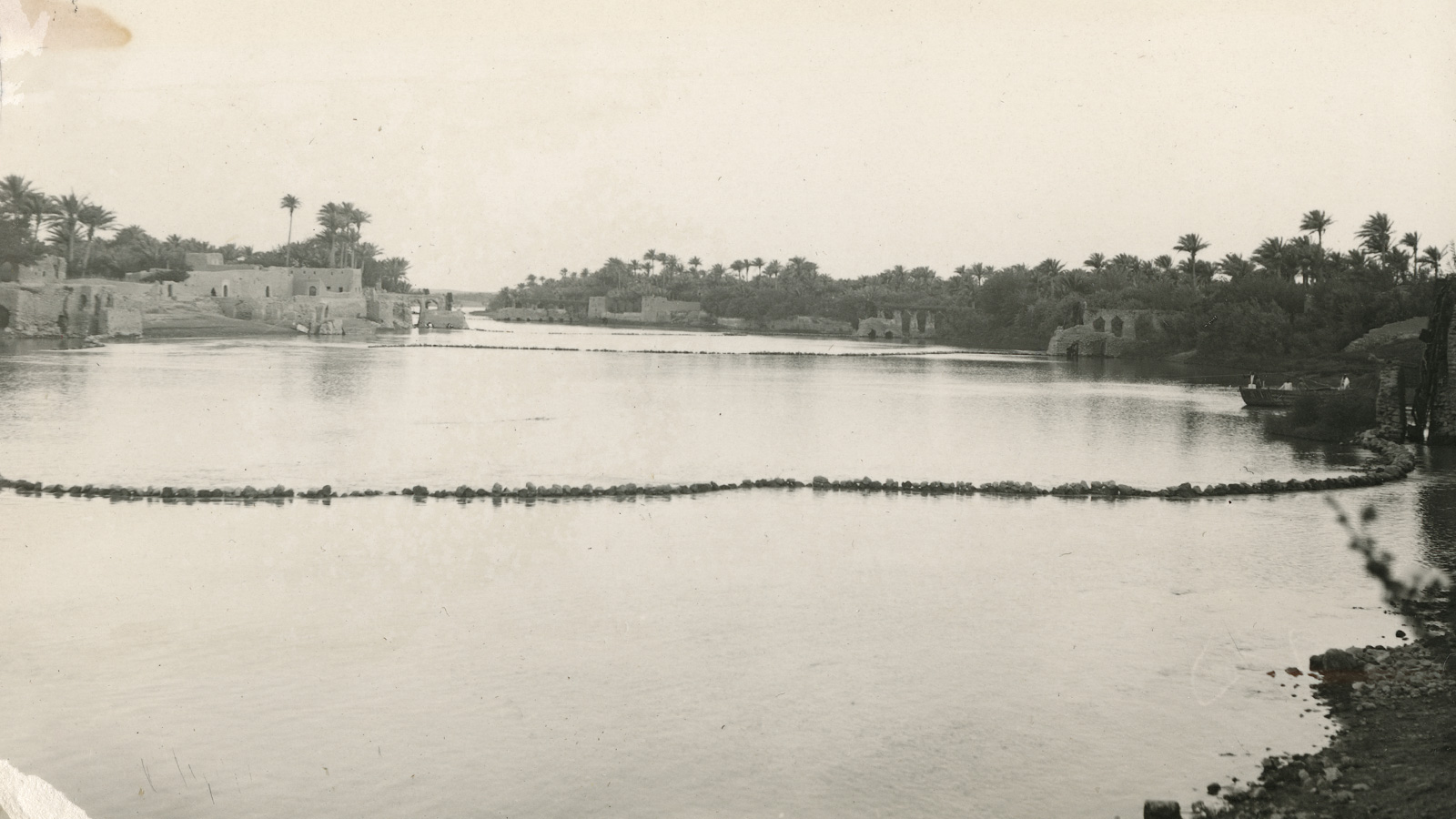
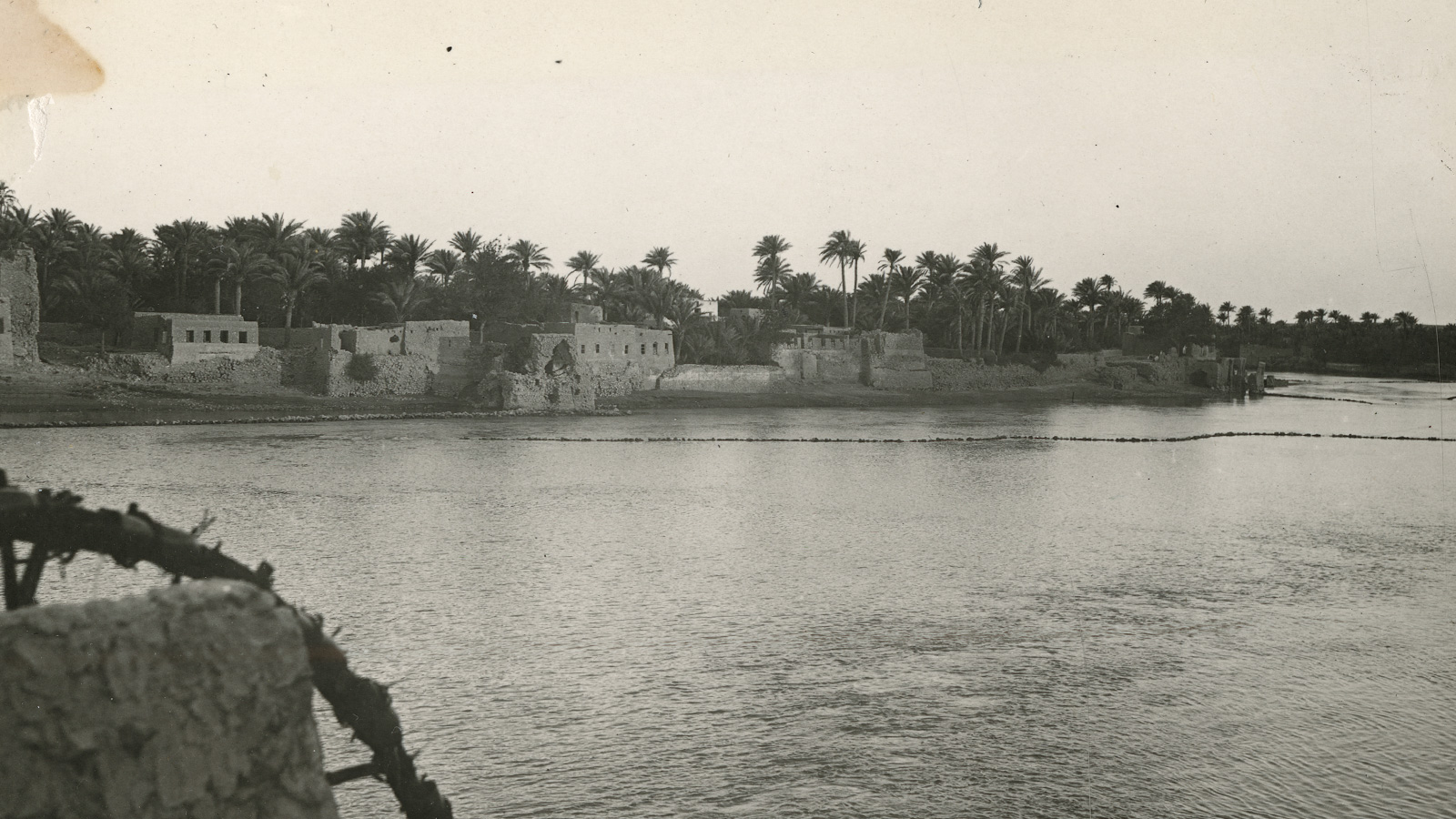
The final route was a single line from its starting point near Kirkuk to Haditha area, where it split into two branches. The northern branch crossed Syria and Lebanon to Tripoli (both under French mandate); the southern branch ran through Transjordan (now Jordan) and Palestine (now Israel) to Haifa (both under British mandate). The project, which crossed several countries and required negotiations with each of them, was completed in 1934.
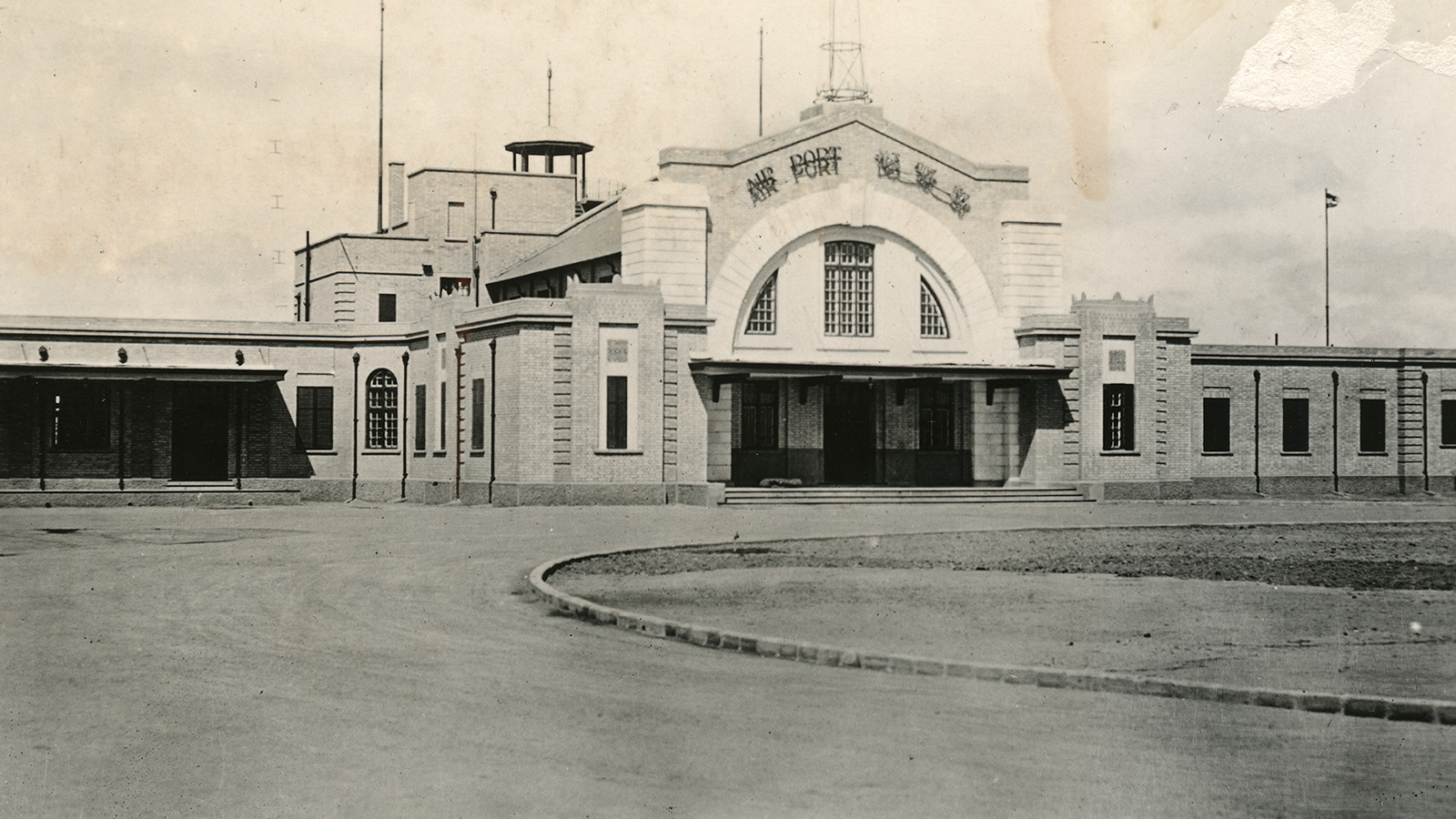
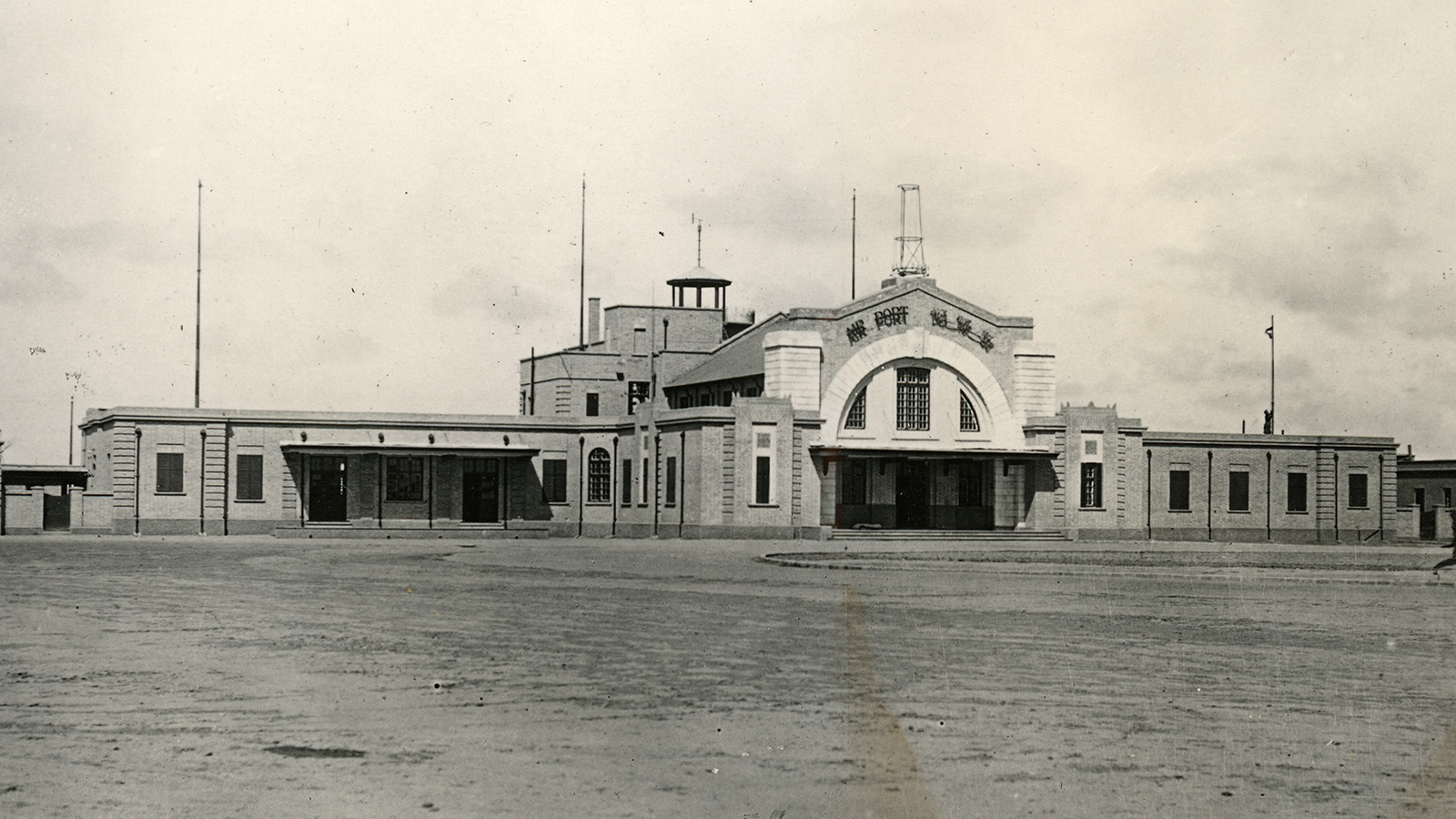
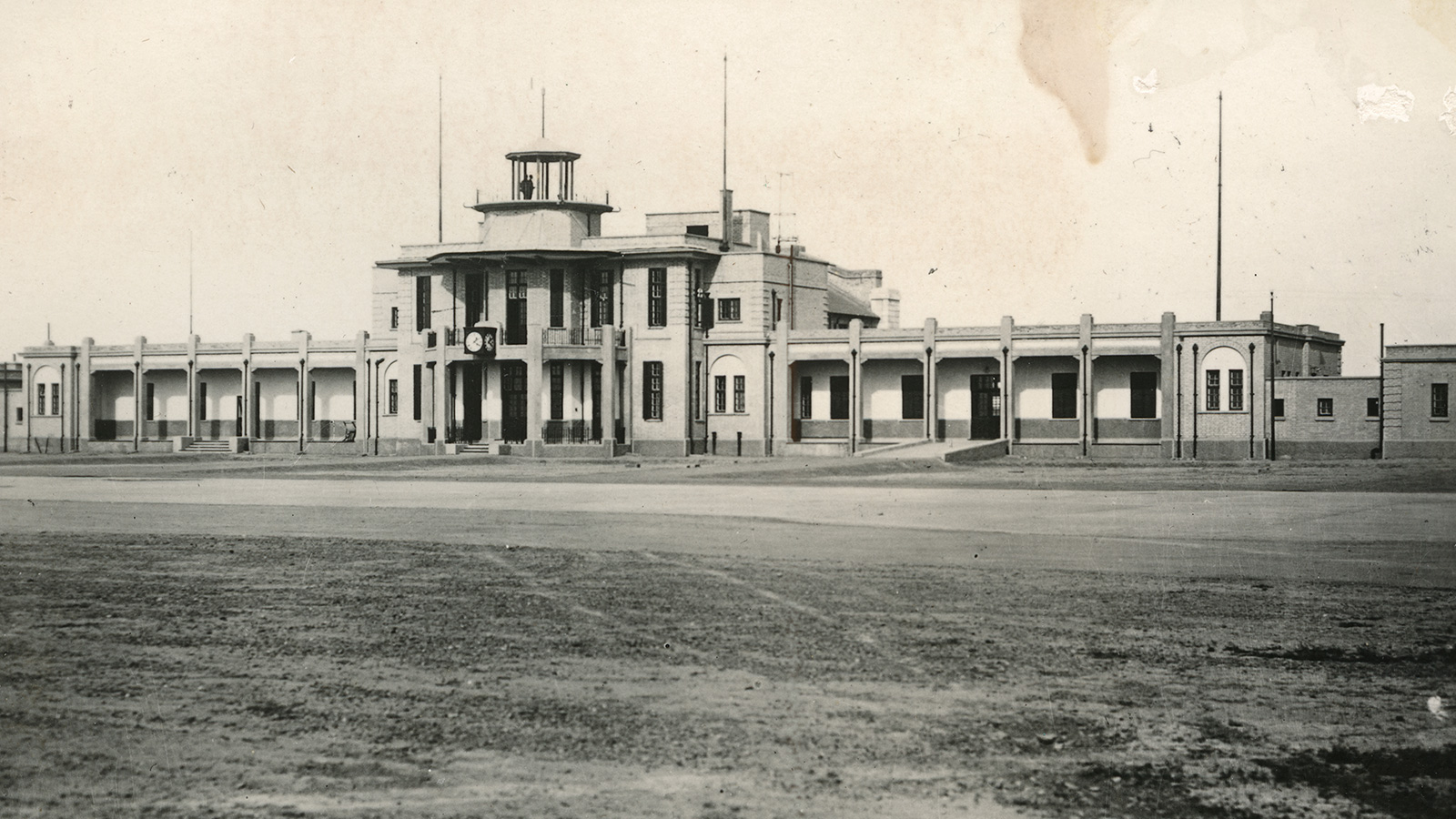
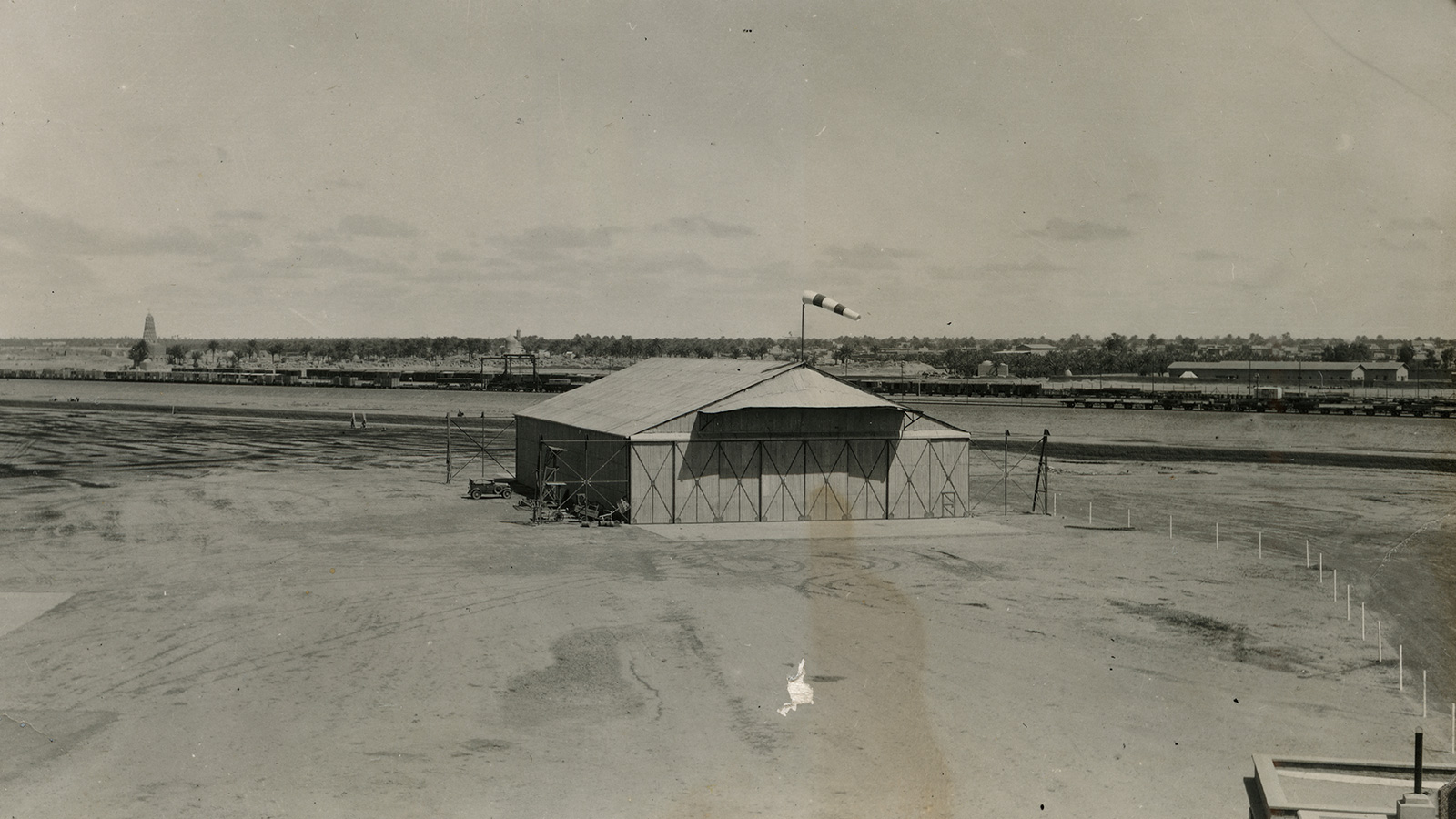
It was probably during construction of the first section from Kirkuk to Haditha, that the Iraq Petroleum Company, following common practice for projects of this kind, commissioned a photographic record of this pioneering feat of engineering. The images were then presumably gathered into an album and sent to the company’s shareholders, one of whom was Calouste Gulbenkian.
Catalogued as Álbum de fotografias de Haditha (Haditha Photographic Album), by an unknown photographer and dated c. 1933, the album contains 74 photographic prints, documenting the construction of the pipeline.
What the photographs show
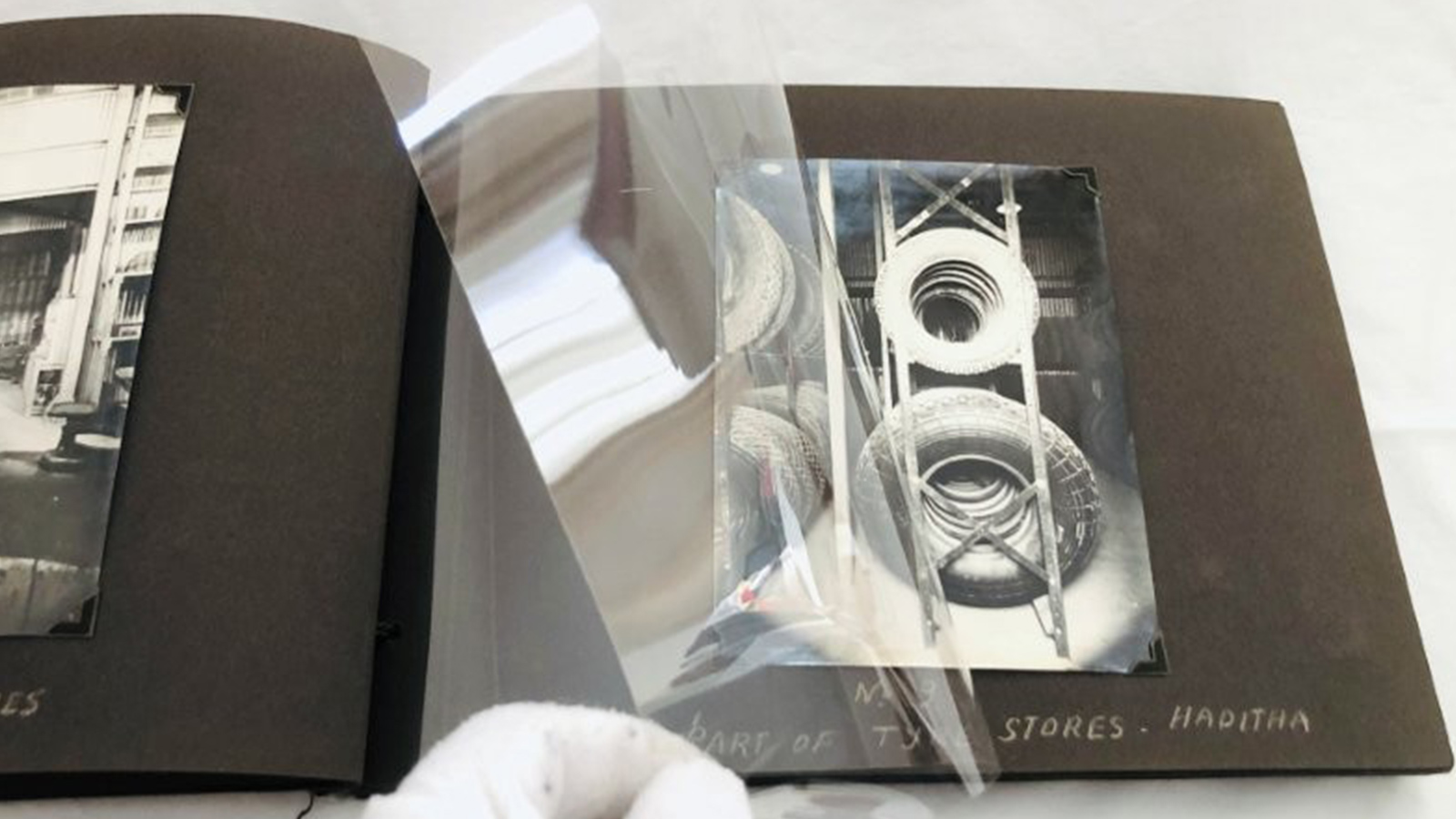
The photographs show the workshops and warehouses at Haditha, the nerve centre of the project, and point where the pipeline forked. They also offer glimpses of the depot where the Iraq Petroleum Company’s vehicles, where maintained, and of the open-air yards where hundreds of sections lie stacked while others are moved by crane. We see a hospital for the workforce and the residential quarter for first-class workers. Near Haditha, an Iraq Petroleum Company ferry carries cars across the Euphrates.
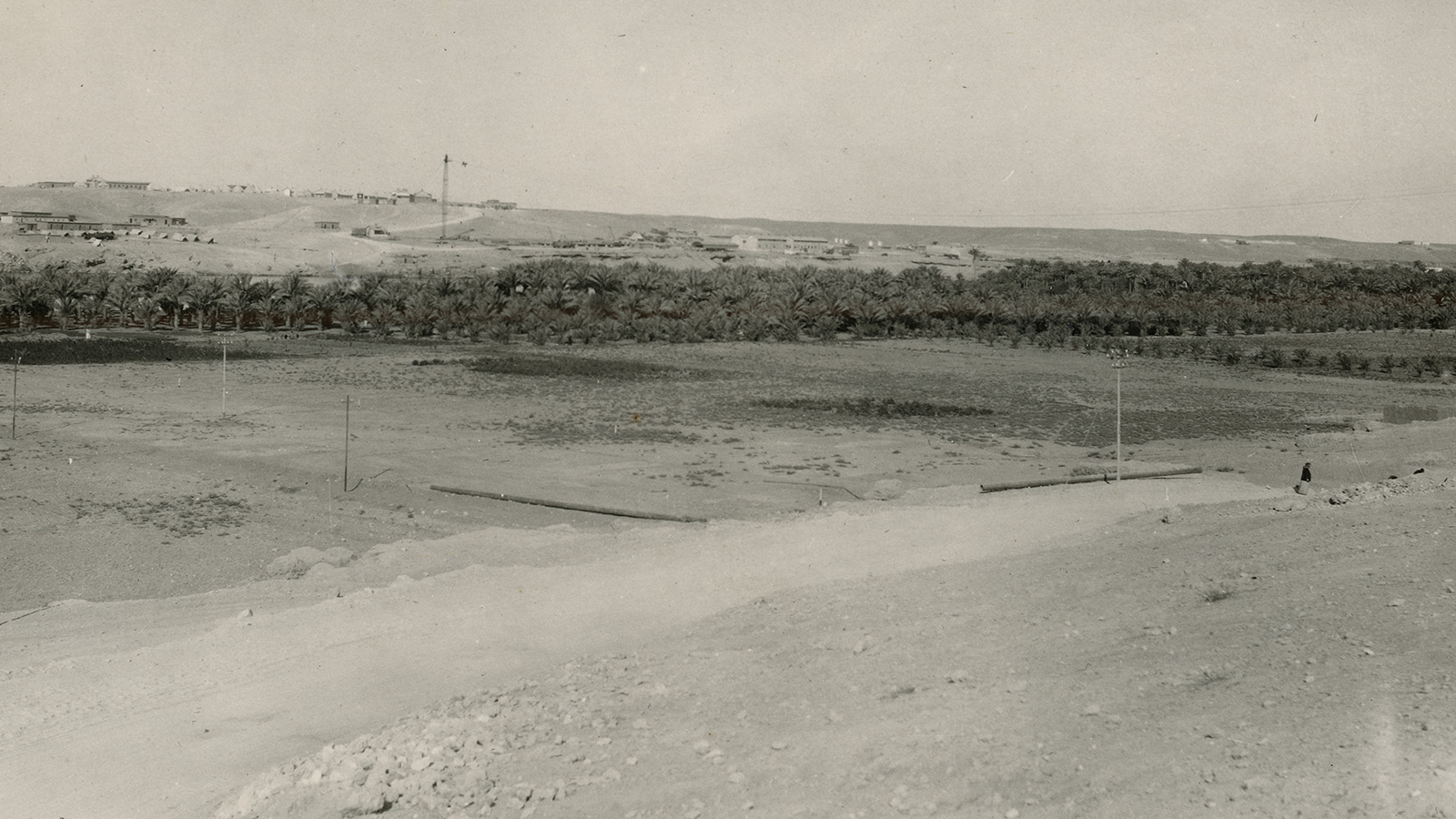
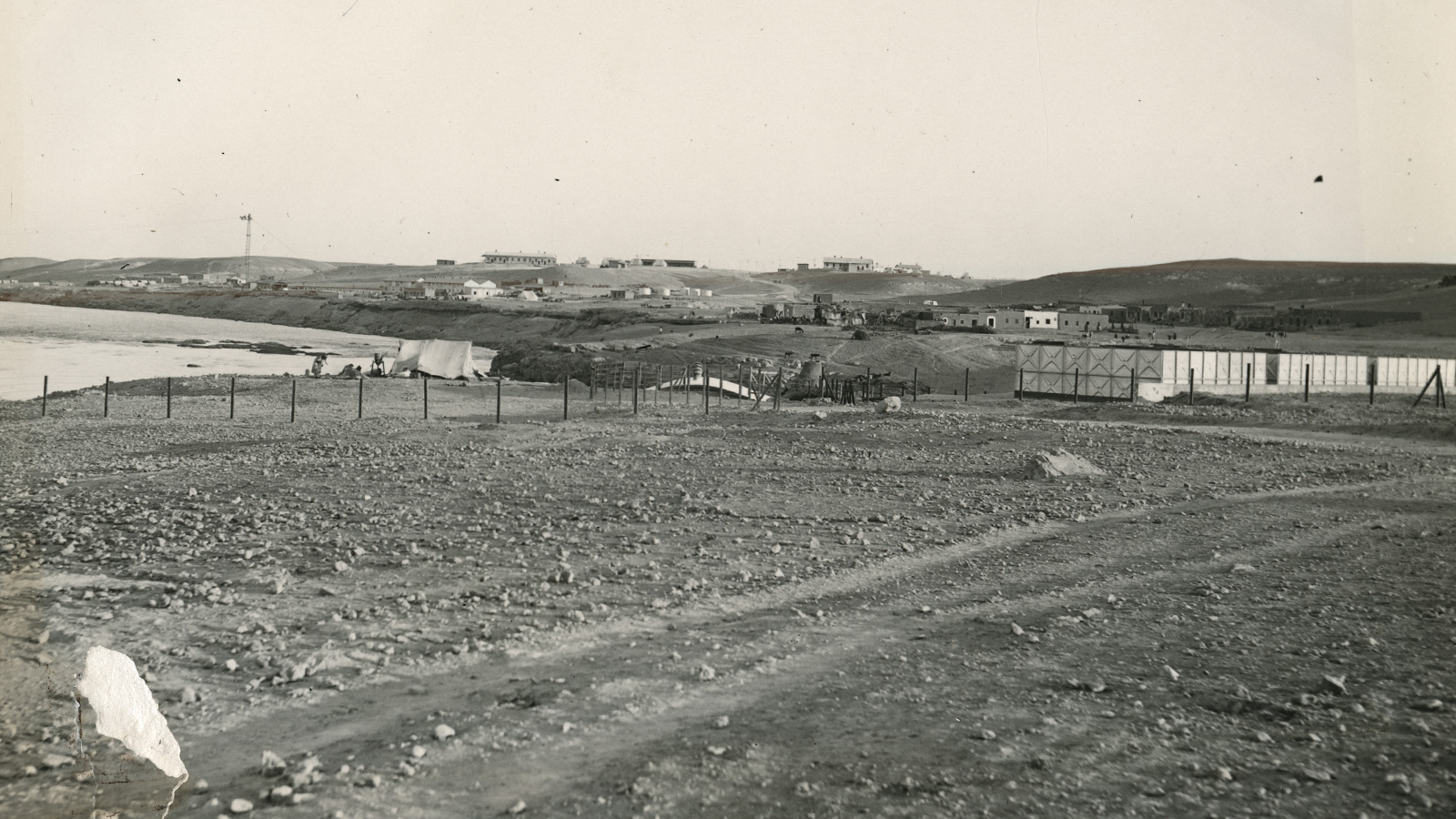
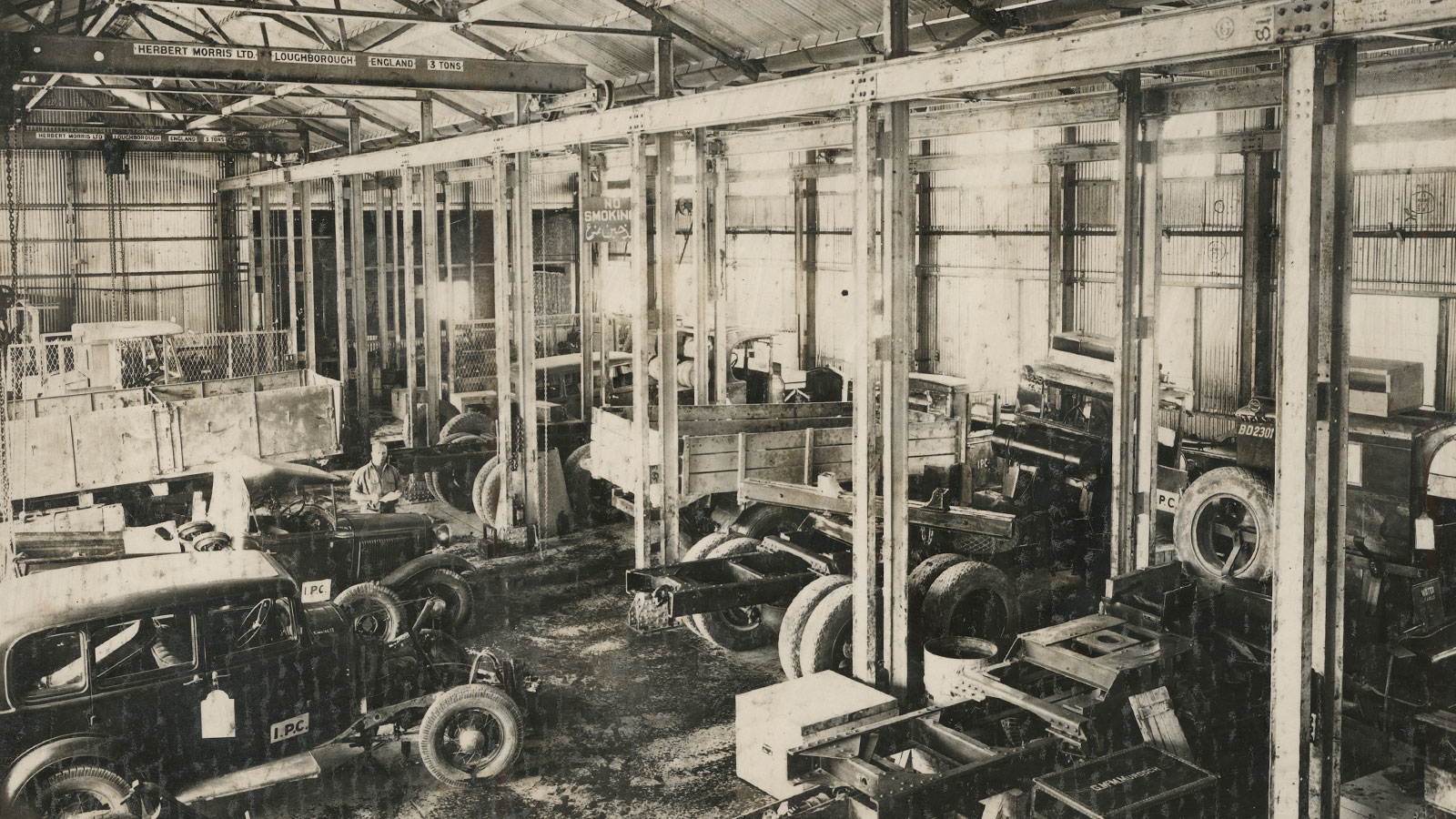
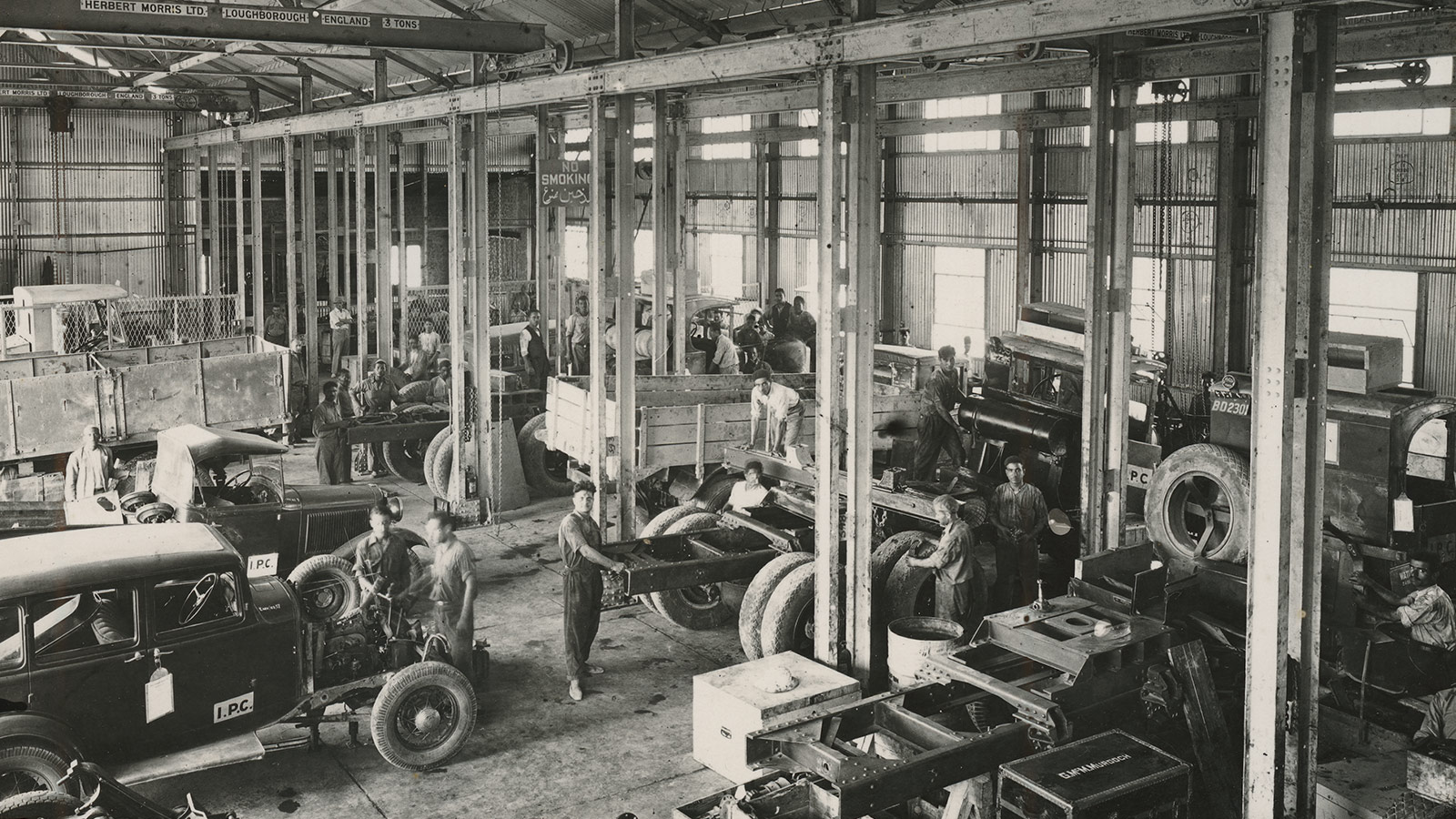
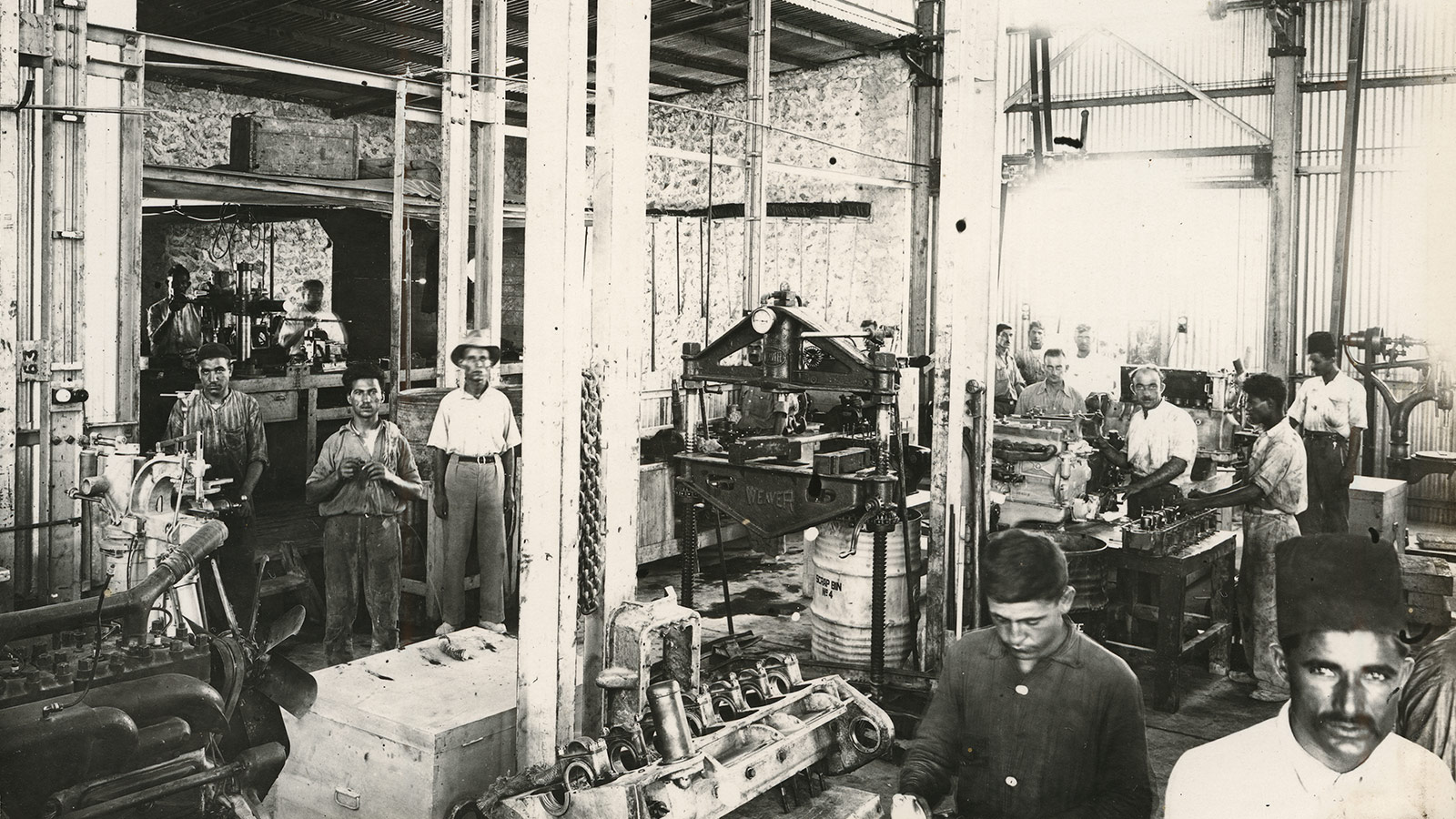
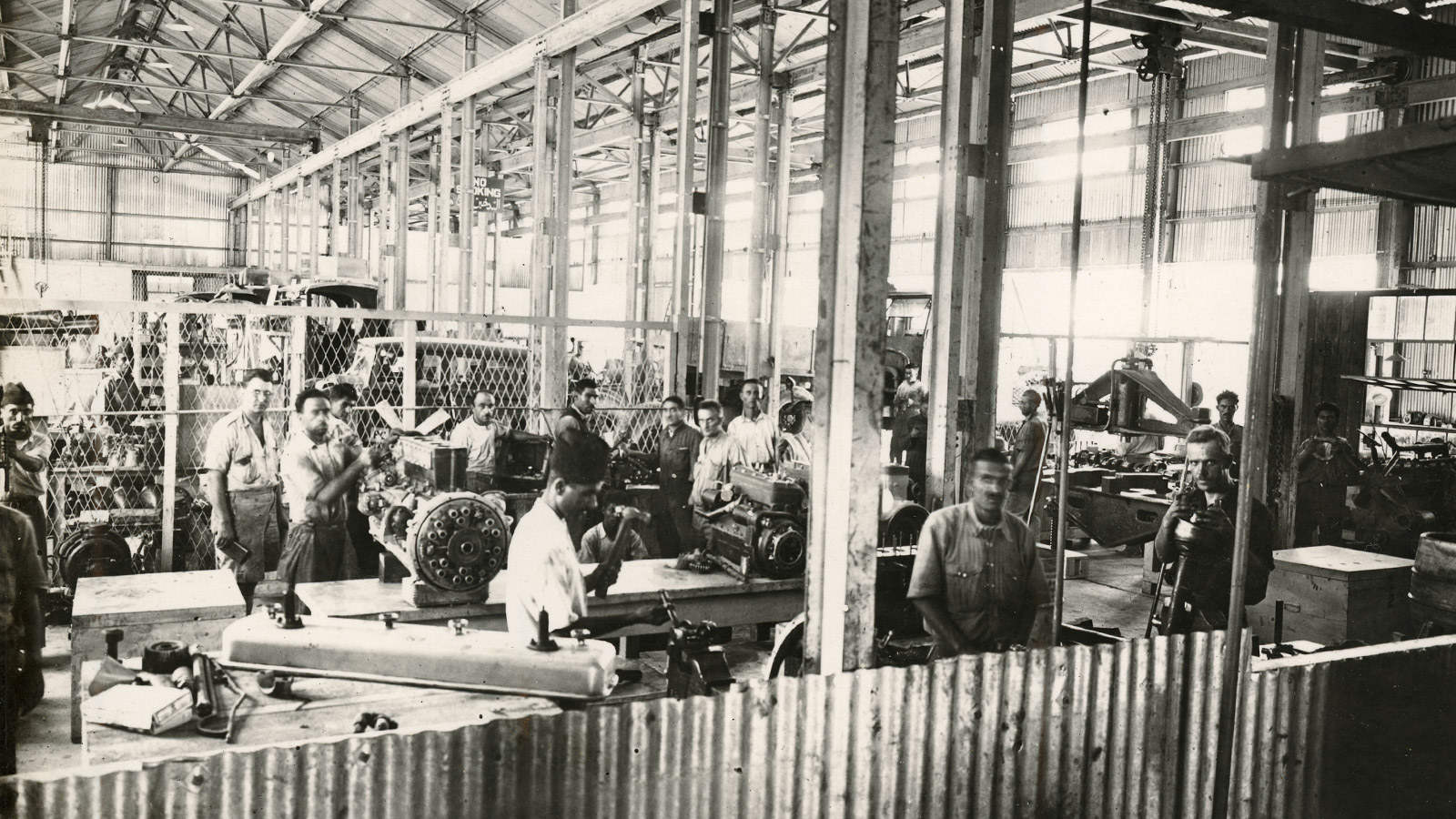
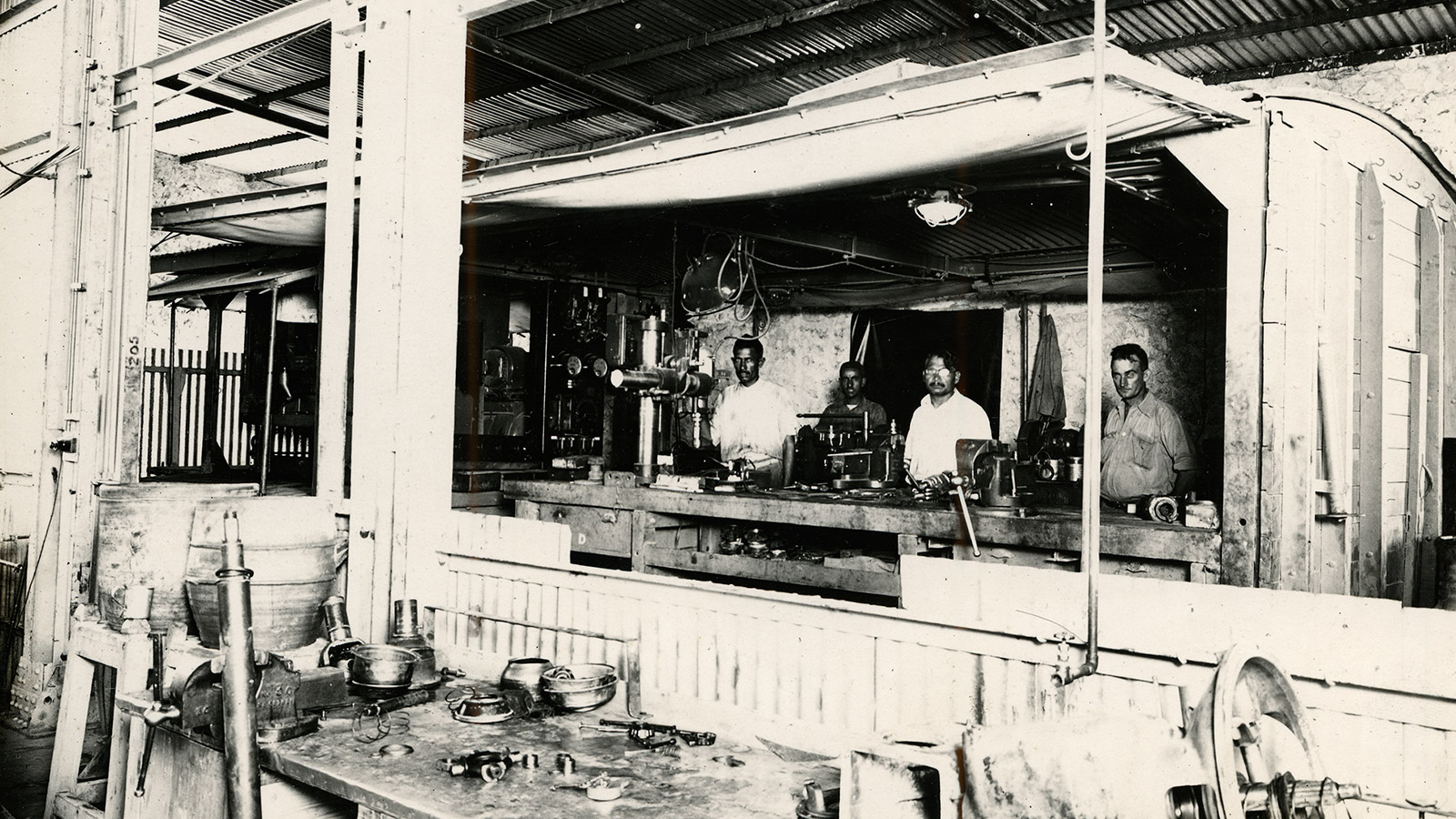
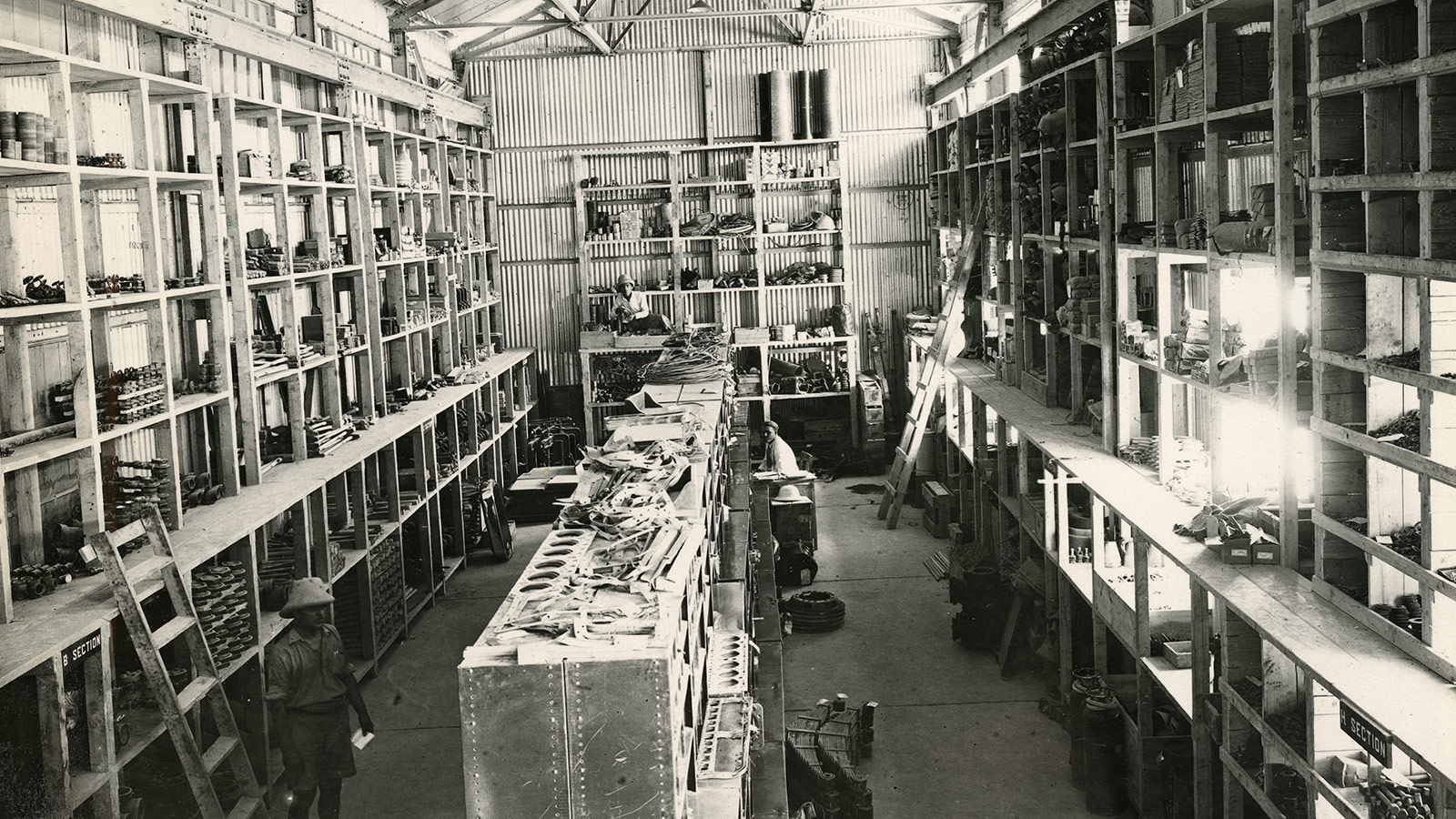
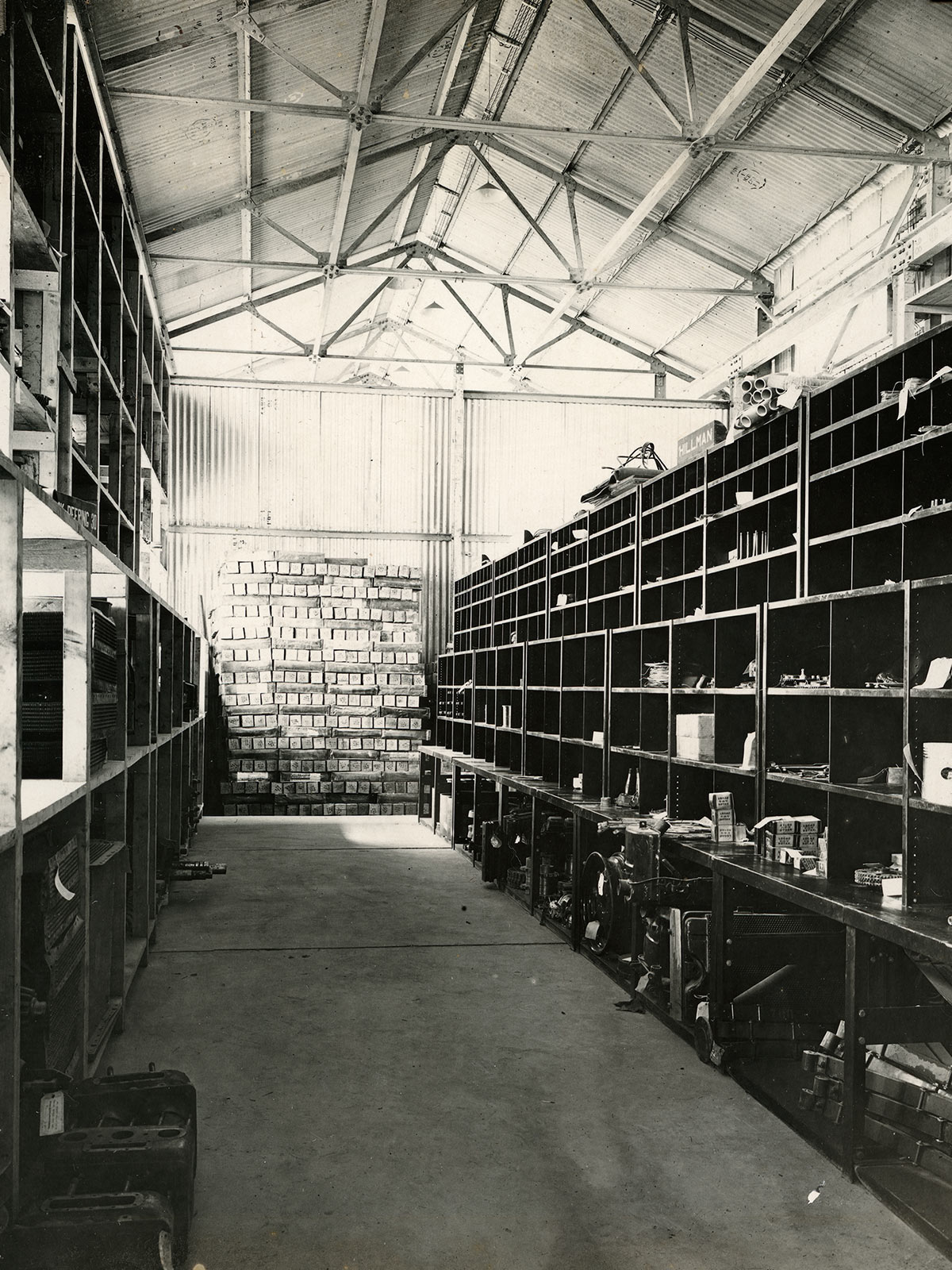
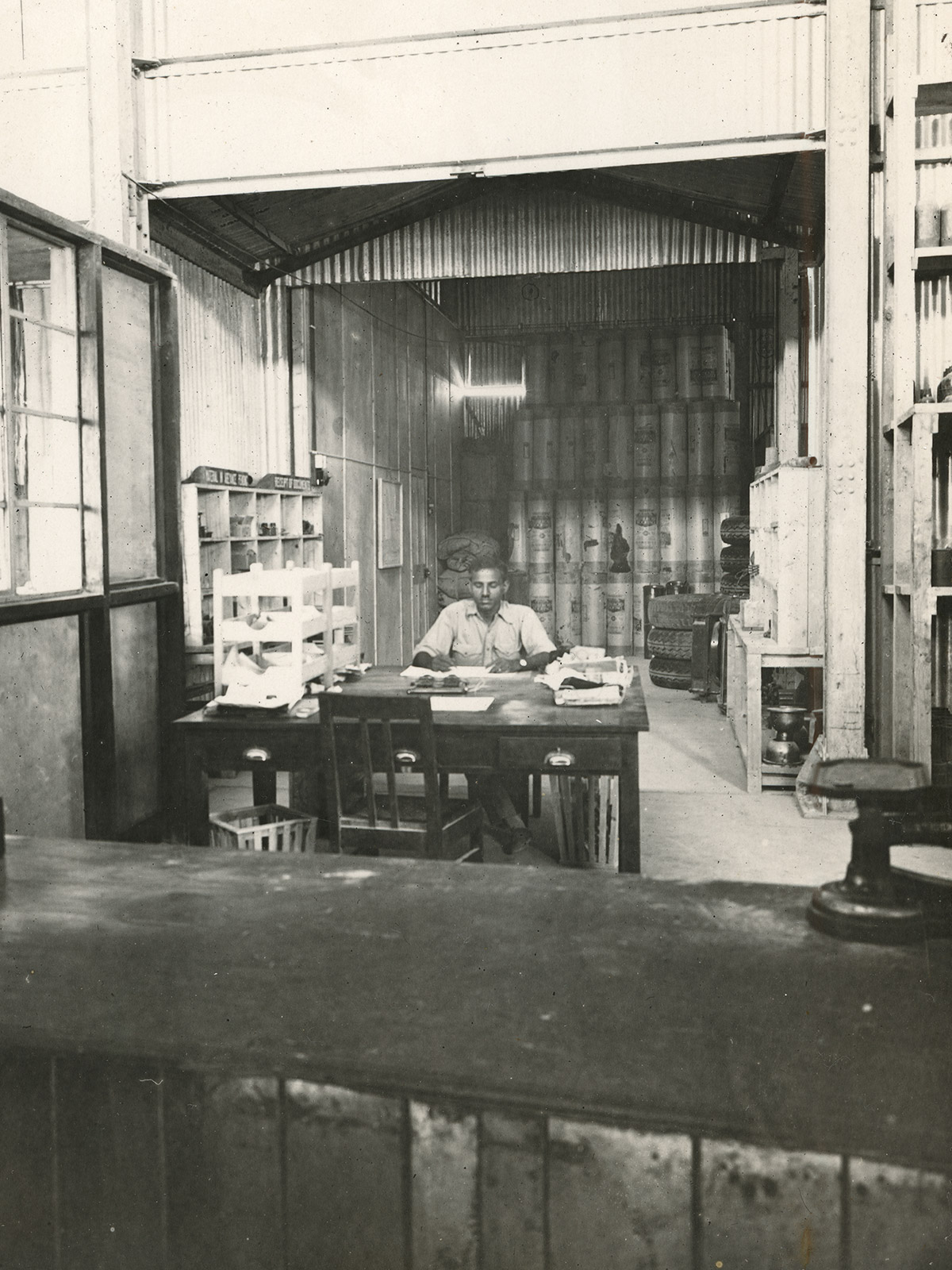
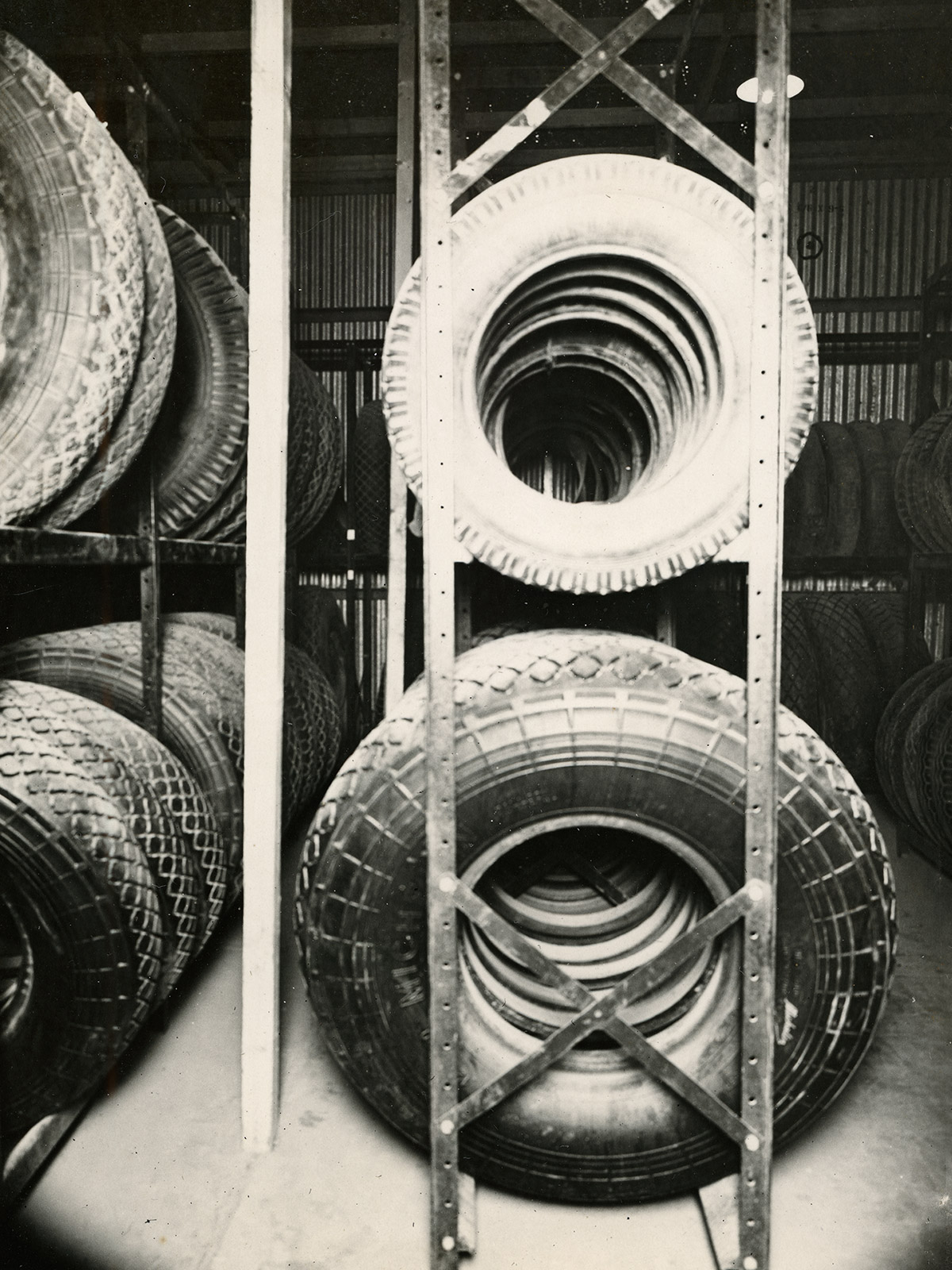
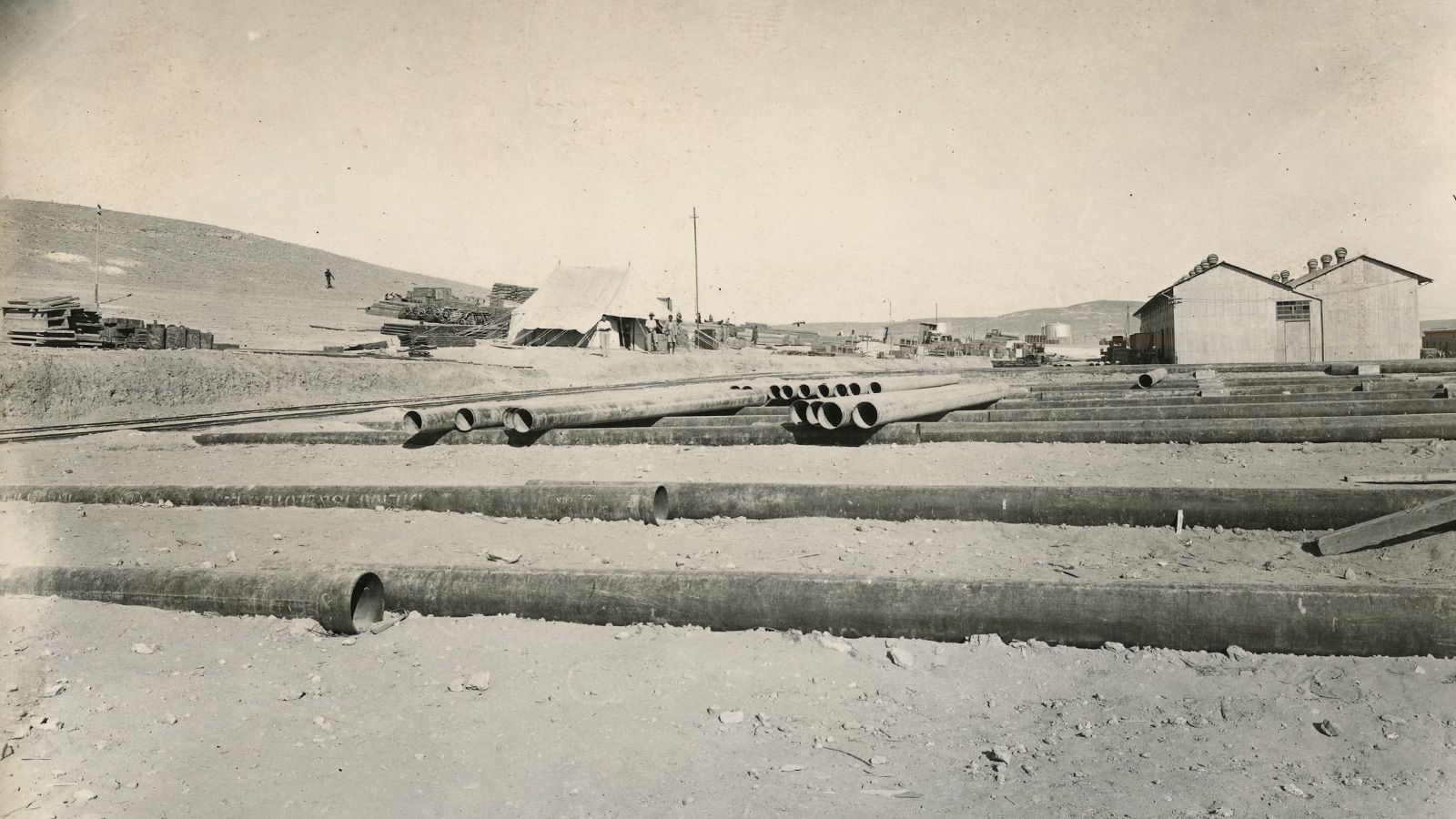
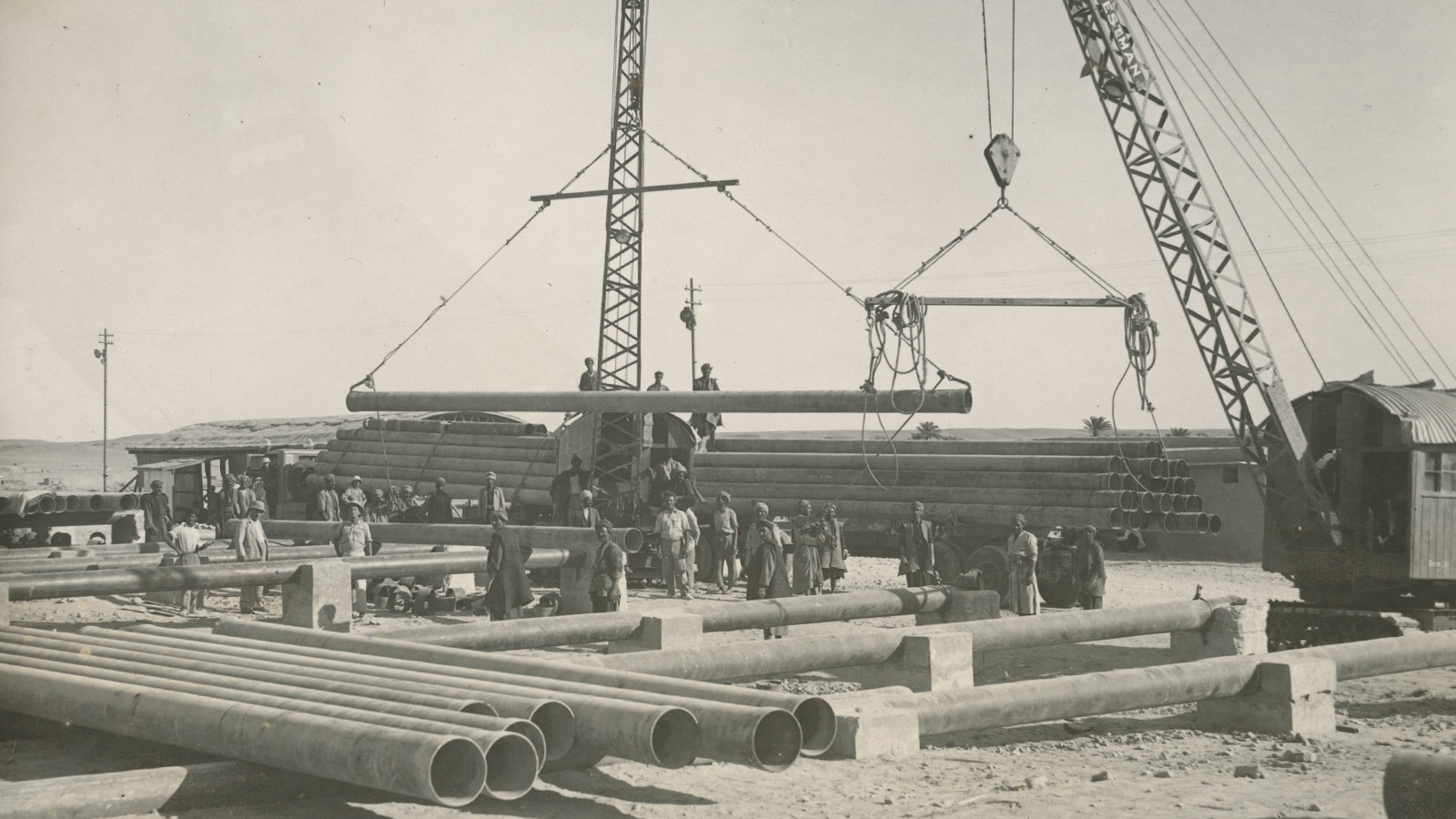
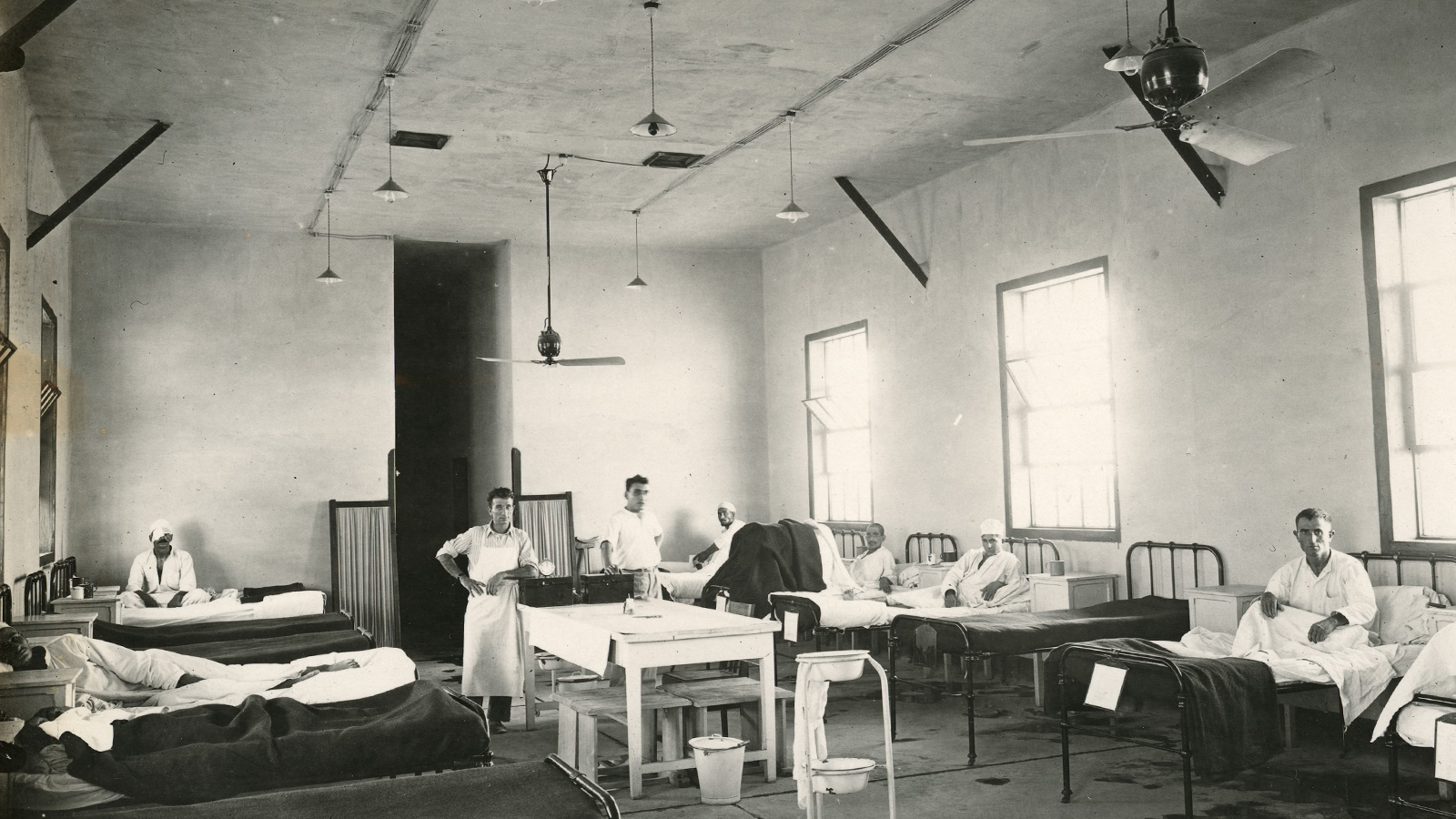
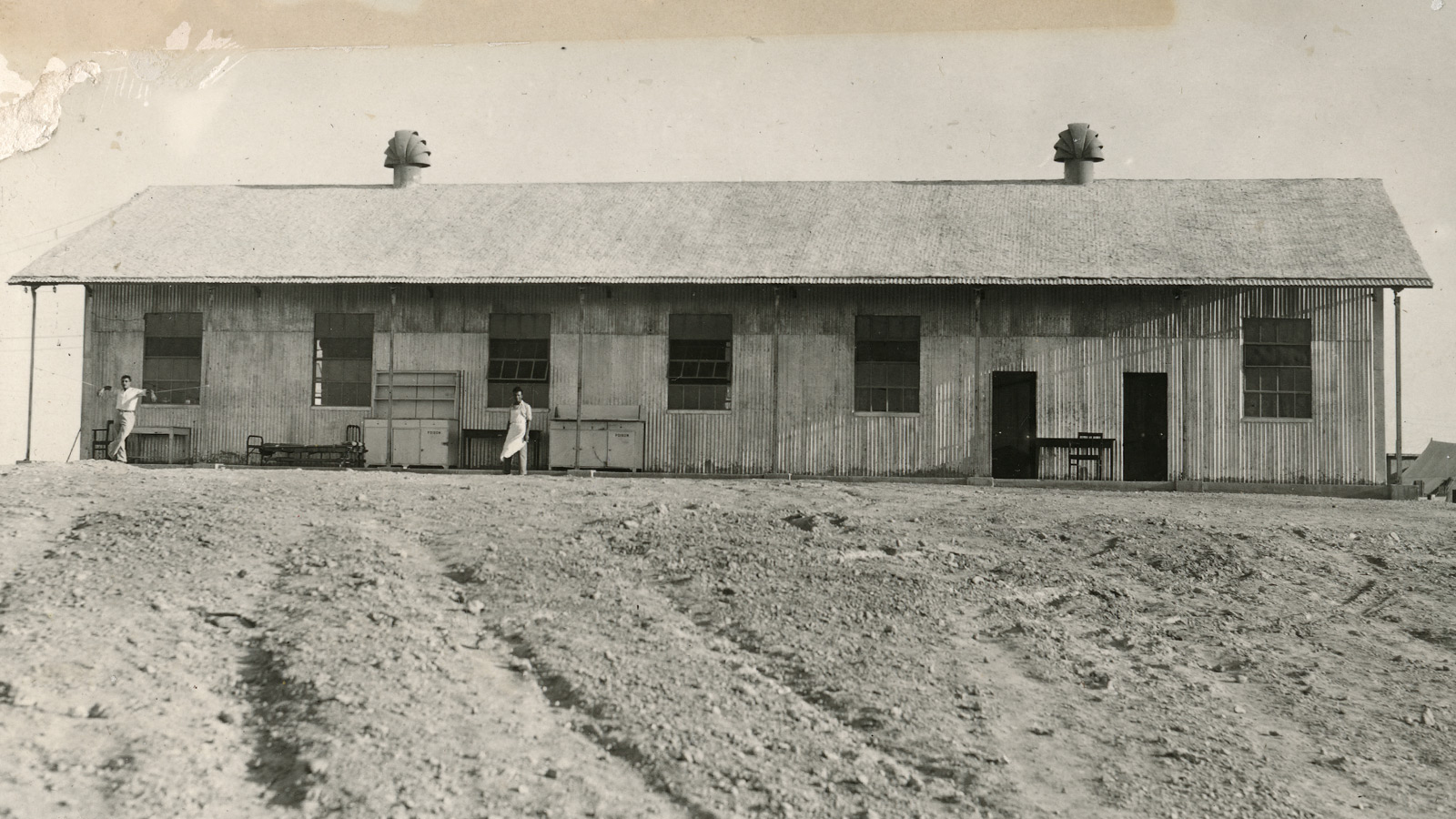
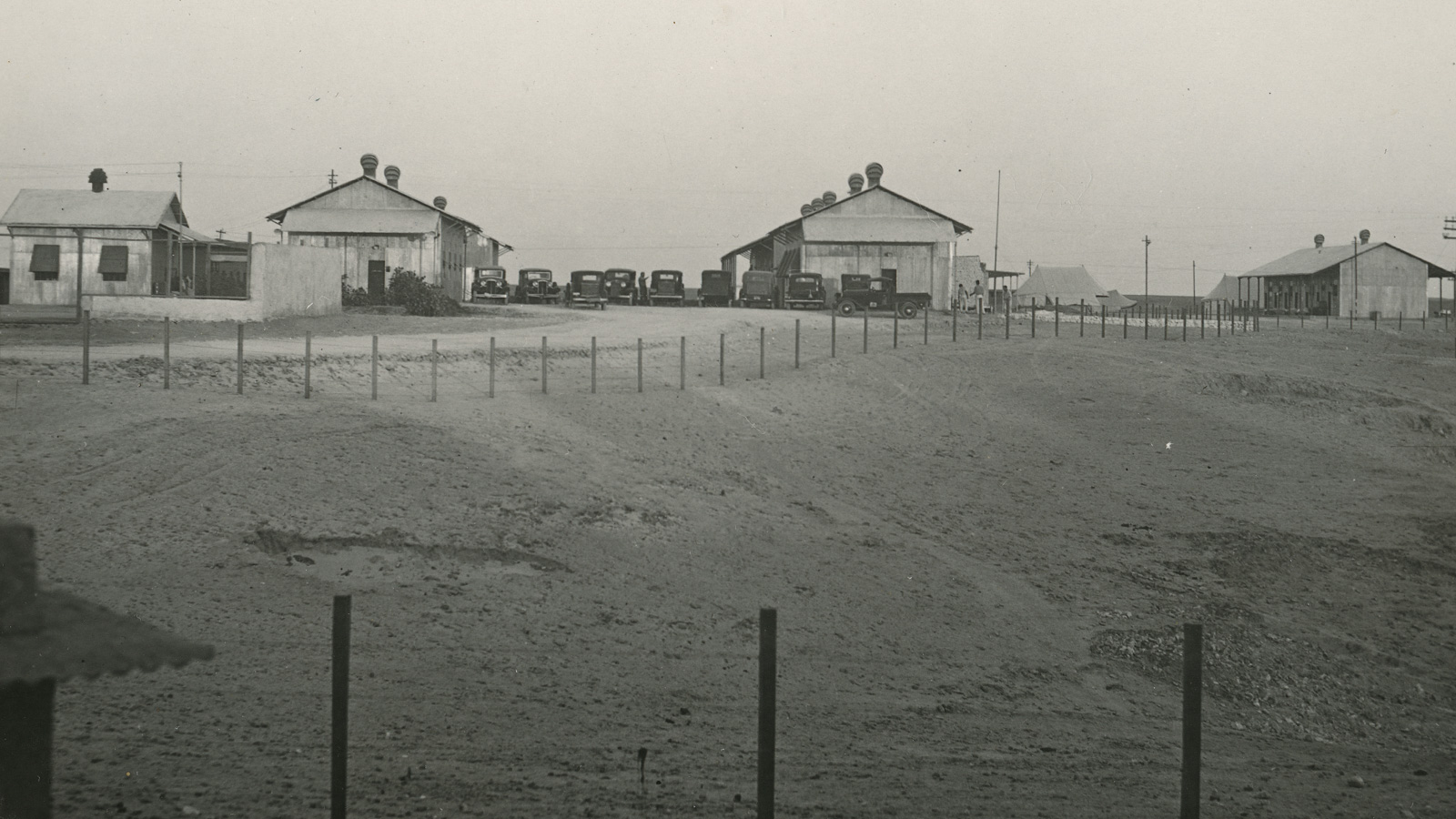
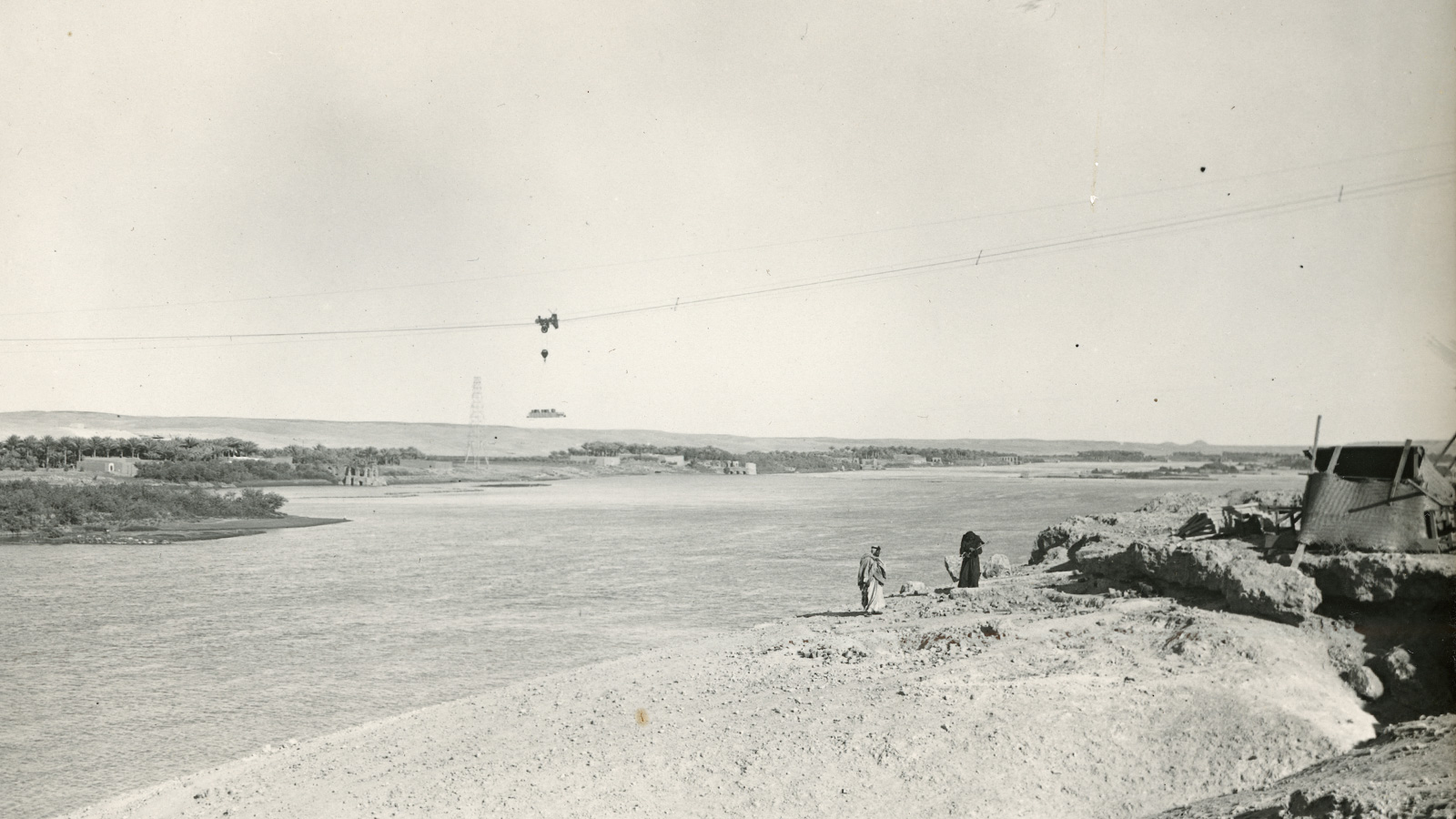
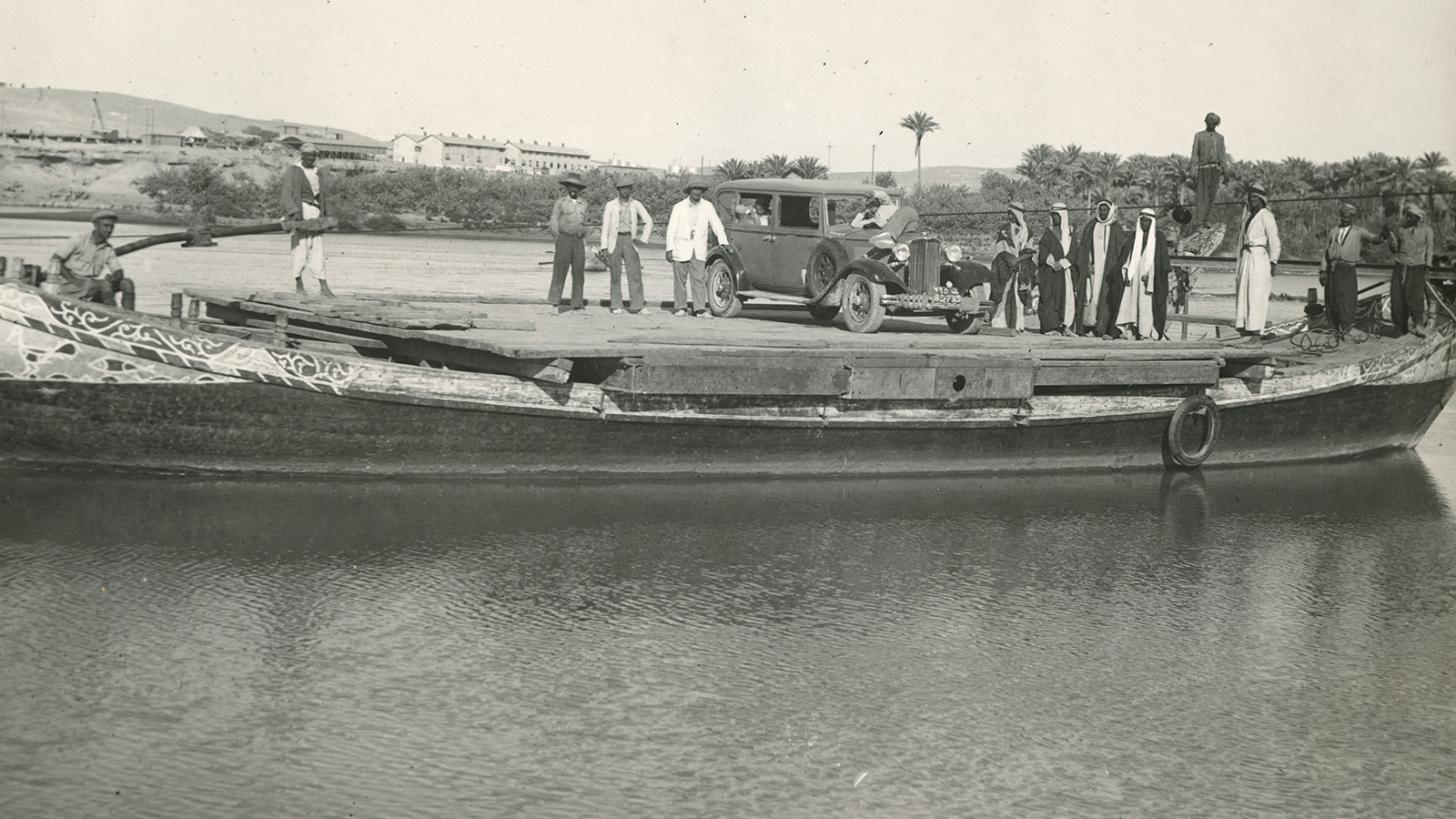
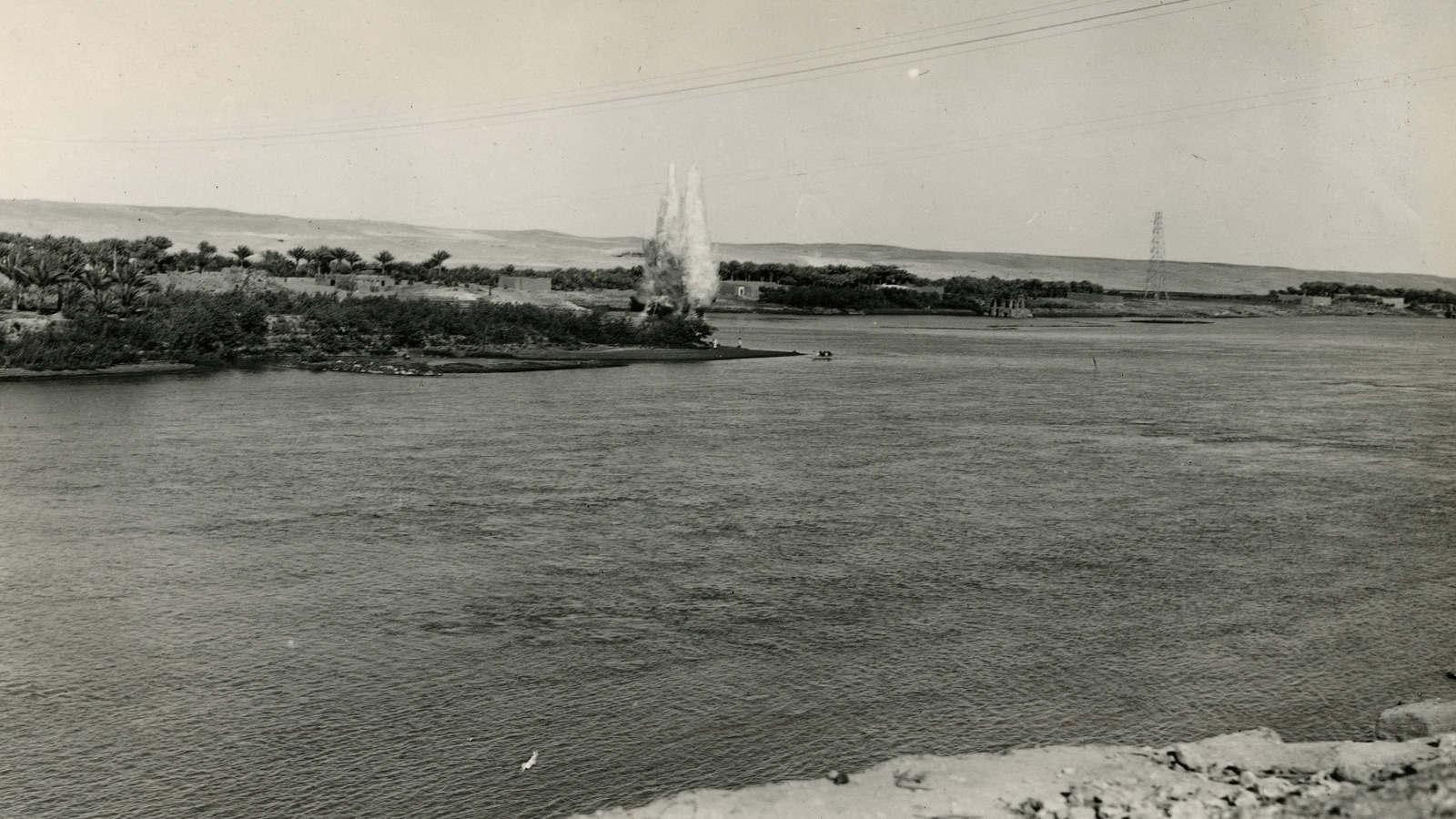
We travel along the route, stopping at Mile 102, at the K2 pumping station and at Mile 184, at the start of the Tripoli branch. There, a camp and a group of workers suggest the work pressing forward.
A worker on a camel, carrying telephone cable and captioned “IPC Telephone Lines Man”, reminds us of the communications the project depended on.
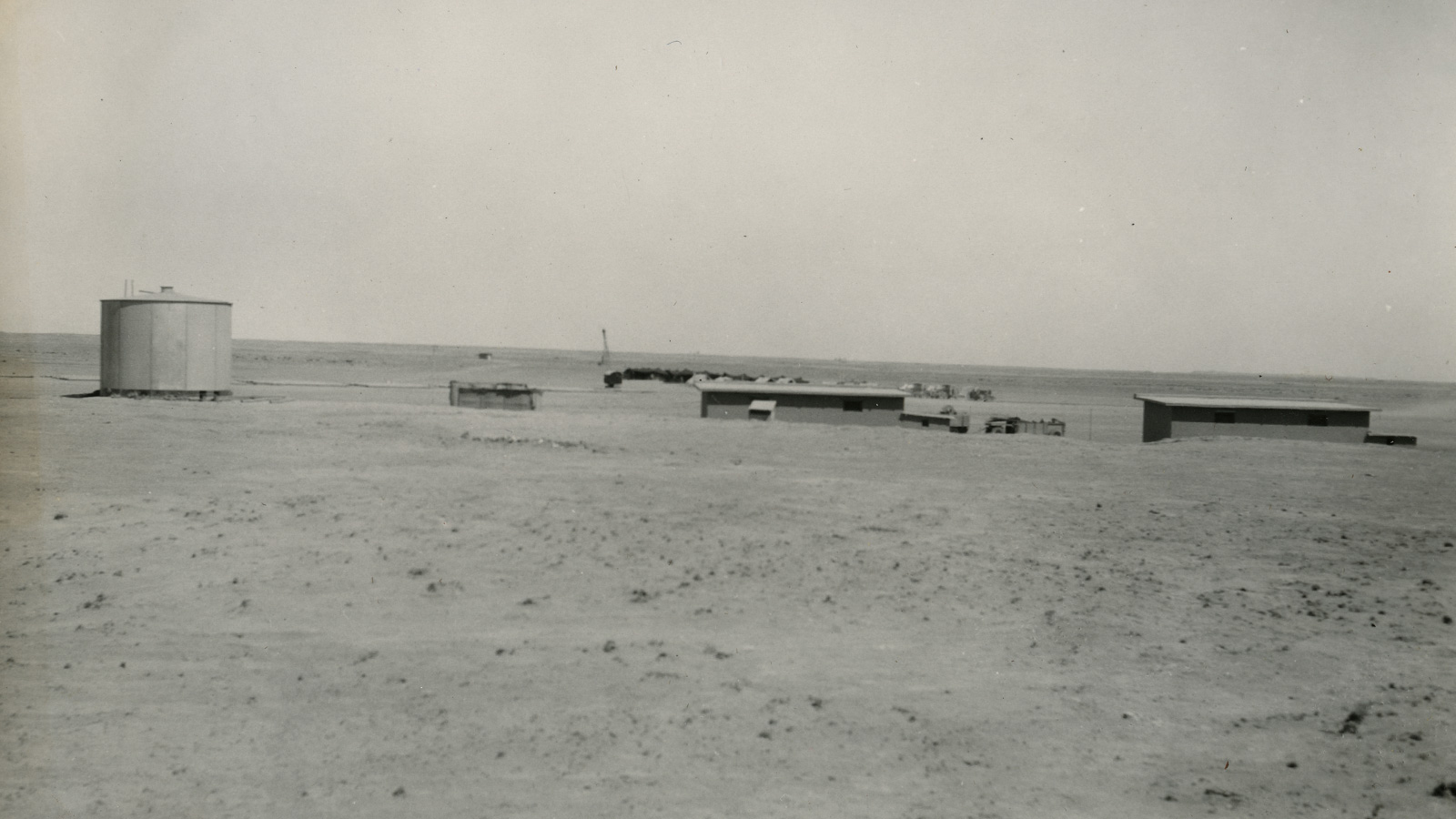
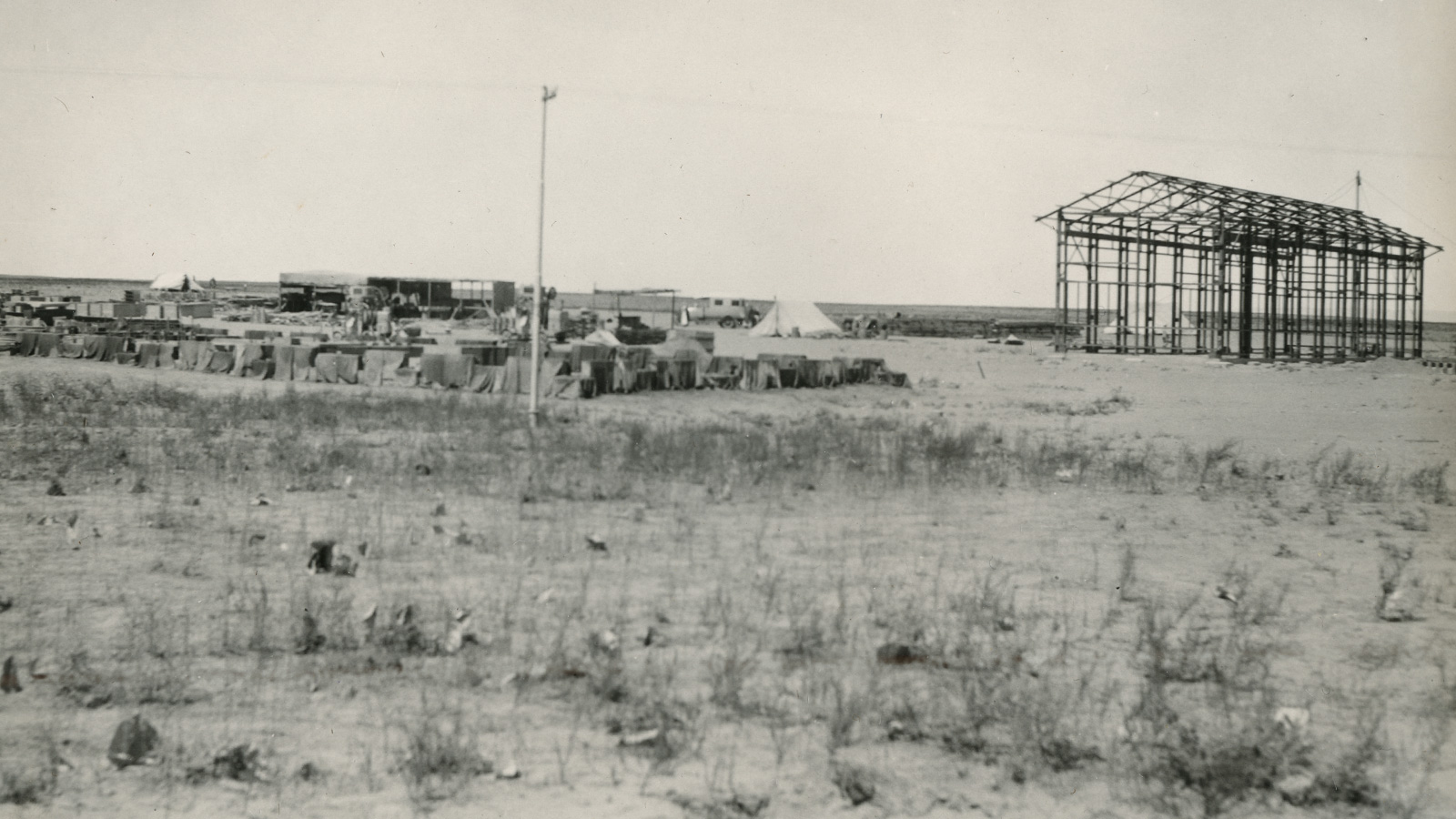
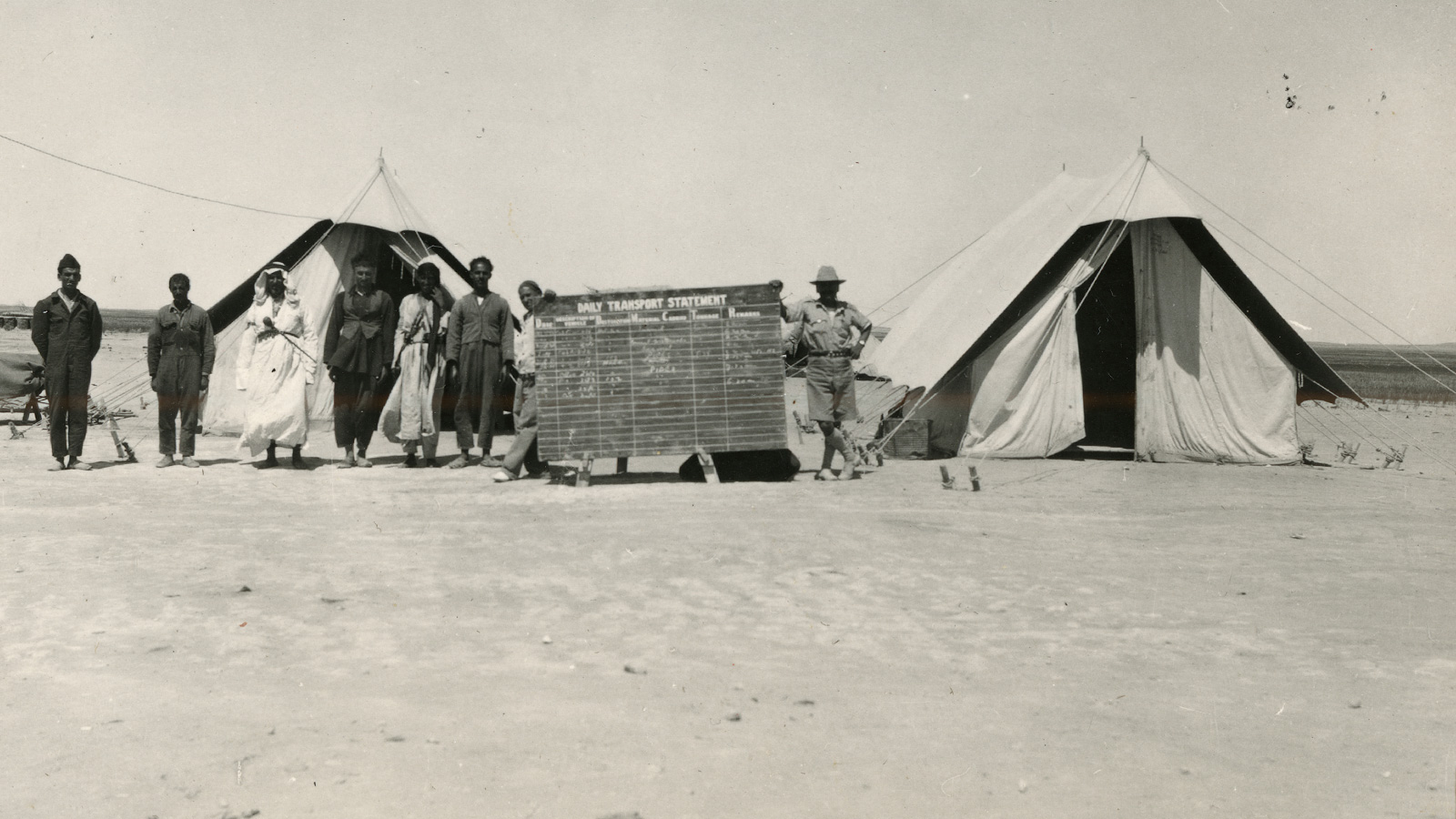
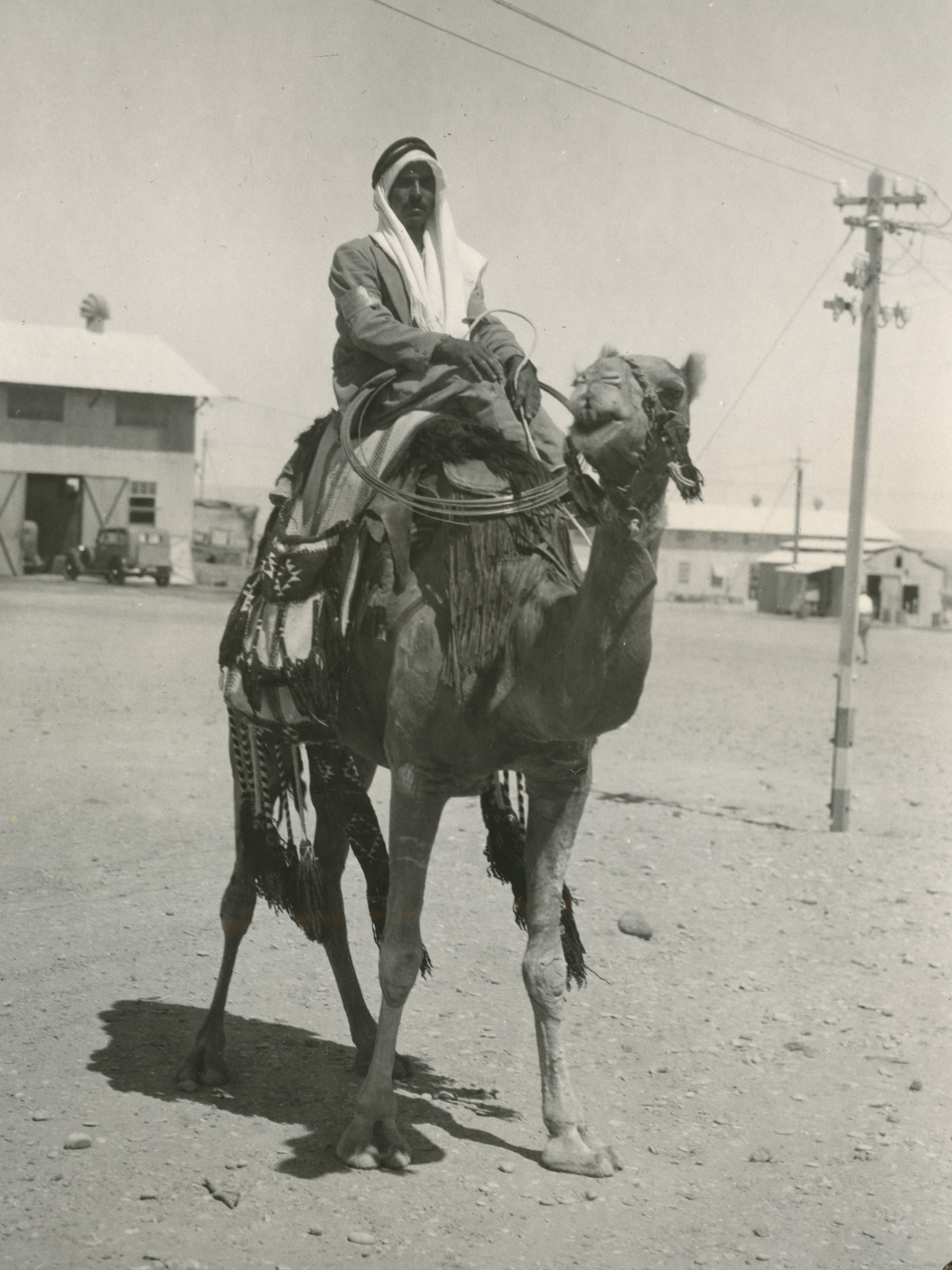
Photographs of the newly built Fellujah (Fallujah) Iron Bridge over the Euphrates which carried the vehicles and heavy loads essential to the works testify to the scale of the infrastructure. So does a view of the railway station at Ramadi, a logistics hub for moving materials, with access to the rail network.
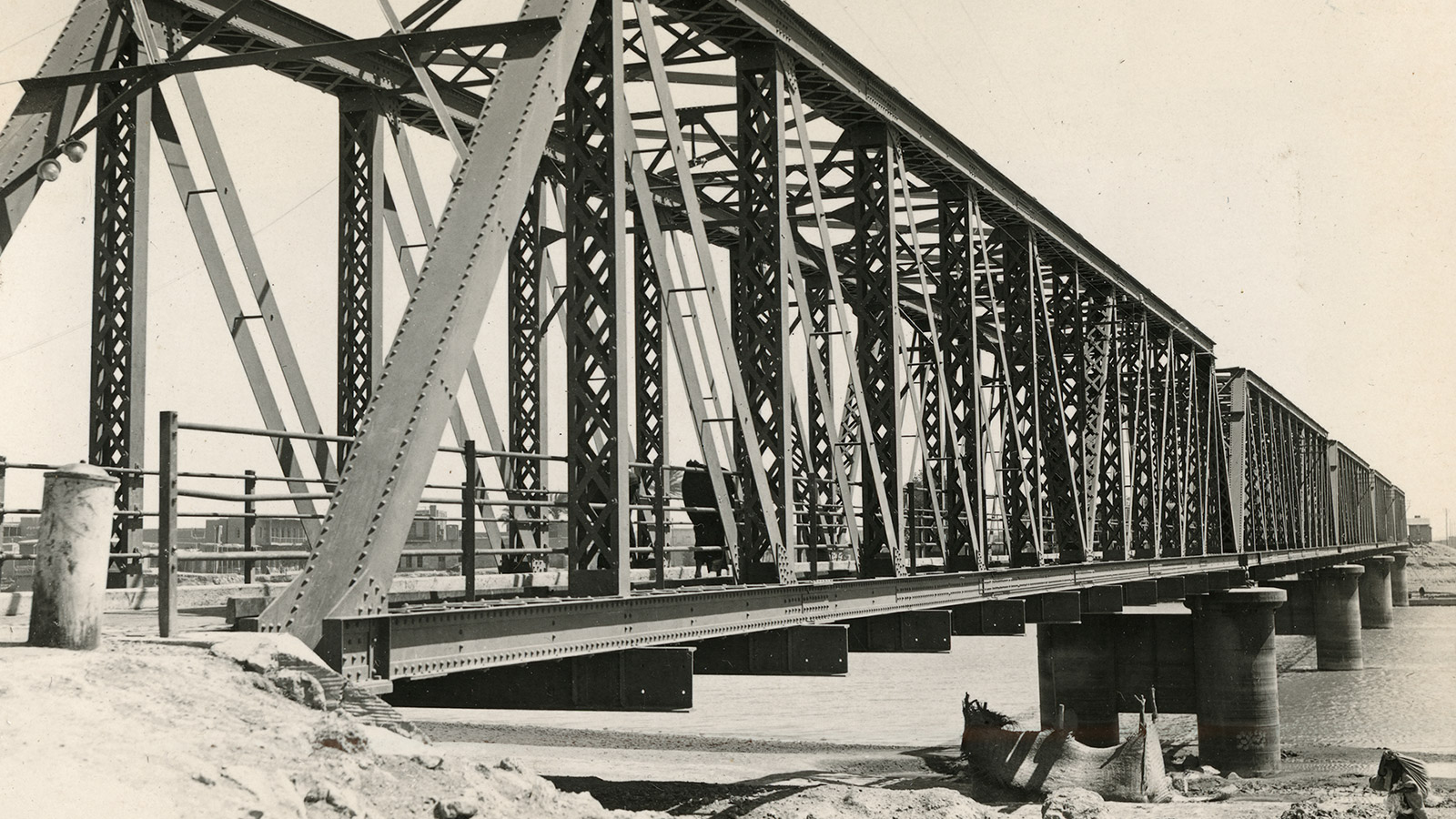
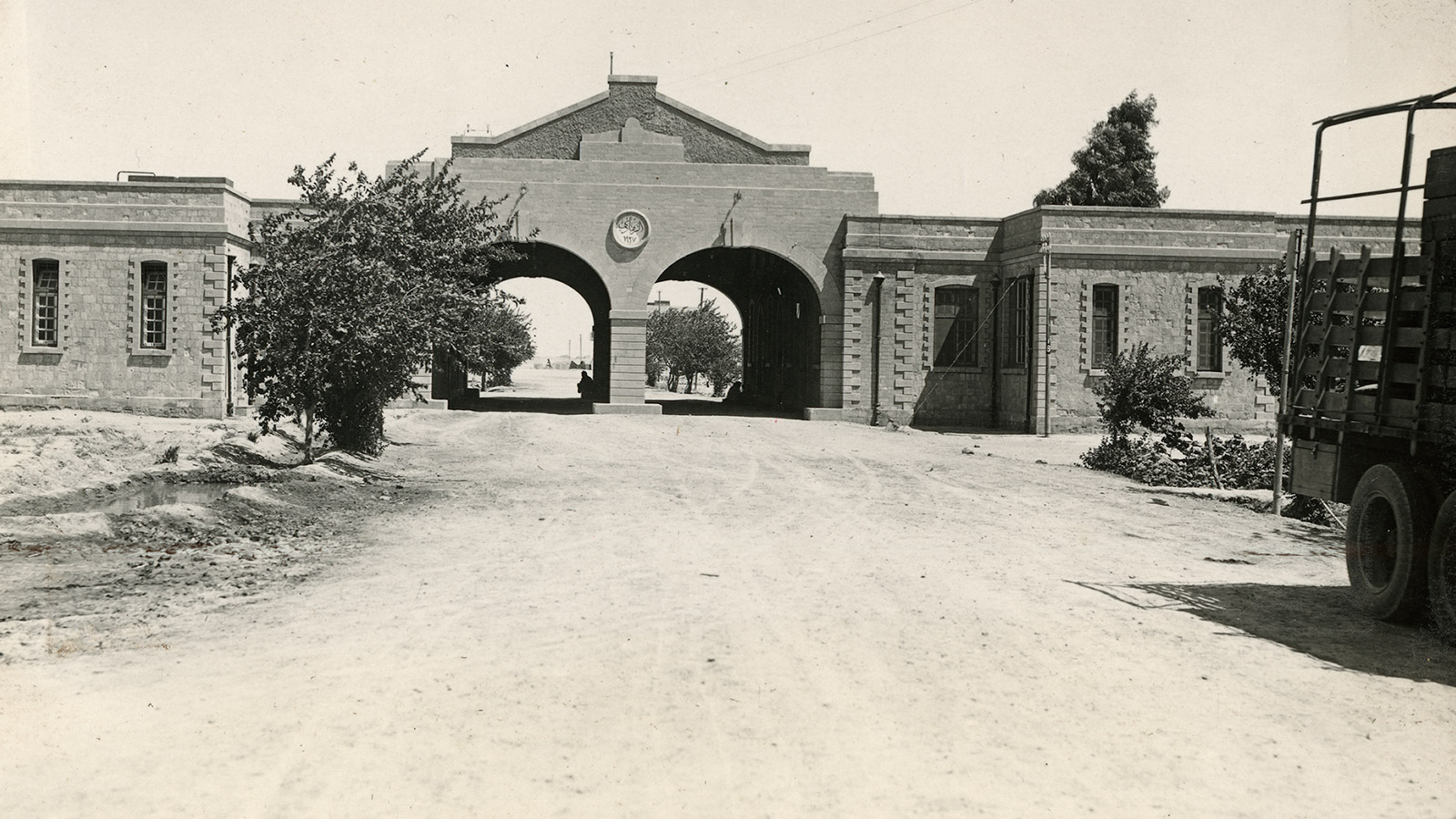
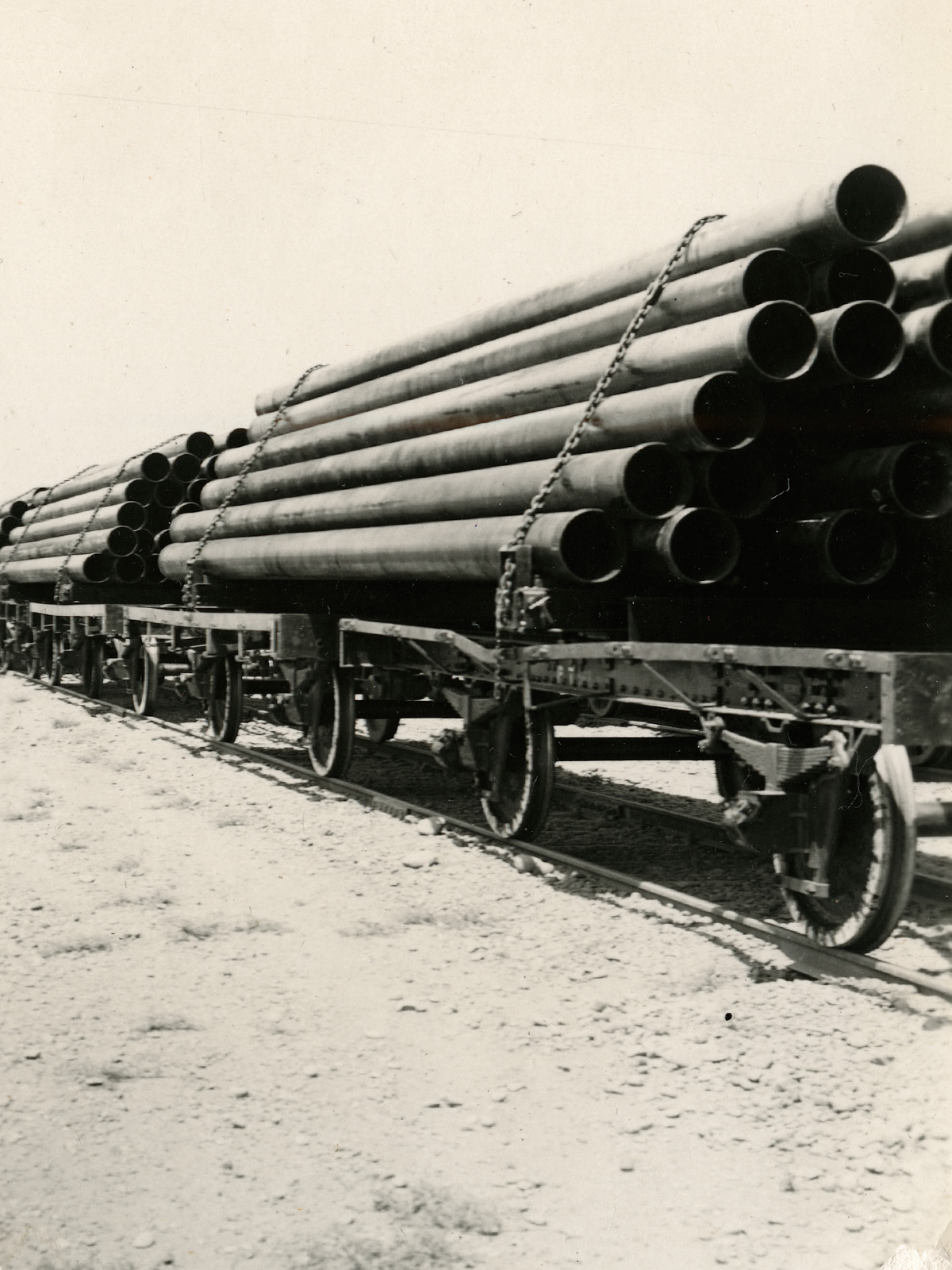
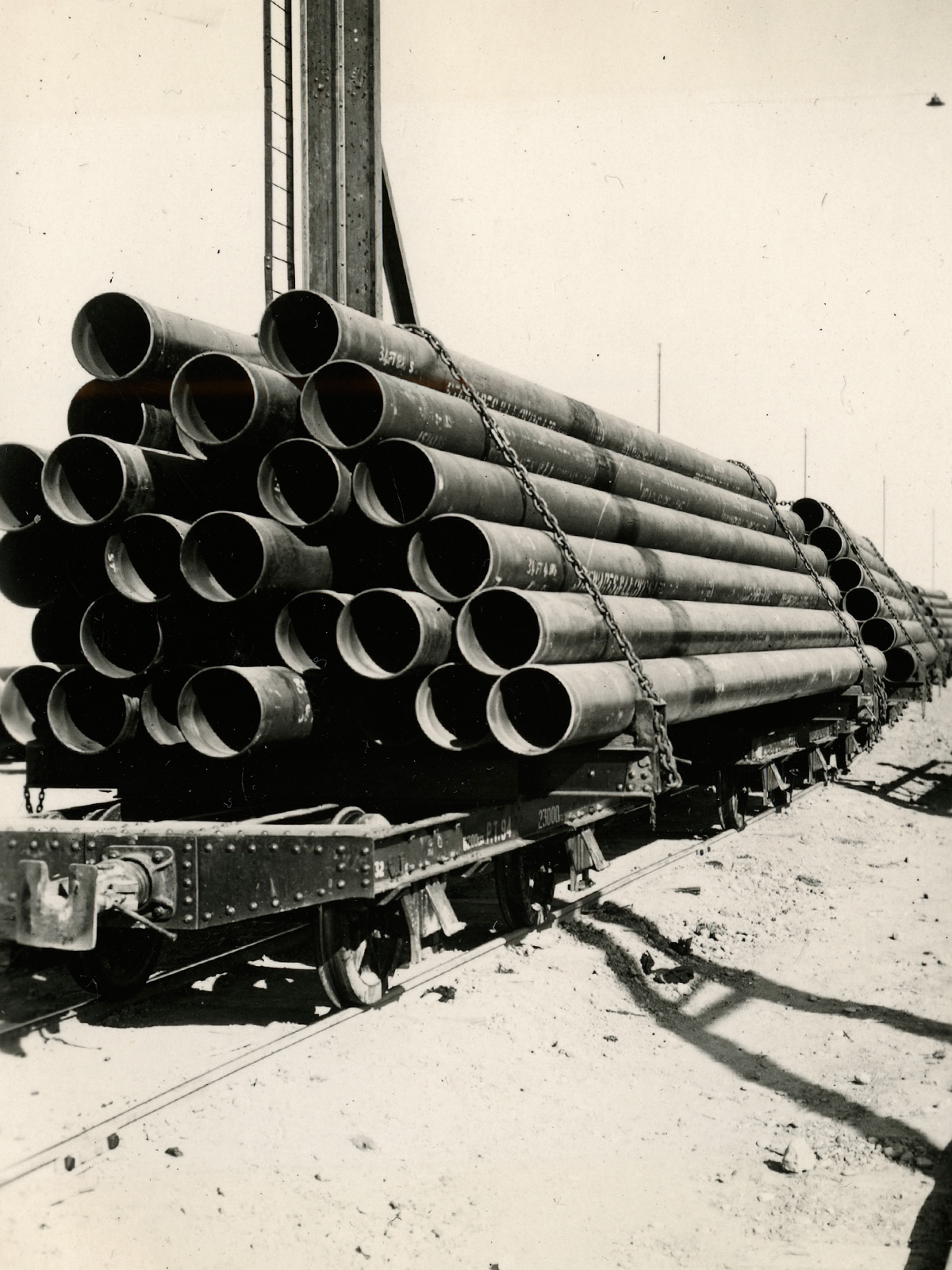
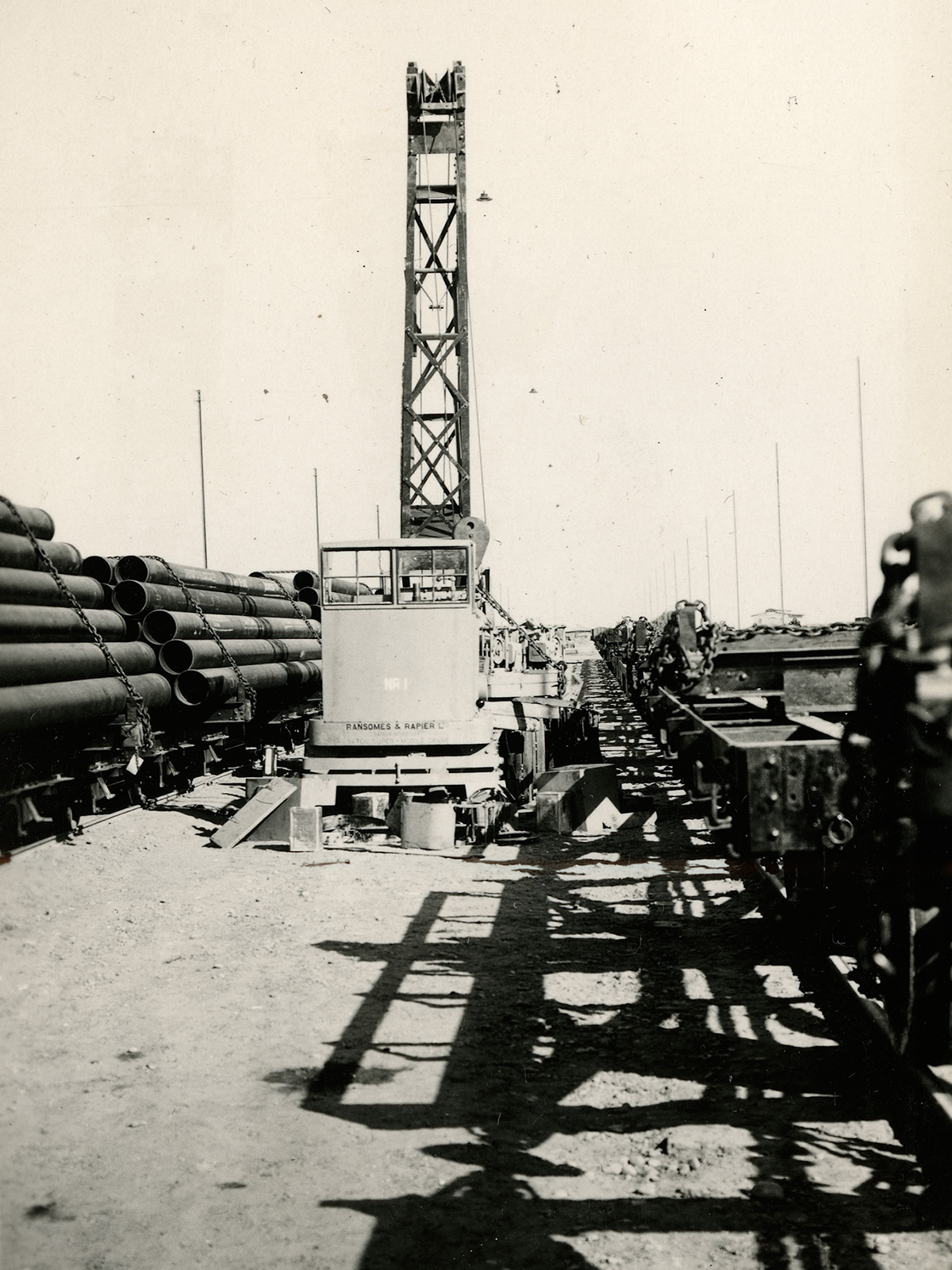
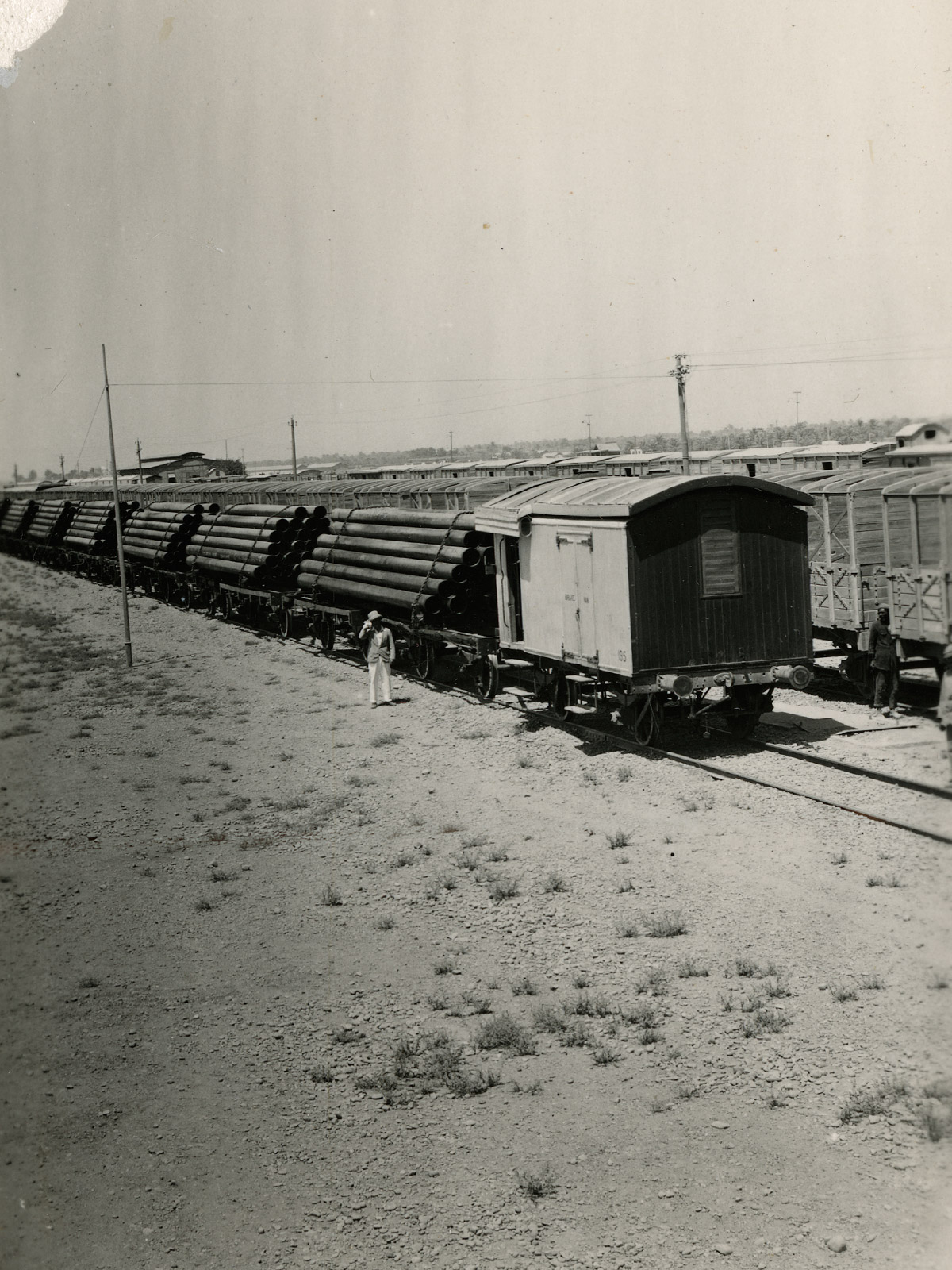
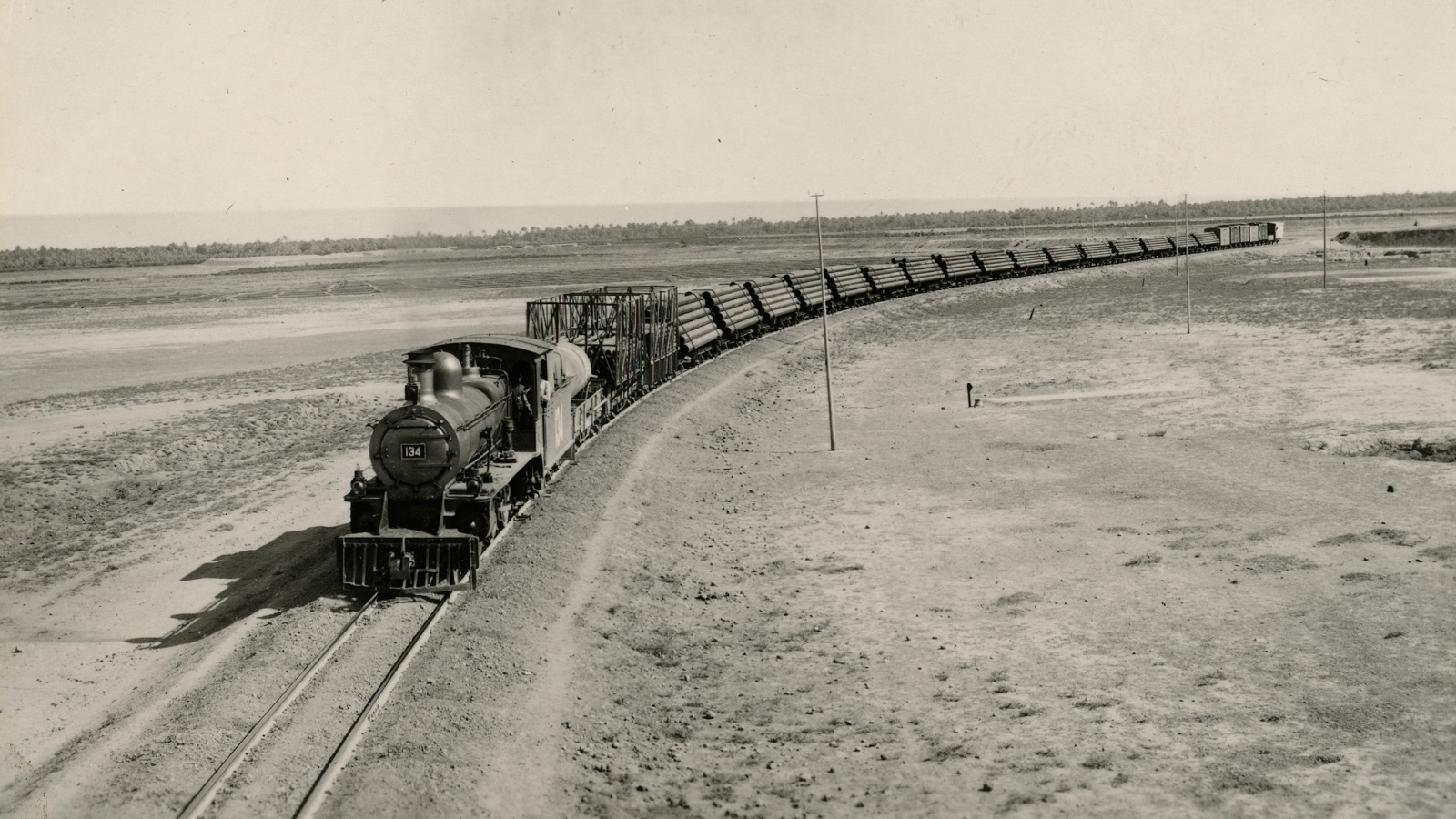
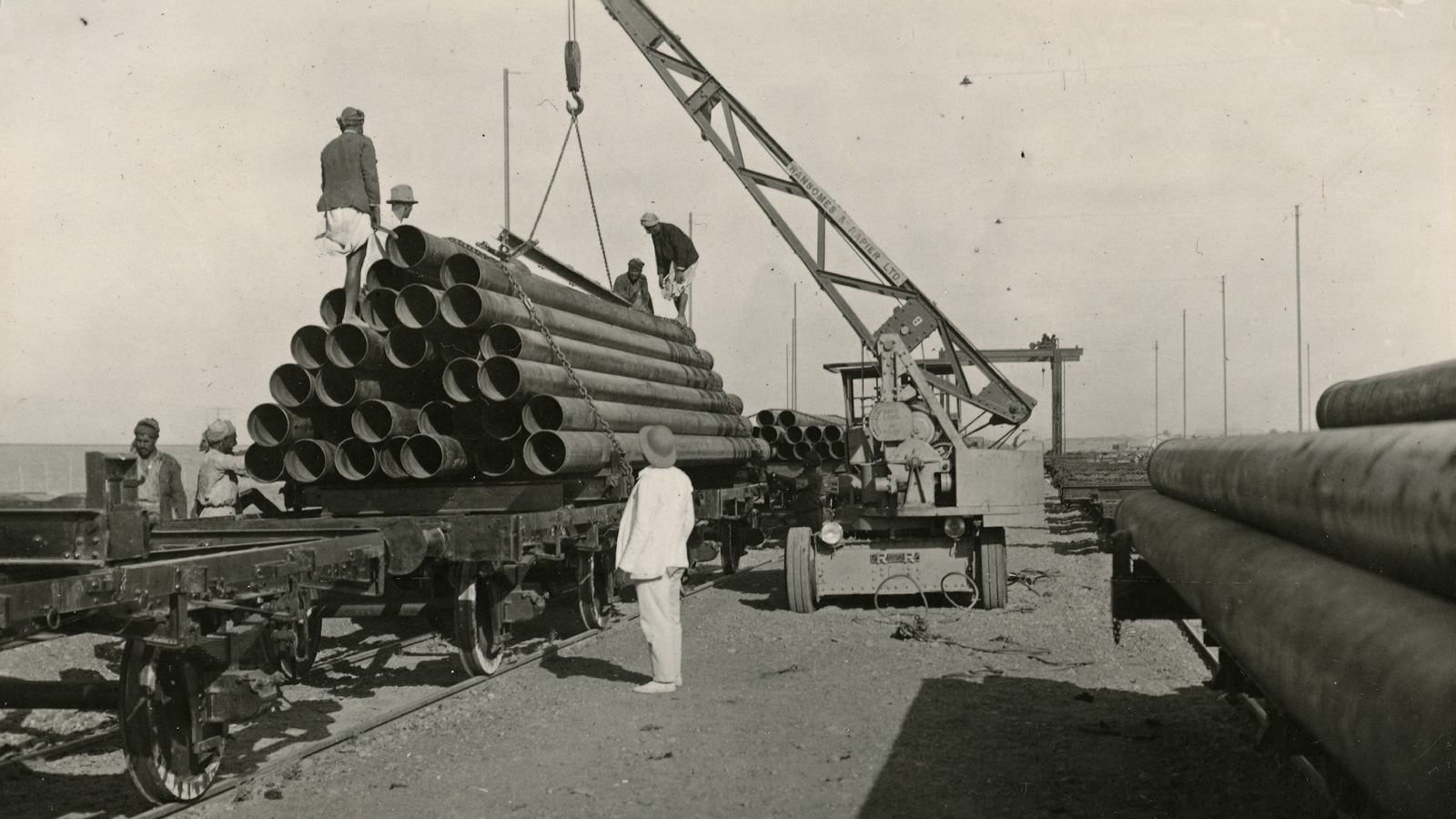
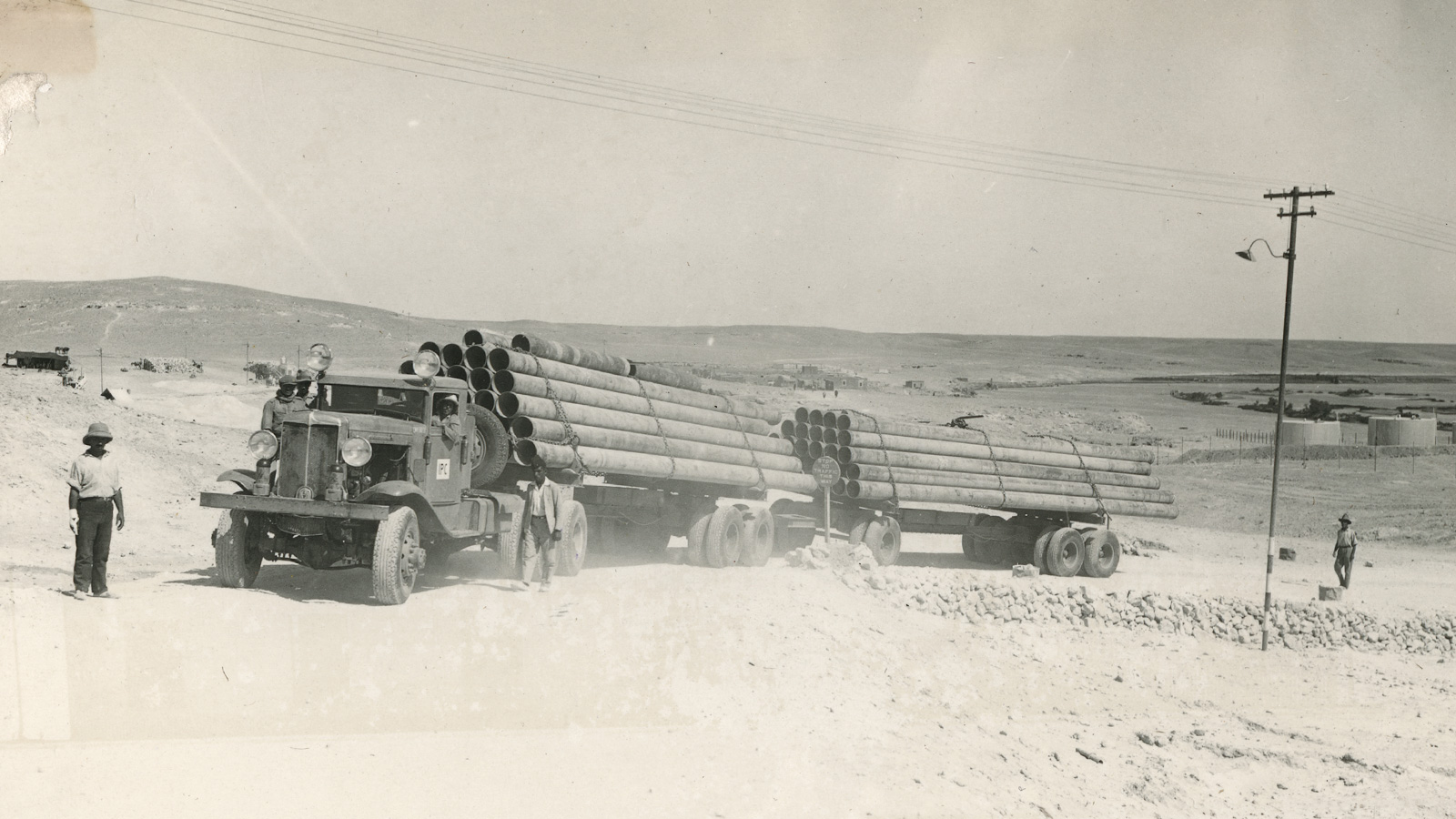
Life around construction, its camps and landscapes, comes through in images of lorries, tractors, and trailers loaded with pipe sections and other materials crossing the desert from Baiji to Haditha.
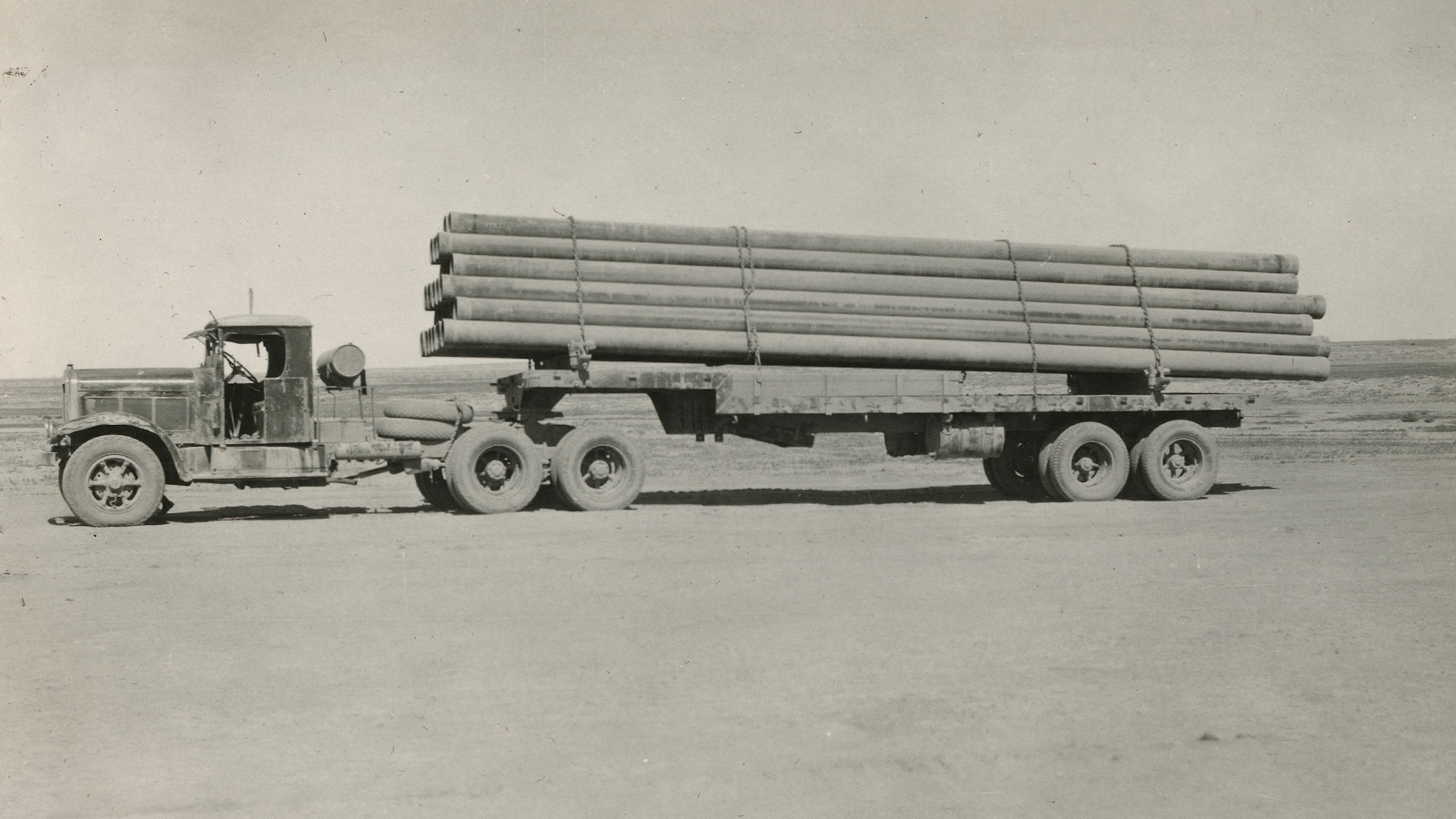
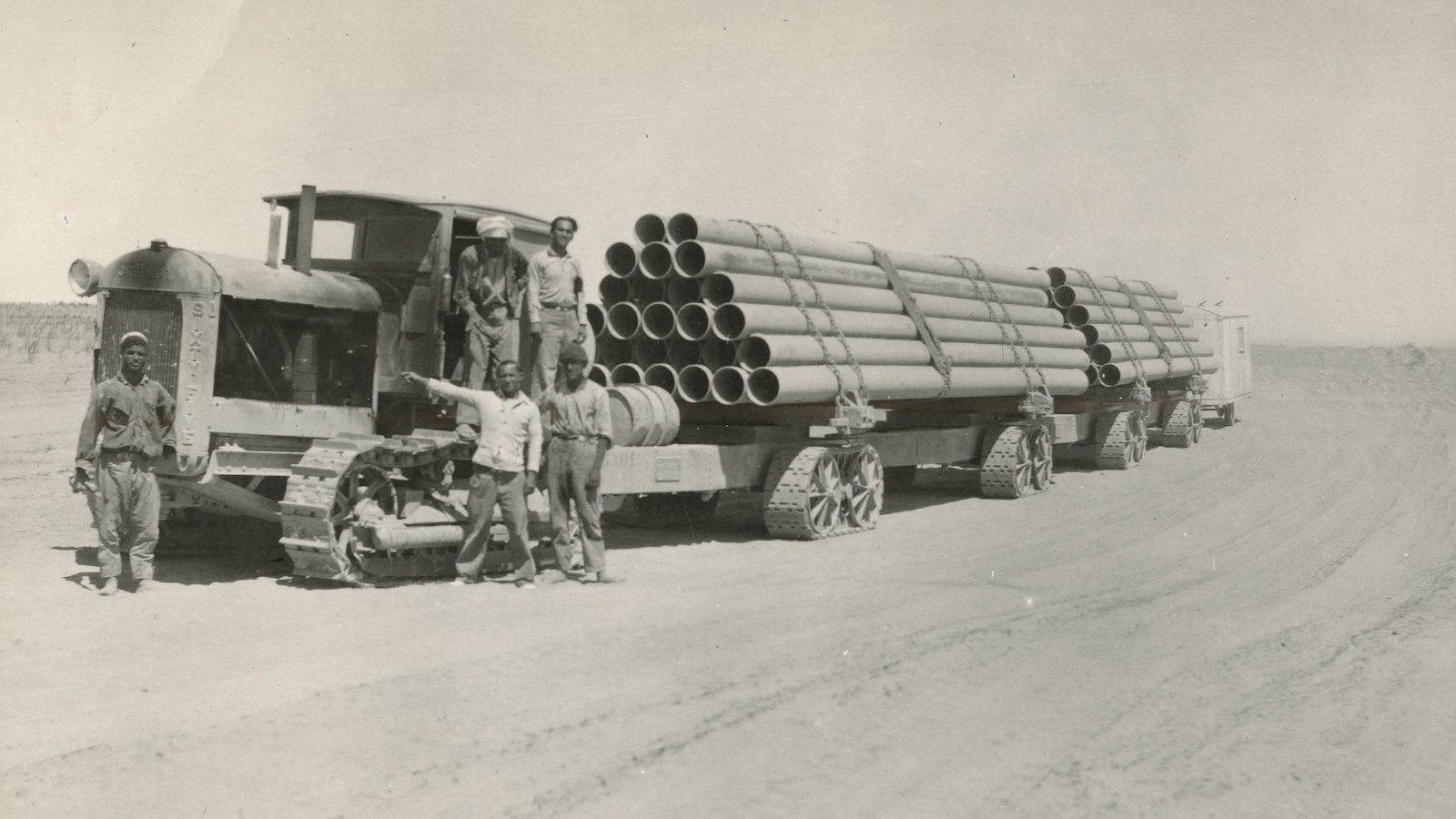
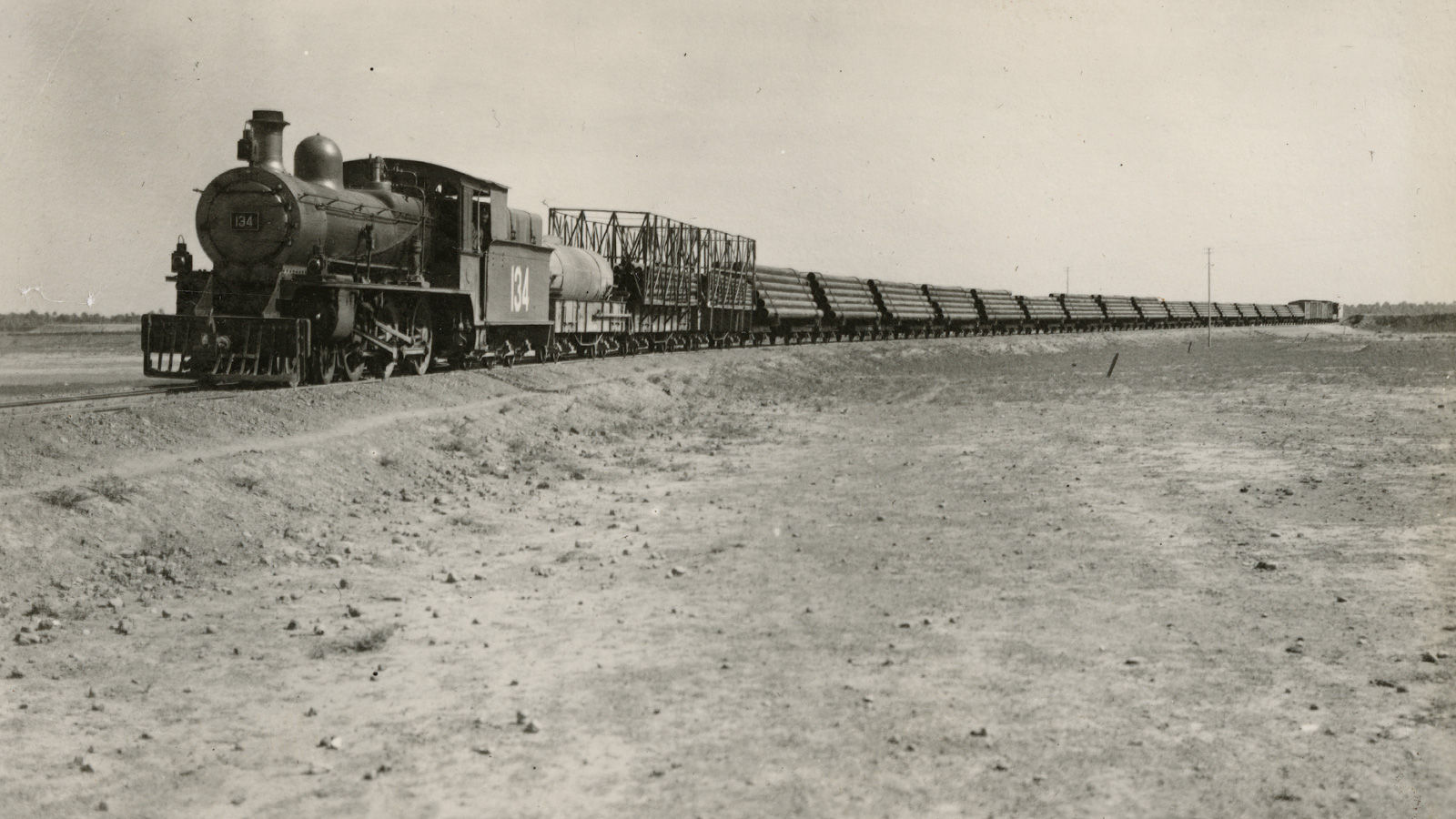
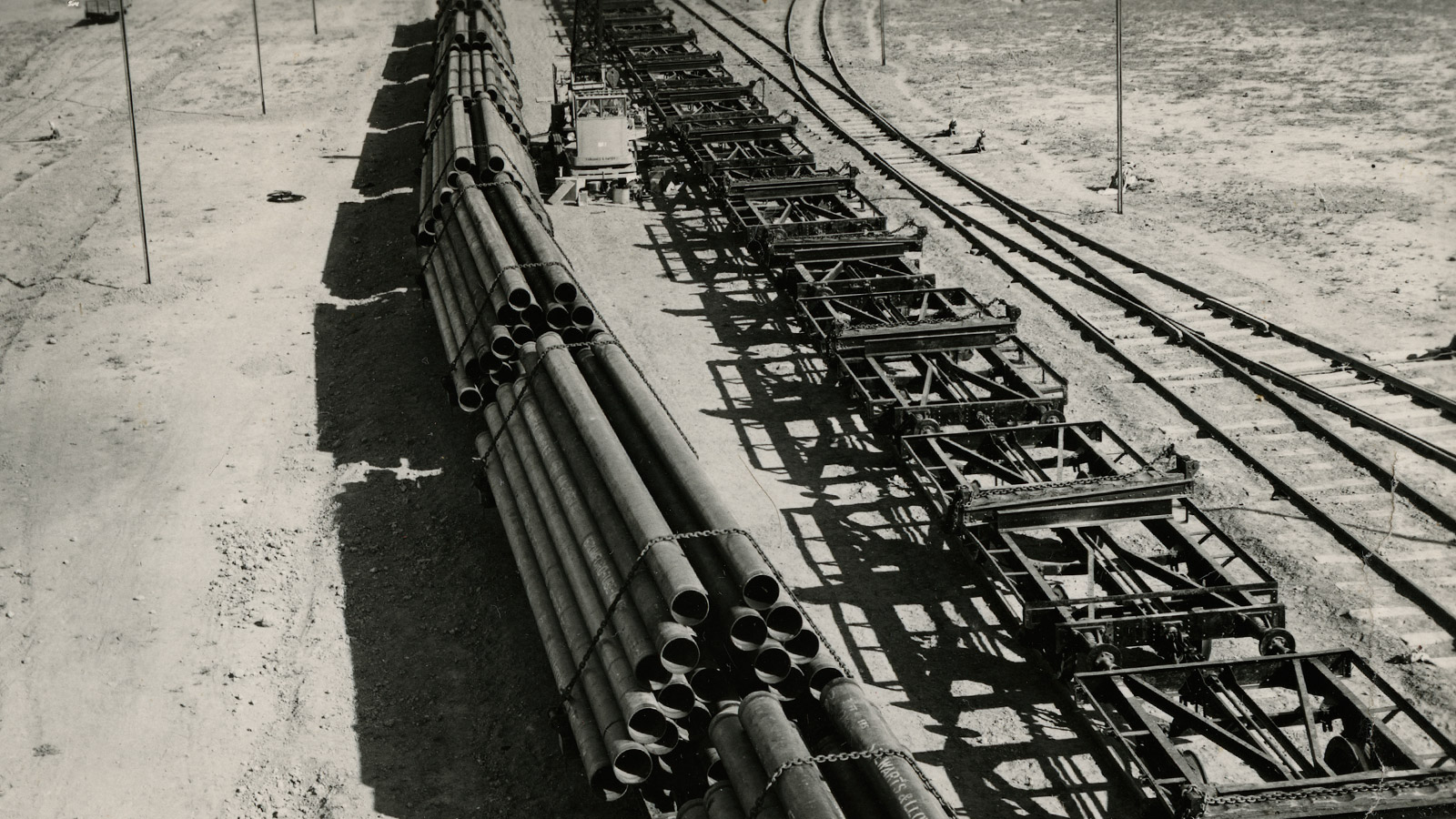
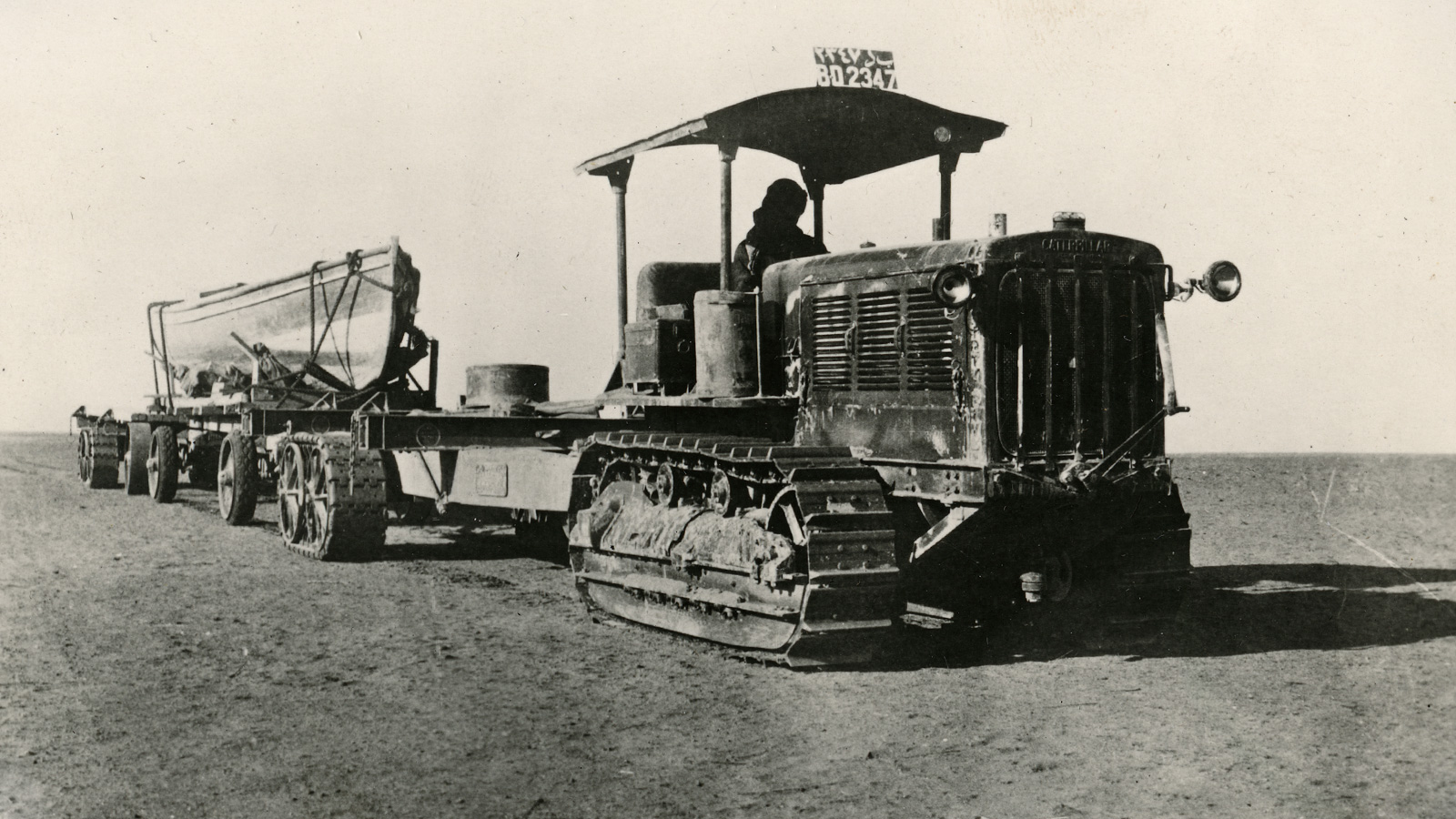
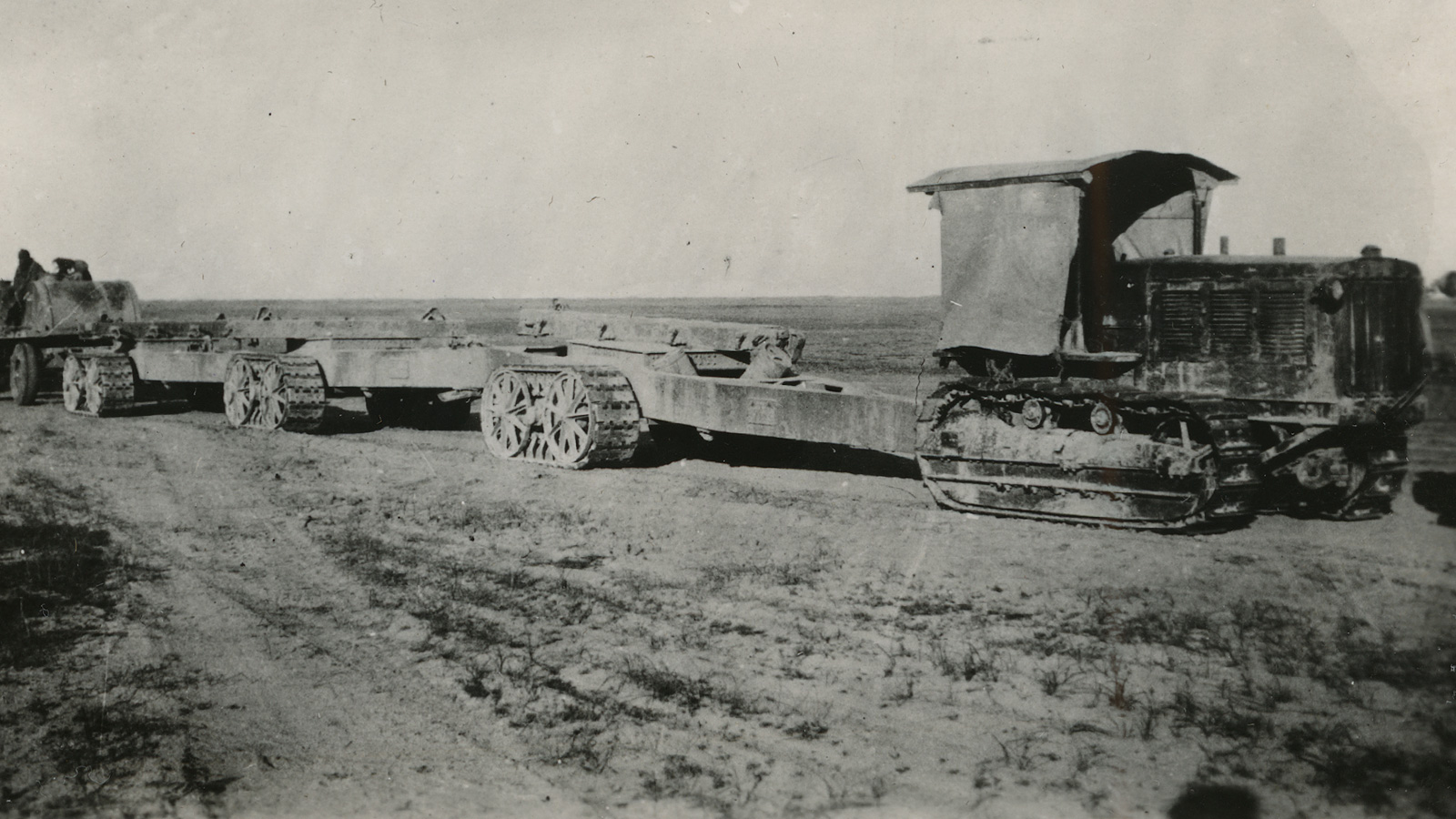
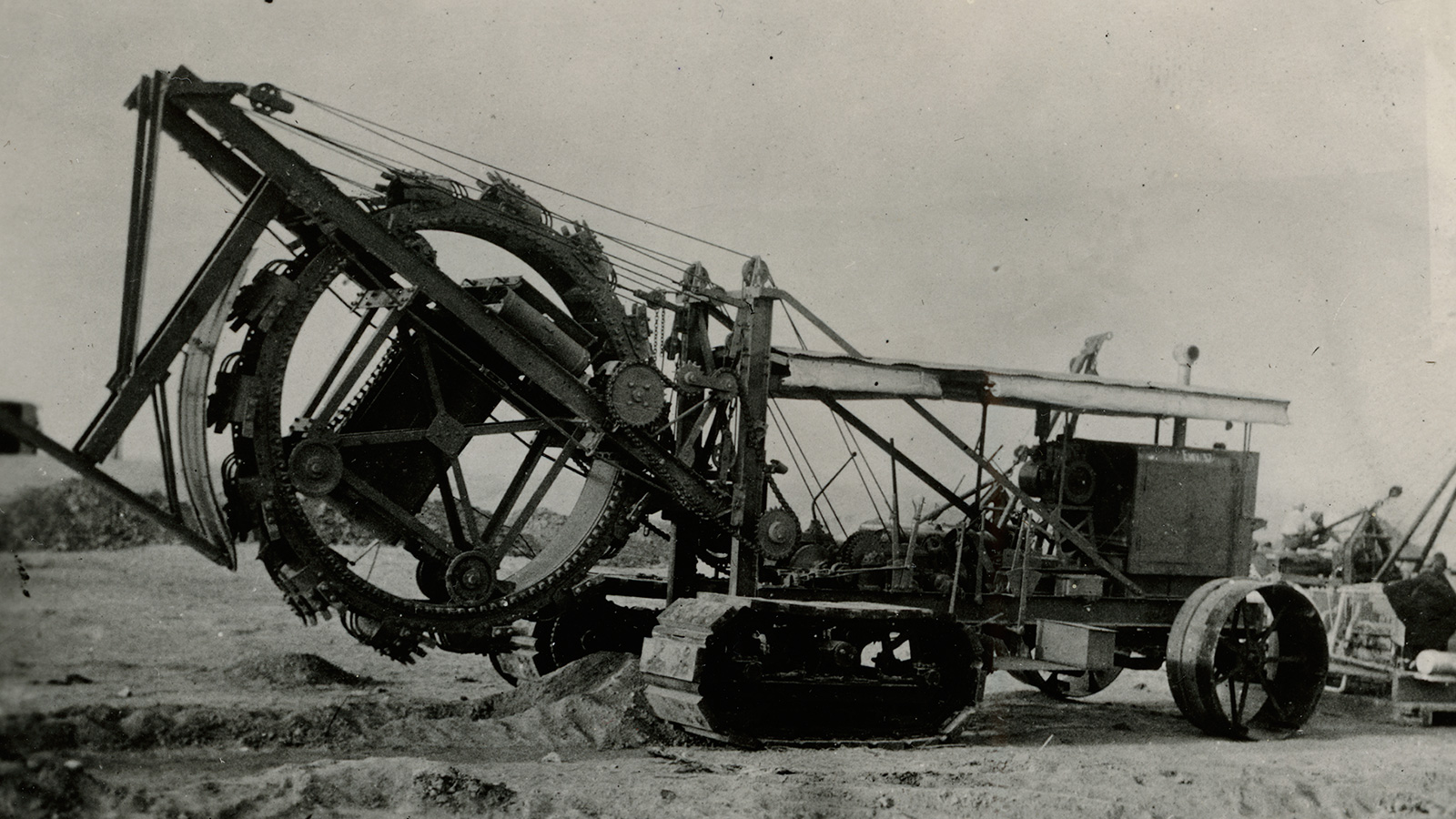
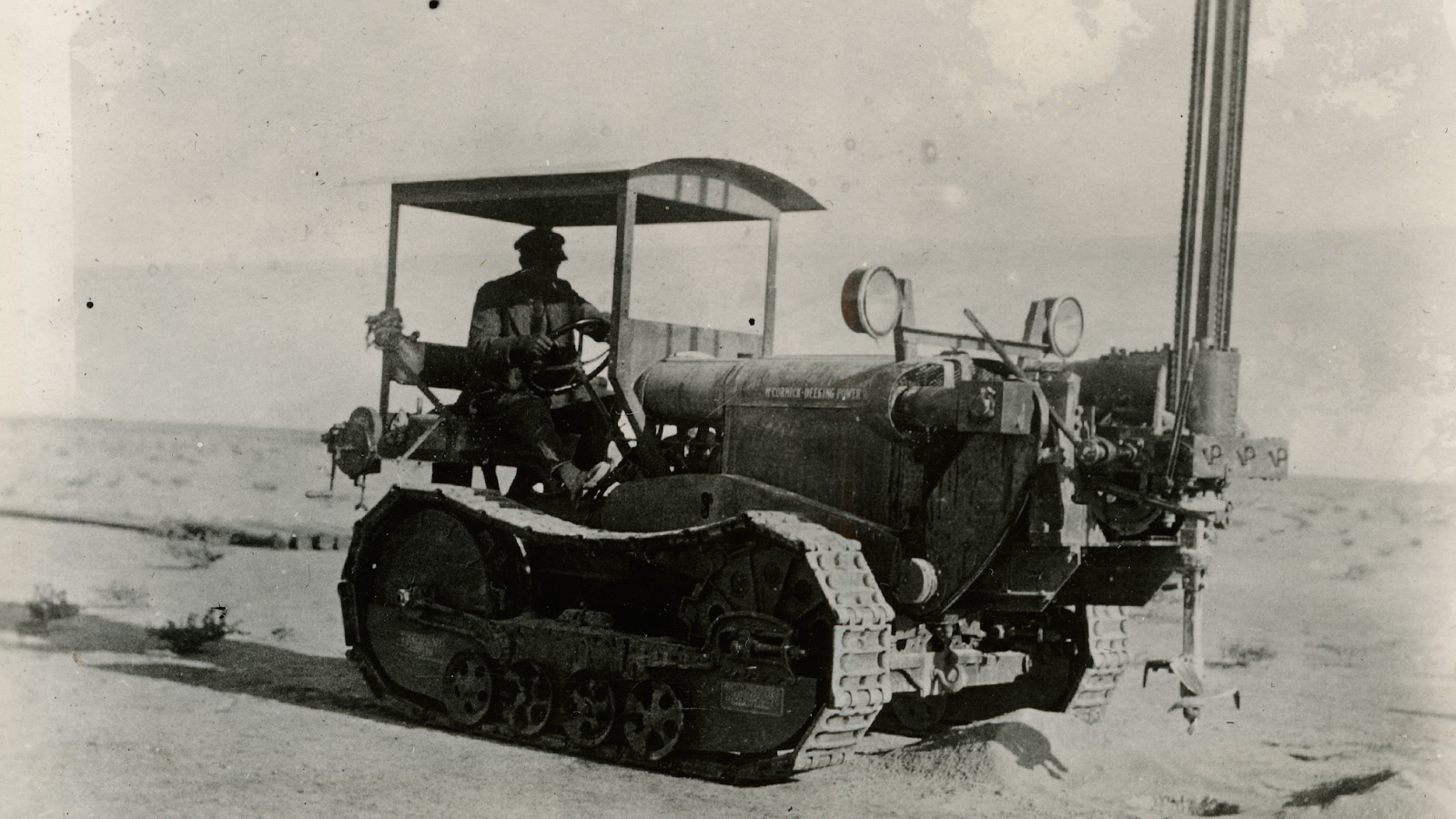
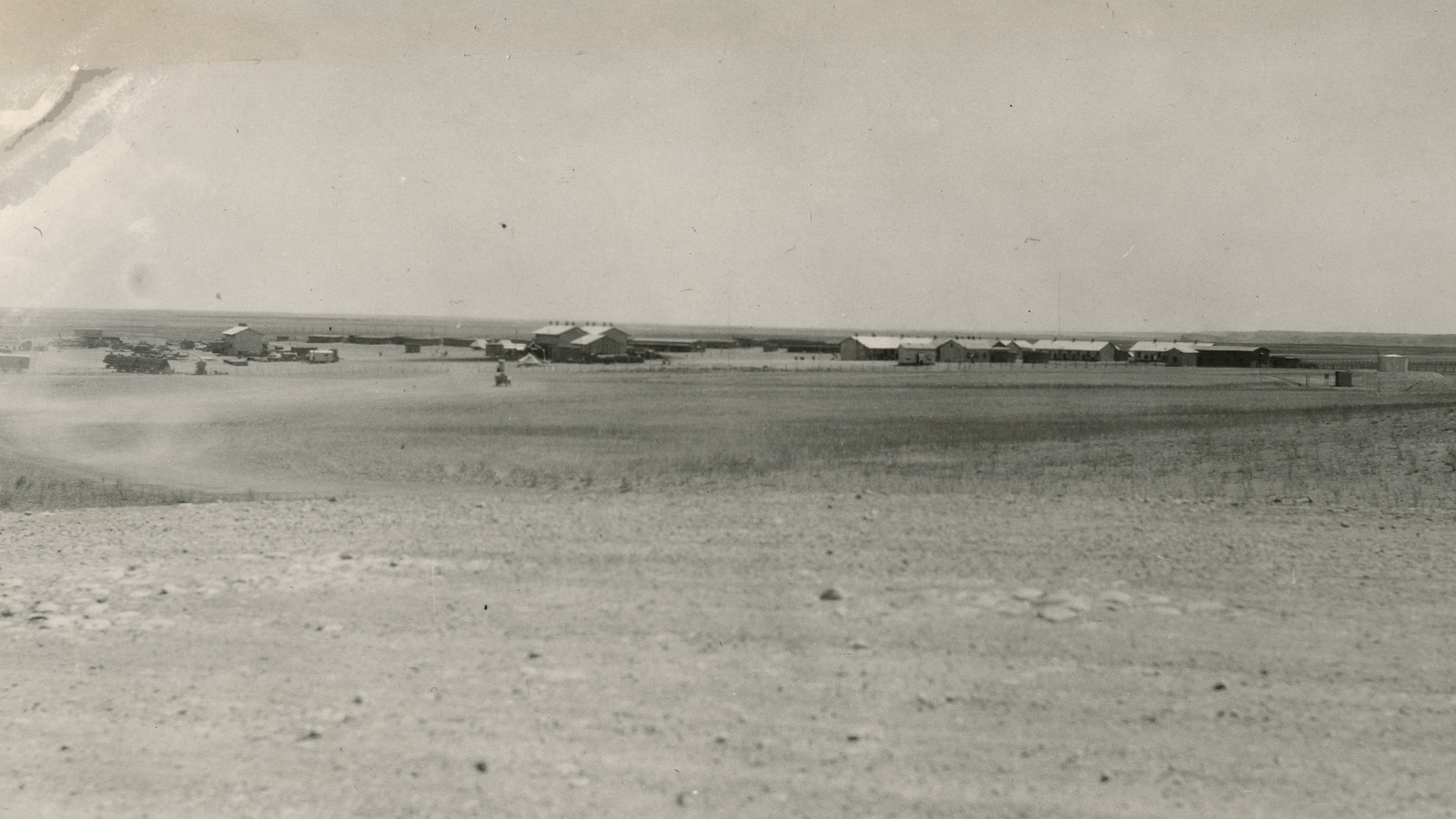
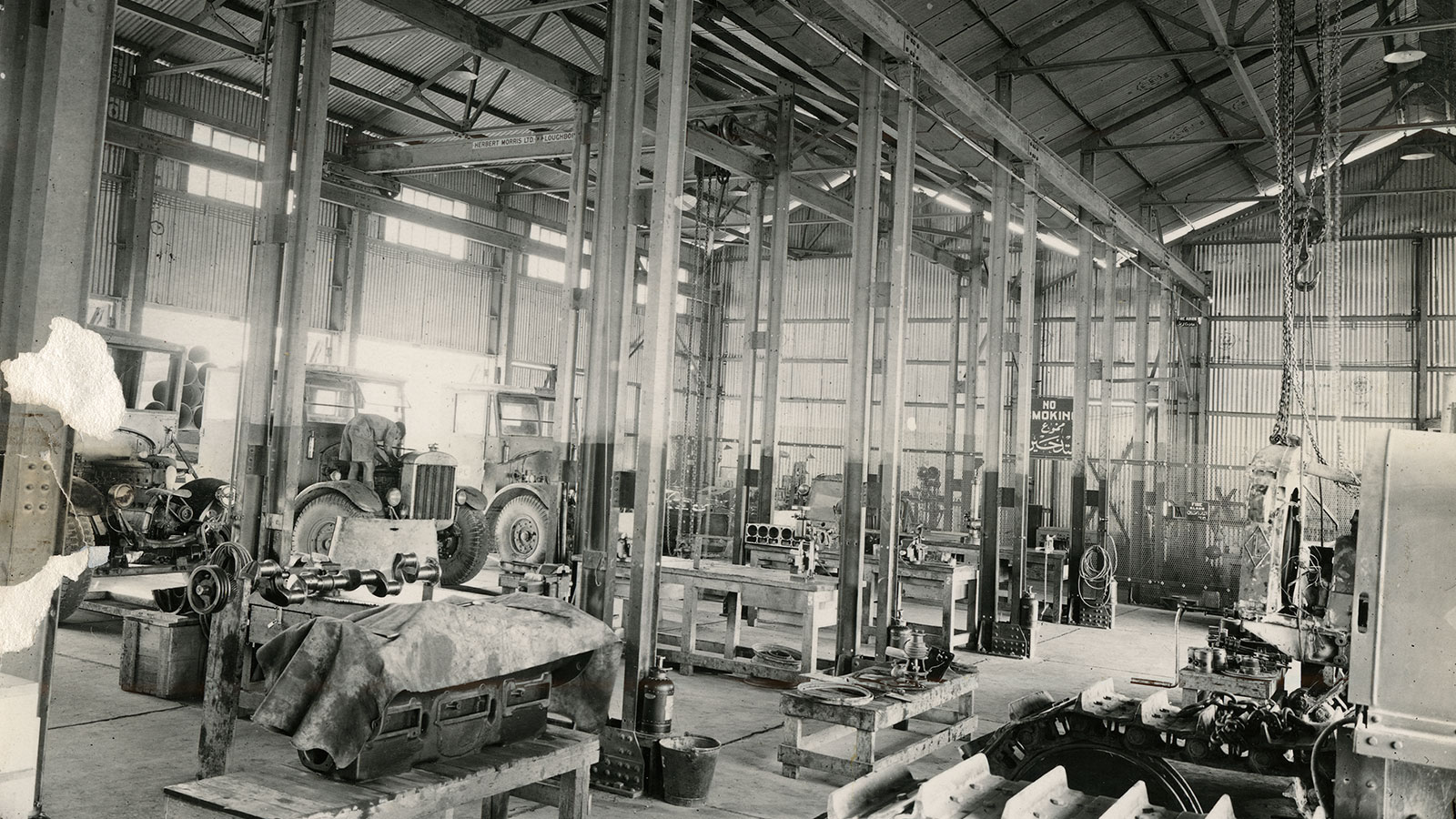
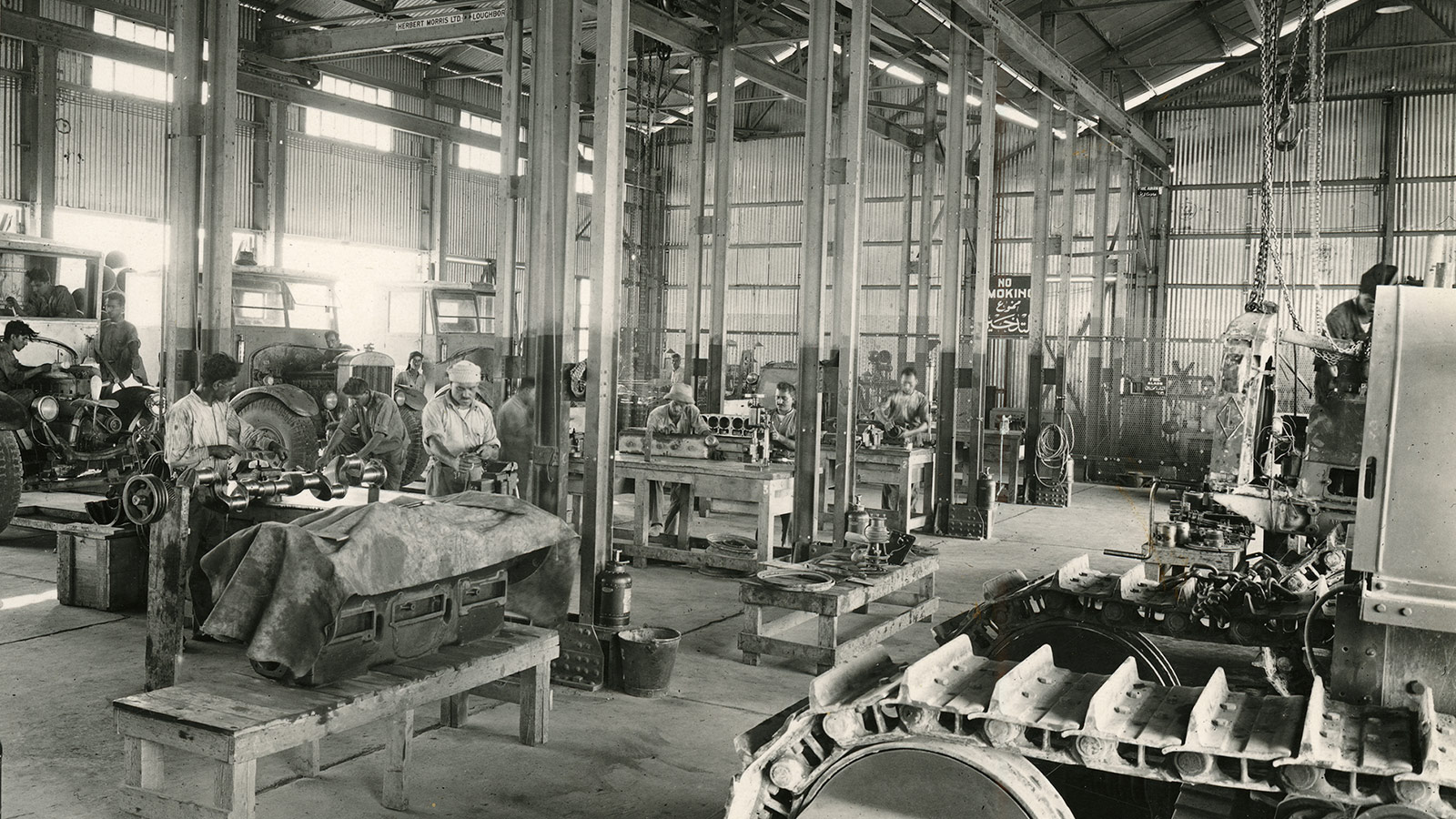
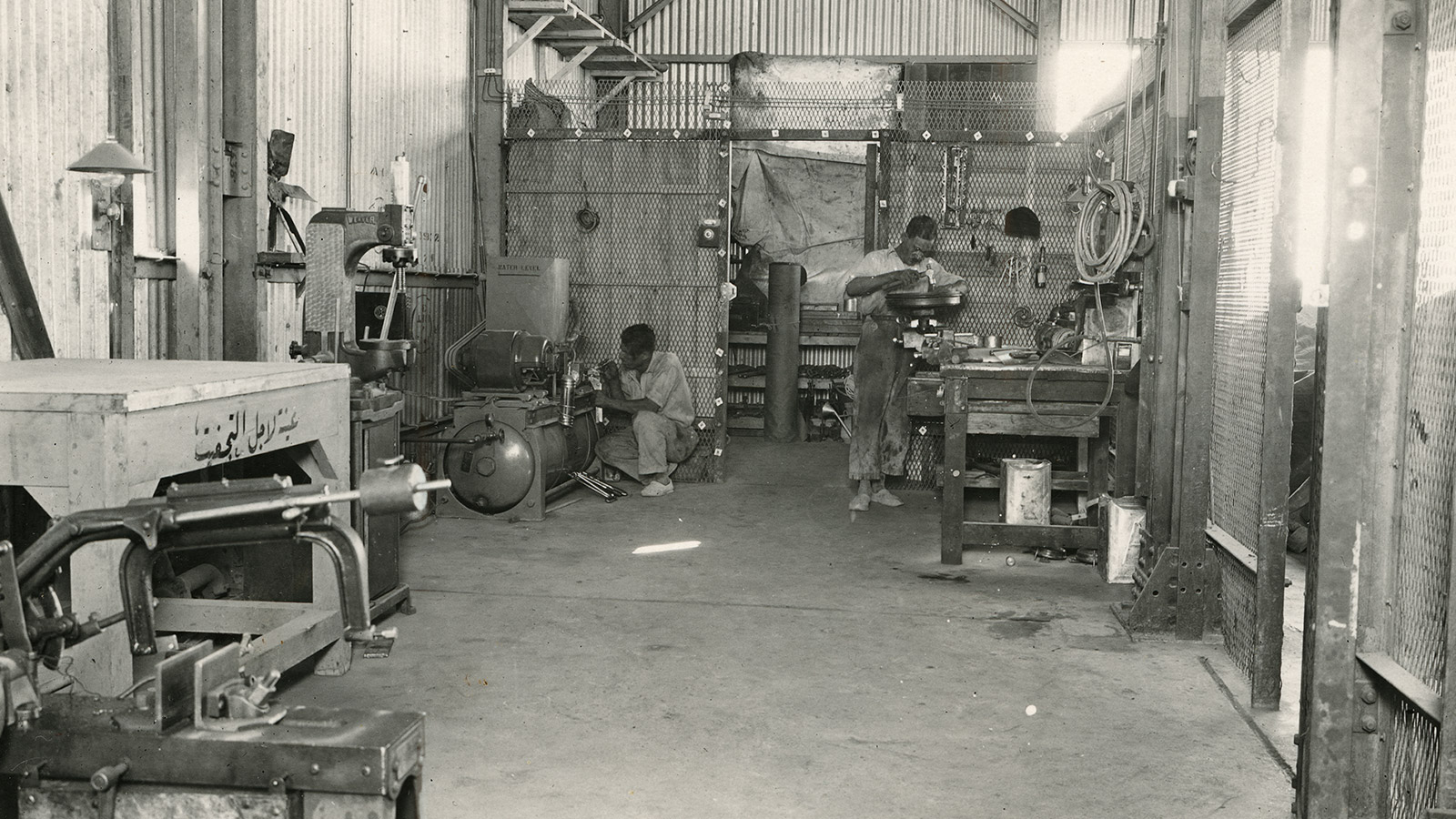
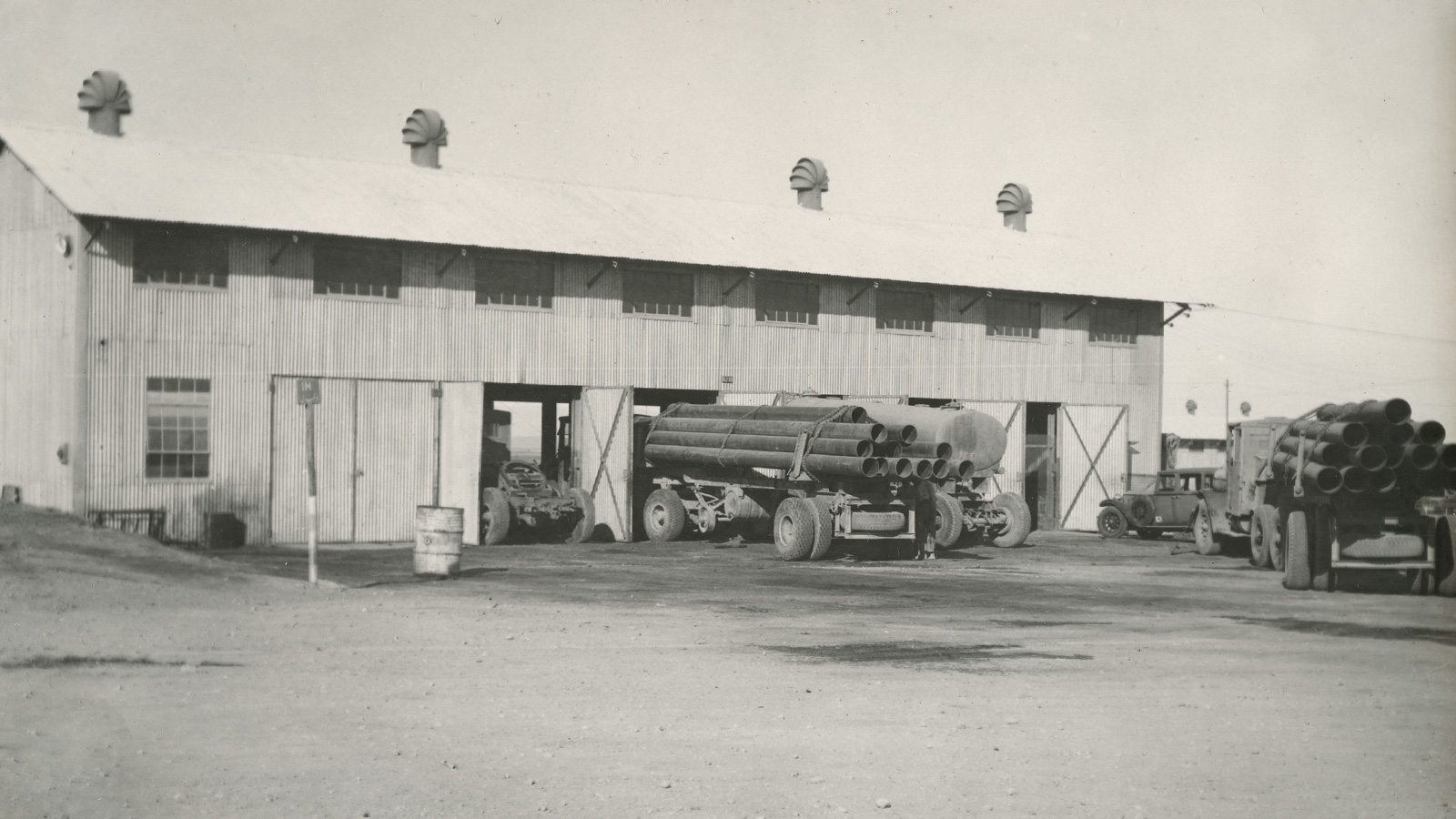
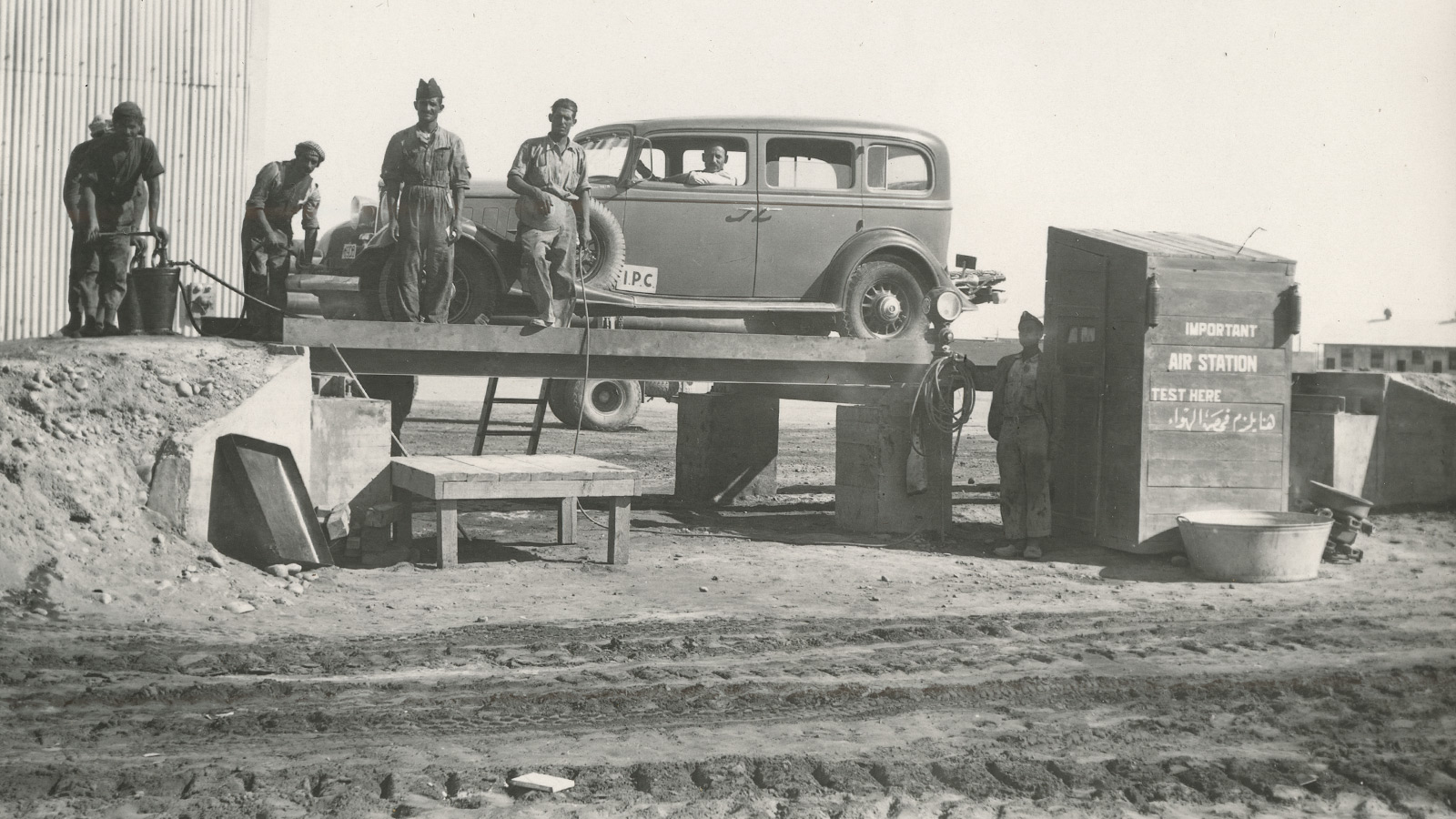
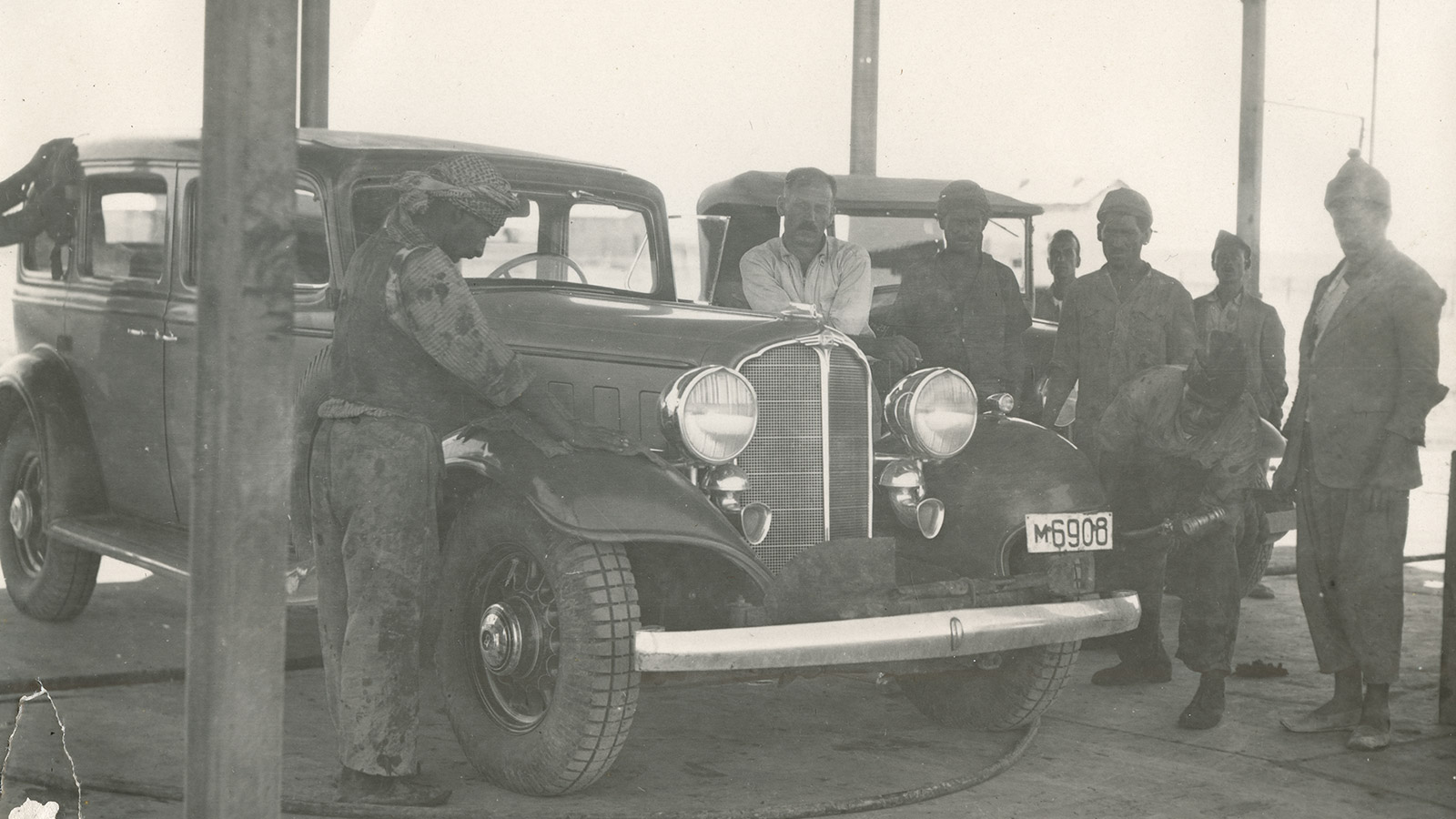
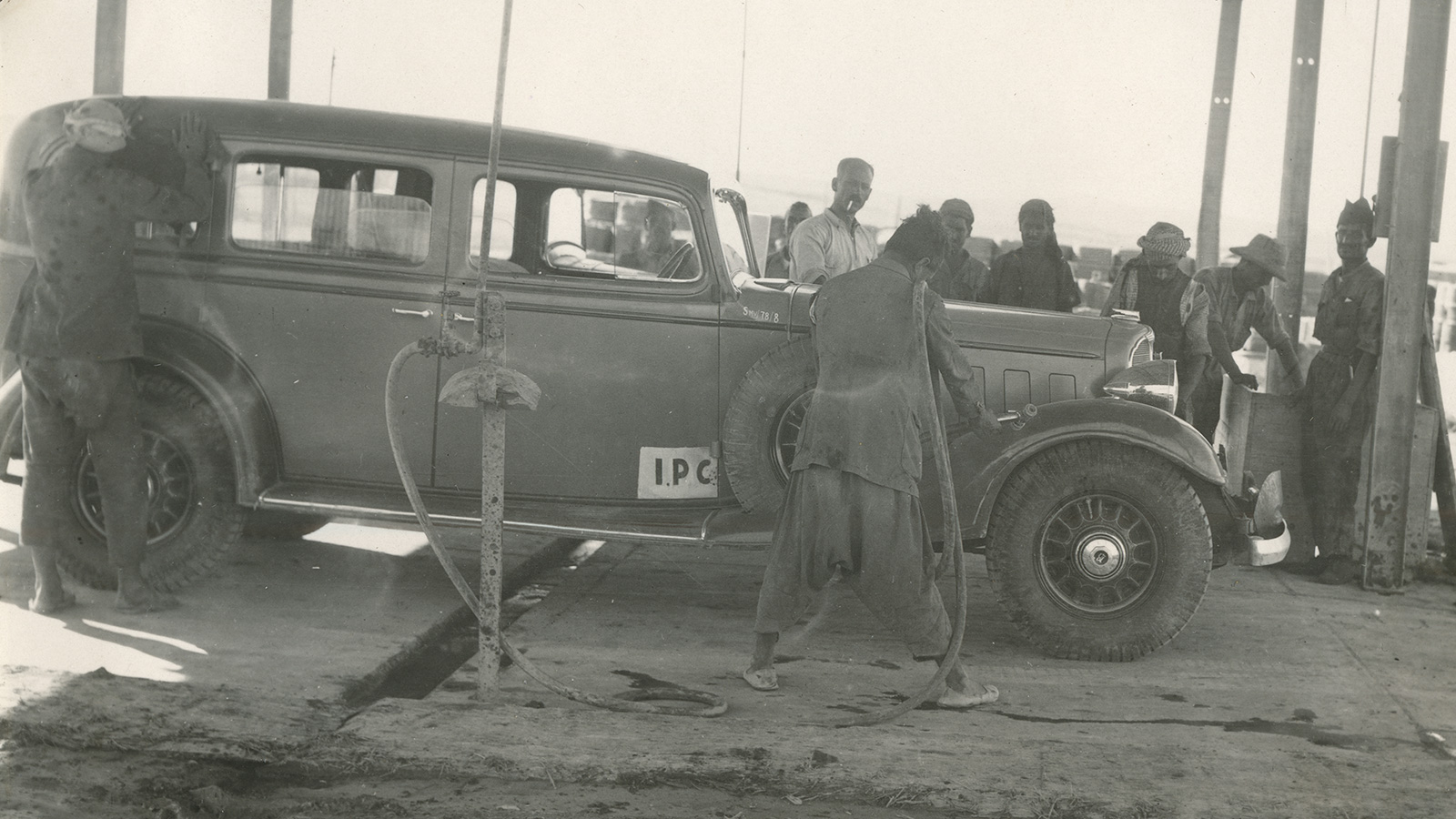
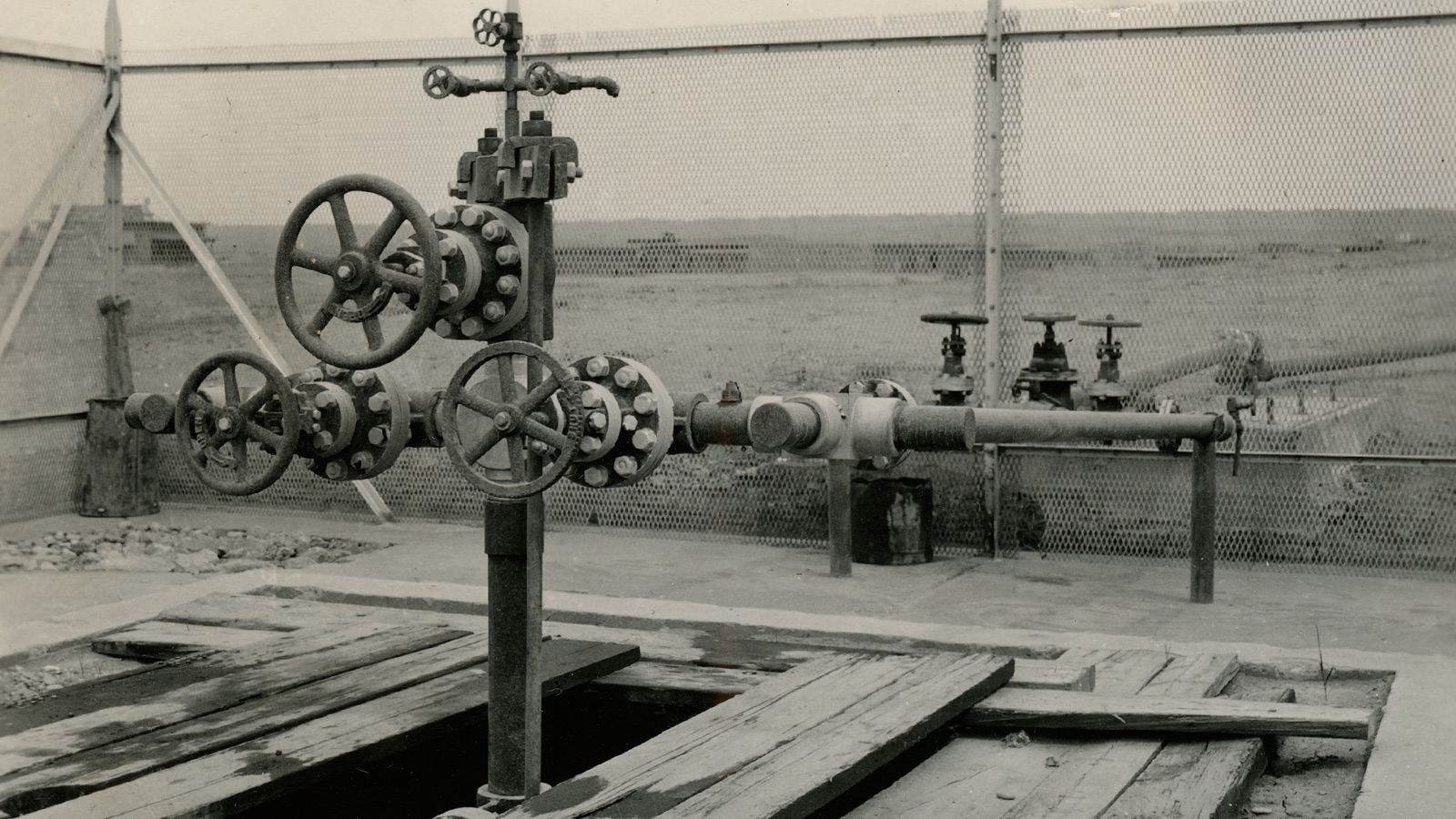
A locomotive hauling a long line of loaded wagons, also bound for Baiji, and its railway station marks the delivery of the first consignment of pipe. Scenes of earthworks, drilling, trenching and pipe-laying across the desert convey the sheer scale of the undertaking and of the Iraq Petroleum Campany’s equipment.
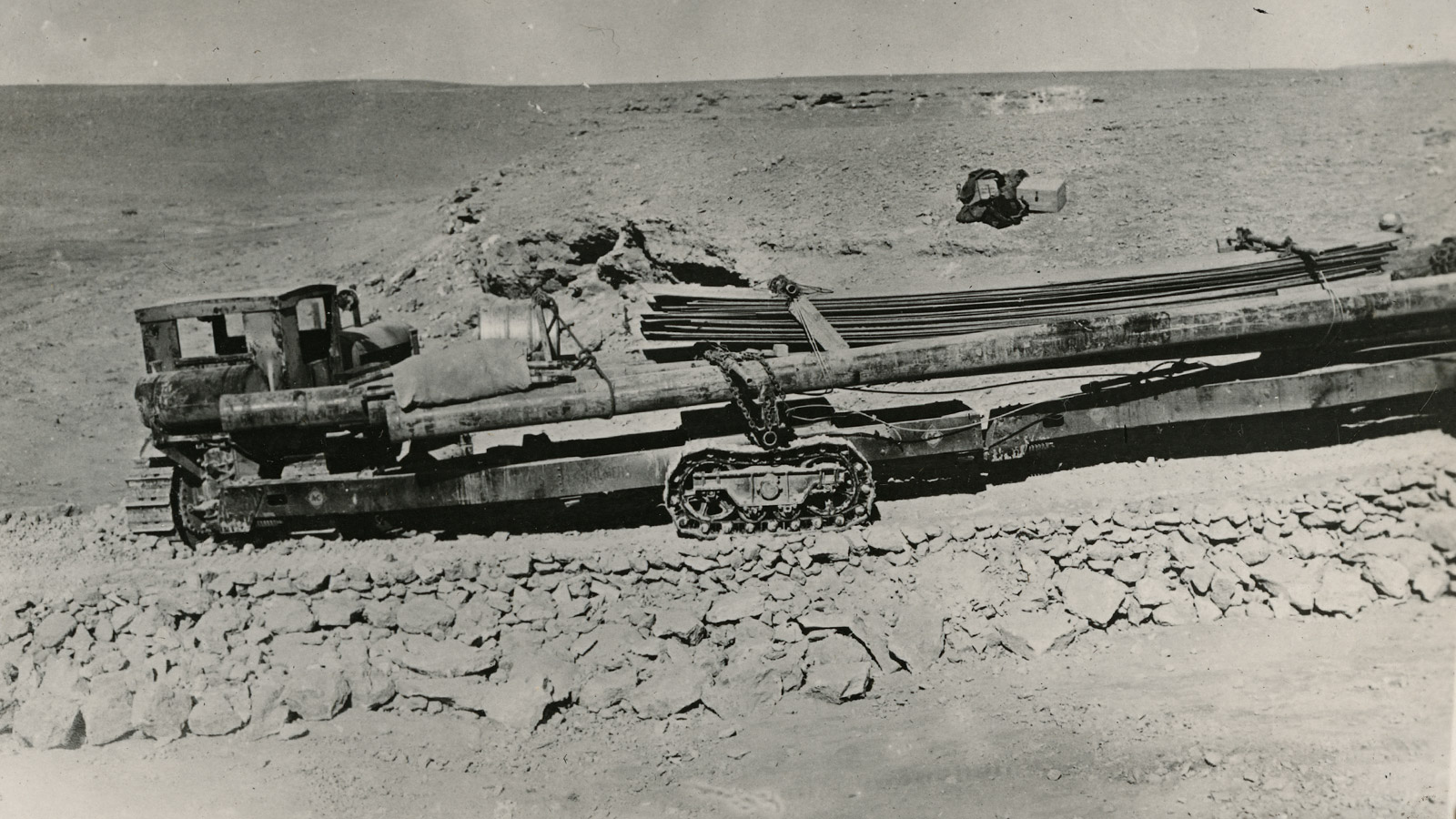
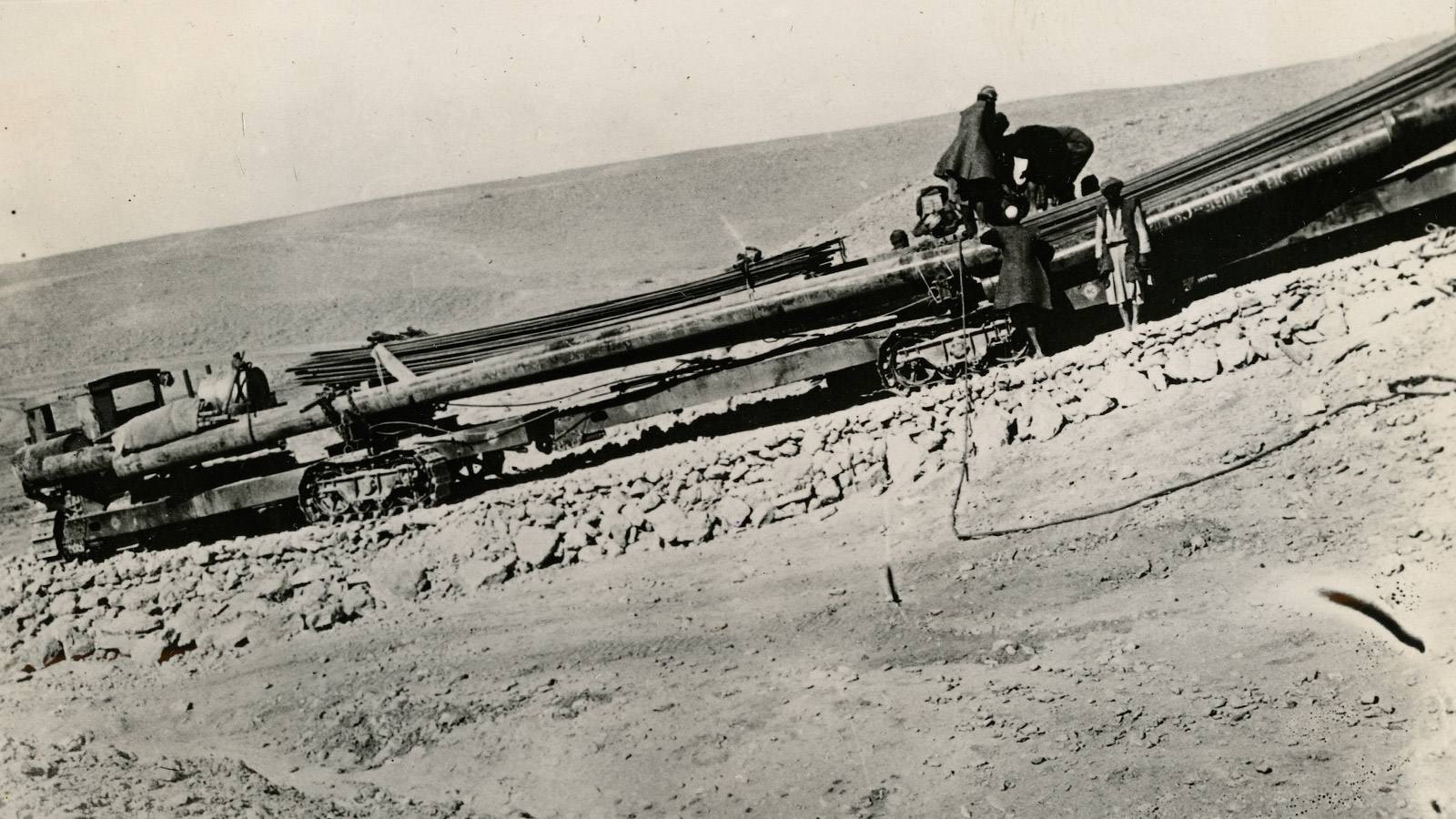
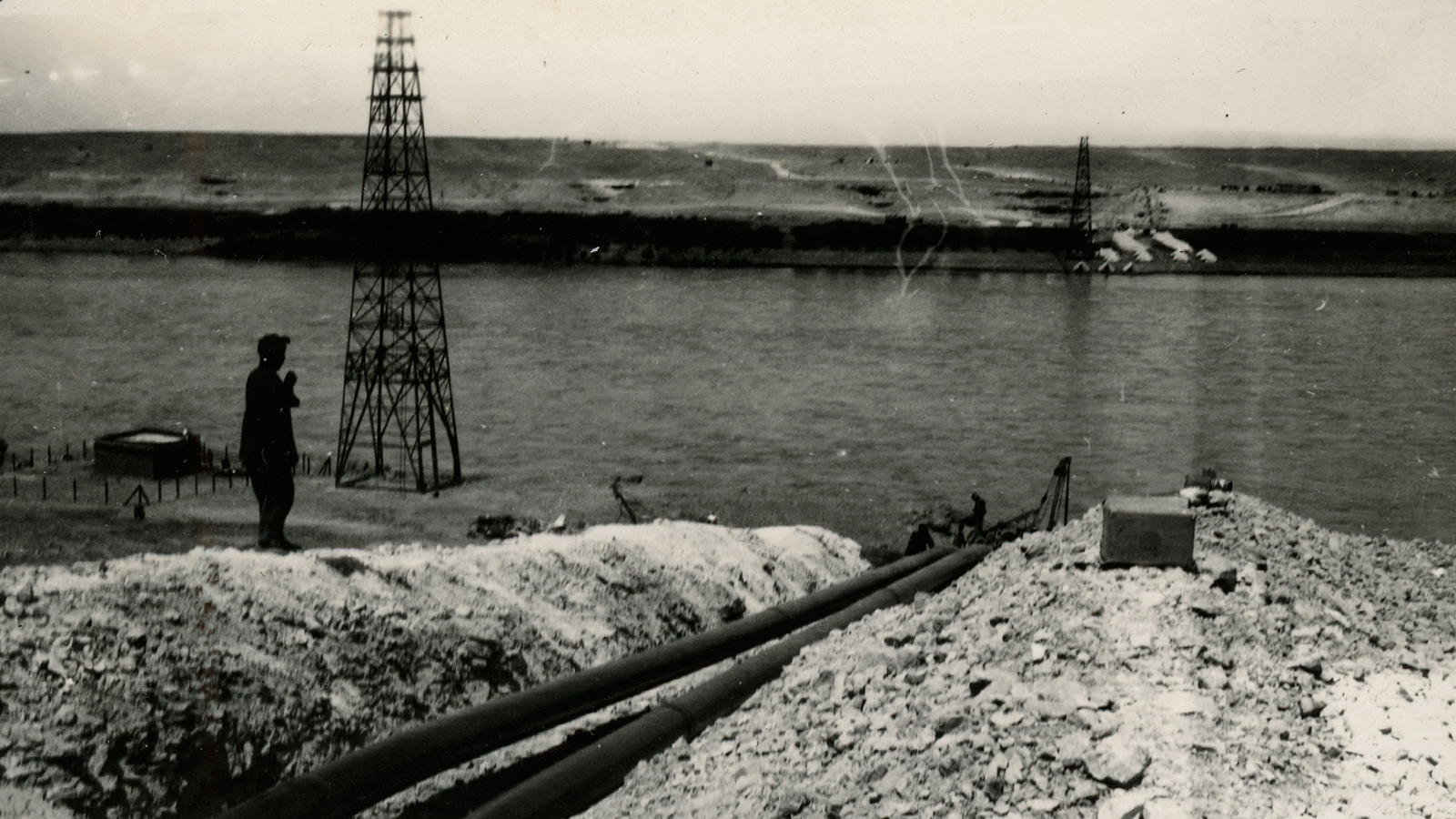
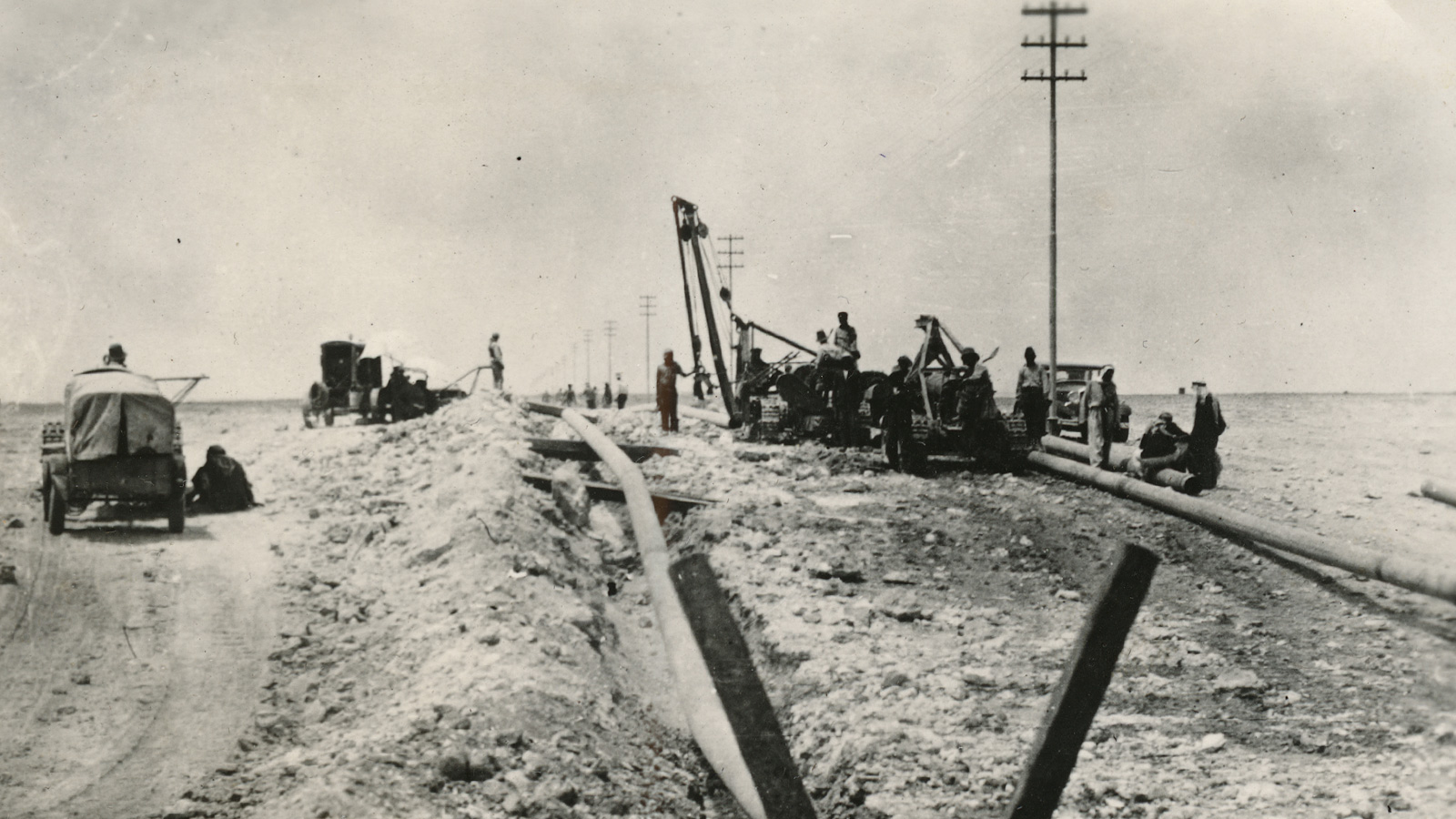
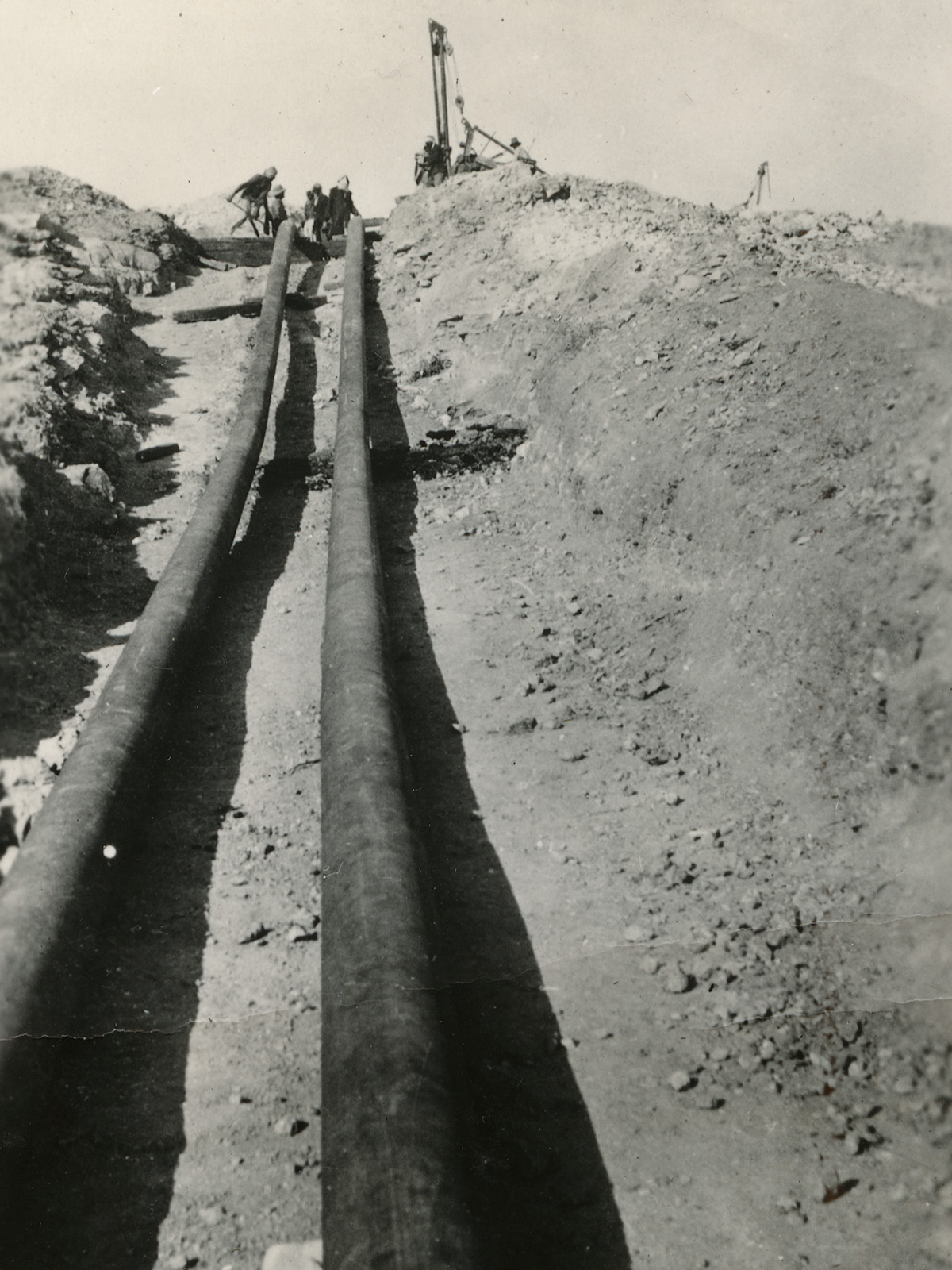
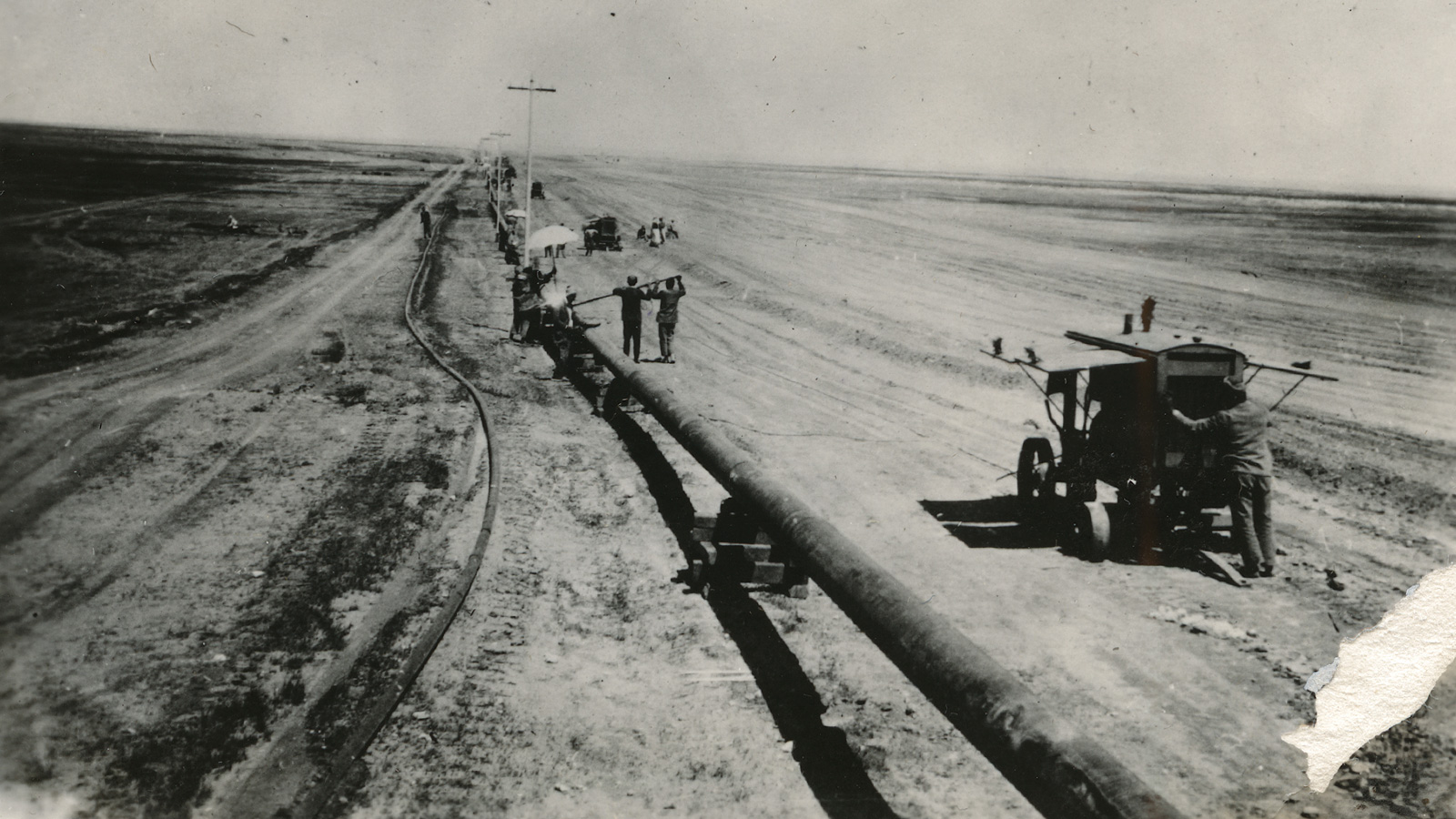
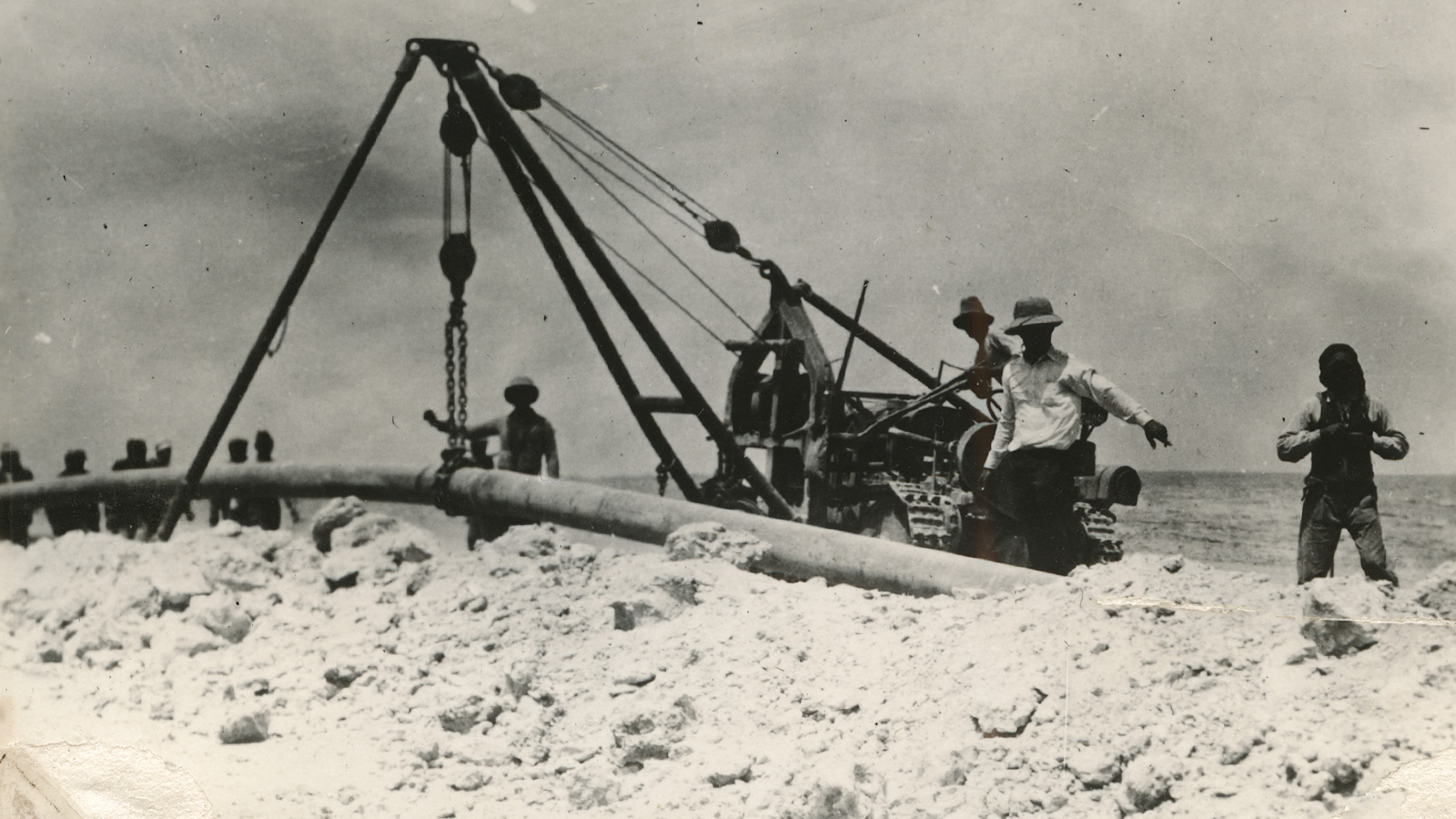
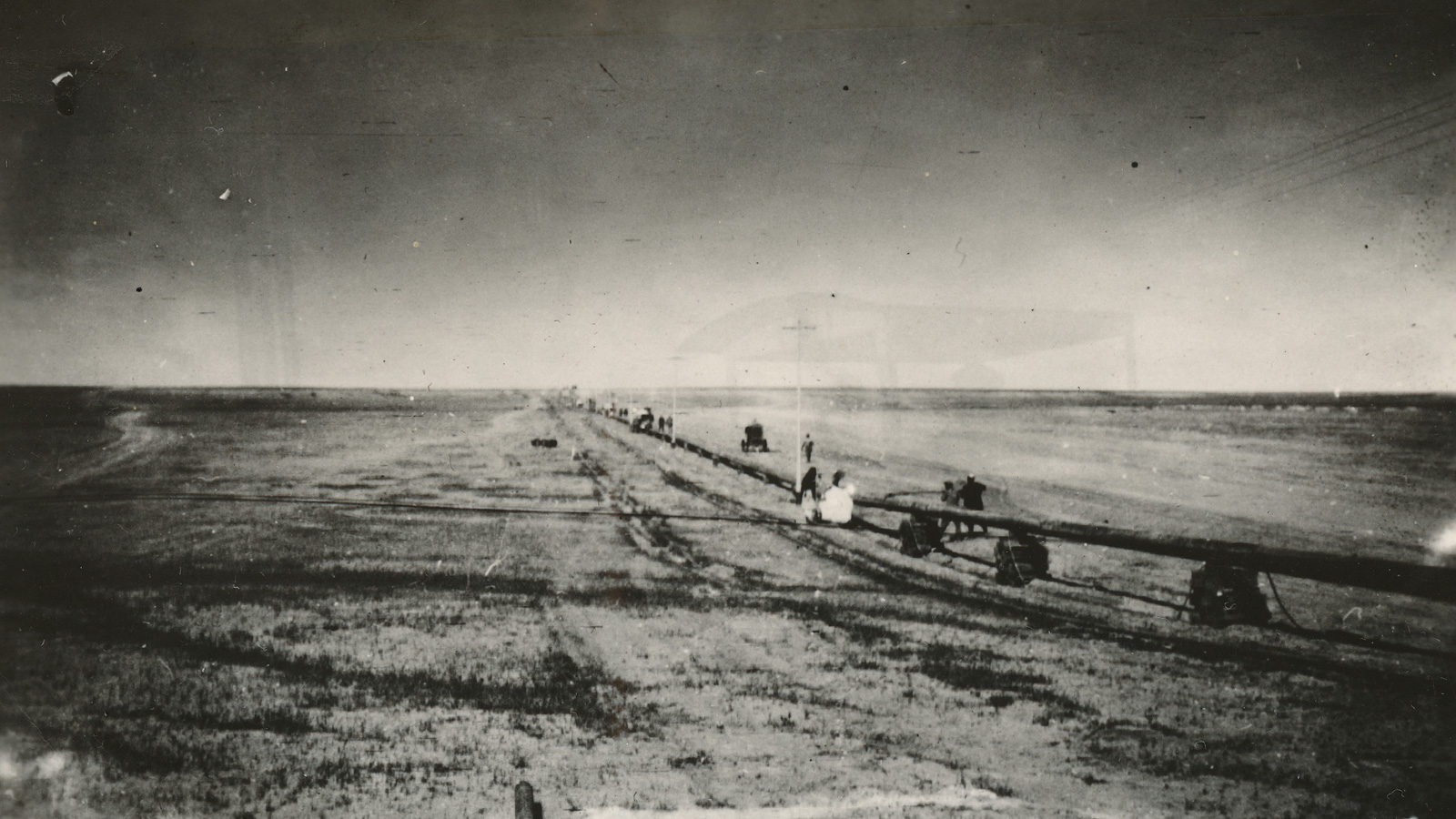
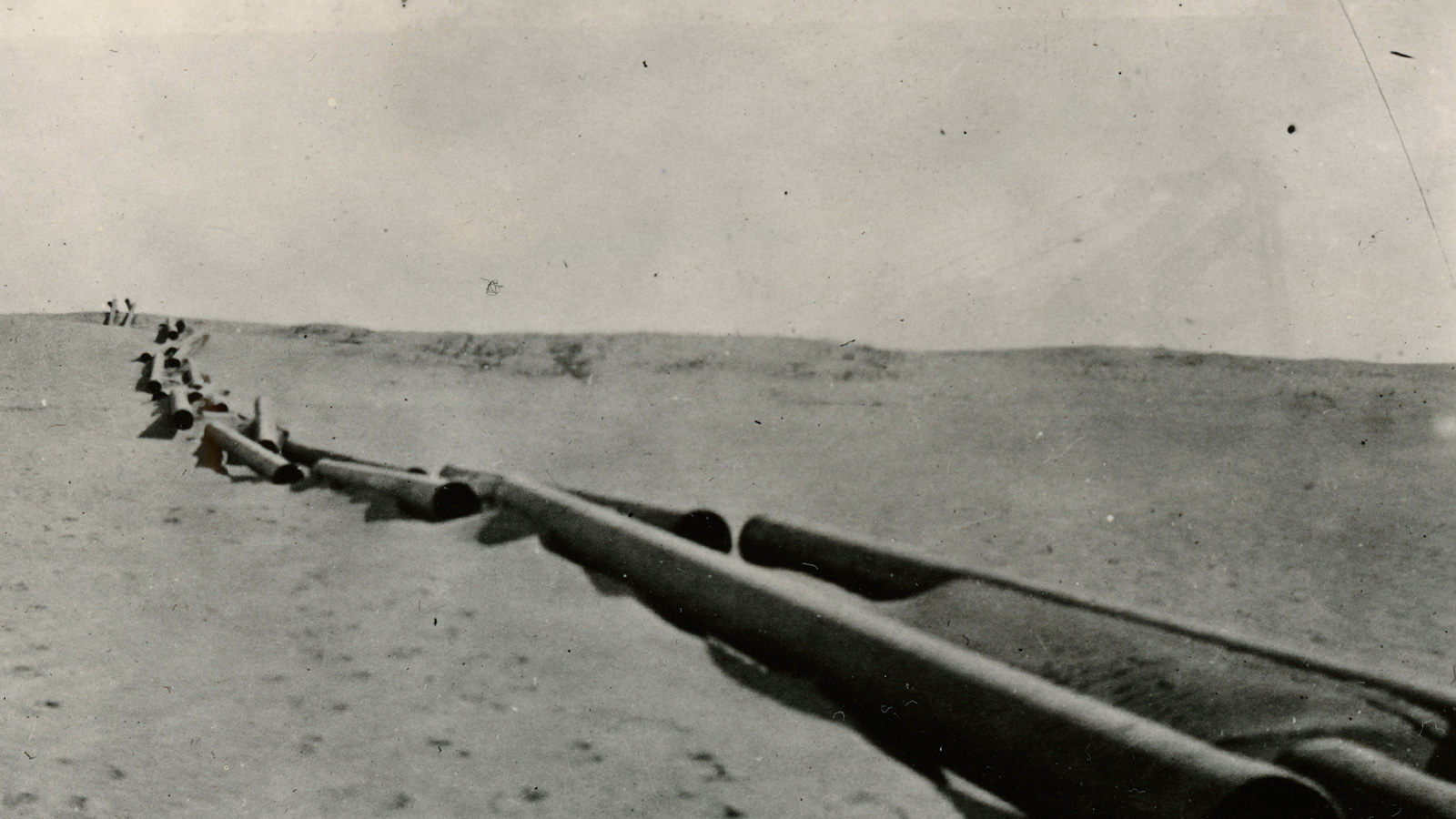
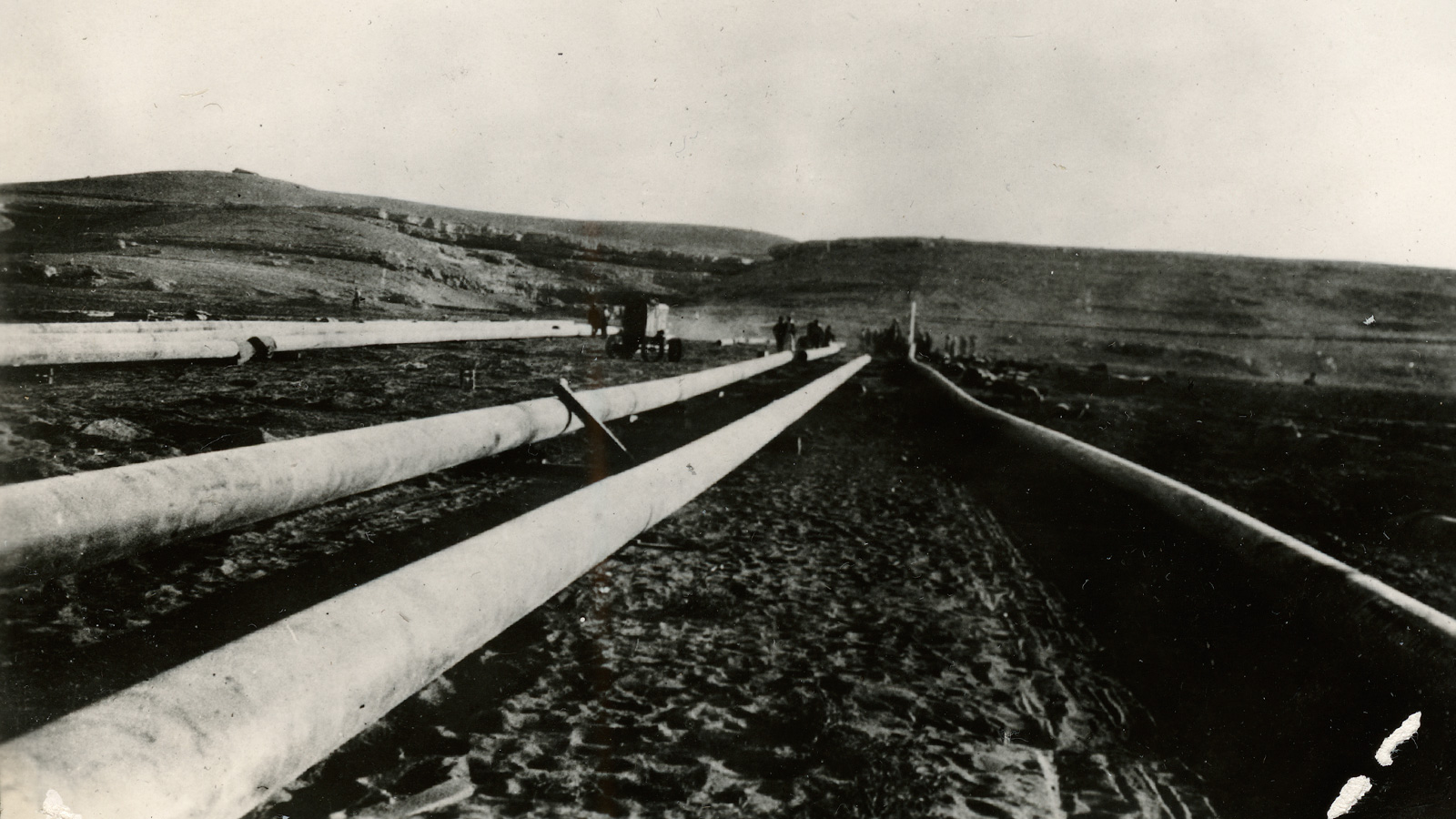
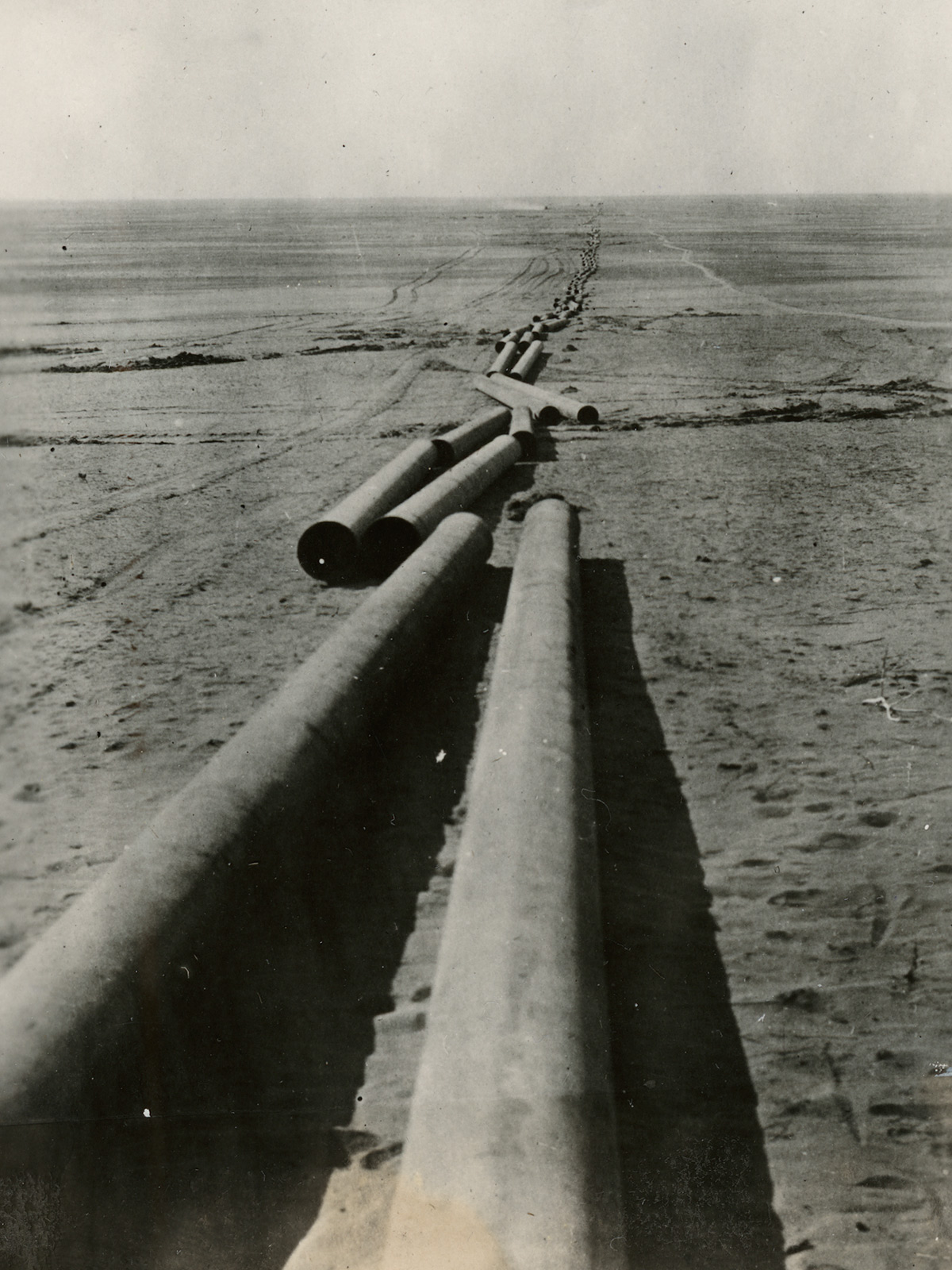
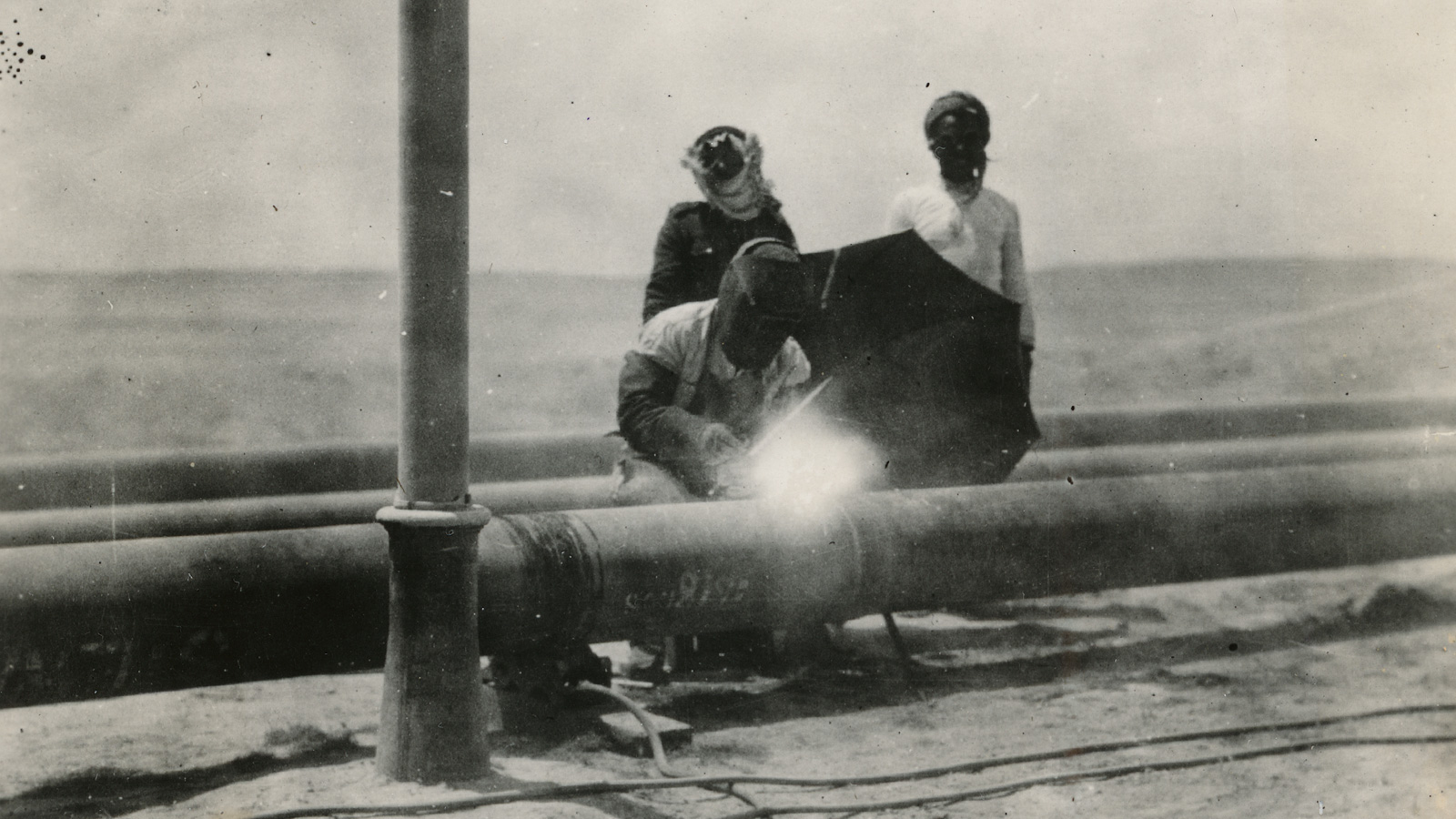
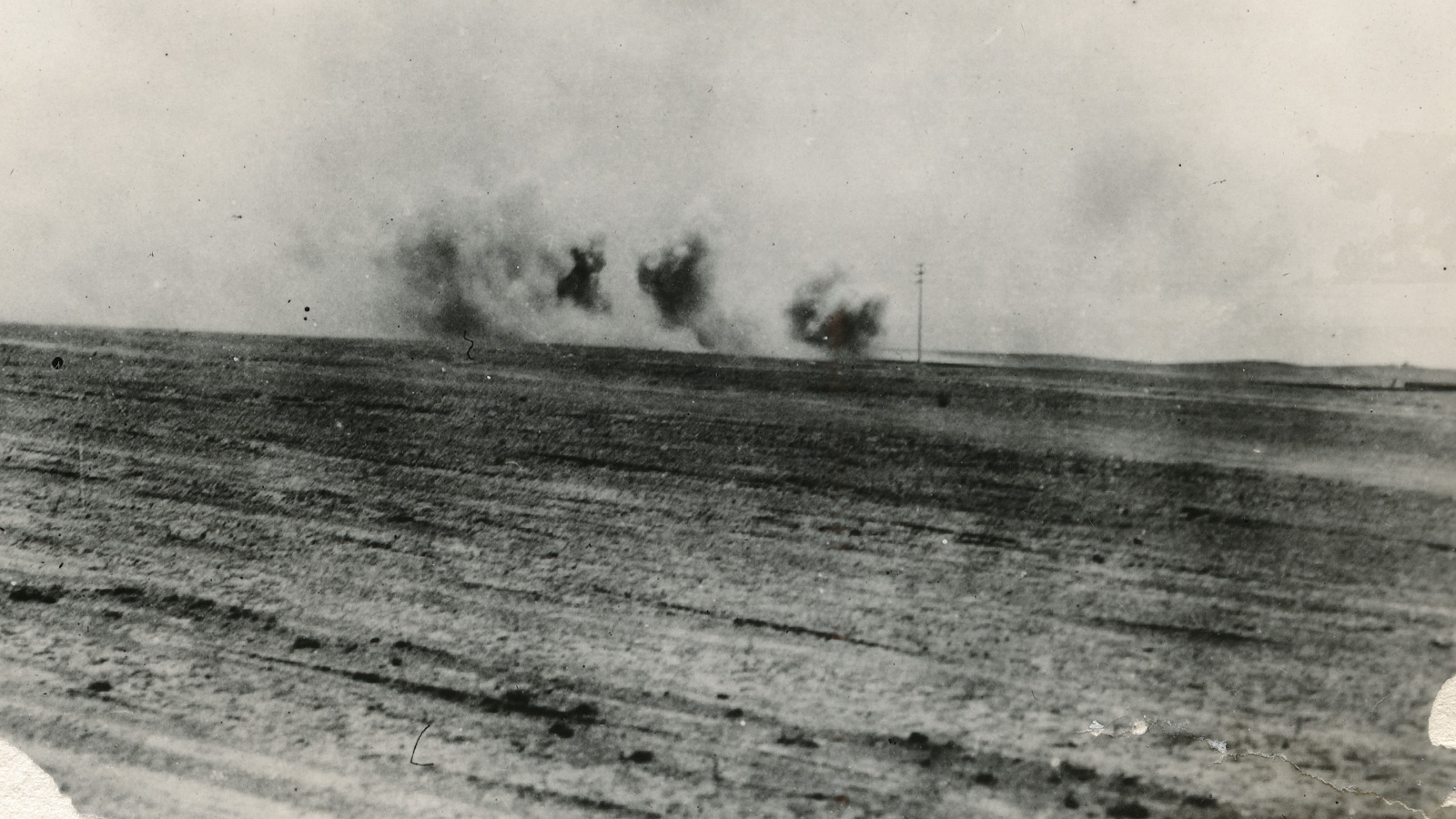
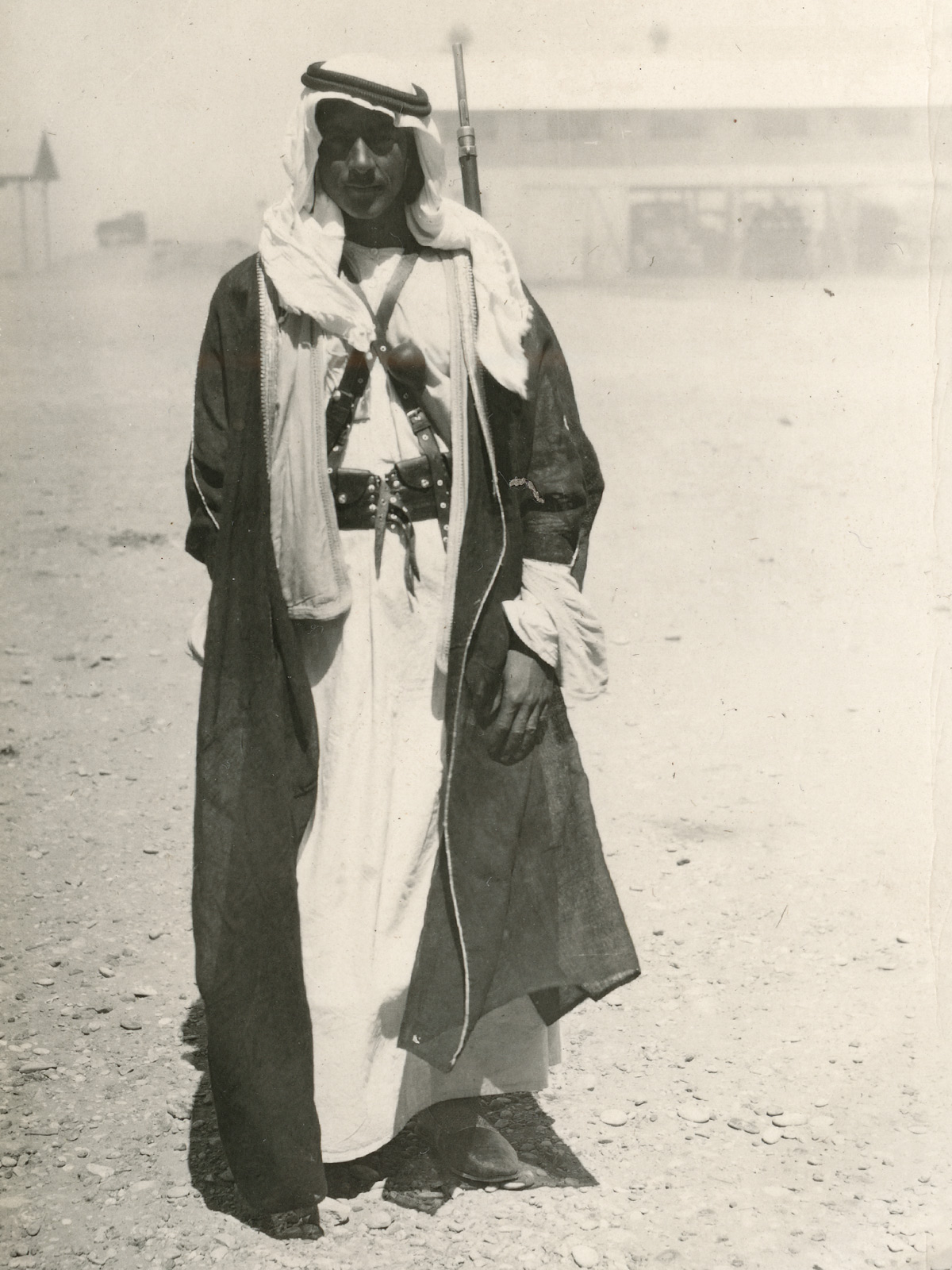
The project raised security concerns along all three routes, where the threat of Bedouin raids had to be guarded against. The photograph of an armed guard bears witness to this.
An album rediscovered
The album was recently located in the Art Library’s storage rooms, among a varied group of uncatalogued items. It reached us without its original context. This often happens with visual documents of this kind: because their support and printing materials differed, they were not usually filed with the records they related to, which over time made it easy for them to become separated from their context, or even lost.
Conservation treatment
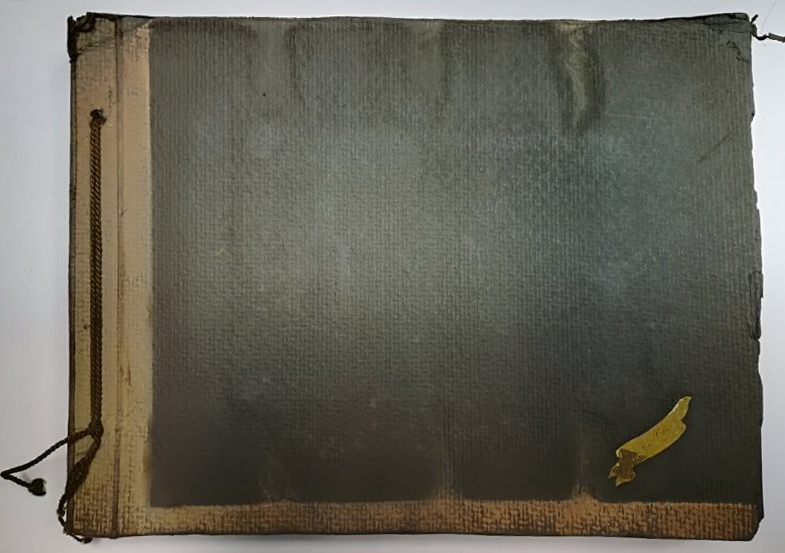
Given its fragile physical and chemical condition, the album was given a preservation and conservation treatment. The work respected both its intellectual and its material character. The album is made up of several individual components that were deliberately assembled, so it could not be taken apart, even where separating the parts might sometimes have been better for their preservation.
The first stage consisted of surface cleaning. The second phase involved a series of measures to stabilise the album physically and chemically.
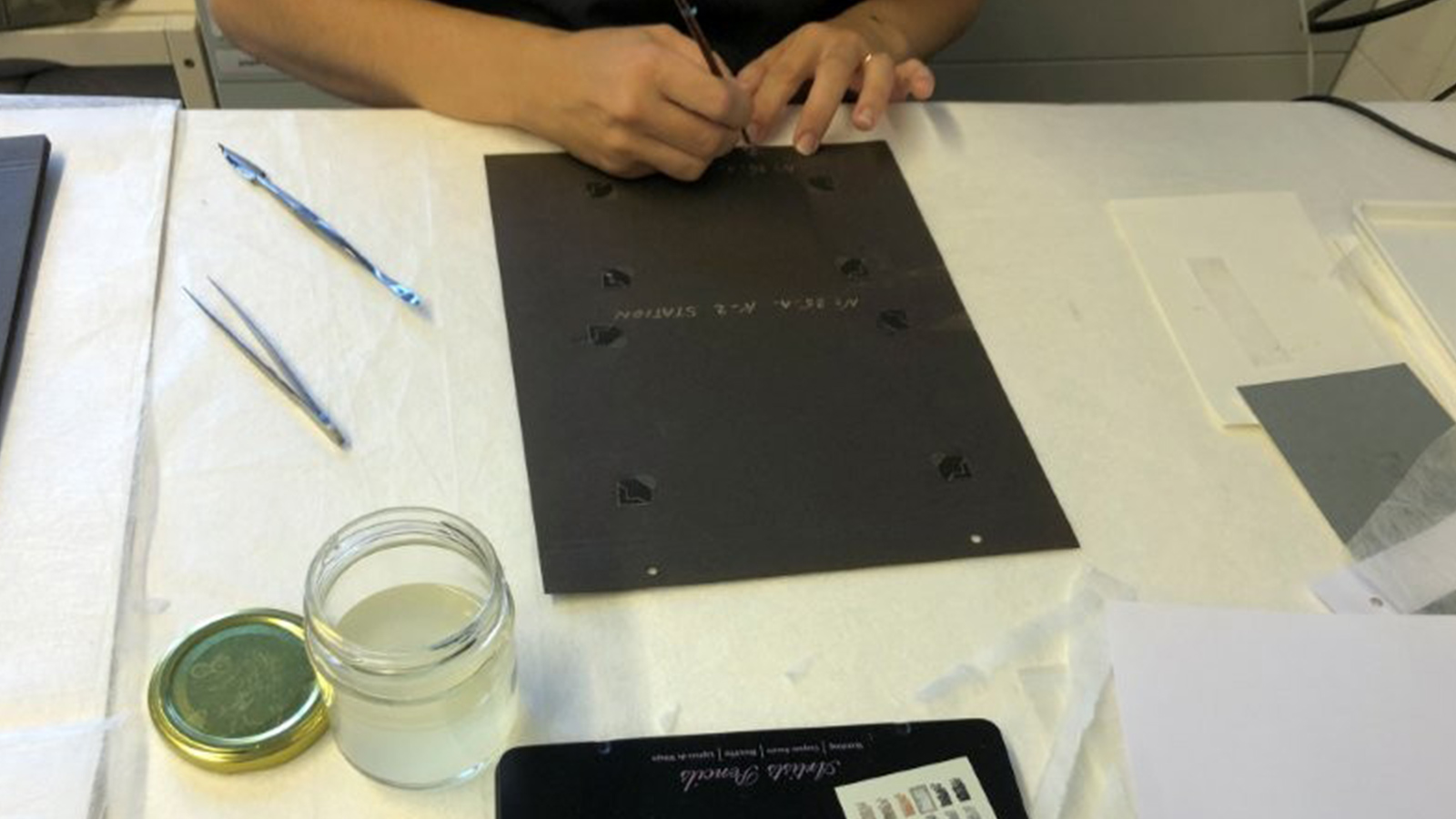
Each element was first cleaned thoroughly and individually: the cover, the pages and the gelatine silver print on developing-out paper. The card cover, which was badly distorted, torn in places and worn, was flattened using a humidification process, and the tears were repaired with Japanese paper and starch paste.
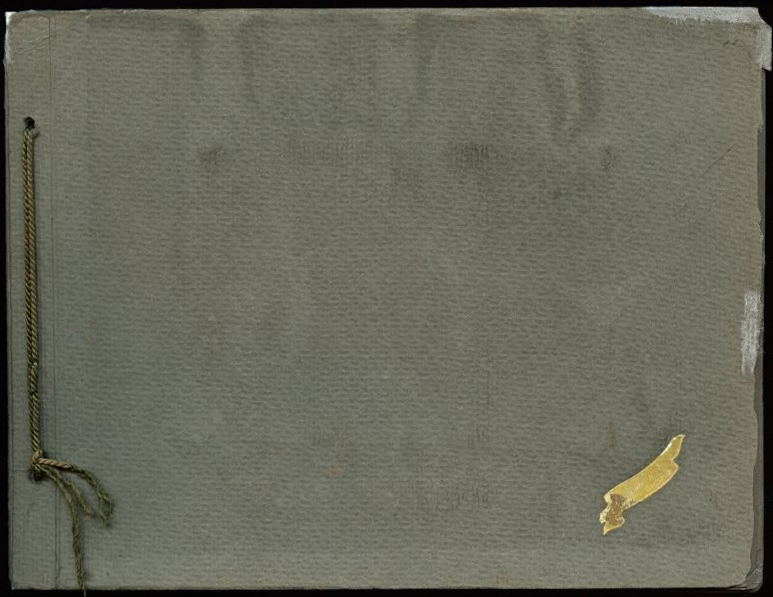
The mounting pages and the prints were treated together. A sheet of conservation paper was placed between each print and its page to slow the deterioration of the photographic image, since the support showed yellowing, fading and the spread of oxidation of the image-forming material, silver.
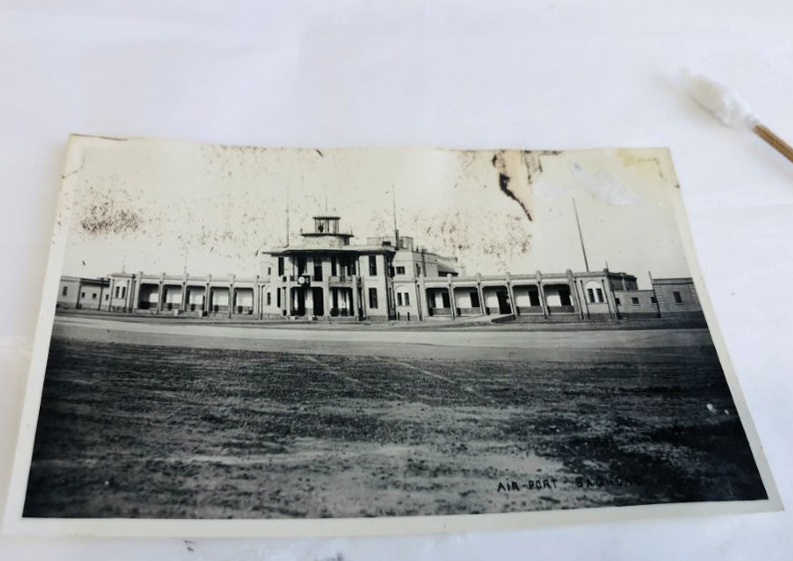
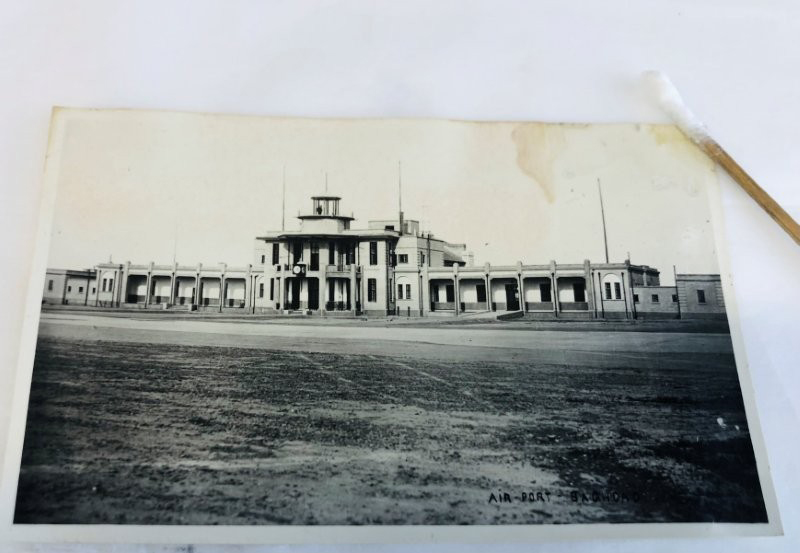
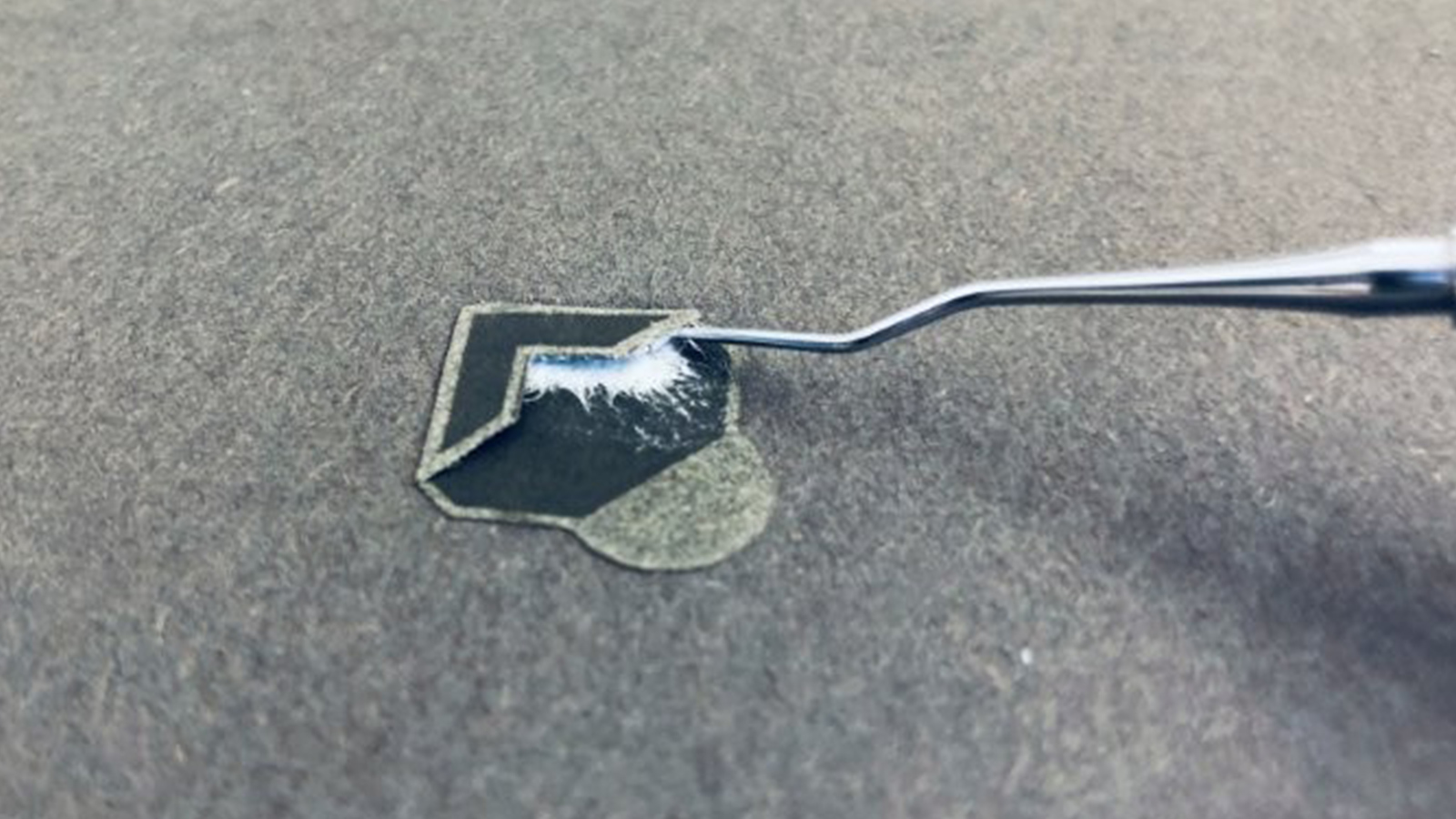
Loose photo corners were reattached, and minor consolidation was carried out where the surface layers of the image were torn or weakened. Prints that had stuck together were separated mechanically.
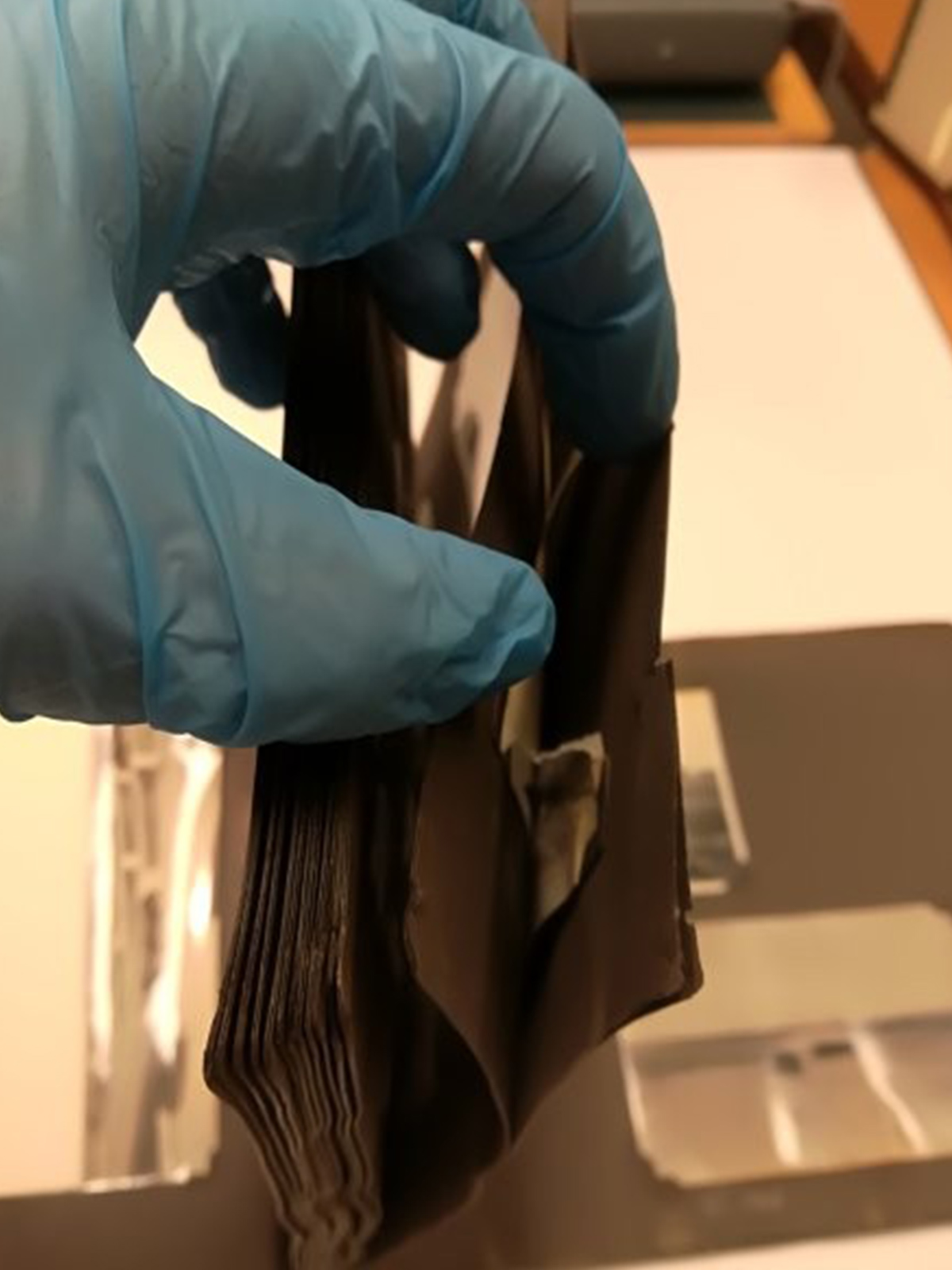
After treatment, each page was interleaved with a polyester sheet of the same size. Together with the reinstated original cord, this keeps the prints from touching one another and allows the album to be consulted safely.
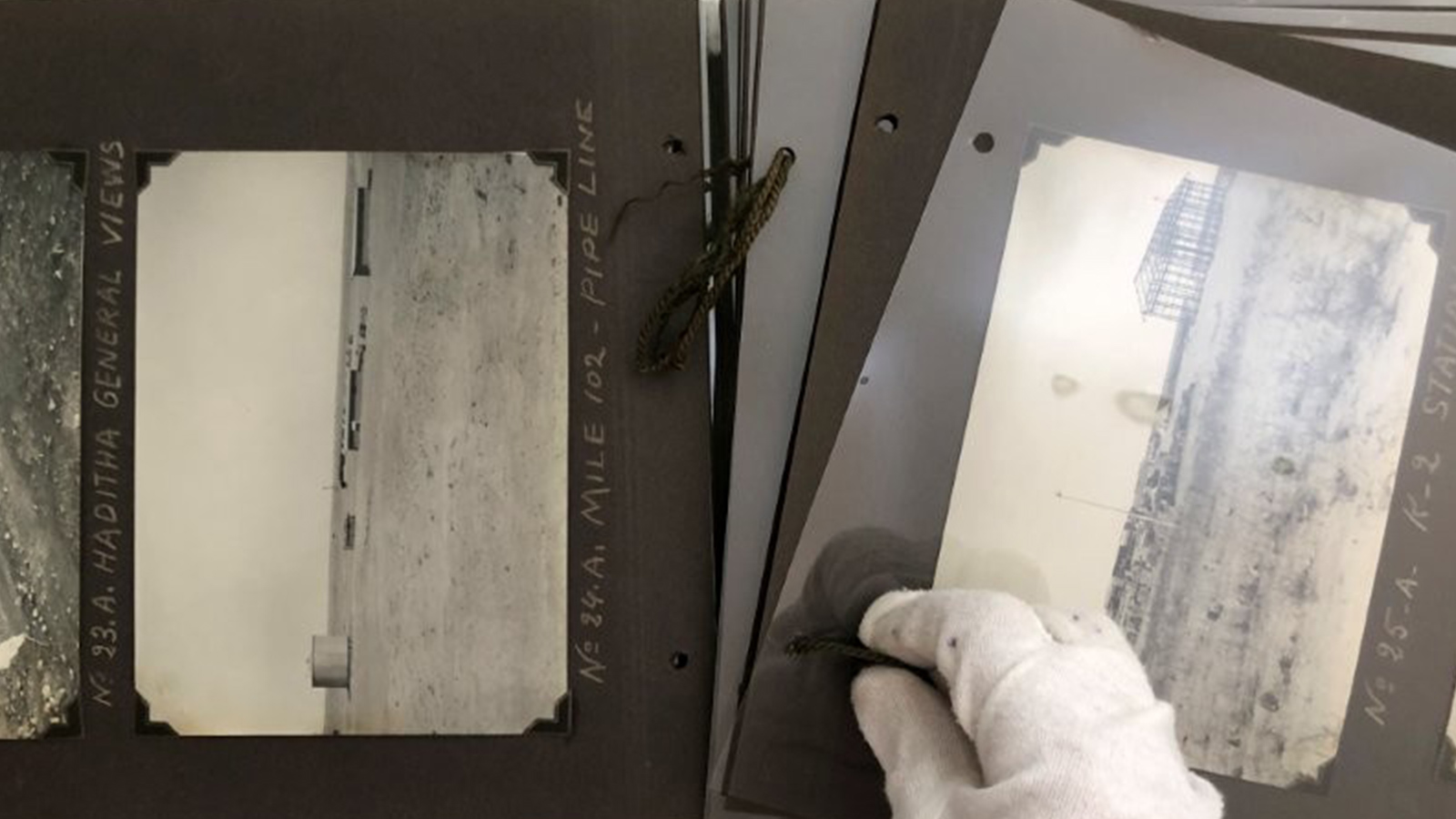
The album has also been digitised. The original now housed in an individual enclosure and kept in a climate-controlled storage room.
From the Archives
Explore the series


No results were found for your criteria.
You may also like

No results were found for your criteria.