
Three Venetian sunk-panel bindings in the Calouste Gulbenkian Museum
-
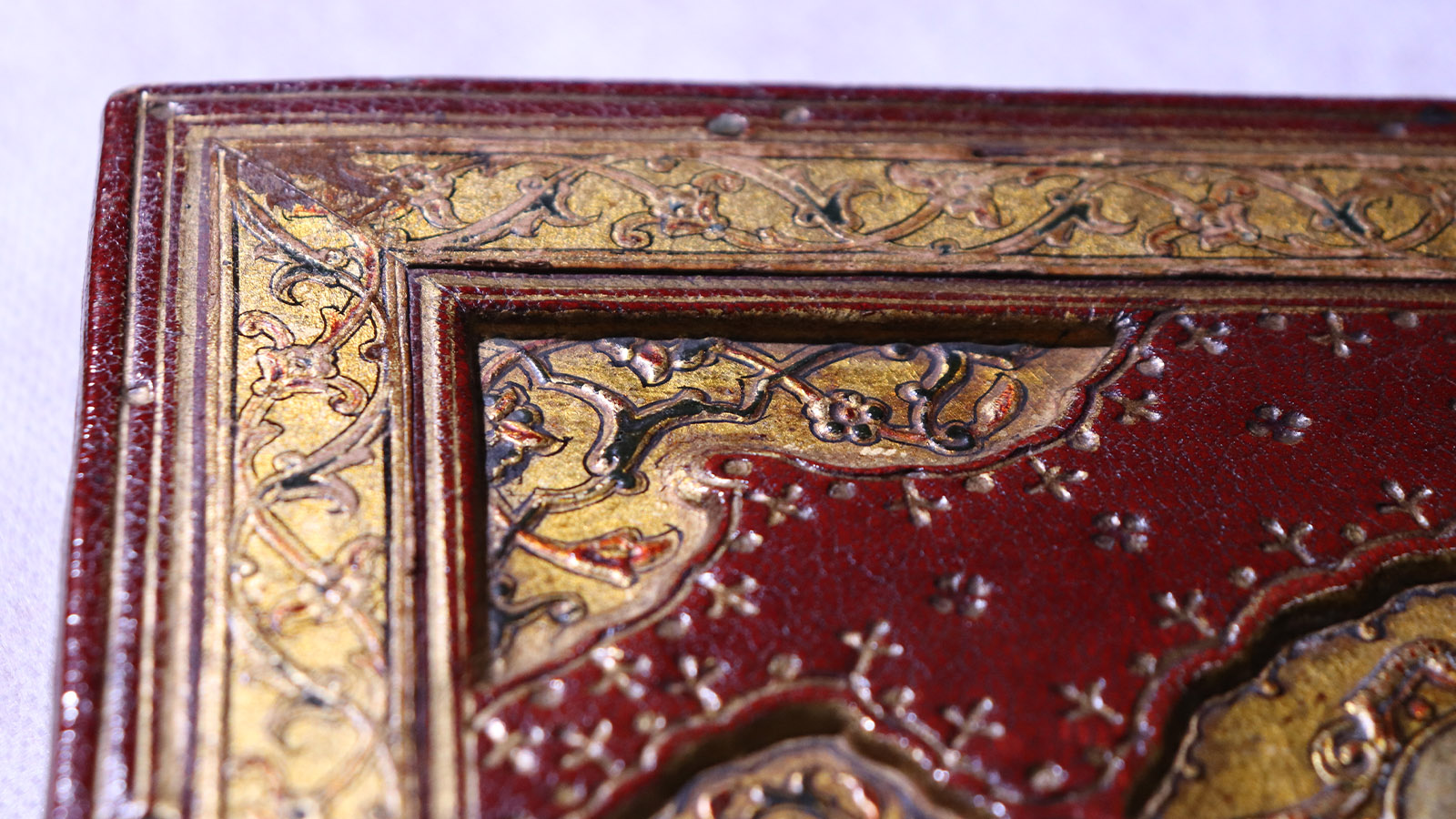
Marks of black ink or graphite on the surface of the binding.
The Museum holds three remarkable examples of Venetian sunk-panel bindings. This luxurious style of bookbinding exemplifies the impact of Islamic art on 16th-century Venetian craftsmanship. The name comes from the shallow, recessed areas on the boards, made by adhering a pierced pasteboard to an unpierced one underneath. The covers of tanned skin were impressed with engraved blocks and embellished by touches of gold and fine hand-painted details recalling Persian lacquerware. Despite the treatment of the boards and the decoration of the covers, the structure of such bindings remains Western, as well as their content. Remarkably, all three bindings in the collection still contain the original texts for which they were made: official copies of laws and regulations related to some of the highest offices in the Republic of Venice, the so-called dogali, usually enriched by an opening illumination.
This research was carried out as part of my doctoral studies (Venetian Sunk-panel Bindings:
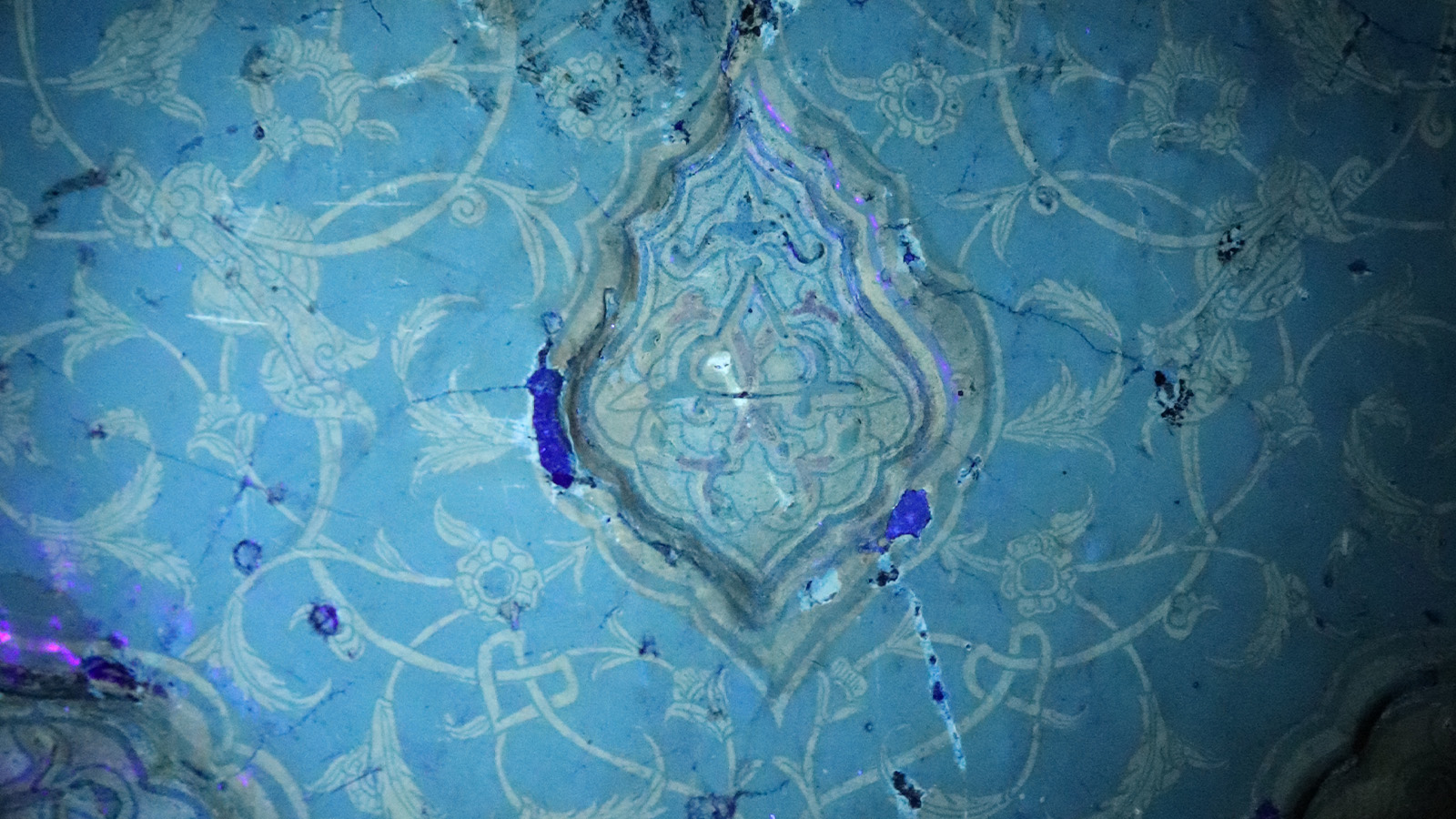
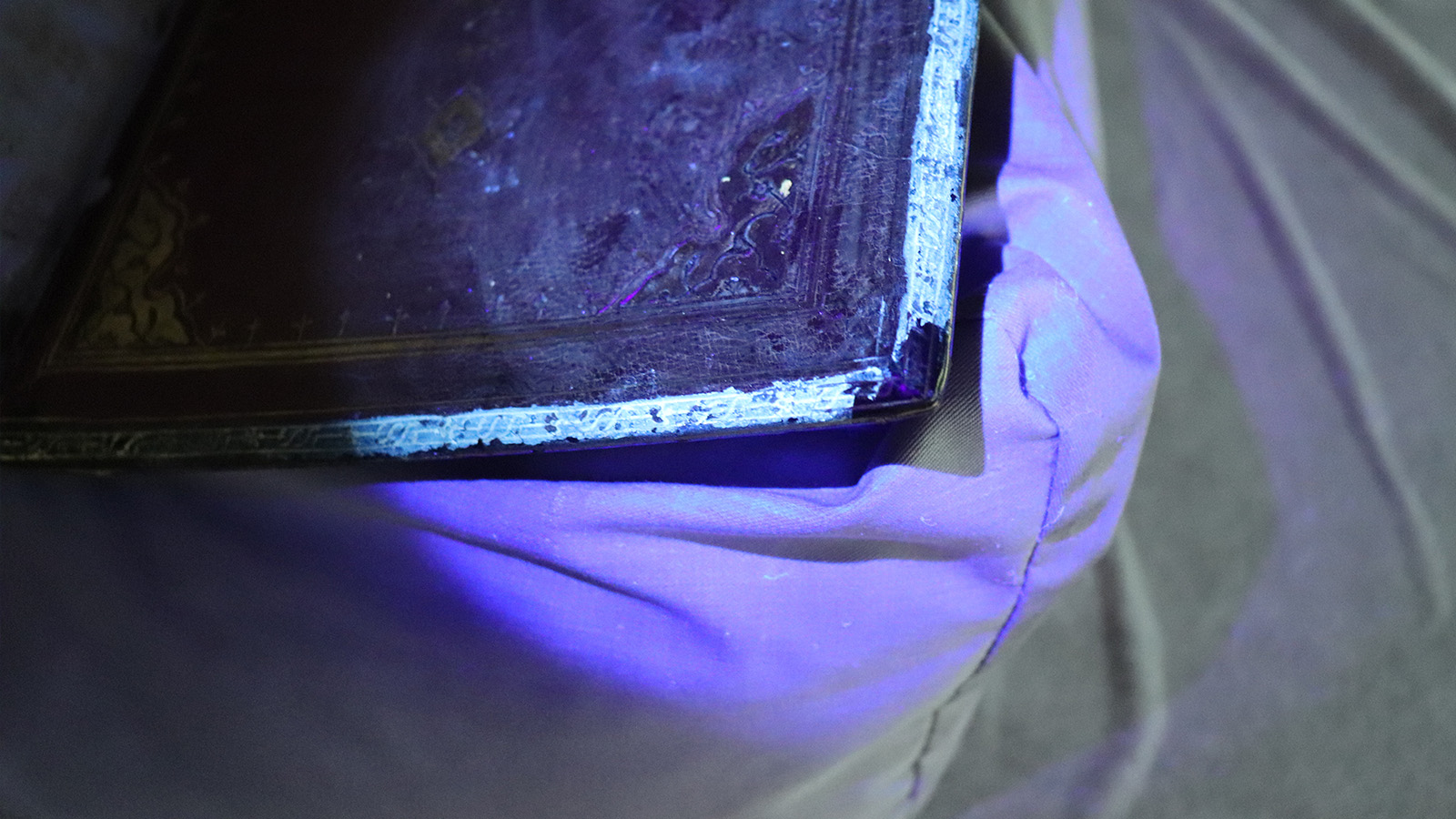
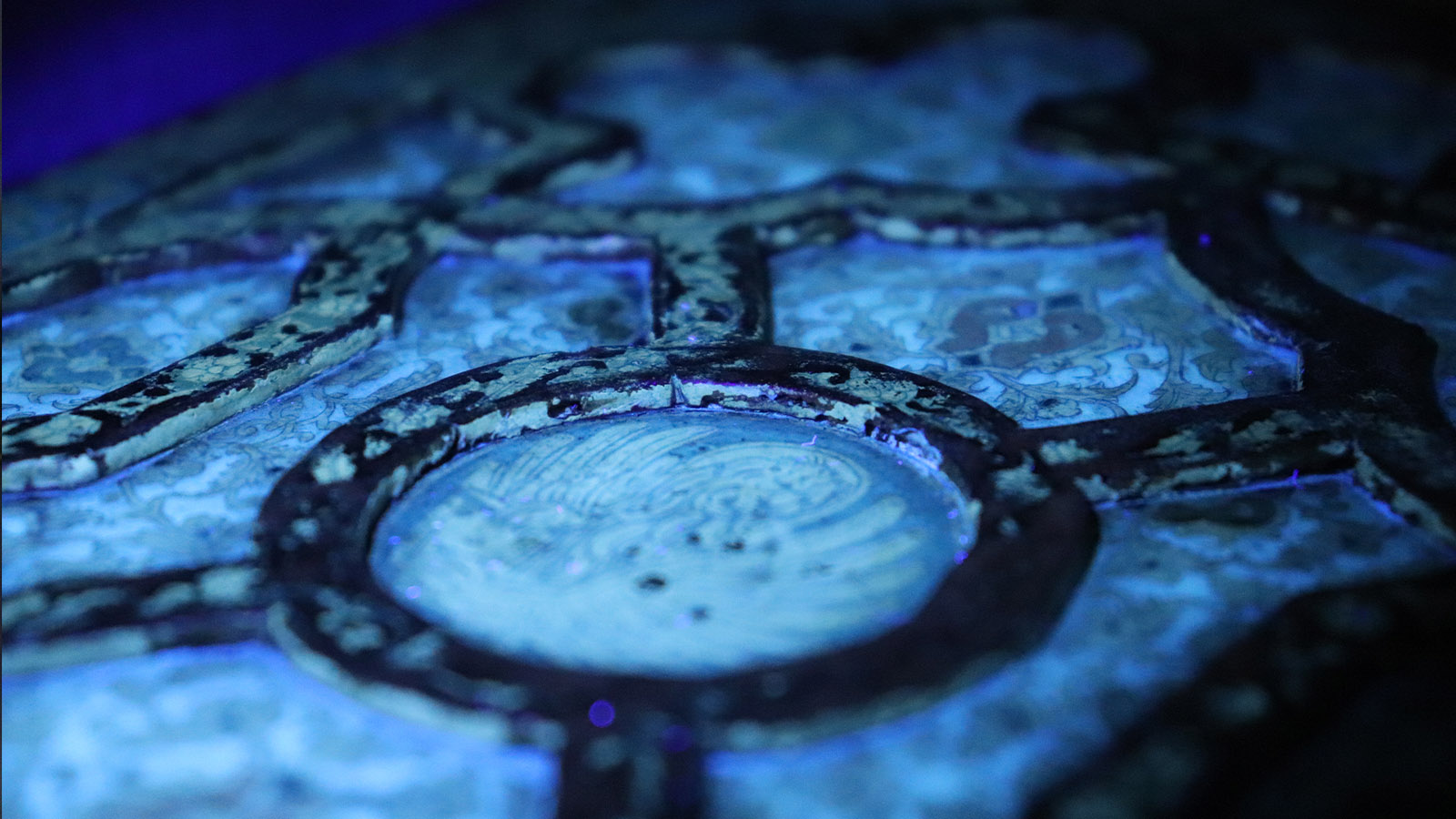
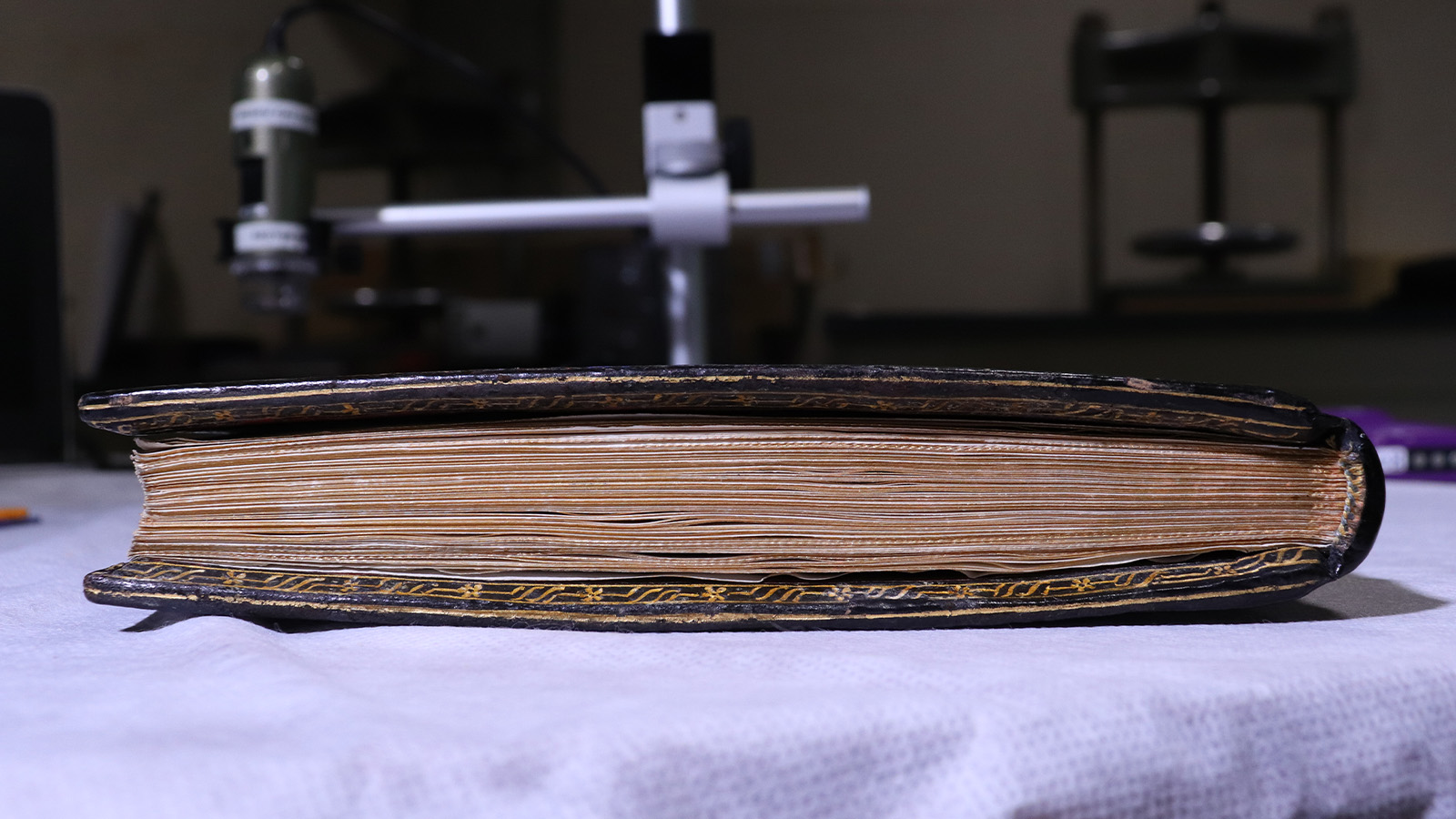
A Sixteenth century Structure and Production, Doctoral dissertation, University of the Arts London, 2025). The thesis explores the structure and decoration of around 130 known examples of Venetian sunk-panel bindings made in Renaissance Venice, along with the historical and cultural context in which they were produced. I aimed to document and analyse these bindings closely, not only to deepen our understanding of their construction and decorative features, but also to support the development of respectful, well-informed conservation practices that preserve their integrity. As a conservator-restorer specialised in books and bound manuscripts, I applied conservation methodologies drawn from the fields of art preservation and historical book research. This included analytical models developed by the Ligatus Research Centre (University of the Arts London), particularly those used in the study of historical libraries and archives. I began by creating detailed photographic documentation of each binding. I examined the surfaces under raking and ultraviolet light and used a digital microscope to investigate manufacturing techniques and identify signs of previous repairs.
The earliest binding was made in 1571 and contains the oath of Francesco Priuli on becoming a procurator of the church of St Mark de supra (inv. LA140). The parchment leaves, beautifully written and decorated, were sewn on four sewing supports. To enhance the richness of the spine, five purely decorative false bands were added, creating the impression of a binding sewn on nine raised bands. The edges of the bookblock were gilded and gauffered, while the endbands were sewn in alternating blue and yellow silk threads. Islamic artistic influence is clearly visible in the centre-and-corner layout of the sunk panels: each board includes a central medallion with scalloped edges, two flanking medallions, one above and one below, as well as four corner-pieces. In contrast with the other two Venetian sunk-panel bindings in the collection, I was surprised to find that the boards, rather heavy indeed, appear to be made of wood and have bevelled edges.
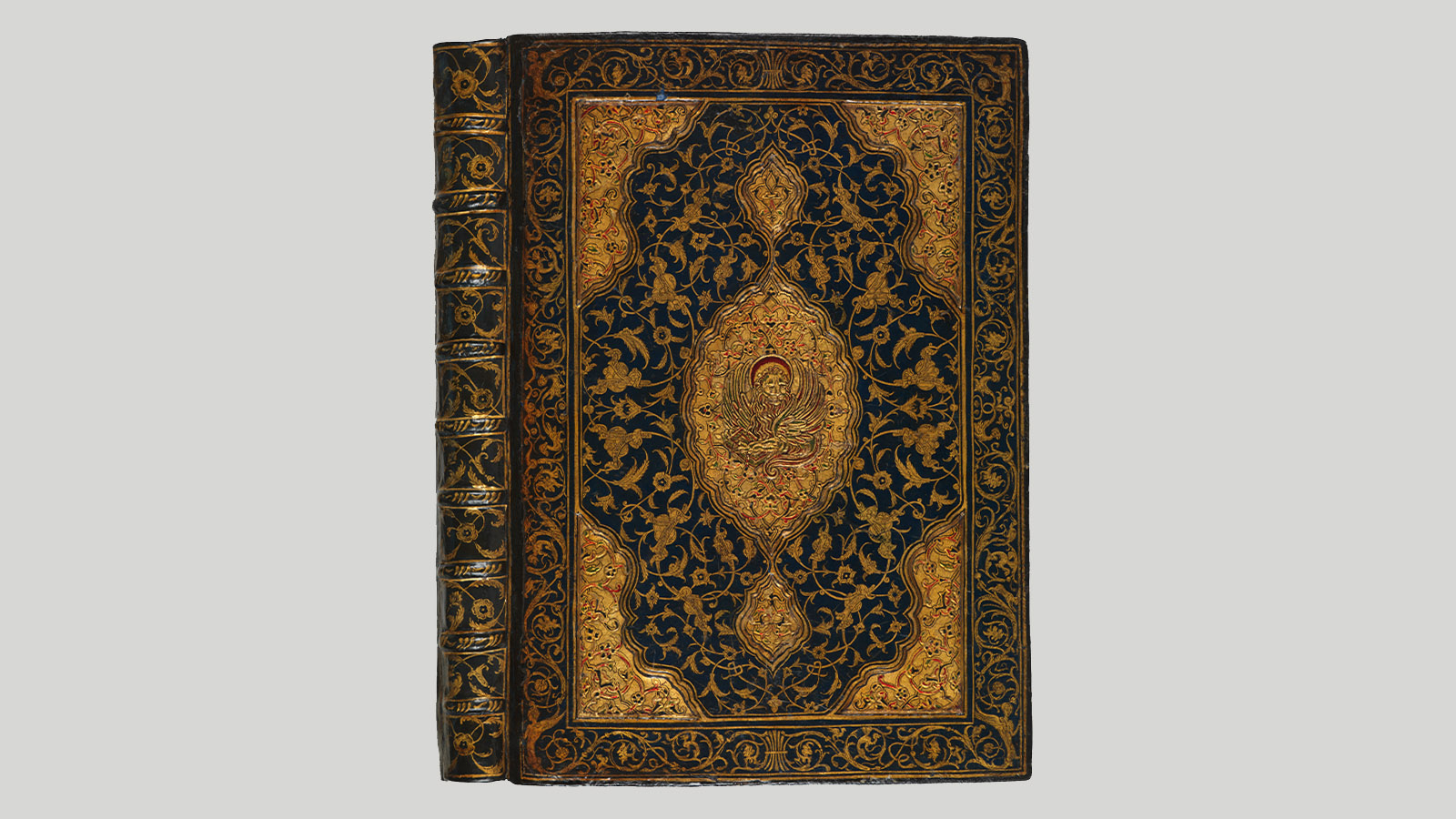
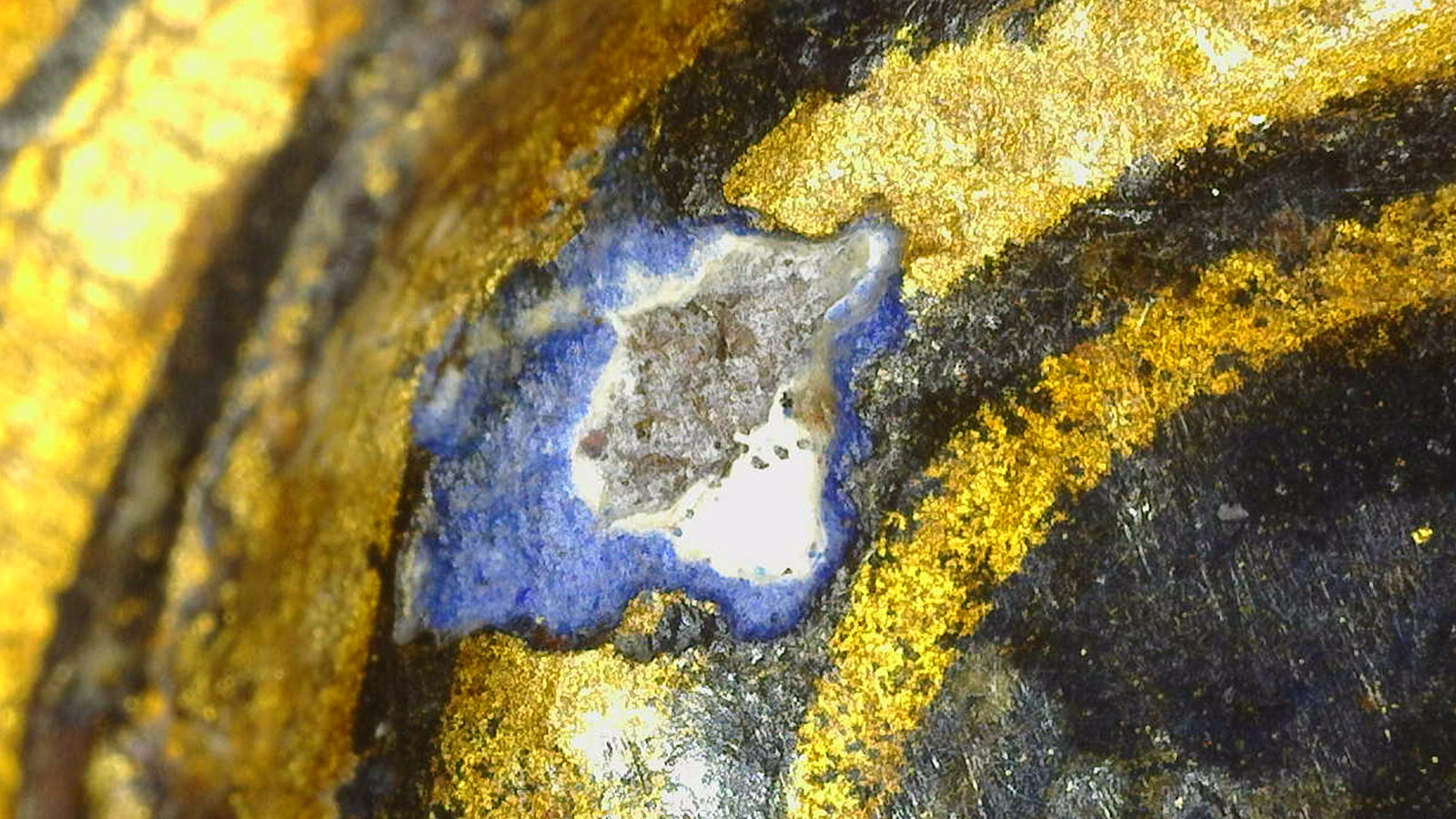
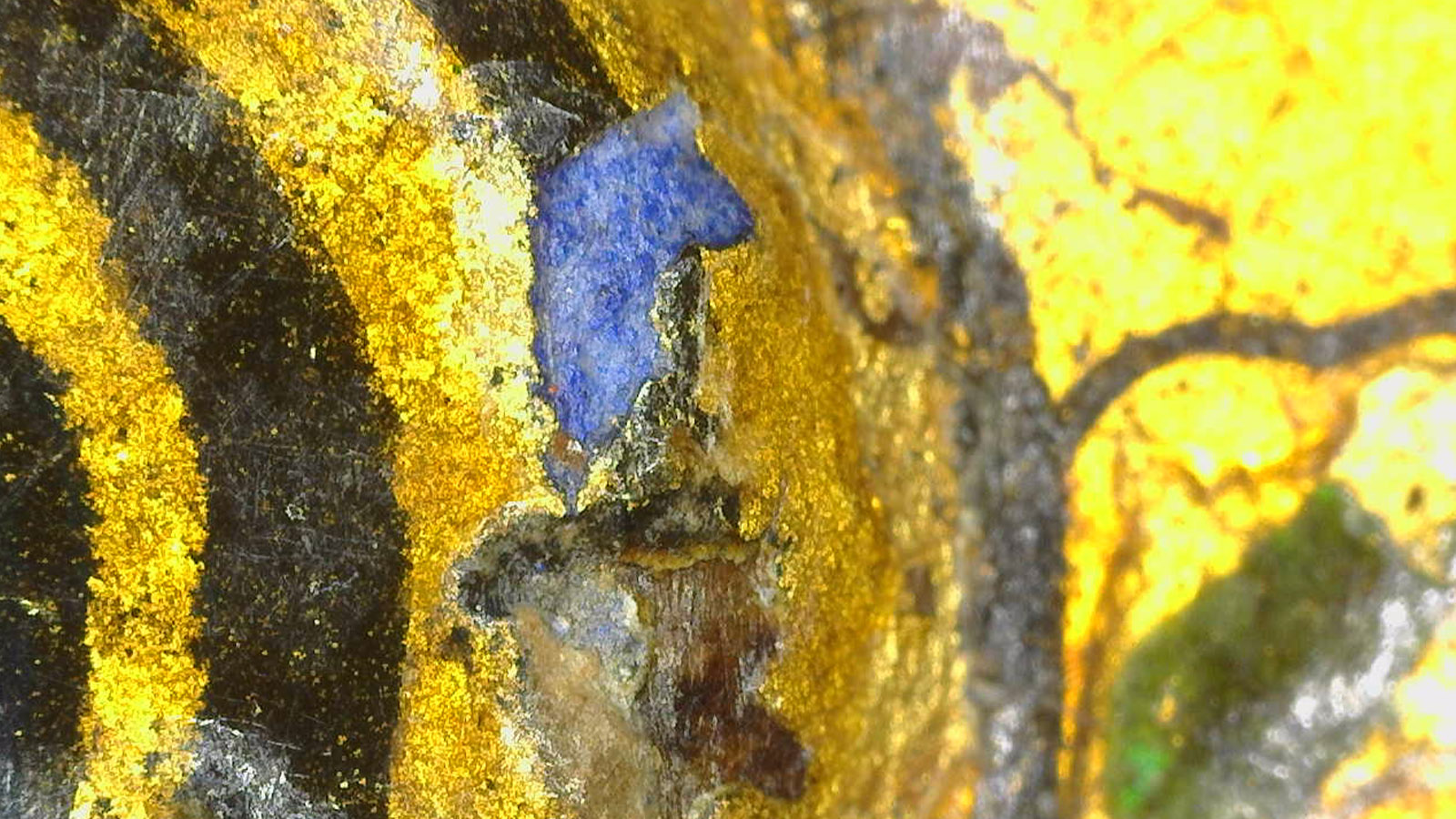
The boards and the spine were covered in tanned skin, but whether the covering extends to the sides of the boards is unclear. A striking feature, clearly inspired by Islamic lacquerware, is the vivid blue coating applied over a white ground on both the spine and the board surfaces. On top of this blue coating, a delicate pattern of fine branches, fleurons, and arabesques drawn from Islamic artistic traditions was painted in gold and colours, with additional gauffered detailing, while a border of grotesque motifs from the Western decorative repertoire was added, thus merging the two visual cultures.
The sunk panels were impressed with blocks engraved with designs such as floral branches, arabesques, the lion of St Mark and Priuli’s coat of arms. The impressions were gilded and painted in bright colours. Finally, the application of varnish gave the binding a lacquer-like finish. Adding further richness, linings of tanned skin were applied to the inside of the boards to imitate an Islamic-style doublure. These linings were also impressed with engraved blocks, gilded, and fully varnished to complete the luxurious effect.
The next binding in the collection contains the commission to Zuanne Lippomano to serve as captain of Candia (modern-day Crete) in 1598 (Inventory no. LA151). This is a stunning example notable for its use of inserts of mother-of-pearls. The parchment leaves and the paper endleaves were sewn on four supports of tanned skin laced through the boards. Endbands were worked in alternating red and cream silk threads over a core of tanned skin, and the bookblock edges were gilded and gauffered. Remnants of the original silk cord, braided with metal thread and once used to secure the seal to the document, can still be seen laced through the spine, as well as remnants of silk ribbons used as tie fastenings.
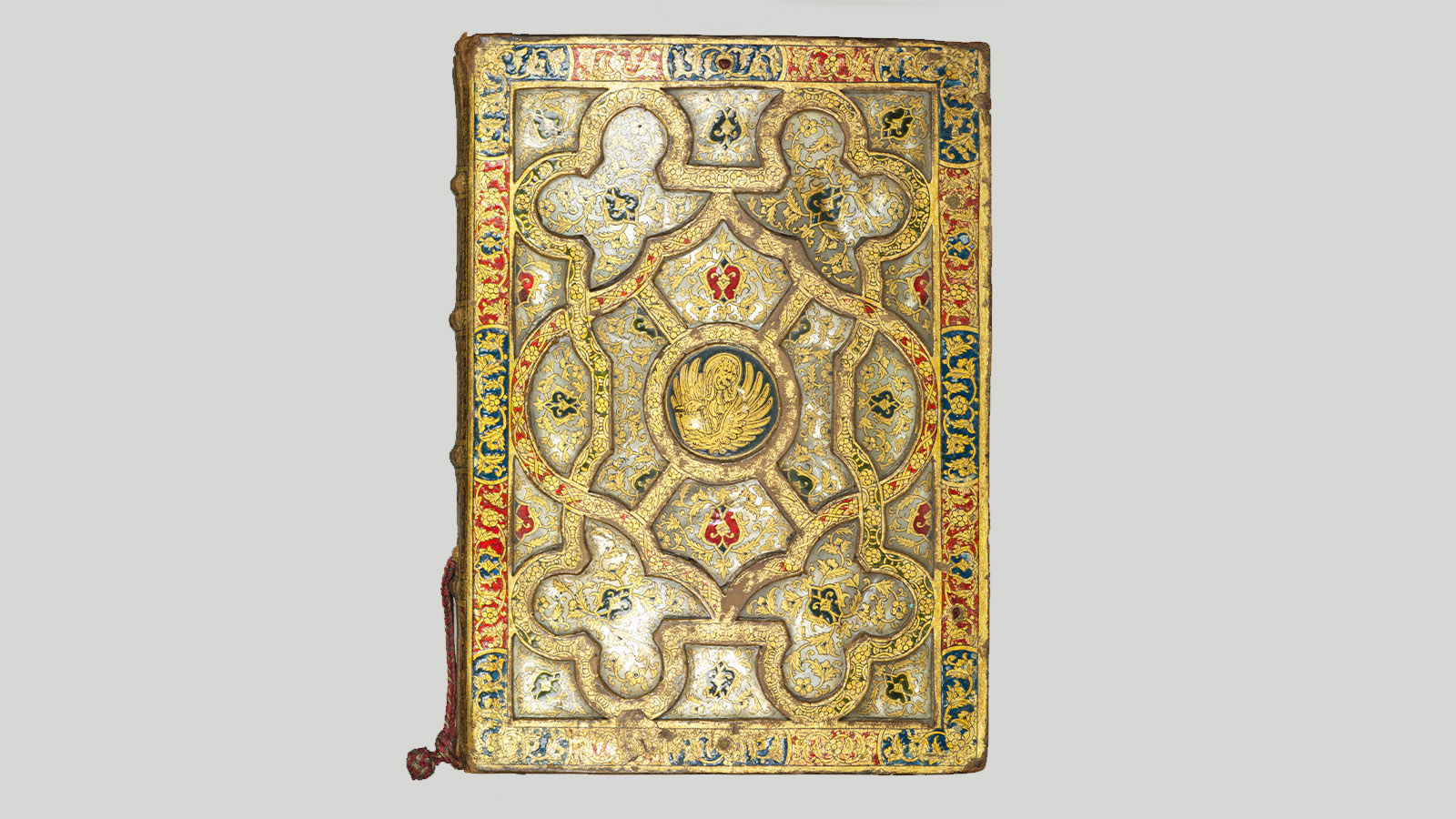
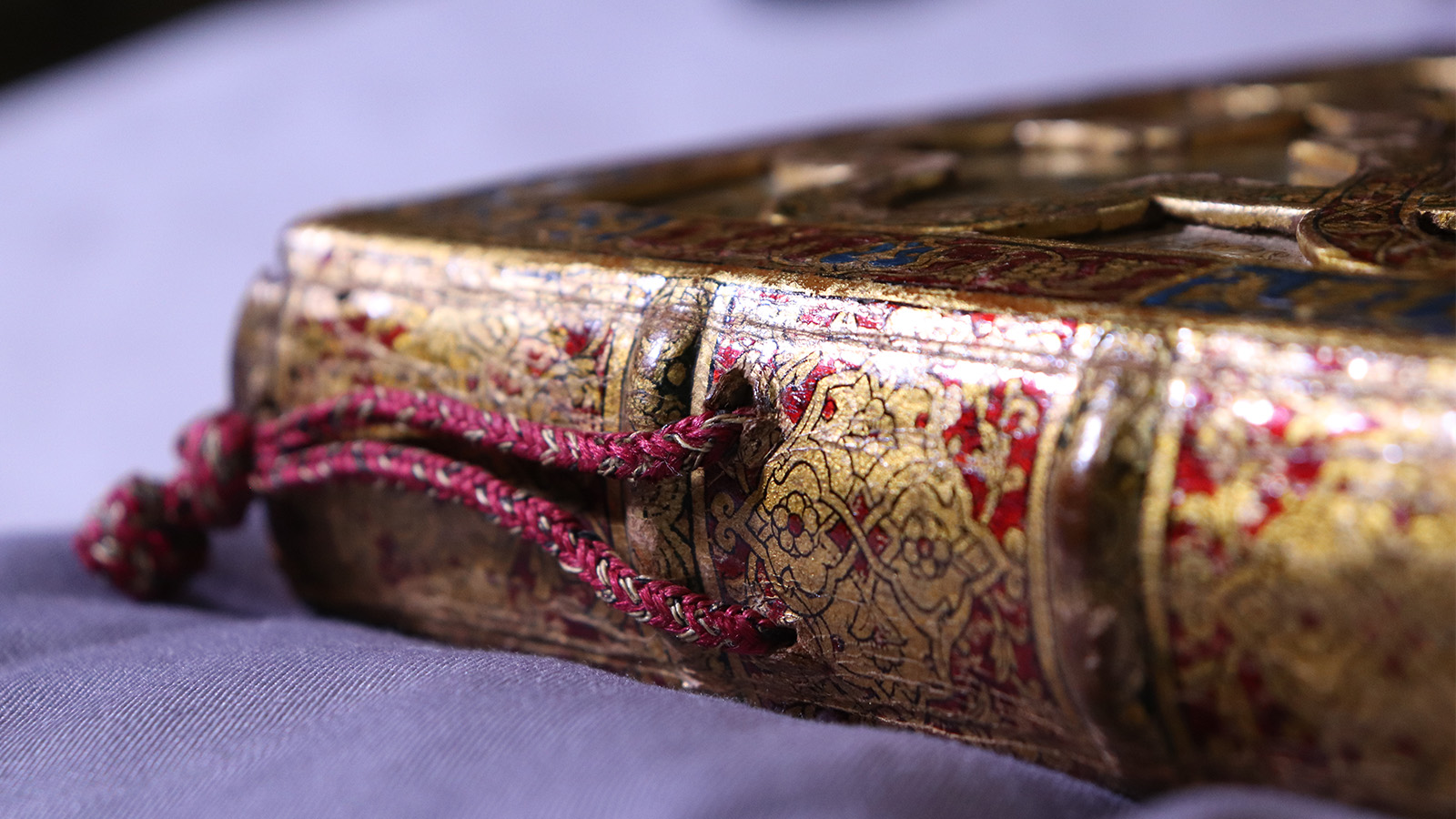
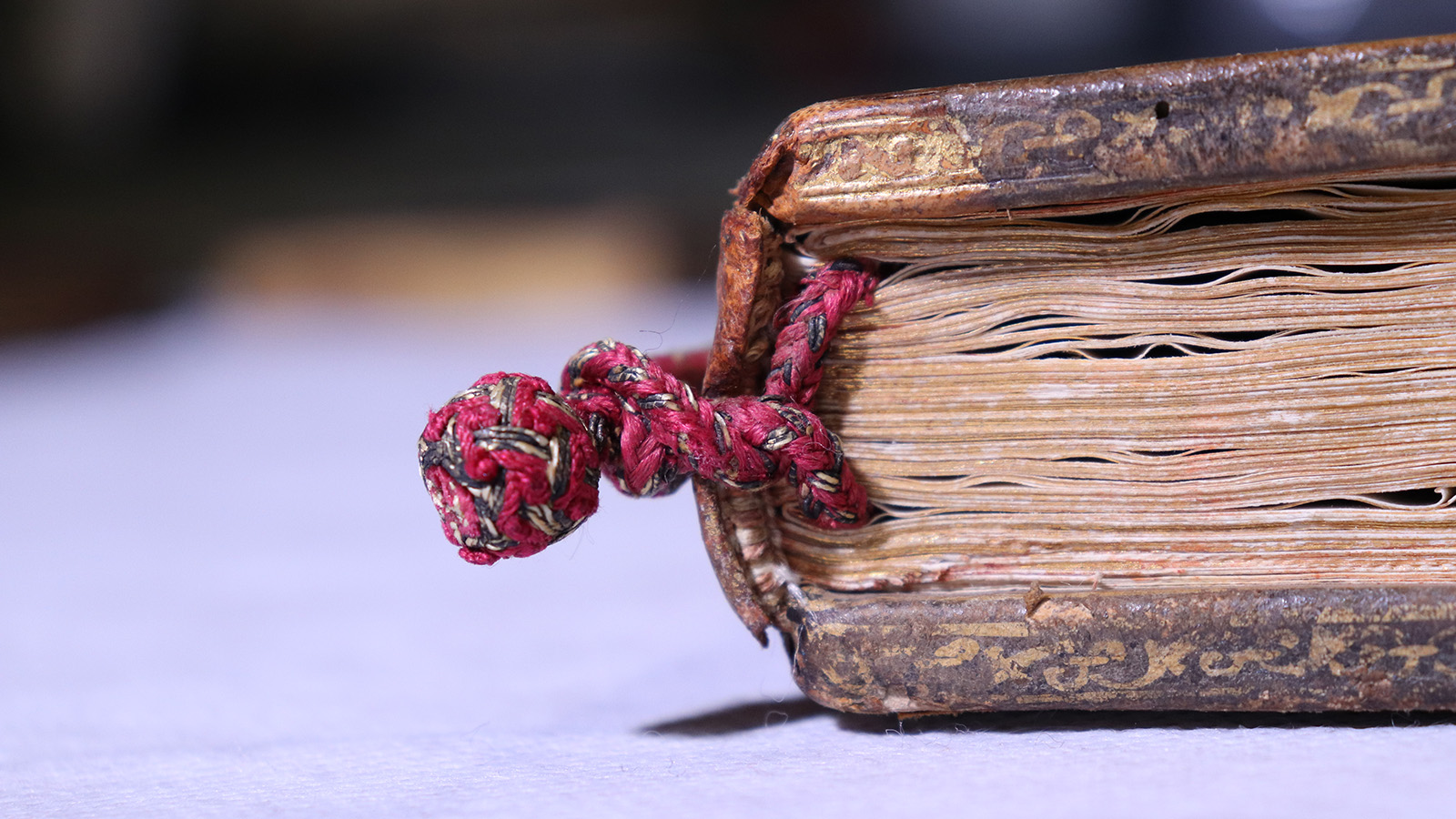
Each board consists of three layers of pasteboard to accommodate deeper sunk panels and the thickness of the mother-of-pearl inserts. The layout of the sunk panels is particularly elaborate: a cartouche shape pointing upward and downward, a rectangle with lobed corners, and a circular centrepiece. On the surface of the pierced pasteboard, marks of black ink or graphite are still visible, probably from a tracing technique.
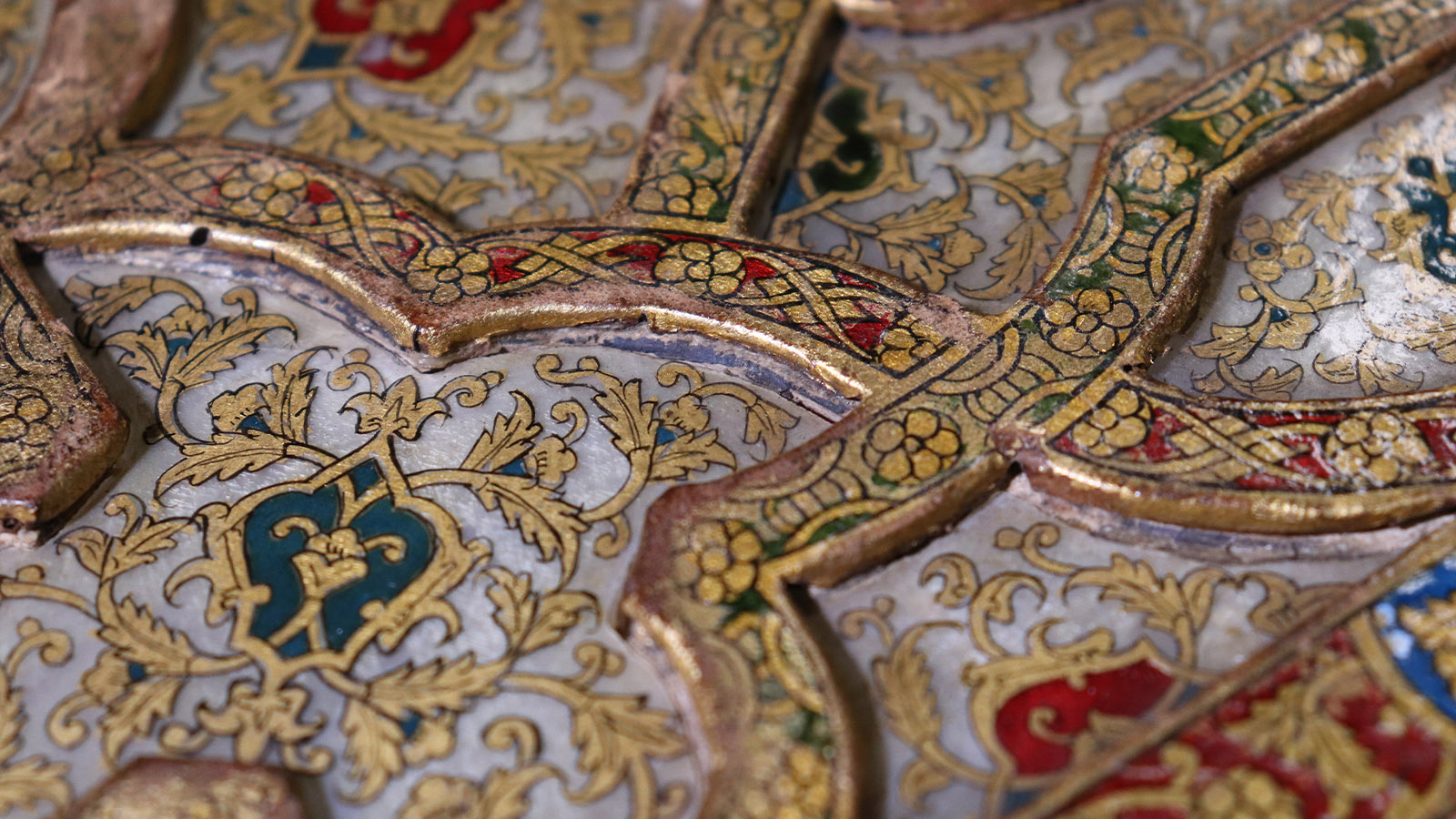
The raised area of the boards, the board edges and the spine were covered in tanned skin and were completely gilded with gold leaf. A delicate pattern of flowers and arabesques were painted to the entire surface of the boards, even on the mother-of-pearl inserts, and the spine in black, red, blue, green and gold. The centrepiece was painted with the lion of St Mark and with the Lippomano’s coat of arms. Finally, the entire surface of the binding was varnished to give it a polished finish.
The last binding in the group holds the oath of Andrea Sanudo upon his appointment as ducal councillor in 1598 (Inventory no. LA200). Although this example appears to follow the most typical model found among Venetian sunk-panel bindings, the rectangular frame running along the edges of each board appears to be a unique feature within the known examples.
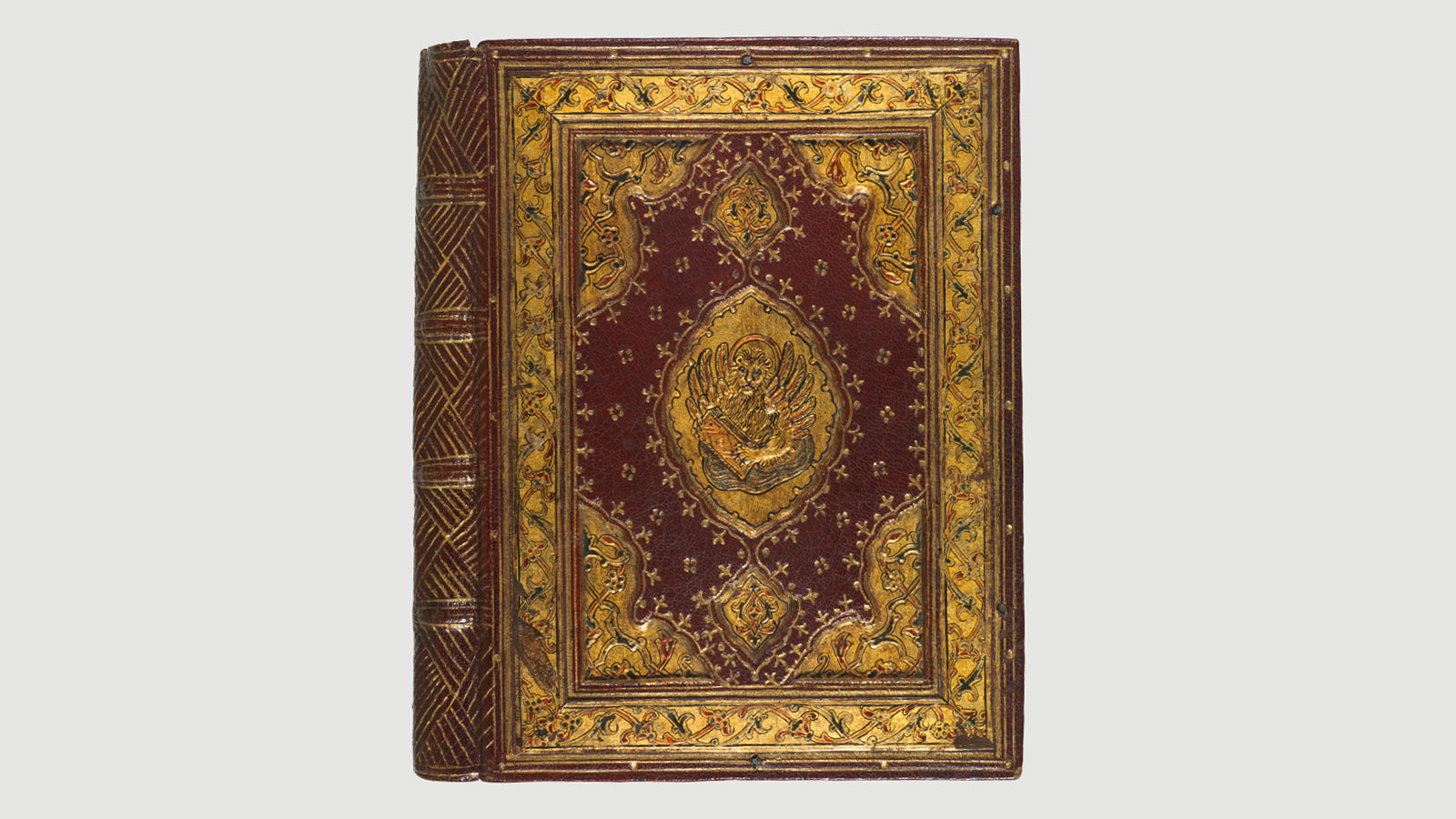
Rather than incorporating sunk panels along the border, this binding was embellished by four onlays of tanned skin forming a continuous border frame. These onlays seem to have been cut from a single piece of tanned skin previously impressed with a large block engraved with a floral design. We can digitally reconstruct the exact design engraved onto the surface of the block, raising questions about whether other Venetian items were decorated with it, or if it was specifically designed for use in bookbinding.
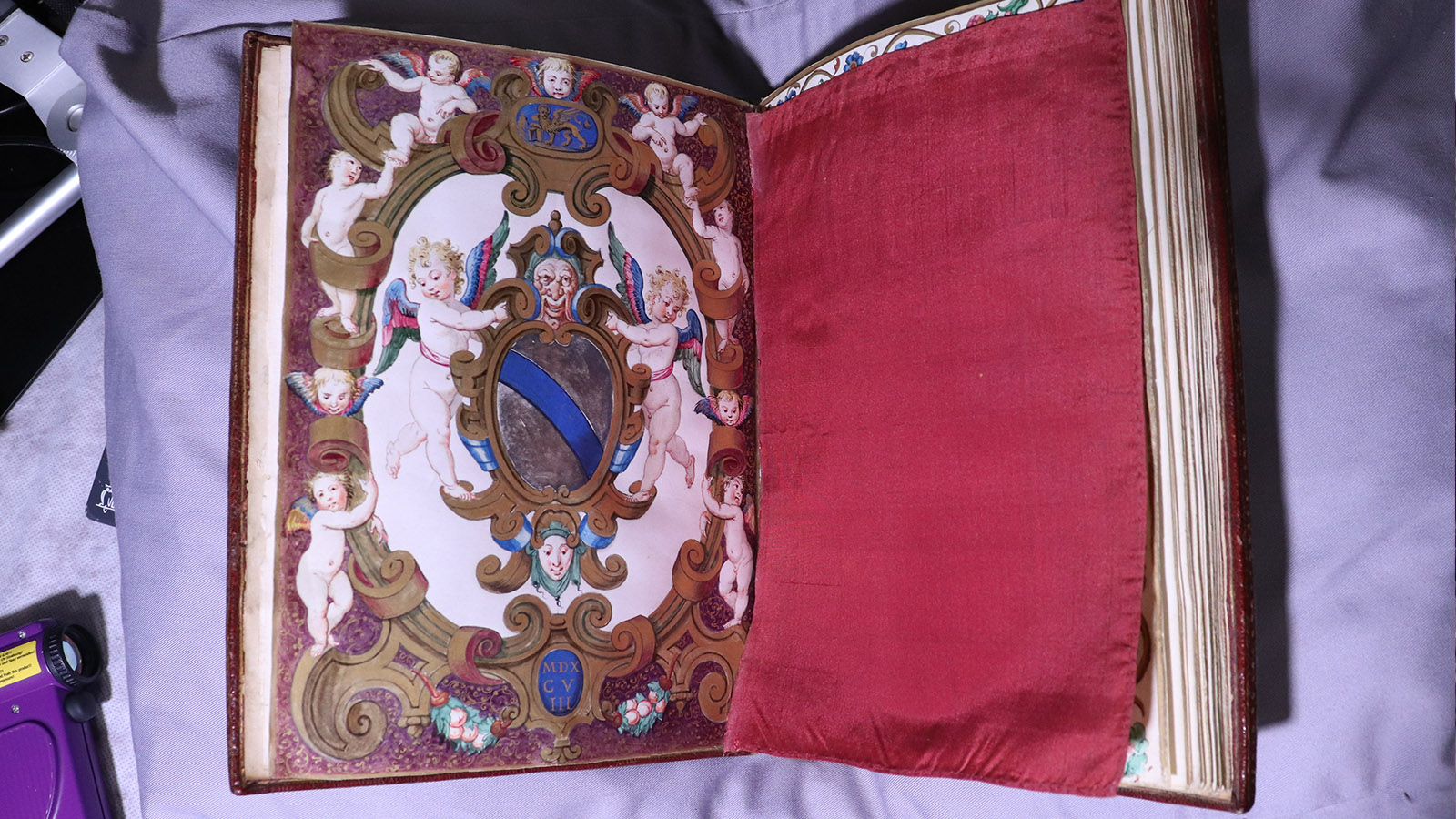
Another notable detail is the preservation of the opening illumination. The illumination was painted on two facing leaves and was originally protected by a piece of plain red woven textile inserted between them to prevent abrasion. Rather than being part of a bifolium, the first leaf itself is a single leaf partially adhered to the preceding paper endleaf and further secured by an additional sewing. Finding this structure still intact is rare and offers valuable insight into the fascinating multimaterial nature of bookbinding.
These bindings are extraordinary examples of the style and clearly reflect Gulbenkian’s refined taste as a collector. The Gulbenkian Archives include fascinating correspondence between Calouste Gulbenkian and his agent, Henri Leclerc, discussing his interest in acquiring two of these bindings during the Sale of Beaux Manuscrits, Incunables, and Riches Reliures from the Engel-Gros Collection, held on 2 June 1921. During my research, I was particularly interested in the documentation related to this sale, as another Venetian sunk-panel binding was described as being available. Unfortunately, the commission to Gabriele Canal to serve as Proveditor in 1562 was not acquired by Calouste Gulbenkian and I could not find its exact location; therefore, it is worth further investigation.
You may also like

No results were found for your criteria.