
The museum out of the closet: unintentionally queer
Continuing this queer-focused interpretation of works from the Gulbenkian Collection, we will now take a look at those that, without any prior intention, convey images which fall outside the realm of heteronormativity. In other words, works that are unintentionally queer. We will not find any historical figures thought to have had loving or sexual liaisons with people of the same sex, nor indeed their mythological portrayal… But we will encounter certain deviations, many of them even created by heterosexual artists.
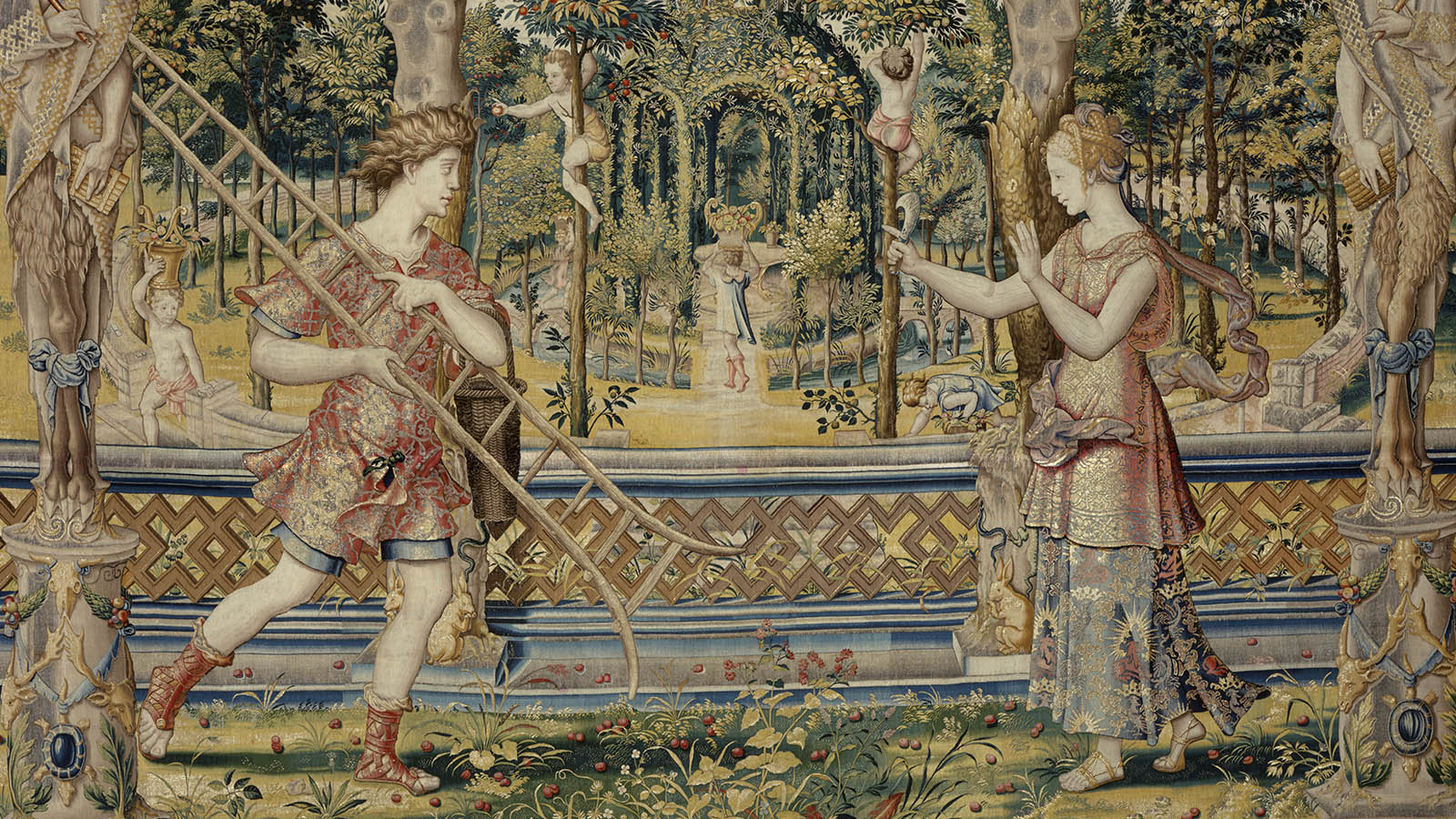
Let us return to the mythologies depicted in numerous works in the Gulbenkian Collection, which serve to reflect other realities, beginning with another look at the Vertumnus and Pomona tapestry. Produced after designs attributed to Pieter Coecke van Aelst, and on display at the Renaissance gallery, this work tells a love story between two deities. In an attempt to win the heart of Pomona, goddess of fruitful abundance, Vertumnus, the god of gardens and fruit trees, takes on a range of physical forms, transforming himself into an old woman and a young girl, for example. This story, told by Ovid in his Metamorphoses, can be reinterpreted in a queer light if we see it as referring to identities that do not fit into a single body, and whose essence lies in their mutation, who are at the same time man and woman, young and old, human and animal.
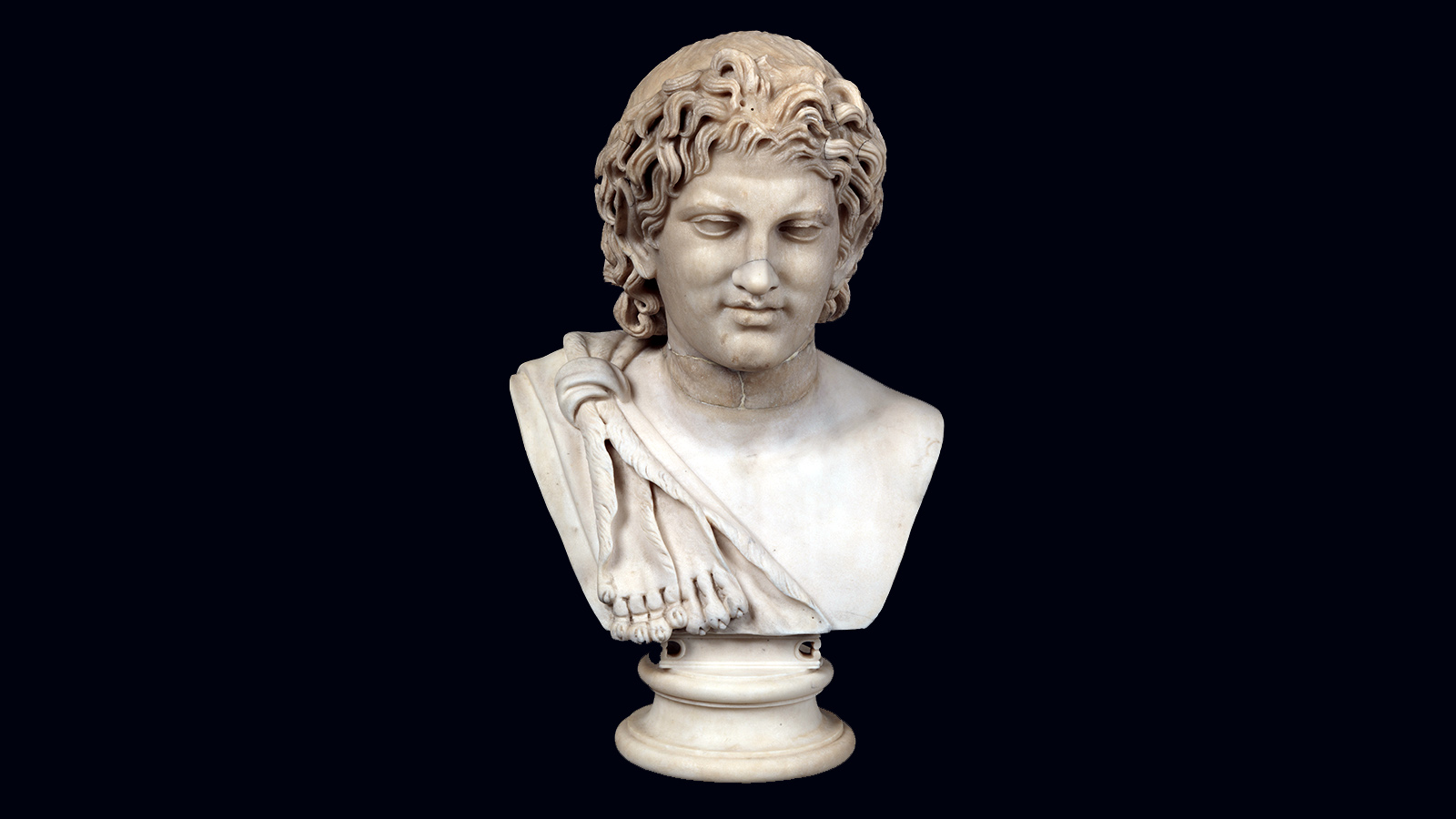
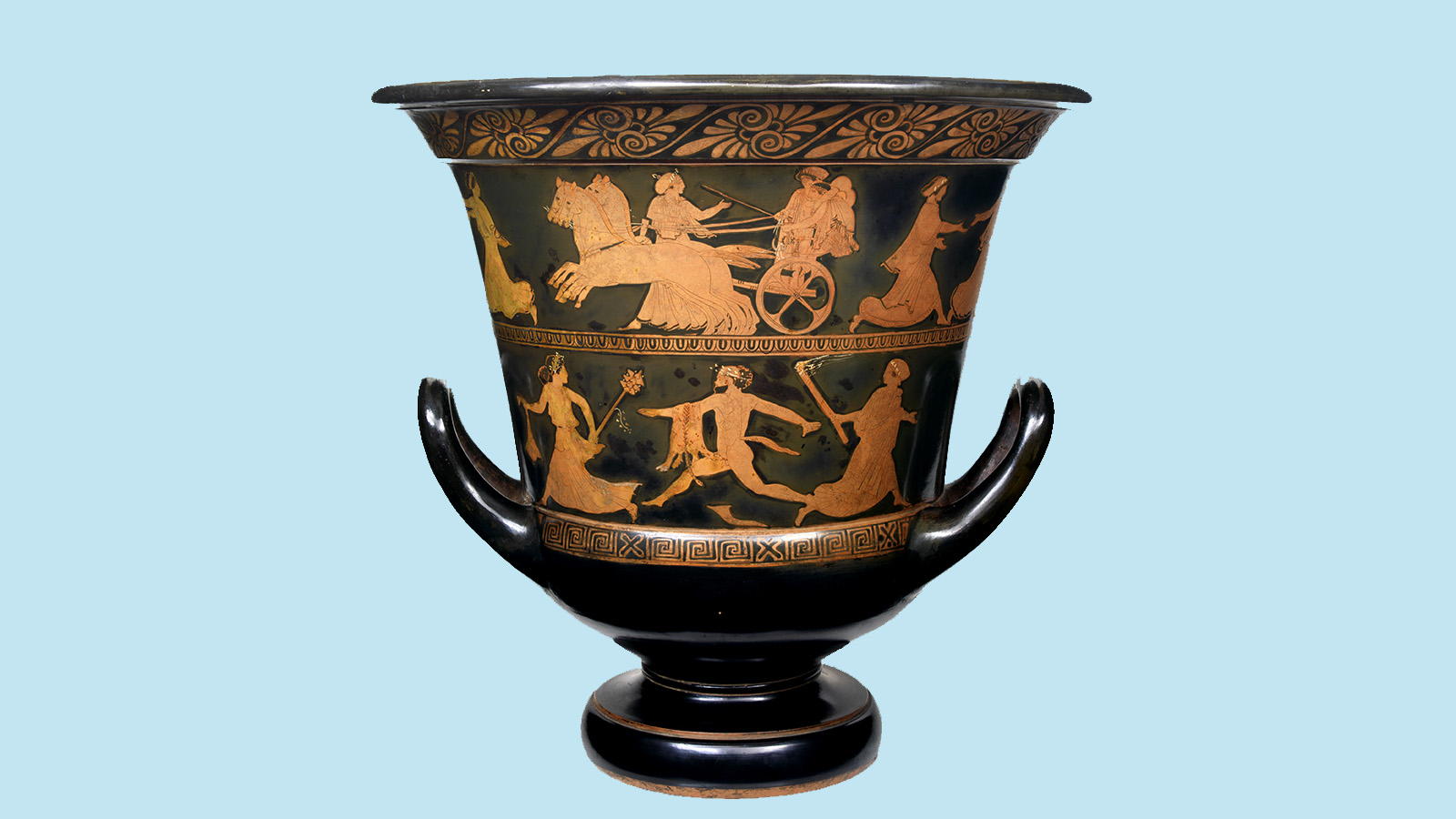
The mythological figure of the satyr, a demigod, half man, half goat, and a born provocateur with a rough appearance, is also depicted in various objects in the collection. A hybrid deity who dwells between gods and humans and is known for his lack of inhibition and voracious carnal appetite, he is a symbol of sexual freedom and the embodiment of desire. This disruptive figure can be seen as a queer character because he does not fit a conventional sexuality, thriving on transgression and being a blend of various identities.
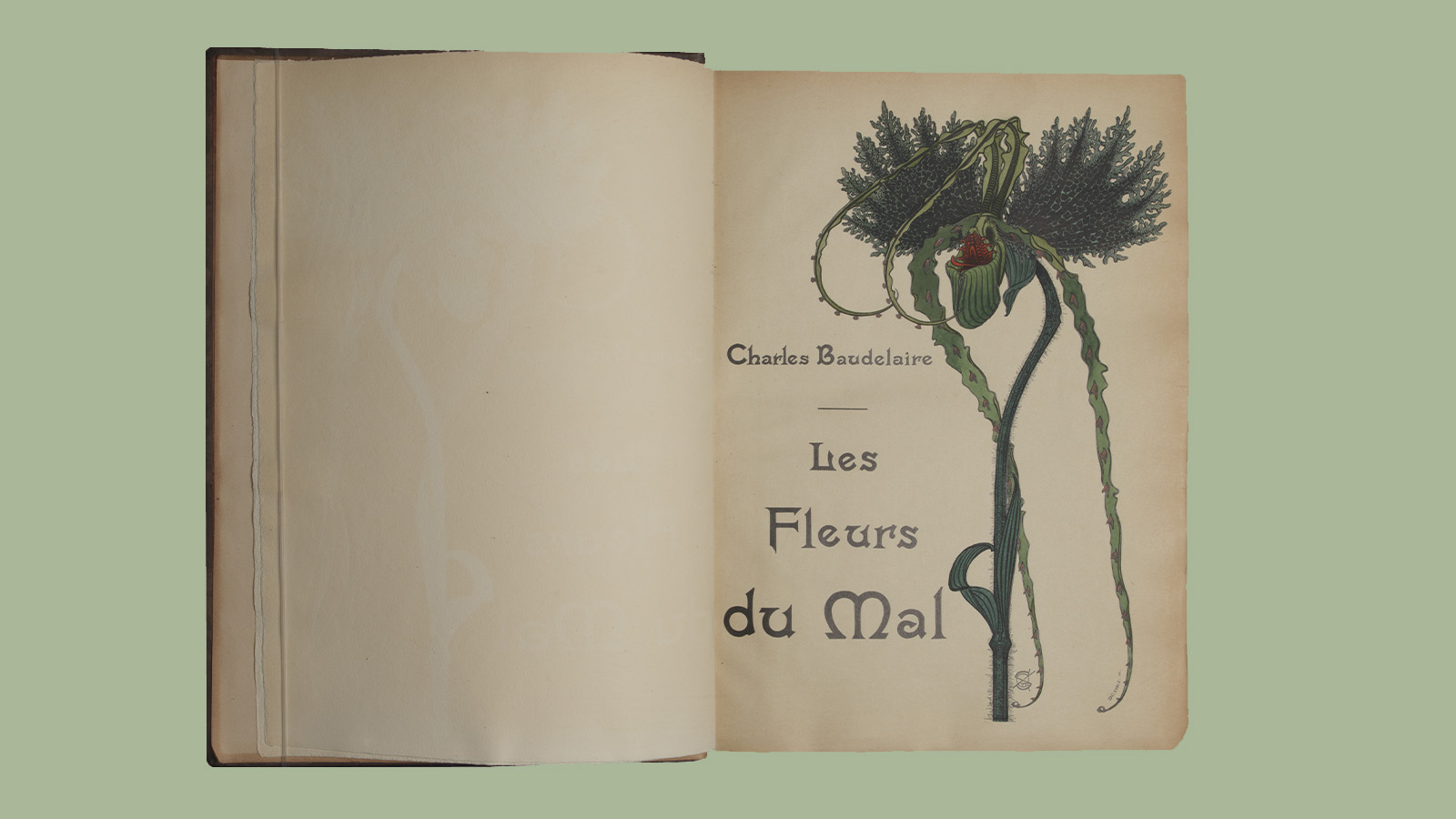
In the aforementioned collection of Gulbenkian’s books, there are a few examples worth highlighting. One is the edition of Les Fleurs du Mal by Charles Baudelaire (1821-1867), illustrated by Carlos Schwabe. In 1845, Baudelaire announced a new book with the provocative title Les Lesbiennes. The subsequent reaction saw the title changed to Les Fleurs du Mal. Even so, the author was fined and the publisher ordered to withdraw the book from circulation. But what are these poems about? They are highly erotic texts inspired by the Decadent aesthetic (a movement from the late nineteenth century that believed art to be an evasion of reality), with verses about love between women.
This edition is particularly valuable, since it reveals the unique artistic work of Baudelaire and his illustrators, who, against everything and everyone, propose an alternative universe in opposition to the society of the time, which was firmly rooted in patriarchy and prevented women from being viewed as artists or entities outside the conventional home. It is this transgression that gives the work a queer quality.
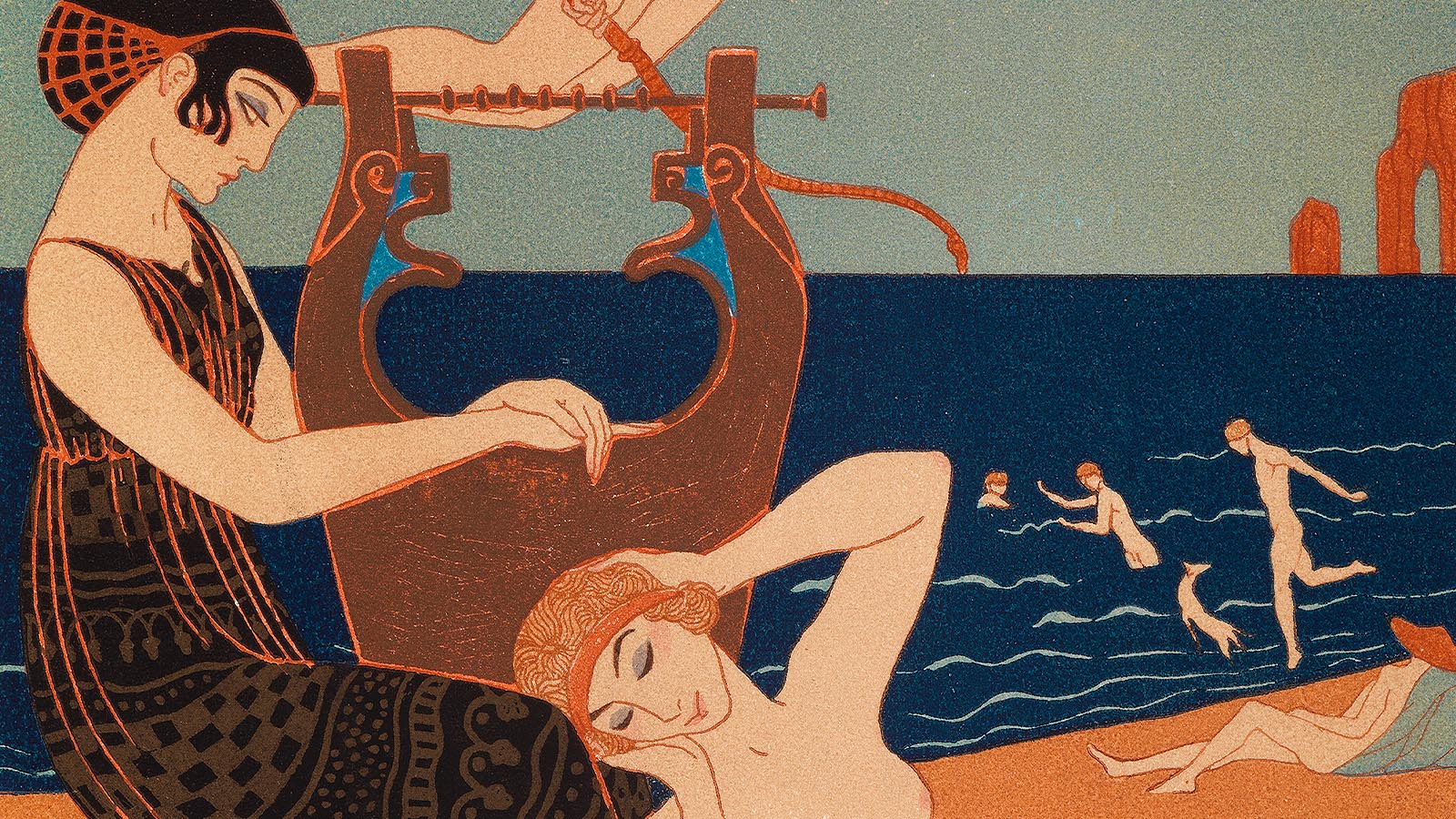
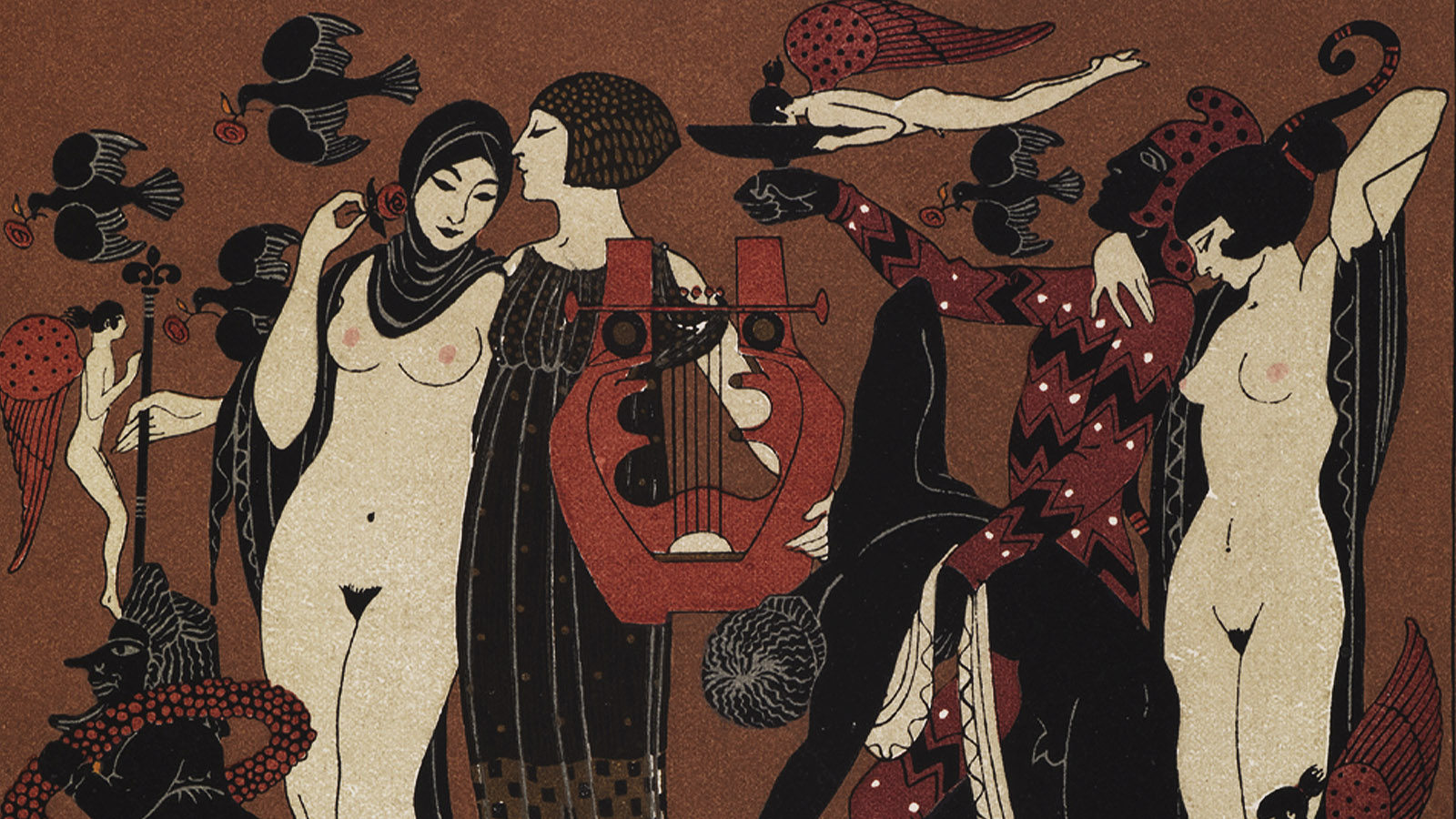
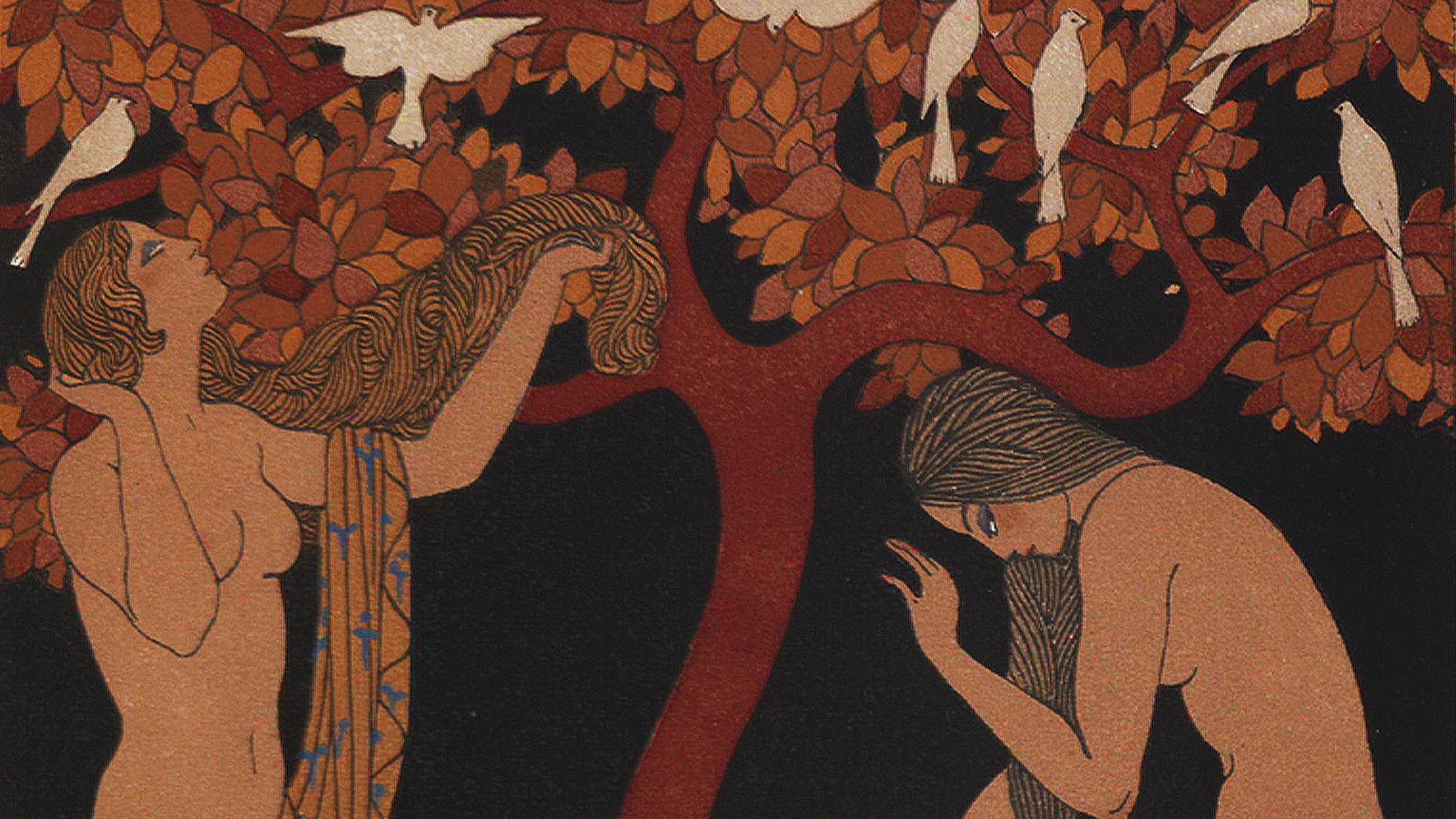
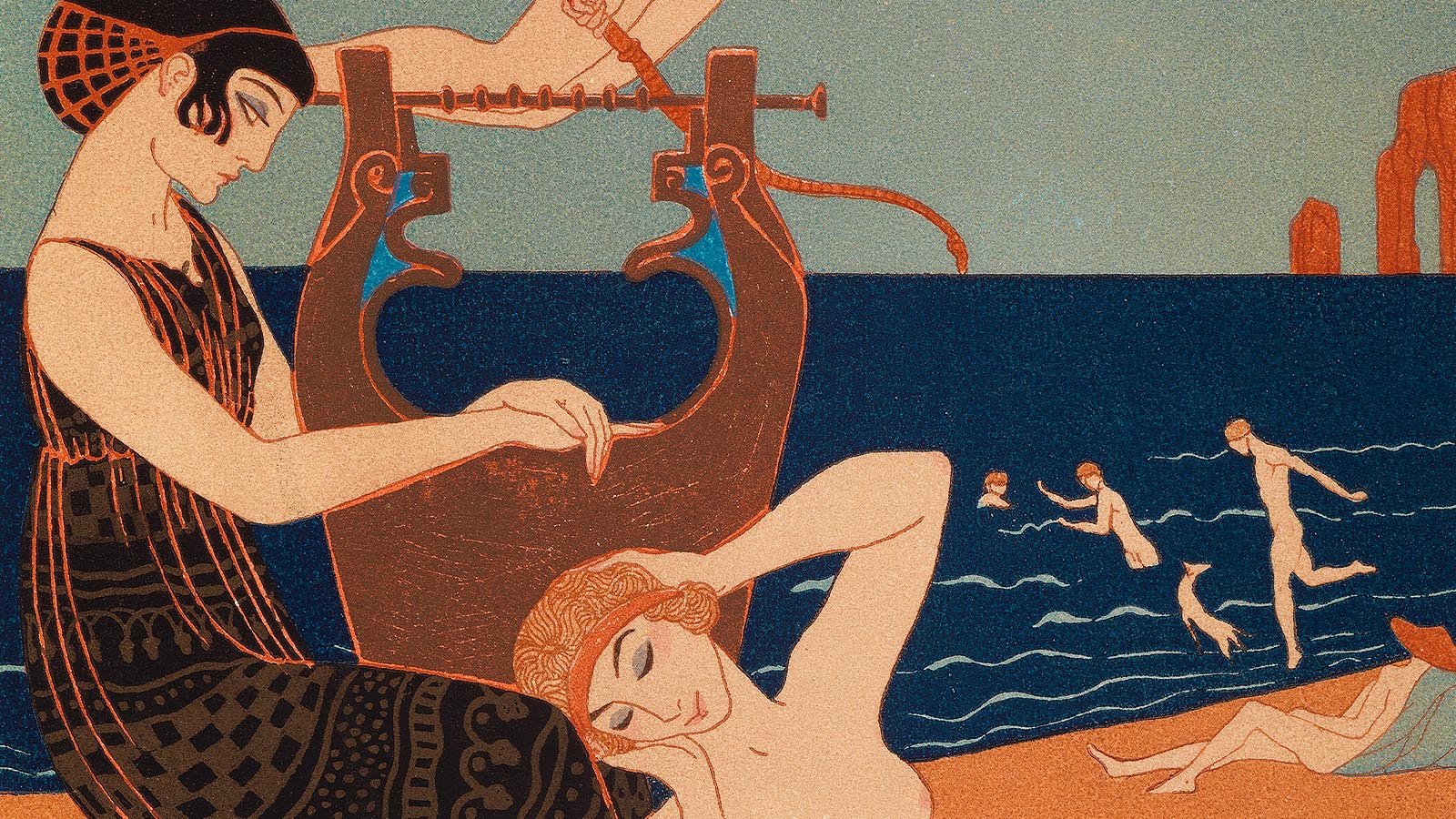
Another deviant character we encounter, albeit with a fictionalised biography, is the poet Bilitis. Les Chansons de Bilitis is a book of poems by Pierre Louÿs (1870-1925), which tells the story of this fictional woman. This edition belonging to the Gulbenkian Collection is a testimony to the Art Déco aesthetic. Its illustrations by George Barbier raise relevant questions, because although they depict a lesbian world, they are nonetheless the perspective of a heterosexual man on women’s bodies (and sexuality). In fact, the poems, which the author claimed to have been his discovery, were exposed as frauds after Louÿs’s death. In other words, it is a mimetic work depicting an experience that was not the author’s own.
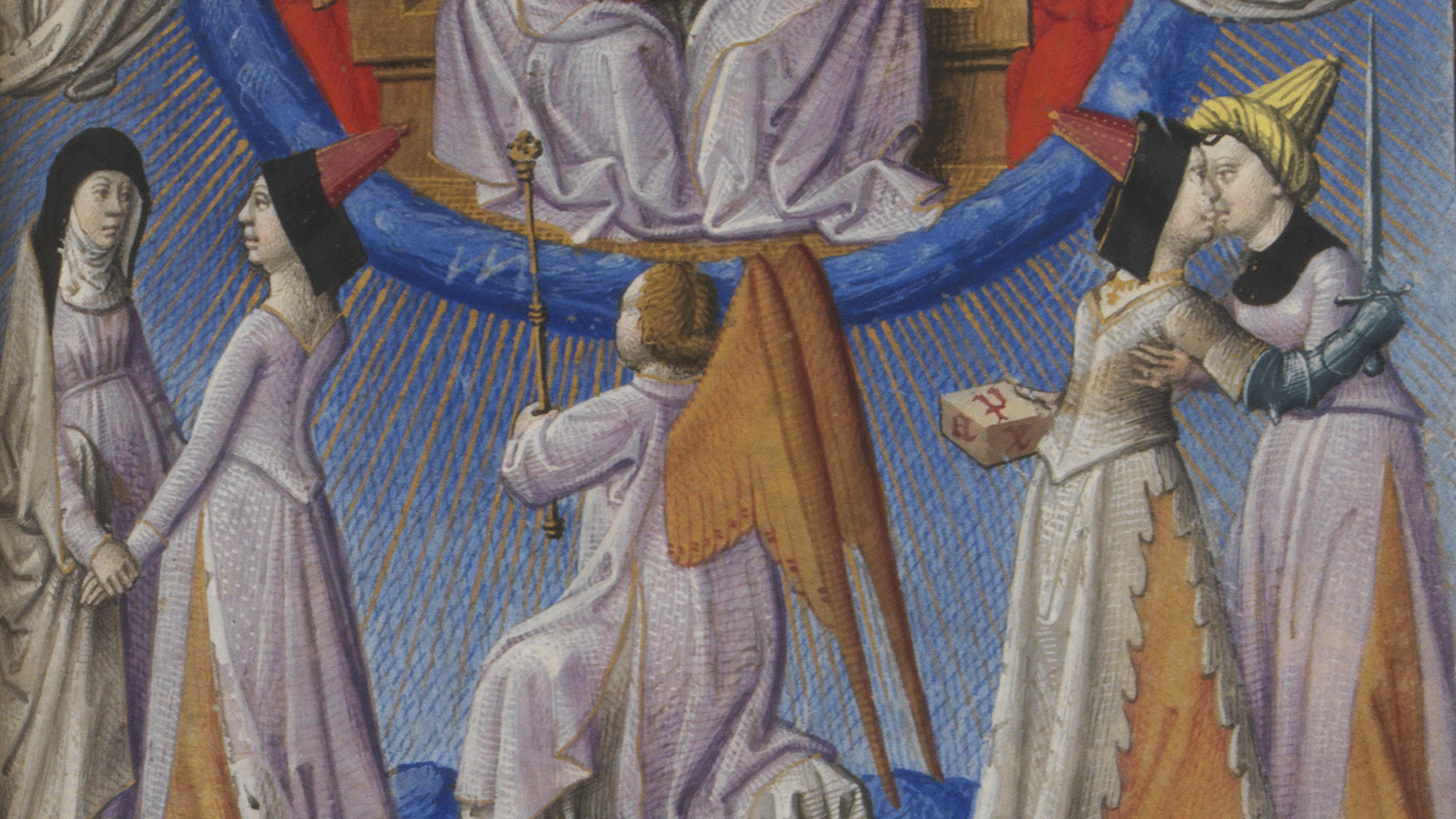
Mention should also be made of the illumination depicting the Trial of Paradise and the Annunciation, from the Book of Hours of René II, Duke of Lorraine. The top of the image features a female couple kissing on the lips. This display of affection is no doubt tied in with the pleasurable side of faith, the believers being surrounded by angels in religious ecstasy. Above all, it is an example of how a work can be subject to a queer reading, even if this was not the initial intention, allowing various interpretations in the present, while also affording a glimpse into the past.
Finally, in the Islamic East gallery, we come across several works that hark back to religiosity as celebration, particularly through the songs, dances and poems associated with Sufism. If we look deeper into the Arabic poetry of Abu Nuwas (756-814) for example, we find erotic poems that exalt the beauty of young men, where seduction between friends is accompanied by wine and the action takes place in male social spaces, such as the hamman (a kind of thermal baths intended for men only). Like the poets Rumi and Hafiz, the pleasures of inebriation and youth are described as jubilation, but Nuwas portrays a carnal and openly homoerotic side, imbuing his work with a symbol of the human-divine connection:
I die of love for him, perfect in every way,
Lost in the strains of wafting music.
My eyes are fixed upon his delightful body
And I do not wonder at his beauty. (…)
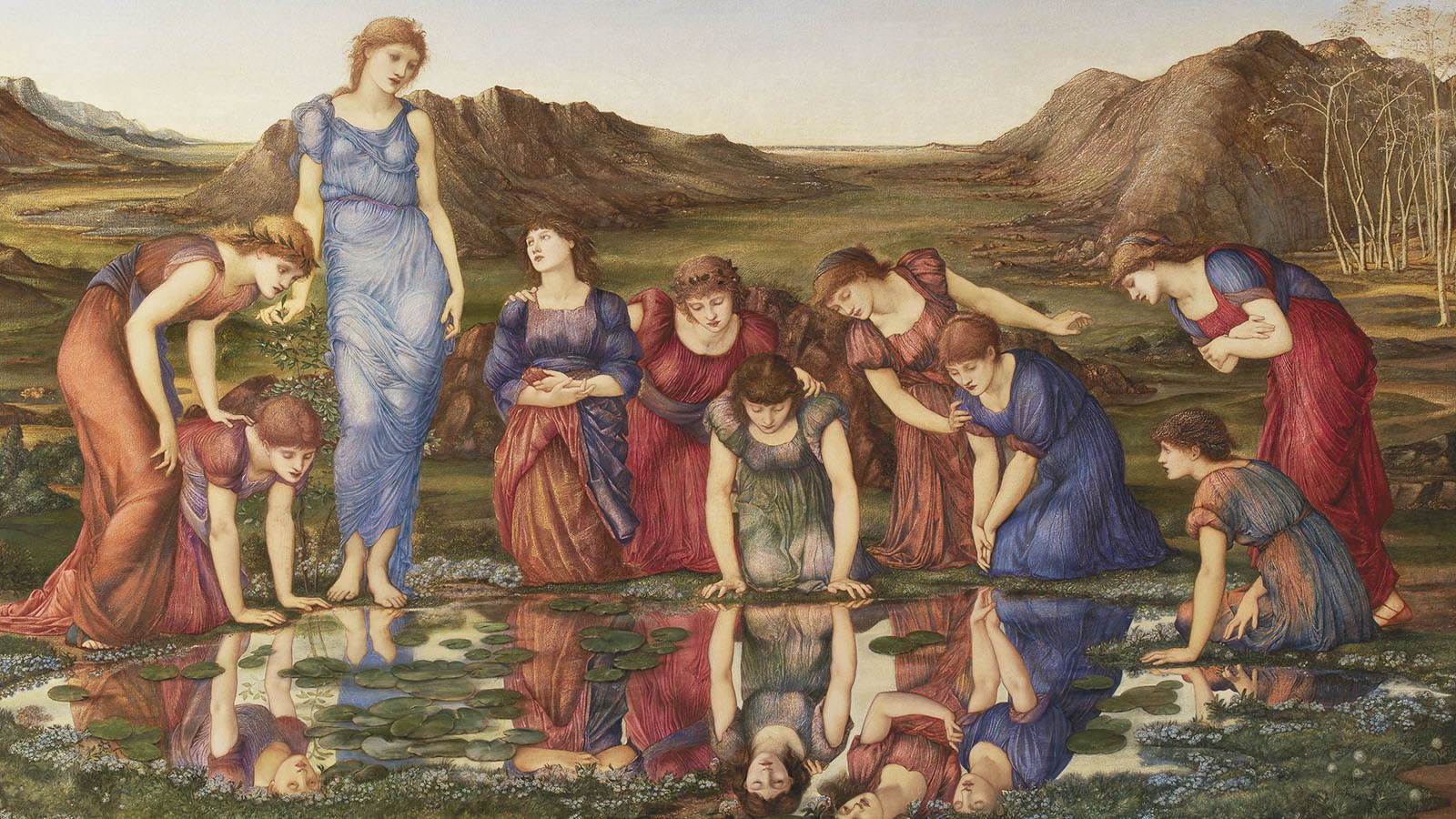
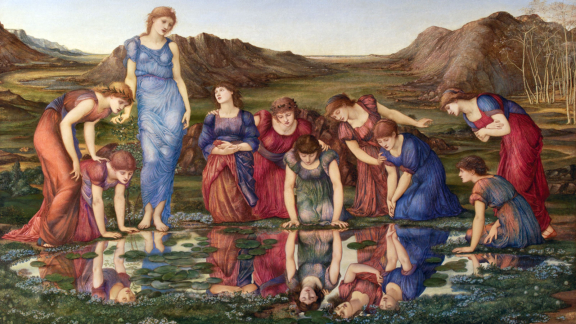
A final queer suggestion comes from The Mirror of Venus. This painting by the Pre-Raphaelite Sir Edward Burne-Jones (1833-1898) shows a group of elegantly dressed women by a lake, in a state of introspection and contemplation. With no apparent story and an empty setting, this is an openly queer work, depicting female friendship in a melancholic way, without the presence of men.
As we can see, queer theory can be a tool for reinterpreting works of art. Such themes are certainly not absent from the works at the Calouste Gulbenkian Museum, they simply need to be decoded in order to be understood today, although some of the pieces were interpreted this way even at the time of their creation.
The Gulbenkian Collection showcases various artists and works that serve to exemplify human complexity and diversity, and which play an important role in the museum space as agents of dialogue between art and society.
The museum out of the closet
Explore the series
No results were found for your criteria.
You may also like

No results were found for your criteria.