
On the hill of Montmartre
Images of Montmartre in Calouste Gulbenkian’s collection of books and paintings
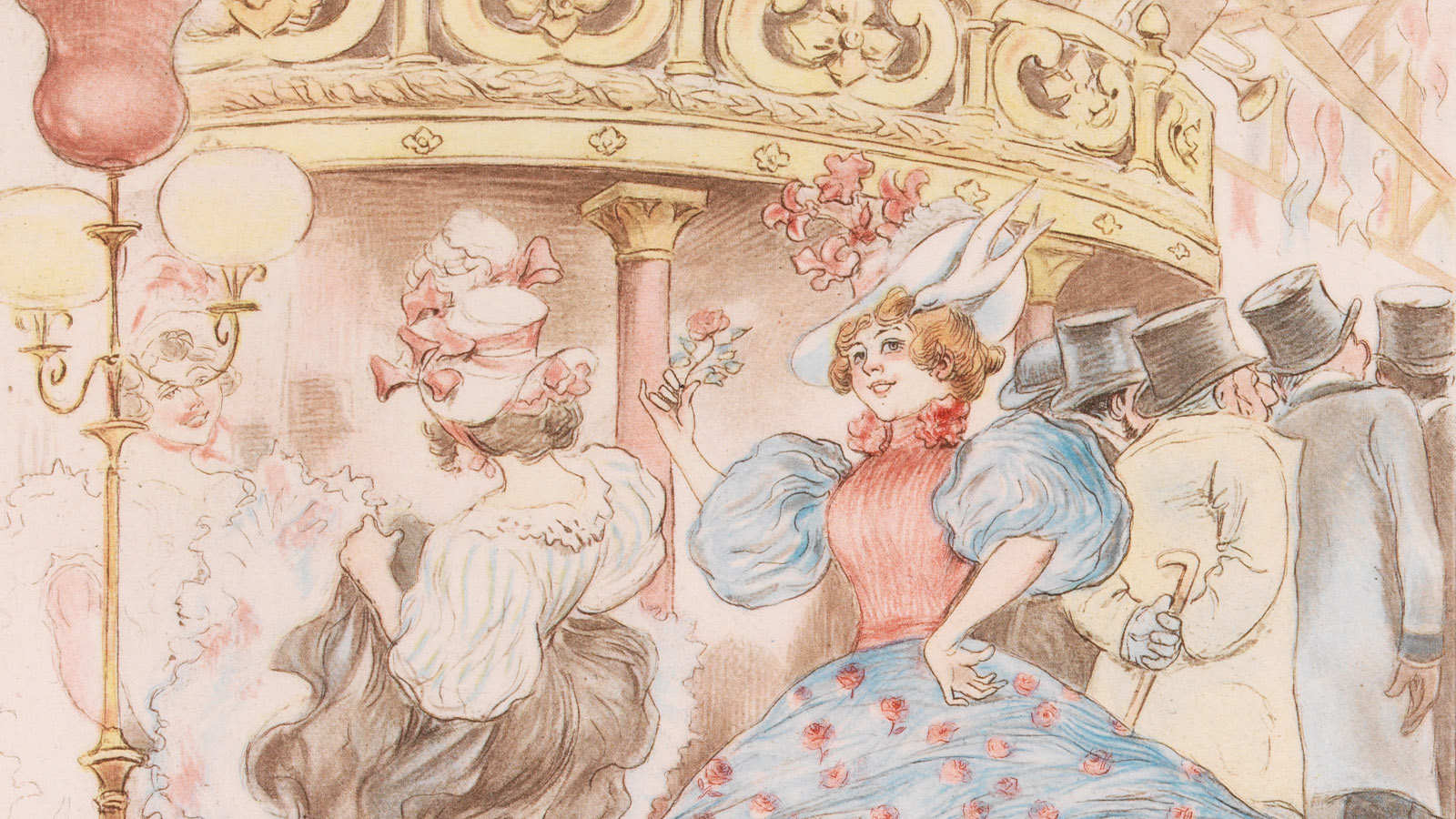
The collection of modern books compiled by Calouste Gulbenkian includes 400 French printed editions. Paris is omnipresent in both the publishing houses represented and in the stories and illustrations contained within the books, which, along with their bindings, were their main source of appeal to the Collector. While much of the collection reflects a latent demand for ‘classical beauty’ that Gulbenkian fully embraced, the discreet yet plentiful presence of more licentious, modern themes is also apparent. Of course, the collection features the hill of Montmartre, which was a hub of culture and festivity in Paris from the late nineteenth century to the early twentieth century. How can the dissemination of images of Montmartre in the Gulbenkian Collection be explained?
The rare books that Gulbenkian purchased in his early days as a collector include numerous works in which female characters and love come together in light-hearted, playful plots with a decidedly misogynistic tone. Here we find what his son-in-law, Kevork Essayan, described as the most powerful force driving his acquisitions: ‘a taste for feminine plasticity and its multi-faceted representation in art.’ [1]
A mong the early purchases in his book collection, such as L’année féminine, les parisiennes d’à present, Montmartre is above all a Parisian leitmotif that stands as an ideal representation of women and bourgeois morality. At the end of the nineteenth century, the newly annexed district of Paris was very popular and symbolises the transition from city to countryside, from labour to leisure, encouraging people to relax on Sundays at the dances and open-air cafés established there.
The Exposition Universelle of 1900 spread the myth of this modern Babylon, the capital of pleasure and of the ‘girls of Paris,’ around the world. Literature, popular music, magazines and fine arts enabled this imaginary to circulate until the mid-twentieth century, during a time when Gulbenkian was adding to his collection. In the 1920s and 30s, his interest in the theme was particularly noticeable in his purchases: Paris dansant, Les dimanches parisiens, Paris au hasard, Paris qui consomme, Paysages parisiens… All of these volumes include images of Montmartre.
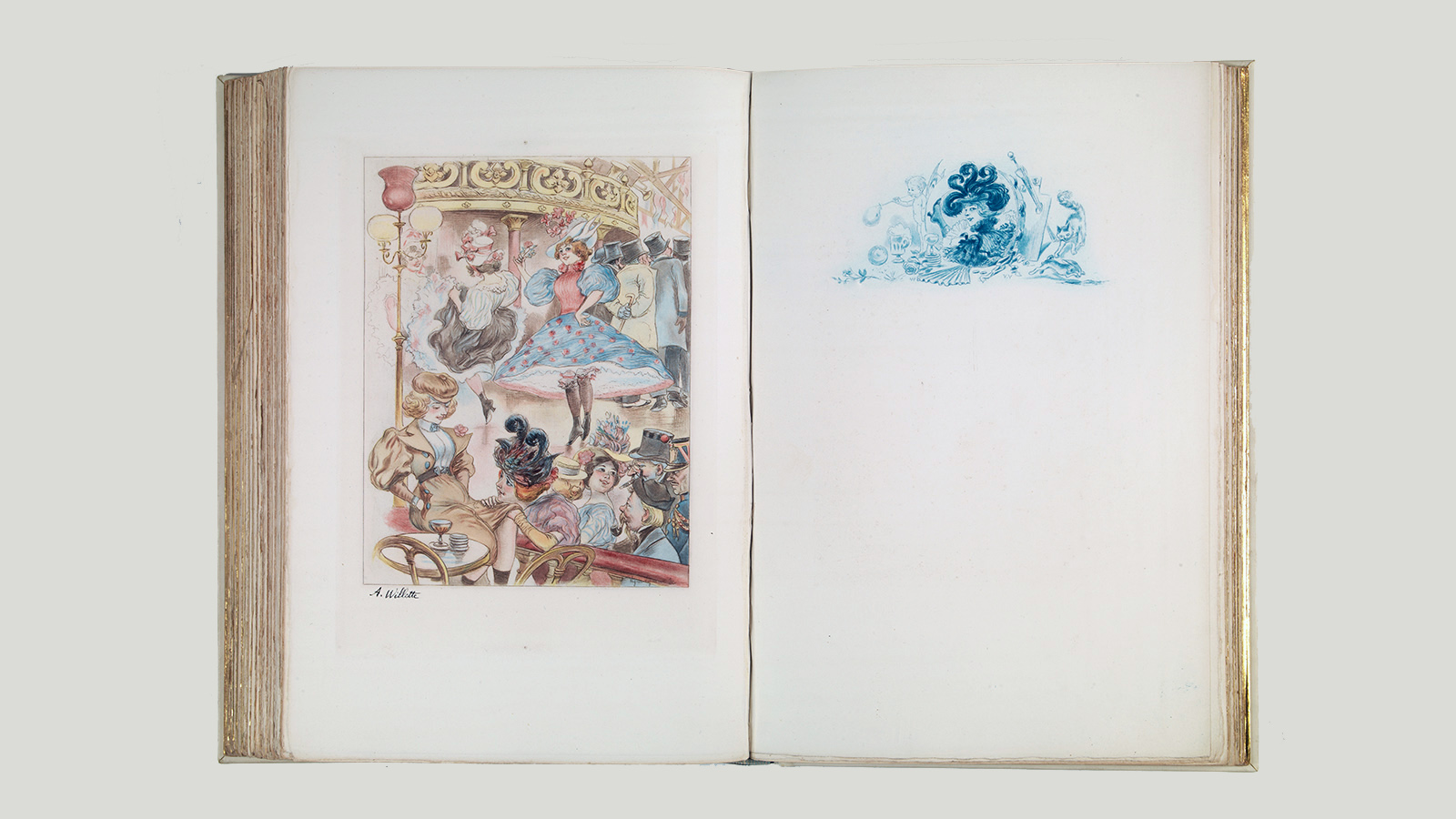
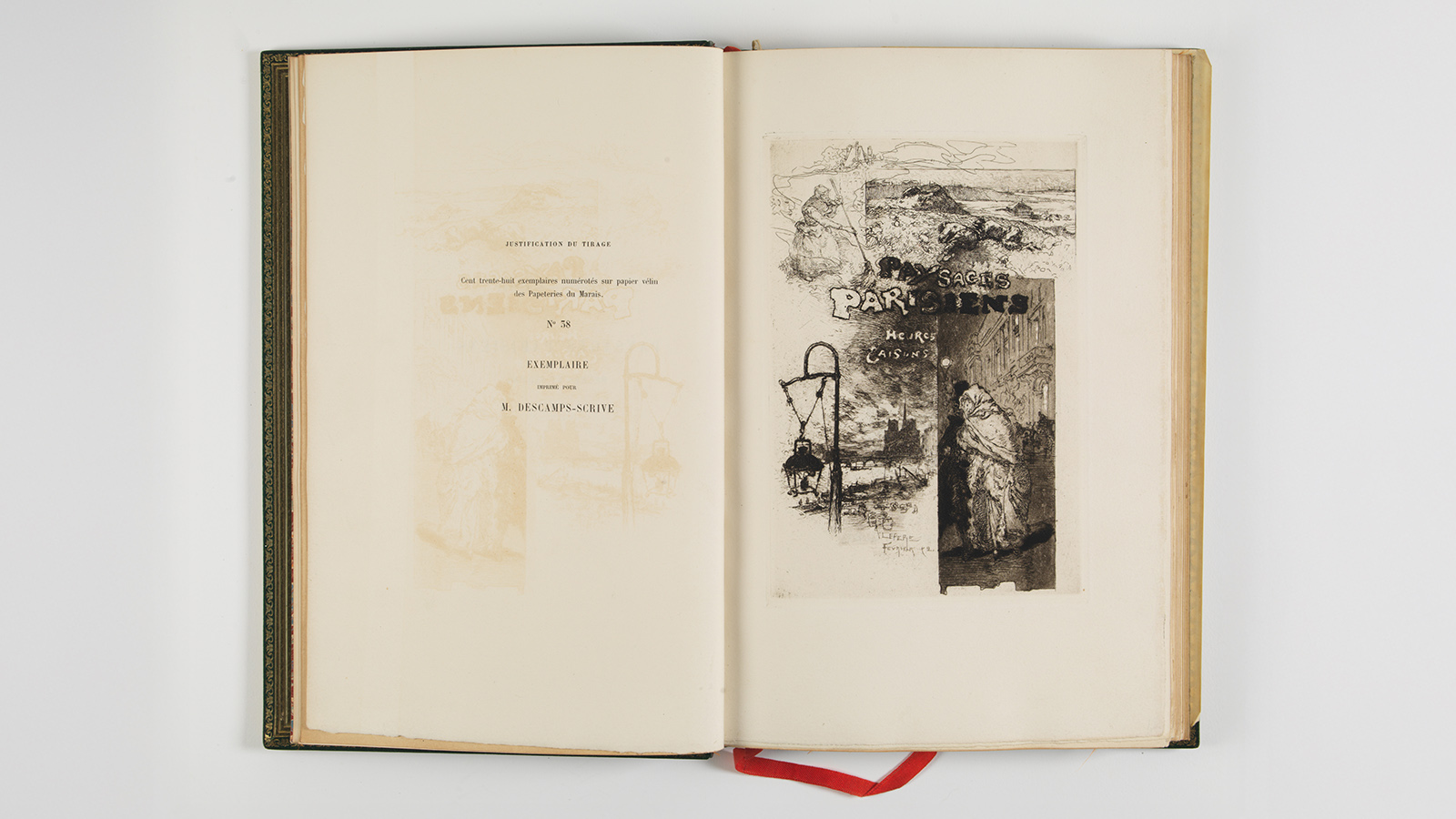
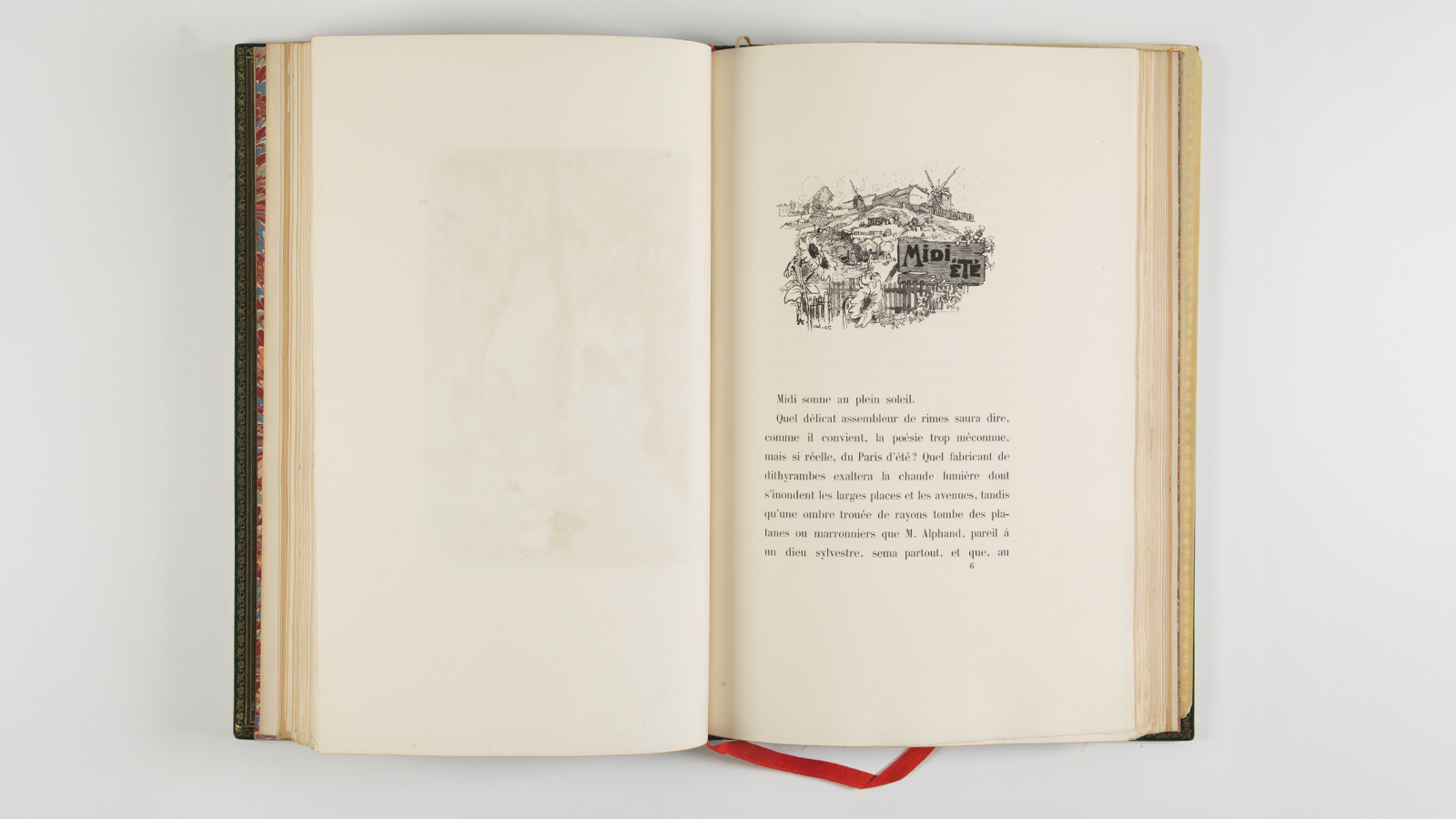
From 1917, the Collector’s choices became more bibliophilic, having stopped purchasing from bookshops and opting instead for public auctions, entrusting his interests to bookseller Henri Leclerc until 1922, then to his successor, Louis Giraud-Badin. In this context, a pronounced taste for luxury editions of works with popular origins emerges. His two copies of Cours de danse fin de siècle are the perfect example.
This series of articles on the can-can published in Gil Blasin 1891 was such a success that book lovers compiled them into a luxury edition produced in very small numbers and aimed at a cultured bourgeois audience. The copy purchased by Gulbenkian in 1920 features a leather binding engraved by George Canape, with representations of the Moulin Rouge and the Blute-Fin windmill. Gulbenkian must have cherished the binding because in 1935, when his agent Giraud-Badin advised him to replace the copy with another [2], he did not heed his recommendation.
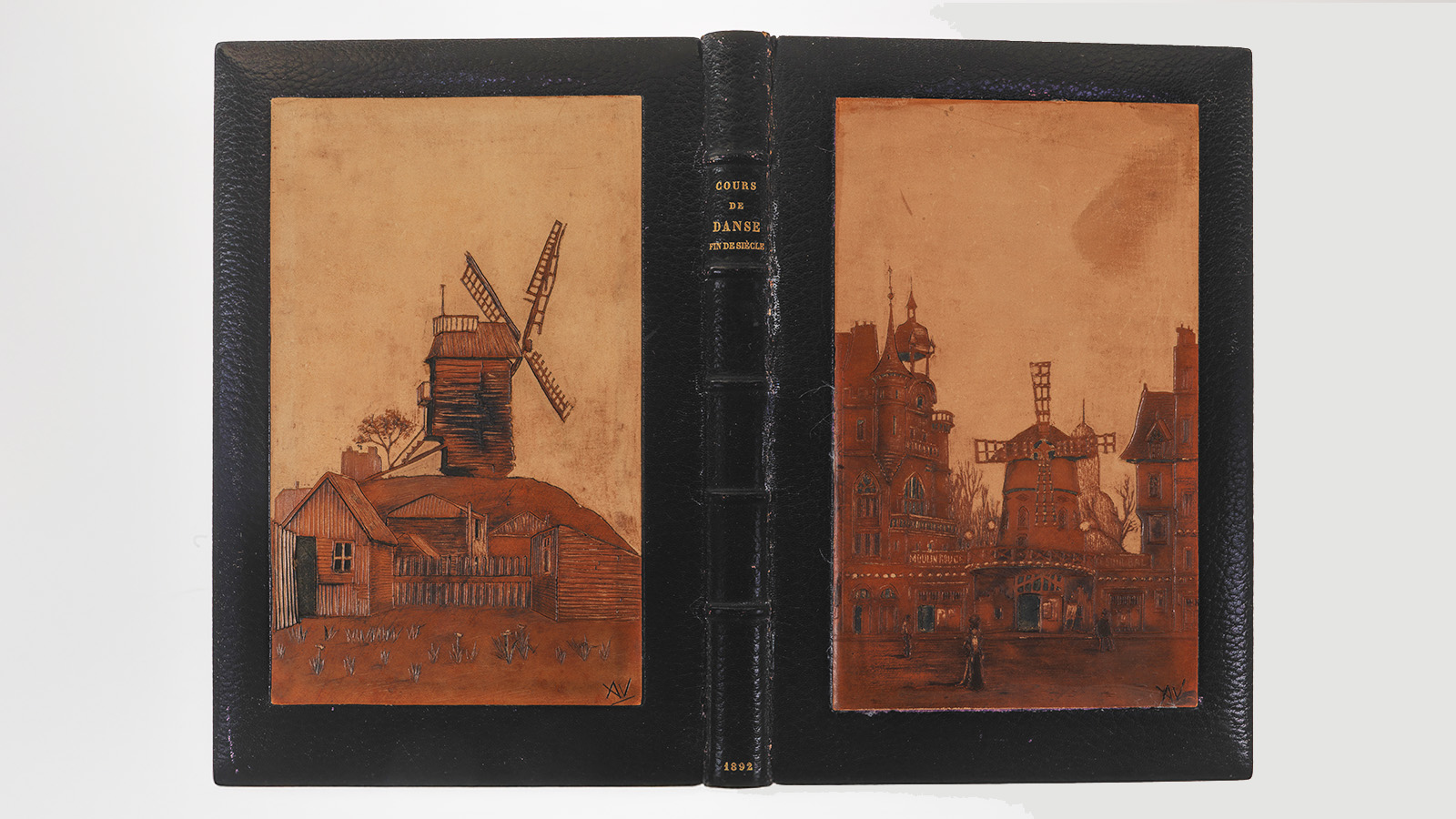
Among the luxury editions and rare books collected by Gulbenkian, there are numerous illustrations by artists who frequented Montmartre. One of them is Louis Legrand, who had his studio at the Moulin Rouge for many years. Gulbenkian had several copies of Cours de danse fin de siècle and Faune Parisienne, his two most well-known works. Both publications are ‘naturalistic’ studies of prostitutes, among other creatures found among the Parisian ‘fauna’, which was a recurring theme in Gulbenkian’s collection.
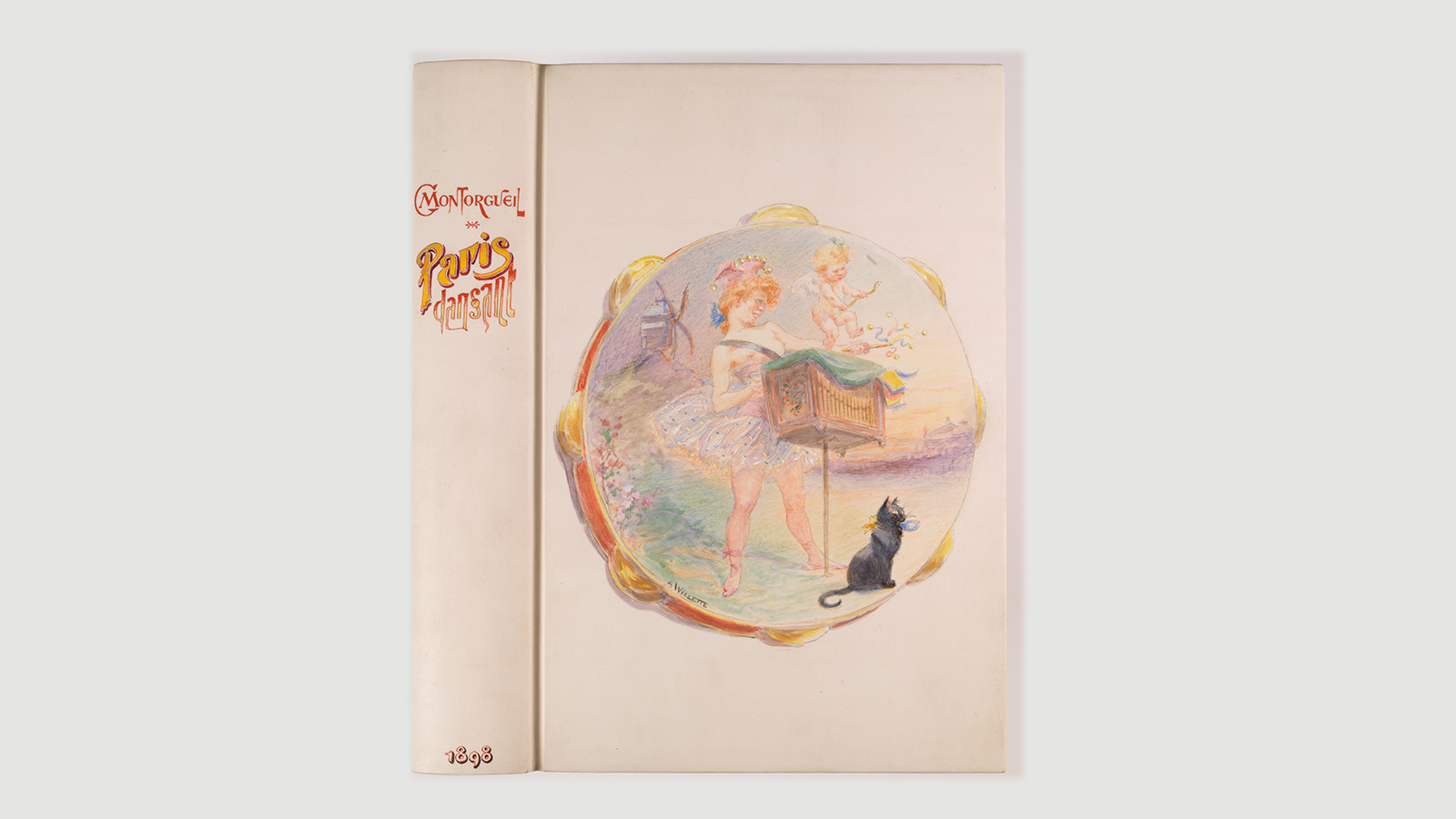
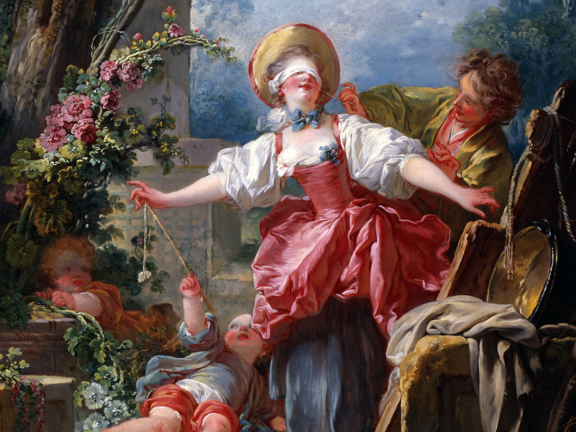
Another is Adolphe Willette, founder of Le Chat Noir, whose Paris dansant is one of the pearls of the collection. The binding by Carayon, who was known for his cardboard bindings decorated with original watercolours signed by the artists and who had produced several other bindings owned by the Collector, features a watercolour by Willette that is sure to have captivated Gulbenkian. In La Vie Artistique – all the volumes of which can be found in the Gulbenkian Art Library – Gustave Geffroy links Willette to the painters of eighteenth-century fêtes galantes and finds in his work ‘something of the mischievous cheer of Boucher and the melancholy pleasure of Watteau, something of the provocation and debauchery of the young masters who were so good at creasing dresses and drawing looks from pretty girls’ [3]. This sensibility was certainly not lost on the Collector, who enthusiastically acquired works by Boucher, Fragonard and Lancret.
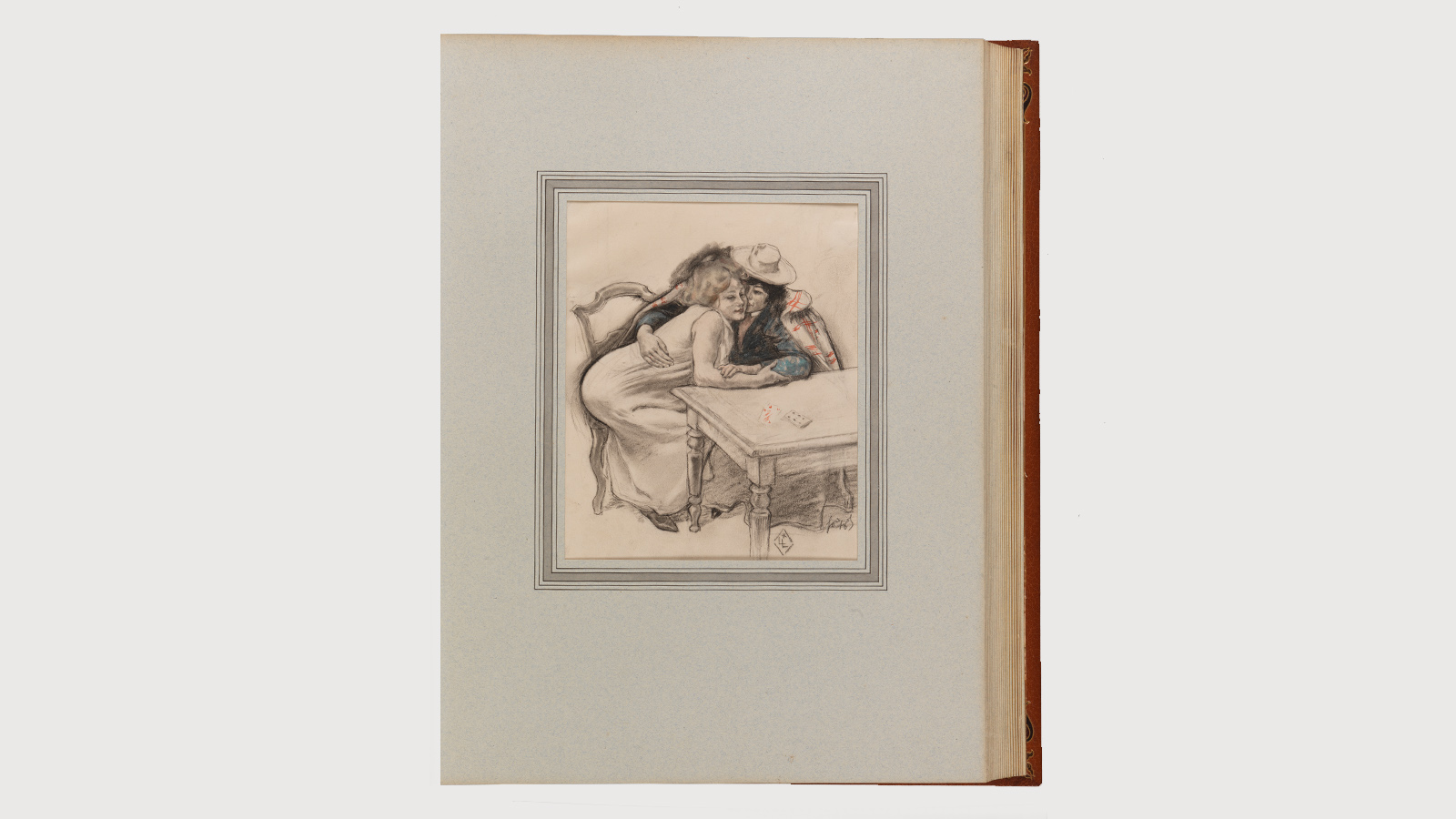
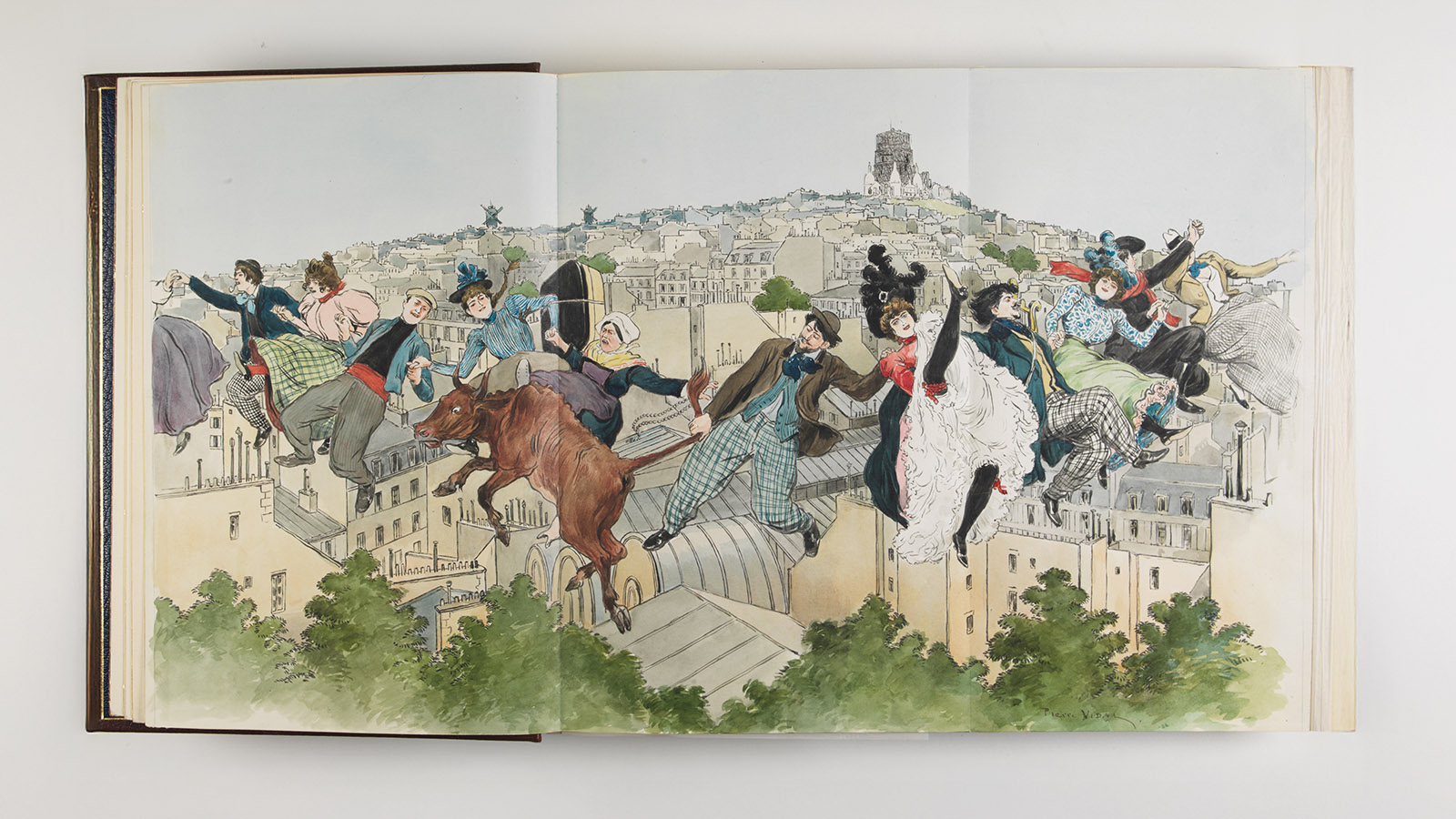
There is only one exception in this collection of modern books: La vie à Montmartre, written by Georges Montorgueil and illustrated by Pierre Vidal. In the auction list of the Henri Béraldi sale that took place in 1935, where Gulbenkian was represented by Giraud-Badin, the work is struck through with a grey pencil as the Collector used to do to indicate the items of no interest to him. However, a handwritten note states that ‘No. 149 from the Béraldi sale (Montorgueil, La Vie à Montmartre) was also purchased.’ [4] The Collector likely changed his mind at the last minute, perhaps based on the advice of Giraud-Badin. With that purchase, Gulbenkian acquired the only book in his collection to specifically focus on Montmartre. Among the usual, more banal details, the auction catalogue describes it as a ‘very curious documentary book.’ Gulbenkian was evidently fond of these kinds of iconographic subjects and of the illustrations of Pierre Vidal, which can be found in eight other works in his collection.
This small corpus of books depicting the hill of Montmartre and the activities that took place there is completed by two paintings. Both are by Stanislas Lépine, a French landscape artist who lived in the second half of the nineteenth century and was a student of Corot, one of the Collector’s favourite painters. Matinée de Printemps and La rue Saint-Vincent à Montmartre depict the Paris district where the artist had lived since he was young. Gulbenkian wrote that he was moved by the portrayal of urban life found in the work of the artist, for whom the streets of Paris were a chronicle of daily life in the capital in the latter part of the nineteenth century.
In his correspondence, the Collector even described him as a ‘master.’ It is relevant to note that La rue Saint-Vincent à Montmartre was the last painting acquired by Calouste Gulbenkian in June 1953, when he claimed: ‘my interest in works of art is always very much alive. [5] ’ Eight days after purchasing the painting by Lépine, he refused to buy another by the same artist on the grounds that: ‘I do not wish this painting unless it is very tip-top and very pleasing’ [6].
This final purchase was therefore carefully considered by the Collector and the landscape appears to have met his high standards for quality. The painting is described in the deed of sale as follows: ‘Rue Saint-Vincent (the painter, his wife and his daughter).’ Gulbenkian thus selected a work of art that depicted the painter he so admired, making his final purchase all the more meaningful.
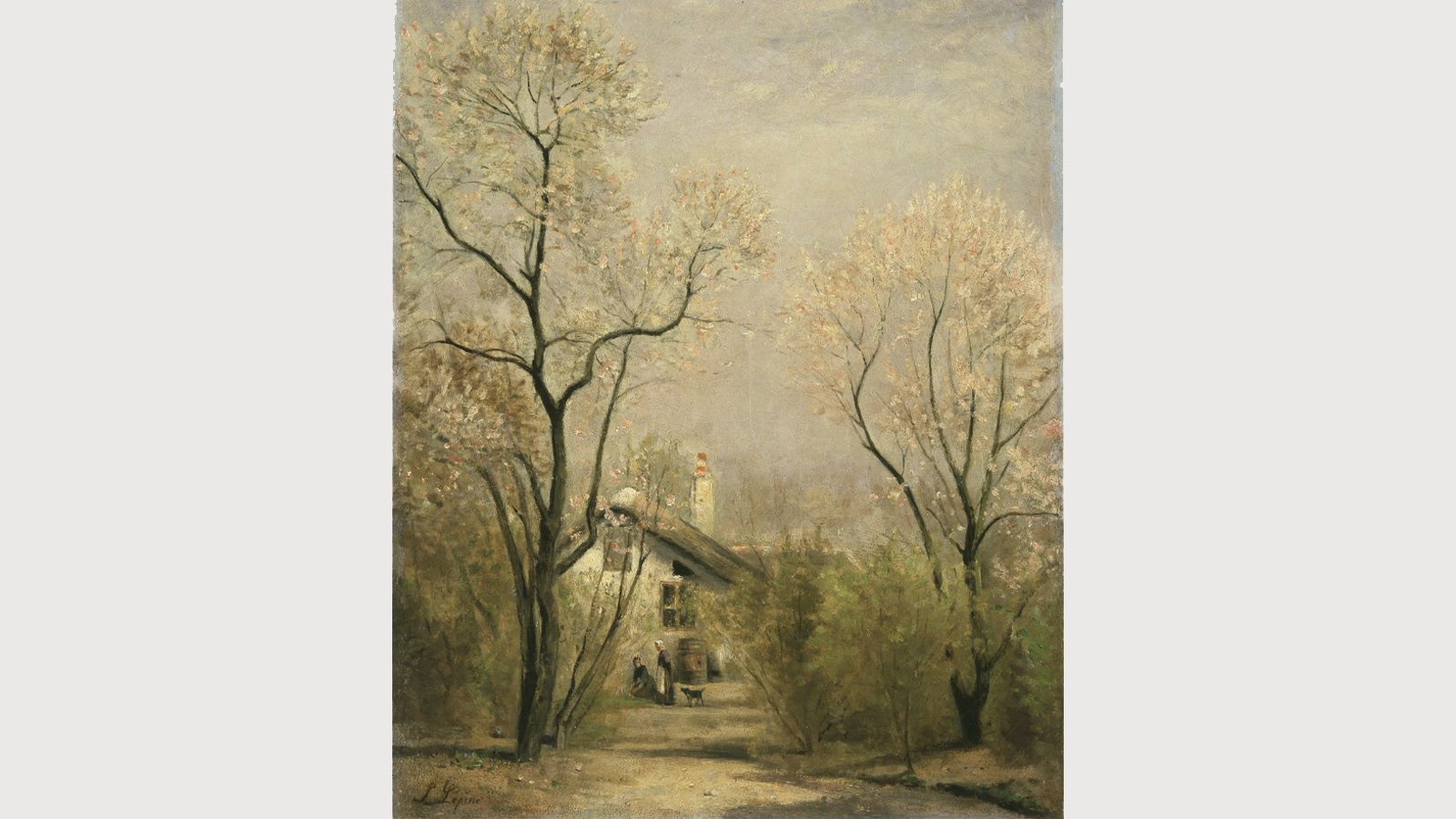
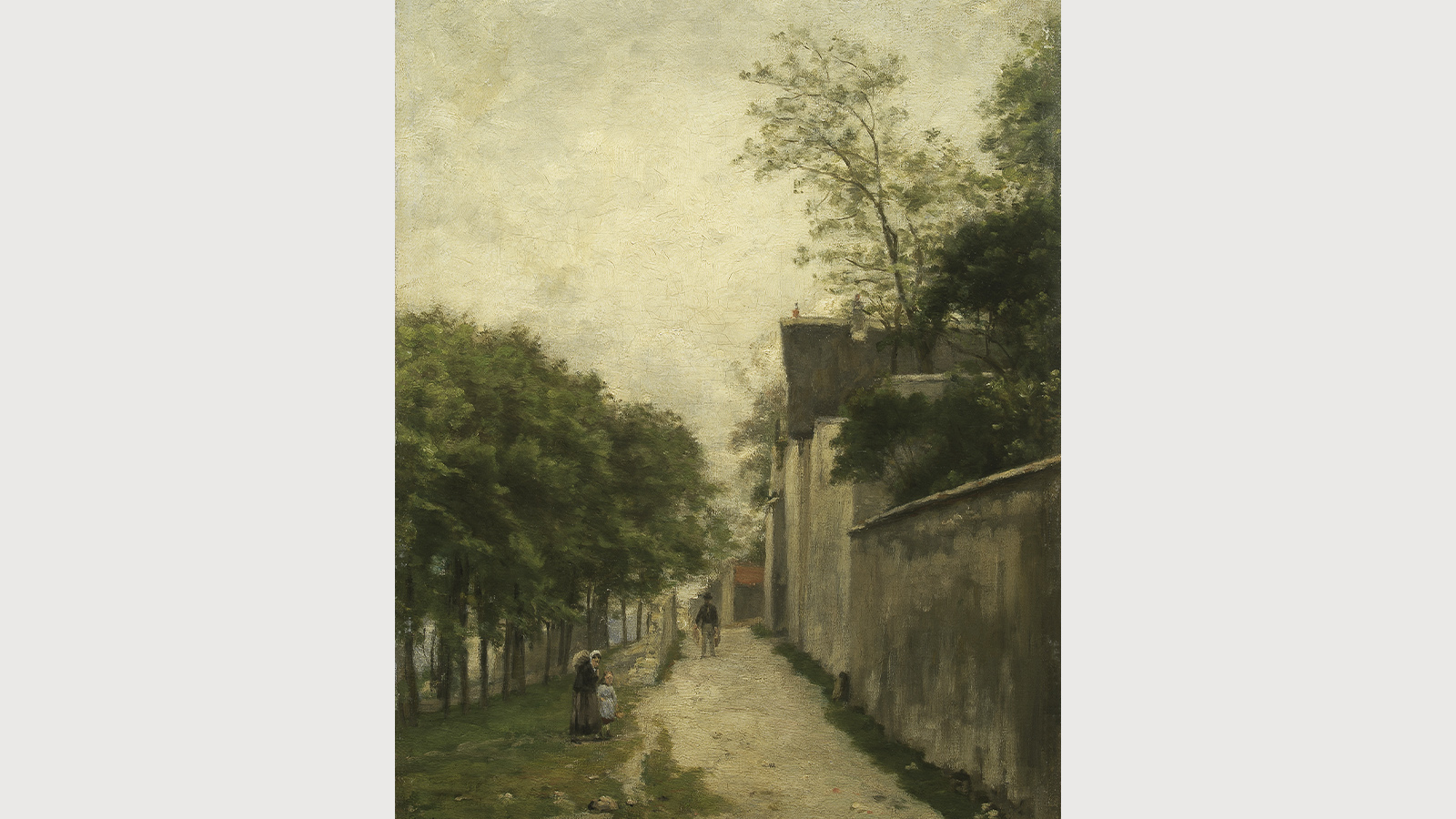
Despite Calouste Gulbenkian’s ‘classical’ approach to art and the absence of a tacit interest in Montmartre, the widespread popularity enjoyed by the Paris district among bibliophiles and landscape artists in the nineteenth century prompted it to be abundantly depicted, demonstrating the cultural influence of Montmartre on the Parisian landscape until the mid-twentieth century.
[1] Azeredo Perdigão, Calouste Gulbenkian Collectionneur, Presses Universitaires de France, 1969, p. 19.
[2] Calouste Gulbenkian Archives, 18 June 1935, PT FCG CSGPCG-S004-P0040151.
[3] Gustave Geffroy, La Vie Artistique, 1893, Paris, Dentu, volume two, p. 142.
[4] Calouste Gulbenkian Archives, 11 June 1935, PT FCG CSGPCG-S004-P0040151.
[5] Calouste Gulbenkian Archives, 18 January 1953, PT FCG FCGMCG-S002-P0004
[6] Calouste Gulbenkian Archives, 18 June 1953, PT FCG FCGMCG-S002-P0004.
You may also like



No results were found for your criteria.