
Albrecht Dürer (1471-1528)
Pato-Bravo Morto, Inv. 140

Iniciativa «Um Olhar sobre as Reservas»

Exposição integrada nas iniciativas de homenagem a Calouste Sarkis Gulbenkian (1869-1955), no 30.º aniversário da sua morte, em 20 de julho de 1985, evocando o seu património artístico e mostrando ao público obras habitualmente mantidas nas Reservas do Museu.
«Desenho, Gravura, Estampas e Arte do Livro» constituiu um dos núcleos da exposição «Um Olhar sobre as Reservas», de que também fez parte o núcleo «Tapetes Orientais». Inaugurada em 1985, ambas as mostras tiveram vida autónoma, contando com publicações próprias.
Esta exposição, que representou o Fundador como colecionador criterioso e detentor de um vasto património artístico, teve lugar na Galeria de Exposições Temporárias do Museu. Estando o seu encerramento inicialmente previsto para maio de 1986, acabaria por se prolongar até ao início de julho e dar lugar a uma outra exposição, intitulada «Um Outro Olhar sobre as Reservas», inaugurada a 20 de julho de 1986, a qual deu continuidade aos objetivos da exposição anterior, substituindo as peças expostas por outras pertencentes às Reservas do Museu Calouste Gulbenkian.
De acordo com o texto de introdução do catálogo, assinado pela diretora do Museu Calouste Gulbenkian, Maria Teresa Gomes Ferreira, pretendeu-se que os dois núcleos da exposição – «Desenhos, Gravuras, Estampas e Arte do Livro» e «Tapetes Orientais» – se oferecessem como uma «extensão das obras presentes nas Galerias de Exposição Permanente» (Um Olhar sobre as Reservas. A Colecção Calouste Gulbenkian, 1985).
Na primeira mostra estiveram patentes iluminuras orientais e europeias, livros dos séculos XVIII e XIX-XX e estampas japonesas. No âmbito da exposição «Um Olhar sobre as Reservas», saíram a lume três publicações: um roteiro relacionado com o núcleo de «Desenhos, Gravuras, Estampas e Arte do Livro», um guião associado ao núcleo de «Tapetes Orientais» e, finalmente, um catálogo, de dimensões superiores a estes dois, que contém a biografia de cada artista representado e estabelece a relação entre as peças do núcleo «Desenhos, Gravuras, Estampas e Arte do Livro» e a sua reprodução, a cores e a preto-e-branco. De todas estas publicações, consta o já citado texto de introdução assinado por Maria Teresa Gomes Ferreira.
Devido às características peculiares da exposição, as conservadoras do Museu exigiram condições especiais de segurança (adequadas à natureza das obras expostas) e de fácil manuseamento para limpeza e conservação dos objetos expostos. Foi igualmente necessário efetuar algumas alterações na estrutura da Galeria de Exposições Temporárias da FCG (piso 01), como o rebaixamento do teto ao nível das vigas. Segundo a documentação consultada, tais alterações foram de caráter definitivo, e os materiais de montagem foram reutilizados noutras exposições.
Esta exposição resultou de uma colaboração entre o Serviço de Exposições e Museografia e o Serviço de Museu. Para cada secção existem notas sobre a museografia das obras e sobre o próprio percurso: o circuito, pontuado por assentos, iniciava-se com o núcleo das iluminuras, seguindo-se a secção de desenho, gravuras e livros do século XVIII, finalizando com as estampas japonesas, os livros do século XIX/XX e os desenhos e joias de René Lalique.
No espaço expositivo foram introduzidos dois projetores para slides, procurando-se que não interferissem com a fruição das obras, bem como caixas com folhetos explicativos. O sistema de tabelas foi pensado de forma a ser legível, mas sem se impor às obras.
A documentação de arquivo reúne alguns artigos veiculados pela imprensa escrita nacional, nomeadamente no jornal Expresso: «Título feliz para uma exposição assaz feliz, porquanto um apurado saber museológico proporciona estimulantes percursos de leitura entre peças de natureza diversa e de tempos e geografias culturais distantes. A errância e o desarrazoado das modulações ondulantes da linha curva pode ser o diversificado e fascinante itinerário que aqui se oferece, entre tapetes orientais dos séculos XVII a XIX, iluminuras europeias e árabes de Quatrocentos, diademas, pendentes, peitorais e pentes art nouveau de Lalique, estampas japonesas de XVII a XIX, ilustrações de livros de XIX a XX.» («Um olhar sobre as reservas. Fundação Gulbenkian», Expresso, 10 ago. 1985)
Entre novembro de 1985 e fevereiro de 1986, foram realizadas diversas visitas comentadas à exposição, conduzidas pelo escultor Lagoa Henriques, complementadas por uma projeção de slides na Sala de Conferências do Museu.
A exposição registou 17 063 visitas ao longo dos cerca de doze meses em que permaneceu na Galeria de Exposições Temporárias da Fundação Calouste Gulbenkian.
Carolina Matias, 2017
This exhibition was included in the homage initiatives to Calouste Sarkis Gulbenkian – the Founder of Calouste Gulbenkian Foundation (FCG) –, on the 30th anniversary of his death, on July 20, 1985, evoking his artistic heritage and presenting the public works that are usually kept in the museum's reserves. This initiative unfolded into a two part exhibition, which brought together two nucleus of works of the museum's collection: the first part featured drawings, engravings, prints and books and the second featured oriental carpets, representing both the Founder as a thorough collector, holder of a vast artistic heritage.
The exhibition took place at the Calouste Gulbenkian Museum’s (MCG) Temporary Exhibitions Gallery (Lower Ground Floor). The exhibition was firstly planned to close on May 1986, but it got extended to the beginning of July, eventually, giving way to another one entitled «Um Novo Olhar sobre as Reservas» [A New Glimpse of the Reserves], which opened on June 20, 1986. This second exhibition continued the aims of the previous initiative, replacing the works on display with others belonging to the MCG’s collection.
Signed by the director of the MCG, Maria Teresa Gomes Ferreira, the introduction text of the catalogue explained that it was intended that the two nucleus of this two part exhibition - Drawings, Engraving, Prints and Book art and Oriental Carpets – were offered as an “extension of the works on display in the Permanent Exhibitions Gallery” (Um Olhar sobre as reservas. A Colecção Calouste Gulbenkian, 1985).
In this first part of the exhibition, Eastern and European illuminations, books from the 18th and 19th-20th centuries and Japanese prints were on display. Within the scope of this initiative , three books were published: two guides regarding the «Drawings, Engravings, Prints and Book Art» and the «oriental carpets» nucleus and a larger catalogue, containing the biography of each featured artist and establishing the relationship between the works of the first category and its colored and black and white reproduction.
The introduction text by Maria Teresa Gomes Ferreira, the MCG Director at the time, is repeated in all the editions.
Due to the very specific characteristics of the exhibition, the MCG curators demanded special safety conditions (appropriate to the nature of the works on display). Therefore, some unusual installation materials were required for this temporary exhibition, such as metallic showcases with safety and easy opening for the works’ preservation. It was also necessary to make some changes to the FCG Temporary Exhibition Gallery structure, such as the downgrading of the ceiling to the beam’s level. The room changes became definitive, and the installation material was reused in other exhibitions.
This exhibition resulted from a collaboration between the Exhibitions and Museography Department and the MCG. For each section of the exhibition, notes regarding its layout and its itinerary were made: the path, which should be punctuated by seats, would start with the Illuminations, followed by the drawing section, the engraving and 18th century books, and finally the Japanese prints, the 19th and 20th centuries’ books and the René Lalique’s drawings and jewelry.
Two slide projectors were placed in the exhibition area, in order to avoid the interference between the works and the visitors, as well as boxes containing explanatory sheets. The label system was designed to be clear but, at the same time, not to outshine the artworks.
The exhibition layout was referred by the Expresso newspaper as: “A fortunate title for a very fortunate exhibition, since this accurate museum knowledge provides stimulating reading paths between pieces of diverse nature and distant cultural times and geographies. The wandering and disarray of the undulating modulations of the curved line are part of the diversified and fascinating itinerary offered here, between oriental rugs from the 17th to the 19th centuries, European and Arab illuminations from the Quattrocento and Lalique art nouveau’s diadems, pendants, pectorals and combs, Japanese prints from the 17th to the 19th century, and book illustrations from the 19th to the 20th century” (“Um Olhar sobre as Reservas Fundação Gulbenkian”, Expresso, 10th Aug 1986).
The sculptor Lagoa Henriques guided several tours to the exhibition between November 1985 and February 1986, all of which followed by a slide projection at the Museum’s Conference Rooms. The exhibition registered 17.063 visitors during its 12-month display at the FCG’s Temporary Exhibitions Gallery.
Pato-Bravo Morto, Inv. 140

Affaire Clémenceau. Mémoire de l'accusé., 1866 / Inv. LM63

Le Sacre de Louis XV, Roy de France et de Navarre dans l'Église de Reims, Le Dimanche XXV Octobre MDCCXXII, Inv. LA115

L' Oeuvre d' Antoine Watteau, peintre du Roy, en son Académie Roïale de Peinture et Sculpture. Gravé d' après les tableaux et desseins originaux tirez du Cabinet du Roy et des plus curieux de l 'Europe par les soins de M. de Jullienne., Séc. XVIII / Inv. LA124A/B

Três Estudos da Cabeça de uma Jovem, Inv. 2300

Le Concert, Gravada em 1773 / Inv. 1807

Estudo de Armadura, 1627-1632 / Inv. 141

Le Rendez-Vous pour Marly, Inv. 1801

Estudo de Mãos, Inv. 248

Les fleurs du mal, 1857 / Inv. LM27

Farinet ou La Fausse Monnaie. Roman valaisan., 1932 / Inv. LM457

Iconologie par figures ou Traité complet des allégories, emblèmes, &c. Ouvrage utile aux artistes, aux amateurs, et pouvant servir à l'éducation des jeunes personnes par MM. Gravelot et Cochin., s.d. / Inv. LA59A/D

Retrato do Marquês de Marigny, 1781 / Inv. 458

Le dernier chapitre de mon roman, 1803 / Inv. LM199

Oeuvres de Cochin. Recueil factice des oeuvres de Cochin, Séc. XVIII / Inv. LA25A/C

Nascimento de Luís, Inv. 459

Clèment-Janin: Le livre d'artiste, 1904 / Inv. LM49B

Inv. 1956A-H

Anunciação, Depois de 1502 / Inv. 457

Figura Feminina com Crianças, c. 1520 (?) / Inv. 426

Figura Feminina Nua - Estudo, Inv. 123

Retrato de Mrs. Dottin, Inv. 866

Poëmes à l'eau-forte illustrés par Louis Legrand, s.d. (1914) / Inv. LM136

Paysages parisiens. Heures et saisons, 1892 / Inv. LM103

Le Cantique des Cantiques, 1925 / Inv. LM435

Figura Feminina Nua Reclinada, 1760-1765 / Inv. 515

Pastoral, c.1745 / Inv. 66

Le passant. Comédie en un acte en vers., 1869 / Inv. LM383

Les aventures de Télémaque, fils d'Ulysse . Gravées d'après les desseins de Charles Monnet peintre du roy par Jean Baptiste Tilliard., Séc. XVII / Inv. LA221A/B

Chansons de Saintonge, 1911 / Inv. LM44

La Mare au Diable, 1846 / Inv. LM251

La cathédrale, 1898 / Inv. LM125

Le quartier de Notre-Dame, s.d. (1905) / Inv. LM126

La Farce de Maître Pathelin. Comédie du Moyen-Âge, arrangée en vers modernes, Idade Média / Inv. LM65

La Marchande à la Toilette, Gravada em 1782 / Inv. 1800

La Soubrette Confidente, Gravada em 1782 / Inv. 1796

Aucassin et Nicolette. Chante-Fable du XII siècle, mise en français moderne par Gustave Michaud., Séc. XII / Inv. LM422

Physiologie du mariage, ou Méditations de philosophie éclectique sur le bonheur et le malheur conjugal, publiées par un célibataire, 1830 / Inv. LM18

Une rue de Paris et son habitant, Séd. XIX / Inv. LM19

Les Délices de la Maternité, Inv. 1799

Il Decamerone di M. Giovanni Boccaccio, 1349-1353 / Inv. LA13A/F

Contes et nouvelles en vers, par Jean de La Fontaine, Século XVII / Inv. LA75A/B

La chanson des gueux (T.I); Dernières chansons de mon premier livre (T. II), 1876 / Inv. LM239A/B

Le Coucher de la Mariée, Gravada em 1768 / Inv. 1803

Choix de Chansons mises en musique par M. de La Borde, Premier Valet-de-Chambre ordinaire du Roi, Gouverneur du Louvre. Ornées d'estampes par J.M. Moreau, dédiées à Madame la Dauphine, Séc. XVIII / Inv. LA68A/D

Fêtes publiques données par la Ville de Paris à l'occasion du Mariage de Monseigneur le Dauphin, les 23 et 26 février 1745., Inv. LA48

Colonnade et Jardins du Palais Médicis, Gravada em 1776 / Inv. 1811

L'Aveu Difficile, Executada em 1787 / Inv. 1900

Nina, Gravada em 1787 / Inv. 65

"Qu'en dit l'Abbé?" ou La Leçon de danse ou Le maître de danse, c.1770 / Inv. 2297

Interior de um Parque Romano, Meados de 1770 / Inv. 2299

RETO: No Reno; VERSO: Marinha, Inv. 371

Les diaboliques, 1874 / Inv. LM385

Inv. 1993

Inv. 1994
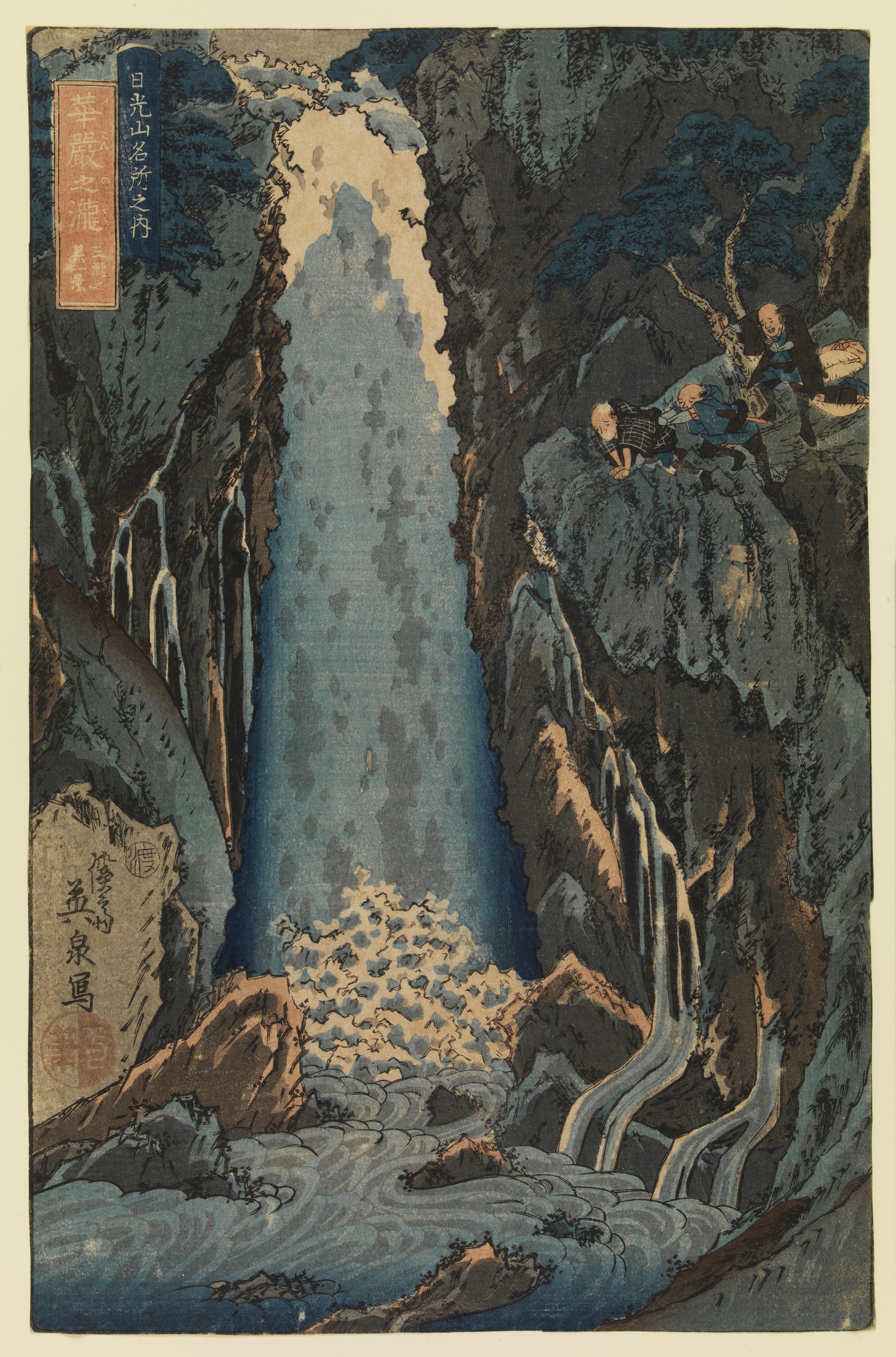
Cascata de Kegon (da série "Locais Famosos nas Montanhas de Nikko ou Vistas Célebres nas Montanhas de Nikko"), Inv. 2028B
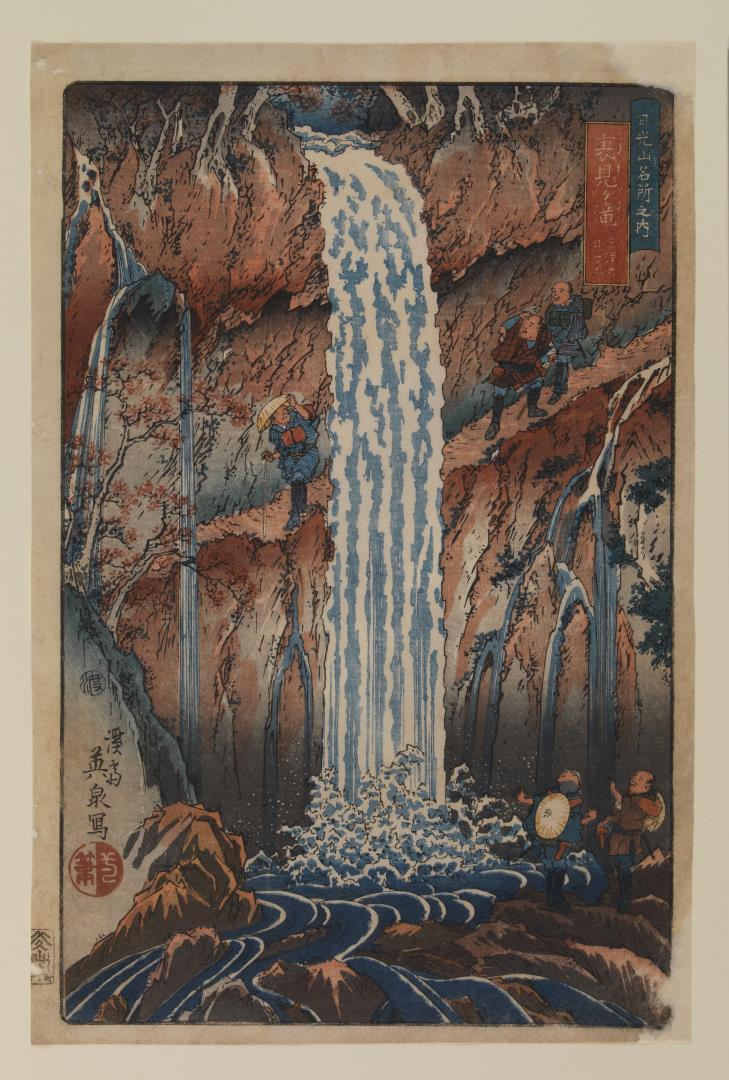
Cascata de Urami (da série «Locais Famosos nas Montanhas de Nikko ou Vistas Célebres nas Montanhas de Nikko»), Inv. 2028A

Les huit renommées, 1927 / Inv. LM441A/B

Inv. 1955

Les dimanches parisiens. Notes d'un décadent, 1898 / Inv. LM193

Faune parisienne, Séc. XIX / Inv. LM227

Antologia do Sultão Iskandar, 1411 (AH 813) / Inv. LA161

Livro de Horas de Isabel da Bretanha (Horas de Lamoignon), Inv. LA237

Paisagem ao Entardecer, Inv. 867

Oeuvres de Molière. Avec des remarques grammaticales, des avertissements et des observations sur chaque pièce, par M. Bret., Séc. XVII / Inv. LA88A/F

Oeuvres de Molière. Nouvelle édition., Séc. XVII / Inv. LA89A/F

Oeuvres de Nicolas Boileau-Despréaux, avec des éclaircissements donnés par lui-même, Séc. XVII-XVIII / Inv. LA14A/B

La Consolation de l'Absence, Gravada em 1785 / Inv. 1797

Inv. 1957

La Crainte, 1783 - prova de admissão / Inv. 1818

La misère sociale de la femme d'après les écrivains et les artistes du XVIIe au XXe siècle, Séc. XVII a Séc. XX / Inv. LM342

La jeune parque, 1917 / Inv. LM440

Le Menuet de la Mariée, Gravada em 1786 (Época de Luís XVI) / Inv. 1808

Les Chansons de Bilitis, Inv. LM421

Les Metamorphoses d' Ovide - Sans lettres., 1767-1771 / Inv. LA96

Diadema "Gafanhotos", Inv. 2477

Diadema "Hastes de macieira", Inv. 2475

Diadema "Ramos de aveleira", Inv. 2476

Firmal "Torneio", Inv. 2472

Peitoral "Pavão", c. 1898-1900 / Inv. 2471

Pendente "Floresta", Inv. 2473

Pendente "Ninfa", Inv. 2474

Pente "Anémonas", Inv. 2467

Pente "Bailarinas", Inv. 2486

Pente "Figuras medievais", Inv. 2487

Pente "Medalhões e amores-perfeitos", Inv. 2469

Placa de gargantilha "Águias entre pinheiros", c. 1899-1901 / Inv. 2468

Pulseira "Mochos", Inv. 2470

Les Adieux, Inv. 1798

Le Livre de la jungle. Traduit de l'Anglais par L. Fabulet et R. d' Humières, 1894 e 1895 / Inv. LM381

Vista de um Bosque com Passagem a Vau, Inv. 861

Oeuvres de Salomon Gessner, 1799 (Ano VII) / Inv. LA57A/D

A casa de chá ("Ichirik"), c. 1787 / Inv. 1966

1776 / Inv. 2391

Paradis terrestres, 1932 / Inv. LM437

Inv. 1986A/L

c. 1795-1797 / Inv. 2040
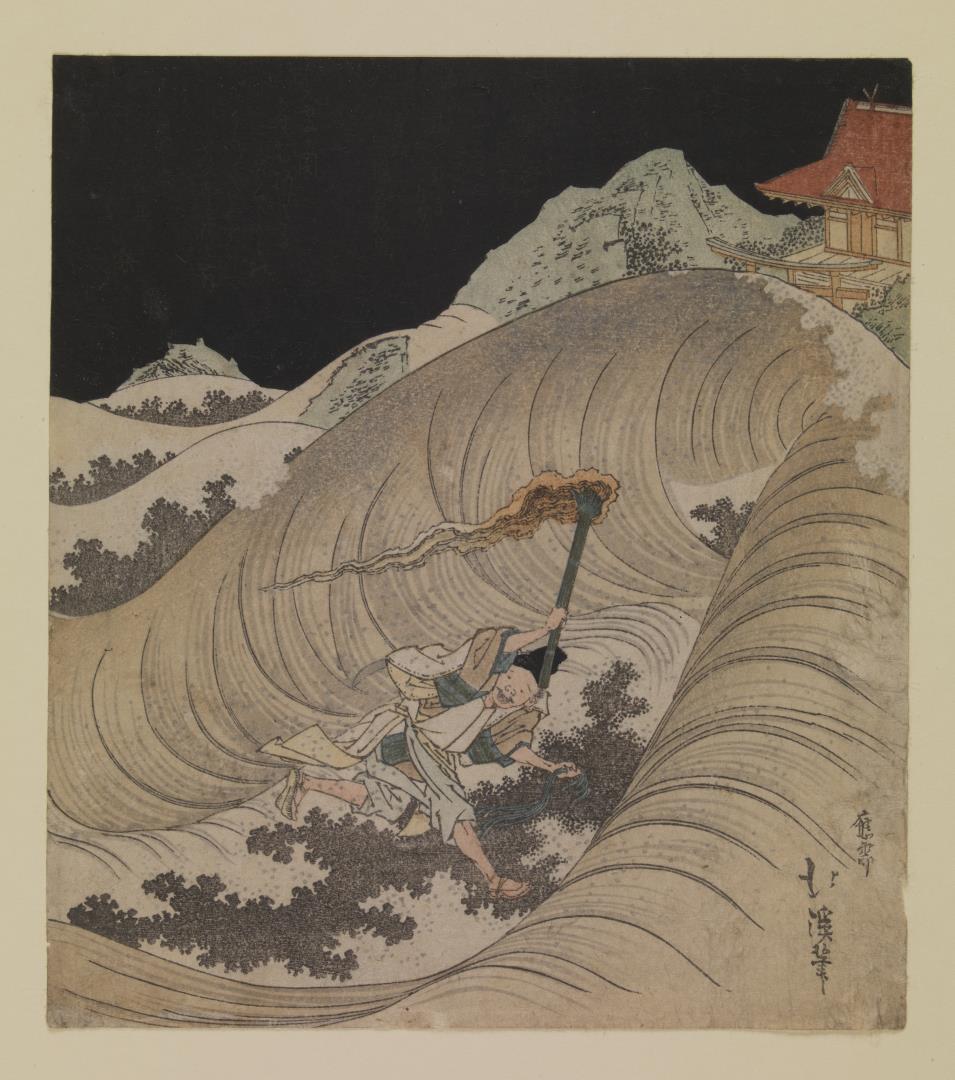
Ritual de Colheita de Algas no Santuário Hayatomo, Inv. 1999C

Plymouth com Arco-Íris, Inv. 374

Ruínas da Abadia de Tintern, c. 1794 / Inv. 375

Inv. 2392

Pássaros exóticos, Inv. 1974A-H

Cinq poèmes, Séc. XIX / Inv. LM123

A Entrada do Velho Porto de Marselha, c. 1862 / Inv. 373


