Carlos Bunga. Inhabit the Contradiction
Event Slider
Date
08 Nov 2025 – 30 Mar 2026
- Sat,
- Closed on Tuesday
Location
Nave and Mezzanine Centro de Arte Moderna GulbenkianPricing
Free – Under 18
25% – Under 30
10% – Over 65
Cartão Gulbenkian:
Free – Under 30, saturdays,
18:00 – 21:00
50% – Under 30
20% – Over 65
10% – 30 to 64
Carlos Bunga presents one of his most complex and personal exhibitions to date, and his largest site-specific cardboard installation, which includes works from the CAM Collection.
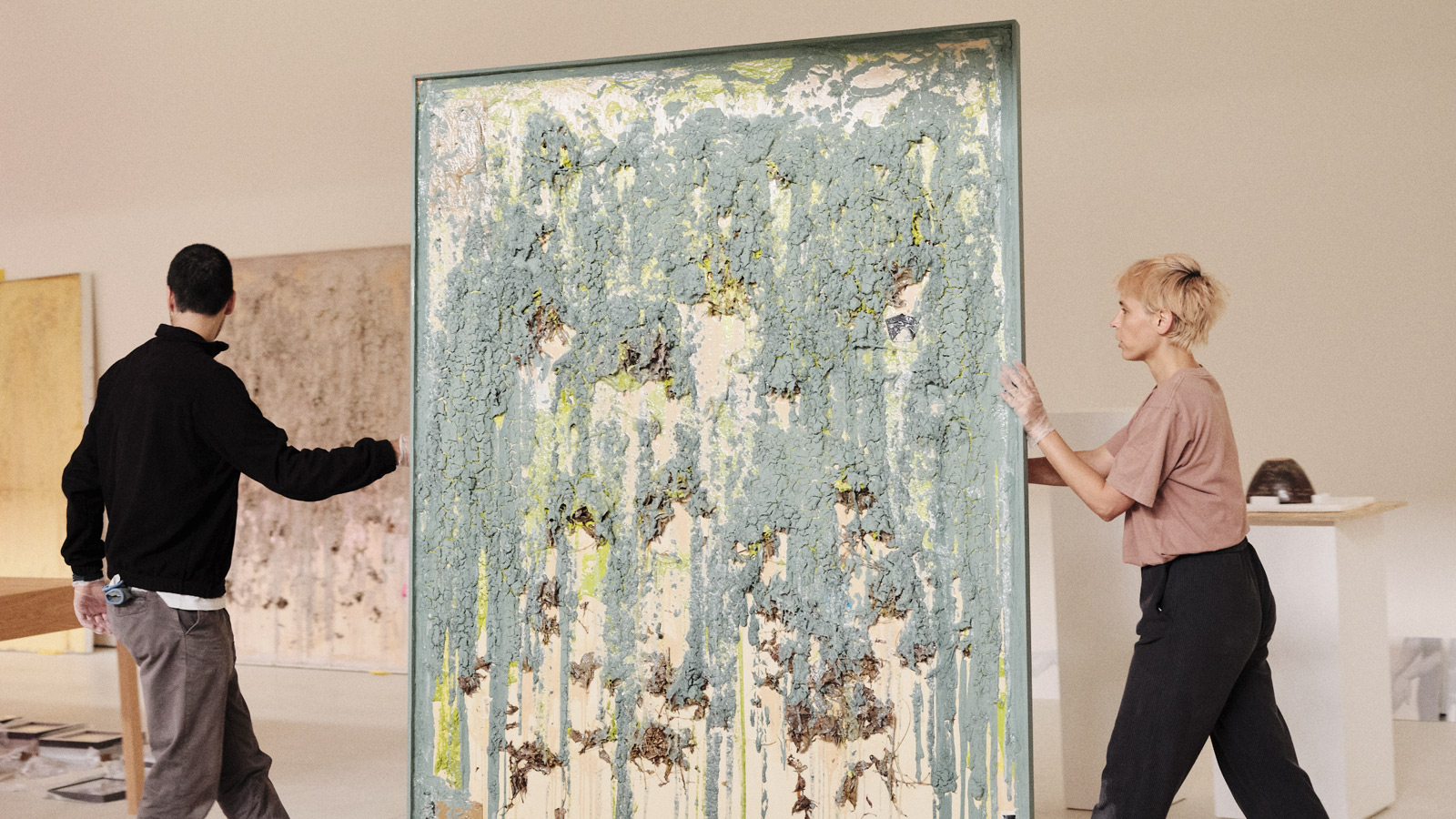
Carlos Bunga (Porto, 1976) has developed an artistic practice concerned with the possibilities of form. What began as his inquiry into the limits of painting has grown into a way of working that hybridizes supports and surfaces until painting becomes a space of activity. His process resonates with the experiments of conceptual and performance artists of the 1960s and ’70s, whose use of simple, iterative gestures generated sensory and emotional force. Over the years, his oeuvre has come to encompass drawing, sculpture, installation, photography, and video.
Working with provisional materials – cardboard, paint, and tape – Bunga’s most recognized projects reinterpret the architectures he is invited to engage with at full scale. Works such as ‘Ruin’ (2008), ‘Landscape’ (2011), ‘Chapel’ (2015), ‘Home’ (2022) and now ‘Bosque’ [Forest] (2025), trace this evolution and the artist’s nomadic paths. Materially fragile yet structurally sound, and intentionally destined for transformation, these works echo the ever-changing nature of built and organic environments and the enduring search, across species, for a space, a place, or a community to return to.
/
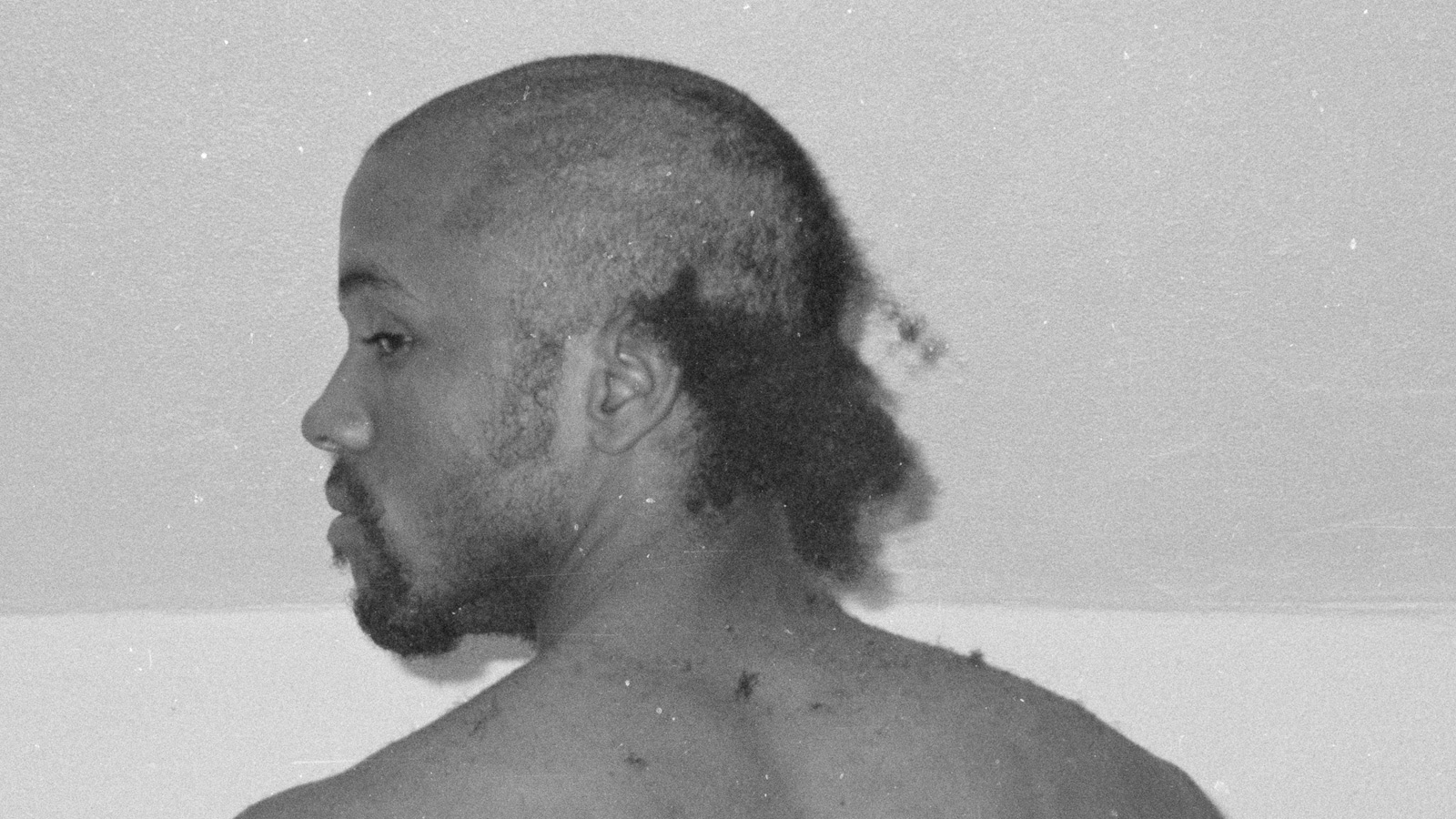
‘Inhabit the Contradiction’ originates from one of Bunga’s surreal drawings: ‘My First House Was a Woman, 1975’ (2018). It depicts a pregnant figure with a house for a head, limbs rendered as both human and animal-like, and a colonial-era stamp crossing the torso. Referencing his mother’s abrupt passage from Angola to Portugal, the artwork is a personal point of departure. Like life itself, the exhibition expands outward into a multifaceted experience shaped by remembrance, change, and the convergences of home, body, mind, and universe.
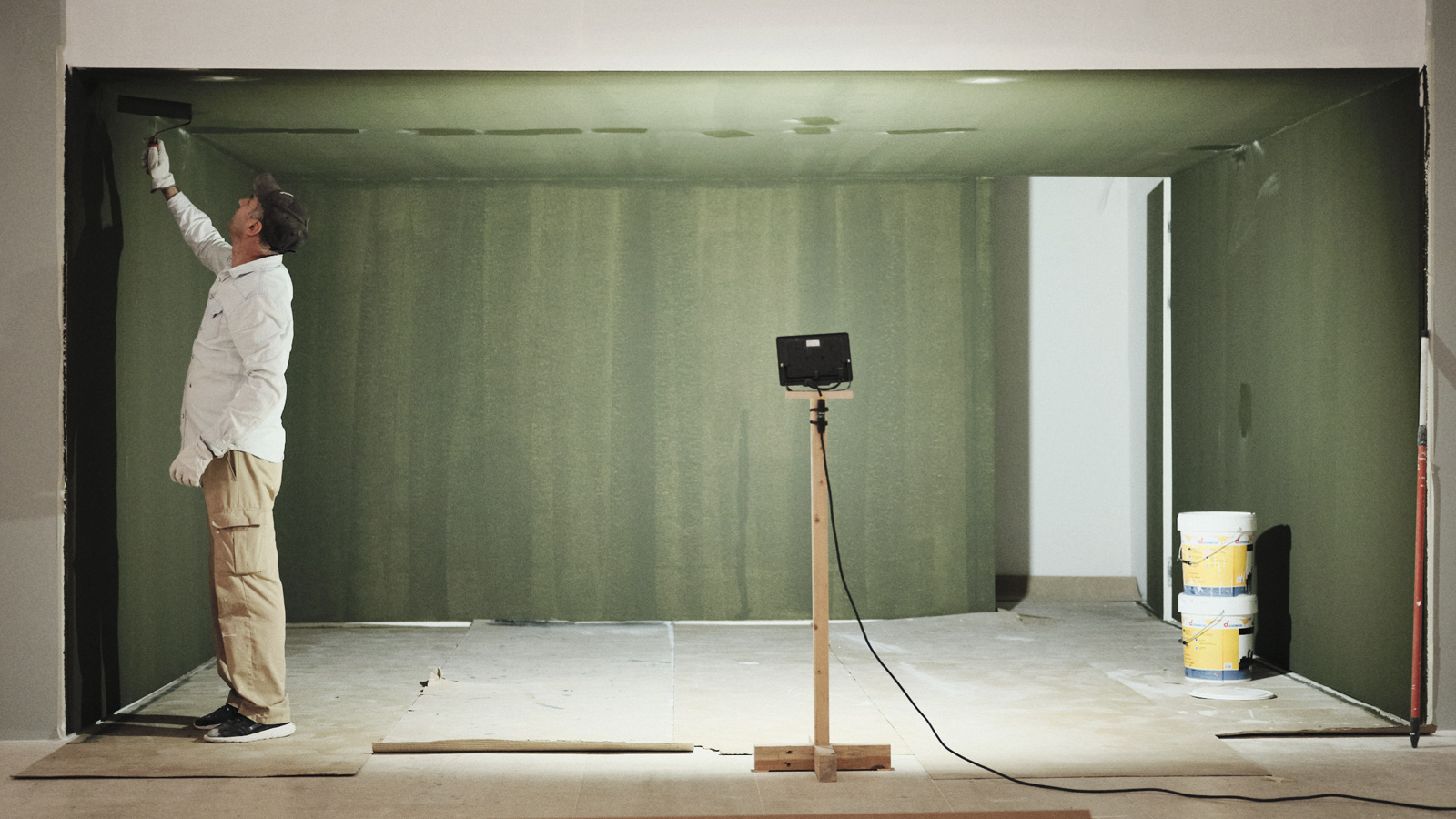
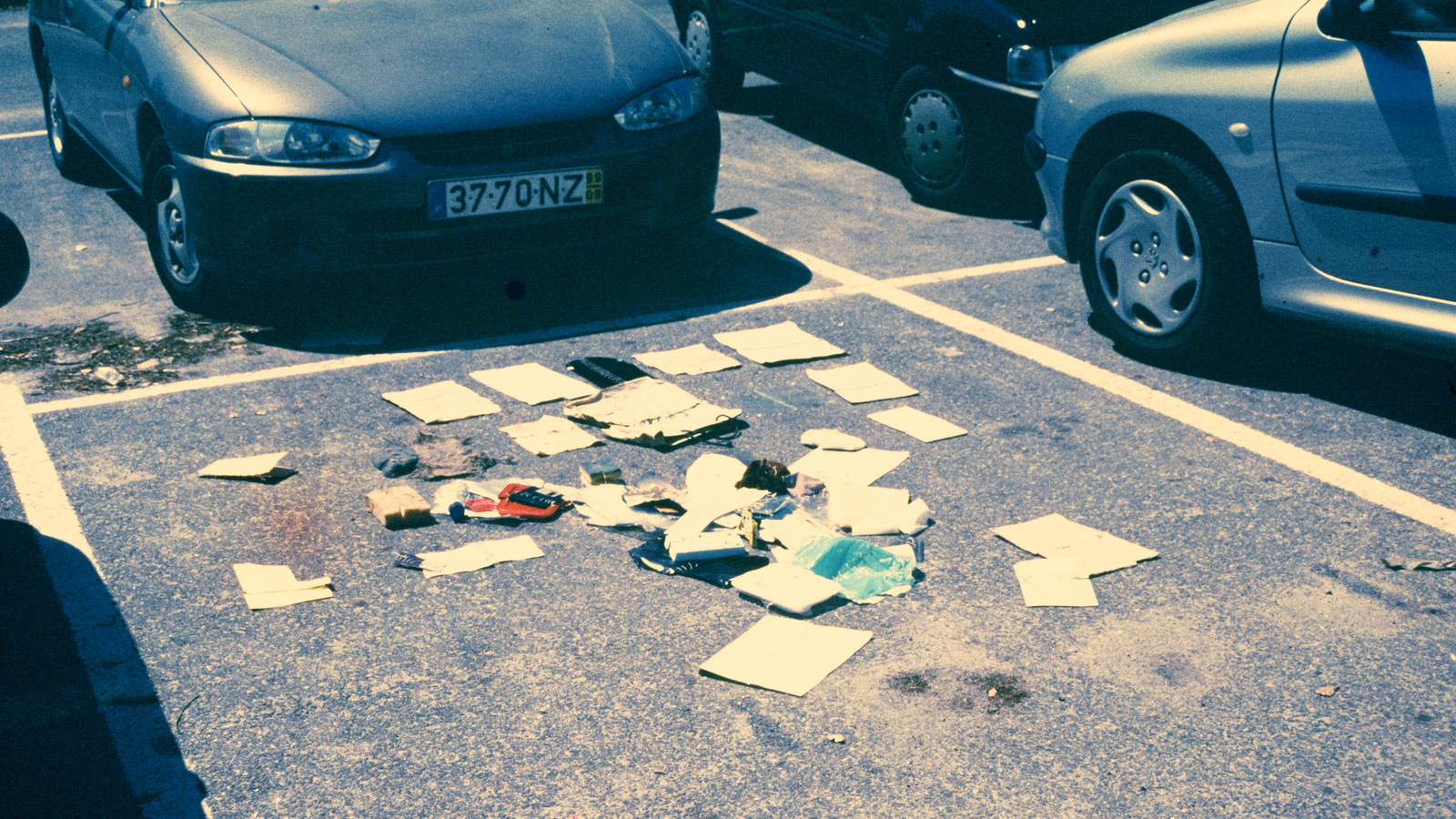
Within CAM’s multiple galleries and the surrounding garden, architectural interventions merge with found materials and painterly gestures. Movement, ephemera, and selections from the institution’s archive and collection layer the exhibition into a meditation on absence and reinvention, and on the complexity of holding multiple, often conflicting truths at the same time.
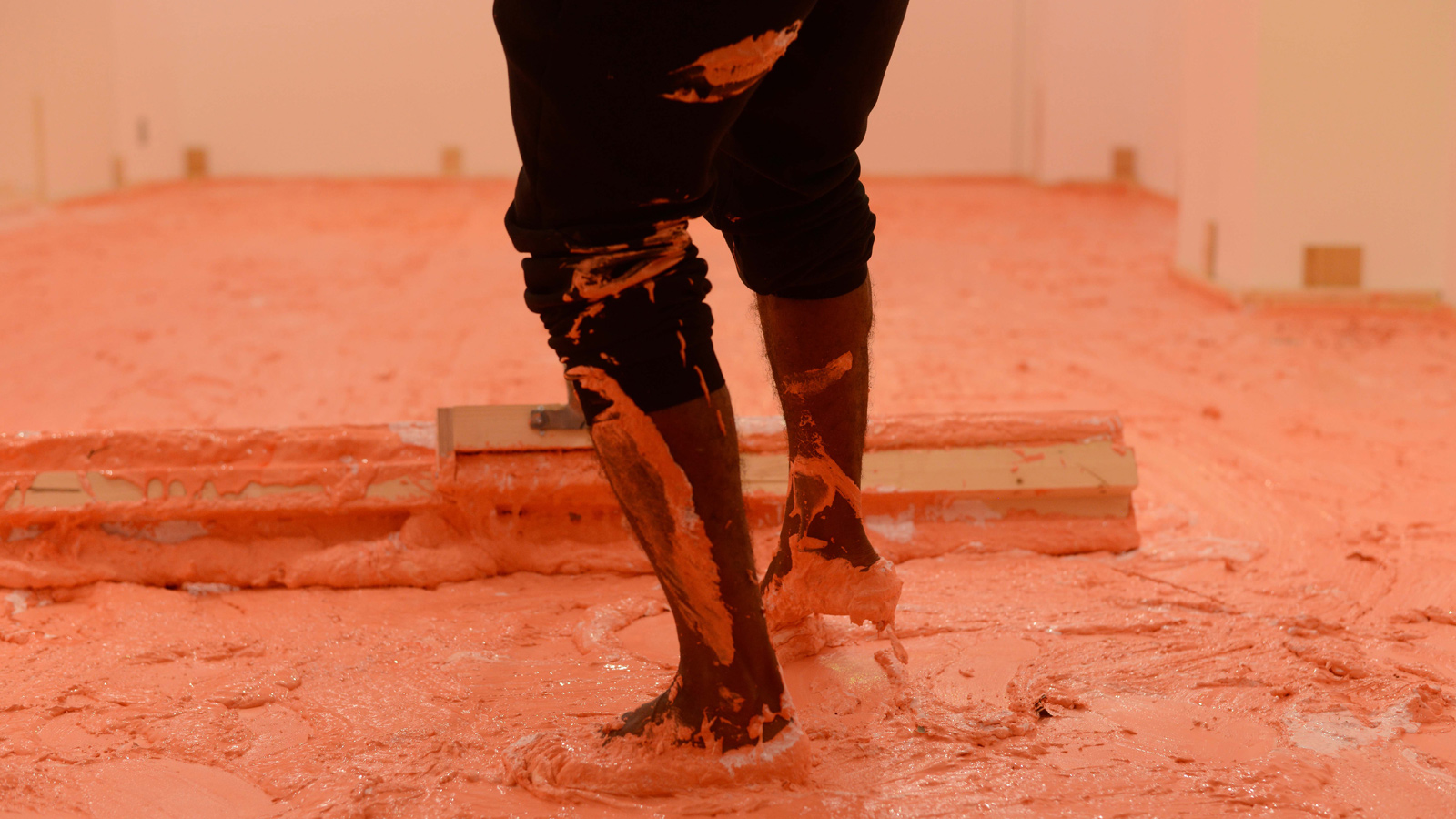
/
Topics
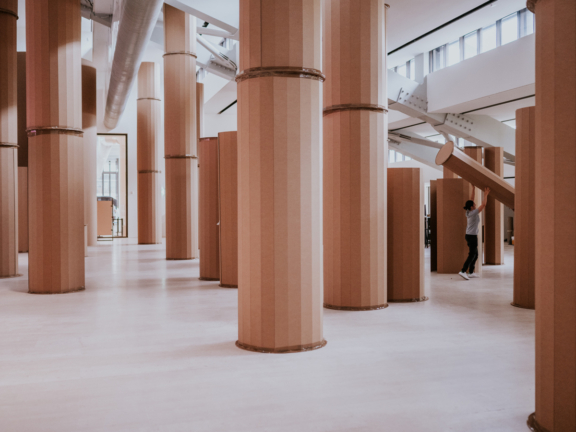
Forest
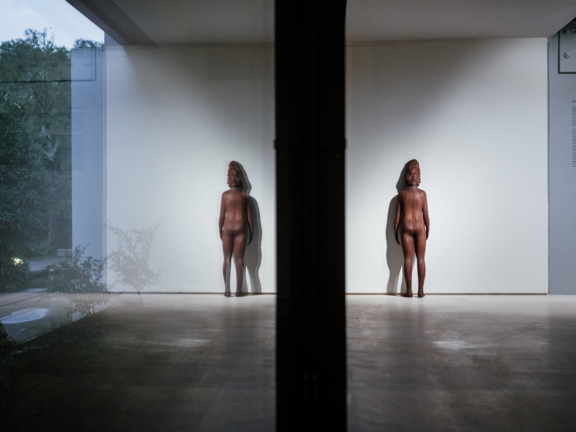
Nomads
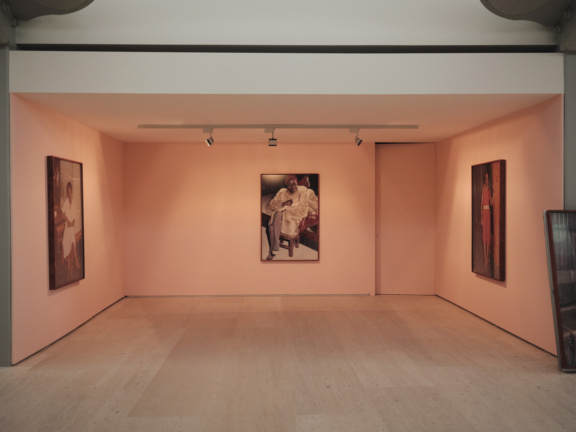
Motherhood
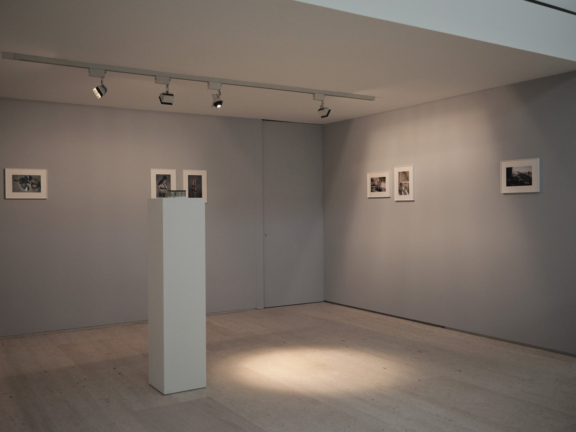
House No. 17
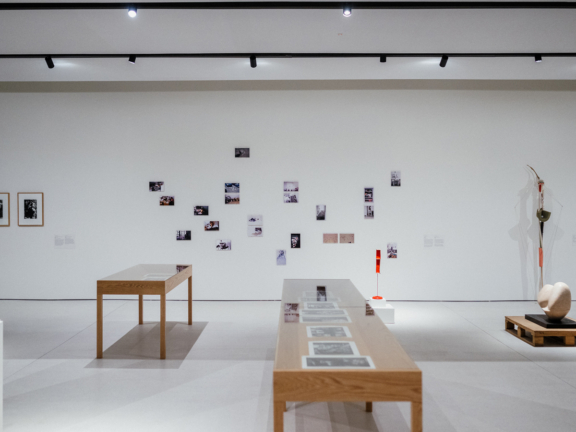
Invitation
-
Home
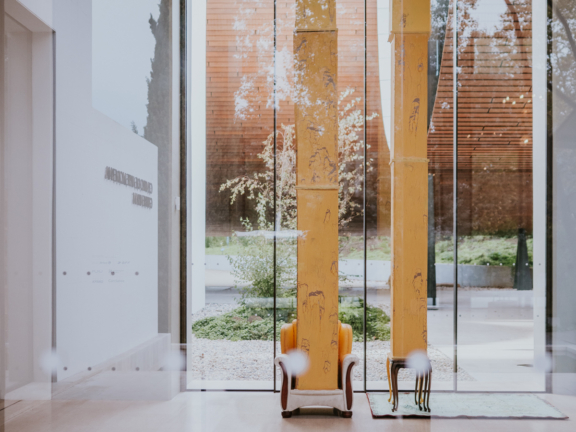
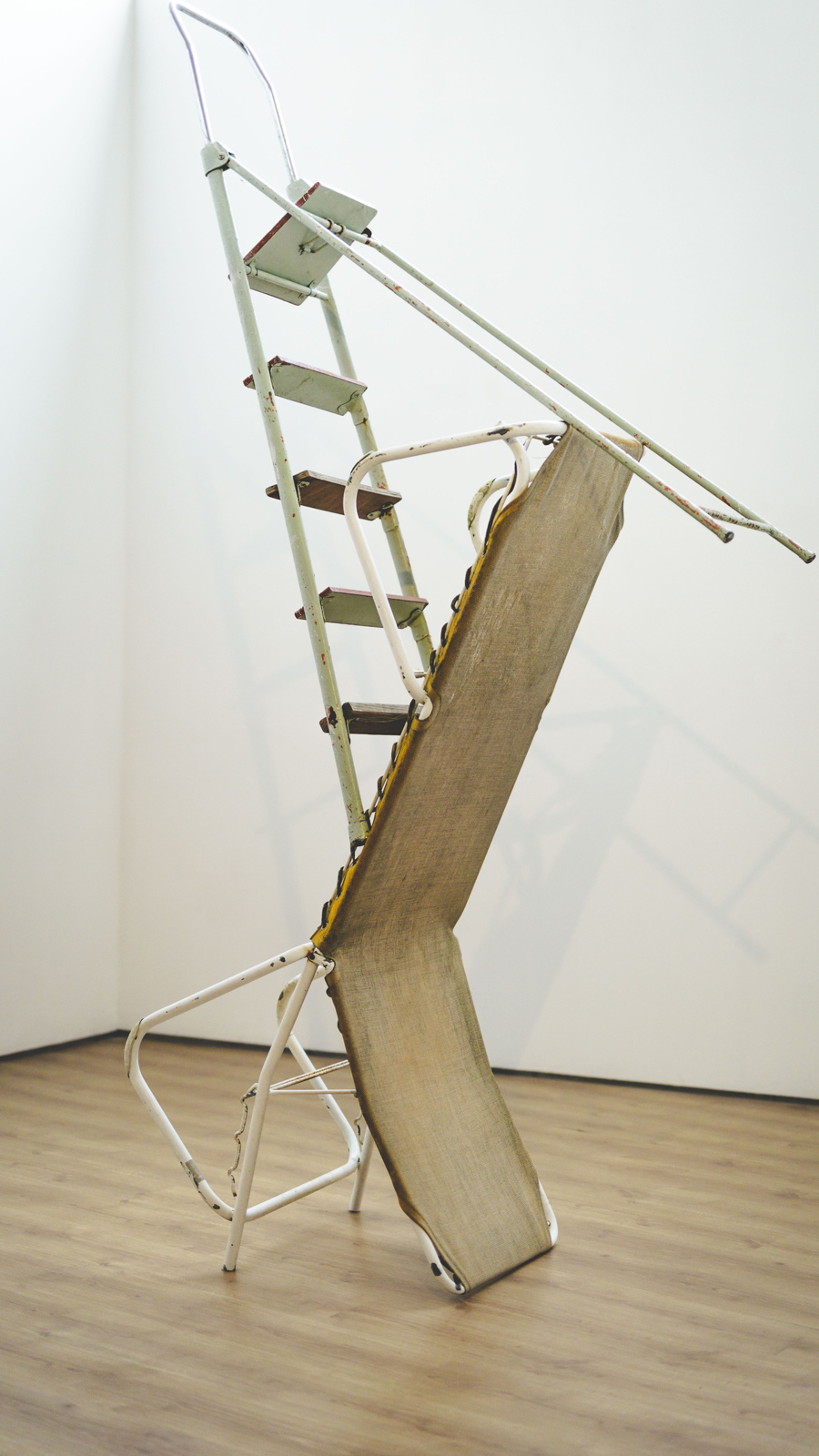
Since the beginning of his career, Carlos Bunga has altered found household objects, imbuing them with new life. Painted, reassembled, and overturned, they take after the makeshift ways we adapt furniture daily by using ‘a chair as a ladder, a bench as a shelf’. Before such interventions, these objects remain inseparable from people, built to support bodies and named for their backs, arms, and legs.
Drawn to humanizing the CAM’s atrium, Bunga has furnished it with sculptures from various bodies of work. Rather than forming a coherent or functional domestic setting, they configure a space where absence is as vital as presence. Arranged on painted rugs or partly on the floor, the works are vulnerable and recall improvised structures encountered in urban centres. By softening this transitory space with familiar, timeworn materials, Bunga opens it to reflection and possibility, inviting visitors to consider the many forms a home might take – the breadth of human experience and emotion it holds, yet cannot always contain.
-
Forest
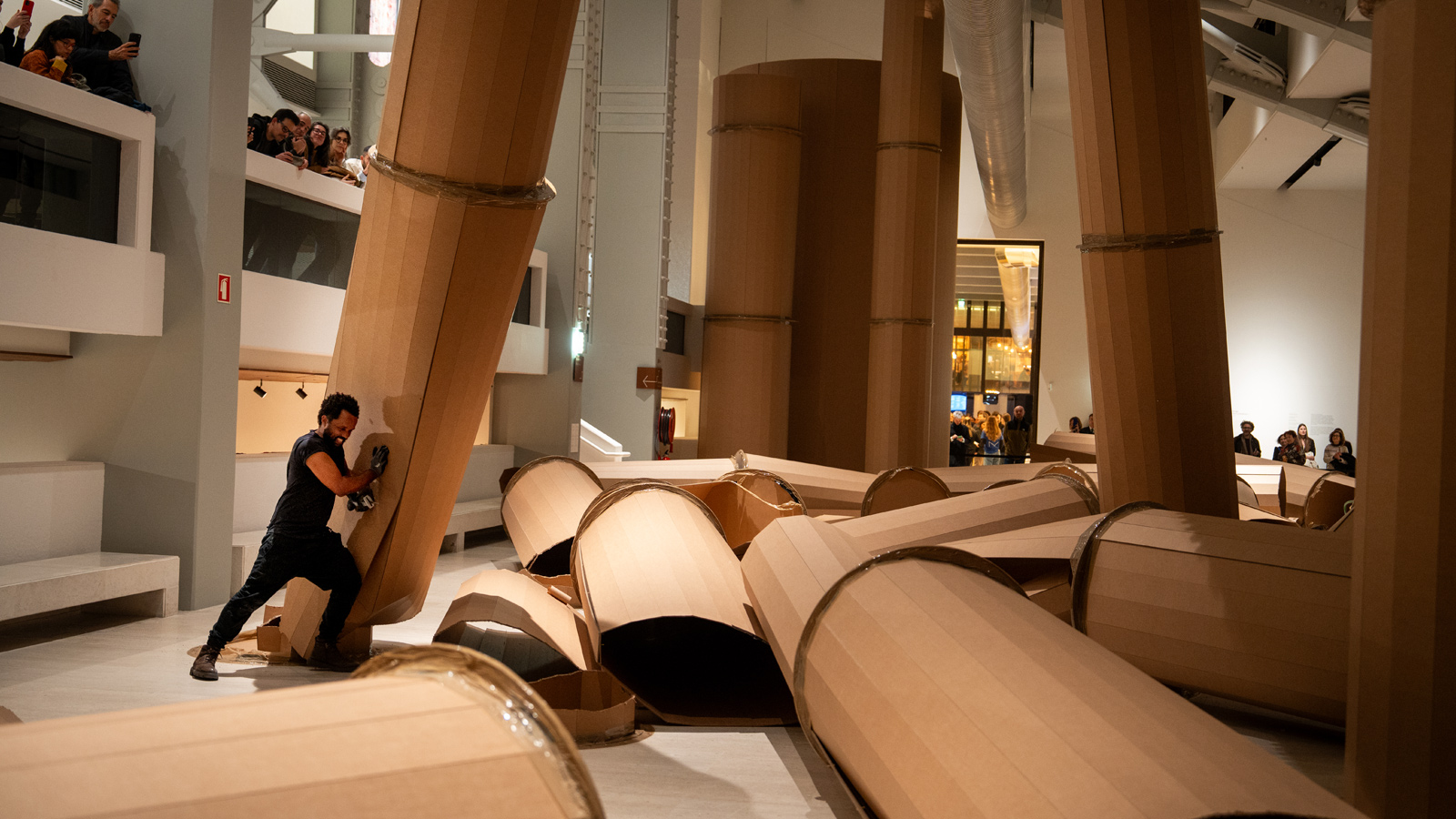
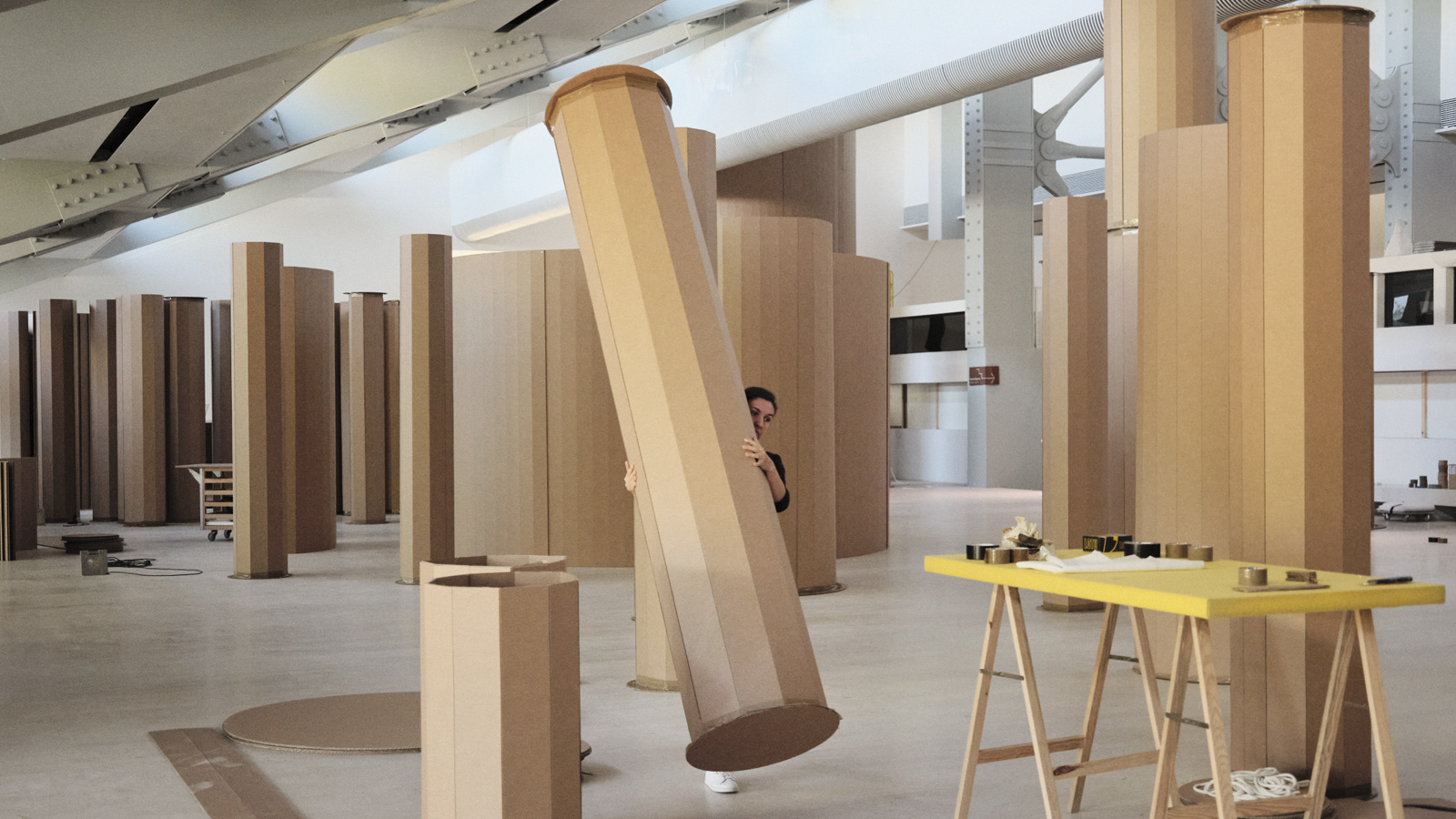
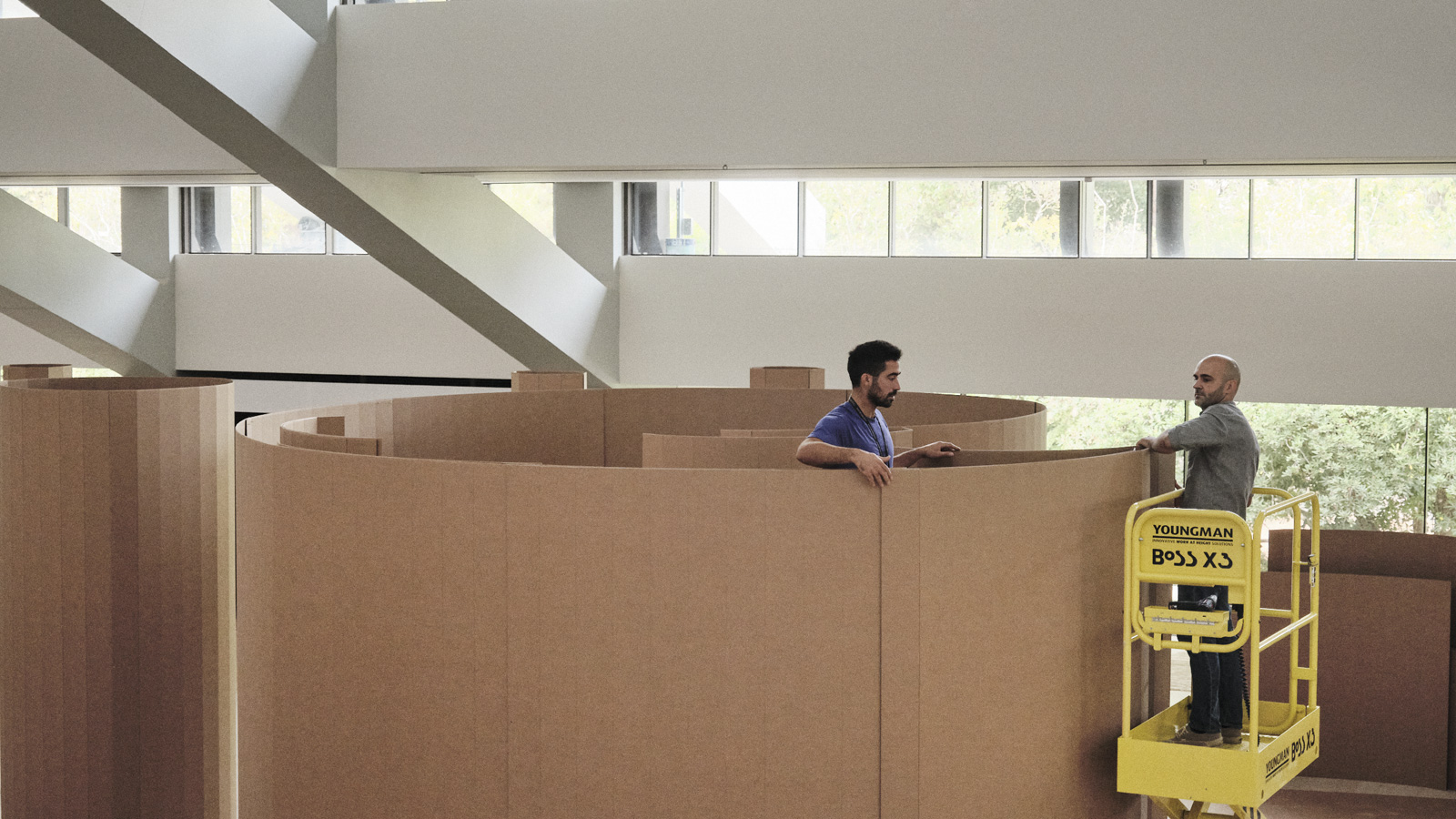
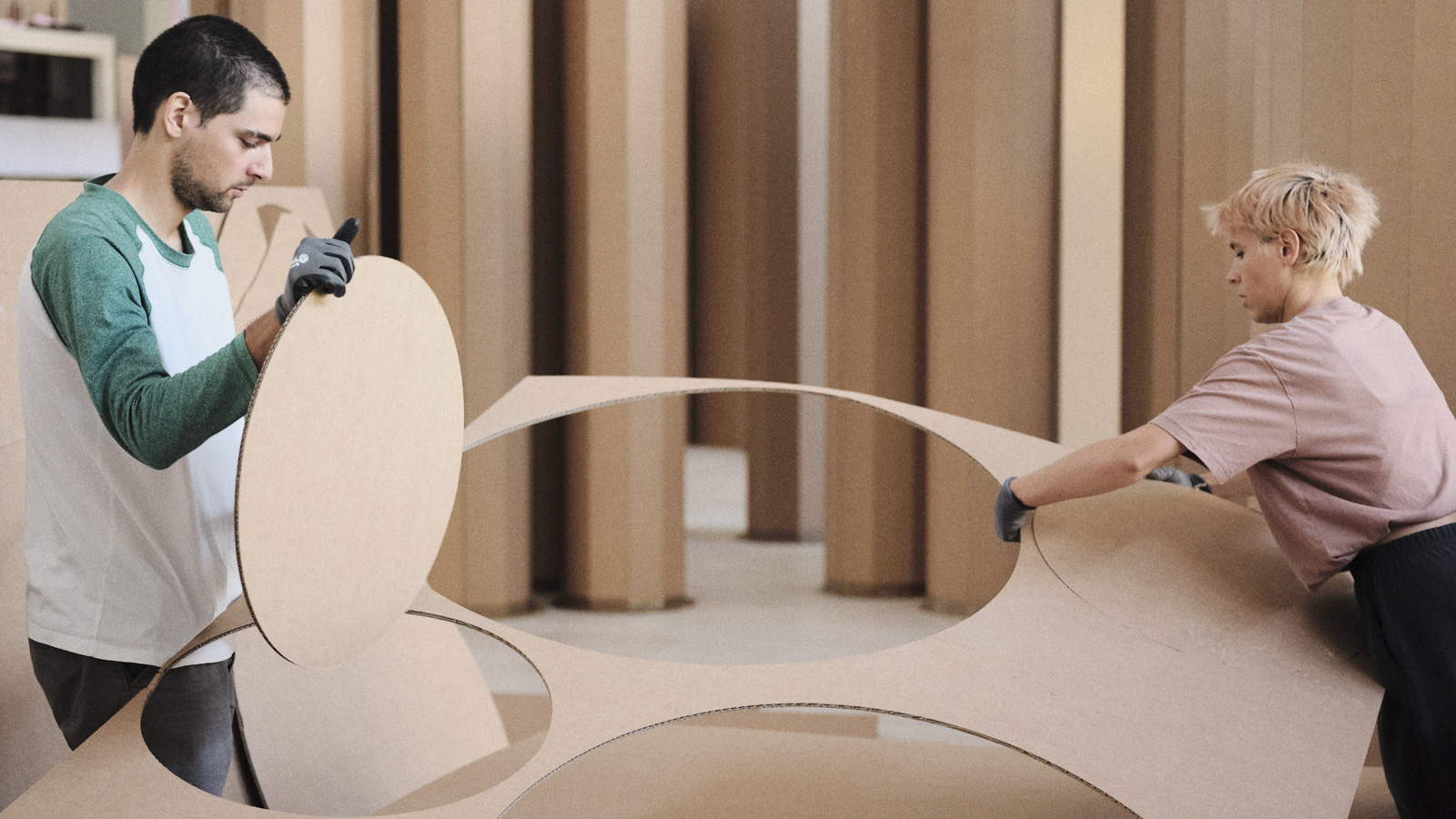
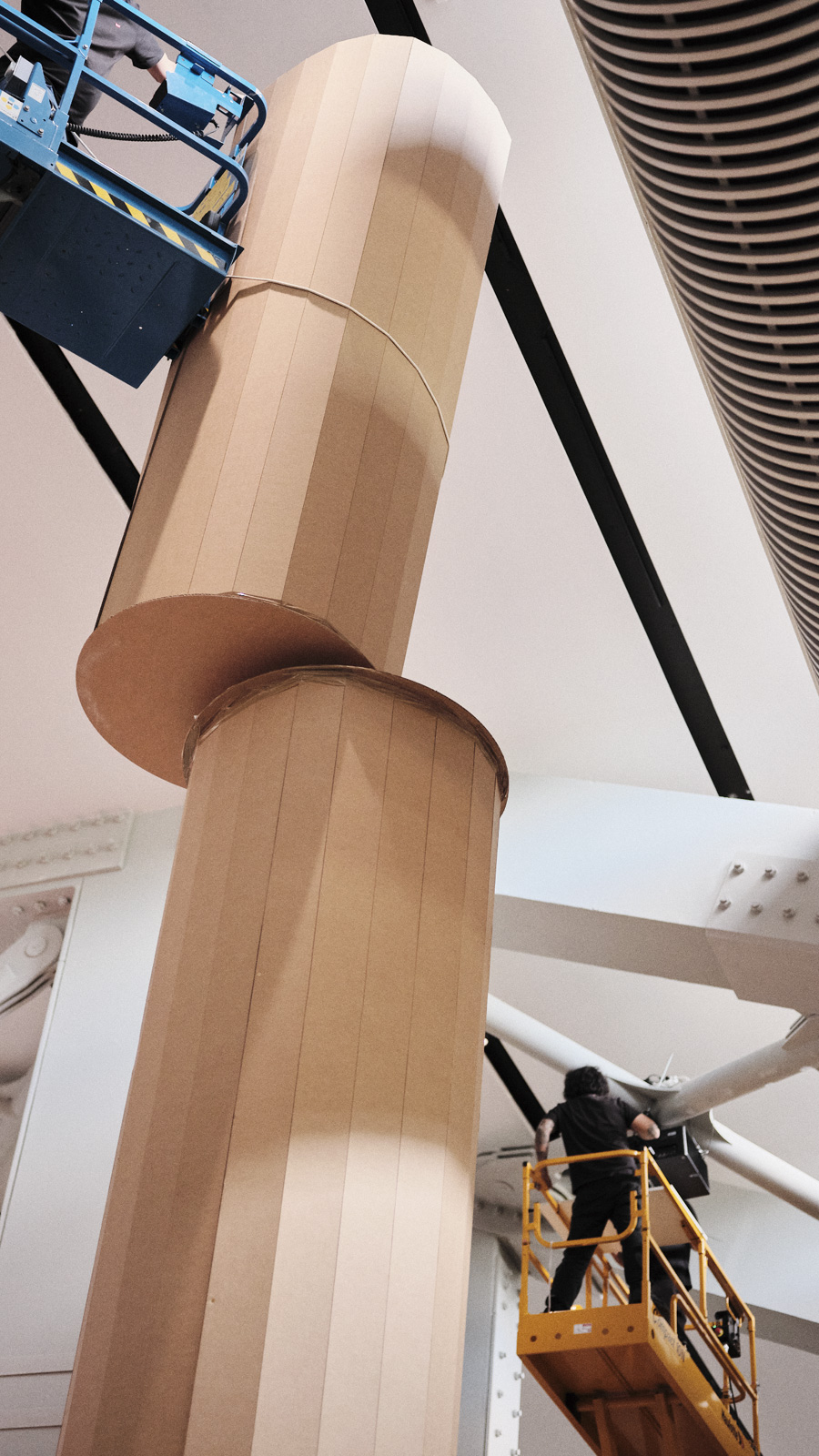
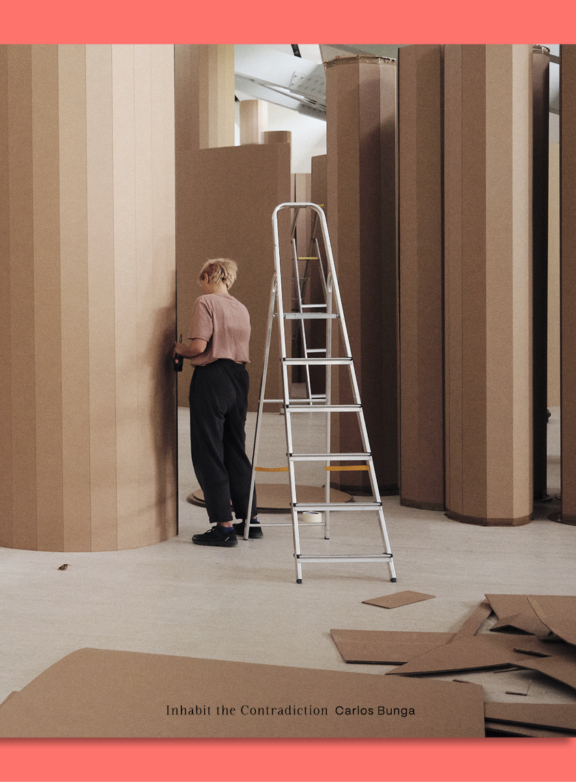
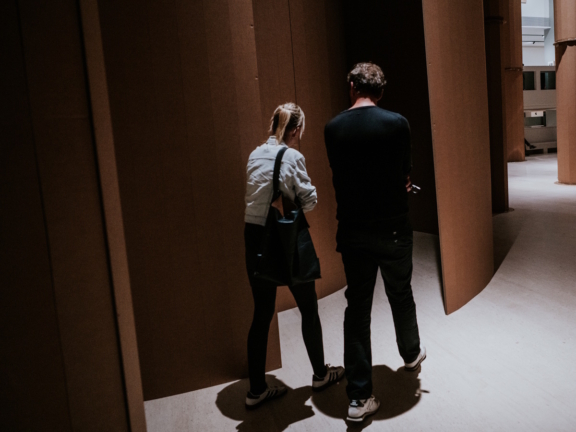
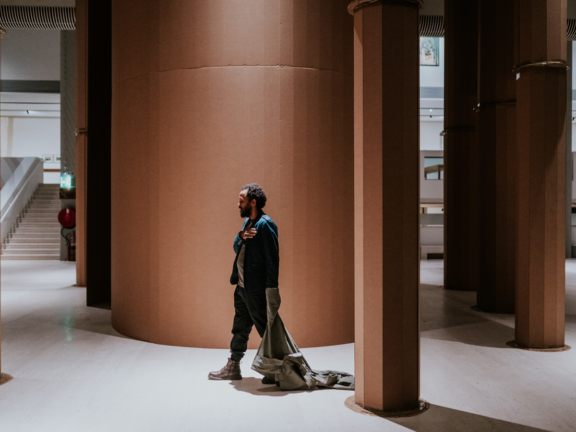
Carlos Bunga’s work is immediate, physically demanding, and responsive to its site, built from ordinary materials. For CAM’s Nave, he has engineered his largest installation yet, working from the outside in to join interior and exterior spaces.
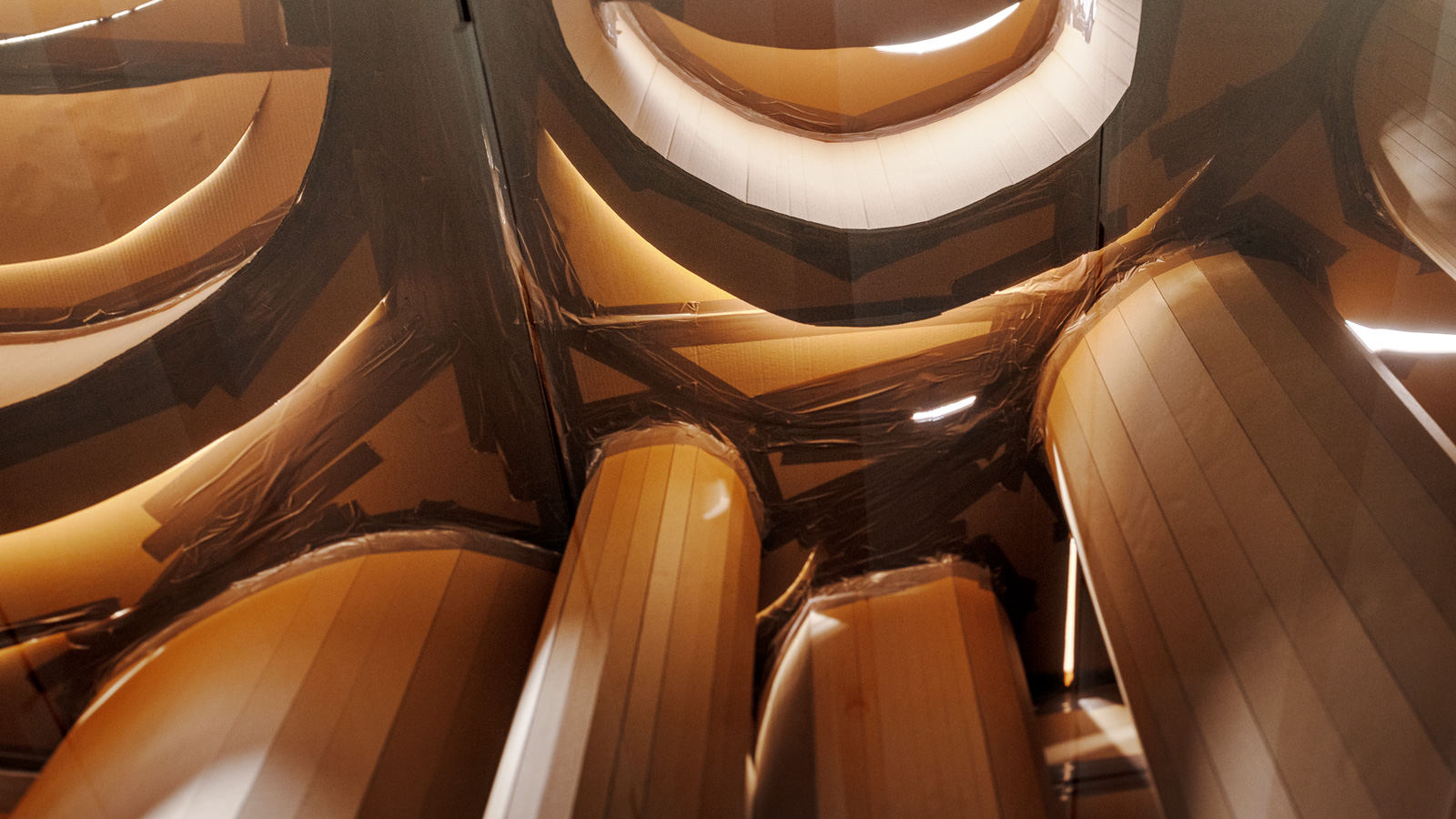
A terrain of cylindrical cardboard forms, taped into towering groupings, evokes both architectural columns and the soaring trunks of ancient trees. Arranged in shifting patterns, these structures create pathways and dead ends, giving the Nave a kinetic dimension that invites movement and encounter. Their volume and curvature refer to the surrounding garden – an ‘urban forest’ – from its foliage to the pools that collect water and mirror the sky.
For Bunga, the forest is a living network – human and nonhuman, visible and invisible, calming and disquieting – where things root, flourish, fall, and morph. Within it, visitors may also find a refuge: a place to pause and regain clarity. At some point, Bunga will cut into the installation, collapsing and recomposing it anew.
-
Nomads
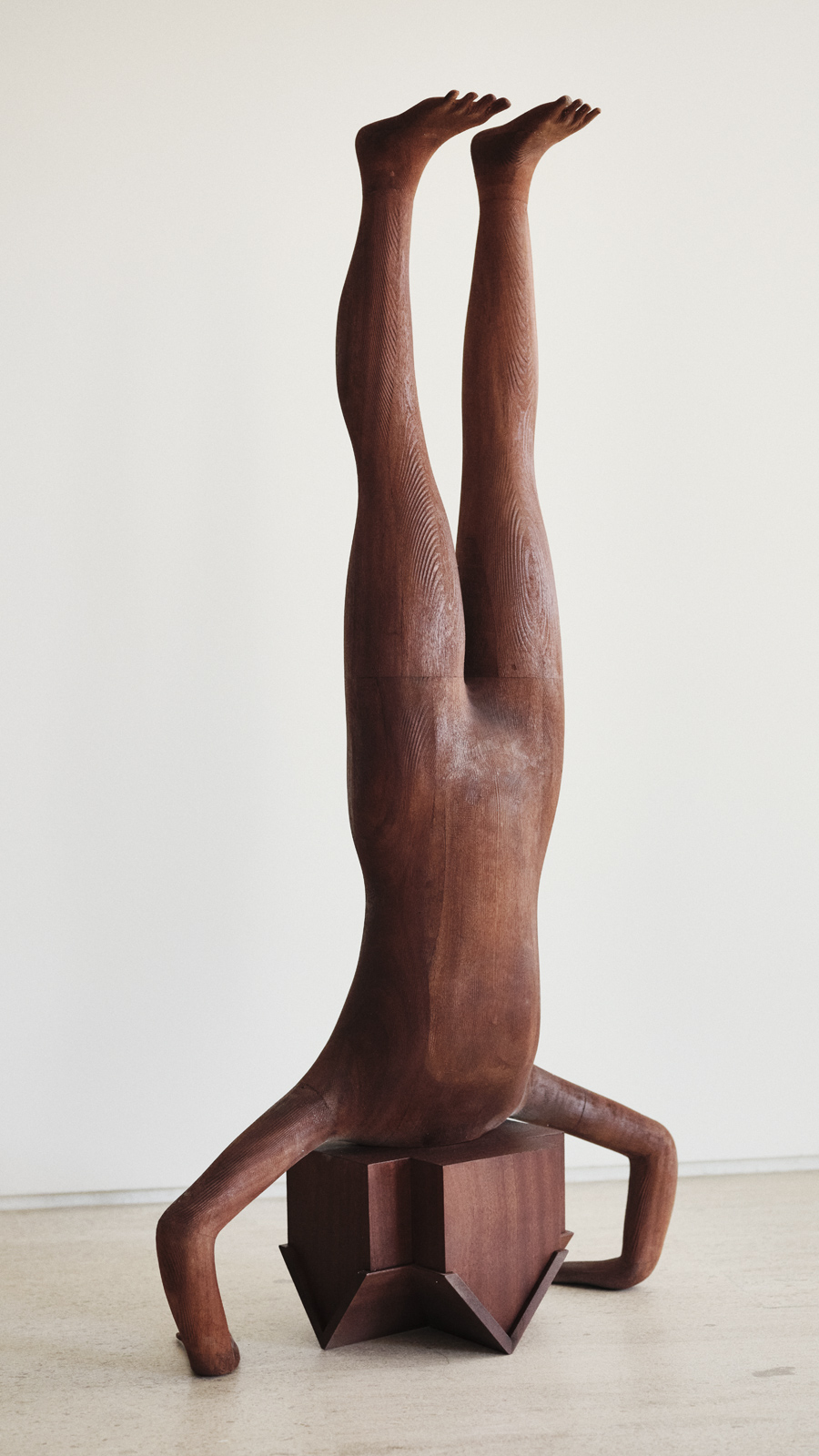
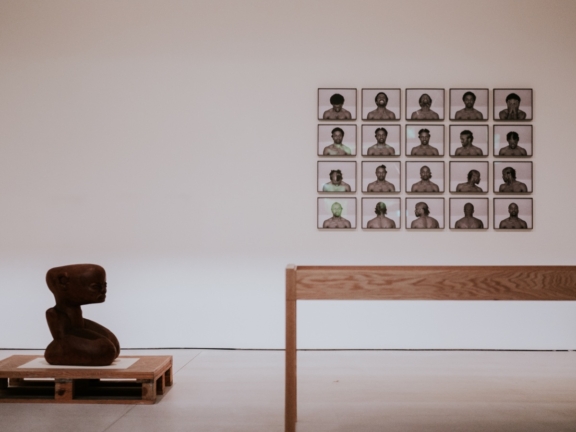
Carlos Bunga’s ‘Nomads’ traverse space and the boundaries of culture and identity. They are genderless, multiracial, and cross-species. Each carries a shelter as their head, constructions that are at once a burden and safe haven, raising questions about the weight of memory and fluctuations of home. Their bodies approximate the proportions of children, suspended in a moment of self-discovery and potential.
This state of flux relates to Bunga’s own trajectory – from refugee to nomad – impacted by displacement and unstable housing. He invokes the figure of the child not only as a symbol of growth but as a way to recover a pre-rational space where play is primary and imagination unbounded. For this exhibition, Bunga presents a new series of ‘Nomads’ made of wood, deepening the relationship between body, architecture, and nature in perpetual metamorphosis.
-
Motherhood
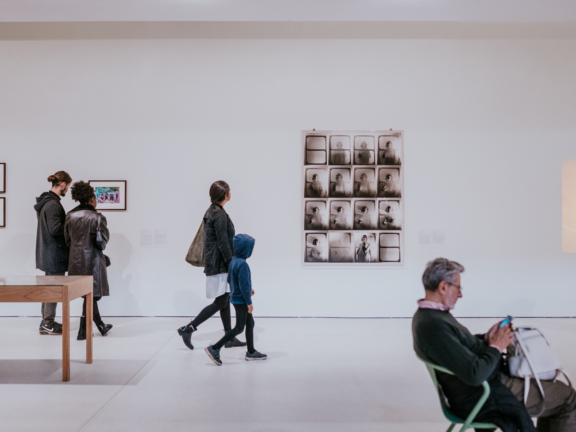
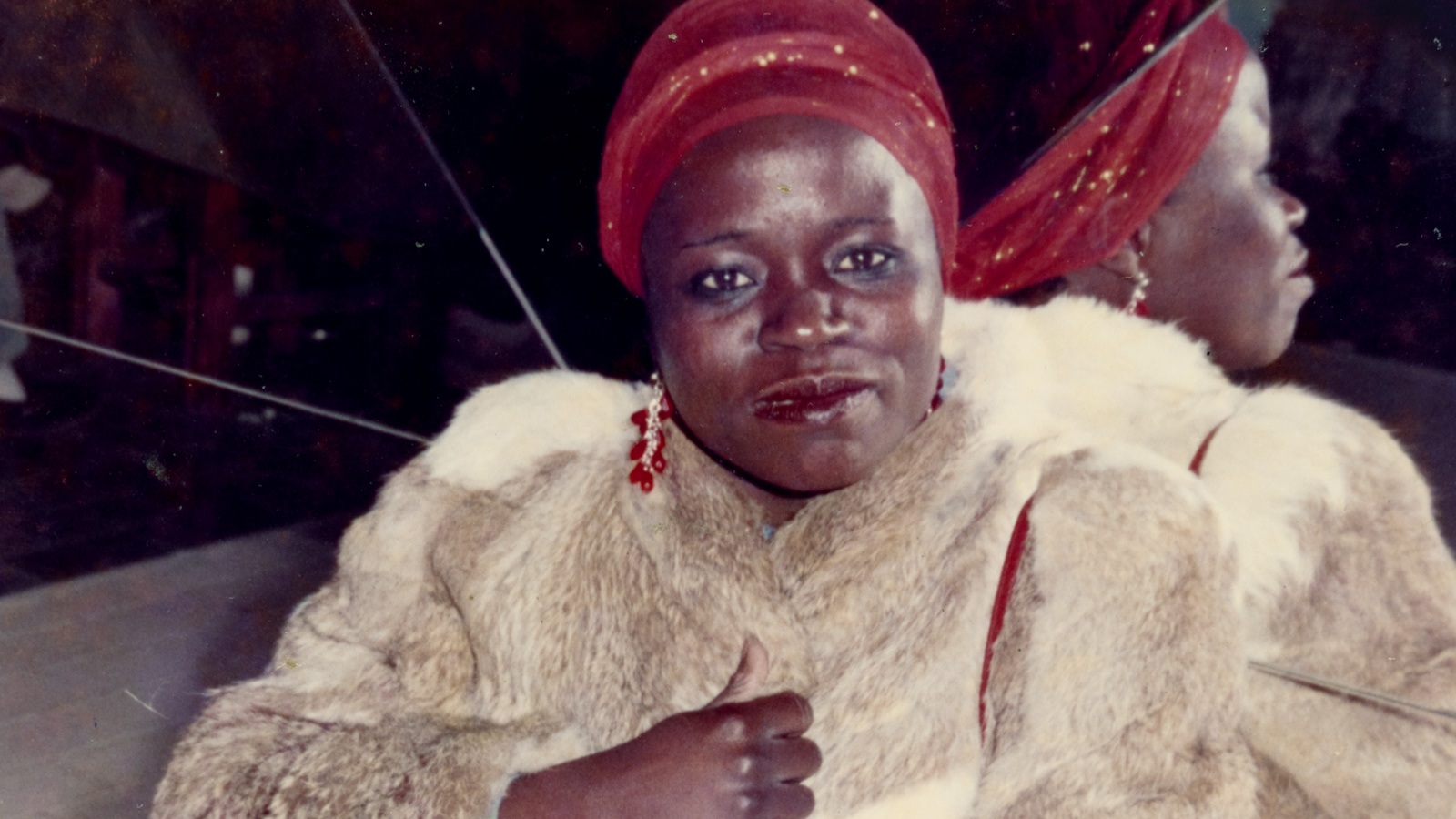
Taken in Lisbon’s Cais do Sodré district during the 1980s, these photographs show Carlos Bunga’s mother in the nightclubs where she worked and socialized. Once a portside zone of foreign traders, sailors, and sex workers, the neighbourhood was also becoming a gathering place for students and bohemians after the 1974 revolution, as Portugal transitioned toward democracy while reckoning with decolonization.
Behind his mother’s glamour lay harsher realities. Fleeing Angola in 1975 with a young daughter and pregnant with Bunga, she arrived carrying little more than some clothes and photographs. Unable to read or write, she relied on her body to provide for her family, yet carried herself unashamed. These photographs were taken amidst her reinvention against prejudices and taboos. Enlarged, they assert her radiance and truth – as an immigrant woman who resisted and protected her family against racism, classism, and misogyny. Beyond a personal nature, they move toward emblems of survival and becoming. She invites the viewer’s gaze but also meets it unflinchingly, compelling us to confront our own judgments – and question what we’ll do when faced with them ourselves.
-
House No. 17
‘House No. 17’ is connected to Carlos Bunga’s Model series, begun in 2002. Whereas his smaller cardboard constructions are ambiguous and formally loose, ‘House No. 17’ is miniature, detailed, and crafted from a cereal box. The sculpture is modeled on one of the artist’s childhood homes in São Bartolomeu dos Galegos, just north of Lisbon.
After years of living in converted institutions and religious centres for refugees, Bunga’s family relocated to this house, part of a social housing initiative built from prefabricated materials intended to last only a decade. In reality, families lived in them for nearly nineteen years, until their visibly degrading state led to demolition in 2002.
The model is paired with a sequence of never-beforeseen photographs taken by the artist just before the demolition of his childhood home. Together they preserve a life on the brink of erasure: interiors and exteriors, objects and signs of habitation, the house’s final dismantling. They can also be interpreted as a kind of portrait of the artist’s mother. Within her rooms, religious icons resided with pin-ups and toy dolls, an assemblage of comforts and ideals that, even today, might be seen as contradictory. Their proximity,
however, resists these distinctions. What is exalted and what is disparaged, what consoles and what provokes, coexisted within her and somewhere within each of us. This reality – ordinary yet profound – could have vanished with the rubble, but Bunga’s photographs withstand this possibility. -
Invitation
The invitation to explore the permanent Collection created a tension Carlos Bunga recognized as another fertile starting point. For more than two decades, he has questioned the authority of seemingly stable structures, drawing our attention instead to their fragility and mystery. What appears solid may, in fact, be provisional; and perhaps it is the nimble and adaptable that ultimately persists.
Bunga gravitated toward works characterized by elusiveness and transience, among other aspects. Several are presented in relation to external loans and his rarely seen works that themselves hover between categories and states of being.
Through this active composition, a body in flux comes in and out of view: passing through cityscapes and landscapes, porous edges, memory and dream, heartbreak and exhilaration. What is gathered here resists conclusion, instead pointing to processes and open ends. At different moments works may relocate, disappear, or be newly introduced by the artist.
Publications
Biographies
-
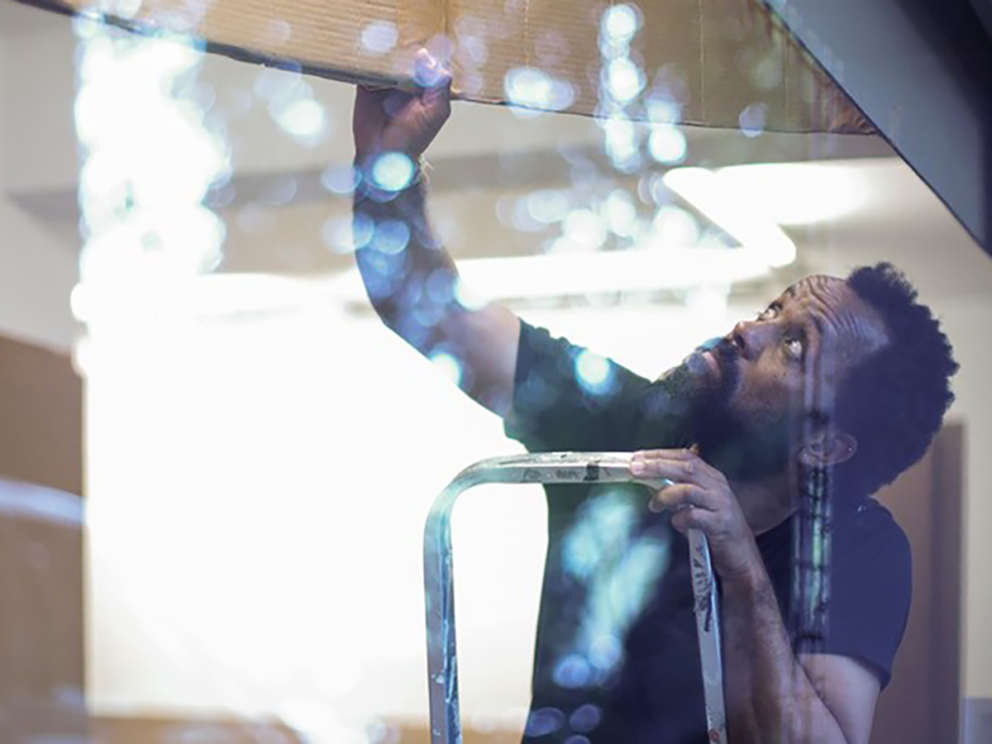
Carlos Bunga
Carlos Bunga (Porto, 1976) studied at the Escola Superior de Arte e Design in Caldas da Rainha and he currently lives near Barcelona.
He creates process-oriented works – installations, performances, video, drawings, sculpture and painting – that refer to and intervene in their immediate architectural surroundings. While using ordinary, unassuming materials the resulting finished works involve a conceptual complexity derived from the inter-relationship between doing and undoing, between unmaking and remaking, between investigation and experimentation. -
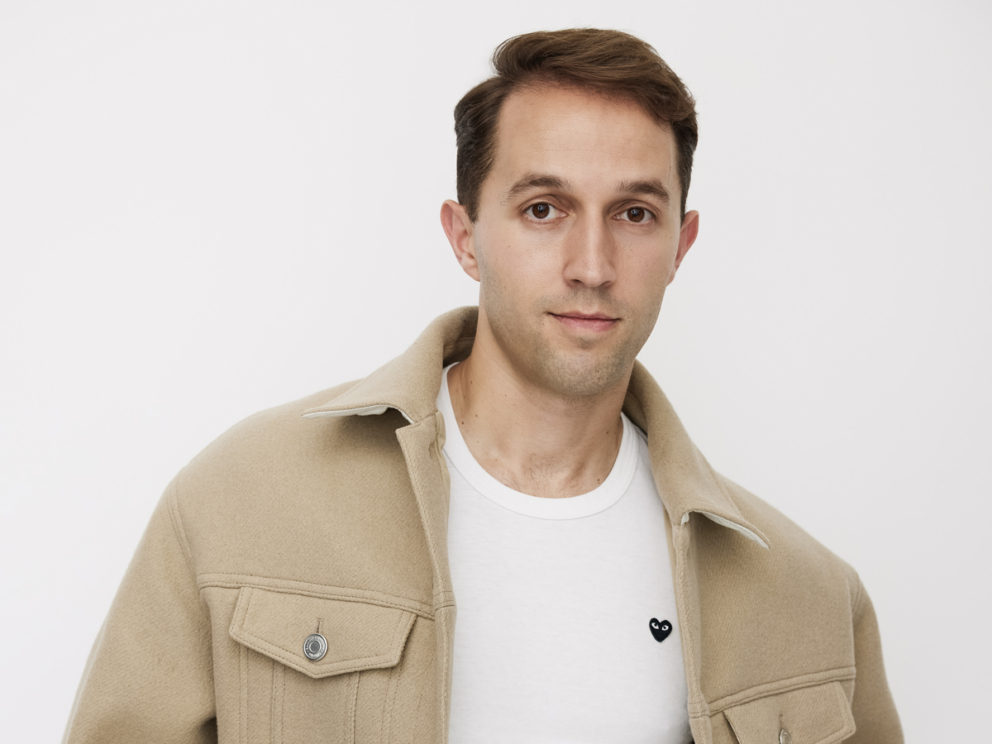
Rui Mateus Amaral
Rui Mateus Amaral is the Artistic Director of MOCA Toronto, where he has curated exhibitions by Alex Da Corte, Phyllida Barlow, Carlos Bunga, among others. In 2022, he organized
‘Summer’, Felix Gonzalez-Torres’ first solo exhibition in Canada, and in 2021, he co-founded MOCA’s triennial, ‘Greater Toronto Art’. From 2011 to 2020, Mateus Amaral directed the program at Scrap Metal, a private exhibition space, working with artists such as Eduardo Basualdo, Eric N. Mack, and Paul P. His writing has appeared in ‘Artforum’, and in 2022 he co-published ‘Garden Court’, Scott Burton.Image credit: © Samantha Pierre and Diego Armand
Curators / artists texts
Carlos Bunga
The first site-specific installation I created, alongside my early works, was born at ESAD.CR – Escola Superior de Artes e Design das Caldas da Rainha. The Fine Arts course, created and reformulated in 1990, stood out for its focus on artistic practice – laboratory, experimental and experiential – both in the school's studio space and beyond: in the streets, in gestures and in encounters.
I started at ESAD.CR in 1998. The school was new and I, like so many other students, was still raw material in the making. Both the school and the students were searching for an identity. We were living in a time of transition, between the old MATEL school and the new ESAD building, a decisive moment in the history of the institution. The atmosphere was one of effervescence and non-conformity; the students, with a critical and irreverent spirit, demanded the right to experiment, to question, and to make art a space of resistance and freedom. Caldas da Rainha, a city with a discreet but deeply rooted artistic traditions, became the setting for a learning experience that was both technical and existential.
There, art and life intertwined in a continuous experience of discovery and transformation far from the big urban centres; the school cultivated a particular sense of community. We shared intense experiences, not only in classrooms and workshops, but also in cafés, homes, parks – anywhere could be an excuse to be together. Between conversations, projects, and long nights of work (and of partying), bonds were forged that went beyond the academic realm. Camaraderie became a method; socialising, a creative process.
This social experience marked an essential period in my development, a time when growing up, thinking, and creating were intertwined, and when the very notion of art expanded into the realm of life.
Through painting, transformation, and installation, I learned that the artistic process is, above all, a form of knowledge. The artistic gesture, whether pictorial, performative or installation-based, is always an attempt to question. Between the studio and the street, between school and the city, between painting and the body, I found the true territory of creation: the place where gesture and thought meet.
However, the more I learned, the more a feeling of discomfort grew within me. My paintings seemed unable to answer the questions that concerned me, and every gesture in the studio was accompanied by a doubt: why? what for? what am I really looking for?
This universe of questioning, of experience or critical spirit, effervescence and non-conformity, in which the very notion of art expanded into the territory of life, has always been present in my way of being and existing in the world over all these years.
This spirit of questioning, this critical and irreverent effervescence, the expansion of art into everyday life remained alive, spanning years and experiences, shaping my way of being, of looking and of creating. Since then, art has become not only a practice, but also a space for reflection, a territory of resistance, and a continuous encounter between life and creation.
Credits
Curator
Rui Mateus Amaral
Main image
© Pedro Pina
Exhibition Sponsor

Support

The Calouste Gulbenkian Foundation reserves the right to collect and keep records of images, sounds and voice for the diffusion and preservation of the memory of its cultural and artistic activity. For further information, please contact us through the Information Request form.
Related
No results were found for your criteria.