






Diatoms: Photonic Marvels of the Ocean
A conversation with artists, scientists and algae cocktails.
Event Slider
Date
- 18:30 / Cancelled 18:30 / Sold out 18:30 – 20:00
Location
Studio Centro de Arte Moderna Gulbenkian
In this talk, Johannes W. Goessling explores how nature can inspire innovative solutions to some of today’s most pressing technological and ecological challenges. To conclude the session, participants will be invited to taste a cocktail and a mocktail made with macroalgae from the Portuguese coast — a unique recipe created by chef and biologist Joana Duarte.
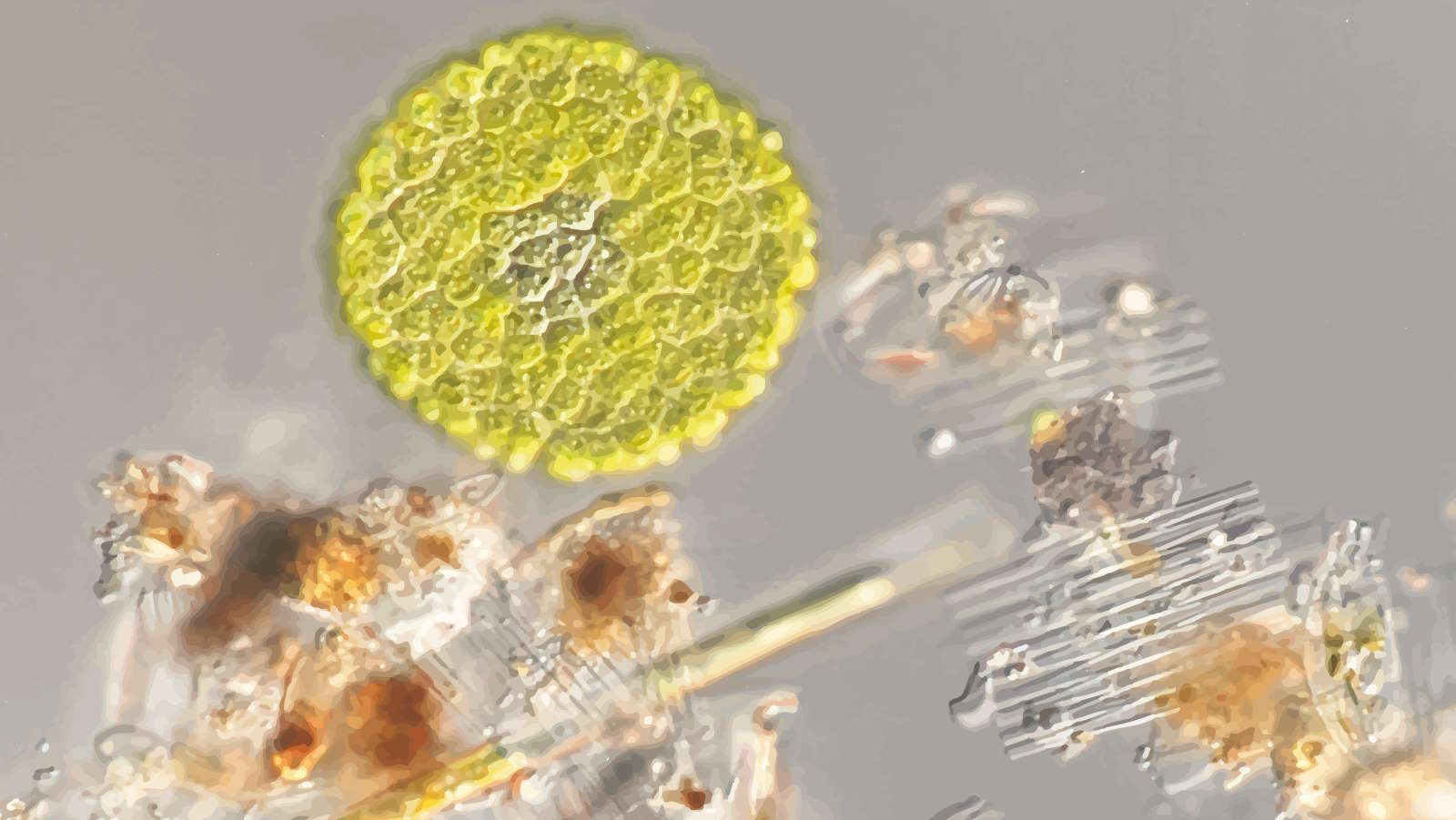
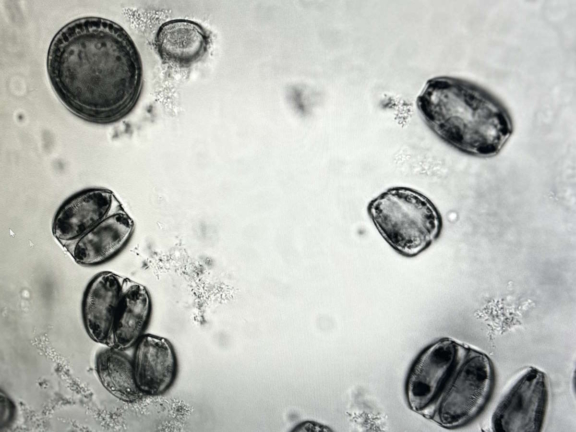
Diatoms – microscopic algae – play a fundamental role in regulating global nutrient cycles, producing a significant proportion of Earth’s oxygen, and acting as natural carbon sinks. Beyond their ecological importance, diatoms possess remarkably sophisticated nanoscale properties. Their intricately structured silica shells act as natural photonic crystals, allowing precise manipulation of light at the nanoscale.
A diverse and prolific group of photosynthetic microalgae, they are vital contributors to ecosystems, producing as much oxygen as all tropical forests combined. Encased in intricate silicon dioxide (glass) shells, these microorganisms exhibit an extraordinary range of structural designs, with each species forming its own unique pattern. Among them, some diatoms have evolved highly ordered, porous structures that align with the scale of electromagnetic radiation, enabling them to manipulate light through photonic processes.
As we explore the bio-photonic properties of diatoms, we are also looking at the evolutionary factors underlying the development of these structures millions of years ago and discussing their potential role in enhancing photosynthesis.
By studying these micro-organisms, we will gain insight into the intersection of ecology, biology, and physics, and examine how nature’s fine-tuned design can drive ground-breaking technological innovations – as quantum computing – while promoting sustainability, resource independence, and ecological responsibility for the future.
An activity integrated in the parallel programme of the exhibition ‘Interferences in the Tagus‘ for Earth Day, under the European project ‘Bauhaus of the Seas Sails‘ and funded by Horizon Europe EU Programme.
Earth Day
This activity is part of Earth Day at Gulbenkian – a celebration of “Mother Earth” for all ages. Read more
Biographies
-
Johannes W. Goessling
Dr. Johannes W. Goessling explores how nature-inspired solutions can address pressing technological and global challenges. His research focuses on diatoms – microscopic algae that regulate global nutrient cycles, produce oxygen, and serve as natural carbon sinks. Goessling’s work highlights the potential of these biological nanostructures for next-generation photonics, quantum computing, advanced sensors, and telecommunications. By understanding the finely tuned design of natural materials, his research promotes sustainable nanotechnology and resource-independent innovations.
Credits
Concept and direction
Johannes W. Goessling
Francisca Rocha Gonçalves
Project
Support
Partnership
The Calouste Gulbenkian Foundation reserves the right to collect and keep records of images, sounds and voice for the diffusion and preservation of the memory of its cultural and artistic activity. For further information, please contact us through the Information Request form.
Related
No results were found for your criteria.