Abel Manta (1888-1982)
Praça de Camões, 1954 / Inv. 62P75

25.º Aniversário da Fundação Calouste Gulbenkian

Verificando-se a impossibilidade de inaugurar o novo Centro de Arte Moderna (CAM) no ano em que a Fundação Calouste Gulbenkian comemorava o seu 25.º aniversário, foi decidido assinalar a data com a apresentação de uma exposição intitulada «Antevisão do Centro de Arte Moderna». Esta exposição visou dar a conhecer ao público o futuro espaço expositivo da Fundação Calouste Gulbenkian (FCG) e as razões que levaram à sua edificação, bem como o seu programa. A mostra organizou-se em torno de três temas: «O Edifício», «Amostragem do Acervo do Museu» e «Centros de Documentação e de Criação Artística».
O «Edifício» foi abordado na perspetiva da sua localização, projeto e construção. Foram expostos alguns estudos iniciais, ainda em localizações experimentais, o projeto do arquiteto Leslie Martin (1908-1999), incluindo a maquete do edifício, e aspetos do projeto do Pavilhão de Educação pela Arte. Foram também expostas fotografias ilustrativas da evolução da construção do edifício, captadas ao longo dos catorze meses que antecederam a exposição.
Em «Amostragem do Acervo do Museu», pretendeu-se expor a coleção de arte moderna reunida pela FCG até então; contudo, devido às limitações de espaço, foram expostas somente algumas obras, apresentadas em sequência cronológica, relevando-se alguns momentos-chave da arte portuguesa: «Os pioneiros do modernismo português, com destaque para Amadeo de Souza-Cardoso, Viana, Almada, Soares e Barradas, bem como a influência de Sónia e Robert Delaunay na arte portuguesa de então; Os anos 30: os Independentes e a criação do S.P.N. e sua influência na vida artística da época; O Surrealismo; O neo-realismo; Vieira da Silva e o abstraccionismo português; A criação da Fundação Calouste Gulbenkian e a sua influência na arte portuguesa dos nossos dias.» (Antevisão do Centro de Arte Moderna, 1981)
Cada um destes períodos correspondia a uma década, que por sua vez correspondia a uma sala. No total eram sete «salas-décadas» unidas por um corredor, situadas na galeria inferior da Galeria de Exposições Temporárias da Sede.
Na última secção, «Centros de Documentação e de Criação Artística», procurava-se criar estruturas de contextualização das obras expostas. Este núcleo foi apresentado no piso 01 da Galeria de Exposições Temporárias da Sede e representava a evolução histórica da arte portuguesa, através da exposição de desenhos, livros, revistas, múltiplos e outros documentos. A ideia seria associar cada momento artístico a alguns marcos culturais, sociais e políticos da época, ainda que de forma «muito esquemática e por limitações várias» (Ibid.). A informação apresentada seria posteriormente integrada num «banco de dados (que se desejará computorizado)» e incluída no projetado Serviço de Documentação. Este serviço viria a ser responsável pela investigação científica da coleção e dos seus artistas e pretendia-se que viesse a ser acessível permanentemente aos estudiosos e investigadores de diversas áreas, tendo particular enfoque na criação artística em Portugal no século XX, especificamente a partir de 1911, data considerada à época como o início do «Modernismo Português».
A conceção de montagem desta exposição assentava no uso de painéis expositores e suportes, concebidos como protótipos dos que se viessem a instalar no CAM.
Disponíveis para venda terão estado o catálogo e cartazes, havendo ainda referências à intenção de serem vendidos slides e postais das principais obras de arte do acervo. Existe também a indicação de que, durante o período da exposição, seriam realizadas sessões de projeção de filmes e diaporamas.
Ana Lúcia Luz, 2019
Since it was impossible to open the new Modern Art Centre (MAC) on the year the Calouste Gulbenkian Foundation celebrated its 25th birthday, it was decided that the date would be commemorated with an exhibition called Preview of the Modern Art Centre. The exhibition aimed to show the public the Calouste Gulbenkian Foundation’s (FCG) future exhibition space, explaining the reasons that led to it being built and its plans. The event was organised in accordance with three themes. “The Building”, “Sample of the Museum’s Collection” and “Documentation and Artistic Creation Centres”.
“The Building” dealt with the location, design and construction of the building. Some initial studies in experimental locations were exhibited, along with the design by architect Leslie Martin (1908-1999), including a scale model of the building and features from the plans for the Art Education Pavilion. Photographs were also shown illustrating the progress of the building’s construction over the fourteen months before the exhibition was held.
In “Sample of the Museum’s Collection”, the aim was to exhibit the collection of modern art created by the FCG up to that point. However, due to space restrictions, only some works were selected to be exhibited, shown in chronological order and highlighting some key moments in Portuguese art: “The pioneers of Portuguese modernism, with a focus on Amadeo Souza-Cardoso, Viana, Almada, Soares and Barradas, as well as the influence of Sónia and Robert Delaunay on the Portuguese art of that period. The 30s: the Independents and the setting up of the Secretariat for National Propaganda and its influence on artistic life at the time. Surrealism. Neorealism. Vieira da Silva and Portuguese abstractionism. The setting up of the Calouste Gulbenkian Foundation and its influence on the Portuguese art of today” (Antevisão do Centro de Arte Moderna, 1981).
Each of these periods corresponded to a decade, which in turn corresponded to a room. There were seven “room-decades” in total, connected by a corridor, located in the lower gallery of the main building’s Temporary Exhibition Gallery.
In the final section, “Documentation and Artistic Creation Centres”, the aim was to set up structures to contextualise the works exhibited. This section was shown on the Lower Ground Floor of the main building’s Temporary Exhibition Gallery and represented the historical evolution of Portuguese art by displaying drawings, books, magazines, multiples and other documents. The idea was to connect each moment in art with other important cultural, social and political landmarks of the time, although “very schematically and with several restrictions” (ibid.). The information shown would later be included in a “database (that is hoped to be computerised)” and included in the planned Documentation Department. The department would be responsible for the scientific research of the collection and its artists and it was hoped that it would be permanently accessible to scholars and researchers in a range of fields, with a particular focus on artistic creation in Portugal in the 20th century, specifically from 1911 onwards, the date considered to be when “Portuguese modernism” began.
The design for the museum was based on using display panels and supports, created as prototypes for the ones that would be installed in the MAC.
As well as selling the catalogue and posters, there are references to an intention to sell slides and postcards of the main artworks in the collection. There are also indications that, during the period of the exhibition, sessions would be held to project films and slideshows.
Praça de Camões, 1954 / Inv. 62P75

Canção popular a Russa e o Figaro, Inv. 77P18

Dona Leonor Teles "Flor da Altura", 1966 / Inv. 67P293

Antítese da calma, c.1940 / Inv. 80P121

s/título, Inv. DP517

La Femme au Serpent, c. 1923 / Inv. 81E883

Surface d'Empaquetage, 1960 / Inv. DE157

Box, Inv. EE15

Renaissance Head, Inv. PE216
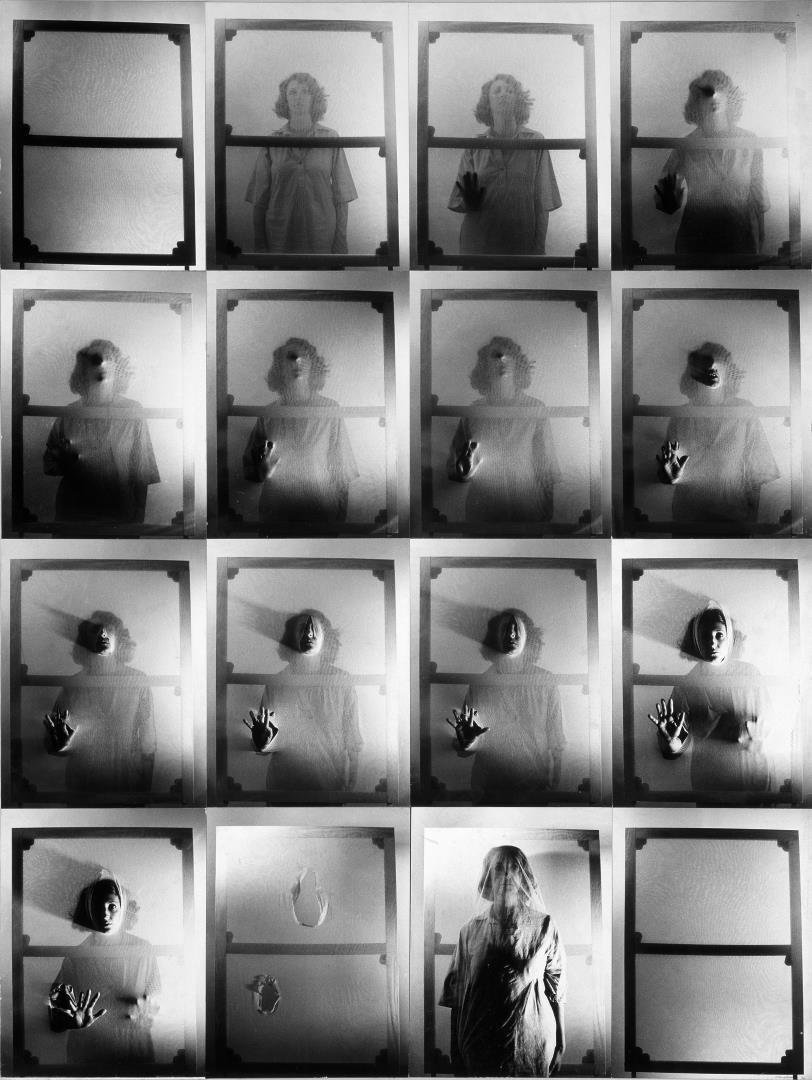
Tela Habitada, Inv. 80FP381

Torso grande sentado, 1977 / Inv. 81E486

Auto-Retrato, 1959 / Inv. 80P174

Trás-os-Montes, 1964 / Inv. 67P146

Odalisque d' Après Ingres, Inv. 67P291

Título desconhecido, Inv. DP838

Sem título, Inv. DP653

Femme au Repos, Inv. EE8

Love Wall, Inv. PE128

Femme Nue Lisant, Inv. PE113

Pub, 1964 / Inv. 64P453

Família, Inv. 65P277
Praça de Camões, 1954 / Inv. 62P75
Canção popular a Russa e o Figaro, Inv. 77P18
Dona Leonor Teles "Flor da Altura", 1966 / Inv. 67P293
Antítese da calma, c.1940 / Inv. 80P121
s/título, Inv. DP517
La Femme au Serpent, c. 1923 / Inv. 81E883
Box, Inv. EE15
Renaissance Head, Inv. PE216
Tela Habitada, Inv. 80FP381
Torso grande sentado, 1977 / Inv. 81E486
Auto-Retrato, 1959 / Inv. 80P174
Trás-os-Montes, 1964 / Inv. 67P146
Odalisque d' Après Ingres, Inv. 67P291
Título desconhecido, Inv. DP838
Sem título, Inv. DP653
Femme au Repos, Inv. EE8
Love Wall, Inv. PE128
Femme Nue Lisant, Inv. PE113
Pub, 1964 / Inv. 64P453
Família, Inv. 65P277