
The Scientific Acceleration Programme embarks on a new phase in Cape Verde
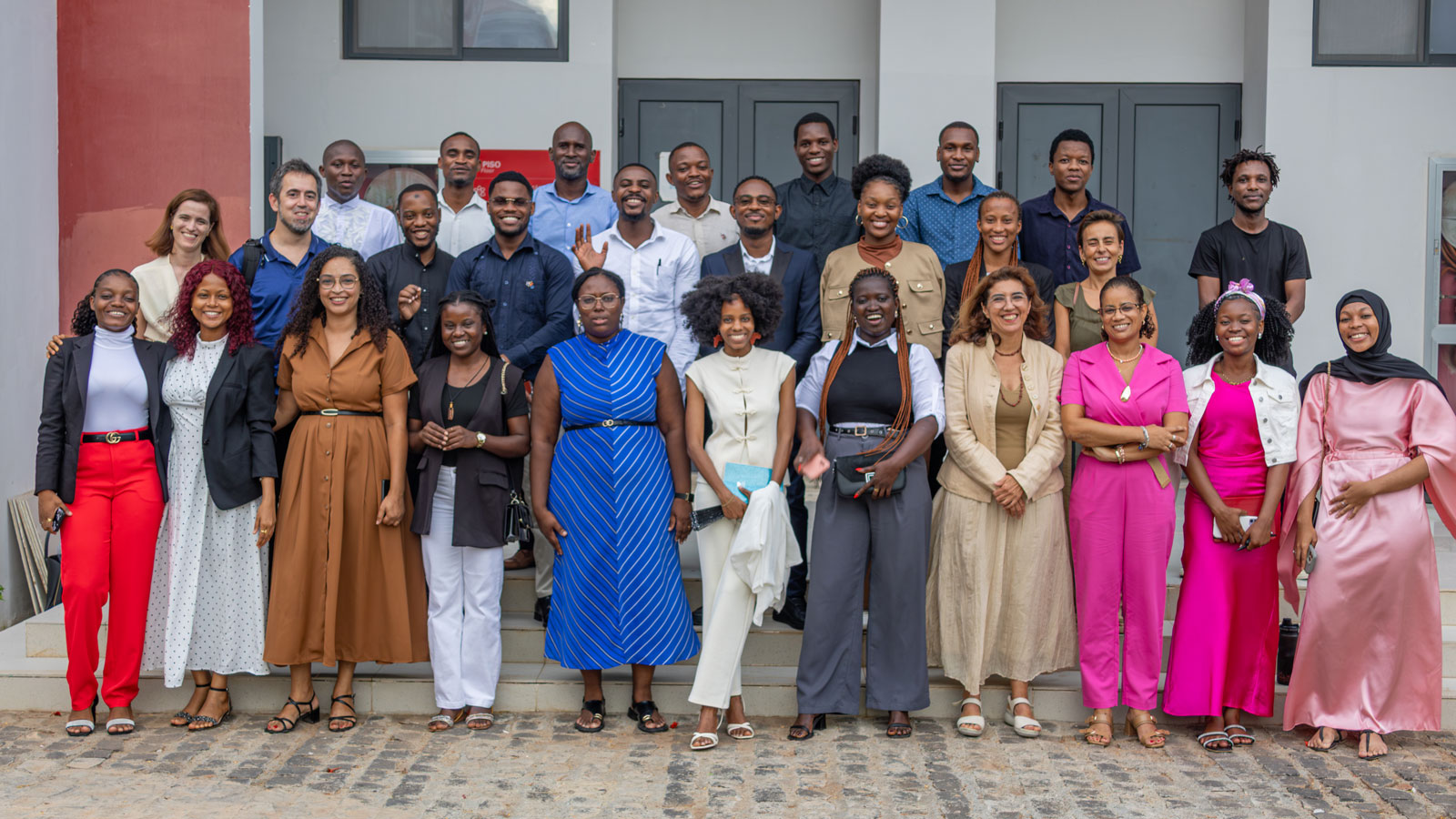
In the now completed phase, the 20 PALOPs graduates received intensive training in core areas of the Health and Life Sciences. Launched on February, the Scientific Acceleration Programme started out with specialist training in Biomedicine Scientific Research at the University of Cape Verde, spanning the fields of biology, chemistry, physics, mathematics, bioinformatics, public health and infectious diseases, coupled with English classes. This training programme counted on the participation of over 40 members of staff from the host university, the Faculty of Medicine of the University of Lisbon and GIMM – the Gulbenkian Institute of Molecular Medicine, specialists in the different scientific fields.
Throughout six months, the students also took part in “Scientific Morabezas” – webinar debates with figures specialising in areas across the environment, literature, journalism, human rights and citizenship that established space for dialogue and sharing different ways of understanding the world. The philosopher Viriato Soromenho Marques, the writer Mia Couto, the science publisher Teresa Firmino, the activist Bubacar Turé and the diplomat Patrícia Portela de Souza were among the guest speakers.
Manuel César, a graduate in Clinical Analysis and Public Health at the Agostinho Neto University in Angola, is one of the 20 Programme students and described it as “challenging and enriching” not only due to its 19 curricular units, with which he had had no contact during his undergraduate degree, but also due to the relationships he built up with his Angolan colleagues and the projects they hope to implement in the future. Manuel César confirmed his desire to work in the field of infectious diseases “given their weighting in the Angolan national health service and as the leading cause of death in the country”, stating how the Programme was only “the first step in my career”.
Furthermore, Bandje Baldé, a general practitioner in Guinea Bissau and another of the students, highlighted the methodologies, the laboratory practices, collaboration and the teamworking “essential to whoever is engaged in research”. Still undecided whether to advance as a paediatrics specialist or follow a career in research, Bandje Baldé is certain that, just like her Angolan colleague, she wants to continue working with infectious diseases.
With the first stage over, the students now embark on a six-month internship in benchmark institutions in Portugal where they gain the opportunity to join teams of excellence and acquire practical experience while consolidating their skills and competences.
The Scientific Acceleration Programme for the PALOPs is a Calouste Gulbenkian Foundation and GIMM – the Gulbenkian Institute of Molecular Medicine – Foundation initiative in partnership with the Faculty of Medicine of the University of Lisbon and the University of Cape Verde. The Programme seeks to contribute towards strengthening scientific and research capacities across the PALOPs through providing opportunities for young talents to be able to respond to the health and development challenges of their countries through science and innovation.