
Drawing in the Museum
Gulbenkian Collection. Great Works
Event Slider
Date
- 15:00 / Cancelled 15:00 / Sold out 15:00 – 17:00
- 15:00 / Cancelled 15:00 / Sold out 15:00 – 17:00
- 15:00 / Cancelled 15:00 / Sold out 15:00 – 17:00
- 15:00 / Cancelled 15:00 / Sold out 15:00 – 17:00
- 15:00 / Cancelled 15:00 / Sold out 15:00 – 17:00
- 15:00 / Cancelled 15:00 / Sold out 15:00 – 17:00
Location
Main Gallery Calouste Gulbenkian Museum
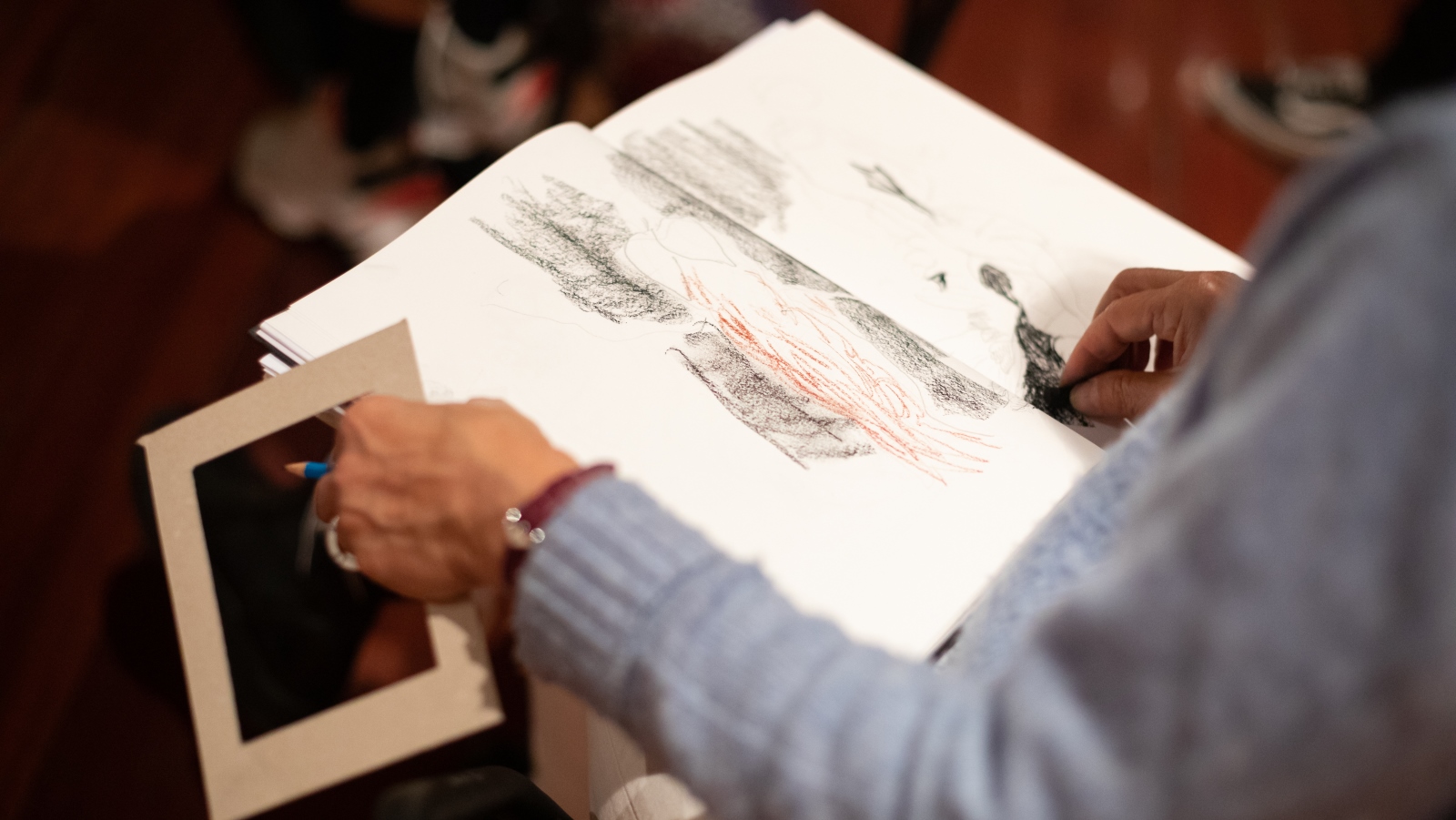
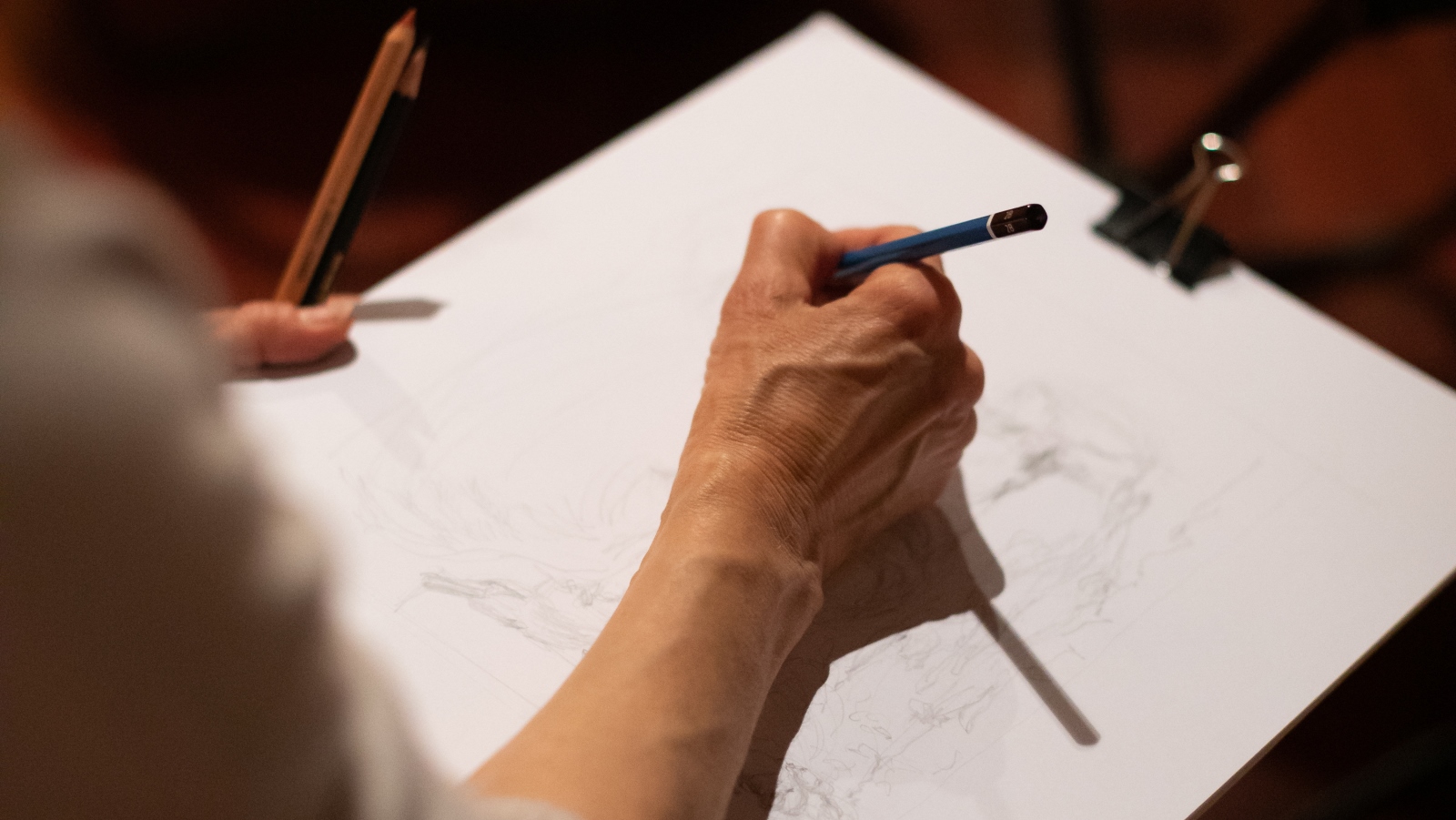
The proposal of the drawing workshops led by artist Catarina Dias is to explore essential questions to the act of drawing.
Each session will dwell on a different topic, ranging from research carried out by artists throughout their lives, to central themes in the history of art, or specific features of the work under analysis. These themes will work as inspiration for engaging in drawing and for understanding the works of art displayed at the Calouste Gulbenkian Museum.
From April onwards, these sessions will focus on the temporary exhibition Gulbenkian Collection. Great Works. This exhibition establishes unprecedented connections between the works of art in Mr Calouste Gulbenkian’s collection, providing new opportunities to explore different techniques, themes, and drawing exercises.
Programme
Transparencies
Starting by observing the painting Soap Bubbles, by Édouard Manet, we will engage in a set of exercises that will allow us to work on the ideas of transparency and temporality.
Painting transparencies has always been a fascinating challenge for any artist, while capturing the ephemerality of time and the transience of things was a central concern for Manet and for Impressionists in general.
After visiting the exhibition, the drawing exercises will be performed in Room 3.
Intimate Portraits
In this session, we will work on portraits and self-portraits. In the temporary exhibition Gulbenkian Collection: Great Works, we find great examples of this type of paintings, which we will use as a starting point for drawing our own self-portrait. Where do I start? What ideas do I want to convey about myself? These are some of the questions we will face in these intimate exercises.
After visiting the exhibition, the drawing exercises will be performed in Room 3.
Reflections
Representing glossy surfaces is a big challenge, and that is precisely our goal for this session! Let us observe the reflections of a cloche, a dish cover from the Penthièvre-Orléans service, sculptured entirely in silver and decorated with maritime motifs. While designing its various elements, we will explore different graphic solutions to represent shine and reflections.
After visiting the exhibition, the drawing exercises will be performed in Room 3.
The Atmosphere of a First Impression
In this session, after analysing several Impressionist paintings on display in the Gulbenkian Collection: Great Works exhibition, we will engage in drawing in the Gulbenkian Garden, exploring the concepts of light and spatial perception. Rather than just describing the place, we will seek to capture its atmosphere and to convey the first 'impression' of something through watercolours, graphite, and graphite stick.
After visiting the exhibition, the drawing exercises will be performed outside, in the Garden.
The Exuberance of Flowers
In this session, we will work from an exuberant silk fragment by Philippe de La Salle (1723-1803), one of the great names of his time, if not the best silk artist in Lyon — a city known as one of the most important silk production centres between the 15th and 19th centuries. A surprising session, dedicated to composition, textures and colour in silk objects.
After visiting the exhibition, the drawing exercises will be performed in Room 3.
Synthesis and Contemplation
One of the most fascinating sections of the Gulbenkian Collection: Great Works exhibition brings together works by artist René Lalique and Japanese works from the 18th and 19th centuries, such as engravings and lacquer objects. Attention to detail and delicate touch in representing nature are some of the elements that connect these works. This way of representing nature will be our inspiration for a drawing session in the garden, where we will explore the use of Indian ink and discover some of the techniques associated with this expressive material.
After visiting the exhibition, the drawing exercises will be performed outside, in the Garden.
Landscapes in a Landscape
We will begin this session at the Gulbenkian Collection: Great Works exhibition, where we will observe two paintings of the gardens of the Palace of Versailles made by French painter Hubert Robert, around 1775. These are landscape paintings that include human figures, as well as natural, sculptural and architectural items. Next, we will go to the Gulbenkian Garden, where we will engage in several drawing exercises to help us understand how to highlight the presence of different elements when drawing a landscape.
After visiting the exhibition, the drawing exercises will be performed outside, in the Garden.
Credits
Concept and direction
Catarina Dias