Art and culture in dementia
Training for professionals
Event Slider
Date
- 10:00 / Cancelled 10:00 / Sold out 10:00 – 17:30
Location
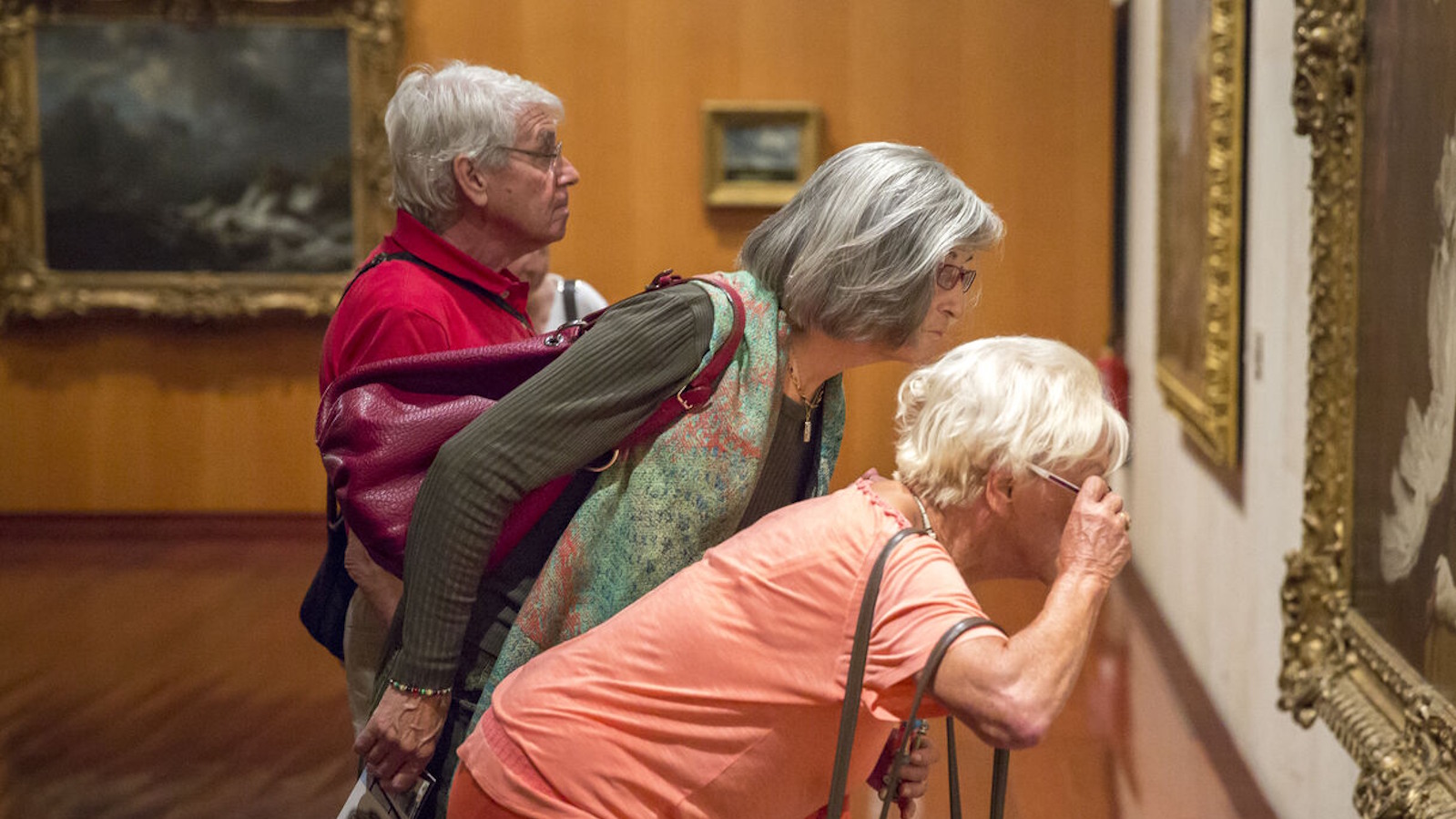
Foyer Room (Level 1) Calouste Gulbenkian FoundationWhat role can art and culture play in the lives of people with dementia? And how can they contribute to wellbeing, expression, and dignity – both for those living with the condition and for those who accompany them, in different contexts?
Through practical examples, case studies, and collaborative exercises, we will explore cultural and artistic practices that engage people with dementia in active and meaningful ways – and reflect together on how to integrate these experiences in different contexts: museums, day centres, institutions, or informal initiatives. An opportunity to reflect on and build cultural, social, and healthcare institutions as spaces of connection, presence, and shared creation.
Training certified by Alzheimer Portugal
Biographies
-
Diana Pereira
Degree in Art History (FCSH-UNL) and a master’s degree in Museum Studies (UEA). She has worked in the Cultural Mediation Department of the Calouste Gulbenkian Museum (2013) and, since 2016, has been responsible for implementing the adults’ programming and participatory projects, such as “Entre Vizinhos”, “O Poder da Palavra” and initiatives for people with dementia.
-
Filipa Aniceto
Clinical psychologist with a master’s degree in Clinical Psychology and a postgraduate degree in Neuropsychology and Artistic Practices and Social Inclusion. She works in the fields of mental health, art and community. She coordinates the project Marcar o Lugar – Encontros no Museu (Marking the Place – Encounters at the Museum), in partnership with Alzheimer Portugal and national museums, and collaborates with Manicómio on mental health and human rights projects.
-
Ivo Meco
Biology and Geology teacher, author of the books Jardins de Lisboa: Histórias de Espaços, Plantas e Pessoas and Das Plantas num Livro, guide for visits to gardens and green spaces, and mediator in the Educational Program of the Gulbenkian Garden.
-
Maria Vânia da Silva Nunes
PhD in Biomedical Sciences, a Master’s degree in Neuroscience and a degree in Psychology and Educational Sciences (University of Lisbon). She is an associate professor at the Portuguese Catholic University, where she coordinates the Master’s degree in Cognitive and Behavioural Neuroscience. She researches and supervises work on cognitive stimulation, ageing and dementia; was the national representative for the Red Cross’s Seniors and Dependents area and is a specialist in Neuropsychology and Psychogerontology.
-
Miguel Pereira
Choreographer, performer and teacher, trained at National Conservatory Dance School and Higher Dance School. A scholarship holder in Paris and New York, he has worked with Francisco Camacho, Vera Mantero, Jorge Silva Melo and Jérôme Bel. With ‘Antonio Miguel’ received José Ribeiro da Fonte Revelation Award. In 2022, he premiered “Miquelina e Miguel”, about memory and dementia, which was distinguished by Expresso. Is an associate artist with O Rumo do Fumo since 2000.
-
Susana Quaresma
Multidisciplinary artist focused on the development and emotional well-being of children and seniors through the arts. With training in architecture, singing, theatre, and creative dance, she has been collaborating for over a decade with the Gulbenkian Foundation, schools, nursing homes, and day centres. She is the artistic director of Corpo Sonoro – Criação Cultural, where she develops theatre, music and movement projects with senior actors and choirs in Torres Vedras.
-
Virgínia Gomes
Senior technician at Machado de Castro National Museum and, since 1993, has been responsible for the Painting, Drawing and Engraving collections. With a degree in History (ULisboa), a Master’s in Special Education (IPLeiria), she specialised in augmentative communication with people with dementia. She coordinates EU no musEU project since 2011, which has been referenced by social and cultural organisations in Portugal and at EU, which is replicated in Viseu since 2018.
Programme
10:00 / Opening
10:20 / The Role of the Arts in Dementia: Clinical Evidence and Neuroscientific Foundations
10:40 / Art Is What Remains When Everything Else Is Gone
11:30 / Prescribing Culture: Cultural Programs for Dementia in National and International Contexts
11:50 / Presentation of the Museums for Inclusion in Dementia Network and the Good Practice Guide for Inclusive Museums in Dementia
12:15 / Testimonials from participants in MID Network programs
12:30 / Conversation
14:30 / Opening
14:40 / The Encounter Between Private and Public Space
15:45 / Singing Art
16:30 / The Gulbenkian Garden and the Plants of Our Childhood
Credits
Concept and direction
Alzheimer Portugal