
Support for scientific projects
Support for scientific research projects with disruptive and innovative potential that can contribute to societal progress.
Contributing to the enhancement of the scientific system
Since its inception, the Calouste Gulbenkian Foundation has upheld its commitment to promoting scientific activity, viewing it as a vital means of achieving its mission to enhance people’s quality of life.
In the mid-20th century, when Portugal had few organizations dedicated solely to research, the Foundation facilitated the establishment of independent institutions, particularly the Instituto Gulbenkian de Ciência (IGC).
With Portugal’s entry into the European Union and its increasing openness to the world during the first quarter of the 21st century, there was a significant rise in the number of PhDs and professionals dedicated to research, along with a sustained growth in national scientific production and established research centres.
This positive evolution of the scientific system led the Foundation to make the activities developed at the Instituto Gulbenkian de Ciência autonomous, incorporating this unit into a new institution – the Gulbenkian Institute for Molecular Medicine (GIMM). Once this process is complete, a new cycle of intervention in the sector begins, characterized by the transition from a model of direct action in science through the IGC to a model of grant-making.
In the long term, the Foundation aims to sustain its contribution to the development of the national scientific system, aligning with its global strategic priorities while taking into account Portugal’s needs and realities.
Current Initiatives
Support for scientific research projects with disruptive and innovative potential that can contribute to societal progress.
An independent institute that welcomes international fellows in an unconstrained intellectual environment.
On October 1, 2024, the Instituto Gulbenkian de Ciência and the Institute of Molecular Medicine merged to form the Gulbenkian Institute of Molecular Medicine (GIMM).
1961-2024
O Instituto Gulbenkian de Ciência (IGC) began as the Gulbenkian Scientific Research Institute in 1961, resulting from the merger of several research centers established by the Foundation during its first decade of work.
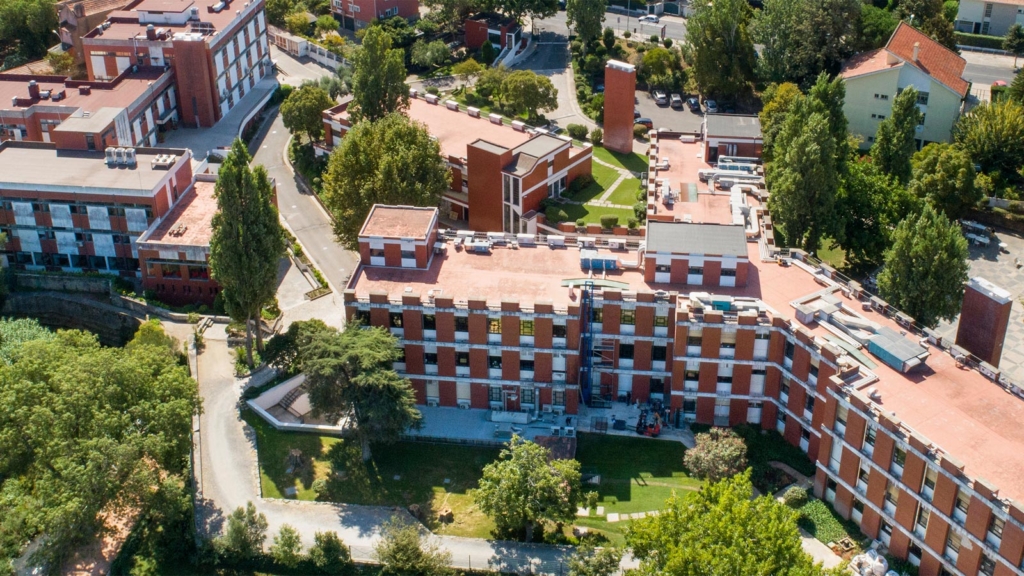
In 1967, it was permanently located in Oeiras, in a building constructed from the ground up next to the Palácio do Marquês de Pombal. From 1985 onwards, it was renamed Instituto Gulbenkian de Ciência (IGC) and became an institution solely dedicated to research and postgraduate training in Biology and Life Sciences.
Over time, it established itself as an incubator for leaders in biomedical research, aiming to welcome and support future scientific leaders – doctoral students, post-doctoral researchers, and group coordinators – in an environment of scientific cooperation, intellectual autonomy, and institutional responsibility, with access to state-of-the-art equipment and technological platforms.
On 1 October 2024, the IGC merged with the Institute of Molecular Medicine (iMM) to form a new institution: the Gulbenkian Institute of Molecular Medicine (GIMM).