
Support for cyclone victims in Cabo Delgado
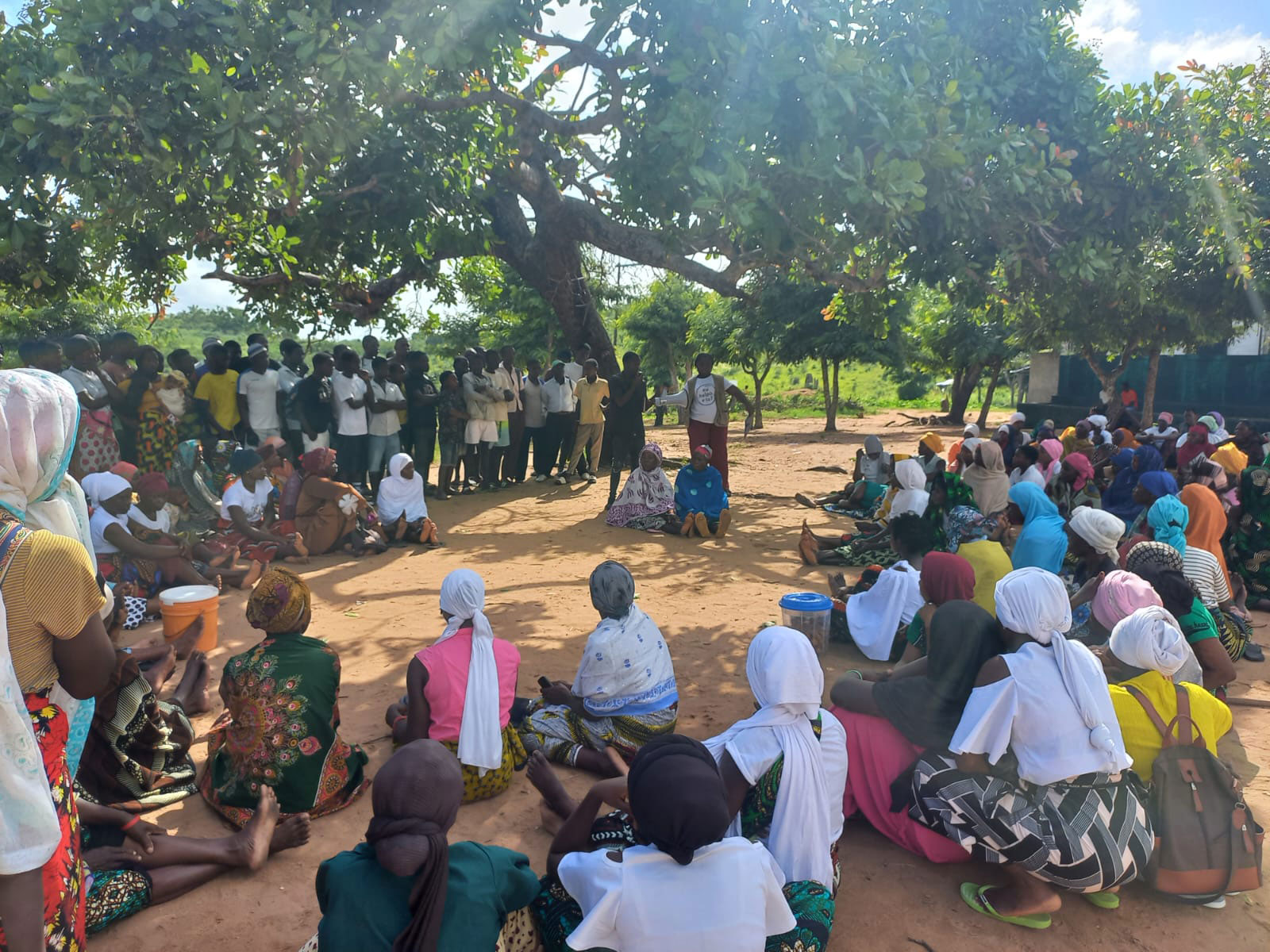
The project, awarded funding of 60,000 euros, seeks to support a thousand households impacted by the cyclone in Impire, in the district of Metuge, in the Mozambican province of Cabo Delgado. A monetary sum is transferred to each family in order to meet some of the costs of rebuilding their homes and other basic need goods. The support is awarded to mothers so as to enable children and youths to return to school and thereby reducing the risks of dropping out.
In addition to money, mobile phones will be distributed with an application that makes this monetary sum available. These devices may also serve as a study tool given that many students have adopted this means to resolve questions and doubts about the contents learned in schools, whether through searching the Internet or watching videos on Youtube.
Impire is a town located on a plateau around 50 kilometres from the city of Pemba, where the school buildings and homes were hit by the cyclone. The school community is made up of two schools that currently provide primary to high school graduation classes for 2,848 students taught by 39 teachers.
This project is implemented by the NGDO Helpo that has worked with the community in Impire since 2009 and has undertaken various projects in the education field, in collaboration with the Cabo Delgado Provincial Directorate of Education and in close proximity to the population of this community through their community agents.
The Cabo Delgado province has been the scenario of a violent armed conflict that, over the last seven years, has forced the displacement of over half a million people, leaving them particularly exposed to natural disasters such as cyclone Chido. This cyclone caused 120 deaths and 868 injuries out of the total of 687,630 persons impacted in the provinces of Cabo Delgado, Niassa and Nampula, in the north, and Tete and Sofala, in the centre, including the total destruction of 118,605 homes and badly damaging 36,927 others with damage also caused to 52 hospital units and 250 schools.