
Museu Diocesano de Santarém wins Vilalva Award 2014
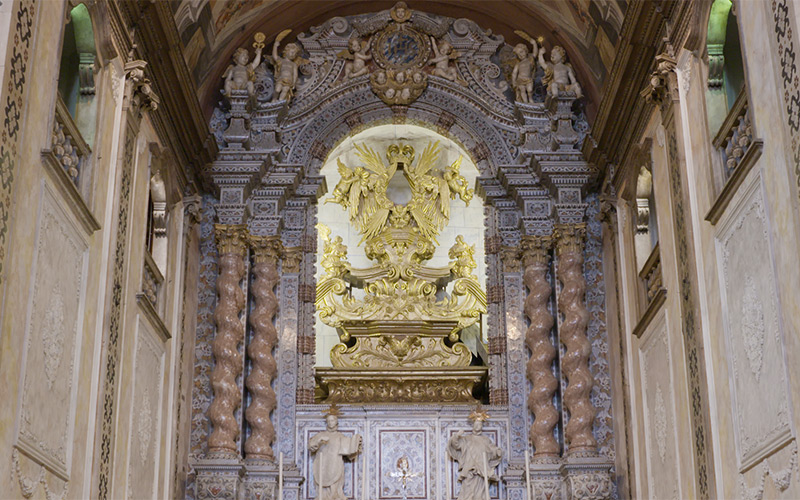
The project to create a Museum of Sacred Art in the Santarém Cathedral complex won the eighth edition of the Vasco Vilalva Award. Worth €50,000, this award, presented annually by the Gulbenkian Foundation, recognised the importance of this new museum for the cultural revitalisation of the region, as well as the restoration and conservation work carried out on the cathedral as part of this project.
No results were found for your criteria.
The jury, which included Dalila Rodrigues, António Lamas, José Pedro Martins Barata, José Sarmento de Matos, and Rui Esgaio, was unanimous in its decision, highlighting the “importance and scope of the restoration work” and the “rescue of a collection of religious artworks from imminent loss”, which are now part of the museum’s collection. The jury recognised the ‘criteria and methodologies of the interventions’ and the quality of the technical and artistic teams involved, further highlighting “the example and stimulus” that this action may represent for other dioceses.
The director of the Diocesan Museum, Father Joaquim Ganhão, expressed his joy with the award, which he accepted with a “deep sense of responsibility”, expressing his hope that the “open doors” of this museum may serve as “a means of inspiration and a source of hope for the appreciation of Portuguese cultural patrimony”. He also highlighted “the professional merit of the companies involved and their technicians, whose quality and experience dictated the success of all the interventions”.
The award-winning project was coordinated by architect Pedro Resende Leão and is part of the Cathedral Route, an ambitious initiative involving the Diocese of Santarém, the Directorate-General for Cultural Patrimony, with the collaboration of the Municipality of Santarém. The works were financed by the National Strategic Reference Framework (QREN) through the Alentejo Operational Programme (Inalentejo).
The new museum has three rooms for permanent and temporary exhibitions, as well as a reserve room. The works of art that make up its collection are the result of a mapping of historical and artistic patrimony that has been carried out since 2006 by the Diocesan Commission for the Cultural Patrimony of the Church, which has brought to light countless pieces of religious art from the 13th century to the present day. A total of 220 works of painting, sculpture, goldsmithing, carving, tile work, liturgical furniture, textiles, books and documents on parchment and paper were identified, coming from the Old Fund of the Cathedral and Seminary of Santarém, as well as from numerous parishes in the diocese of Santarém. These works were scattered throughout the territory along the banks of the Tagus River, from Vila Nova da Barquinha to Salvaterra de Magos, many in poor condition, unappreciated and no longer serving their original purpose.
The conservation of the Museum is the responsibility of Eva Neves, a technician who has been involved in the project since its creation.
Honourable mention
The jury also decided to award an honourable mention to the restoration of Cinema Ideal, a private initiative involving Midas Filmes and Casa da Imprensa, with an architectural design by José Neves. Established in 1904 in the heart of Chiado, Cinema Ideal was Lisbon’s first cinema. From the 1970s onwards, it gradually fell into disrepair and began to show exclusively pornographic films (Cinema Paraíso). It re-opened in August 2014. The jury emphasised the importance of this project for the history of cinema in Portugal and for Lisbon’s urban life today.