
Cape Verde strengthens oncological research with a digital platform
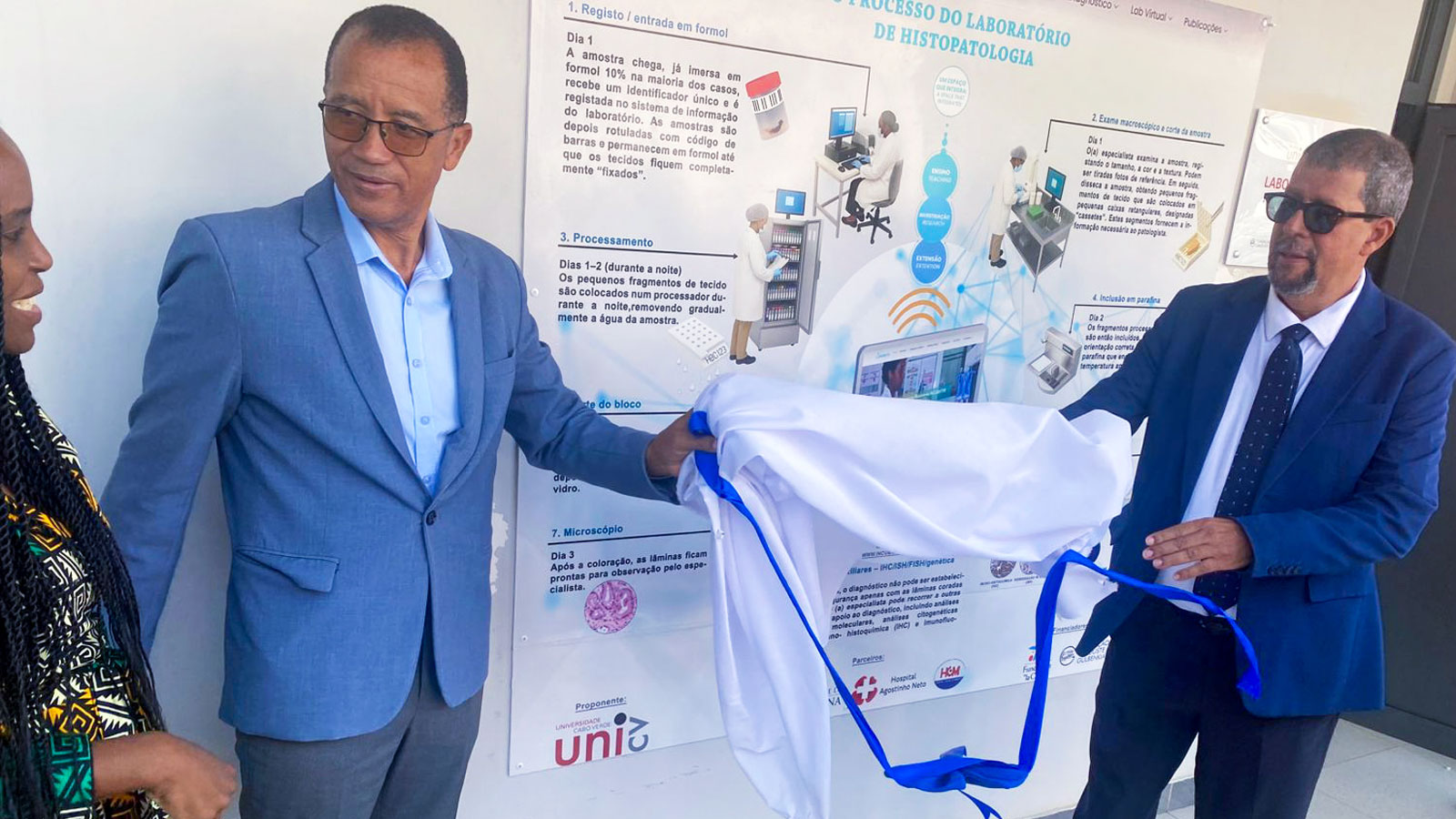
The INCUBATOR platform brings together scientific and medical data as well as the most relevant guidelines for prostate diseases connected with the appearance of cancer for the Portuguese language academic, medical and scientific communities, thus serving as a support tool for preventing and diagnosing this cancer. The platform integrates the virtual histopathology laboratory that will also provide means of support for training histopathologic technicians through post-graduate and master’s degree programs. This laboratory includes examples of different clinical cases, with steps and instructions to back up clinical decisions.
With support from the Gulbenkian and “la Caixa” foundations, this project emerged in the wake of founding the first histopathology laboratory in Cape Verde in 2023; thus enabling the processing, analysing and support for histopathological diagnoses, fundamental both to biomedical research and to strengthening the health services in this country.
Prostate cancer is one of the leading causes of cancer related deaths among males in Cape Verde, where there is a lack of histopathologists and with only late diagnosis techniques available. According to the project’s lead researcher, Neidy Rodrigues, “the literature tells us that there are risk factors for African descendants, a population group that is more likely to develop prostate cancer than European or Asian groups.” This is an area this researcher wishes to study in the future. Another of the project involves launching a bilingual version of the INCUBATOR platform so as to reach out to other African countries.
The INCUBATOR stems from a tender held in 2021 by the Gulbenkian and “la Caixa” foundations in support of health research projects at PALOP scientific institutions. Promoted by the University of Cape Verde, in partnership with the Eduardo Mondlane University – Faculty of Medicine, the Agostinho Neto University Hospital and the Central Hospital of Maputo, with financing from the aforementioned foundations. The project holds strategic importance to the development of histopathological infrastructures and the advanced training of researchers with a priority focus on prostate cancer.