
“Let us make no mistake: the climate crisis is also a crisis of culture, and thus of the imagination.”
Amitav Ghosh, ‘The Great Derangement’
This is the news page.
The Calouste Gulbenkian Foundation has a decades-long history of championing arts organisations that drive positive social change in collaboration with their communities. Since 2020, we have also been supporting organisations that create opportunities for more people to have a say in climate action. Last year our teams working on socially engaged arts and citizen engagement on climate began to explore work at the place where arts, community participation, and climate action meet: Arts X Participation X Climate Action.
Our research found that there is a lot of place-based creative climate action already happening – often under the radar and caught in the gap between ‘arts’ and ‘environment’ funding priorities. It has also highlighted the variety of ways that arts organisations are responding creatively to climate change: igniting collective imaginations about green futures; enabling emotional connections to global and local issues; modelling truly sustainable practice and many more.
We have been particularly excited to see the way some arts organisations are engaging deeply with communities about what climate change and climate justice means for them and their local area. This goes beyond artistic programming on environmental themes. It involves creating vibrant spaces for residents to come together, identify collective priorities, and collaborate with decision-makers to deliver meaningful change.
We believe this kind of creative community engagement has huge potential for scaling public engagement on climate change – complementing more formal ways to give the public a say.
In 2021, Scotland’s ‘Net Zero Nation’ public engagement on climate strategy highlighted the power of the arts and set out to maximise the sector’s potential. In 2025, the UK Government will launch a national strategy for public participation on climate, and we think the arts sector can help put the wind in its sails.
The arts sector is engaging audiences on climate change, but audiences want more.
Artists have always been at the vanguard of social progress, and it’s no different with climate change. The engagement of arts organisations with climate change has increased in tandem with public appetite for climate action. All of the UK Arts Councils’ funding strategies now cite environmental action as a priority, accelerating the increase of creative climate engagement programmes. Julie’s Bicycle’s latest annual report on England’s publicly funded arts organisations found that 71% had produced work exploring environmental themes within the last year.
When it comes to UK arts audiences and their preferences, Indigo Ltd’s 2024 Act Green survey found that 72% think cultural organisations have a responsibility to influence society about the climate emergency, yet only 16% think organisations are placing great importance on tackling the climate crisis.
Many arts organisations work with communities outside the ‘climate bubble’.
In many places, people and communities are underserved by arts organisations, and many people are rarely involved in creative activities. But through initiatives like the UK Branch’s The Award for Civic Arts Organisations we’ve seen countless examples of arts organisations who have real, deep and meaningful ties with their communities of place and interest.
Another good example comes from Culture Declares Emergency, which CGF began funding back in 2019, is the Hub in Birmingham and West Midlands. This has been using arts-based approaches to engage with South Asian and Pakistani heritage groups to foster climate resilience in partnership with other community partners and the local authority.
Many arts professionals are skilled facilitators of climate conversations.
Artists and arts organisations are often expert at bringing people together, engaging with complex and competing ideas, activating emotions, and navigating cultural values. These are important skills that can help shape how society responds and adapts to climate impacts.
Culture for Climate Scotland, led by former theatre director Ben Twist, has long-recognised the common overlap of skills required to intervene in complex social systems and work in the arts. Inspired by the artist Frances Whitehead, Culture for Climate Scotland has developed a specific process to embed artists in non-arts organisations to address key societal issues. Approaches in the Embedded Artists’ toolkit range from challenging existing paradigms that limit adaptation to involving new stakeholders and audiences in responding to climate change.
Arts practices can get people talking about transformative change and systemic injustice.
Many public authorities, like local councils, have commissioned work to involve their residents in deliberative discussions about how to respond to climate change in recent years. But the status quo assumptions of the commissioning organisation can constrain discussions and inadvertently discourage systemic thinking and transformative ideas.
Creative approaches, on the other hand, seem to extend the horizon of possibility. Participants in a creative workshop are perhaps more likely to contemplate big questions about purpose, meaning and justice than they would in a more formal deliberation setting. And this effect applies both to resident participants and the organisers. A quote about the ‘Artists of Change’ who worked with Lewisham Council’s climate team to engage with residents and shape a community-led Climate Manifesto makes a similar point:
“The work I do is ultimately about big existential questions of our time – it’s about how we live, equality and justice. However, my day to day work in the council didn’t always reflect that. Artists of Change bridged that gap in a really meaningful way.”
Martin O’Brien, Climate Resilience Manager at Lewisham Council
One of the richest learning reports we found is from Culture for Climate Scotland’s work with communities in the Outer Hebrides on how best to manage Marine Protected Areas. This work took place as part of an EU-funded project (SEASOH) whose team wanted an inspiring, different and accessible way to work with Outer Hebrides communities.
Culture for Climate Scotland (formerly Creative Carbon Scotland) hosted a series of creative engagement events with communities including post film-screening conversation spaces, printing workshops using found objects from the shoreline, and sea swims. In one workshop, participants made origami paper boats on which they anonymously wrote their ‘hopes and fears’ about marine protection to share with project practitioners.
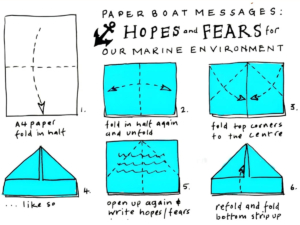
Paper boat messages: hopes and fears for our marine environment. Created for Seas of the Outer Hebrides Winter Workshops, 2020. Image credit: Kirsty O’Connor.
Alongside these activities, Culture for Climate Scotland evaluated the role of creative practice in a public engagement context. The learning report details how participants found the creative workshops refreshing, fun and made the issues more personal. The SEASOH project team believed that the involvement of artists aided the building of trust and ‘raised the benchmark of the collective output’.
The collaboration with artists also catalysed changes to the SEASOH project team’s individual and collective working practice, resulting in different ways of thinking and delivering more inclusive and innovative project outcomes.
This example highlighted how creative methods of public participation have the potential not only to be inclusive and engaging, but also to deliver more effective environmental projects through community contributions to policymaking.
In the next few weeks, the UK Branch will be sharing news about three new grant partnerships for long-term creative climate (and ocean) community engagement work. These new partnerships align with the Foundation’s strategic commitment to Sustainability and Equity. They complement wider other initiatives such as the life-cycle assessment of the Europe Oxalá exhibition, which examined the environmental impact of curatorial practice, and the Foundation’s role as an Active Member of the Gallery Climate Coalition, supporting emissions reduction and sustainable practices across the international arts sector.
Even though this quite specific practice is just one way that the arts sector is engaging with audiences about climate action, we found many more examples than we are in a position to support directly. The UK Branch has aimed to highlight the potential that we see in this kind of work, and has hosted conversations with other funders who could support such work or are already doing so.
Resources
“To see my play being performed by professional actors at a theatre every evening has been extremely gratifying… Completing this project has made me realise that very occasionally in life dreams do materialise. ” John Stanley
This case study looks at Homecomings a festival of new writing by prisoners and ex-prisoners. Find out more by watching the film and reading the project summary below.
The UK Branch of the Calouste Gulbenkian Foundation’s Sharing the Stage initiative ran from 2014-2018. It supported arts projects in which vulnerable and under-served groups of people ‘share the stage’ with professional performers, and projects that are based on partnerships between arts organisations and social partners.
Phase One supported the research and development (R&D) stage of 14 consortia projects. Phase Two ran from 2016-18, supporting 10 consortia projects to full production of the work created through the participatory process.
Established in 2000, Synergy Theatre Project works towards rehabilitation and resettlement with prisoners, ex-prisoners and young people at risk of offending through theatre and related activities whilst placing the wider issues surrounding criminal justice in the public arena.
Synergy created Homecomings, a festival of new plays by prisoners and ex-prisoners about getting out and going home, presented at Theatre503 in London from 21 February to 18 March 2017. Homecomings was the culmination of Synergy’s goal to develop a festival of plays to bring the voices of prisoners and ex-prisoners into the mainstream, to create access to high-quality artistic experience for participants, and for audiences to engage with the criminal justice system.
Glory Whispers by Sonya Hale and The Monkey by John Stanley were scheduled for performance at Theatre503 from 21 February to 13 March 2017 with a joint programme/playtext published by Bloomsbury.
"Taking part in getting my play come to life through the workshops and then from rehearsals to a read-through and finally the production has been an incredible experience from start to finish. To see my play being performed by professional actors at a theatre every evening has been extremely gratifying and is the only thing in my life I feel I can be proud at having achieved. Completing this project has made me realise that very occasionally in life dreams do materialise and for that reason alone it has made me feel good about myself" John Stanley
The Monkey by John Stanley played to capacity houses selling out during its second week at Theatre503, exceeding Box Office targets and achieving a raft of 4 and 5 star reviews.
“An entrancing whirlwind of character” ***** Remote Goat
Unmissable ***** “An unmissable show from an exciting writer that explores drugs and violence with truly compelling results.” James, Shears, Drama, Off West End, Reviews, 12 March 2017
Due to a last-minute change to the cast, Glory Whispers could not be performed in full. However, Synergy was able to honour a number of commitments: opening the festival with a public presentation of Glory Whispers; showcasing the play for friends at other venues and the Sharing the Stage cohort; accommodating invited women ex-prisoners and ex-addicts in recovery, as well as the public and industry professionals; and a pre-show talk on addiction and recovery.
“Glory Whispers ... is a raw, visceral, funny and above all authentic piece of writing about a world which is often either under-represented or mis-represented in the theatre. I would love to see Glory Whispers as a full-scale production and for the voices of the protagonists that Sonya has created to be heard by a wider audience.” Andy Watson, Artistic Director, Geese Theatre
Although the tour to HMP Send for Glory Whispers was cancelled and The Monkey was unsuitable for performance in HMP Thameside due to its content, the first two acts were read and discussed by nine prisoners in the Reading Group, and copies of the playtext distributed and donated to the prison library. Extracts from The Monkey and Glory Whispers were also used on playwriting courses at HMPs Isis and Thameside. Writers on both courses participated in creative writing exercises, engaging with the craft of playwriting and learning how to apply elements to plan, create, shape and develop stories for the stage.
The production of The Monkey and rehearsed readings at Theatre503 reached audiences of over 750, playing to capacity houses in the final week with gross sales of just over £6,000. Readings at HMPs Thameside and Isis played to audiences of over 100 prisoners. Based on advance bookings, Synergy is confident that it would have exceeded targets if Glory Whispers had played its full run at Theatre503 and visited HMP Send.
Professional companies were assembled with casting led by Nadine Rennie, Casting Director for Soho Theatre, attended by professional directors Juliet Knight and Russell Bolam and the two ex-prisoner playwrights. Four ex-prisoners were directly employed in the roles of Assistant Directors and Assistant Stage Managers. Two further ex-prisoner writers attended rehearsals and performances of full-length readings of their plays at Theatre503. The festival productions and readings engaged a total of eight ex-prisoners as direct participants. Thirty serving prisoners at HMPs Isis and Thameside participated in practical playwriting workshops delivered by professional playwrights Michael Bhim and Phil Davies. Eighteen of the prisoner participants went on to have their new plays performed in extract performed by professional actors at the prisons to audiences of over 100 prisoners and prison staff.
"Being in this negative situation, this is one of the most positive things I could have done" Emerson, prisoner writer participant at HMP Isis
Both writers were consulted on show marketing and participated in casting and rehearsal, gaining enormous experience from observing the rehearsal process and seeing their plays performed. They have also progressed in their creative careers through the platform of Homecomings: Sonya was commissioned by Clean Break Theatre Company, participated in an Audio Drama writing workshop at Theatre503, an Arvon Foundation writing for television retreat and has developed two further plays which were produced in 2018, “Dean McBride” won the Heretic Voices open submission competition and was presented at the Arcola Theatre and Sonya was commissioned by The Big House to write “Bullet Tongue” which opened in November 2018. Writer John was developing The Monkey into a screenplay and is in conversation with directors about his next play. He continues to write with support from Synergy's New Writing Manager.
Writer Martin continued to develop new screenplays and had a writing credit on My Name Is Lenny, released in 2017. There Is A Field has secured full funding including an Arts Council Grant and will premiere at Theatre503 in February 2019. John, Martin and Sonya are all currently writing new plays as part of an invitation project which Synergy have been running in partnership with Soho Theatre.
Writer Ed continued to develop The Political History of Smack and Crack with director Cressida Brown and a full production of the play visited the Edinburgh Fringe, Soho Theatre and played to prison audiences in 2018. Stage Manager Karl took up a 12-month paid placement as Studio Assistant at Synergy, as part of its ex-prisoner training and employment programme.
Whilst ex-prisoner writers reported positive changes in terms of self-confidence, self-belief and their own potential, ex-prisoner crew members focused on the benefits of participating in the work of theatre-making, reporting positively on being a part of a successful working team and widening their circle of friends.
"I have found that working with the production team and cast has allowed me to find new friendships and better working relationships." Karl, ex-prisoner and crew member on The Monkey
Artists gained unique access to the criminal justice system and prisoners’ and ex-prisoners’ stories, develop their practice and became advocates for the work:
"Having the opportunity to work with ex-prisoners gave me the knowledge and authenticity I needed to play the character as truthfully as I could" Danielle, cast of The Monkey
The professional cast and crew of The Monkey appreciated the value of working on new writing by ex-prisoners, in some cases it provided a new context for their practice; in others the presence of ex-prisoner writers gave them confidence in delivering the work and for those who were new to participatory work it created confidence in the value of such work.
"Working with fresh voices and dynamic people is inspiring. Seeing lives changed by Synergy is uplifting and what it's all about." Morgan Watkins, cast of The Monkey
"The play I wrote was about losing a child in addiction and it enabled me to heal massively around this - like all that pain and heartache has not gone to waste. Writing this play also enabled me to have greater dialogue with my son and our relationship is really flourishing:" Sonya, ex-prisoner writer of Glory Whispers
Homecomings, and especially The Monkey, raised awareness of the issues around the criminal justice system, challenging perceptions about prisoners and ex-prisoners with their audiences; the production humanised ex-prisoners, as recognised by a reviewer from a peer organisation:
"This portrayal of life after prison is frank and heartwarming in places. It shows the inner conflicts that underlie the want and need to start afresh coupled with the contrasting magnetism of home" Kate Davey, National Criminal Justice Arts Alliance on The Monkey
Audience members were overwhelmingly positive in their responses to all the work in the festival, highlighting both the quality of the work and their enjoyment of the plays, as shown by the word cloud.
Synergy hosted two pre-show panels which were attended by public audiences including ex-prisoners. In addition, there was a post-show discussion and audience Q&A featuring the cast and writer following the performance of The Monkey on 9 March. These were lively, frank discussions which helped audiences to understand the challenges faced by people moving through prison to life on the outside and to illuminate the ways that artistic participation, specifically writing, had helped them to find ways to articulate their feelings, find empowering ways to make use of their past experiences and gain confidence and validation through doing so.
Within the arts sector, Synergy demonstrated that these voices create powerful, compelling drama that is relevant to society at large and of equally high quality as non-participatory performing arts. Theatre503 is a respected venue and platform for first-time writers (to have their work performed), as many progress to theatres such as the Royal Court. Synergy felt the benefit of this partnership, as Theatre503's Artistic director Lisa Spirling announced Homecomings at the press launch of the new season in front of members of the national press and senior theatre industry professionals, and Synergy is now an Associate company. The season was given parity with other professional productions in marketing, Theatre503 introduced Synergy to Chloe Nelkin Associates, who ran a positive Press and PR campaign. The readings of Glory Whispers were attended by industry representatives from The Royal Court Theatre, Clean Break Theatre Company, Soho Theatre and The Yard, which led to discussions about future productions with leading companies.
The main challenge was the unforeseeable loss of a leading professional actor so close to the date of the first performance, and although mitigated through the rehearsed readings and additional plays, it underlines the economics and pitfalls of small-scale touring: understudies are expensive, and three weeks is the minimum rehearsal time required to stage new, full-length plays. Synergy has revisited the recruitment process and put extra reference points into the process to ensure professional commitments are honoured.
The impact of cancelling the visit to HMP Send was minimised because although prison publicity had been distributed, Synergy intervened before the posters went up and the relationship with HMP Send remains positive.
Synergy worked with Theatre503 to manage the change, and good communication on a daily basis strengthened ties with the venue. The success of The Monkey demonstrated Synergy’s ability to deliver a high-quality production with strong reviews and sold out performances.
The legacy of the project included the opportunity for participants to engage with Synergy Studio's programme of free theatre-based training and employment opportunities, with courses available both in the prison and outside alongside work placement opportunities for prisoners on temporary licence and ex-prisoners.
Selina Busby, (Principal Lecturer and Course Leader, MA Applied Theatre), Central School of Speech and Drama has conducted interviews with Sonya Hale and John Stanley which are contributing to a longitudinal study which Central is carrying out into the long-term impacts of Synergy's work. Preliminary findings from the first phase of the study, which includes Homecomings, are summarised as follows:
" ... it is possible to identify three key areas of immediate impact for the individual participants: the development of aspirational thinking and goal building, the enhanced peer support and the development of key or transferable soft skills. The development of self-esteem and confidence is present in all three areas and is a fundamental by-product of participation in the projects." Selina Busby, May 2017
Through the process, Theatre503 has become more open to future arts and criminal justice projects, and advocates of participatory work. The theatre has committed to a long-term relationship with Synergy, which has become an Associate Company, in addition to delivering a second Introductory Playwriting course for ex-prisoners in collaboration with Synergy. Synergy will present There Is A Field at Theatre503 as part of their Spring 2019 season.
Following the success of the playwriting course at HMP Thameside, Synergy has consolidated its position by delivering two further projects, broadening the appeal and reach of their work by offering new opportunities for prisoners to write, perform and participate through spoken word and devising projects. Synergy has also delivered further projects at HMP Isis since Homecomings.
"We would welcome working on another project with Synergy", Neil Barclay, Librarian at HMP Thameside
Writers completing the courses at HMPs Isis and Thameside were encouraged to submit their plays to the 2017 Koestler Awards and invited to participate in the Synergy Studio series of theatre-based training courses for ex-prisoners, as well as playwriting courses for ex-prisoners, scheduled to be hosted by Theatre503 in Autumn 2017.
Bari, then a prisoner at HMP Thameside, won a 2017 Koestler Gold Award for his stage play Purple One and is currently seeking to self-produce his next play The Strip King at the 2019 Brighton Fringe Festival. HMP Isis participant Trey is now in discussions with Synergy for an Assistant Stage Management role. HMP Isis participant Ernest subsequently joined Synergy Studio after release, stage managed Synergy’s young people’s touring production of Blackout and gained his first ever accredited qualifications in acting and stage management.
The festival left a strong positive impression with other arts organisations working within the criminal justice sector including members of staff from the Koestler Trust who attended multiple events.
Synergy successfully partnered with The Koestler Trust to deliver the stage play category for the 2018 Koestler Awards, providing playwriting workshops in six prisons. Outcomes included double the number of entries and performances of the winning plays in extract at HMP Whatton and the Royal Court Theatre. The partnership will continue in 2019.
Read the evaluation report
“It was great working in partnership with another organisation with the wider community. It brought together a group of young people who have since formed fondness and friendship with each other.” Staff member, New Writing North
This case study looks at We, the Crowd. Sage Gateshead worked in the West End of Newcastle to present We, The Crowd, a mass participatory event, bringing non-professional musicians and composers together with theatre and orchestral professionals. Find out more about We, the Crowd by watching the film and reading the project summary below.
The UK Branch of the Calouste Gulbenkian Foundation’s Sharing the Stage initiative ran from 2014-2018. It supported arts projects in which vulnerable and under-served groups of people ‘share the stage’ with professional performers, and projects that are based on partnerships between arts organisations and social partners.
Phase One supported the research and development (R&D) stage of 14 consortia projects. Phase Two ran from 2016-18, supporting 10 consortia projects to full production of the work created through the participatory process.
Sage Gateshead, is a music organisation, a performance venue with three halls, a world-class chamber orchestra (Royal Northern Sinfonia) and an artistic programme with three parts: classical music; a programme of popular and contemporary music; and creative learning programmes for people of all ages, engaging about 17,000 participants each year.
Sage Gateshead has been working in the West End of Newcastle since 2012, delivering immersive orchestral music-making every day with the aims of improving educational attainment, resilience and life chances. Sage Gateshead’s community engagement had increased significantly with these communities, learning a lot about how to support the musical life of people in West Newcastle. Sharing the Stage offered the opportunity to develop this learning and extend it through finding collaborative ways of working and developing long-term partnerships with key organisations in the city, to further benefit local communities.
In the production phase of Sharing the Stage, Sage Gateshead consolidated its R&D experience with We, the Crowd, a full performance in November 2016, collaborating with Royal Northern Sinfonia, Newcastle United Foundation and Unfolding Theatre. The culmination of a nine-month long project explored what music and football mean in people’s lives in the West End of Newcastle.
“Music and football. It’s how we make memories. Like, every day, you just do the same thing, but going to a match, or going to a band, that’s what you remember.” Workshop participant
Within the overall Sharing the Stage programme, Sage Gateshead and its partners wished to achieve the following:
The project, running from January to November 2016 had three phases: project setup (January to June); community consultation (June to October); project delivery and learning (October to November. Each partner had clearly defined roles. Sage Gateshead took the lead, with NUF supporting introduction to NUF groups, including the Kicks group, National Citizen Service group, the NUF coaching team and Health Bus and Newcastle Arts Team supporting Unfolding Theatre by facilitating access to community groups. Unfolding Theatre worked in collaboration with the partners and community groups in the West End of Newcastle and took the production lead.
Through a series of consultation workshops with community groups across the West End of Newcastle, Unfolding Theatre was able to gather the stories, ideas and perspectives of community members engaging with West End Voices, young people at Excelsior Academy, CHAT Trust, children and parents connected with In Harmony Newcastle Gateshead and young people at NUF’s programmes. One of the consultation events was a high-profile Family Fun Day bringing together football and music, with a temporary five-a-side pitch at Sage Gateshead, and coaching all day. The Health Bus also enabled the partners to begin conversations making the link between health and wellbeing and football and music; once again, it was an opportunity for Unfolding Theatre to gather stories and ideas to inform phase 2.
The performance at St James’ Park on 23 November 2016 brought together Royal Northern Sinfonia, Backyard Rhythm Section, Gypsy Lipstick, Hawthorn Primary School, West End Voices, Young Writers City (Excelsior Academy), and the communities of Newcastle’s West End. All the groups starred as crowds at a football match, singing alongside professional musicians. Actors took the roles of stewards telling the stories of real people they had met and talked to about how music and football impacted on their lives.
“Tonight’s performance explores what music and football mean in the lives of people in Newcastle’s West End. It brings together performers aged eight to 85, from diverse musical cultures, backgrounds and with different footballing allegiances. However, in all of the groups, people talked about togetherness. Whether they were playing football or music, people talked about how it forged friendships and brought the community together we hope tonight’s performance celebrates that.” Programme Note, We, the Crowd
“We have learned about how a big organisation can work with a smaller one in an equitable partnership.” Sage Gateshead
Sage Gateshead and the partners developed systems and processes that it shared as part of We, the Crowd, with particular success between Sage Gateshead and Unfolding Theatre, and feel that it had succeeded in developing new inter-organisational methods of working as a result. Another example of inter-organisational cross-fertilisation was the number of professional artists who had worked for Sage Gateshead and progressed to working for Unfolding Theatre, as part of We, the Crowd, which also provides a legacy of employment opportunities for creative practitioners in their hometown.
“There are new possibilities for Unfolding Theatre.” Unfolding Theatre
“I think we’ve established a fantastic base for a long-term relationship - the collaboration certainly gave two slightly different target audiences the chance to work together and try things they perhaps otherwise wouldn’t have.” Newcastle United Foundation
NUF, Sage Gateshead and Unfolding Theatre share the common goal of improving lives through arts, music and sport, as did the other key partners in the project. We, the Crowd provided them with the shared focus of working together to engage communities living in socio-economic disadvantage in West Newcastle. Project partners were identified due to their existing work within communities, recognising their expertise in the long-term nature of their work based within the community as the team were trying to reach. The project setup and consultation periods undoubtedly helped this. The feedback gathered during the project indicates that We, the Crowd did this at many levels:
“The project provided us with an opportunity to expand on the experiences offered by Young Writer’s City. It was great working in partnership with another organisation with the wider community. It brought together a group of young people who have since formed fondness and friendship with each other. And they all in one way or another have benefited from the friendship.” Staff member, New Writing North
“My dad didn’t want me to do things like this; he told me music will get me nowhere. I had to tell him I wanted to stay to do writing, and I think he thought it was something to help my handwriting because I have bad handwriting and he shouts at us about it. So, I just let him think it was that. But then after a while he found out I was song-writing. Then he got interested and was asking to hear it. I did a recording for him of us rehearsing and he couldn’t believe I had written it. He did believe me in the end and I think it made him feel proud. I think when he heard about St James’ Park, then he felt really proud and he started posting things on Facebook. And then I went for the Royal Northern Rock Talent Award and I won that to do some of my own song-writing and he felt proud of us, and he posted that on Facebook.” Participant, Excelsior Academy workshops
“It is something special when given the opportunity to express myself in this accepting, respectful way, helps me to feel part of things.” Participant, West End Voices
“The journey of We, the Crowd, it was their music, their decisions. We’ve noticed a change. They’re much more vocal now.” Senior Youth Worker, CHAT Trust
Through attending the Sharing the Stage learning community events, Sage Gateshead identified the need to develop and learn new ways of co-producing creative learning with people and communities through dialogue about what matters to them. The Family Fun Day, using the Health Bus to initiate conversations, and weekly sessions facilitated by a key/youth worker and a professional artist working collaboratively, were all ways in which Sage Gateshead learned new ways of working with people. The professional artists all have personal connections with West Newcastle, which supported the relationship-building and allow for the development of a script that was based on the boat and conversations with local people, celebrating the benefits of being part of arts and sports activities:
“Music is always there. It keeps me grounded.
It’s a daily meal for me.
Songs can bring you back to places.
When everything is hard, music is easy.”
Evidence from participants’ workshops suggests that there was a positive distance travelled in terms of wellbeing, where participants provided a variety of narratives to demonstrate positive impact of the project on their lives. However, the short-term nature of the project (relatively speaking) precludes assertions about having demonstrated improved “wellbeing”. Participants lives are multifaceted and sometimes complex, and Sage Gateshead was clear about setting the limitations of being able to directly attribute sustainable improved well-being outcomes for a project like We, the Crowd. Nonetheless, the narrative gathered from participants indicates the impacts for individuals:
“I have written a song about my Mam because she has supported me through some really hard times when I was being bullied really badly. When I put pen to paper writing a song in that all the problems out and it took them away. Then it is easier to move forward. And I have actually forgiven them all. Being able to be part of a project like this makes everything more better. When life pulls you down you have to pull yourself back up. And I have actually had a hard time. The song the road is like about that. That we have to pursue our dreams and not give up.” Participant, Excelsior Academy sessions
“It is difficult to say how much this means to me. My wife has health issues (MS) which make it hard interact fully with the community. The choir is one place where she is accepted and can join in, with support. These events help to cement a feeling of inclusion and acceptance.” Participant, West End Voices
“Now I feel differently about school. It’s changed how I feel about school. I used to mess about and now I have stopped messing about.” Participant, Excelsior Academy sessions
Sage Gateshead’s work in West Newcastle is aligned with a place-based approach for supporting children and young people from cradle to career, delivered through multi-partnership collaboration. They embedded this by working with the local Unfolding Theatre, a demonstrable commitment to developing and embedding a place-based approach, appreciated by participants performing at St James’ Park, an iconic venue in Newcastle.
“It was VERY exciting, because St James’ Park is a very, very big place and I don’t usually go there. It was my first time to go there and see it. It was very good.” Participant, Hawthorn Primary School
“The most notable opportunity provided was to perform at St James’ Park. That was both a huge challenge for them and an achievement. And it is a memory they all continue to draw strength and inspiration from.” Co-ordinator, New Writing North
“The Sinfonia were playing, and Excelsior Academy. There was a big choir. And does! It was a privilege to do this.” Participant, Hawthorn Primary School
“Most exhilarating. It was a lot of fun and just fabulous having Royal Northern Sinfonia playing alongside us. They were so friendly.” Participant, West End Voices
Five players from Royal Northern Sinfonia took part in We, the Crowd, which presented opportunities and creative challenges in bringing together professional and nonprofessional artist of the performance. All the participants played some familiar repertoire, and all learned something new:
“Fred’s song was brilliant, and it was really well-written for us because it was a challenge, but it wasn’t too hard. If it had had harmonies, it would be too hard. But because it didn’t it was great.” Professional artist
There is no doubt that bringing together different ways of making and presenting music brought opportunities underlining the effectiveness and benefits of collaborating with new groups and artists:
“For RNS musicians, the culmination of We, the Crowd certainly pushed our players out of their comfort zone in terms of how far they, themselves, had to go towards making the musical elements work. This required a certain amount of flexibility that is not usually required of them. I think there was also a general challenge in terms of marrying the culture and conventions of classical music making the high standard (which is what is required of our players day in, day out) with its fairly rigid ways, and the need for them to take a more relaxed approach to this kind of project, didn’t always run to plan or on schedule.” Classical Music Producer, Sage Gateshead
“The raw energy, I think came from a very well-produced show. It was all on the day, Fred was like, “can you just do that? Can we have this bit? And they (professional musicians) just said, “yeah, that’s fine!” - Scribble, scribble, scribble (action of amending their schools). I was worried it would throw them. But they were beautifully, not just professionally, engaged. Royal Northern Sinfonia is such a resource in the community.” Professional artist
Extensive learning took place throughout the development and delivery of We, the Crowd, which can be clustered into key themes:
The personal: during project reflection workshops, partners identified the personal and professional collections that were critical to the success of the project. Whilst professional connections played a key role in the partnerships, personal connections to West Newcastle were woven throughout; the team believe this to be significant in the building of relationships, establishing the trust of local people and organisations.
Connectors/connections: partners at an individual and organisational level identified the role and importance of connectors, in this case through the artists employed. As well as being connected to the place, they were also connected to the partner organisations, engendering a feeling of togetherness between participants, staff and organisations. Other connectors included Newcastle Arts Team, which was crucial in linking between Sage Gateshead, Unfolding Theatre and the people of West Newcastle and the organisations in their lives.
“We already had connections through previous pieces of work to CHAT Trust and West End Voices. We have connections to Hawthorn Primary School and New Writing North. Our role is one of brokering and making sure that we make the best collections of key individuals and organisations working in the West End. We hold an overview. We saw Sharing the Stage as an opportunity to further develop work with this organisation but also build a relationship with Sage Gateshead.” Newcastle Arts Team
We, the Crowd is part of a broader impact and new direction for Sage Gateshead; trusting Unfolding Theatre with the artistic process increase the potential for Sage Gateshead to change their way of working, including developing equitable partnerships.
“We believe being part of the Sharing the Stage Learning Community has shaped the direction of travel of Sage Gateshead Creative Learning Programme for the next five years.”
Unfolding Theatre produced a show as part of summer activity, one performance was a relaxed performance and Sage Gateshead facilitated a conversation with its partner North East Autism Society who advised on changes needed.
In 2019 Sage Gateshead is planning to work in partnership with Children North East to 'poverty proof' the organisation. This will enable all staff to understand what it means to live in poverty and agree what will change at Sage Gateshead to break down barriers and challenges to participation.
The Director of Creative Learning completed a Systems Change training with Forum for the Future School of Systems Change. A systems change approach is being used within Creative Learning and across the organisation.
Sage Gateshead has continued with the Sharing the Stage Action Learning Group, this has been invaluable in continuing to implement the learning from We, the Crowd and continuing organisational learning.
In 2019, Sage Gateshead is setting up a Youth Forum and Young Programmers group to consult with young people on organisational strategy and artistic programme.
Sage Gateshead recommended that Annie Rigby, Director of Unfolding Theatre, join the Well North Steering group, which steers the Well North arts in health multi partnership programme in a ward in West Newcastle, a ward in East Newcastle and two wards in Gateshead.
RNS has increased playing out in community centres and local schools.
Read the evaluation report
“(Home Away) has given me the confidence to commit to engaging more with hard to reach communities that deserve to have their stories told.” Group Leader
This case study looks at Home Away, a five-day festival and conference of participatory arts – 10 new pieces of theatre and choral work, bringing together communities from Scotland and the rest of the world, launching the National Theatre of Scotland’s 10th Anniversary season. Find out more about Home Away by watching the film and reading the project summary below.
The UK Branch of the Calouste Gulbenkian Foundation’s Sharing the Stage initiative ran from 2014-2018. It supported arts projects in which vulnerable and under-served groups of people ‘share the stage’ with professional performers, and projects that are based on partnerships between arts organisations and social partners.
Phase One supported the research and development (R&D) stage of 14 consortia projects. Phase Two ran from 2016-18, supporting 10 consortia projects to full production of the work created through the participatory process. Read the Sharing the Stage evaluation report here.
Established in 2006, the National Theatre of Scotland (NTS) is Scotland’s national Theatre Without Walls, creating, co-creating and touring work to theatres, village halls, schools and site-specific locations, both at home and internationally.
The second phase of Sharing the Stage focused on the production of Home Away, as part of NTS’s 10th Anniversary year, and formed an integral part of its strategy to develop and enhance participatory arts as part of the mainstream offer from NTS.
The project title and theme Home Away gave the opportunity for five communities in Scotland and five communities from across the world - groups from diverse, multi-cultural, multi-nationality, cross-generational and cross-gender backgrounds - to explore the idea of being at home and being away, being in your comfort zone and out of it.
Within the Sharing the Stage programme, NTS’s main goals were to:
NTS undertook an ambitious programme of creation and curation of 10 productions led by professional artists working in participatory settings, culminating in a world festival of theatre from 8-12 October 2016 at the renowned Tramway venue in Glasgow.
“High quality performances; fantastic experience and great atmosphere.” Audience member
Alongside the performance and workshop programme, a symposium on participatory arts was created and included partnership and contributions from British Council, Scottish Association for Mental Health, Scottish Refugee Council and Creative Scotland.
“This project has been immensely empowering for me as an artist and leader. The opportunity to honour the stories of my community, connect with new people, and bring a project to fruition has filled me with a strong sense of pride, accomplishment, and inspiration.” Group Director
NTS developed collaborative art projects with five communities in Scotland and five communities across the world.
All 10 shows were showcased internationally, and as part of NTS’s 10th anniversary festival and symposium. Over 8,000 people attended or participated in the festival, programme or symposium over the course of five days. The productions, workshops and symposium program focused around “marginalised” communities having a platform to create world-class theatre and share their stories in a “mainstream” context, challenging perceptions of the communities. The groups that took part were identified as follows:
· Transgender | · Gaelic |
· BAME | · Rurally isolated elderly |
· Youth from areas of multiple deprivation | · Slum dwellers from India |
· Favela communities from Rio | · Immigrant settlers from Chicago |
· At risk young men from ghettos in Jamaica | · Aboriginal artists from the Gold Coast, Australia |
‘Home Away proved what you can do with partnerships’, Simon Sharkey, NTS
Key to the overall success of the development and production of Home Away was partnership working: the British Council, Scottish Association for Mental Health, Scottish Refugee Council, Creative Scotland, LGBT Scotland, Glasgow Life and the Calouste Gulbenkian Foundation committed resources, support and money. The quality of the partnerships allowed the group to be ambitious in their creative scope and the level of investment, having sufficient time to create and curate 10 new works with 10 communities. The project set a standard of excellence in national and international collaboration and production through participatory arts, and the NTS now has an international network and a robust model of practice that can be built on in order to achieve its goals in the future.
“At the end of it all, I think the biggest impact has been on our children. This will give them so much confidence about who they are in their place in this country and their relation with the greater world!” Group Directors, Memori
“The process was strongly affirming that participatory arts can successfully create meaningful change. I’m eager to collaborate with international artists and communities to make theatre that is impactful on those in the audience and those participating.” Group Leader
“It was a wonderful show, important and thought-provoking, and excellent acting.” Audience member, Bargad Ki Chhaon Mein
The productions played across the world to critical and audience acclaim with standing ovations and social media reaction as testimony to the standard and impact of the shows and their content. The common themes and threads that ran through a number of the performances showed the links between heritage, tradition and language and how important it is to keep it alive, now, and in the future. Audience responses can be seen here: https://www.nationaltheatrescotland.com/production/home-away/ and on NTS’s online channel: https://www.youtube.com/ntsonline In addition to social media, video and observation, audience feedback (80 individual responses across the Festival) was almost unanimously positive (scoring nine or 10) for the quality of the production, the content, ideas, relevance and whether they would recommend this to others. There were many thoughtful comments which demonstrate that these 10 works told powerful stories and opened up windows into others’ lives:
“It’s a fascinating topic that really brings the idea of ‘home’ into greater clarity – it brings a universal feeling to the heart.” Participant, workshop and Fuaigh Fosgail
“Theatre itself brings the change, wherever it is, bringing different cultures together.” Audience member commenting on entire programme.
“It’s a great idea to bring all the people from all around the world, and share everything: sadness, happiness. I felt very lucky to meet these amazing people! I just loved it. Believe.” Audience member, multiple events
“What made a cancer specialist, several busy executives, doctors, civil servants, students, homemakers, teachers to be rehearsing every night sometimes even up to 2 AM in the morning for the last few months?! I could come up with only one answer: deep down, we are still attached to our “home” and the stories are about a part or time of our life which is integral to our being, in our genes, our identity, our very existence, which just inadvertently guided us to become committed like this. We wanted to tell, and boy, we wanted to tell!” Group Director, Memori
Home Away featured on several radio stations, television reports, media outlets and digital forums. Scotland’s main TV News programmes featured the festival as did BBC Radio Scotland. Several features were run in the national broadsheets and tabloids. A microsite for the project was created and had a very active hit rate.
“The power of theatre to reach across countries and cultures for the common good is evident from the NTS’s Home Away festival.” Joyce McMillan, The Scotsman (magazine)
“This work has placed a real value on people telling their stories and holding the work to a professional standard. I hope this has helped to change some of the stigma that’s existed.” Group Leader
Home Away extended its reach beyond the arts and cultural sectors, with the British Council, Scottish Refugee Council, Scottish Mental Health Week and several other agencies promoting the festival and participating in the symposium. There was praise and expression of the will to raise expectations and continue with the standards of practice that the festival and programme achieved, and this increased profile and aspirations cross-sectorally has continued subsequently. Scotland’s Minister for Culture visited and supported the programme, as did the Vice-Consul for India, whilst the US Embassy supported the Chicago group. This support undoubtedly optimised the profile for Home Away and participatory art, whilst demonstrating to supporters, partners, collaborators, artists and participants that expectations were as high as “mainstream” productions.
Having this high profile resulted in an increased awareness of participatory art, and through the 10 pieces, the lives, stories and creative work of the groups involved.
“To say that I got to be a lead artist on a project with the National Theatre of Scotland is honestly a dream come true! I have admired NTS for years and the Chicago theatre community is well aware of the company’s great work too. There was so much pride from the North-Western Settlement, Adventure Stay Chicago, Old Town School of Folk, and the city of Chicago getting to align their name with NTS and the country of Scotland for this festival.” Group Leader
“Home Away is important… because Scotland is a country with a wide range of communities of people of different cultures representing themselves and their stories together.” Audience member, workshops and performances
Participatory art often creates audiences, from the communities with whom the directors and creators are working: people want to see the result and outcomes of their collaboration and sharing of ideas and experiences. Therefore, Home Away brought new audiences to the Tramway, as well as sharing these new works with audiences in and around Glasgow. Audience statistics show that over 8,000 people attended the performances across the world and at the Festival. Completed surveys indicate that many people saw several of the productions as well as taking part in workshops and events, offering many new cultural experiences and offerings, and that audiences were keen to take part in this Festival of World Theatre.
Alongside the Sharing the Stage funding, NTS, Creative Scotland, British Council, Scottish Mental Health Week and Glasgow Life all invested money in Home Away, in addition to other resources – such as staff time, marketing and promotion – investing in delivery to the highest standards – artistically, creatively, organisationally and meeting the needs of participants and communities.
Initial funding often levers further income, as an initial grant or sponsorship expresses confidence in a project’s viability. Home Away was no exception, as NTS was able to attract two significant private sector sponsors, in turn accessing Arts and Business Scotland funding and support.
Home Away brought the issues affecting the communities who took part in the Festival to several audiences or groups:
“It has brought a wonderful clarity to my aims for artistic practice. It was an inspiring and powerful project that has made me feel more optimistic and hopeful about how work about queer people can be made accessible to a non-queer audience. It has given me the confidence to commit to engaging more with hard to reach communities that deserve to have their stories told.” Group Leader
These issues were communicated in turn to audiences and workshop participants. As shown from some of the feedback gathered, the issues hit hard, and many people commented on the importance of learning about each other:
“You can tell that the whole group really care about the work they do. The joy and enthusiasm: it was great to get an image of what life in Dundee might be like.” Participant, Scottish Dance Theatre workshop
“It’s important that cultures and experiences are shared, to give this diverse population information about the history of each other.” Audience member, Memori
“I chose all the tens [highest score] because I was heavily impacted by the performance and it brought me information I never knew.” Audience member, Memori
“This work would be important anywhere; a bit too close for comfort, very strong.” Audience member, Reprise, The Hidden House, Antes Que Todo Acabe
“Big experiences that are full of adventure often bring people together and that is certainly true for the Chicago group. Two of the community cast members in Reprise had never been out of the country and one had never been on a plane before… this experience has changed their lives and the rest of the team in our own ways. The exposure to other cultures and the warm welcome we all received from Glasgow has left a lasting impression on all of us.” Group Leader
Home Away provided any number of opportunities for the participants, including:
“Taking part brought me close to the young people I worked with, a new group formed specially for the project and it was great to have been able to bond with them through making the show together. It was amazing to see them radiate with joy and excitement at talking and dancing with the people they met through the festival. To hear them talk with great warmth about people they met from Chicago and India, in addition to their peers from Jamaica, was very heart-warming.” Group Leader
Directors and participants identified the opportunity to extend their reach to audiences and other communities, particularly the chance to physically meet and work with others from across the world:
“Home Away has allowed us to develop a project that we feel fulfils our aim to make Gaelic theatre accessible and to connect with other marginalised communities. We hope we can now tour the show to a wider audience.” Fuaigh Arts Collective
Other identified opportunities, which will continue to drive the awareness and aspirations for participatory art included access to:
“This has been a key that has opened more doors for me from simple things, like powerful people responding to my emails who may have ignored me before, to being considered for new work opportunities.” Group Leader
“Most of the artists involved in the project had not worked with the NTS before; by working with them we are hearing from a new and exciting diverse group of creatives” Group Leader
The skills and expertise shared with the project included many examples of good practice from across the world.
“The learning gained from the learning community was invaluable. The wider UK context of the practice was highlighted and allowed us to see our strategies in an international context.” Simon Sharkey, NTS
The NTS learned that maintaining key relationships between itself and each group was important in order to maintain creative conversations, push the boundaries, be a sounding board mental to encourage great art. It learned that keeping groups informed that the context is vital and that it had to support the artists and participants in understanding how their performance would fit with the festival programme and how each group would be paired and marketed as a double bill.
The delegate programme was a new area for NTS, and it learned a lot in terms of programming fitted within the festival. A significant learning is that there is a great demand for the sharing of practice and cooperation in advocacy for participatory arts.
Home Away has enabled NTS to build on a continuing narrative with a number of legacy outcomes.
The programme, festival and symposium were a success and have a legacy in multiple connections between marginalised communities across the world exercising their voice for the good of society. Proof of the legacy lies in the co-productions that have been planned, the request to have the model replicated or repeated on a biennial basis, and the adoption of each other’s techniques, models and approaches to creating art to lobbying for participatory arts practice to be recognised.
Home Away has raised awareness of participatory performing arts among non-participants and across different sectors, for example, the partnership with the Association of Mental Mental Health Scotland is ongoing, and it is supporting a programme with the NTS.
Local authorities and international institutions such as CESC in Rio, The Settlement House in Chicago and Manifesto Jamaica all expressed a desire to stay connected and have changed their approaches to working with artists and communities as a result of involvement in this project.
The individual participating groups have also taken the experience forward:
Read the evaluation report
“I LOVED every minute and learnt so many new things which normally would be out of bounds for a wheelchair user. The Graeae experience has brought me out of my reclusive shell.” Participant
This case study looks at Graeae’s This Is Not For You. Part of 14-18 NOW, this outdoor performance celebrated the contribution of veterans who have become disabled through war, but were never commemorated as a casualty of war. Find out more about This Is Not for You by watching the film and reading the project summary below.
The UK Branch of the Calouste Gulbenkian Foundation’s Sharing the Stage initiative ran from 2014-2018. It supported arts projects in which vulnerable and under-served groups of people 'share the stage' with professional performers, and projects that are based on partnerships between arts organisations and social partners.
Phase One supported the research and development (R&D) stage of 14 consortia projects. Phase Two ran from 2016-18, supporting 10 consortia projects to full production of the work created through the participatory process.
Graeae is the world’s first theatre company led by D/deaf and disabled performers. Graeae champions the inclusion of D/deaf and disabled people in the arts through intensive actor and writer training initiatives; access support for creative and learning situations; workshops and training programmes for young artists; and a range of training models for the creative sector.
Graeae aimed to create a major outdoor performance, animation and permanent memorial to celebrate the contribution of veterans who have become disabled through war, but who have never been commemorated as a casualty of war. This became This Is Not For You, directed by Jenny Sealey, written by Mike Kenny and performed by Blesma, The Limbless Veterans, professional performers and local community choirs. The production was co-commissioned by 14-18 NOW and Blesma, The Limbless Veterans and supported by Arts Council England in addition to the Calouste Gulbenkian Foundation (UK Branch). The project was successful because of these and other partnerships, working across sectors:
There were four main strands to the project:
This Is Not For You had a number of intended outcomes and impacts: creating a body of artistic content that was both beautiful and affecting; for the veterans to feel skilled-up, listened to and represented with authenticity; creating a lasting impact on participants and audiences that broke down barriers and opened up future opportunities.
This Is Not For You is still delivering on the outreach programme, and working with François Matarasso on an independent evaluation, an investment that allowed Graeae to develop appropriate mechanisms for assessing the impact on participants. Graeae, with the National Centre for Circus Arts, trained 25 disabled veterans in performance especially for This Is Not For You.
This Is Not For You was performed in the summer of 2018 as part of the Greenwich and Docklands International Festival, reaching an audience of 1,600 people over four performances, and Stockton International Festival reaching an audience of 2,300 people over three performances with choirs of 75 participants over the two performance locations. This was supported by an outreach programme during the autumn term of 2018 with schools and community groups and a micro-site: http://tinfy.org/
Graeae succeeded in its aims and objectives for participants and practitioners, and gained valuable organisational experience, which is evidenced by the feedback and outputs gathered as part of the ongoing evaluation.
This Is Not For You was an outdoor performance paying to Britain’s wounded veterans from the First World War as well as more recent conflicts, both men and women, whose contributions to history often go unnoticed. The audience response was overwhelmingly positive, as demonstrated in the analysis of returned feedback forms; some 60% were new to Graeae’s work, extending both reach and awareness for inclusive theatre. Individual comments indicated the impact of the piece:
“The show challenged the audience to consider the experiences of disabled veterans with viewpoints that are little understood and often unrepresented. The cast of veterans added an integrity and truth to the performance which was uncomfortable at times but completely absorbing and inspirational.” Audience member
“It brought home the fact that the war dead get much more recognition than the wounded and disabled.” Audience member
The experience of training and rehearsing was transformational for some of the participants, and some veterans took to the training from the start. The discipline and physicality of circus skills training matched the rigour and precision required in the army.
“I LOVED every minute and learnt so many new things which normally would be out of bounds for a wheelchair user. The Graeae experience has brought me out of my reclusive shell. I have grown in confidence well away from my comfort zone. I have felt very much loved and supported. I have continued with singing lessons, my voice is developing into a soprano. (before This Is Not For You, I didn't even know I could sing!) I've made a great circle of friends who I still meet up post This Is Not For You.” Participant
Since the production, the veteran participants have taken their experience and fed it into other projects:
Graeae worked with experienced theatre professionals in a context that stretched, challenged and enthused them, reporting that:
This was the first time that Graeae had worked with veterans on this scale, and within the organisation, each department adapted to situations as they arose. Accommodation was seldom as accessible as promised; travel was chaotic; the production was performed in the middle of a heatwave; the non-standard rehearsal space was not ideal for all the access needs of the group; and the access needs of the team were much higher than anticipated. However, the team were quick to respond and were in constant communication when finding solutions.
Since the production:
“The learning was immense and intense.”
The length of time to develop This Is Not For You enabled Graeae to engage the creative team and develop the work at a timescale that enhanced the project overall, for instance, removing the pressure to achieve everything within a dedicated three-week rehearsal period. It also gave the creative team time to build relationships and trust with participants and develop the themes of the work and the aesthetic of the piece. This longer timescale also benefited participants: having the resources and space to develop this project over a long period made the transition to active participant and performer more manageable.
There were a great number of positives from the project, but there was also room for reflection on some of the challenges people faced. Graeae was vigilant about supporting its practitioners throughout the project, and avoiding feelings of vulnerability, but admits that had it known the level of access support needed for some people, it would have built a larger personnel infrastructure to ensure that everyone was less stretched. On reflection, it is likely that the company would have either reduced the number of participants, increase the rehearsal time or do both to reduce the demands placed on the team over a short period of time.
One tangible change that occurred was within the organisation: how Graeae worked with and valued participants. The creative team learned a huge amount about working with people who were new to the arts and new to identifying as disabled. The company also invested in learning around mental health, and how the company can support people when they are in a place of poor mental health. That will benefit Graeae’s work as it moves forward, having made a commitment continuing to work with disabled veterans.
Read the evaluation report
“It was great to tell my life story and to be witnessed and know that the telling of my story made a positive impact to many listeners.” Participant
This case study looks at Turn. Artist Nic Green brought together unheard voices and traditional crafts to make a tidal orchestra for voice and bells on Govan Docks, Turn, celebrating the cycles of life, nature and birthdays. Find out more about Turn by watching the film and reading the project summary below.
The UK Branch of the Calouste Gulbenkian Foundation’s Sharing the Stage initiative ran from 2014-2018. It supported arts projects in which vulnerable and under-served groups of people 'share the stage' with professional performers, and projects that are based on partnerships between arts organisations and social partners.
Phase One supported the research and development (R&D) stage of 14 consortia projects. Phase Two ran from 2016-18, supporting 10 consortia projects to full production of the work created through the participatory process.
Nic Green is a performance maker based in Glasgow, Scotland. Her work is varied in style and method, with forms often ‘found’ through collaborative and relational practices with people, place and material. She is the Artist in Residence at National Theatre Scotland for 2017-2019. She also teaches regularly at Glasgow University, on the Theatre Studies Undergraduate programme.
Artsadmin enables artists to create without boundaries, producing interdisciplinary work to share with local, national and international audiences. For this project, Artsadmin supported Nic Green’s development and delivery of TURN.
Nic Green produced TURN (co-funded by the Esmée Fairbairn Foundation), a performance project created especially for the Govan Dry Docks with collaboration with the women and community groups around Govan, seeking to provide a way for unheard voices to tell their stories. Nic Green and the communities worked with Naomi Pinnock (composer), Yas Clarke (sound design), Rosie Galloway (bell-maker) and Feral Producers Jill Smith and Kathryn Boyle.
TURN began through Nic Green's research into the Clydeside communities and places where river-based industries had once been in operation with the intention of creating a temporary, outdoor spectacle. During this research Nic Green found that a defining strand running through such communities was gender. Post-industrial narratives predominantly focused on the male experience of work, or worklessness and connections made between gender and material, for instance referencing 'men of iron' and 'men of steel'. The power of these dominant narratives meant Glasgow was a place that contained a wealth of invisible and unheard stories, often relating to the female experience in post-industrial communities.
The TURN project drew a number of ‘circles’ in its creation. It paid attention to the macro-cycles of moon and tide, and the project itself was structured around and consciously integrated into these systems. Within this the project drew geographical circles in and around Govan, with the creation of hand-cast handbells and ringing of church bells, as well as presenting the stories of local life cycles and change, through the voices of women celebrating their birthdays.
Over 9 months the team engaged over 30 organisations across Govan, formed a choir of 21 'Ringer Singers', supported 7 'Birthday Women Speakers' and welcomed 536 audience members to the final performances.
The intention was to create a celebration of the cycles and transitions that surround, form and influence our lives. From the planetary-lunar and tidal shift, to the human processes of ageing, the performance marked the interaction of 'turnings' on many scales. Bringing together radio-broadcast speech, a bespoke choir and a series of hand-cast bells made in and with the people of Govan, TURN was a unique performance of people, place and acoustic instrumentation across three significant dates in the lunar calendar for September 2016.
All handbells rung in the performance were created for a specific organisation or individual in, or connected to, Govan. Each bell was cast in bell bronze in the DIY foundry at the GalGael Trust, and features an inscription in relief, chosen by each bell-owner. By the end of the project the team had made 29 bells in total (one for every day of the lunar cycle), for the following people and organisations:
Govan C, Buzzcut, Galgael, Govan Allsorts, FNUF, Scottish Maritime Sailing Trust, Govan Fair, The Pearce Institute, Govan Housing Association, Oar Wee Garden, Cafe 13, Sunny Govan Radio, Glasgow Press, Bead n Blether, Alasdair McIntosh, African Arts Centre, Women's Creative Company, Govan and Craigton Integration Network/ Govan Community Project, Riverside Hall, Mighty Fine Theatre, Hells Bells, Plantation Productions, The Shed, Moogerty Garden, Northlight Heritage, Govan Old Church, Unity Cafe, St Mungo Singers and Friends of Elder Park.
A key partner in realising the creation of the bells was the team at the GalGael Trust based in Govan. GalGael has been working alongside the unemployed in Glasgow's south since 1997. It provides a space in which people can re-connect with themselves and re-connect with the people and the communities around them. GalGael’s work uses traditional wood craft to restore a sense of self-respect and self-worth.
"Participating has allowed me to extend my musical skills and knowledge, provided the opportunity to meet some interesting people and to feel part of an inclusive community. We very quickly came together as a group whereby I felt I could trust being myself and express creativity" Choir Member
TURN focused on the relationships between diverse entities. The form and methodologies of the project were committed to emphasising the complex interweave between people/place, sound/space, human/non-human and past/present.
“I really enjoyed performing as a storyteller on the full moon and having the opportunity to do this in a in a natural environment and for an appreciative audience. It was great to tell my life story and to be witnessed and know that the telling of my story made a positive impact to many listeners. The project offered me a chance to step out of my comfort zone and develop as a performer. I have wanted to use my voice for some time and this was the perfect opportunity for me to do that." Woman Speaker
Through a multi artform approach, the work created a unique interplay between autobiographical storytelling, radio technologies and vocal composition which invited audiences to reconsider the parameters of contemporary performance. There were strong and positive responses in the media and TURN attracted national interest across Scotland.
"Govan is such a diverse and historical area and is much changed from the past. It felt like the access we had to the closed docks was like the access into other people's lives and memories and experiences." Audience Member
As a company, Nic Green & Feral are interested in taking work out of ‘black box’ theatres and into civic or public spaces to reduce perceived barriers to engaging with performance art. Working on TURN gave them the opportunity to test themselves in this field.
Being part of the Sharing the Stage learning community was valuable in terms of thinking about care, legacy and authenticity with regard to participatory practice.
Nic Green & Feral identified the main benefits of TURN as follows:
Feral has continued to work with the Heritage Festival Doors and Open Days, which specialise in opening up heritage to audiences, so they can access spaces virtually closed to the public.
Nic Green continues to conceive context-specific artworks with place and communities. She is currently working with National Theatre Scotland and Scottish Association of Mental Health on LIKE FLYING; a sited, aerial performance made with teenagers in two local authorities in Scotland.
Read the evaluation report
“They made no distinction between us, even at 83 I felt included, even though we are different generations.” Participant
This case study looks at Sitting Comfortably by Geraldine Pilgrim. It was designed for both theatre spaces and care homes, celebrating memories of joy and happiness held by residents, and is suitable for touring. Find out more about Sitting Comfortably by watching the film and reading the project summary below.
The UK Branch of the Calouste Gulbenkian Foundation’s Sharing the Stage initiative ran from 2014-2018. It supported arts projects in which vulnerable and under served groups of people 'share the stage' with professional performers, and projects that are based on partnerships between arts organisations and social partners.
Phase One supported the research and development (R&D) stage of 14 consortia projects. Phase Two ran from 2016-18, supporting 10 consortia projects to full production of the work created through the participatory process.
Geraldine Pilgrim works across theatre and the visual arts. She stages installations and site-specific performances in occupied and deserted historic houses, buildings and landscapes. She is Artistic Director of Geraldine Pilgrim Performance Company which she set up to create performances and events, predominantly with older people, young people and arts and community groups.
Geraldine Pilgrim's goal for the production phase of Sharing the Stage was to challenge the perceptions of age in the wider arts sector and in society, and to promote opportunities to learn, explore and develop throughout one’s life through Sitting Comfortably.
In particular, Sitting Comfortably sought to:
Sharing the Stage supported the creation of two touring versions of the same show, which maintained the integrity of both purposes socially and artistically.
Sitting Comfortably was about memories of older people in care homes, often confined to a wingback chair facing nowhere, and how they remember happiness and joy, as well as grief and loss. The project was a response to the current narrative around older people only remembering unhappy events in their lives – Sitting Comfortably was about happiness. The show was generated by two years of research, which saw the team visiting sheltered housing, extra care homes, nursing homes, stroke centres and community centres, interviewing people to gather their memories of happiness.
Working with an expanded cross-generational cast of young and older professional performers and local older volunteer performers, the team were able to work not only with the original participants from Barking and Dagenham but also for newly recruited older performers and five younger performers.
Geraldine Pilgrim successfully gained and sustained the support of their project partners, to the extent that it created momentum. For example, the Catherine Low Settlement supported the early stages, even though the distance from Wandsworth to Barking and Dagenham made it difficult for them to participate in the later stages. Their initial support made the project possible. Other partners included the Peel Institute and Novak Collective, and the performance programme shows the range of other partners and collaborators that Geraldine Pilgrim gathered for Sitting Comfortably.
Sitting Comfortably created and nurtured other partnerships, which supported the company’s learning as well as making the two versions possible:
Sitting Comfortably was a participatory performance inspired by memories of happiness from residents of care homes and sheltered housing. This in itself challenged the common perception that old age is miserable.
“My mum and dad spent their last days in a residential old folks home in Southgate and I really appreciated the poetic compression of so many episodes filled out those days, not to mention elegant projection tech that somehow made a bridge between the lost world of Capra and the world beyond the home, the one that perhaps the young carers return to on their days off.” Audience member
The creative process undertaken by the company with the participants over a number of months, which culminated in Sitting Comfortably, inspired the younger performers and made possible a number of strong bonds between the generations. Young people were invited to attend performances, and were enthusiastic in their responses and reactions, again indicating that making intergenerational events can start to counter negative perceptions.
“The young people were fabulous; I could have been their grandmother.” Participant
“They made no distinction between us, even at 83 I felt included, even though we are different generations.” Participant
The power and professionalism of Sitting Comfortably was recognised by the arts sector, securing a booking from the Broadway Theatre Barking, and the arts professionals who attended the public performance had their perceptions challenged through the themes and content of the work.
“We were very impressed with it, the clarity of the tableaux, the exquisite choral work and the engaging community cast.” The Barbican Creative Learning team
Despite living in an ageing country, our society is focused on youth – and youthfulness. With two performances, one of them a paid public event, Sitting Comfortably has provided an opportunity to hear older people’s stories and voices. Despite a focused PR campaign, which generated coverage locally and in theatre media, one BBC freelancer attended. Although there was a noticeable interest, this didn’t translate into coverage or reviews. It will continue to be difficult to raise awareness of the quality and breadth of participatory performing arts, let alone participatory art with elders, when the media do not cover these stories.
“I came to see Sitting Comfortably last week and wanted to write to congratulate you on such a huge achievement. The layering of stories, different generations of people on stage and in the choir, the level of detail and high production values made for a complex and joyful work. Such a powerful antidote to the stream of gloomy stories about social care in the media! I so admire your tenacity and the sheer determination it must have taken to realise this important idea.” Audience member, Broadway Theatre Barking
Participants discussed the experience for them at length with the team, and in addition to being part of Sitting Comfortably, they confirmed that they felt:
“What fascinated me was the timing, which was spot on. Everything mingled together. Subject matter touched you and my daughter said the audience next to her were over the moon. It hit home for a lot of people, it’s an eye-opener, a lot of people were in tears.” Participant
“I never knew I could have done what I was expected to do - I think I have given my best and I would never have known what worked or didn’t work.” Participant
In addition to a great deal of technical learning, Geraldine Pilgrim identified the following as its key learning:
“I was low when the project ended – it was something to look forward to. At our age it was fantastic to be involved in something. It was a little bit of a downer when it finished; I look forward to doing it again if I possibly could.” Participant
Sitting Comfortably has not been able to secure funding so that it could be produced elsewhere, despite the clear benefits to the participants in terms of making and experiencing high quality performances, and the wellbeing effects for the duration of the project.
However, the experience has confirmed Geraldine Pilgrim’s commitment (creatively, as an individual and as a company) to making work that matters – “that is, it has an effect on people’s lives; the opportunity to be involved can and does change people’s lives, through making art alongside professional artists.”
Geraldine has created new pieces since then, including continuing her Handbag piece, which draws on the use of specific spaces and multi-generational participation.
“I want to make more work of this nature and develop a participatory vocabulary that is innovative and transformative for both participants and audience.” Geraldine Pilgrim
Read the evaluation report
“An amazing chance to work with people of different backgrounds. To improve on skills and develop ways of devising and to add to my toolbox.” Participant
This case study looks at Switch, by Contact and Ockham’s Razor. Switch brought circus, dance and martial arts training to young people in Manchester, along with newfound confidence and friendships. Find out more about Switch by watching the film and reading the project summary below.
The UK Branch of the Calouste Gulbenkian Foundation’s Sharing the Stage initiative ran from 2014-2018. It supported arts projects in which vulnerable and under-served groups of people 'share the stage' with professional performers, and projects that are based on partnerships between arts organisations and social partners.
Phase One supported the research and development (R&D) stage of 14 consortia projects. Phase Two ran from 2016-18, supporting 10 consortia projects to full production of the work created through the participatory process.
Founded in 1972 as Manchester Young People’s Theatre, since 1997 Contact has expanded its remit beyond theatre to cross-disciplinary arts, while retaining a core commitment to working with young people. Integral to this is its governance structure, with young people on the board, and with equal say in programming and decision-making.
Ockham’s Razor is an aerial theatre company which combines circus and visual theatre. It specialises in creating physical theatre on original pieces of aerial equipment and creating stories from the vulnerability, trust and reliance that exist between people in the air.
This project had two distinct phases within the second phase of Sharing the Stage:
The R&D initiated in 2015 continued throughout 2016, as Contact drew upon this and its experience of delivering The Agency (with a focus on young entrepreneurship activity) in culturally underserved wards in North Manchester, developing connections, relationships and knowledge of the area to present an exciting, high quality and high-profile arts offer.
In the first phase, through three rehearsal and development periods, 32 young people aged 13-25, worked with Ockham's Razor to explore its unique approach to contemporary circus. Recruiting a locally known young free runner increased engagement. Contact also built in peer-to-peer learning, bringing in participants in Contact Young Company, which had a positive effect on the mixed group:
"An amazing chance to work with people of different backgrounds. To improve on skills and develop ways of devising and to add to my toolbox". Participant
During the residencies Ockham's Razor and digital projection specialists Imitating The Dog worked intensively with the young participants to develop skills, explore themes and devise material. The final week in October 2016 culminated in an informal sharing of the performance content generated.
"Over the course of the workshops those who have returned have shown an understanding of how to be present and connected in performance and they have helped push the whole group further. 11 Charlotte Mooney (Co-Artistic Director Ockham's Razor)
A reoccurring positive outcome of the project and engagement with this new arts activity was a growth in self-confidence and trust in others:
"I have learnt skills on the stave (aerial equipment). How to push myself. The ability to work as a team. How to embrace a challenge." (Participant)
"They were so supportive of each other and willing to push themselves into sometimes uncomfortable territory on stage." Alex Harvey (Co-Artistic Director Ockham's Razor)
This phase fulfilled its key intended outcomes: to work with young people who do not traditionally engage with the arts by bringing a high-quality arts offer to North Manchester, with a number of impacts identified by participants and practitioners around participating in the arts, gaining new skills, making friends and building self-confidence.
The second phase saw the creation of a new piece of work, SWITCH, which had a number of aims:
Following taster sessions at Circus House in Manchester, and on the ground recruitment in North Manchester, Contact selected 12 young performers under 25 years old to form the ensemble. A two-week development period at Manchester Youth Zone in Harpurhey, North Manchester, saw co-artistic director, Charlotte Mooney, work alongside beat-boxer and musician Bellatrix, to facilitate a collaborative devising process. In the third week, the company transferred to the stunning Upper Campfield Market, a Victorian building in central Manchester, which was transformed by Contact’s production team and Ockham’s Razor from a semi-derelict former market to a beautiful contemporary circus environment. The double-bill of SWITCH, and professional piece Tipping Point, was performed to over 1,000 people over 6 shows from 15-19 August 2018.
Participant feedback on their experience was overwhelmingly positive, citing the level of care, pastoral support, creative facilitation and producer support as excellent. Travel expenses, food and per diems were appreciated by young people balancing other employment, and most noted improvements to their mental and physical wellbeing.
“I have had better mental and physical health, being productive and waking up early each day.” Participant
“I am really energised to have been part of the project… I feel fitter and stronger.” Participant
“Money for food meant I didn’t have to worry about having a job.” Participant
The project succeeded in creating a supportive and trusting ensemble of young people from different backgrounds and ages, and very different levels of experience (from first-time performers to young people already engaged with circus training), all feeding in creatively to the final piece.
“The emphasis on play and improvisation is very different to how I’m used to training.” Participant
“The way that Bell taught us was incredible – I can use these skills going forward in my career.” Participant
Several members of the group defined an interest in studying contemporary circus, and all stated they were more likely to engage with this area of practice.
“It has been amazingly helpful speaking to professionals, and has helped me make decisions about what to do in future.” Participant
Contact were keen to work in the North Manchester ward of Harpurhey, where it has delivered the Contact/BAC social enterprise programme, The Agency, (originally funded by the Foundation) for the last seven years. The partnership with Manchester Youth Zone was critical to this as its dance studio and gymnasium provided the ideal location for rehearsals. Of the final 10 performers in the public shows, five were from under-served North Manchester or northern Greater Manchester areas (2 from Moston, 1 from Harpurhey, 2 from Rochdale). A further three came from lower-income wards of central Manchester close to Contact: Rusholme and Moss Side.
“Being based in North Manchester was a great help for me.” Participant
Responses to the double bill were extremely positive, with some 5-star reviews. All reviewers covered both shows equally, which was important to show two pieces in dialogue, one professional and one amateur.
“Switch feels young at heart; there is the thrill of experimentation and the joy of learning running throughout. The final scene of the cast gleefully regarding a stage turned into a shambles by their behaviour is a lovely moment of closure... Tipping Point is astonishing... but combined with Switch it currently offers the best value in town. 5 STARS” Manchester Theatre Awards
“It is a major creative challenge to work with non-circus trained young people to develop work that has its basis in the challenging and innovative style of Ockham’s Razor… With a soundtrack by Bellatrix, this new work has charm and style in abundance… (Tipping Point) is a stunning spectacle of just how good modern cutting-edge circus can be.” Manchester Evening News
The show was featured on ITV Granada News, reaching a very wide mainstream audience and every show was followed by capturing audience feedback on a comments chalk-wall and by roving front of house staff. Comments were predominantly positive:
‘Exhilarating’ ‘Immersive’ ‘Terrifying!’ ‘10/10’
‘Amazing experience being sat at ground level and so close to the performers!’
‘The young people moved with such skill.’ ‘Absolute beauty to watch’
‘Best Circus show I've ever seen’ ‘Mummy - can we go to the theatre every day?’
‘It was great to get local young people involved with such a high-profile company.’
Through successful targeted outreach and groups engagement the audience was notable in its youth and diversity. 74% were under 35 (52% under 25), and 38% Black, Asian or Minority Ethnic. The project benefited from subsidised tickets from Contact corporate supporter, Mills and Reeve, supported by the newly appointed Contact post of Audience Development Producer.
The long gap between earlier phase one activity and production phase meant a lot of drop-off of participants, and therefore not as much skills progression as hoped. The challenge of needing consistent availability for a three-week period in August was a major challenge for recruitment and many young people engaged with could not commit due to work or holidays. Of the 12 young performers in the cast, two subsequently dropped out (one due to work commitments but who remained in most rehearsals, and one due to safeguarding issues relating to the rehearsal venue).
The ensemble was notably less racially diverse than traditional for Contact projects and casts, which Contact felt was possibly due to the nature of the art-form being explored, and the focus of recruitment in a more traditionally white working class part of the city.
For several months, Contact tried to find an ideal site in North Manchester and visited many possible locations. Manchester International Festival was also supportive in location hunting, but it proved unsuccessful. With the support of Manchester City Council, Contact secured Upper Campfield Market. Although a stunning venue in the city centre, it did not have the sense of something special coming to an unexpected part of the north of the city.
August proved a challenge for sales, without schools, colleges or youth groups able to organise trips at this time. Box office yield was also lower than target, a result of large numbers of funded tickets, a large proportion of young person concessions, and strong take-up of VIP tickets for press night. Although Contact reached 75% of total tickets available, total box office and ticket yield was only 57% of target (£8.22 per ticket).
It was a steep learning curve for Contact’s marketing team to communicate carefully around circus that did not conform to a general public’s sense of what circus is, and they drew upon Ockham’s Razor’s experience. Team feedback post-show was that the fun, amusement and joy within the performance had not come across in the marketing assets as much as had been hoped.
It is hard for Contact to gauge the success beyond the project itself as it is still some time before it returns to its building and programmes more contemporary circus within the reopening programme. However, Contact is exploring an aerial performance based family Christmas show for 2020.
The young people’s stated desire to take their training and engagement further can only be gauged in time, and Contact has proposed a follow-up social and reunion to see a piece of contemporary circus at the Lowry and re-interview the group at this point.
One key outcome from the project has been a young participant, Josh Wilkinson, who first engaged with Contact through the Agency and subsequently in each phase of SWITCH, has now become a full board member at Contact. He is currently the only board member of a Manchester cultural organisation from Harpurhey.
Read the evaluation report
“This is what I’ve had to look forward to and has helped me with my recovery. I’ve met some amazing people and feel confident. I don’t feel trapped anymore, I feel positive. Instead of feeling nervous, embarrassed and scared I wake up happy.” Participant
This case study looks at Staging Recovery. Geese Theatre Company worked with adults in recovery from substance abuse to create an ensemble that writes, produces and performs new work in a range of settings. Find out more about Staging Recovery by watching the film and reading the project summary below.
The UK Branch of the Calouste Gulbenkian Foundation’s Sharing the Stage initiative ran from 2014-2018. It supported arts projects in which vulnerable and under-served groups of people 'share the stage' with professional performers, and projects that are based on partnerships between arts organisations and social partners.
Phase One supported the research and development (R&D) stage of 14 consortia projects. Phase Two ran from 2016-18, supporting 10 consortia projects to full production of the work created through the participatory process.
Geese Theatre Company is a team of theatre practitioners who present interactive theatre and facilitate drama-based groupwork, staff training and consultation for the probation service, prisons, young offender institutions, youth offending teams, secure hospitals and related agencies throughout the UK and abroad.
Historically Geese’s expertise had been in developing and delivering participatory arts interventions in custodial and secure settings. Sharing the Stage offered the opportunity to work on its vision of creating safe, crime-free communities and for the arts to be recognised as a powerful vehicle for individual and social change, in this instance, demonstrating the impact of arts engagement in improving recovery rates. The goal was to create an ensemble for people in recovery, working in partnership and collaboration with a range of agencies and artists in Birmingham.
The group had not met before May 2016, many had never experienced theatre or drama before and all were at various stages in their own recovery. After 12 intensive weeks exploring different theatre techniques and other artforms, such as film and movement, they performed at The Birmingham Repertory Theatre (The REP) for a public audience. Unlocked, devised and produced by the ensemble, incorporated their new skills to tell the story of the journey they had been on throughout the course of the project.
Over three years, the Sharing the Stage project formed a large part of Geese’s overall portfolio of work and provided the opportunity to develop its local, Birmingham community offer, specifically with people who are vulnerable and marginalised due to substance misuse and addiction. Over the 18 months of the project Geese:
Staging Recovery was the name for the ensemble, decided on at the end of the Sharing the Stage funding and they have chosen to continue using the name. There were a number of significant outcomes, for Geese, the professional practitioners and participants.
Feedback from participants, audiences, referral agencies and the wider sector has been consistently positive at public performances and with invited audiences:
“I work for [an agency] so it was very valuable to see recovery played out from a service user’s point of view.” Audience member
“An excellent example of how the arts can promote wellbeing, examine complex lives and be socially inclusive.” Steve Ball, Associate Director, The REP
Geese developed a growing partnership with The REP and specifically with one of their Associate Directors; their work brings new participants and new audiences into their venue, providing a 'bridge' for people who might not think that a large city centre theatre was for them.
“The REP is a prestigious venue and fitting place for these voices to be heard.” Audience member
The company also had the opportunity to develop links with numerous agencies around the city that are working with people with multiple and complex needs, including Reach out Recovery, Changes UK, Crisis, and SIFA Fireside, which provided referrals, wraparound support or signposting services for participants, and shared its expertise with Geese.
“[There’s] a high proportion of people suffering from alcohol and drug addictions – it’s important that productions like this are available to the public to reduce the stigma.” Audience member
“Being a recovering addict, I was stuck in that box and couldn’t get out without the help of others.” Audience member
Case studies and broader participant audience feedback demonstrated the power of the arts to change a person’s recovery journey, increasing recovery capital:
“I don’t like talking out loud, I can go shy, but working with Geese has opened me up – and I feel great!” Participants
“It has made me more positive and confident about what I’m capable of.” Participant
“This project has shown me that change is obtained by effort.” Participant
“This is what I’ve had to look forward to and has helped me with my recovery. I’ve met some amazing people and feel confident. I don’t feel trapped anymore, I feel positive. Instead of feeling nervous, embarrassed and scared I wake up happy.” Staging Recovery member
Final performances at high-profile events and/or at high-profile venues were significant in inviting other organisations within both the Birmingham arts and social welfare communities to recognise the benefits of using an arts-based approach with marginalised groups and of encouraging new participants/audiences into venues.
Geese has increased its skills and extended its reach as an organisation in the following ways:
Staging Recovery was subsequently funded for a further three years (until June 2020) by Paul Hamlyn Foundation which has enabled its further development and growth.
The most important learning for Geese was designing a programme of creative work that produced a powerful and entertaining performance and enabled the participants to explore and articulate their own messages. The level of vulnerability of some of the members meant that great skill in facilitation was needed and the practitioners had to immerse themselves completely in the process at times. As an organisation, Geese was mindful of the role it played in people’s lives and now continually assesses boundaries and professional practice.
The process of evaluation raised interesting and important issues for practitioners: working on this project has shown that ‘we didn’t necessarily know what we thought we knew’; this reflection has contributed to Continuing Professional Development (CPD) and wider business plans. Similar data was gathered from participants, and these patterns have encouraged Geese to look more closely at the evaluation data collected, what it means and how it is reported and processed.
Staging Recovery advanced the company’s knowledge of the subject area. As a direct result of this project, Geese created a new performance ‘Fear of Flying’ for audiences in recovery in the community and toured this to five local organisations in 2017, which was extremely well received and has raised the company’s profile in these communities.
Geese was able to look at its engagement and impact over a much longer term than previously: Staging Recovery was the first project where it was able to evidence change over longer periods and with some members of the ensemble having been with Geese for over two years, it is able to evaluate and reflect on its methodology and theory in a new way as well as strengthening the evidence base.
Following the end of the Sharing the Stage funding from the Calouste Gulbenkian Foundation, Geese was successful in securing a further three years of funding from Paul Hamlyn Foundation Arts Access and Participation fund. Staging Recovery has developed since the completion of the Sharing the Stage project, and now works with people in recovery from a wide range of issues, including homelessness, a range of addictions, domestic abuse and offending behaviour.
Since then, the group have welcomed new members and created a number of pieces, using multiple arts forms and exploring universal themes such as family, choices and personal development. Each time they meet, the group have around 12 sessions to work with new artists, improvise scenes and build the final piece.
In the last year, Staging Recovery has performed at The REP, ACE Dance studios and at the centenary celebration of Birmingham Voluntary Sector Council. They also perform in community settings, such as Crisis UK and CGL Reach out Recovery.
Existing ensemble members remained with the group, some for one or two programmes, some for all of them, and their influence and input has supported and shaped the group. The group all expressed in feedback the importance of the responsive and pastoral care given alongside the creative sessions. The group has remained cohesive and produced several performances:
In 2018 Geese has been exploring the balance between the aim of creating an experienced, increasingly professional ensemble where members can continue to develop; and the aim of continuing to have an accessible ensemble, creating new opportunities to engage, new links and partnerships and new performances. Geese has responded to opportunities and will be carefully monitoring their impact. Whilst aware of the tensions that may exist between these aims, it is an excellent opportunity to interrogate the tensions (which will exist in any long-term participatory project) and the company is keen to explore the ways forward and to take any learning, both for Geese and for the wider participatory arts sector.
Read the evaluation report
“(Inclusive Creativity) opens up new possibilities; it takes the creative process further than I’ve been able to take it before.” Participant
This case study looks at Inclusive Creativity, which brought together disabled and non-disabled musicians on the concert platform who toured to London and Dublin with a new 30-minute composition and hosted a conference programme within the annual Walled City Music Festival. Find out more about Inclusive Creativity by watching the film and reading the project summary below.
The UK Branch of the Calouste Gulbenkian Foundation’s Sharing the Stage initiative ran from 2014-2018. It supported arts projects in which vulnerable and under-served groups of people ‘share the stage’ with professional performers, and projects that are based on partnerships between arts organisations and social partners.
Phase One supported the research and development (R&D) stage of 14 consortia projects. Phase Two ran from 2016-18, supporting 10 consortia projects to full production of the work created through the participatory process.
Derry-based Walled City Music (WCM) seeks to create an accessible platform for classical music, by removing boundaries and broadening perceptions. Founded in 2008 by Cathal Breslin and Sabrina Hu, WCM now hosts the Walled City Music Festival which runs for four days each summer with a programme of recitals by leading artists, projects, workshops and gala concerts.
Through a series of participatory workshops, performances and a process of rigorous evaluation, Inclusive Creativity, a project initiated by Ulster University and produced for Sharing the Stage in partnership with Walled City Music, aimed to place creative artists with disabilities at the core of a programme which sought to define best practice in the following areas:
Inclusive Creativity culminated in three public performances by Acoustronic, who are a quintet of young musicians from Derry, each with a disability, who formed their own ensemble in 2015, with the aim of making music together.
Central to this phase of the project was the creation of a public performance programme based around the commission of a 30-minute new work from composer Professor Frank Lyons, entitled NonZeroSum, which was composed for Acoustronic and the Benyounes String Quartet. The work was ground-breaking in the complex interaction of the nine musicians, mediated through technology, that levelled the playing field for disabled and non-disabled performers to make music together.
The performance programme was completed with a number of shorter works written by three composers associated with the ensemble: Brendan McCloskey, Ryan Molloy and Lewis Smith. The programme was performed in WCM’s home city, Derry, in June 2017, then toured to London and Dublin in September and December 2017:
Inclusive Creativity was able to realise all the goals it had outlined, and achieved more besides, as can be seen in some of the legacy outcomes. Artistically, organisationally and across the sector, Inclusive Creativity achieved the following headline outcomes:
“We learned that there is a great willingness by the professional performing musicians and composers who have become involved with the group to go the extra mile” WCM
“This project required us to experiment with and develop new forms and codes of communication during the performance, in order to coordinate the improvised, notated and technological elements of the work and to function as one ensemble - string quartet and Acoustronic combined. This process and the solutions reached enriched my understanding of working in this particular environment.” Artist
“It has elevated my networks greatly, as through the concerts I am meeting new professionals each time.” Participant
“(Inclusive Creativity) opens up new possibilities; it takes the creative process further than I’ve been able to take it before.” Participant
“[I’ve benefited from] connecting with experienced practitioners from different backgrounds with a range of skillsets and the opportunity to develop the project into a performance which we have shared on an international platform.” Participant
‘It makes me feel excited and happy. I feel like I’m part of the team. I feel like I am a professional musician.’
‘Performing in various venues – sharing accommodation – brought me closer to my friends.’
‘The audience members are an example of being brought closer to other people.’
Reaching over 375 people over the course of the project, audiences across all three performances responded enthusiastically to the concept, the music and the experience: out of 50 completed responses more than 30 people gave the programme the highest possible scores (nine or 10) for being different, well put together, absorbing and thought-provoking, suggesting that there is an appetite and willingness to engage with new music and new ways of presenting music. This suggests that with effective interpretation to assist understanding of the levels of participation and creativity of the Acoustronic musicians, engagement with audiences need not be a barrier. 60% of respondents indicated that they were very or extremely likely to attend something like this again, with a range of positive comments:
‘The contemporary piece underlined the new energy in incorporating people from all backgrounds in the arts’
‘We are a community. Everyone can have their own voice.’
‘Good combination of live music and recordings, gives everyone a chance to be heard.’
There was a steep learning curve for the WCM team on the logistics of touring with an ensemble which required high levels of support for a wide range of disabilities and needs, all of which had been planned and accounted for, but which required more advance and detailed planning than for other projects, with obvious implications for the funding of future programmes like Inclusive Creativity. Acoustronic became a team of 13: 5 musicians, plus carers, managers, the creative/technical team, plus the string quartet.
“a full recce of hotels, restaurants, performance venues and travel routes between the two, carried out by helpers and organisers fully familiar with the needs of the group was essential to ensure smooth running of the trip and preserve the energy of the musicians focusing on their performance.”
Partnerships can develop and change throughout the timeline of a project like this. Drake Music supported Inclusive Creativity in the R&D phase, and became an active collaborator with the development of the Kellycaster; this partnership with Drake Music also enabled Inclusive Creativity to have a much greater reach in terms of promotion and publicity, as they were able to tap into Drake Music’s extensive networks.
The partnership with St Magnus International Festival’s Composers’ Course has the potential to become a long-term, sustainable relationship which could significantly impact on the composition of new music, that is, contemporary music that can be performed by disabled and nondisabled musicians together.
Acoustronic and the Benyounes Quartet were invited to perform NonZeroSum at Calouste Gulbenkian Lisbon in January 2018, as part of the PARTIS conference, and Acoustronic has been invited to become Ensemble in Residence at the Royal Irish Academy of Music for twelve months, where the Principal wants to include concepts of Inclusive Creativity in the curriculum. As well as working at the Conservatoire, Acoustronic will also support the creation of new ensembles in Cork, Dublin and Athlone, taking Inclusive Creativity to a national platform and offering opportunities to more creative artists with disabilities.
The project won the University of Ulster Research Impact Excellence Awards in May 2018 (Faculty of Arts, Humanities & Social Sciences), whilst Acoustronic won the Derry Journal People of the Year Award 2018, for their contribution to Arts and Culture.
Read the evaluation report
“It has made me focus more on making change for people and using a forum to express my voice” Participant
This case study looks at Boot Camp, which produced a sharing for the Royal Court Stage and nurtured young creative talent and activism at an early stage, supporting 11 thriving careers. Find out more about Boot Camp by watching the film and reading the project summary below.
The UK Branch of the Calouste Gulbenkian Foundation’s Sharing the Stage initiative ran from 2014-2018. It supported arts projects in which vulnerable and under-served groups of people ‘share the stage’ with professional performers, and projects that are based on partnerships between arts organisations and social partners.
Phase One supported the research and development (R&D) stage of 14 consortia projects. Phase Two ran from 2016-18, supporting 10 consortia projects to full production of the work created through the participatory process.
The Royal Court Theatre is based in Sloane Square, in the Royal Borough of Kensington and Chelsea. In recent years it has placed an emphasis on developing and producing international work and cultivating new writers. Its development activity encompasses a diverse range of writers and artists, including an ongoing programme of writers’ attachments, readings, workshops and playwriting groups.
The Boys’ Project was a UK-wide participatory creative and activist project for young men, conceived by Bryony Kimmings, with six UK partners: Royal Court Theatre, Roundhouse, mac Birmingham, Lowry, West Yorkshire Playhouse and Wales Millennium Centre. Over three years, The Boys’ Project engaged young men from council estates all over the UK, including Leeds, Cardiff, Peterborough, Birmingham, Manchester and London, who have created, trained and experimented with art in a political context.
Phase Three: Boot Camp had the aim of developing Bryony Kimmings' vision of inspiring an army of young men from council estates across the UK, to become peace-warrior-artists for positive social, political and media change. Because of personal and professional challenges, Bryony stepped away from the project and the Royal Court took on the lead producing and delivery of Boot Camp, co-ordinated by Royal Court Associate Artist Chris Sonnex, who had been working on The Boys’ Project since inception.
The intended outcomes were:
A key part of this phase was the residency, which had a number of planned outcomes, building on the work that had taken place previously:
These outcomes were achieved through a week-long residency in a live-in workshop facility, Hawkwood College, Gloucestershire in February 2017, followed by a week of creation and sharing at the Royal Court Theatre in 2017. Both weeks were captured by film-maker Pierpaolo Inga. Boot Camp culminated in a performance of The Undergrowth at the Royal Court, the work which had been developed during the residency.
The Boot Camp achieved its intended outcomes, with 11 boys attending the residency and eight the Royal Court week, all of whom are developing flourishing creative careers in their chosen specialism. The Royal Court, Birmingham MAC and the Roundhouse continued to support and nurture The Boys’ Project, and the Royal Court stepped up to a leadership role when Bryony Kimmings had to step away, all of which have strengthened relationships, extended organisational experience and skills.
Of the six original partners, the Royal Court, Birmingham MAC and the Roundhouse committed their boys, artists and staff to the Boot Camp. West Yorkshire Playhouse, Wales Millennium Centre and the Lowry had all experienced significant staff change in addition to a re-focusing of resources and their boys elsewhere. The Royal Court points out that this is a notable outcome of a longitudinal project like The Boys’ Project, and certainly the particular challenges of long-term partnerships of this nature remain a barrier.
A new partner was Hawkwood College, an ethical centre providing courses, facilitating training, offering venue hire and home of the Centre for Future Thinking, whose vision is about creating the world we want for now and our future, a place that convenes people and organisations from many disciplines in support of creative endeavour, a flourishing society and a sustainable environment. Hawkwood sent its information to the Roundhouse in 2016, and the team immediately thought it could be a good fit for Boot Camp. The Royal Court reached out to the Principal at Hawkwood, who was an enabler and active partner from the outset. Hawkwood’s subsidy of the provision to the boys enabled the Royal Court to deliver Boot Camp on the resources available.
“It has integrated me with a variety of people and a range of artists from across the country. I feel from this I can take my art forward.” Participant
“It has made me focus more on making change for people and using a forum to express my voice.” Participant
The Boot Camp was supported by a strong team of artists and facilitators, led by The Royal Court’s Artistic Associate, Chris Sonnex, together with a Royal Court Associate Director, the Young Court Manager, poets and playwrights, radio presenters, theatre makers and creative practitioners and facilitators, captured by a professional film-maker. Together with an intensive timetable, the residency supported the boys:
“Made me feel relevant; a creative individual, ready to tour my talents around the world.” Participant
Feedback indicates that the residency – the structure, content and artists and facilitators – fulfilled its aims of enabling intensive creative and professional development for the cohort and encouraging them to be activists for positive social, political and media change.
“It has given me the intellect I need to be more engaged in politics in my area and I feel enabled and established to be part of something like this.” Participant
On a practical note, the boys also took away the technical skills and know-how shared by their mentors and tutors, to develop their own practice. The opportunity to meet others, share their experience, create connections and networks was frequently commented on by participants:
“It's brought me closer to good networks in the industry.”
“Working with other members from different cities and understanding similarities.”
“It brought me closer to my bros in Leeds, Manchester, Birmingham, London. Also, through this I'm closer to VICE, Roundhouse etc.”
“Art and performance brings people together (heart drawing), it is amazing collaborating with these beautiful artists. I would never have this opportunity if it wasn't for the Boys' project. It brought out my strengths and allowed me to collaborate with other people. Good experience!” Artist
It is also evident that The Boys’ Project and the Boot Camp had an impact on the thinking of the team of artists and facilitator; notes and feedback indicate that the experience caused them to reflect on how to sustain and grow the group, the challenges of continued development and fundraising, in addition to how to creatively grow the boys’ talent to the point where they could ‘self-drive’. There was also considerable reflection on how to manage the boys’ expectations and to continue to guide, not lead or imprint other agendas onto the cohort’s development, so that they could achieve their expressed wish:
“To be paid as artists, funded or sponsored, as well as supported with space and in creating work.”
These conversations also reflect a harsh environment in which to fundraise or seek additional funds to support long-term, focused, small-scale interventions that have future creative and social impacts, combined with the challenge of obtaining funds for projects that appear to support small numbers of individuals. This challenge was reflected in other Sharing the Stage reports.
Maintaining meaningful, well-resourced partnerships in order to deliver longitudinal projects like The Boys’ Project and within that, Boot Camp, remains challenging because of two main issues: rapid and frequent staff turnover in the creative industries; the difficulty of obtaining funding for long-term, intensive projects which work with smaller number of individuals for different outcomes than many performances or large scale audience engagement.
In addition to the usual costs and resources required for long-term R&D with residencies and staged sharings, there are additional aspects to consider when working with any group of participants: how to manage expectations for participants; the responsibility of the lead organisation or group to signpost or provide a managed withdrawal after project completion; the impact on creative practioners and artists (and any requisite training or continuing professional development); the challenges of ensuring work and ideas are co-created and produced with the participants and avoiding ‘mission creep’.
The Boys’ Project overall, and the Boot Camp within that, explored the group’s artistic talents and politics, providing appropriate outlets for them such as training, performances, and networking opportunities, with the aim of changing the social power dynamic the Boys experienced in their everyday lives. The basis of the project was to make the voices, talents and opinions of the Boys heard and this has continued.
All the Boys have continued to develop their careers and practice, spanning singer/songwriting, graffiti, spoken word, dance, performance, film, photography and music – videos can be found here and on YouTube.
Read the evaluation report
This Is Not For You from Graeae Theatre Company is a new piece of theatre, supported by the Calouste Gulbenkian Foundation (UK Branch). The epic outdoor performance pays tribute to Britain’s wounded war veterans, men and women whose contributions to history often go unnoticed.
Part of 14-18 NOW, the UK’s arts programme for the First World War centenary, the piece is a story of veterans’ fight for respect and remembrance, told with heft, beauty and wry humour, both on the ground and off it, with audio description and sign language as integral parts of the production. Graeae, the country’s foremost disabled led theatre company, with National Centre for Circus Arts and The Drive Project, is training 25 disabled veterans in performance especially for the piece.
The director, Jenny Sealey, shares her experience of running the first storytelling intensive, in which she worked with veterans to develop the script and build confidence in telling the story.
This was our first exploration of Mike Kenny’s latest script with seven veterans.
The aim of the week was to explore the themes, the physicality and emotional landscape of the piece.
For our first exercise, we lined our veterans up, and explored different ways of introducing themselves by name, rank and serial number. As their words started to speed up and overlap, this started to reflect the intensity of battle – the marching and the noise of numbers and the idea of fighting to be heard.
Next, we explored outside childhood games like Knock Down Ginger, conkers, arm-wrestling, tag and the ways in which these games are adapted for people with different impairments. The use of the childhood games was a reminder that when in the forces, you lose your innocence very quickly.
This exercise was followed by a read-through of the script that created some emotional responses, not least the feeling of hopelessness when coming back from war disabled, and the battle adjusting to life as a civilian, fighting for benefits and pensions. It wasn’t just the emotional reunions the veterans recognised, but also the battle of trying to readjust into society, mourning the limbs and minds that have been lost, as well as the complexity of trying to describe the shock of what you have witnessed.
They discussed:
What is the point of war?
War is there to create industry.
High expectations for the outcome of war but reality does not meet this.
Promises washed away.
The Angel character in the play is a prominent figure – benevolent, a shining new light, offering hope not glory.
There is no glory in war.
Everyone loses in war.
Who put glory in war?
War creates wealth.
We always do what we are told. A soldier receives nothing. They say jump, we ask how high.
Christopher Holt, a voice coach, took on some of these intense provocations and enabled the participants to give voice to their emotions and thoughts. They tackled a new composition, The Marching Song. It was a poignant moment realising our composer Oliver Vibrans (a wheelchair user) would have been one of the ones left behind in this room, but now full of disabled men. They were a collective, they belonged to each other.
Freddie Opoku-Addaie, our choreographer, joined us to explore the physical landscape, using their comfort zone of marching, discipline, uniformity and rigor. He then pushed the idea of the individual, the fragmented and the abstract and ways of creating images and story, mixing linear and non-linear ways of working.
For a group who are non-professional performers, they totally ‘went for it’, placing a lot of trust in the process of the unknown.
We proceeded to create three set pieces named Patrol, Crew and Prosthetics Present. The latter used the idea of the taking off of prosthetics as an army gun drill, using the same barking way of giving orders but referring to limbs:
Grab prosthetic
Sleeve back
Release limb
Prosthetic off
Prosthetic down
Stand at ease.
This led naturally to a section of work with choreographer Tina Carter, also from a military background. Using a series of chosen movements, they each created a short piece exploring PTSD (Post Traumatic Stress Disorder). These were beautifully executed with emotional authenticity and poignancy; one veteran undergoing intense work around his own PTSD asked if he would like time out, but he said ‘No Jenny, I have to do this. It will be good for me. I have to do it’. And he did.
The week unearthed not only a commitment to learning new skills while exploring ways to inform and honour the script, but also real creative honesty and openness.
Following this, we went into our intensive sessions with 10 veterans who started their weekly circus training six weeks ago. The strength, agility and skill of adapting their specific bodies with performance equipment was already paying dividends, giving us the confidence to introduce them to elements of the design to be used in the show – 6ft steel cuboids!
We had three cuboid prototypes each with different numbers of bars for climbing. The cast got into teams and with ingrained military problem-solving minds and means of communication, they moved the cuboids across the space in a diversity of ways, rhythms and pace.
They were then given time to explore their individual approach to transferring their hoop/static trapeze skills into the domain of the cuboid, making decisions to have their prosthetics on or off, and in the case of those with one arm, exploring how to use the other bodies in order to climb onto the cuboid.
The material gathered over the two days has laid a strong foundation for us to build the physical narrative of the piece. It has confirmed our belief that the veterans own the story and their place within it.
This Is Not For You is performed at Greenwich+Docklands International Festival on 30 June and 1 July, and at Stockton International Riverside Festival on 2 and 3 August.
The piece is directed by Jenny Sealey, written by Mike Kenny and performed by Blesma, The Limbless Veterans, professional performers and local community choirs.
For more information, visit www.tinfy.org
It’s a key question for many working today to improve how we manage and protect the marine environment. Understanding societal value of the sea lies at the heart of the UK Government’s Marine Pioneer Programme (MPP), which is testing ‘natural capital’ approaches to marine and coastal management. It is also central to our Valuing the Ocean strand here at the Gulbenkian Foundation’s UK Branch, and to the work of the Marine Conservation Society (MCS).
So, recently, in collaboration with the MPP and MCS, we hosted a roundtable of some 30 experts – marine social scientists, practitioners and policy-makers – to explore the many ways in which people value the ocean. The idea of the meeting was to understand, map and share the state of knowledge, and to discuss ways we might work together to move things forward.
Often only a narrow range of values shapes decisions about the sea. But if decisions better reflected the full range of societal value, perhaps better decisions would be made – decisions that are better supported and understood, more equitable, and lead to more sustainable management for the long term.
“Often only a narrow range of values shapes decisions about the sea”
On the day the group discussed some of the challenges to making this happen and some solutions.
Jargon is a problem if we want a wider range of values to count. Jargon puts people off. They disengage because they don’t understand the buzzwords, and because they are not taken seriously unless they are using them. Even for the experts, specific terms can mean different things to different people; take, for instance, the many interpretations of a ‘natural capital approach’ (NCA).
The Marine Social Sciences Network is currently developing a glossary of definitions for the sector, which should help to address the issue. However, a deeper concern was raised: that the assumptions embedded in terms like ‘natural capital’ may reinforce economic value as a priority above all else.
Can we, should we question the fundamental terms of the discourse?
The natural capital approach should encompass the breadth of things people care about the ocean – from the beauty of a sea view to the biodiversity of marine life and the prosperity of the industries that depend on it. In practice, there’s a risk it becomes a shorthand term for ‘finding ways to pay for nature’ or prioritising the immediate economic value of resources over wider considerations for the long term.
“The natural capital approach should encompass the breadth of things people care about the ocean”
But it’s still a challenge for government to incorporate wider values into decision-making processes, partly because the parameters for decision-making are often economic, partly because it is difficult to account for other benefits in ways that seem ‘robust’, and partly because other benefits are often taken for granted and so get overlooked.
At the beginning of the day, MCS previewed Our Blue Heart, a new documentary which clearly shows the breadth of things people in the UK value about the sea and the complexity of the trade-offs. For example, communities want the prosperity but not the impacts that coastal tourism can bring; impacts like the demand for holiday homes inflating the cost of housing for local people or the degradation of the marine and coastal environment.
Our Blue Heart builds on MCS’s Common Ground work, which has used the Community Voice Method (CVM) to make visible the diversity and nuance of people’s views and the benefits they share. Understanding what – or whose – values hold sway in decisions about the marine environment is fundamental if we recognise that societal benefits of the sea are held in common and effective decision-making must be underpinned by principles of social justice. Engagement processes like CVM can facilitate a transparent and participative conversation about how the environment is managed and the trade-offs involved.
Influencing decisions with a wider set of values is difficult if it’s not clear how decisions are made or who is making them. WWF-UK is trying to map the process and who holds the power in decision-making for the marine environment in North Devon as part of the Marine Pioneer Programme. But it’s not straightforward, even locally, as individuals have different levels of involvement and there are many groups. How might we improve transparency at all levels of decision-making so that more people can get involved?
Threaded through discussions on the day was a wariness of ‘reinventing the wheel’. One of the benefits of collaboration is more collective knowledge of what is already going on and what works. But what time or resource is given to reflecting on the outcomes of past decisions to inform the present? Or on the effectiveness of the process and the assumptions that underpin it, like who bears the cost, who benefits? Too often past mistakes are repeated as the political machine latches on to ‘new’ initiatives, and money and focus follow. How can we embed a reflective approach, and the resource needed to sustain it, in decision-making for the future?
We are great believers in progress through collaboration! If you’re interested in these questions and staying in touch, please register through this short survey, which sets out the areas of enquiry and ideas that emerged on the day and asks if/how you might like to get involved.
We have also compiled a bibliography of works recommended by the roundtable participants.
Looking to the future
November 2018 was the last learning community meeting that was coordinated by the Calouste Gulbenkian Foundation (UK Branch) and the Centre for Ageing Better (CfAB). However, this is not the end of the learning community. The group expressed their desire to coordinate meet ups in 2019.
The TiLL programme is now approaching its legacy stage, and we are thinking about consolidating and embedding the work. To this end, the Foundation and CfAB have together hired a new Partnerships & Influencing Manager, Emma Foxall, whom the group met and briefed.
Delivery of all projects under this grant programme will conclude this year. The organisations in the group are continuing to think about their direction and next steps, developing and embedding new partnerships, scaling up, and creating resources such as training manuals. They began the session by looking to the future, and identifying challenges and opportunities in their work.
English Longitudinal Study of Ageing (ELSA) research – CfAB
CfAB is working on interpreting the findings from ELSA Wave 8, including questions concerning the health and lifestyles of people aged 50+. We know that ageism can have serious health consequences, including lowered levels of self-efficacy, physical function and memory loss.
Aideen from CfAB presented data from Wave 8 of the ELSA, which indicates that people who hold pessimistic views about later life are more likely to have a more negative experience of growing older. Worry and negativity can have adverse effects on health and wellbeing, which can result in a negative feedback loop in which poor outcomes accumulate. The group discussed these findings and the role of the TILL courses in reducing feelings of pessimism.
Discourse workshop: from ‘older people’ to ‘life course’ – Centre for Policy on Ageing
Dave and Hannah invited us to consider the difference between transition as it occurs in discourse around ‘older people’ and transition as it occurs in discourse around the ‘life course’. In two groups, we concentrated on two discussions.
The first centred on the differences between a life course approach and a older-person centred approach. The group agreed that there are many similarities between the two, however the life course approach focuses on the wider system, instead of the individual. The life course perspective creates a balance between personal responsibilities and societal responsibility. Whereas, the life course approach is more about expressing agency and being involved in the process, the older-person centred approaches are more about deciding something for an individual.
The second discussion was about taking a life course approach in health and wellbeing services. This would view all points on the circle of life as equally important and valuable. The group used the example of education to reflect on how a life course approach could shift attitudes. Currently, education is ‘frontloaded’ to focus on children and young adults, whereas a life course approach would emphasise the importance of education at any age.
Legacy session – CfAB
Next, Jemma led the group through a session on legacy, providing an opportunity to consider next steps for each organisation and as a community.
Three key themes emerged. The first was the ambition to scale up, help more people to access resources (courses and tools), and reach a wider age-range. The second theme was to translate the work into other agendas, such as ageing or loneliness, or use a human rights framing. The final aim was to change discourse to a ‘life course’ approach. This aim intersects with the desire to promote ‘pro-ageing’ or positive ageing.
AgeWise film
Margot began day two with a short film that introduces the AgeWise programme, and a group meditation.
Loneliness and transitions discussion – Beth Johnson Foundation
The group discussed an understanding of the life as a cycle (referencing life course, fluidity, a river of life). This contrasts with the dominant discourse of a ‘timeline’ which focuses on an end point.
Next, the group turned their attention to the topic of loneliness. Transitions such as retirement, attending university or leaving a job, can lead to loneliness. While loneliness is not age-specific, older age can sometimes contribute due to withdrawal and/or separation. The group agreed that activities related to TILL can help to cope with loneliness; providing perspective, reflection and support.
‘Your money and your life’ – Age & Opportunity
The group played and fed back on Age & Opportunity’s board game, “Your Money and Your Life”. The game seeks to convey the need to prioritise what is important in life, and the balance between practical and emotional/social needs.
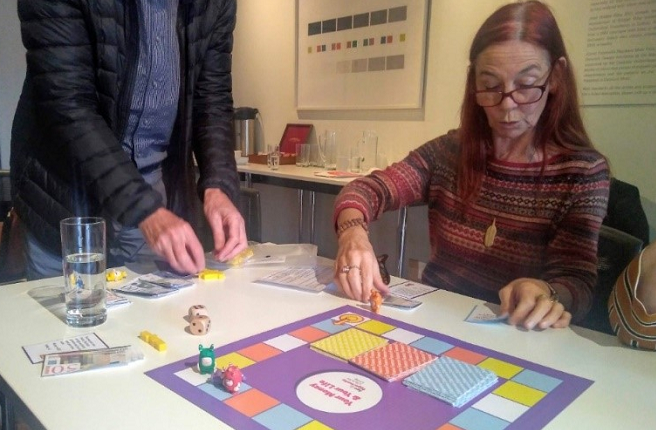
Thank you all so much for your help and contributions to the learning community over the last three years. It’s been a pleasure to work with you all!
I was lucky enough to join 250 delegates from 15 countries for the world’s first International Arts and Homelessness Summit & Festival. The Summit programme ranged from panel debates to more informal chances to engage with the arts – from singing exercises to becoming ‘living statues’ – which provided a unique energy to proceedings. Half of the delegate places were given free to people who are or have been homeless, ensuring that people with lived experience were at the heart of the Summit.
The event was hosted by With One Voice (WOV), a new international movement that aims to strengthen the arts and homelessness sector through exchanges in practice and policy. The Festival consisted of a week-long programme of free events and exhibitions across Manchester. The Summit was a conference at the Whitworth Art Gallery, which brought together practitioners, artists, activists, academics and policy makers from across the world.
Day one: Practice Exchange
Matt Peacock, Director of WOV, welcomed delegates to day one of the Summit, the practice exchange. Matt explained that while the arts won’t solve homelessness, it will help to build wellbeing, resilience and pride. He praised the Summit & Festival as a unique opportunity to celebrate the creativity and self-worth of people who have been homeless, and for those in the arts and homelessness sector to learn from each other.
The day kicked off with quick-fire presentations. They provided a fascinating snapshot into the work of arts and homelessness organisations from around the world. It was moving to hear about the practical difference that art can make to people’s lives. We were treated to more of these bite-size presentations throughout the Summit.
“The arts won’t solve homelessness, but it will help to build wellbeing, resilience and pride.”
Cultural Spaces and Homelessness
A panel discussion explored the ways that cultural spaces are welcoming people who are, or have been, homeless to take part fully in their programmes and/or services.
Director of Dallas Public Library, Jo Giudice, explained how kindness is central to the Library’s approach. She revealed how the little things can have the biggest impact, “We welcome homeless people at the ‘front porch’, learn their name and give eye contact”. After taking down the restrictive ‘codes of conduct’, the Library simply asked for kindness and respect from its users.
The panel discussed the importance of handing over power and giving people the opportunity to shape, and contribute to, an institution’s programme. Jo explained how it was essential for Dallas Public Library to consult homeless people about the changes needed at the Library. New services such as free music lessons have reinvented the Library’s offering and its relationships with its users.
Governance was another topic covered, with agreement that there must be buy-in from ‘the top’, both from senior management and boards. However, it was acknowledged that institutional change takes time. At Dallas Public Library it involved gradually convincing employees of the vision and investing in staff training.
Many institutions are only in the early stages of creating more inclusive spaces. WOV is conducting an International Review of Cultural Spaces’ Responses to Homelessness. A ‘toolkit’ and training package for institutions which want to broaden access and opportunities for homeless people will be launched in 2019.
Practice Exchange Workshops
The panel discussion was followed by a choice of practice exchange workshops, which included poetry, theatre and film-making. I attended the singing session, where Streetwise Opera’s Mark Oldfield was on hand as facilitator and choirmaster. After introducing ourselves (through song, of course), we heard from delegates about their experiences of participating in, or running, choirs. One delegate spoke of the importance of his choir, explaining “We sing because we need to be heard”.

Credit: Rey Trombetta
Next, Marina dela Maza Escobedo introduced us to the work of Barcelona-based Basket Beat. The project works with vulnerable and underserved communities to help with their personal growth, through creating and learning music in groups and with basketballs. A group of volunteers joined in the interactive session, which involved using basketballs to keep a rhythm. It was a fun and easy alternative to conventional musical groups.
Following this, we discussed topics such as collaborative leadership, and how to make group activities inclusive for all participants. There was also the chance for workshop attendees to step into the role of facilitator and share singing exercises with the group. We concluded the session by singing ‘Somewhere’ from West Side Story, filling the room with the lyrics “There’s a place for us”. Mark explained that the song was something of an anthem for Streetwise Opera.
An afternoon of world café conversations left me with plenty of food for thought and excitement for day two.
Day Two: Policy
Manchester City Council’s Homelessness Strategy
On the second day of the summit we shifted our attention to policy. Matt Peacock, Director of WOV, explained why Manchester was chosen to host the Summit and Festival. It was inspiring to hear how a commitment to increasing access to arts has been included in Manchester city council’s current five-year homelessness strategy. Equally impressive was the important role of the city’s cultural sector in supporting the strategy.
Mayor of Greater Manchester, Andy Burnham discussed the city’s ‘A bed every night’ initiative but admitted that shelter is only the first step to providing stability. He spoke of the importance of the arts for self-expression, growing confidence and enabling people to share their story.
A panel discussion reflected on how Manchester has integrated people with lived experience into its homelessness strategy. The Booth Centre’s Amanda Croome explained how civil society had stepped in to work with local government after the city council admitted they couldn’t solve homelessness on their own. Co-production with individuals with lived experience of homelessness was recognised as crucial to the development of the Manchester Homelessness Charter. However, John Organ from Inspiring Change Manchester warned that co-production can only be effective when power is redistributed.
Amanda noted the importance of providing holistic support when tackling homelessness. She explained how Manchester City Council’s Homelessness Strategy is the first civic homelessness strategy to include the arts and culture. Leonie Bell from Paisley Partnership stressed the need to integrate culture into other policy areas, to release its ‘transformative power’.
The panel praised WOV’s model for ‘The Jigsaw of Homeless Support’, which has been included in the council’s strategy. The model rejects hierarchical and linear approaches to support and advocates for a more diverse ‘interlocking jigsaw’ of support. It recognises that people with multiple needs require multiple solutions from the offset.

Credit: Rey Trombetta
Legislative Theatre
Next, we were invited to become ‘Spect-Actors’ in a legislative theatre workshop led by Katy Rubin and Letitia Bouie from the Theatre of the Oppressed NYC. The Theatre partners with communities facing discrimination to inspire transformative action through theatre. Katy explained the role that legislative theatre can play in educating the public, empowering individuals and challenging the status quo.
Legislative Theatre involves watching original plays based on the actors’ lived experiences. The audience is encouraged to brainstorm alternatives to the problems presented on stage. Then, Spect-Actors take to the stage to rehearse new ideas. Everyone is invited to suggest policy proposals that get processed by a ‘Policy Advisory Team.’ The policy-makers present the best proposals, which are debated and voted on by the crowd. If most people accept the idea, the government representatives make a promise to act on those ideas.
Our theatre scenario focused on the exploitation of an artist who was homeless. A top-down community organisation was profiting from sales of the artist’s work yet refused to pay them for their art. The organisation’s CEO was only happy to pay what he perceived as ‘real artists’.
Spect-Actors acted out alternative scenes to this infuriating scenario. Ideas included taking the artist’s story of discrimination to the press and cutting ties with the community organisation. The audience then discussed the viability of these scenarios. Next, it was time for the policy proposals, which included having 25% of boards made up of individuals with lived experience. There was unanimous approval for the audience’s proposals and agreement from the government representatives that they would discuss these with their colleagues.
I was left impressed with this powerful approach to storytelling, which puts individual experiences of discrimination centre stage and seeks alternative solutions to social justice issues.
Final reflections
After a delicious lunch, provided by social enterprise Back on Track, there was time to explore the Whitworth’s Poet Street exhibition, curated by ‘Urban Poet’ Jed Austin. The exhibition features poems and artwork by rough sleepers in Manchester, providing moving accounts of life on the streets. The money raised from sales of the artwork will be used to buy winter provisions for people who are sleeping rough. It was just one of the many artistic events taking place across Manchester, which included a photography exhibition at Piccadilly station of portraits of people who attend the Booth Centre.
Following a round of world café conversations, day two closed with pledges from delegates on how to take this work forward. It was also a moment to celebrate the creativity and voices of people who have been homeless; the new connections, perspectives and ideas had emerged from the Summit; and the passion and vision behind this work.
Photo credits: Rey Trombetta, Streetwise Opera.
The Calouste Gulbenkian Foundation (UK Branch) is a founder funder of With One Voice.
Swapping our desks for seats at the Royal Court Theatre, we arrived for a show like no other: The Sharing the Stage symposium. The event celebrated the achievements of a cohort of organisations that the Foundation supported under our Participatory Performing Arts strand of work.
Sharing the Stage
The goal of Participatory Performing Arts strand was to widen participation in the performing arts to people from all walks of life. Our long-term aim has been to give a platform to voices that are seldom heard, highlight the social benefits of the arts, and enrich artistic works with authentic lived experiences.
Over the past three years, a group of ten leading theatre companies and practitioners have worked together as part of the Sharing the Stage cohort. They have explored new ways of working, interrogated the role of participatory arts practice, and considered how to ‘mainstream’ this work. The symposium showcased the cohort’s boundary-pushing projects, and brought together other practitioners working in this area.
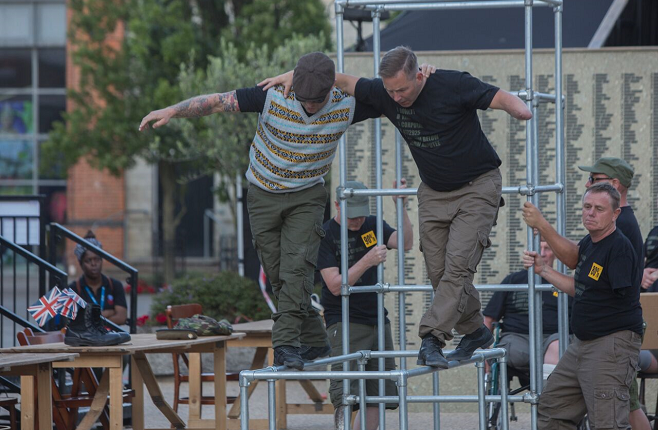
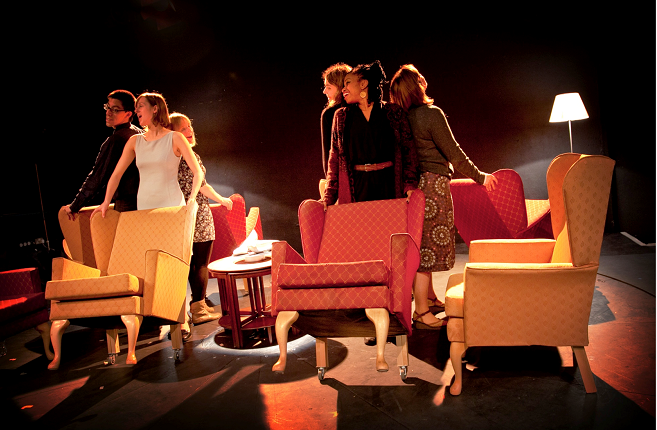
Showcasing the cohort’s work
The day kicked off with quickfire presentations and short films from the organisations, providing insights into their inspiring projects. We heard about shows made in care homes, favelas, a derelict shipyard site, and even a football stadium. Performers included injured veterans, marginalised young men, adults recovering from substance abuse, and people with physical and learning disabilities.
The cohort described the transformational effects of their practice which had touched the lives of individuals and communities. The projects had brought people together, presented individuals with exciting new challenges, and enabled them to develop skills and grow in confidence.
We were lucky enough to hear from Josh Wilkinson, one of the performers in Contact Theatre’s Switch, which was created by Contact with young people from Manchester and the team from Ockham’s Razor. He explained how it had brought circus, dance and martial arts training to young people in Manchester, along with newfound confidence and friendships.
Neil Grutchfield spoke about Synergy Theatre’s ground-breaking work, providing a platform for prisoners, ex-prisoners and young people at risk of offending to write and create theatre. Neil stressed that participatory practice does not compromise artistic quality, and called for it to be integrated into the wider space of British theatre.
Following the presentations, the director of the UK Branch, Andrew Barnett explained how this work has paved the way for our Inquiry into the Civic Role of Arts Organisations.
Shaping the future of participatory practice
Next, we reflected on ways to shape the future of participatory practice. We were asked to write down challenges faced by the sector and encouraged to draw on our personal experiences. After discussing these in small groups and identifying solutions, our ideas were shared in the plenary session. Common themes included altering funding models, increasing diversity, changing organisational structures and finding new ways of evaluating projects.
Solutions included opening theatres for community use, changing hiring practices to reward ‘best potential’, and bringing more young voices into the arts. Other ideas were filming evaluations, and appointing trustees with lived experience. It was also felt that the sector needs to take more risks in order to see real change.
The symposium provided a valuable opportunity to have rich discussions and identify opportunities for further learning and collaboration. It was also a chance to celebrate this wonderful work and recognise what can be achieved when non-professional performers share the stage.
With thanks to the Royal Court Theatre and the rest of the Sharing the Stage cohort.
Photographs: (Left) Billy Drinkwater, Kirk Bowett, Mark Brown perform in This is Not For You, Greenwich, photographer: Alison Baskerville, courtesy of Graeae. (Right) courtesy of Geraldine Pilgrim.
The Participatory Performing Arts strand has aimed to widen participation in the performing arts, especially for the most vulnerable and underserved communities. Supported projects include international arts and homelessness movement With One Voice; the Arts Impact Fund, which helps arts and cultural organisations to become more sustainable and resilient; and the London International Festival of Theatre’s Tottenham-based work, LIFT Tottenham.
Transitions such as retirement, and the decisions that accompany them, are often experienced and dealt with as part of a couple. But models that support people to manage change as they age tend to focus on individuals.
That’s why we developed Couple 50+ MOT, previously known as Retiring Together: a model that helps couples use their relationship as a resource to build and maintain wellbeing and resilience in pre-retirement. The idea is to allow couples to address, proactively, the issues surrounding this transition, supporting them to prepare for the future in partnership.
Developing the model
Couple 50+ MOT from Tavistock Relationships involves four sessions over four weeks with a skilled therapist. The sessions allow couples to reflect on past changes, discuss expectations for the future and build on their learning to prepare for transitions that lie ahead. A film showing a couple progressing through the intervention was designed by our clinical team and used as a course prompt and homework.
The model was developed after extensive research and consultation with other agencies working on transitions, including the Transitions in Later Life (TiLL) Learning Community. We also worked with three couples as case studies, to help design and develop the model and the training required for delivery.
Learning to ‘think couple’
After developing the model, we focused on training agency staff to deliver the intervention. Our clinical team developed a free one-day training workshop for staff in relevant external agencies. There was considerable interest from clinical organisations but less response from corporate agencies. Nine participants attended, almost all of whom were clinical therapists familiar with psychodynamic psychotherapy/counselling.
As most participants were new to couple work, there was a focus on helping trainees to ‘think couple’, which included role play exercises. All nine participants reported that the training had increased their knowledge and confidence in working with couples. Following extra class-based learning, trainees were place into clinical supervision groups to continue their training.
Recruitment challenges
Trainees were encouraged to seek their own couples, to develop the referral pathway in their existing services. At Tavistock, we also facilitated referrals, through producing flyers and publicising the intervention on our website and twitter account.
We wanted this service to act as a preventative relationship ‘MOT’ check-up for 50+ couples, enabling them to avoid potential issues and breakdown in the future. However, recruiting people pre-crisis is challenging, as many people underestimate the benefits or relevancy of such an intervention.
“This preventative relationship ‘MOT’ check-up for 50+ couples enables them to avoid potential issues and breakdown in the future.”
Another difficulty in recruiting suitable couples was overcome with insight from the TiLL Learning Community. The use of the term “retirement” can be off-putting, and advertising in local newspapers as a service for couples aged 50 years+ was more successful in attracting suitable clients.
The brief duration of the intervention may also appeal to couples who might fear what external relationship support might entail – possibly helping to overcome the stigma of seeking support. In the end, ten couples were seen by the pilot service – none of which had previously had therapy and/or relationship support.
Couple feedback
Following the short intervention, the feedback from the couples revealed they:
Advisory board experts in the field were also impressed by the range and depth of the work. This has been encouraging feedback in support for two aspects: 1) using a time-focused approach and 2) working with therapists without couple experience.
The programme was so well received that participants were happy to be featured talking about it as part of an in-depth article about relationship MOTs in later life in the national press. The piece, from the Daily Telegraph Magazine, Stella, can be read here.
Next steps
We intend to carry out further piloting, disseminate the model and testing, and undertake an evaluation of this work. The issues of loneliness and reduced wellbeing in retirement are resonating more widely in society, and there is growing political interest in the mid-life agenda. This all adds to the future potential of this model being widely replicated, meaning more couples can work towards the future, together.
Tavistock Relationships is an internationally renowned charity for advanced practice, training and research to support couples, individuals and families. The Calouste Gulbenkian Foundation (UK Branch) supported the Couple 50+ MOT/Retiring Together pilot as part of its Transitions in Later Life programme, which helps people in mid to later life feel better supported to manage changes as they age.
Around the world, we see a growing recognition that there’s little resource or knowledge on how to plan emotionally and psychologically for transitions in later life. Changes such as retirement, moving out of the family home or a deterioration in health are often difficult to manage, and can, for example, lead to loneliness and isolation which impacts on mental and physical health.
We have worked with Calouste Gulbenkian Foundation (UK Branch) to understand what can be done to support people at this stage of life by examining 15 case studies from around the world. Three central lessons became clear.

In order to reach and support people in later life, different providers – government, third and private sector – need to work together.
In the cases of Slovenia’s 2004 National Action Plan for Employment and Japan’s Lifelong Learning Promotion Law, for instance, the ability to implement management mechanisms and achieve an alignment of interests between different providers has been a key driver of impact.
The capacity to start small is key to achieving impact at scale.
This is particularly obvious with some of the housing and community centres we have analysed. A4Lin the Netherlands, for example, set up its first home in Rotterdam in 1992. This allowed the programme designers to be responsive to local needs and enabled them to draw out important lessons for expansion in subsequent years. Today, there are more than 30 sites of this type in the Netherlands, with 1,700 apartments, supporting ~2,500 residents (with another 10,000-12,000 on the waiting lists). As a result, other countries are now exploring this model of care provision.
There is a lack of interventions specifically targeted at promoting the emotional wellbeing of people transitioning into later life.
We found that few initiatives were motivated by the explicit aim of supporting the emotional wellbeing of the older generation, with the exception of Singapore’s C3A. This means that very few interventions, out of the 15 analysed, measured their impact against emotional wellbeing indicators.
Our research also helped to develop a better understanding of motivations and drivers. Across the 15 initiatives analysed, we identified four common objectives:
Our analysis includes examples from different providers – government, third and private sector organisations. Motives differ across providers. Government-led initiatives have been driven primarily by the desire to increase labour market participation, often in response to financial pressures. Examples include Australia’s Transition to Retirement scheme, Finland’s National Programme on Ageing Workers (FINPAW) and the US’s Senior Community Service Employment Program (SCSEP). Those interventions created to develop new skills and knowledge have been implemented by a range of providers: Japan’s Lifelong Learning Promotion Law, for instance, is a government-led initiative, while the US’s Central Baptist Hospital Career Coaching is delivered by the private sector. Initiatives led by third sector organisations have more commonly been motivated by the aim to build social support networks and stronger communities for the older generation – The Transition Network in the US and the Council for Third Age (C3A) in Singapore, for example. Only a few initiatives analysed as part of this research, however, have been driven by the explicit desire to promote emotional wellbeing. Interventions to support the wellbeing of older people have tended to focus primarily on physical wellbeing – with the provision of houses or community centres. Examples include: Mehrgenerationenhäuser II in Germany, Levensloopbestendige (Apartments for Life or A4L) in the Netherlands and Seoul’s 50+ initiative.
Our aims for this research were to: increase the sector’s understanding of the work that exists internationally regarding transitions in later life; develop an understanding of the enablers, challenges and conditions required for impact; and extract lessons from other countries that can be fed back into policies and programmes.
By applying our Public Impact Fundamentals framework to different interventions, we were able to deconstruct why some initiatives were successful or not in achieving their intended objectives. This research enabled us to draw out lessons for future policy and programme design. We hope that our findings will contribute to the work happening around the world so that, together, we can better support those making a transition in later life.
All the case studies we analysed as part of this research can be found here, and a full report – including all the detailed analysis – is available for download here.
If you know of a policy that aims to support transitions in later life, or have comments or questions about CPI’s work, please do get in touch.
The Calouste Gulbenkian Foundation (UK Branch) has partnered with the Centre for Public Impact (CPI) to conduct this research. Our Transitions in Later Life programme aims to help people in mid to later life feel better supported to manage changes as they age.
Read the report View the case studiesOur June 2018 learning community meeting was held in Dublin, Ireland, hosted by Age & Opportunity.
Ageing stereotypes exercise led by Age & Opportunity
Ciaran and Brian gave everyone a random selection of word cards (e.g. crisis, spiritual, travel), to place face-down at either ‘middle age’, ‘older’ or ‘younger’. The words around each age group were revealed, leading to a discussion about language and stereotypes, and how these are important on a cultural and personal/internalised level.
We discussed needing a culture shift to thinking about a life course approach, instead of distinct categories such as ‘middle age’ that are neither real nor helpful.
Cognitive ageing and brain plasticity
Dr Sabina Brennan, a psychologist, cognitive neuroscientist and award-winning science communicator shared some of her work with the group on the theme of brain health and ageing. In summary:
Challenges and breakthroughs session
The group positioned themselves along a spectrum from challenges to breakthroughs, to represent their experience since the last community meeting, and we collectively discussed some of the challenges that had arisen – including a few that others had experienced before.
Train the trainer handbook
Cheshire and Wirral Partnership NHS Foundation Trust has produced a handbook for training trainers, that is given to each new trainer. They took us through it and briefly discussed their experience in training trainers, in particular about making sure that trainers are suitable to conduct the work and represent their course – an issue which has been raised before in learning community meetings. Manchester Mind use shadowing and pair-working for newly trained trainers to allow them to gain experience safely. All those trained by Workers’ Education Association will first undergo the course themselves to understand the impact and what may be brought up in a personal way.
Citizens Advice Looking Forward
Citizens Advice has become increasingly aware of the needs of people who are approaching later life. Because of this, it is in the process of conducting research to potentially inform the design of a new service. This involves ethnographic interviews and focus groups to create case studies of several people’s experiences/priorities/expectations throughout the UK (including some video case studies).
On the morning of day two, Allyson gave us an interim summary of the research so far and the group discussed potential services and how to encourage people to make use of services that are available.
Three Horizons visioning session
The group produced a Three Horizons map for the system surrounding the experience of transitioning into later life, and to envision the future that we would want in (perhaps) 10 years’ time.
Experiential session led by Manchester Mind
Ruth from Manchester Mind began and ended the session with a short, guided meditation. She introduced us to two exercises on social networks, including listing and drawing our personal relationships. A final exercise, ‘Who Am I?’ got us to think about ourselves and our identity, the many roles that we play and the many strengths and characteristics that we carry.
Disrupting Ageism
What do you think of when you hear the word ‘ageing’? For most of us the answer is later life.
Dave and Hannah from the Centre for Policy on Ageing began day one by donning a ‘creative disruptive persona’ and asking questions about ageing, to introduce a discussion on ageism in society. The group were encouraged to ask questions like ‘how are you ageing today?’ to colleagues, family and friends in the run up to the session. This proved to be a useful exercise. Particularly, discussing ageing with people who don’t work in this sector provided a new perspective; even a five-minute conversation could give great food for thought.
Language
Next, we discussed ageist language. We know that language in the media and beauty industry can be particularly painful – e.g. ‘anti-ageing’ creams – but we must also be careful with the language we use in our work. We discovered that we all liked and disliked different terms associated with older people and later life. We felt it could be helpful to have a similar discussion with course participants.
Positive transitions
Following this, the group designed rituals which ‘aim to be affirmative and positive transitions, rites of passage fit for our aspirations for people who have participated and “graduated” from our various courses.’ Suggestions from this creative session included a celebration of what has been achieved and what is to come; and something to signify passing through a transition – such as a gate or archway.
Project updates
The group discussed the importance of developing relationships with key individuals within partner organisations, including employers. These relationships are often with champions who really understand the work and can provide an ‘in’, or where there has been continued contact over time with key individuals. However, there is a danger that these relationships will be lost when members of staff move on or change role.
Encouragingly, members of the learning community identified that there is often strong demand for this work from course participants, and great demand for the ‘train the trainer’ model.
Consultations
On day two, we met with the Royal Society for Public Health, which is conducting research with the Calouste Gulbenkian Foundation on ageism, for a report titled ‘That Age Old Question’. The cohort provided helpful feedback on the report’s draft recommendations. Read the report.
The Centre for Ageing Better also consulted the learning community on the topics of retirement and managing change. The input will help inform an upcoming book that will cover a range of issues facing people as they grow older, and provide advice for people to prepare for these transitions.
Problem solving
The group took part in a problem solving session to talk about challenges in their work, share insights and offer solutions.
Next steps for the learning community
At the end of a busy two days, the group discussed their ambition to hold an externally-facing event or series of themed roundtables in 2018 – potentially on routes to market.