Fundação Calouste Gulbenkian. Estratégias de Apoio e Internacionalização da Arte Portuguesa 1957 – 1969
2013


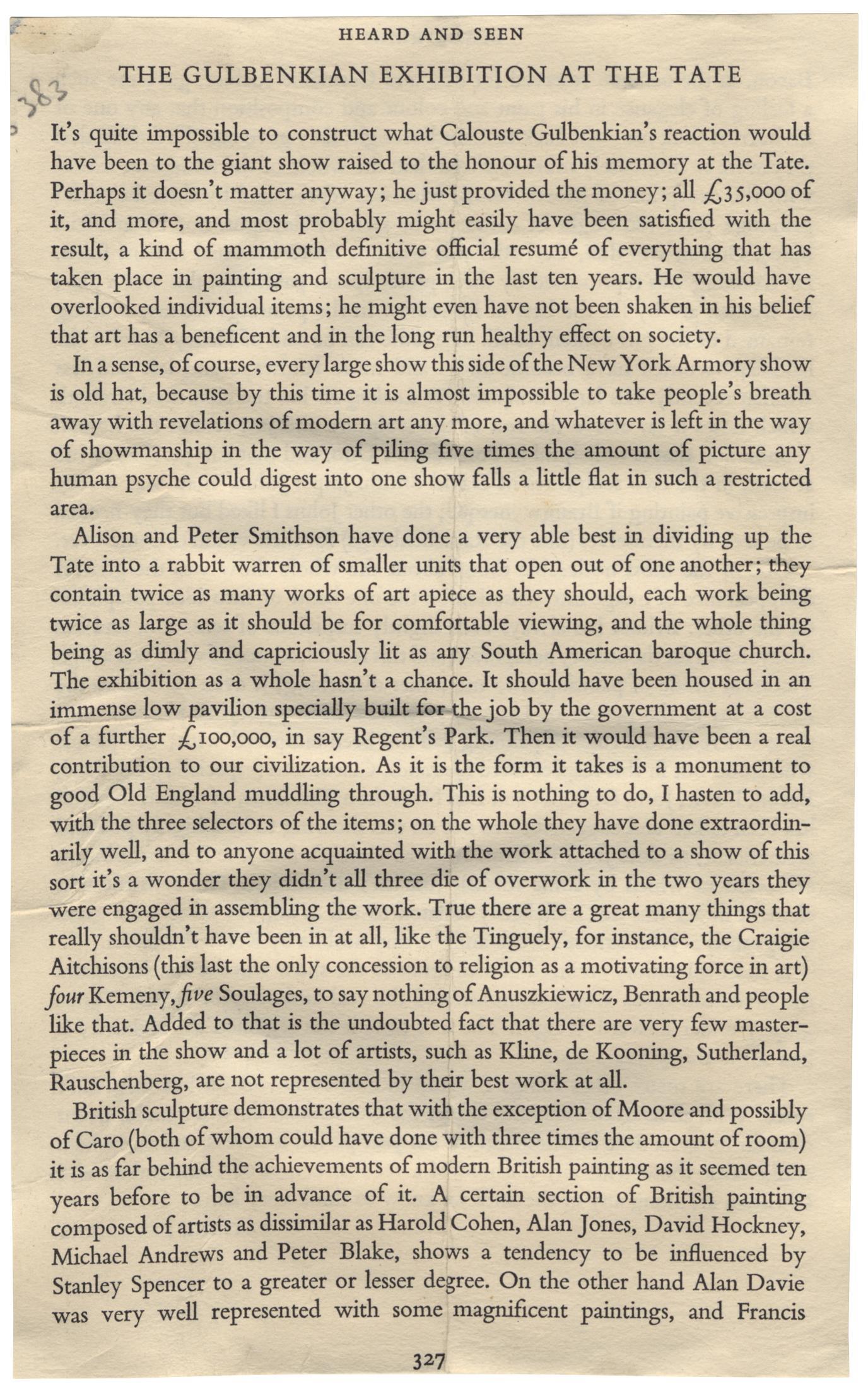
Com o desígnio de patrocinar uma mostra internacional de arte contemporânea fora do país, mais concretamente em Londres, na Tate Gallery, a Fundação Calouste Gulbenkian (FCG) organizou esta exposição com o apoio da sua delegação naquela cidade. Para tal, contou com uma comissão de seleção de obras constituída por Alan Bowness, Lawrence Gowing e Philip James, trustees da Tate Gallery de Londres.
Após três anos de preparação, a exposição foi inaugurada a 20 de abril de 1964, procurando destacar os mais proeminentes artistas do pós-guerra, nos suportes artísticos da pintura e da escultura. Contando com a representação de 370 obras de 170 artistas, viria a registar uma assinalável afluência de público (cem mil visitantes) e teve ecos nos mais significativos títulos da imprensa escrita da especialidade, de âmbito europeu e norte-americano.
Dos 170 artistas que expuseram, 40 residiam em França, 46 nos Estados Unidos da América e 49 no Reino Unido. A significativa presença de artistas ingleses e norte-americanos evidenciou uma nova abertura e descentralização artística, cujo histórico centro (Paris) ia sendo disputado entre as novas tendências que haviam despontado em Nova Iorque e Londres.
Não tendo havido representação portuguesa no certame (à exceção de Vieira da Silva, naturalizada francesa em 1956), a FCG organizaria e custearia, por determinação do seu presidente, três visitas à exposição destinadas a artistas e críticos de arte, a fim de lhes permitir o contacto direto com grandes obras da década.
Leonor de Oliveira, 2015
The exhibition arose from the desire of the Calouste Gulbenkian Foundation (FCG) to sponsor an international show of modern art outside of Portugal. It was held in London with the support of its Delegation there. The exhibition was run by a Selection Committee made up of the Trustees of the Tate Gallery in London: Alan Bowness, Lawrence Gowing and Philip James.
Three years in preparation, the exhibition focused on the most important artists of the post-war period, in the disciplines of painting and sculpture.
It opened at the Tate Gallery 20th April 1964, with 370 works by 170 artists.
The show received a notable 100,000 visitors and featured in the most important European and American press in this field. Of the 170 artists on show, 40 were French, 46 from the USA, and 49 from the UK itself. The preponderance of British and American artists was evidence of a new era of artistic decentralisation. The historical centre, which had been Paris, was now challenged by the new movements which had sprung up in New York and London. There being no Portuguese representation at the event, save for Vieira da Silva, the FCG President organised three visits by artists and critics. These were paid for by the Foundation and allowed the artists and critics more immediate contact with the great works of the decade.