Advancing Strategic Ocean Communication
Strengthening ocean-climate action through effective communication
The Advancing Strategic Ocean Communication project is a collaborative initiative led by Communications Inc (Comms Inc), the Intergovernmental Oceanographic Commission (IOC) at UNESCO and the Calouste Gulbenkian Foundation. With Comms Inc as the key delivery partner, the project aims to improve ocean communication and scale best practices through global networks and initiatives, particularly within the UN Ocean Decade (2021-2030).
The Foundation is providing £200,000 in funding for the project during 2024-2025. In alignment with our Climate and Ocean programme, this investment builds on our long-standing commitment to ocean communication research and engagement, recognising that effective communication is essential for advancing ocean protection and that ocean protection and restoration is essential for life on earth. Other funders involved in the project include the IOC-UNESCO and the David and Lucile Packard Foundation.
The Project
The Advancing Strategic Ocean Communication project brings together ocean experts and communicators from around the world to co-produce guidance that strengthens communications efforts, increases investment in effective communications and maximises impact. By improving the way ocean issues are communicated, it seeks to inspire public engagement, influence policy decisions, and integrate communication as a core component of ocean conservation efforts.
At the 2022 UN Ocean Conference in Lisbon, the Calouste Gulbenkian Foundation and Comms Inc convened 60 funders, NGOs, and communicators at the Foundation to identify needs, gaps, and opportunities for action in ocean communication. The Influence and Engagement: Priorities for Effective Ocean-Climate Communication report, widely shared across the sector, highlighted key recommendations that informed the development of this project. Building on this, IOC-UNESCO invited the Foundation and Comms Inc to host a follow-up event at COP27 later that year.
The project seeks to advance strategic communication, make evidence and tools more accessible and galvanise greater investment in ocean communications. These objectives align closely with the priorities set out in the UN Ocean Decade’s white paper on Restoring Society’s Relationship with the Ocean, published in 2024; indeed, the project has helped to shape the Decade recommendations.
The project has four Chapter Groups focusing on key themes: research and evidence, messages and messengers, scaling up, and training and education. These groups, comprising of 24 participants from 14 countries, meet regularly to discuss what’s working well in ocean communications and identify gaps and challenges. This consultative approach has ensured that the project remains grounded in the real needs and experiences of ocean communicators worldwide. A commitment to inclusion and equity is central to this effort. The project aims to amplify voices from regions typically underrepresented in ocean communication discussions, with the JEDI Advisory Board ensuring best practices in justice, equity, diversity, and inclusion.
Ocean Communications Symposium
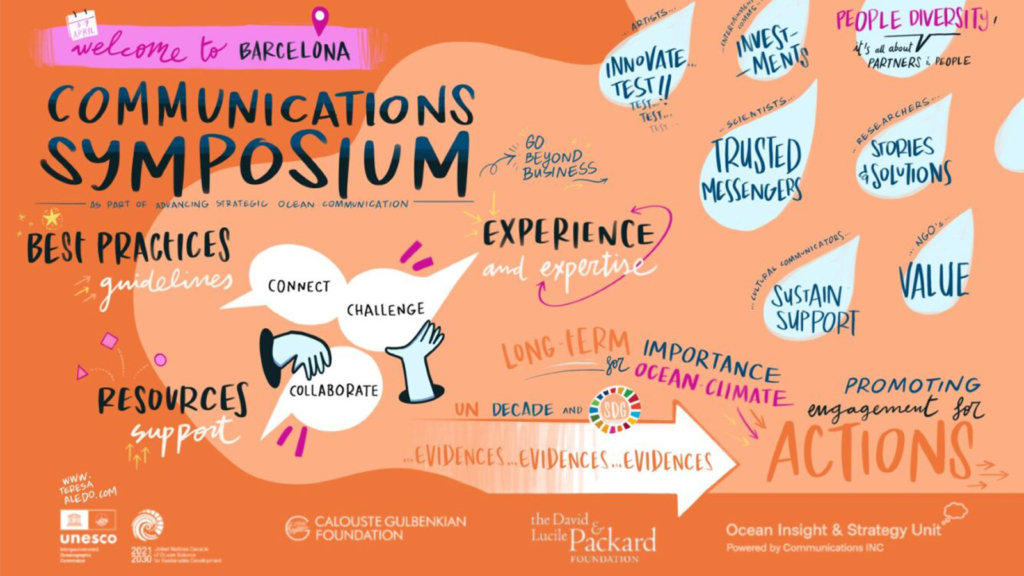
A significant milestone in the project was the two-day Ocean Communications Symposium held in April 2024 in Barcelona as an official satellite event of the UN Ocean Decade Conference. The symposium gathered over 50 ocean communicators from 26 countries to share expertise, discuss challenges and identify key opportunities for action. Structured around the project’s core thematic areas, the event featured expert speakers and facilitated discussions, leading to an Insight Analysis Paper that has shaped the project’s outputs. The Symposium highlighted four priorities:
A key output from the symposium was the development of the Better Practice Principles, a set of guidelines designed to support ocean communicators in creating more impactful, strategic and inclusive campaigns. Co-produced by the four expert chapter groups and a JEDI advisory board, these principles recognise the evolving nature of communication best practices and the resource limitations faced by many practitioners. Designed as a flexible framework, the principles provide a reference for communicators to enhance their strategies, make the case for best practices within their organisations and apply more effective approaches in their work. To facilitate their adoption, a series of Communications Training and Expertise Sharing Sessions will be held in the lead-up to the UN Ocean Conference (June 2025).
Through our funding, the Foundation is elevating the role of communication within ocean-climate action; fostering collaboration and increasing investment in effective, evidence-based communication strategies. By working with Comms Inc, IOC-UNESCO and the Packard Foundation, we are helping to ensure that ocean communication receives the attention, resources and expertise it needs to drive meaningful change.
Priorities for Effective Ocean-Climate CommunicationLearning Hub