Valuing the Ocean (2014-22)
We are a watery planet. The ocean covers about seventy percent of the earth and supports life as we know it. It is the blue heart of our ecosystem. Half the oxygen we breathe comes from the ocean. It plays a critical role in climate regulation, food provisioning and people’s livelihoods. It also offers many other benefits which help make life worth living for us all, from the beauty of a seascape to the thrill of underwater creatures or surfing the waves.
But pressures on the ocean including climate change, pollution, habitat destruction and over-fishing are immense and growing. There has been a fifty percent decline in marine biodiversity over the past forty years. The need to increase the effectiveness of conservation is urgent. The consequences of not doing so will impact on everyone, but soonest and hardest on those who have least.
The ocean was a priority area for the Foundation for a decade in recognition of its vital role in making our planet liveable, and the impact of climate change on the ocean’s health. In 2013, the UK Branch published research which highlighted an opportunity to improve the flow of information within and beyond the marine sector, to make knowledge more accessible, and engage wider audiences with ocean health. Valuing the Ocean was established in 2014 to improve cross-sector collaboration and support communications around the value of the ocean to influence long-term change.
Our theory of change
Our hypothesis was twofold. One, that people will act to protect what they value. Two, that to bring about significant change we need an ecosystem of organisations with different skills and interests working together. This is underpinned by a model for systemic change.
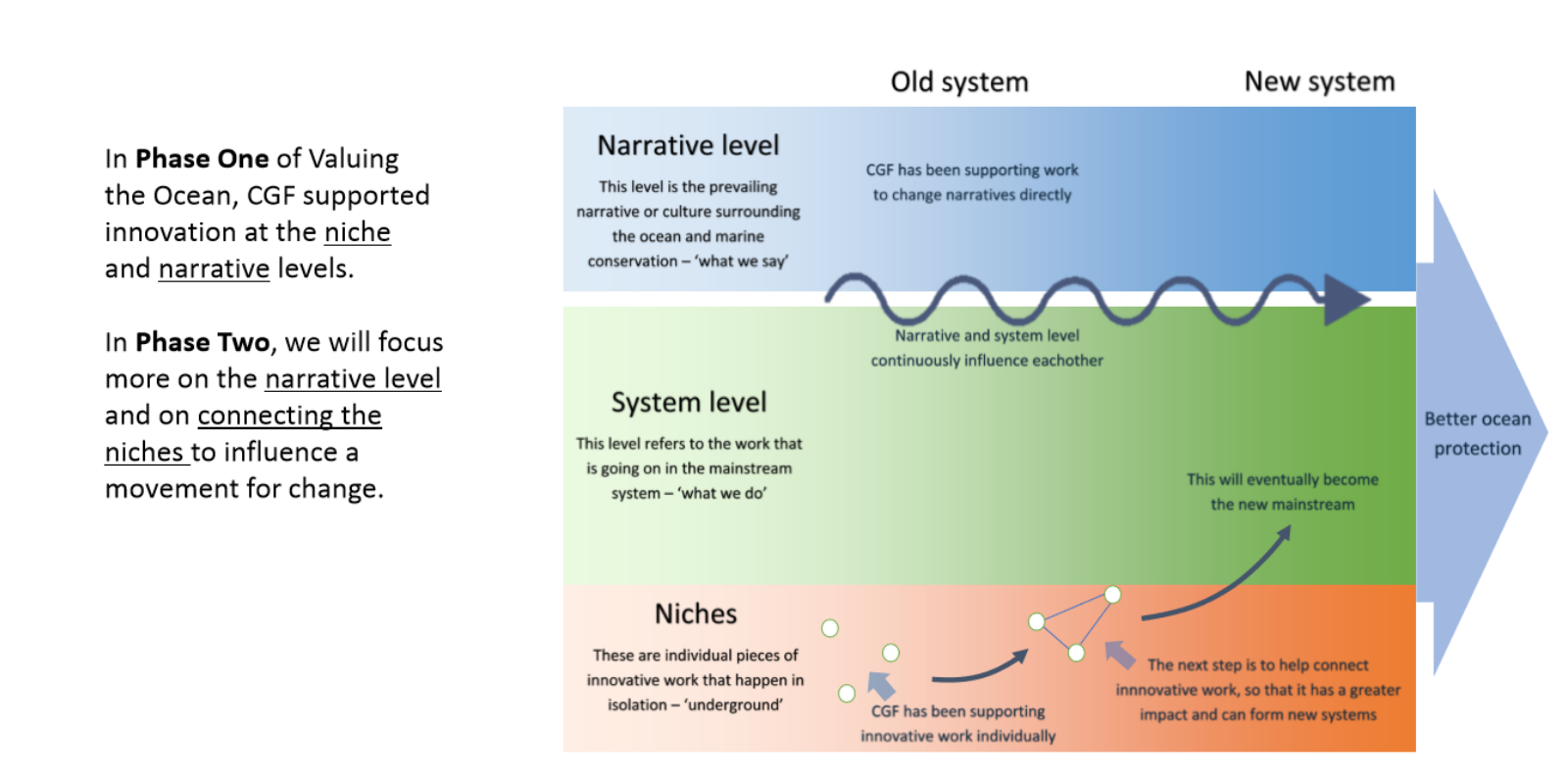
The programme focused on four key areas of intervention.
1. Connecting across boundaries
Working collaboratively, people can achieve more than the sum of their parts: we learn from each other, bring together different skills, experience and priorities, and work creatively to find new solutions. The impact is multiplied and more likely to be game-changing.
Our flagship initiative for this programme was the Marine CoLABoration, a coalition of nine NGOs which the Foundation convened to share learning and develop impactful joint campaigns to raise awareness of critical ocean issues and advocate for change.
2. Communicating the value
Through Valuing the Ocean we supported organisations to test new ways of communicating why the ocean matters. This helped to build communications capacity and create a new ‘sea story’ in the UK. Our focus was on both the framing of messages and the means of engaging people, for example, through support for the Marine Conservation Society’s Community Voice Method, the Marine CoLAB’s #OneLess campaign, and On Road Media’s projects (now known as Heard) to reach new audiences through media and influencers. We supported several projects that encouraged journalists to report on ocean health effectively, including Sparknews and the Earth Journalism Network.
3. Connecting with communities
Valuing the Ocean supported new approaches to engage local people on marine protection issues, particularly in coastal communities. This was not so much about championing conservation measures, but about exploring what matters to people and how this can feed into more equitable and inclusive decision-making. The work promoted building consensus and a shared appreciation of the value of the marine environment for local prosperity and wellbeing. It also helped connect people to activity that can influence wider policy and practice. Examples include the New Economics Foundations’ Blue New Deal initiative and Surfers Against Sewage’s Plastic Free Parliament campaign.
4. Collaborating beyond the UK
Sustainable management and protection of the ocean depends on effective collaboration beyond UK Waters. From its inception, Valuing the Ocean had an international scope, working alongside the Gulbenkian Oceans Initiative led from our Head Office in Portugal. Supported projects include Funding Fish and the Natural Capital Coalition.
Other initiatives supported through this programme can be found in our Projects directory.
Learning resources
Our Learning Hub published tools, guidance and research developed through the programme to help organisations working to protect the ocean collaborate, engage local communities and communicate effectively about the ocean.
Learning hub
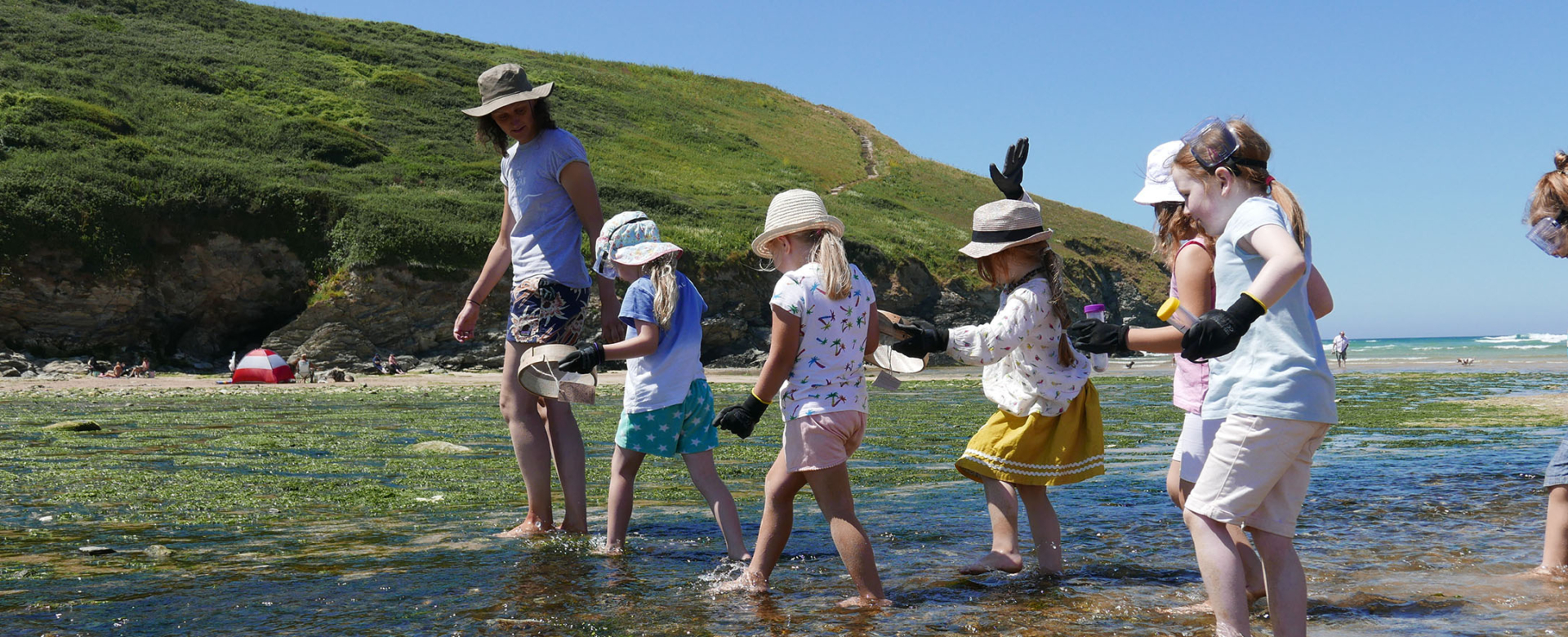
Header image: Grampound School, Ocean Camp 2018 © Surfers against Sewage