
Waterpipe adapted as a teapot
Gallery
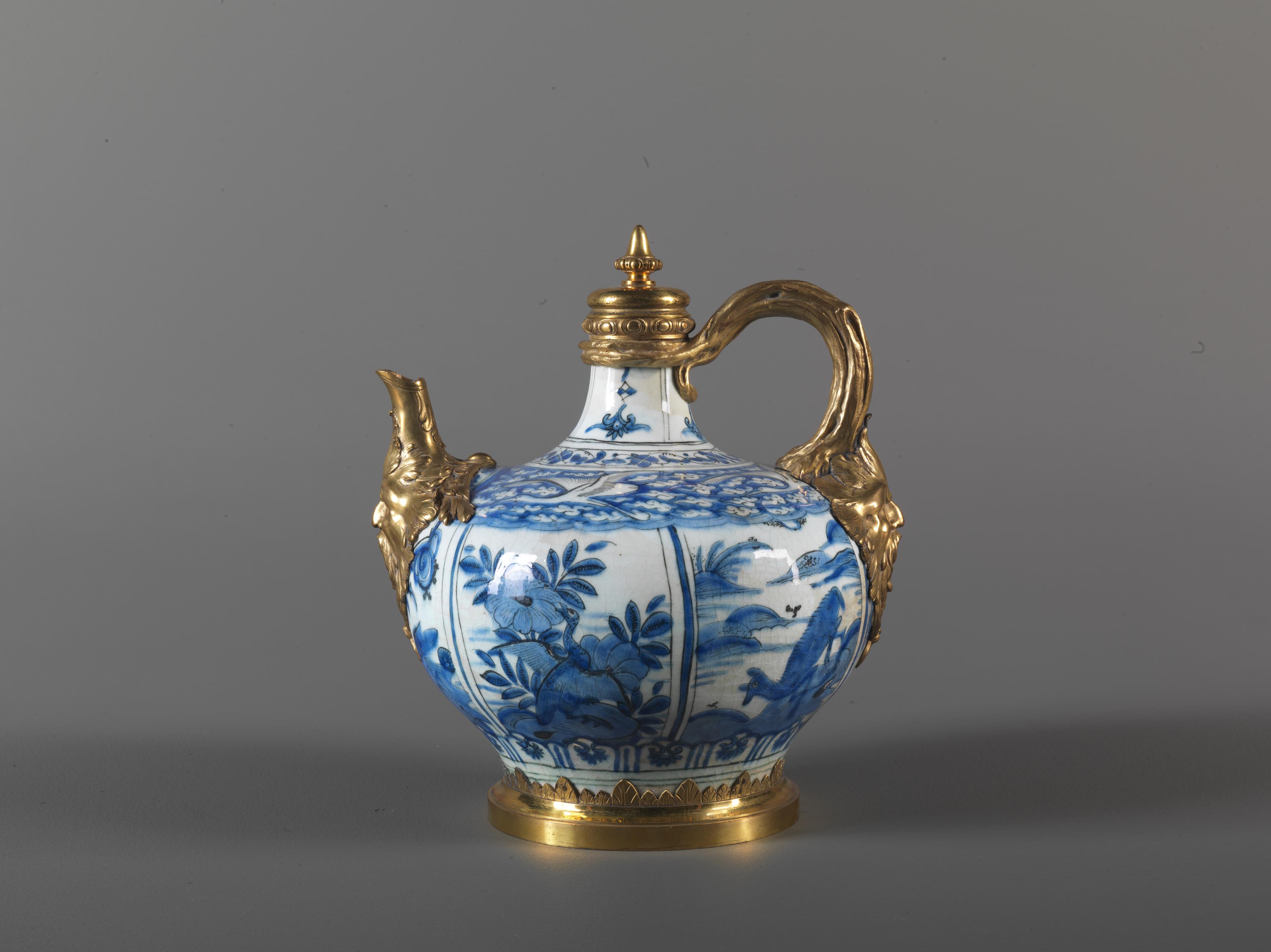
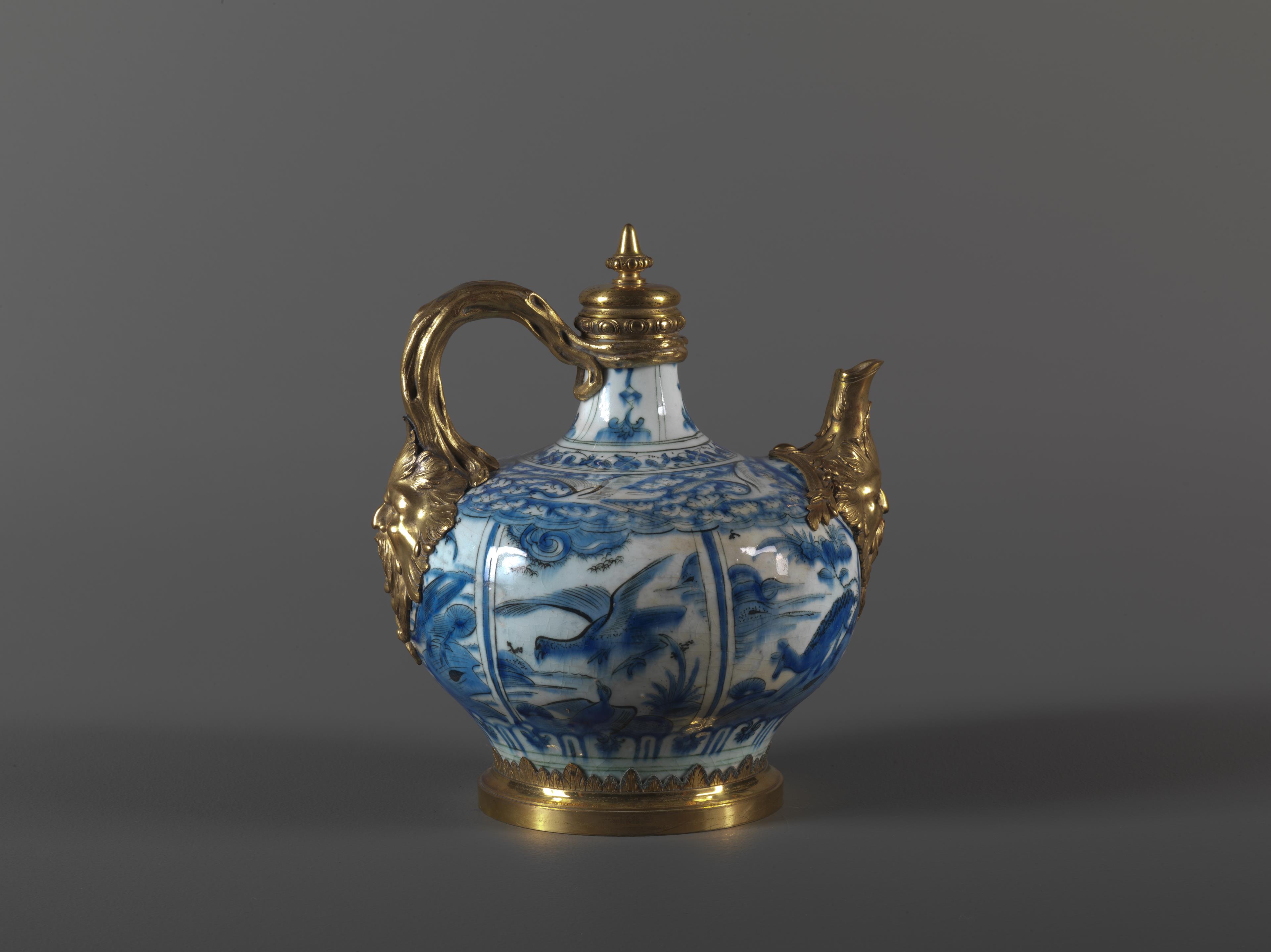
In the seventeenth and eighteenth centuries, aristocrats and wealthy merchants from many cultures used expensive tableware to demonstrate their wealth and social status to guests. Imported ceramics and vessels made of unusual foreign materials were highly sought after globally.
In Europe, silver mounts were added to appropriate these objects into the local context, with the weight and quality of these embellishments further emphasizing their rarity and prestige. Chinese porcelain was especially coveted for this purpose.
This vessel, however, with pseudo-Chinese markings on its base is not Chinese but Iranian. The maker never intended to fool a European consumer, only perhaps a Persian one, as it is the base of a water pipe [qalyan] used for smoking. A century later, in France, a clever artisan seized upon its unusual shape to convert its three orifices, with the aid of bronze mounts, into a handle, spout and lid of a teapot.
Object details
- Title
- Waterpipe adapted as a teapot
- Origin
- Iran
- Date
- Safavid period, 17th century
- Technique
- Stonepaste painted under the glaze
- Materials
- Stonepaste
- Dimensions
- Height 25,00 cm
- Inventory no.
- 951