
Assyrian low-relief
Gallery
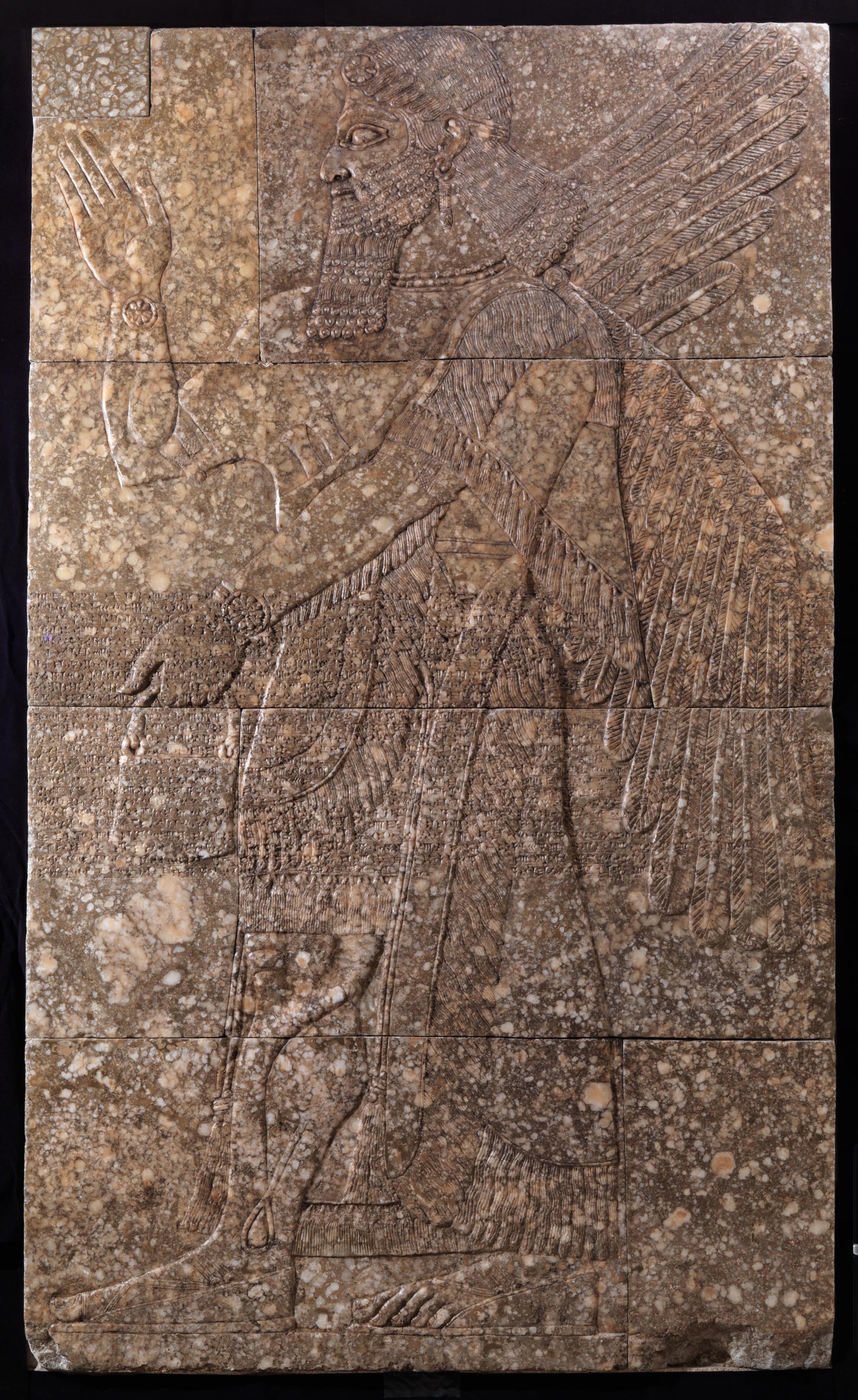
The winged figure on that low relief is a protective entity known as an apkallu’, which can be translated into ‘wise’. Repeatedly carved on the walls of the palaces and official buildings, these figures were associated with apotropaic powers (to turn away harm or evil). Usually represented in pairs, the figures were standing on each side of the king, the only human present in the scene.
Here, the apkallu both reverses the king’s image and performs a purification ritual. The relief’s magical purpose is amplified by the cuneiform inscription running on its surface – mentioning the extensive list of the king’s titles, and names of deities protecting him.
Imagery and text are complementary, making this relief performative; from the mural representation to the materiality of the palace, the king is protected from all harm by these winged genies.
Object details
- Title
- Assyrian low-relief
- Origin
- Nimrud, Mesopotamia (present-day Iraq)
- Date
- Neo-Assyrian Empire, reign of Ashurnasirpal II (884-859 BCE)
- Materials
- Alabaster
- Dimensions
- Height 230,00 cm; Width 140,00 cm
- Inventory no.
- 118
Incorporation
- Type
- Purchased
- Place
- Paris
- Provenance
- Palácio de Assurnazirpal
- Intermediary
- Paul Mallon
- Date
- 31 Jan 1920