




Rosana Antolí. An Aria for the Mallard
Event Slider
Date
12 Jul 2025 – 11 Jan 2027
Location
South Garden Gulbenkian GardenPricing
- Free entry
‘An Aria for the Mallard’ seeks to reimagine the traditional operatic form by dedicating an aria to a more-than-human subject – the mallard duck.
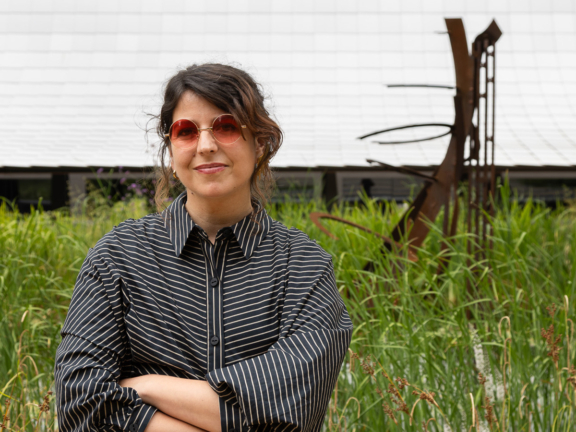
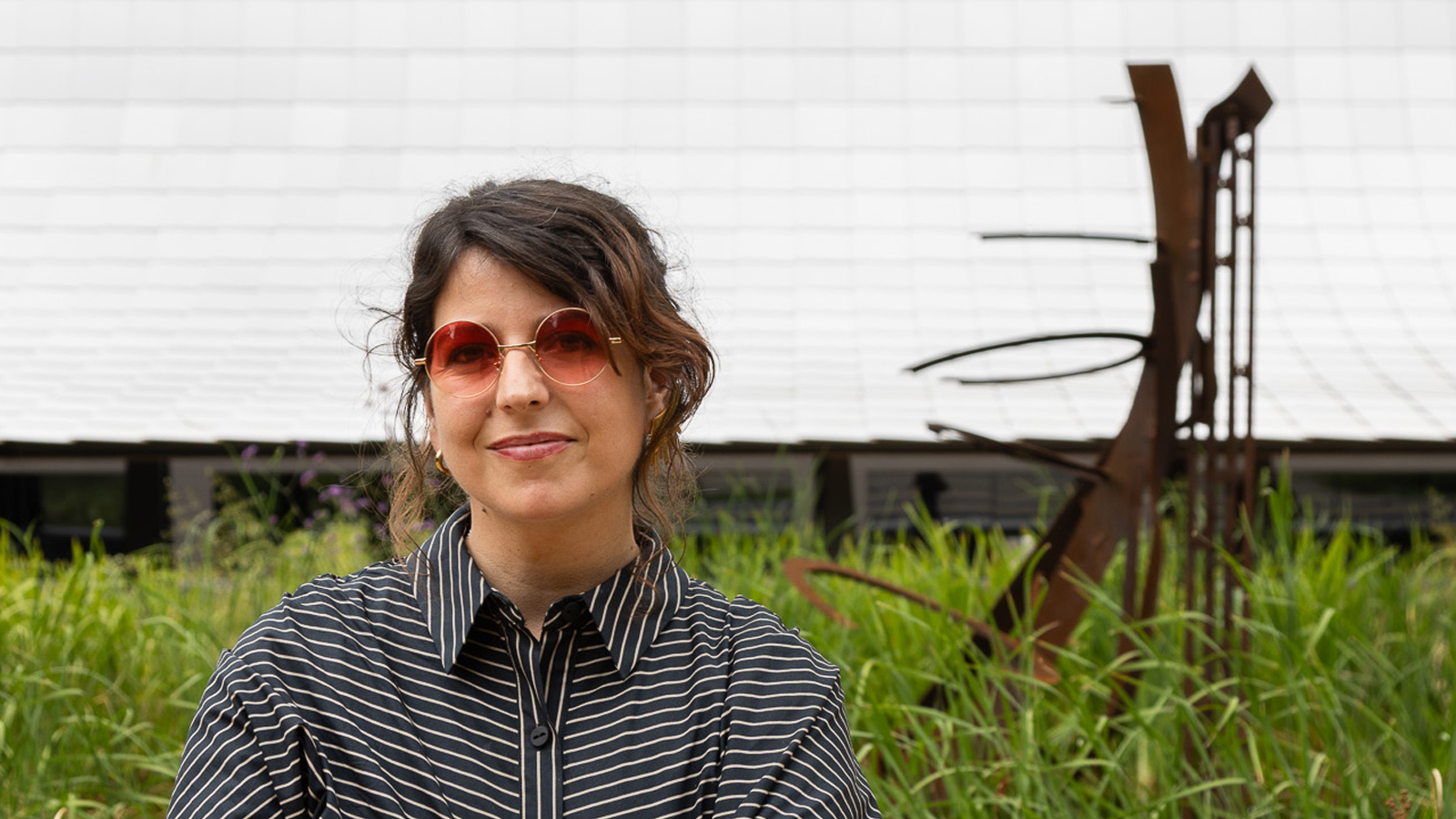
Rosana Antolí (Alcoi, Spain, 1981) is a UK-based multidisciplinary artist and performance director, whose practice explores ecofeminist and more-than-humans themes through immersive experiences that challenge perceptions of identity, the body, and agency.
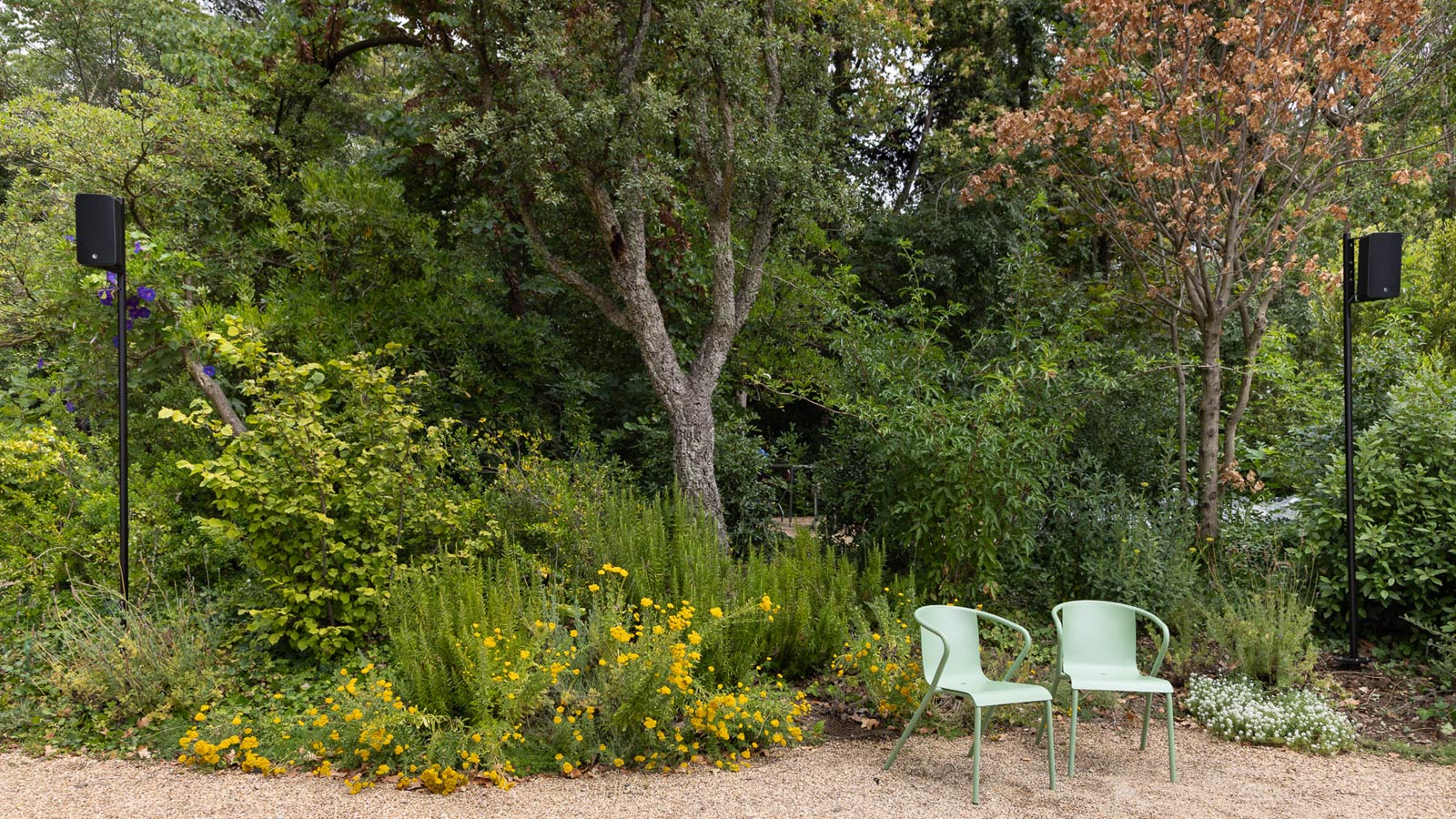
With ‘An Aria for the Mallard’, Antolí explores the intersection of art and science, using sound, sculpture, and environmental engagement to highlight the interconnectedness of an ecosystem.
This installation situates itself within contemporary practices of eco-art and bioacoustics, which aim to challenge anthropocentric perspectives. By blending the traditions of opera with ecological narratives, the artist reflects on the relationship between humans, non-human species, and the environments they share.
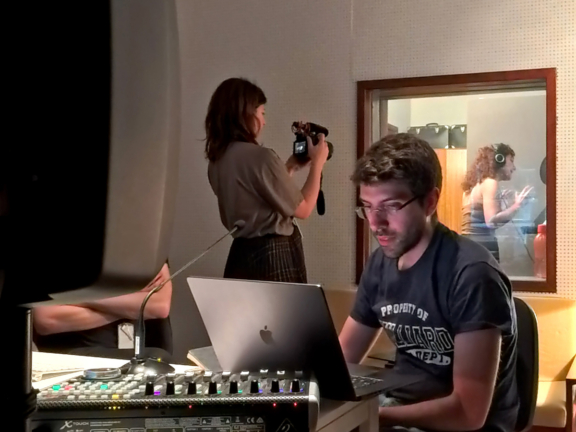
Innovative in its approach to co-creation, the project not only collects sounds from non-human voices such as birds, but actively creates a dialogue with them, resulting in songs performed by Gulbenkian Choir soprano Claire Rocha Santos and the voices of the Gulbenkian Garden inhabitants.
Encompassing the subtle activity of plants, the release of CO2, and the volatile particles responsible for the scents of flowers and foliage, the Garden is envisioned as a performative entity with its own tempo and rhythms, shaped by both visible and invisible bodies. By integrating these dynamics, the work invites audiences to experience this space as a living, interconnected system, fostering a deeper awareness of the interactions between sound, movement, and the more-than-human world.
/
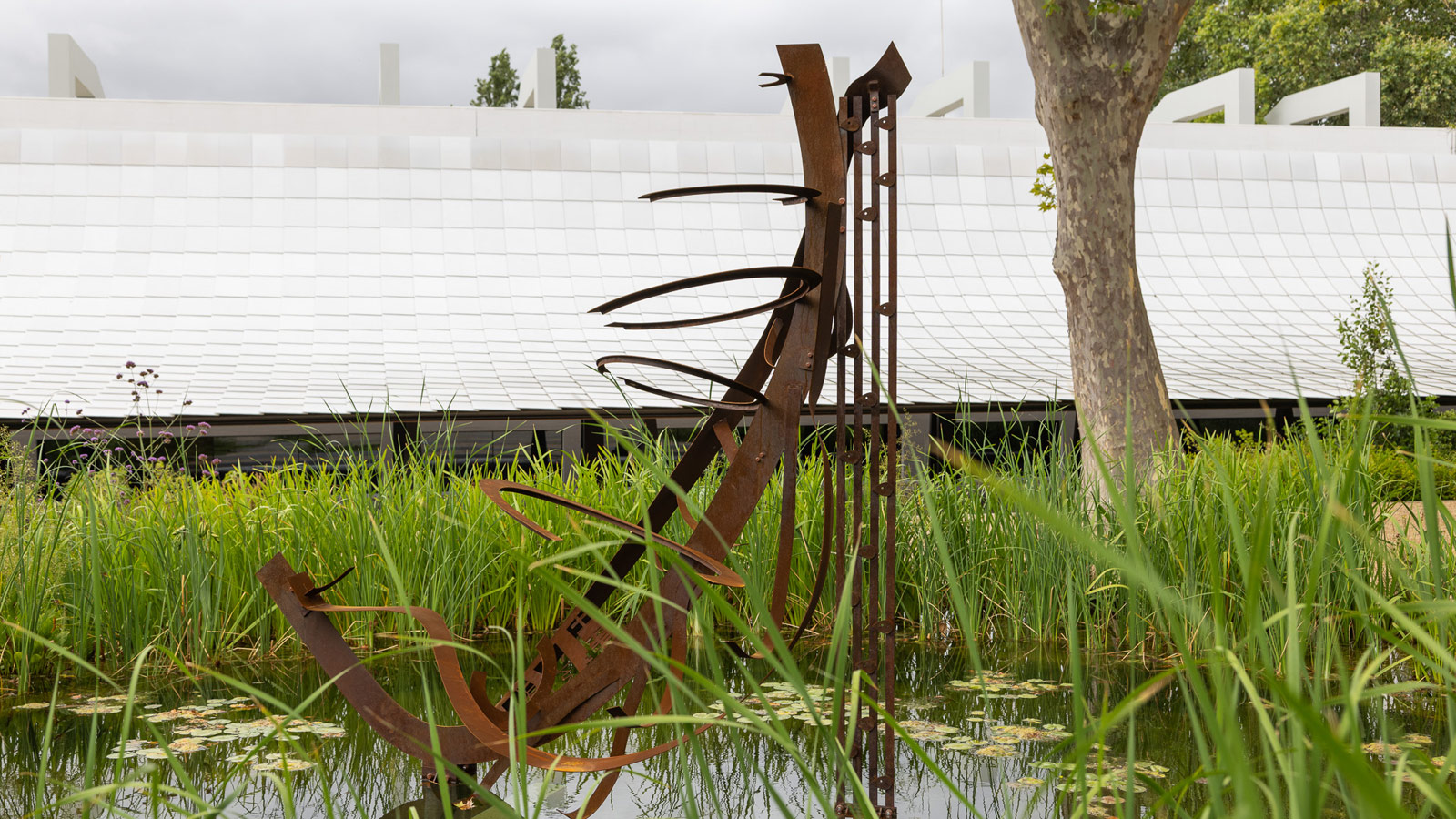
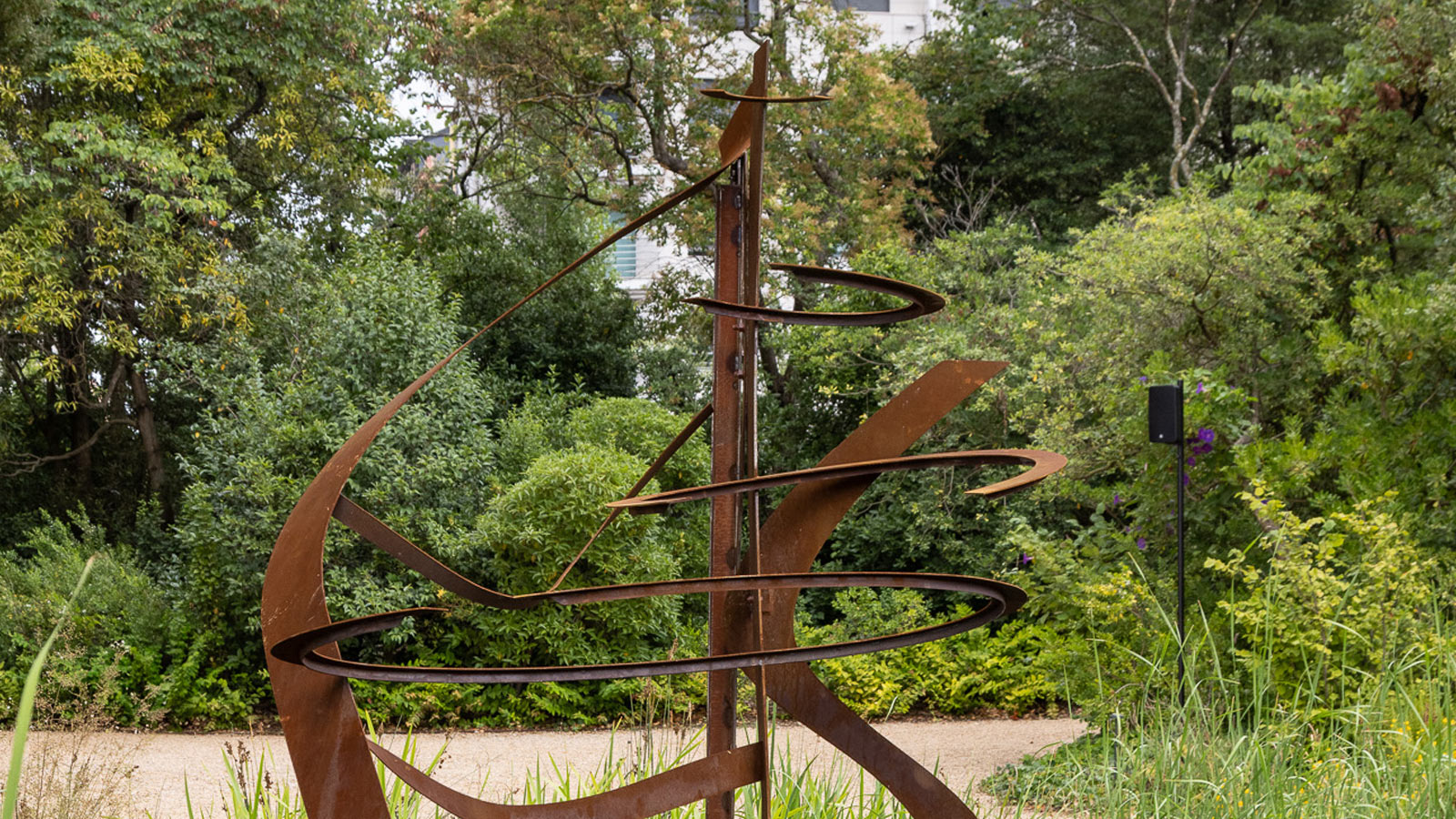
Positioned on the reflective surface of the pond, a sculpture serves as visual score of the composition, adding to the installation’s immersive experience. Each part of the piece responds to a different sound or movement performed by the more-than-human, connecting auditory, visual, and physical elements to the surrounding natural environment.
The corten steel used for the sculpture will naturally blend with the Garden’s aesthetic. Not only can it already be found in the Garden’s furniture, but it is also a material that respects its inhabitants as, for example, it doesn’t reflect light, thus not affecting their behaviours and experiences. Over time, this material will evolve, with the oxidation process causing shifts in color and texture, reflecting the sculpture’s dynamic relationship with the environment.
With music and sound art by electroacoustic composer Jorge Ramos, the songs are played three times per day, at 10:00, 14:00, and 18:00, each one a different variation of the composition – the first features only the electroacoustic music; the second includes the more-than-human voices of the Eurasian Wren, the Blue Tit, the Spotless Starling, Blackbird and the Mallard Duck; and the third adds the voice of the soprano.
Biographies
-
Rosana Antolí
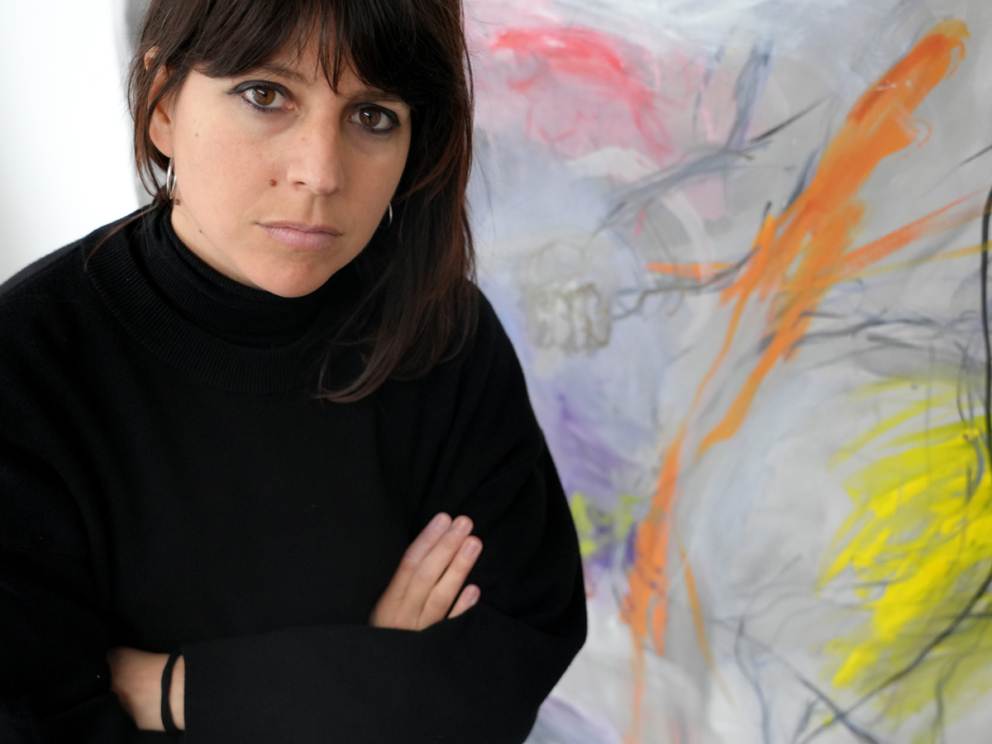
Rosana Antolí (Alcoi, Spain, 1981) is a multidisciplinary artist and performance director based in the UK, working across performance, painting, sculpture, installation, and sound. Her practice explores ecofeminist and posthuman themes through immersive experiences that challenge perceptions of identity, the body, and agency. Drawing from social choreographies and the gestures embedded in everyday life, she weaves mythology, biology, speculative futures, and porous systems into layered narratives. Antolí’s work invites open dialogue around collective embodiment, plural ecologies, and the possibilities of co-creation with non-human life forms, navigating interdisciplinary collaboration and artistic research.
-

Jorge Ramos
Jorge Ramos is a Portuguese multi-award-winning composer, sound artist, and researcher based in London. He holds degrees from Conservatório de Música Calouste Gulbenkian de Braga, Escola Superior de Música de Lisboa, and a Doctorate in Music Composition granted by the Royal College of Music London. He has written solo, chamber, choral, symphony, mixed, electroacoustic, live-electronics, film, stage, installations, and advertisement music. He has a particular interest in perception and psychoacoustics. His musical approach explores the intersection of technology and orchestration/timbral blend, with a focus on intuitive electronic-informed orchestration, instrumental synthesis, computer-assisted orchestration, machine learning, and artificial intelligence.
-

Claire Rocha Santos
Claire Rocha Santos is a Franco-Portuguese soprano and harpist based in Lisbon. With a versatile career spanning solo, chamber, operatic, symphonic, and staged music, she has performed across Europe and Asia as both a soloist and ensemble member. She completed her studies at the Conservatório de Música de Coimbra, Conservatório Orfeão de Leiria, and the Escola Superior de Música de Lisboa, where she also earned a Master’s in Music Education with a specialization in Harp. In parallel with her performance work, she is deeply committed to music education, particularly in the field of harp. A European Network of Opera Academies (ENOA) artist, Claire is currently a soprano with the Gulbenkian Choir, Ensemble Vocal Aura, and Voces Caelestes.
Audio
Credits
Creation e Art Direction
Rosana Antolí
Music composition and Sound Art
Jorge Ramos
Soprano
Claire Rocha Santos
Scientific collaboration
Rui Oliveira
Gulbenkian Garden
Paula Côrte-Real
Gulbenkian Culture Programme
António Gomes da Costa
Main Performer
Mallard Duck
Chorus
Blackbird
Blue Tit
Eurasian Wren
Spotless Starling
Electronic variations
Gulbenkian Garden Plants
A partnership between CAM, the Gulbenkian Culture Programme, the Gulbenkian Garden and the Gulbenkian Music
Supports
The Calouste Gulbenkian Foundation reserves the right to collect and keep records of images, sounds and voice for the diffusion and preservation of the memory of its cultural and artistic activity. For further information, please contact us through the Information Request form.
Related

No results were found for your criteria.