
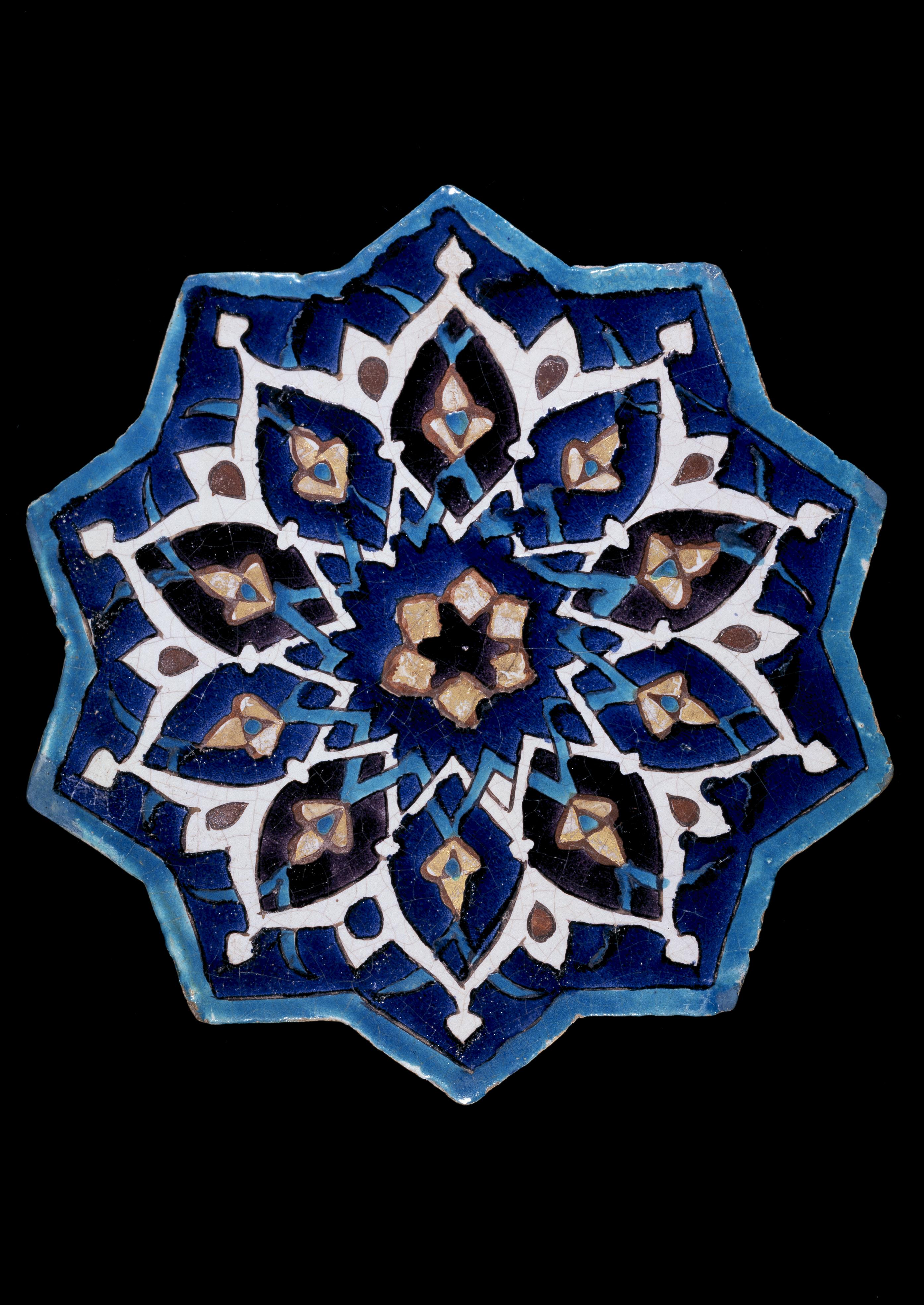
Star-shaped tile
Iran, first half of the 15th century
Gallery

/
Complex systems of multiplying and dividing circles are behind the art of creating mesmerizing Islamic star patterns. This star-shaped tile combines six- and ten-point radial symmetry. When combined with tiles of other shapes, such as pentagons or hexagons, an endless repeat pattern is produced to cover buildings, inside and out.
The profound knowledge of mathematics, geometry and engineering reflected in Islamic tilework was transmitted orally and through illustrated treatises. One example is the spectacular 30 meters ‘Topkapi Scroll’ (Turkey, 16th century), with 114 patterns dating back to the tenth century.
Object details
- Title
- Star-shaped tile
- Origin
- Iran
- Date
- first half of the 15th century
- Technique
- Stonepaste painted and glazed in ‘cuerda seca’ (dry cord) technique
- Materials
- Stonepaste
- Dimensions
- Diameter 28,00 cm
- Inventory no.
- 1728
Incorporation
- Type
- Unknown
- Provenance
- Desconhecida
- Date
- Unknown