
L`Amour à la folie
Gallery
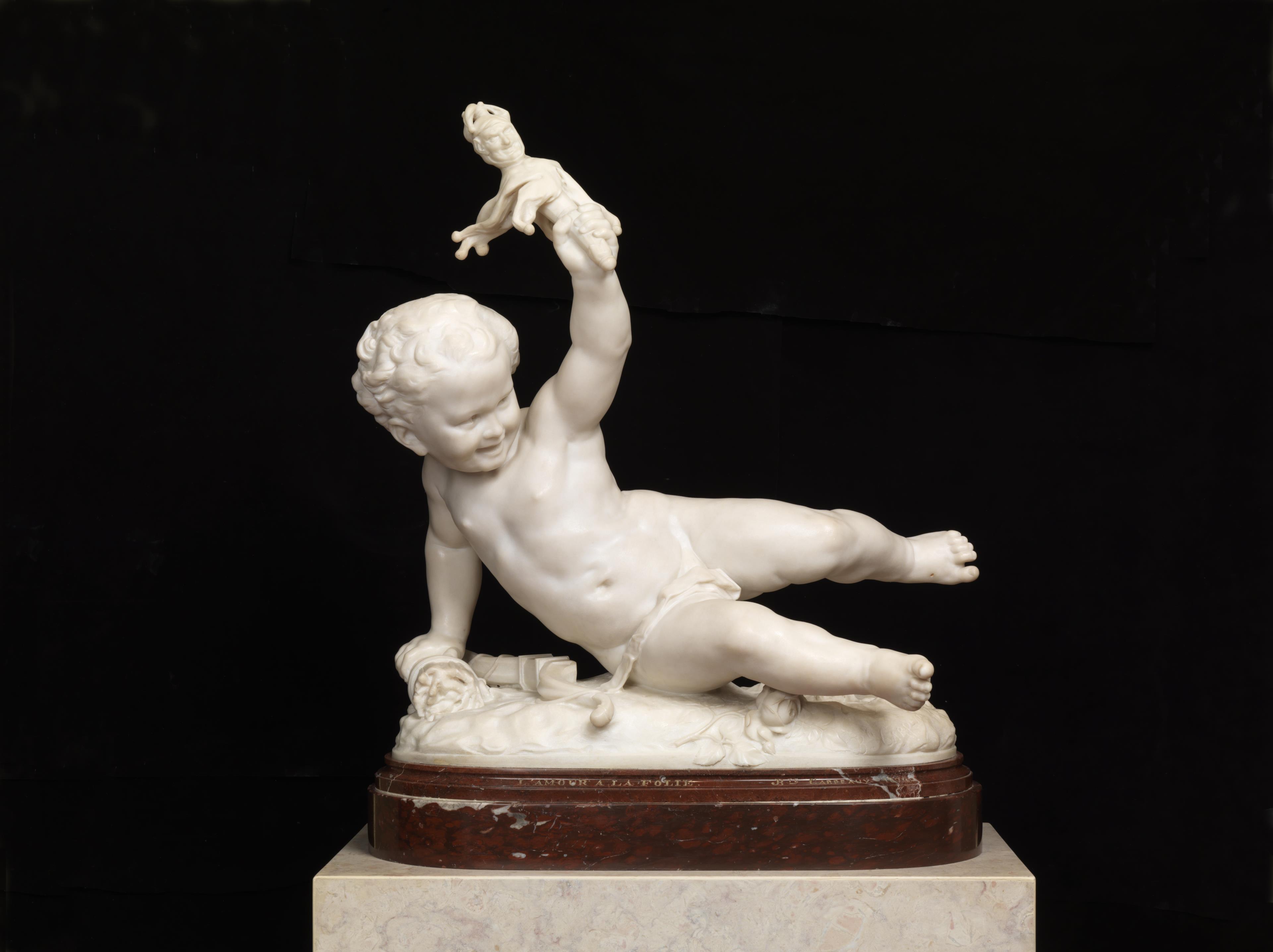
This figure was taken from the famous sculptural group The Dance, one of the most brilliant works produced in France in the second half of the nineteenth century as part of the eclecticism in vogue during the Second Empire. The work was commissioned by the architect Charles Garnier who, in 1863, entrusted Jean-Baptiste Carpeaux with decorating the façade of the new Paris Opera House. Embroiled in controversy and scandal, the work was officially unveiled in 1869.
In 1873, the artist produced the figure of Cupid as a stand-alone work, in order to offset the ruinous expenses incurred with the complex execution of The Dance. Carpeaux retained the original pose of the reclining figure, though depriving it of any allegorical meaning. The cupid, as we can admire it here, full of movement, resembles models of French sculpture from the Rococo period and reflects the well-known influence that Rubens’ painting had on Napoleon III’s favourite sculptor.
Object details
- Author(s)
- Jean-Baptiste Carpeaux (1827 – 1875), Sculptor
- Title
- L`Amour à la folie
- Origin
- Paris
- Date
- 1872
- Materials
- Marble
- Dimensions
- Depth 41,00 cm; Width 70,00 cm; Height 72,00 cm
- Inventory no.
- 563
Provenance
Incorporation
- Type
- Purchased
- Place
- Duveen Brothers, Paris
- Provenance
- Coleção Boutreux
- Intermediary
- Duveen
- Date
- 12 Jun 1922