
Greek kalyx-krater
Gallery
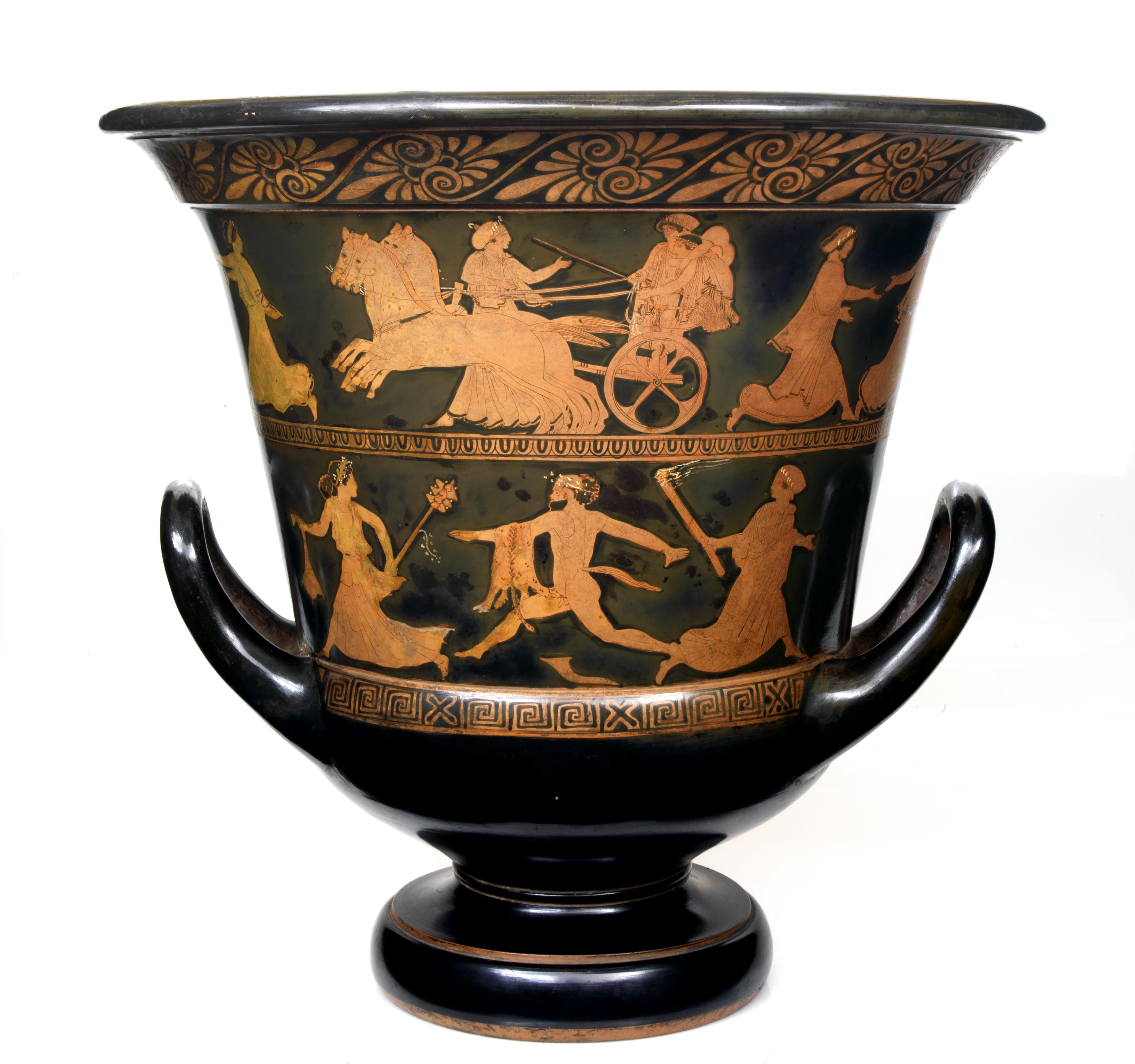
This red-figured ceramic is a calyx-krater, identifiable thanks to his low rounded handles, used in festive contexts such as symposiums, to mix wine with water before it is served to guests. Primarily used as grave-markers, kraters kept some connection with funerary contexts mostly through their iconography.
Here, we can identify two different scenes: on the top register the rapt of the Leucippides by the Dioscuri twins Castor and Pollux. This scene foreruns the death of Castor, soon to be killed by the Aphareides, to whom the two sisters had been betrothed.
Announcing the fatal end of the Dioscuri and their transformation into the Gemini constellation by Zeus, this scene is balanced by the theme developed on the lower register. A group of maenads and satyrs are illustrated, embodying the Dionysus context of such symposiums, and the very purpose of that vessel – serving wine in a celebratory context.
Object details
- Author(s)
- Pintor de Coghill
- Title
- Greek kalyx-krater
- Origin
- Attica
- Date
- Classical antiquity, c. 440 BCE
- Technique
- Red figures
- Materials
- Terracotta
- Dimensions
- Height 42,00 cm; Diameter 44,00 cm
- Inventory no.
- 682
Provenance
Incorporation
- Type
- Purchased
- Place
- London
- Provenance
- Coleção T. Hope
- Intermediary
- Christie's
- Date
- 23-24 July 1917