
Carol Engelson (1944-)
For Lady Alexandra Nawruz XXI, 1977 / Inv. PE59


Exposição itinerante de pintura americana contemporânea, comissariada pela crítica de arte Barbara Rose e promovida pela Embaixada dos Estados Unidos da América em Portugal, com a colaboração da Fundação Calouste Gulbenkian (FCG). A exposição seguiu de Espanha, onde foi apresentada em várias cidades, para ser mostrada em Lisboa, continuando o périplo por Paris.
Na opinião de Fernando de Azevedo, a exposição centrava-se na «intransigente defesa da pintura como dominante da futura década», procurando afirmar-se numa época em que a fotografia e outros processos miméticos e automáticos assumiam uma preponderância no panorama artístico americano e internacional (Azevedo, Colóquio/Artes, set. 1982, p. 70).
Ainda de acordo com as afirmações do pintor, nos últimos anos da década de 1970 e início da década de 1980 a FCG havia reunido esforços para apresentar, periodicamente, mostras de arte americana ao público português, a fim de «produzir em Portugal uma importante e a todos os títulos louvável informação sobre os valores e tendências americanas, quer como perspectiva antológica dos seus valores já adquiridos, dos anos quarenta para cá, quer ainda como leitura prospectiva de valores e atitudes em gestação contemporânea» (Ibid.).
Barbara Rose, a comissária da exposição, entendia que a exposição retrospetiva de Jasper Johns, de 1979, acabou por ter sido inspiradora no relançamento da pintura a pincel para muitos jovens artistas e terá despertado também na comissária a vontade de visitar os seus ateliês. Destas iniciativas resultaria esta proposta de antevisão do que poderia vir a ser a década de 1980 na pintura norte-americana. A mostra foi apresentada na Galeria de Exposições Temporárias do Museu Calouste Gulbenkian e contou com 41 pinturas de 41 artistas americanos. A seleção destes pintores americanos, herdeiros do modernismo pós-cubista, procurou ser heterogénea. A esse respeito a comissária diria: «Alguns actuam em metáfora, outros não. Algumas das imagens são privadas e poéticas, outras públicas e geométricas. Não tentei reconciliar a diversidade dos pontos de vista, mas preferi antes deixar que os artistas falem por si próprios.» (Pintura Americana nos Anos 80, 1982)
Contudo, alguns denominadores comuns relacionavam as obras em exposição, nomeadamente a grandeza de escala e a manualidade marcada nas telas.
A avaliar pela cobertura dada ao evento pela imprensa nacional, a exposição terá tido um forte impacto junto de um público cada vez mais desperto para os valores artísticos norte-americanos. Para Leonel Moura a exposição «foi a coisa mais estimulante» que teve «oportunidade de ver nestes últimos anos», elogiando o «elevado rigor» e esclarecimento relativamente à prática da pintura naquele país (Moura, Expresso, 14 ago. 1982).
Já para a crítica do Diário de Notícias, Manuela de Azevedo, a exposição era «muito pouco significativa do que pode chamar-se anos 80, visto que a década mal esfrega os olhos para a vida, deveria chamar-se dos artistas que nasceram na década de 40» (Azevedo, Diário de Notícias, 17 ago. 1982). A jornalista considerava que a exposição apresentava poucas novidades, mas que funcionava como uma afirmação dos valores pictóricos precedentes.
Em setembro de 1982, no âmbito da organização da exposição foram adquiridas obras de alguns dos artistas representados, para enriquecerem o acervo da Coleção Moderna da FCG, entre eles Dennis Ashbaugh, Howard Buchwald, Carol Engelson, Meredith Johnson, Mark Lancaster e Catharine Warren.
Como evento associado à exposição, foi exibido um ciclo de cinema dedicado ao tema.
Filipa Coimbra, 2017
Travelling exhibition of contemporary American painting curated by art critic Barbara Rose (1938) and organised by the Embassy of the United States of America in Portugal, with the cooperation of the Calouste Gulbenkian Foundation (FCG). The exhibition came to Lisbon from Spain, where it had been held in several cities, and later continued its journey to Paris.
In the opinion of Fernando de Azevedo (1923-2002), the exhibition focused on “an uncompromising defence of painting as the dominant future of the coming decade”, seeking to assert itself at a time when photography and other mimetic and automatic processes were prominent in the American and international art landscapes (Azevedo, Colóquio. Artes, Sept. 1982, p. 70).
According to statements by the painter, in the last years of the 1970s and the start of the 1980s, the FCG had made efforts to periodically hold exhibitions of American art for the Portuguese public: “producing in Portugal important and overall praiseworthy information on American trends and values, from a retrospective viewpoint of values already acquired, from the 1940s to date, and as a prospective interpretation of values and stances currently being developed (ibidem).
Barbara Rose, the exhibition curator, understood that the retrospective exhibition on Jasper Johns in 1979 had been an inspiration in re-launching brush painting for many young artists and would have also stimulated the curator’s desire to visit their studios. These initiatives led to the proposal for a glimpse into what the 1980s could mean for North American painting. The exhibition was shown in the Calouste Gulbenkian Museum’s Temporary Exhibitions Gallery and comprised 41 paintings by 41 American artists. The selection of these American artists, the heirs of post-cubist modernism, aimed for heterogeneity. To this regard, the curator said that: “Some act in metaphor, others do not. Some images are private and poetic, others public and geometric. I have not attempted to reconcile the diversity of points of view, but instead let the artists speak for themselves” (Pintura Americana nos Anos 80, 1982).
Nevertheless, some common denominators connected the pieces in the exhibition, such as their large dimensions and the markedly manual nature of the canvases.
Judging by the coverage given to the event by the Portuguese press, the exhibition had an extensive impact on a public increasingly alert to North American artistic values. For Leonel Moura, the exhibition “was the most stimulating thing” he had “had the chance to see in recent years”, praising the “extensive discipline” and explanations regarding the practice of painting in the USA (Moura, Expresso, 14 Aug. 1982).
For the Diário de Notícias’ art critic, Manuela de Azevedo (1911-2017), the exhibition was “very insignificant for what we could call the 1980s, since the decade has barely awoken, and it should instead be called artists who were born in the 1940s” (Azevedo, Diário de Notícias, 17 Aug. 1982). The journalist believed that the exhibition presented little that was new, but it functioned as a statement of preliminary pictorial values.
In September 1982, as the exhibition was being organised, some works by some of the artists represented were acquired to enrich the FCG’s Modern Collection, among which pieces by Carol Engelson, Meredith Johnson, Mark Lancaster and Catharine Warren.
A series of films on the theme was also shown in connection with the exhibition.
For Lady Alexandra Nawruz XXI, 1977 / Inv. PE59

sem título, 1979 / Inv. PE50

Coma-Mom, 1979 / Inv. PE60
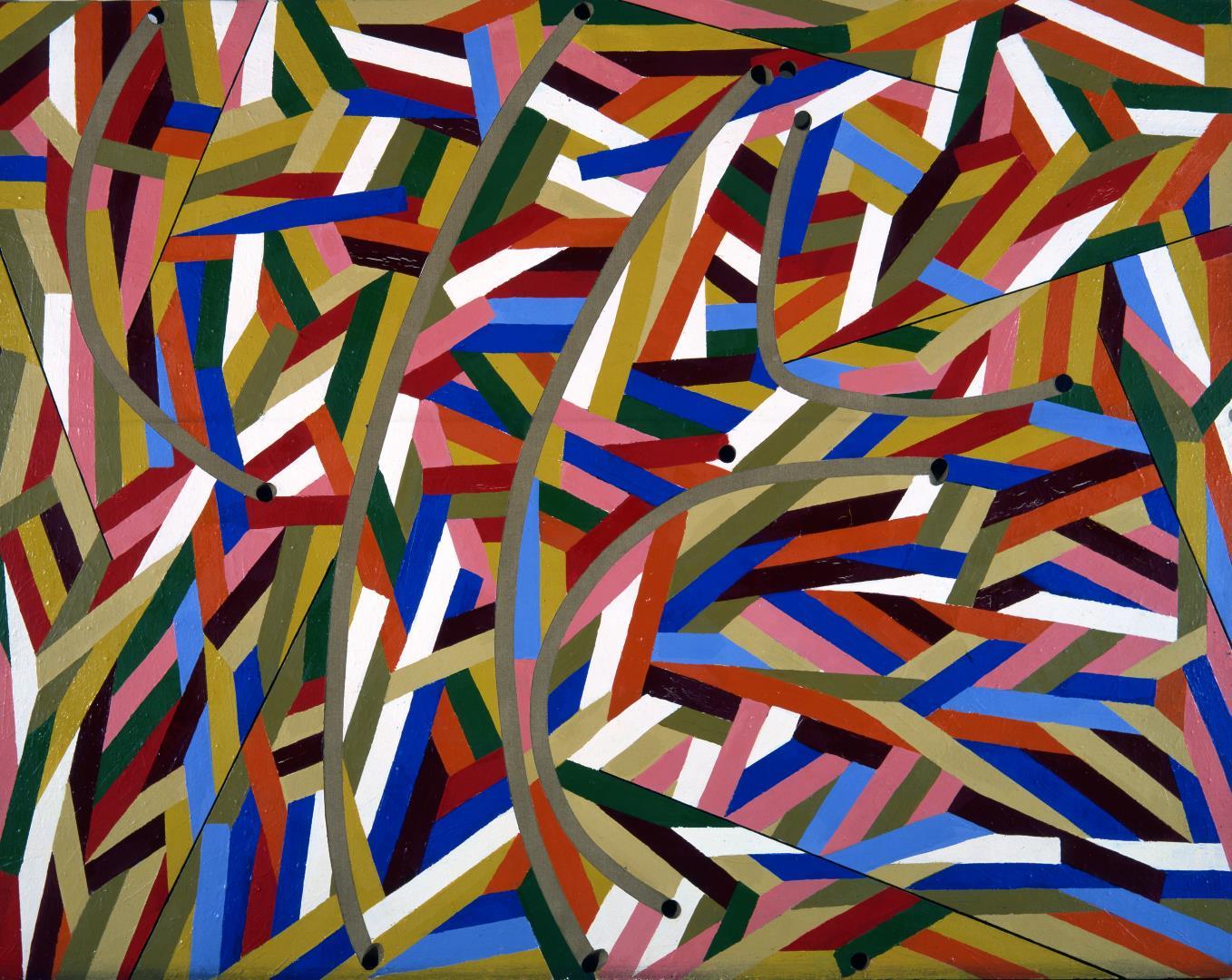
Untitled (Wheeling), 1978/79 / Inv. PE58
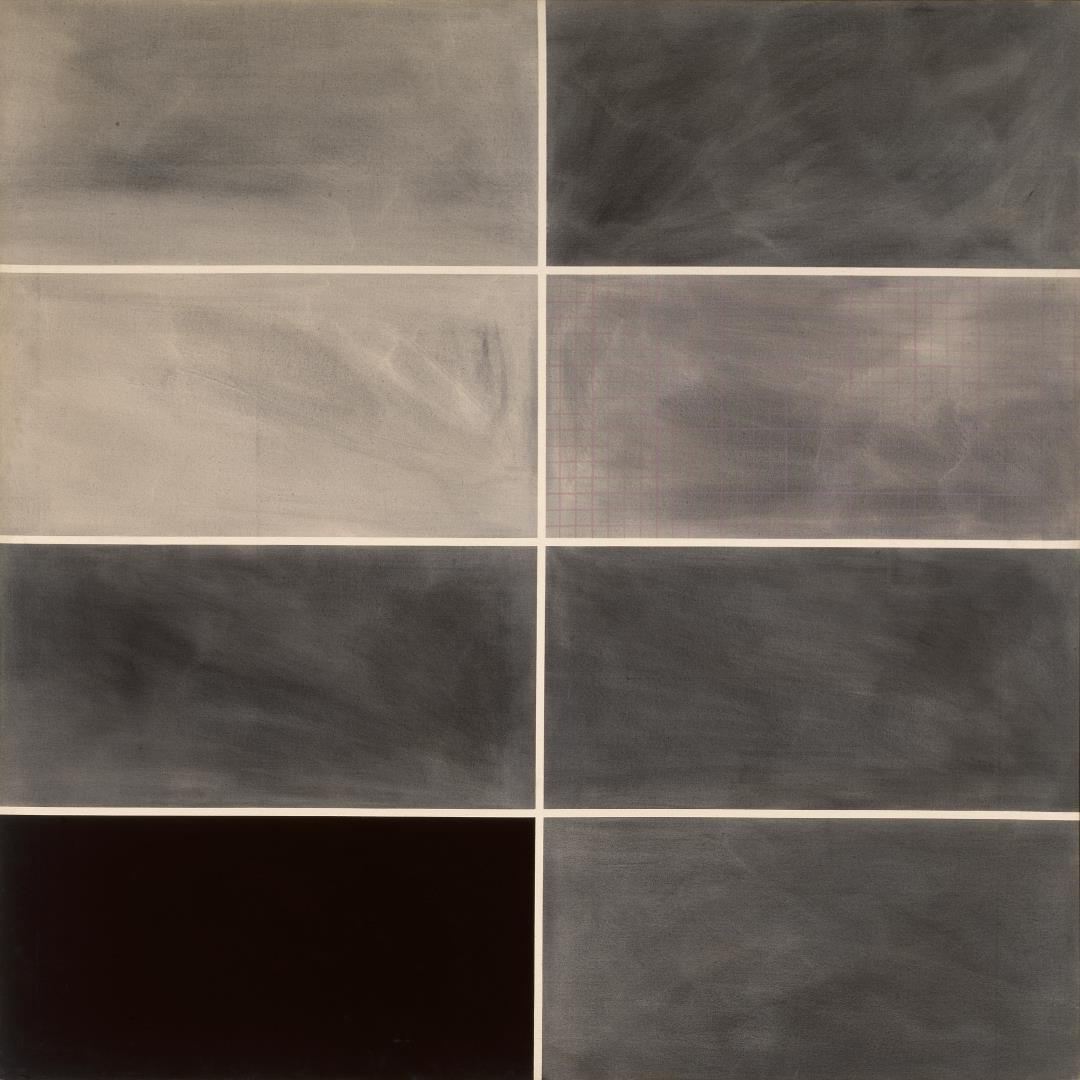
Cambridge January 1969, Inv. PE188
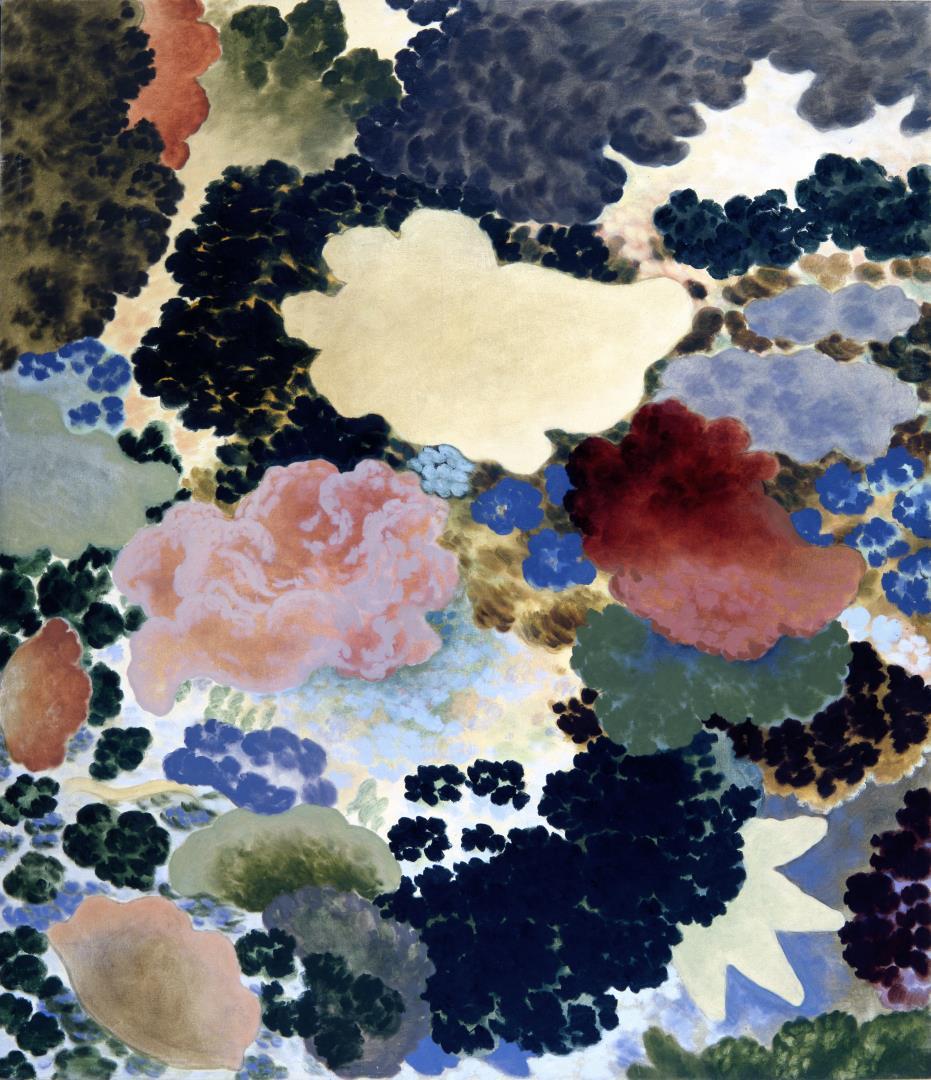
Untitled, 1975 / Inv. PE49
For Lady Alexandra Nawruz XXI, 1977 / Inv. PE59
sem título, 1979 / Inv. PE50
Coma-Mom, 1979 / Inv. PE60
Untitled (Wheeling), 1978/79 / Inv. PE58
Cambridge January 1969, Inv. PE188
Untitled, 1975 / Inv. PE49


