
Gallery
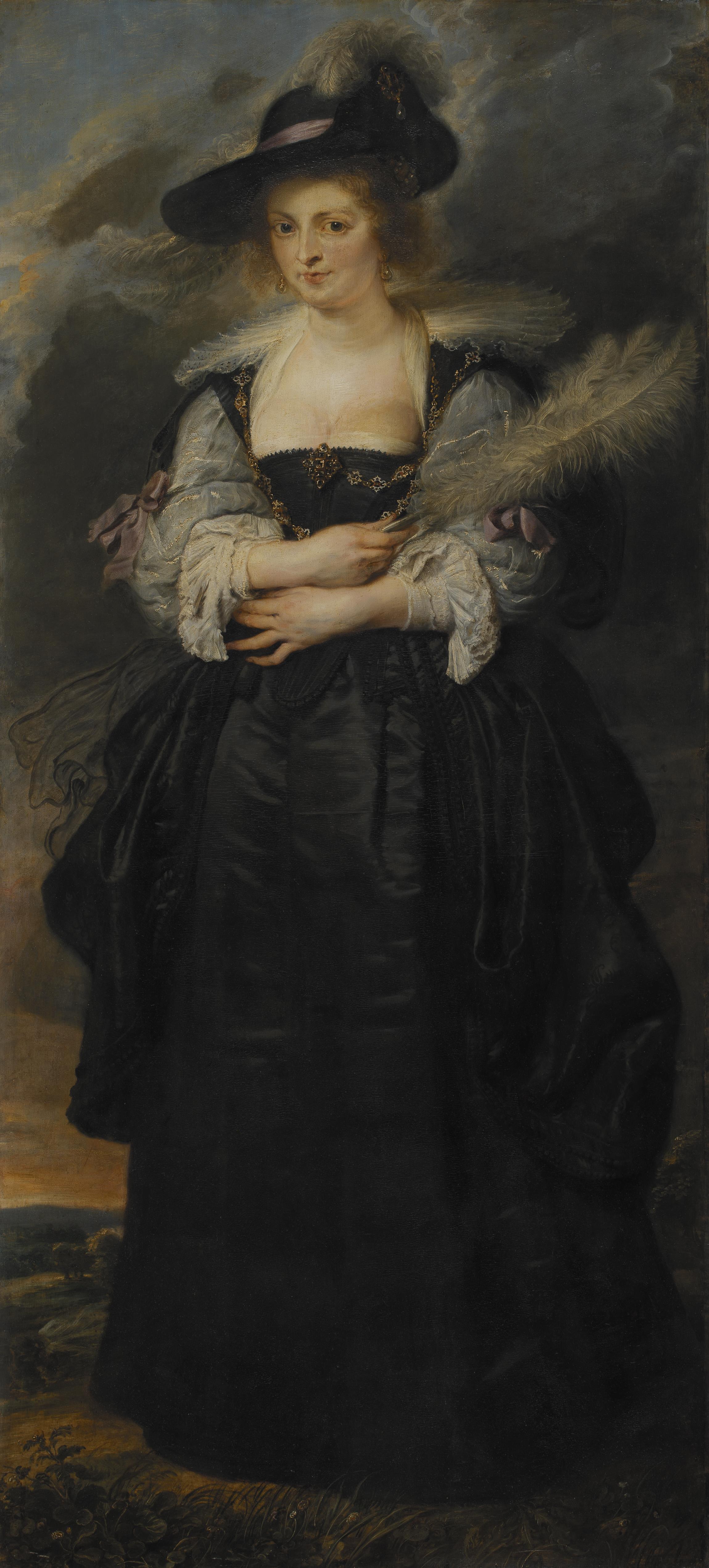
In 1630, Rubens married Helena Fourment, the daughter of a wealthy silk and tapestry merchant from Antwerp. The painter’s second wife appears frequently in his work from that date onwards.
The low horizon line and unusual format of the panel accentuate the monumental verticality of the figure, who is wearing a black satin dress and a wide-brimmed hat with an ostrich feather, in fashion among the prosperous bourgeoisie of the time.
The work was wrongly attributed to Van Dyck in the inventory of Sir Robert Walpole’s Collection (1752) and in the album of prints engraved from Catherine II of Russia’s paintings, at Houghton Hall (1788). The figure is identified, however, as ‘Rubens’ Wife’ and the piece was intended to remain in the painter’s household. The possibility that Rubens may have made an addition to the original composition cannot be ruled out.
An exuberant affirmation of the Baroque style in Flanders, the portrait bears witness to Rubens’ technical virtuosity in bringing out the textures and nuances of the black satin dress and in achieving an audacious and exuberant plasticity of form.
Object details
- Author(s)
- Peter Paul Rubens (1577 – 1640), Painter (artist)
- Title
- Portrait of Helena Fourment
- Origin
- Flanders
- Date
- c. 1630 – 1632
- Technique
- Oil on wood
- Materials
- Wood; Oil
- Dimensions
- Height 186,00 cm; Width 85,00 cm
- Inventory no.
- 959
Provenance
Incorporation
- Type
- Purchased
- Provenance
- Museu do Hermitage
- Intermediary
- Antikvariat
- Date
- March 1930