
Opening folio of a Quran manuscript
Gallery
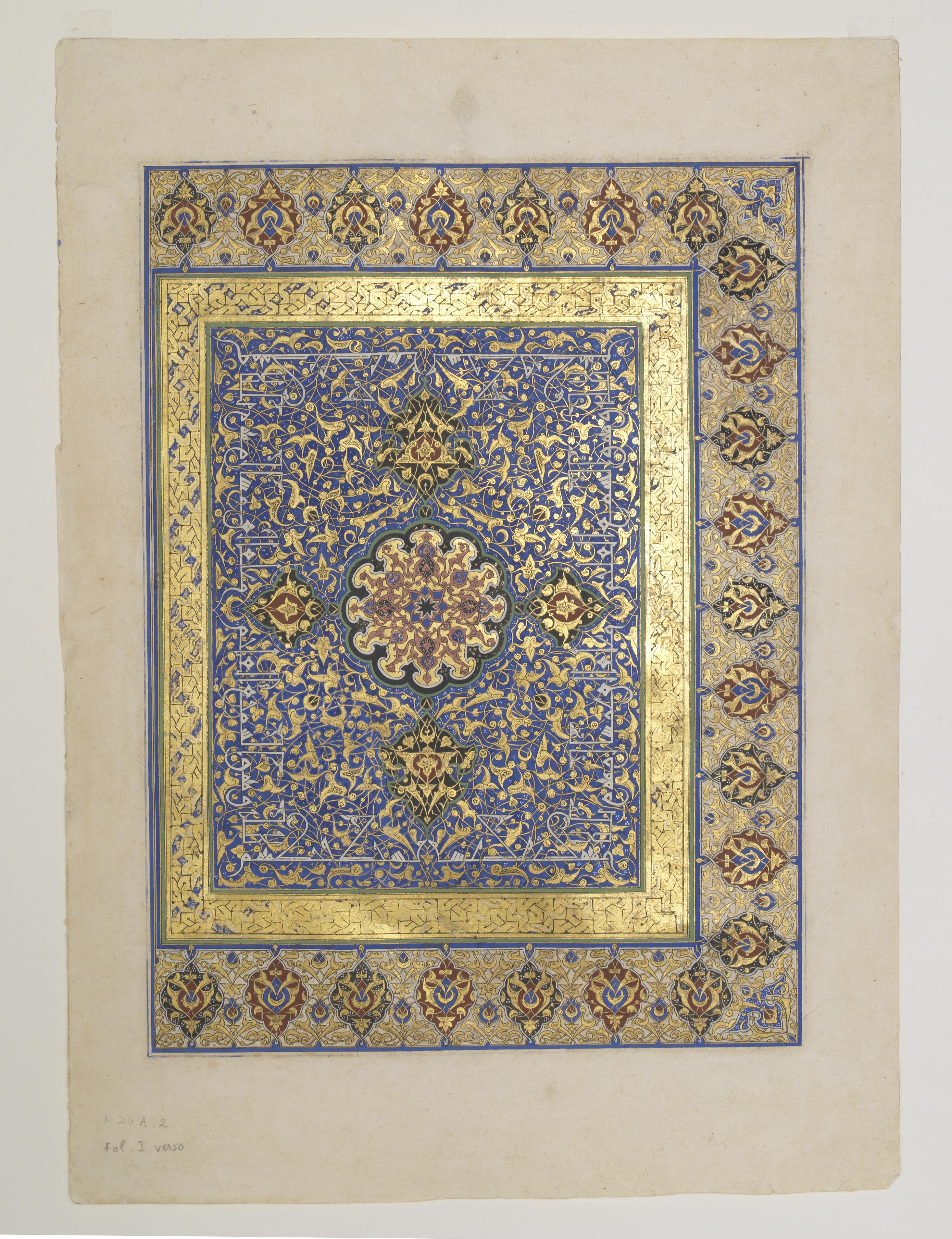
Knowledge and erudition are instruments of power. Books were commissioned and impressive libraries were constructed by the first Muslim elite, in Damascus, Cairo and Baghdad, in the eighth century, and this activity spread throughout the Islamic world.
After conquering Constantinople, in 1453, the Ottoman Sultan Mehmed II (r. 1444–46/1451–81), aged 21, claimed the title of Caeser of Rome. He then set about turning the city into an administrative and cultural centre, by establishing educational institutions [madrasas] and a palace library open to the ‘public’. In addition to Islamic manuscripts, the library held works in Greek, Latin, Armenian, Syriac, Italian and Hebrew.
Mehmed also promoted the production of books and more than 75 manuscripts, including these Quran folios, can be attributed to his patronage. His bibliophilia sparked major artistic developments in places like Venice (LA151 and LA140), which supported Mehmed’s ambition to cast his own portrait medal (inv. 2422).
Object details
- Title
- Opening folio of a Quran manuscript
- Origin
- Istanbul
- Date
- Ottoman period, second half of the 15th century
- Technique
- Ink, watercolour and gold on paper
- Materials
- Paper; Gold; Ink
- Dimensions
- Height 35,30 cm; Width 25,30 cm
- Inventory no.
- M20
Incorporation
- Type
- Purchased
- Place
- Paris
- Provenance
- Wildenstein
- Date
- 30 Jan 1928