
Artistic Networks of Trust
Collecting and Dealing in Times of War and Diplomacy
Event Slider
Date
- 17:30 / Cancelled 17:30 / Sold out Wednesday, 17:30
- 09:30 / Cancelled 09:30 / Sold out Thursday, 09:30
- 09:30 / Cancelled 09:30 / Sold out Friday, 09:30
Location
Auditorium 3 Calouste Gulbenkian Foundation
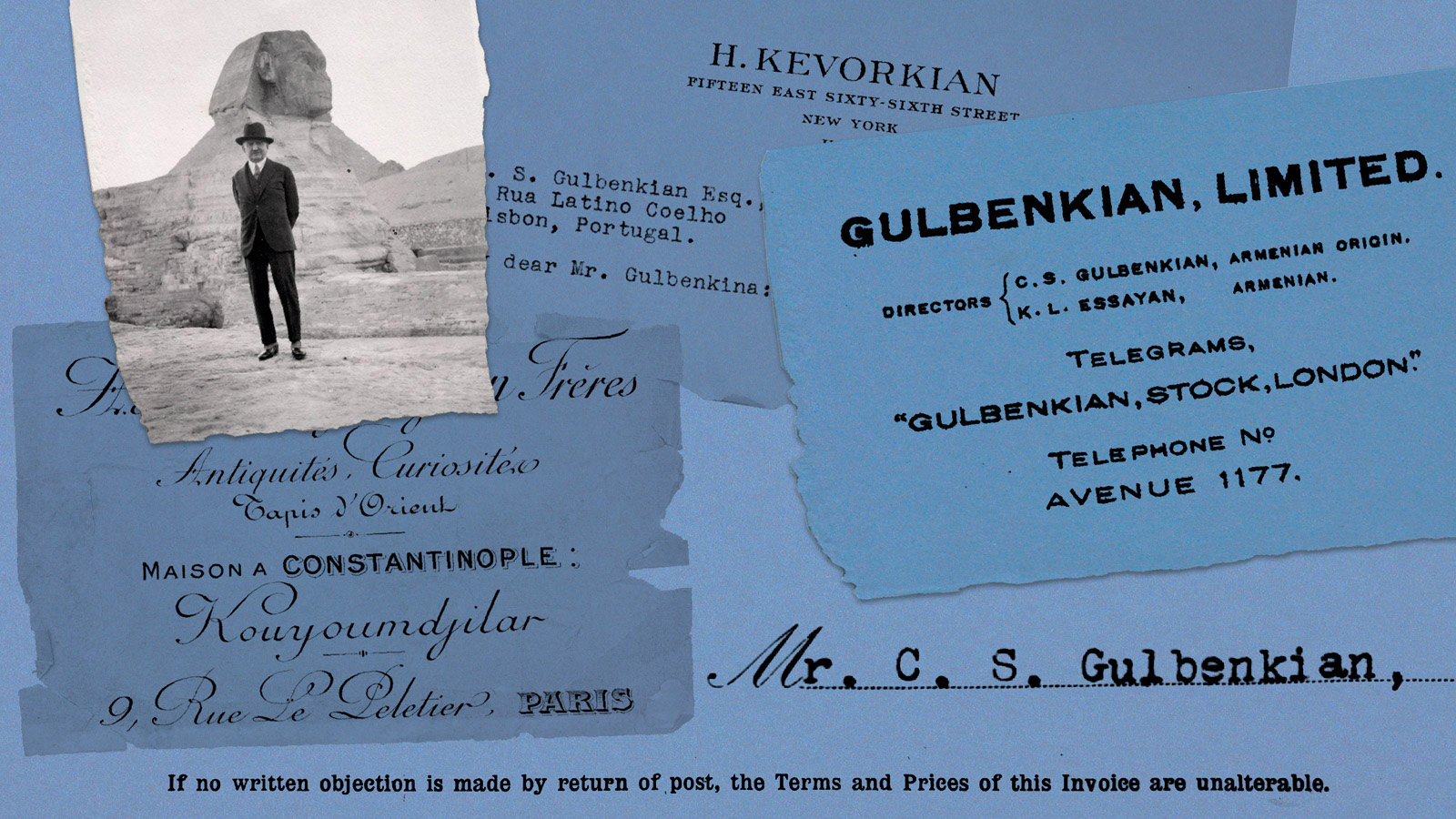
The Calouste Gulbenkian Conference in Art History, in its second edition, offers a reflection on networks of trust in the art world, through the lens of Calouste Gulbenkian’s life and transnational activities.
The second edition of the Calouste Gulbenkian Conference in Art History is dedicated to the theme “Artistic Networks of Trust: Collecting and Dealing in Times of War and Diplomacy.” Taking Calouste Gulbenkian as its central figure and placing particular emphasis on the role of Armenian networks, this event seeks to shed light on the complex social, political, and cultural dynamics that shaped the production, circulation, collecting, and display of artworks from the late nineteenth to the mid-twentieth century.
Calouste Gulbenkian emerges as a key figure within these transnational networks, acting as a collector, businessman, diplomat, and patron. His activity was closely intertwined with a broad network of relationships – many of them within the context of the Armenian diaspora – revealing how personal trust, community solidarity, and cultural affinities were essential to sustaining artistic exchange during periods of profound geopolitical upheaval.
Over the course of three days, a group of scholars will examine how these networks of trust supported the art world in contexts marked by migration, war, and diplomacy. Featuring new, unpublished research and insights from recent in-depth studies of the Gulbenkian Collection and Archives, the panels will explore a wide range of topics, including the emergence of art markets in the Qajar and Ottoman Empires; the impact of WWI and WWII on dealing and collecting; the role of international exhibitions in moving objects and people, as well as marking alliances; and the intersections between art, philanthropy, and benevolence.
The event will be livestreamed and available on this page.
Speakers
-
Alyson Wharton-Durgaryan
Honorary Senior Fellow at the University of Lincoln (United Kingdom), where she was Senior Lecturer (2015-2025). She works on Armenian architects, publishing ‘Architects of Constantinople: the Balyan Family and the History of Ottoman Architecture’ (2015), and ‘Forms of Belonging: Armenian Architects, Vernacular Style and Architectural Placemaking in the Ottoman East’ (forthcoming, 2025). She has also written on art dealer Dikran Kelekian.
-
Franziska Kabelitz
She has an MA in History of Art and Archaeology from the School of Oriental and African Studies in London, and worked as assistant curator at the Museum for Islamic Art in Berlin where she supported the planning and logistics of the Pergamonmuseum’s ongoing refurbishment works and the Museum for Islamic Art’s new permanent exhibition. Her research interests focus on the history of collecting and acquisition networks in the late nineteenth and early twenty centuries.
-
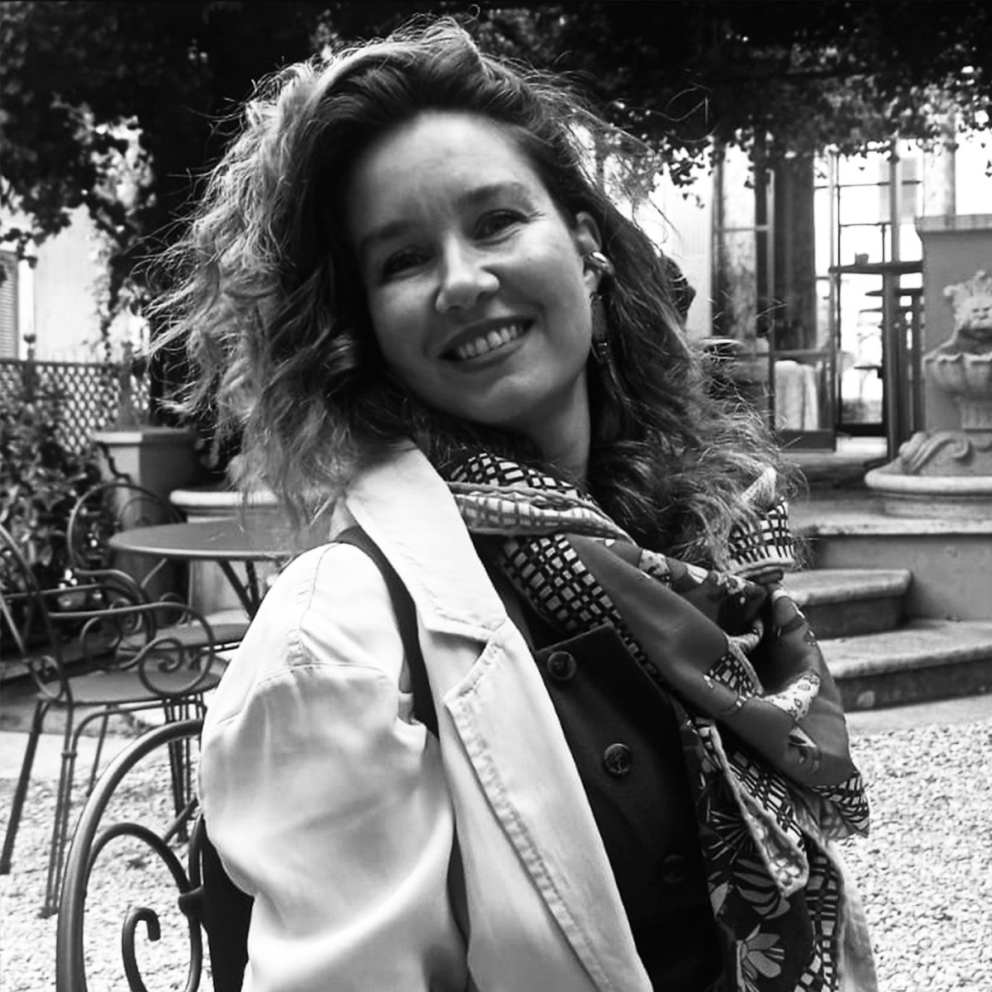
Gizem Tongo
With a PhD in Oriental Studies from the University of Oxford, Gizem Tongo has taught at Oxford, Boğaziçi University, Middle East Technical University, Hacettepe University, and Victoria and Albert Museum. Her research focuses on the late Ottoman Empire and the Greater War period. She co-curated the exhibitions ‘Mihri: A Migrant Painter of Modern Times’, and ‘Occupied City: Politics and Daily Life in Istanbul, 1918–23’. She is a British International Research Institute Postdoctoral Fellow.
-
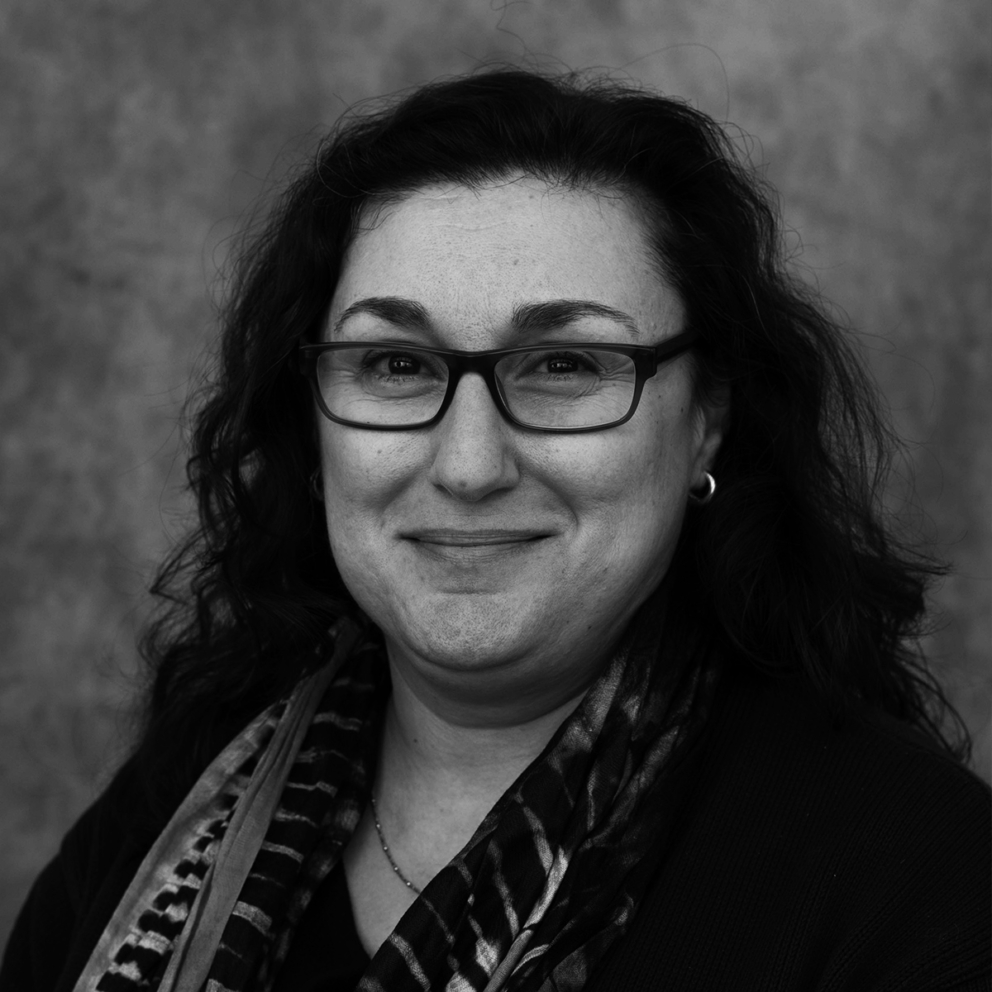
Heghnar Watenpaugh
Professor of Art History at the University of California, Davis. Her most recent book, ‘The Missing Pages: The Modern Life of a Medieval Manuscript, from Genocide to Justice’ is the only book to win awards from both the Society for Armenian Studies and the Ottoman and Turkish Studies Association. She is a fellow of the Guggenheim Foundation and a National Endowment for the Humanities Public Scholar. She is the President of the American Research Institute of the South Caucasus.
-
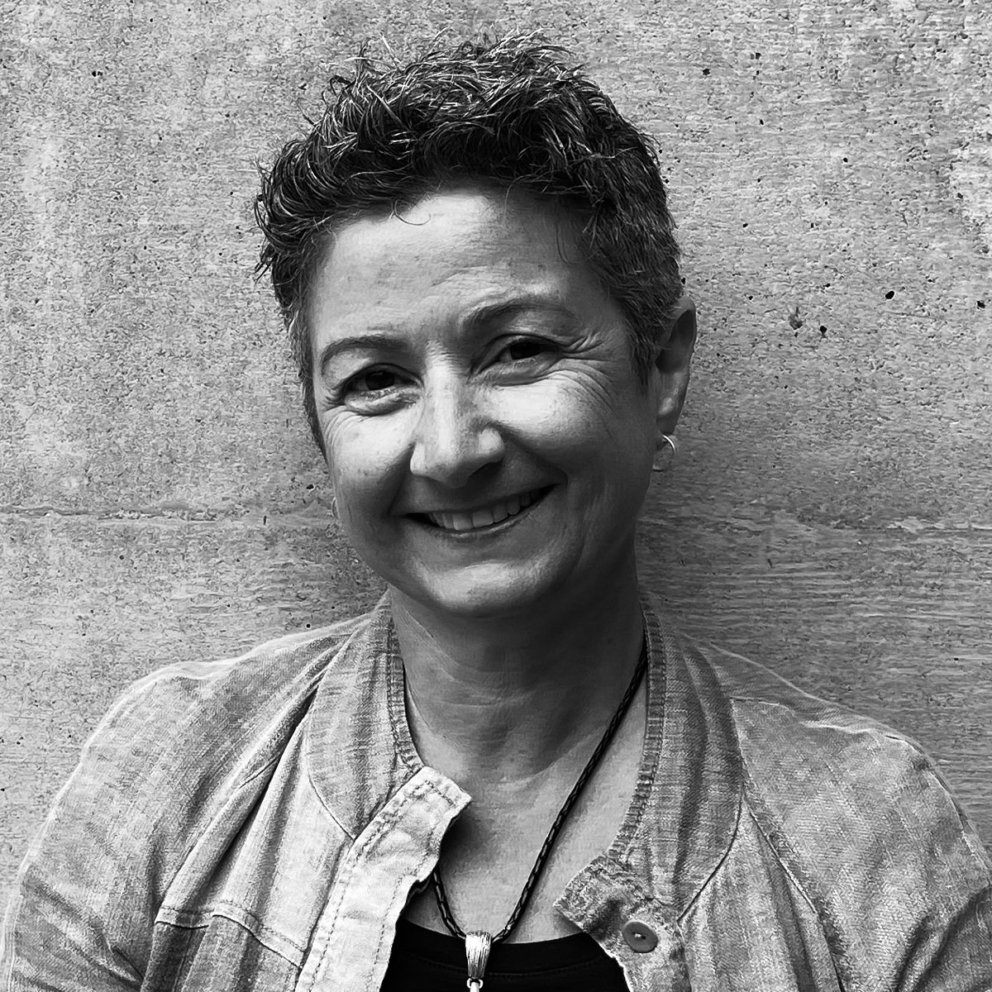
Houri Berberian
Professor of History and Meghrouni Family Presidential Chair in Armenian Studies at the University of California. Her research focuses on late 19th-early 20th-century Armenian history, especially revolutionary movements and women and gender. Her books include ‘Armenians and the Iranian Constitutional Revolution’ (2001), ‘Roving Revolutionaries’ (2019) and ‘The Armenian Woman, Minoritarian Agency, and the Making of Iranian Modernity, 1860–1979’ (2025), coauthored with Talinn Grigor.
-
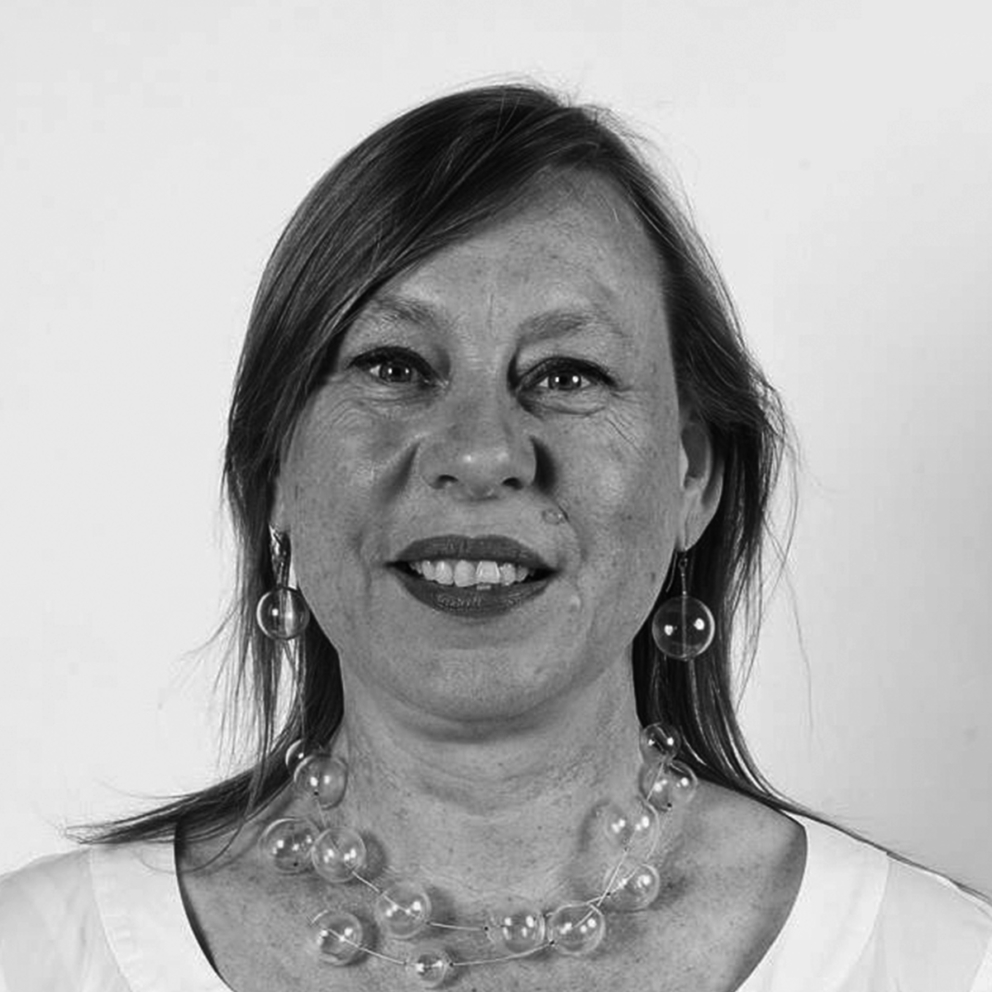
Jessica Hallett
Deputy Director of the Calouste Gulbenkian Museum and curator of the of the Islamic, Armenian, and Chinese Art collections. She organized the exhibition ‘The Rise of Islamic Art’ and has been developing the participatory project ‘Power of the Word’, which brings local knowledge inside the museum. She has contributed to a diverse range of peer-reviewed academic journals, books and catalogues, mainly on trade and innovation in the production of ceramics, textiles, tapestries, carpets, and glass.
-

Julia Phillips Cohen
Associate Professor of History and Jewish Studies at Vanderbilt University. She is the author of ‘Becoming Ottomans: Sephardi Jews and Imperial Citizenship in the Modern Era’ (2014) and ‘Sephardi Lives: A Documentary History, 1700-1950’ (2014) as well as articles in the American Historical Review, International Journal of Middle East Studies, Journal of Modern History, Jewish Quarterly Review, and Jewish Social Studies.
-
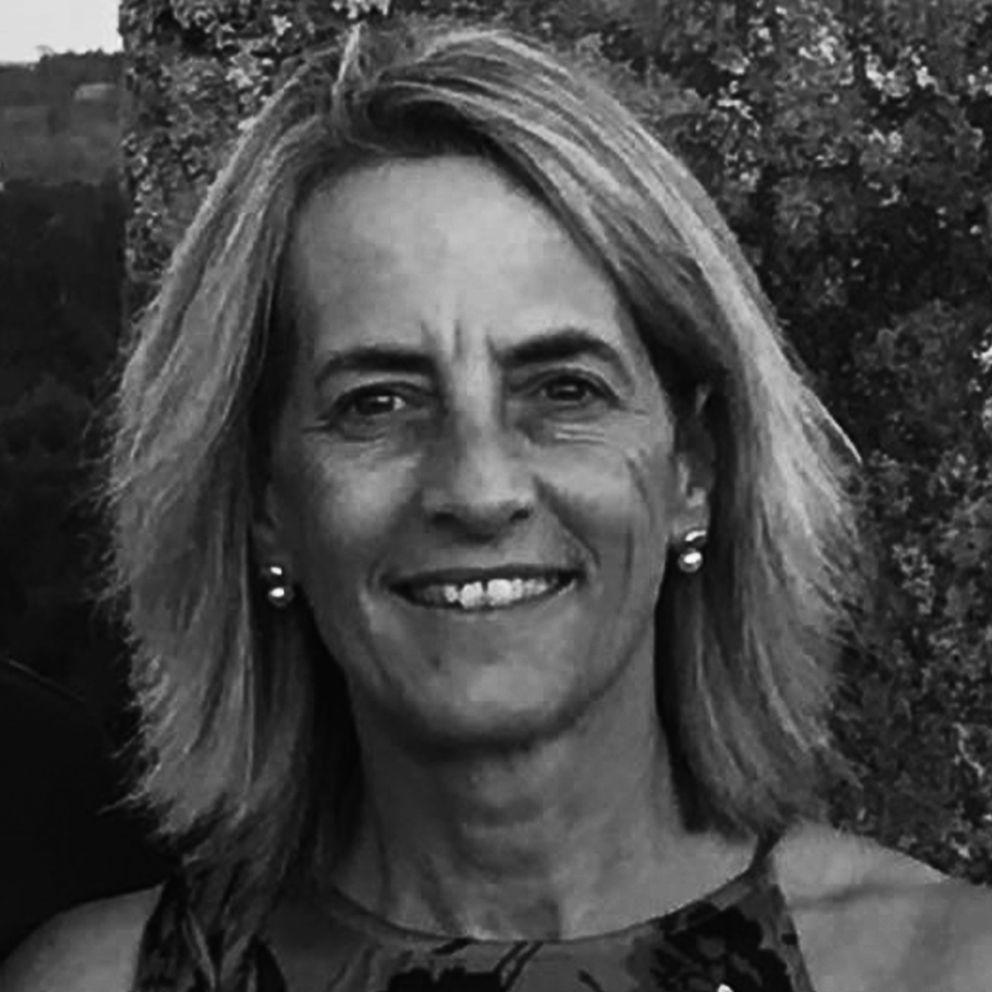
Mafalda Aguiar
Chief Archivist of the Gulbenkian Archives since 2017, she began her collaboration with the Calouste Gulbenkian Foundation in 2004. She graduated in History from NOVA FCSH (1984-88) and holds a post-graduate degree in Information Science – Archives at the School of Arts and Humanities, University of Lisbon (1989-1891). She began her career in 1989 at Instituto Português de Arquivos. She worked for 10 years at the Audiovisual Archive of SIC – Sociedade Independente de Comunicação (1992-2001).
-
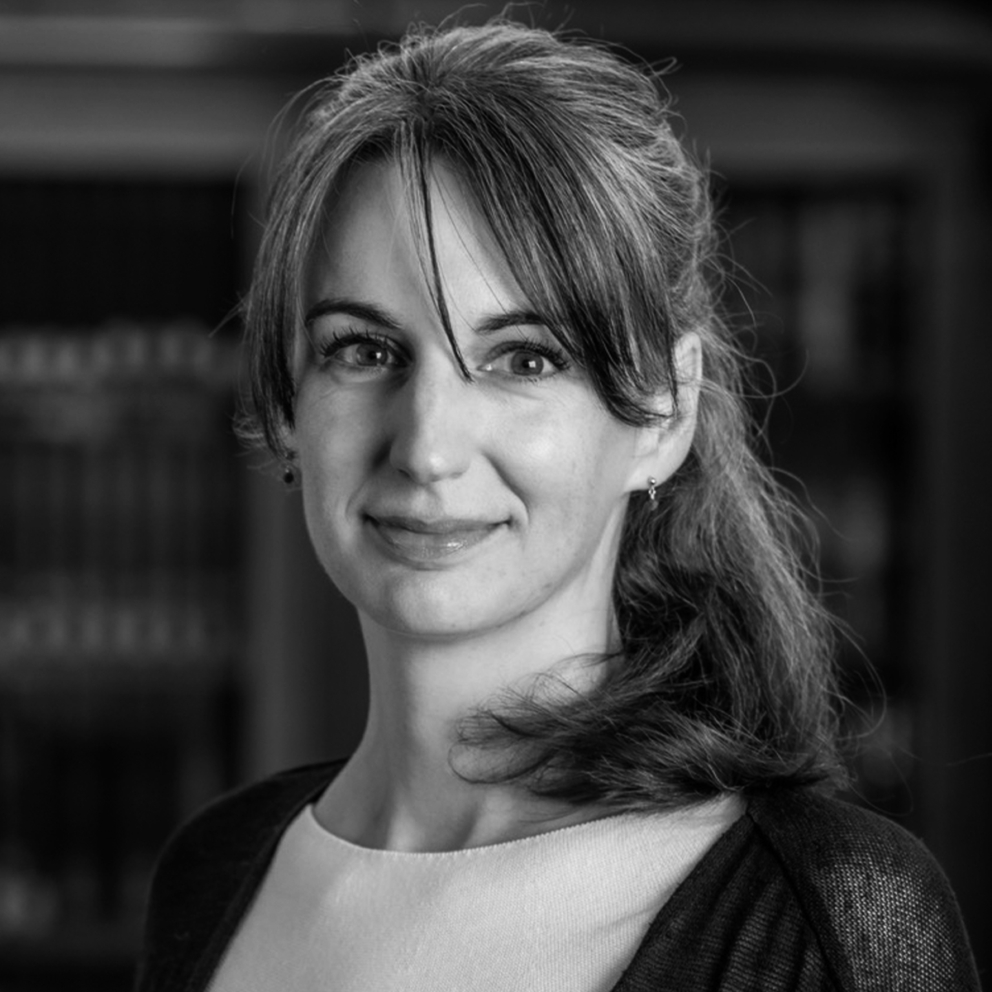
Margaret S. Graves
Minassian Associate Professor of Islamic Art and Architecture in the Department of History of Art and Architecture at Brown University. She is a specialist in the art of the Islamic world, with a primary research focus on the plastic arts. She received her PhD in 2010 from the University of Edinburgh and her latest book, ‘Invisible Hands: Fabrication, Forgery, and the Art of Islamic Ceramics’ will be published in early 2026.
-
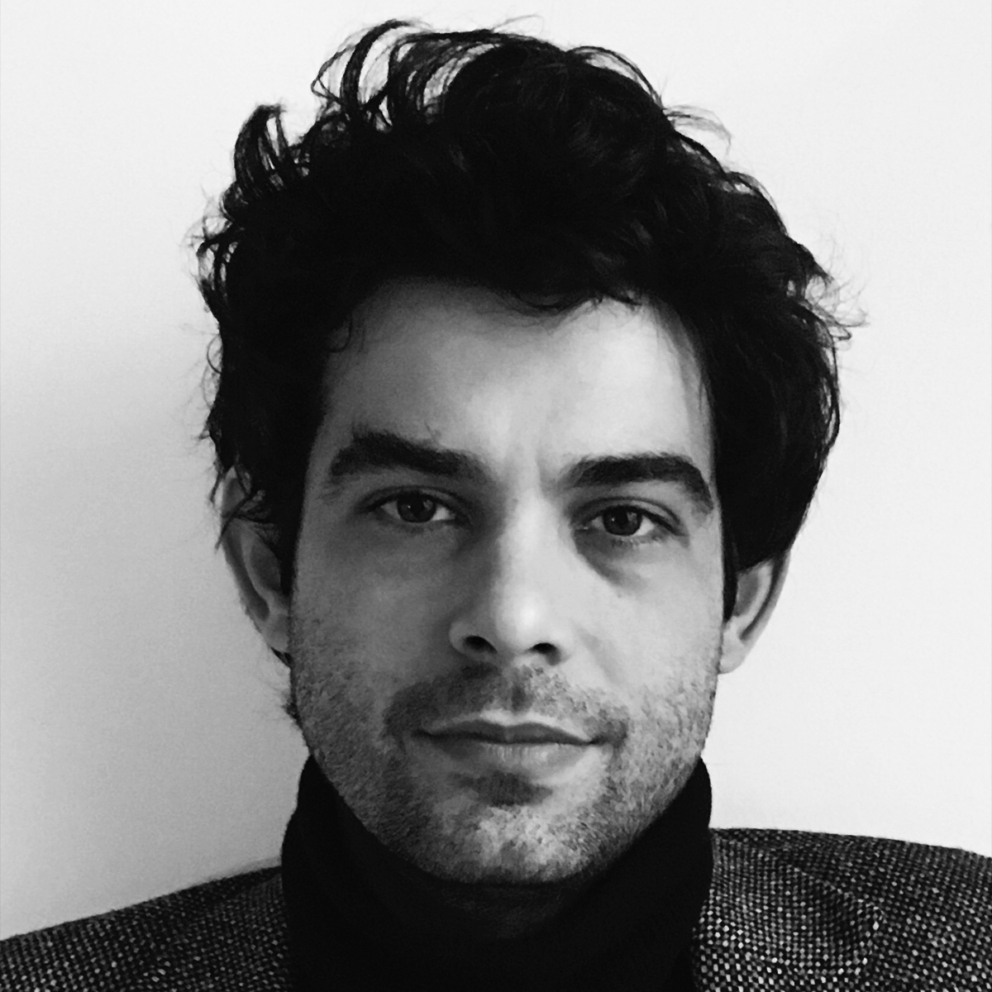
Mattes Lammert
Lecturer – Research at the Institute of Art History of the Universität Zürich. Previously, he led the research project “Acquisitions made by the Berlin State Museums on the Parisian Art Market during the Occupation 1940-1944” at the Technische Universität Berlin, in collaboration with the Staatliche Museen zu Berlin and the Deutsche Forum für Kunstgeschichte Paris. He is also a scientific advisor to the current ‘ProvEnhance’ project of the Musées royaux des Beaux-Arts de Belgique.
-
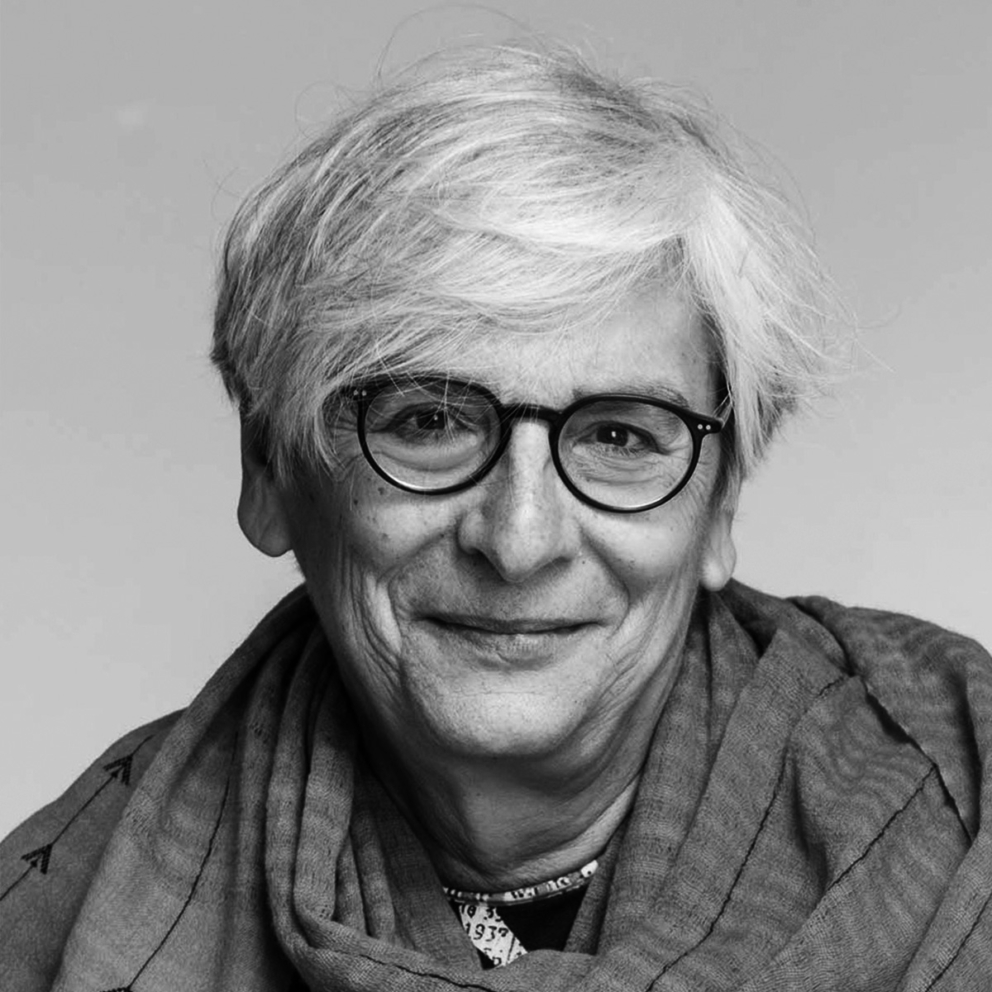
Mercedes Volait
CNRS emeritus research professor at InVisu, a department of INHA in Paris. Positioned at the intersection of architecture, Middle Eastern studies and art history, her research specialises in the visual and material history pf modern Cairo, with particular attention to expertise, patronage, and cross-cultural interplays. She has published extensively on the transformation of the Egyptian capital, its visual representations, and the commodification of its crafts and decors after 1850.
-
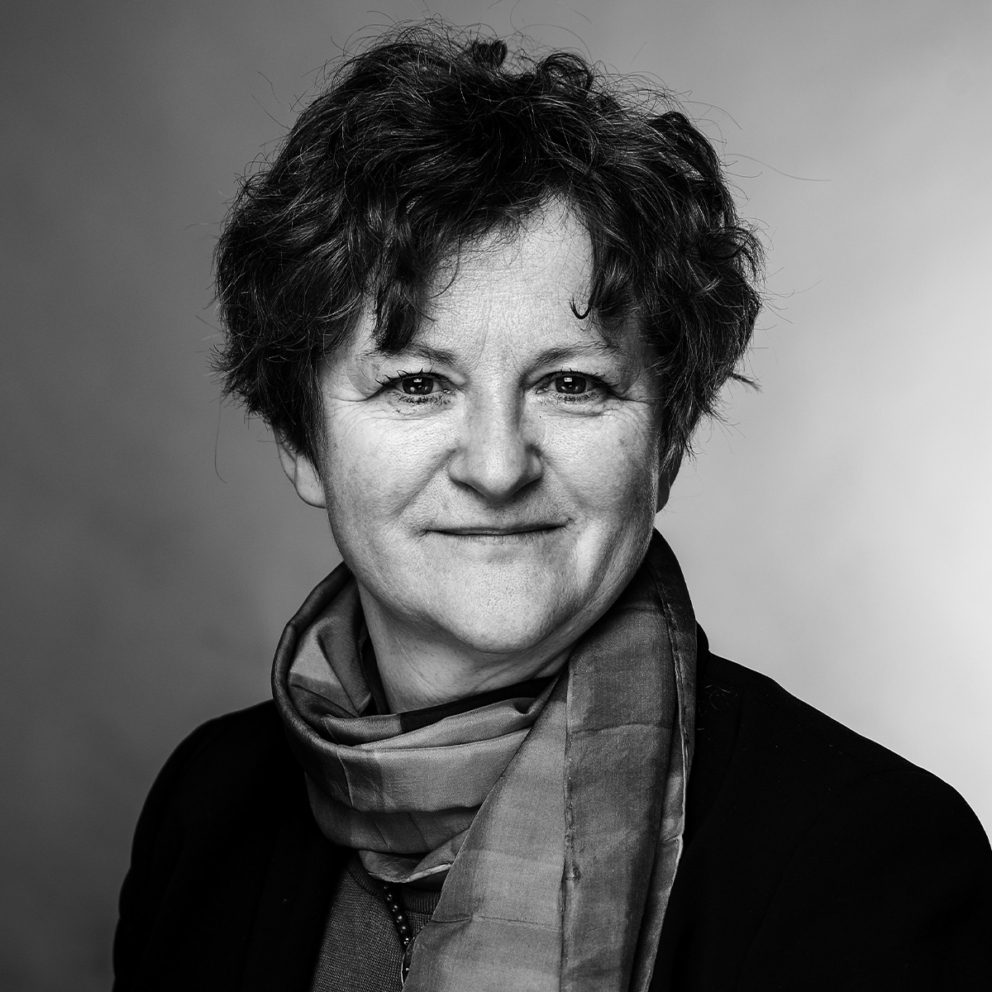
Nathalie Neumann
French-German art historian. She has curated exhibitions and participated in conferences related to documentary photography and the cultural transfer between Germany and France. For the last 15 years she has worked on numerous publications, talks, conferences and exhibitions on the art collection of Julius Freund and aspects of restitution of looted art. She works as a provenance researcher on the porcelain collection of the Vonderau Museum in Fulda.
-
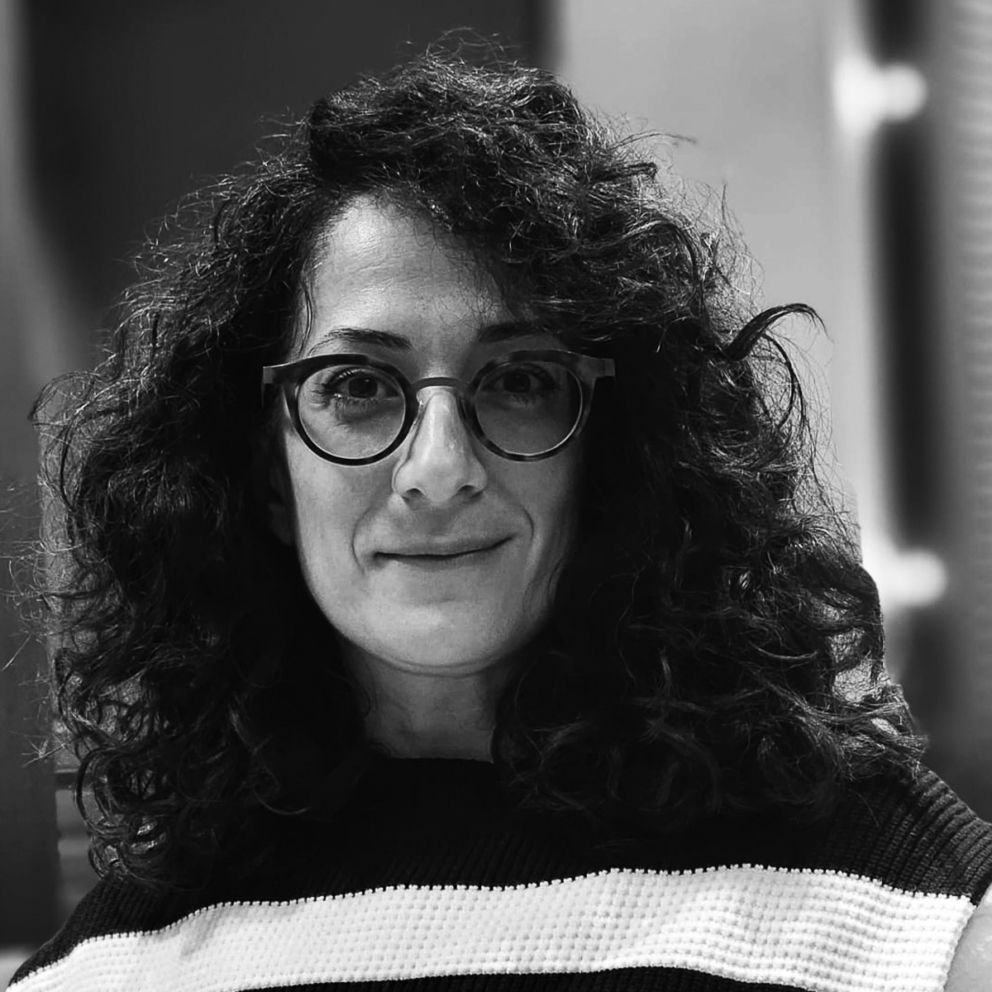
Negar Habibi
Art historian and the inaugural holder of the Mossadegh Foundation Lectureship in Iranian Studies at the University of Geneva, Switzerland. Her research focuses on artistic production and women’s patronage in seventeenth-century Iran, as well as on Persian and Islamic art collecting in twentieth-century France. Her works include ‘Ali Qoli Jebâdâr and Safavid Occidentalism’, ‘Shahnameh: The Book of Persian Kings’, and ‘The Idea of the Just Ruler in Persianate Art and Material Culture’.
-
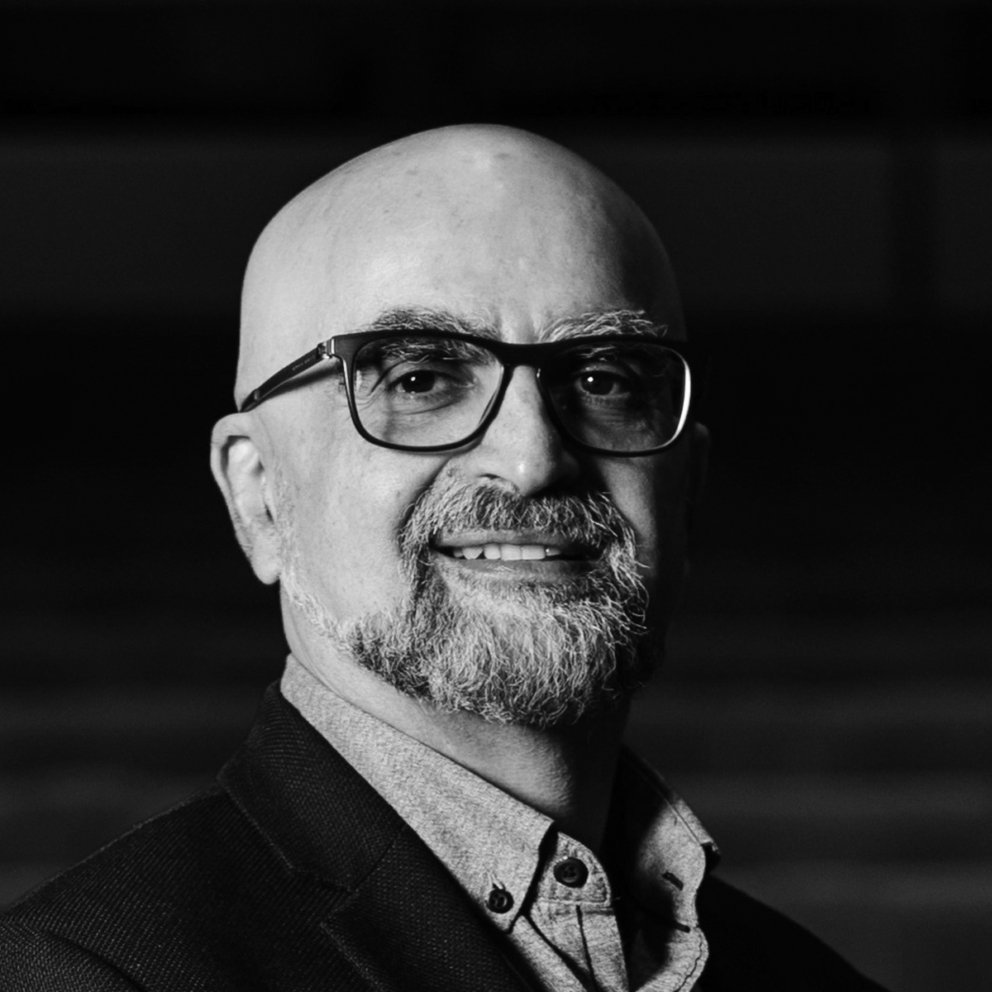
Razmik Panossian
Director of the Armenian Communities Department at the Calouste Gulbenkian Foundation since 2013. He obtained his PhD from the London School of Economics and Political Science, where he also taught. He is the author of ‘The Armenians: From Kings and Priests to Merchants and Commissars’, and various other academic publications on Armenian identity, politics and diaspora.
-
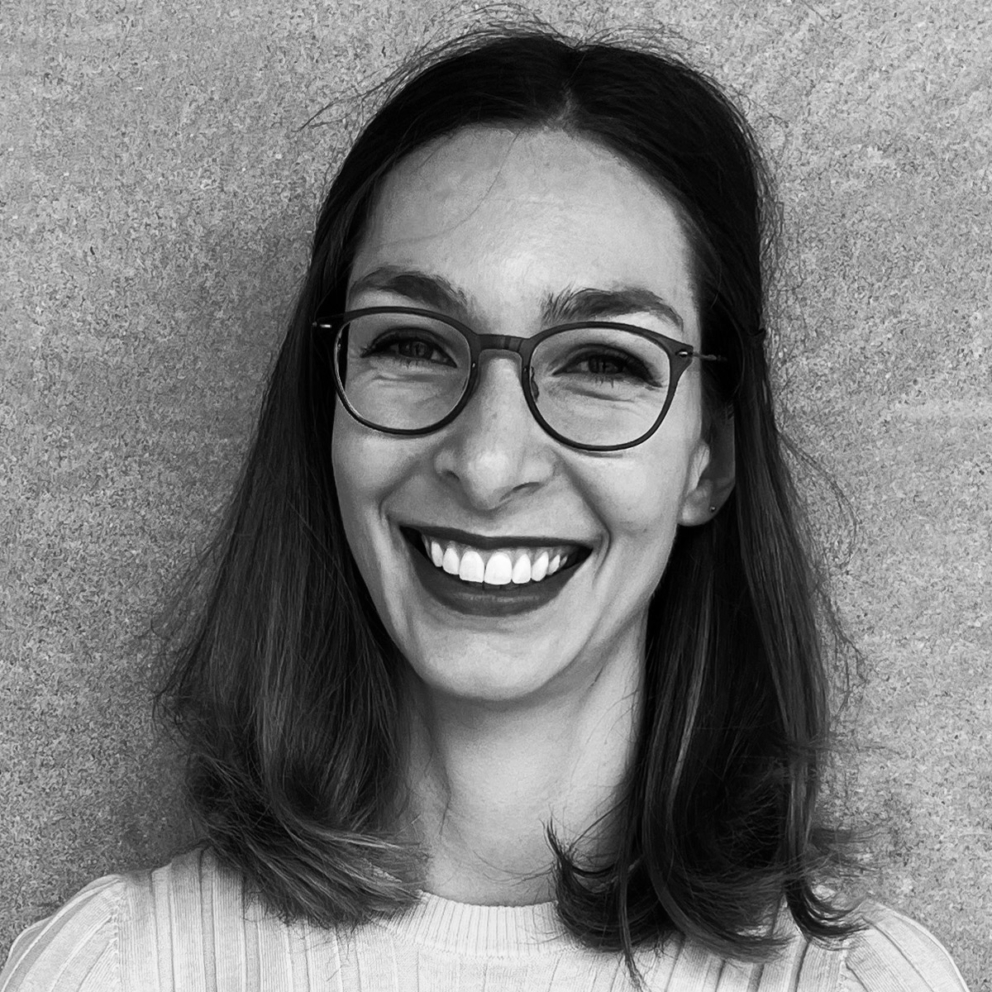
Roxanne Goldberg
Art historian and academic editor. Her research focuses on aesthetic theory and social belonging in relation to the cultural brokers who introduced Islamic art to the United States in the late 19th and early 20th centuries, including the men and women in the carpet business who were often Armenians in diaspora. Roxanne Goldberg received her PhD from MIT and is currently a postdoctoral researcher at ETH Zurich.
-
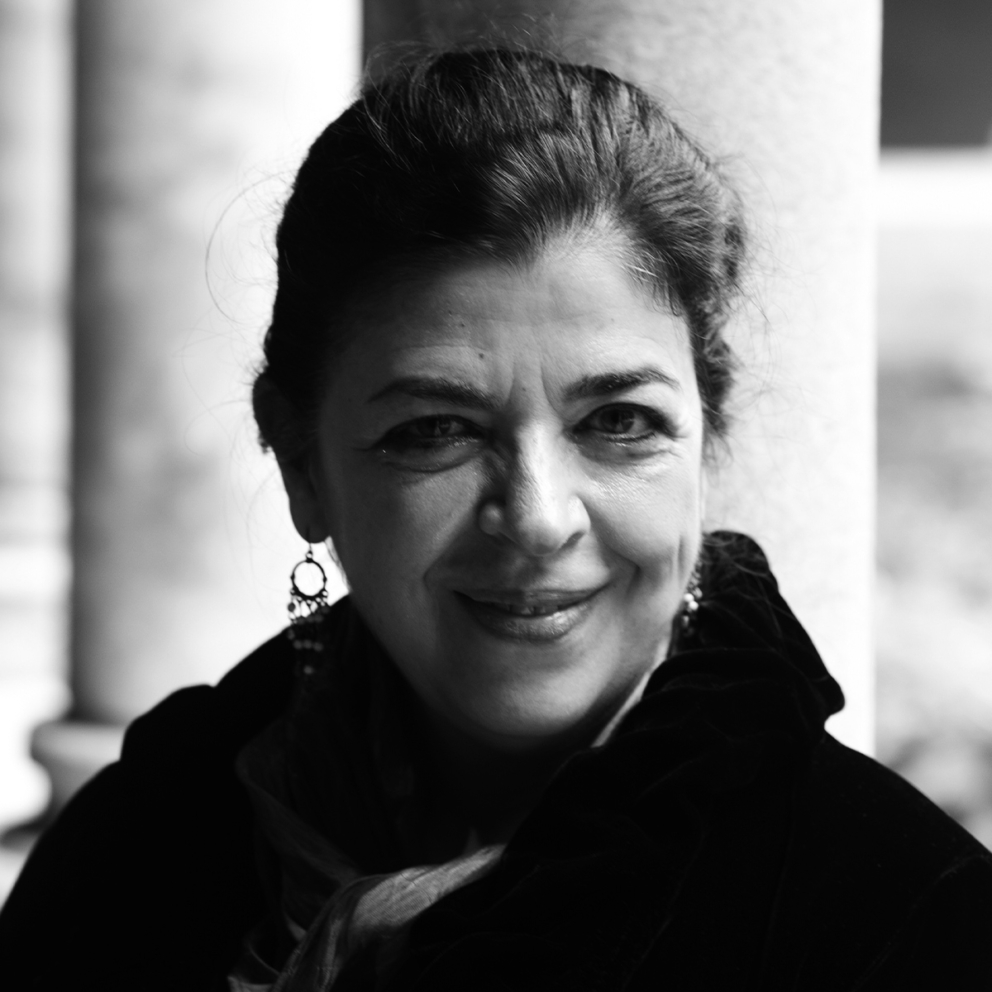
Sato Moughalian
>She holds two MAs from CUNY Graduate Center, where she is a third-year History PhD student studying intersections of modern Armenian visual production, mass violence, national identity and state formation. Her MA thesis was co-winner of the 2023-24 Provost’s Thesis Award. She was a classical flutist and won the 2013 Ramon Llull Prize for Creative Arts. Her book, ‘Feast of Ashes: The Life and Art of David Ohannessian’ will be published in Turkish in 2025.
-
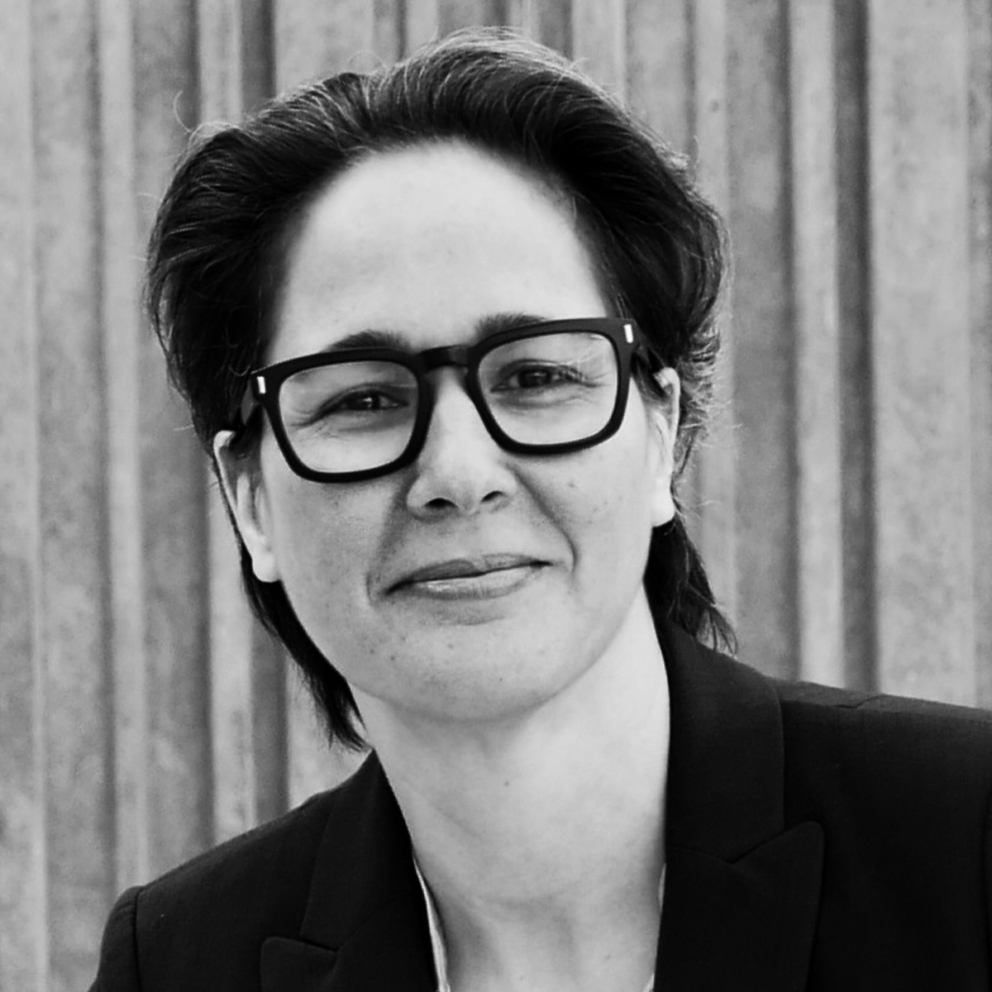
Talinn Grigor
Professor of Art History at the University of California, Davis. Her research focuses on late 18th- to 20th-century architectural and art histories through postcolonial, feminist, and critical race theories grounded in Iran, Armeno-Iran, and Parsi India. Her books include ‘The Persian Revival’, ‘Contemporary Iranian Art’, ‘Building Iran’ and ‘The Armenian Woman, Minoritarian Agency, and the Making of Iranian Modernity, 1860-1979’, coauthored with Houri Berberian.
-
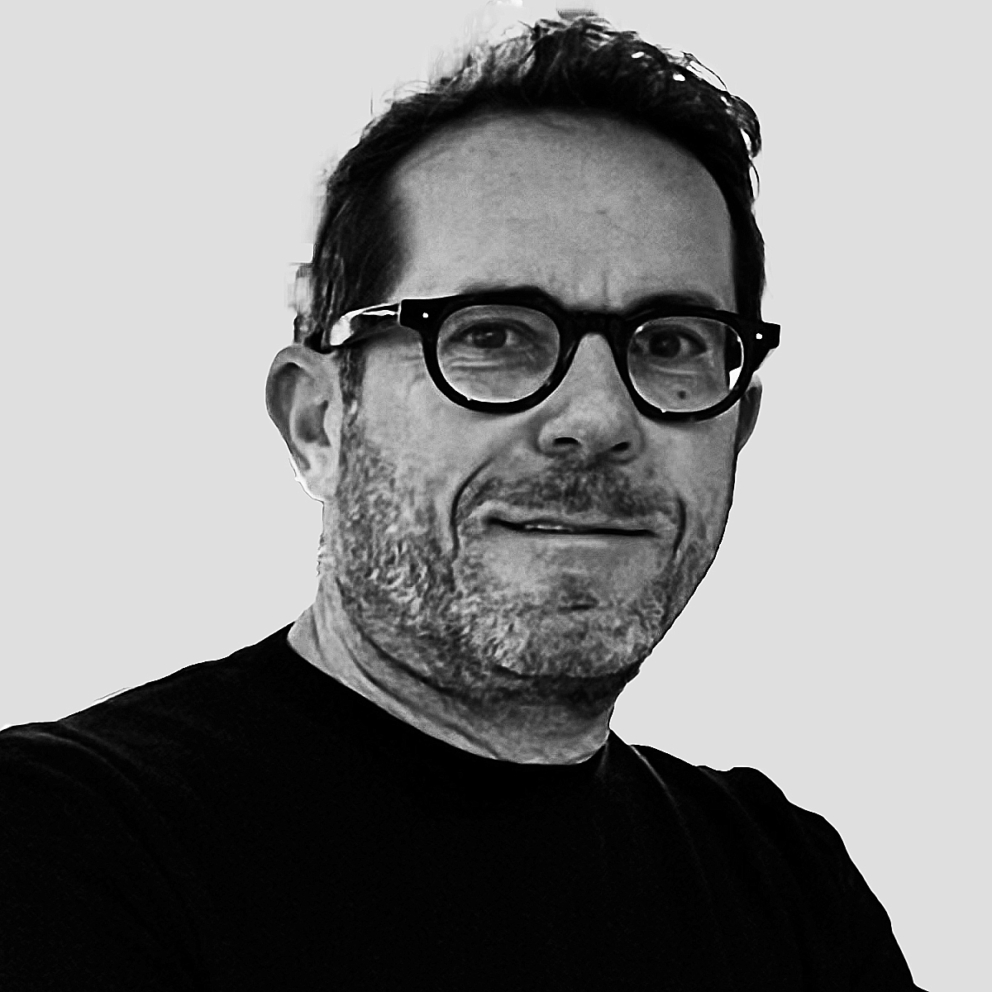
Vazken Davidian
Associate Faculty Member and Research Fellow at the Department of Asian and Middle Eastern Studies, University of Oxford. He holds PhD in Art History from Birkbeck College. Co-editor-in-chief of the journal ‘Études arméniennes contemporaines’. Author of several articles on Ottoman Armenian art and cultural history. He is currently completing the monograph ‘Art, Realism and the Politics of Social Reform: Reading Late Nineteenth-Century Visual Representations of Ottoman Armenian Subalterns’.
-
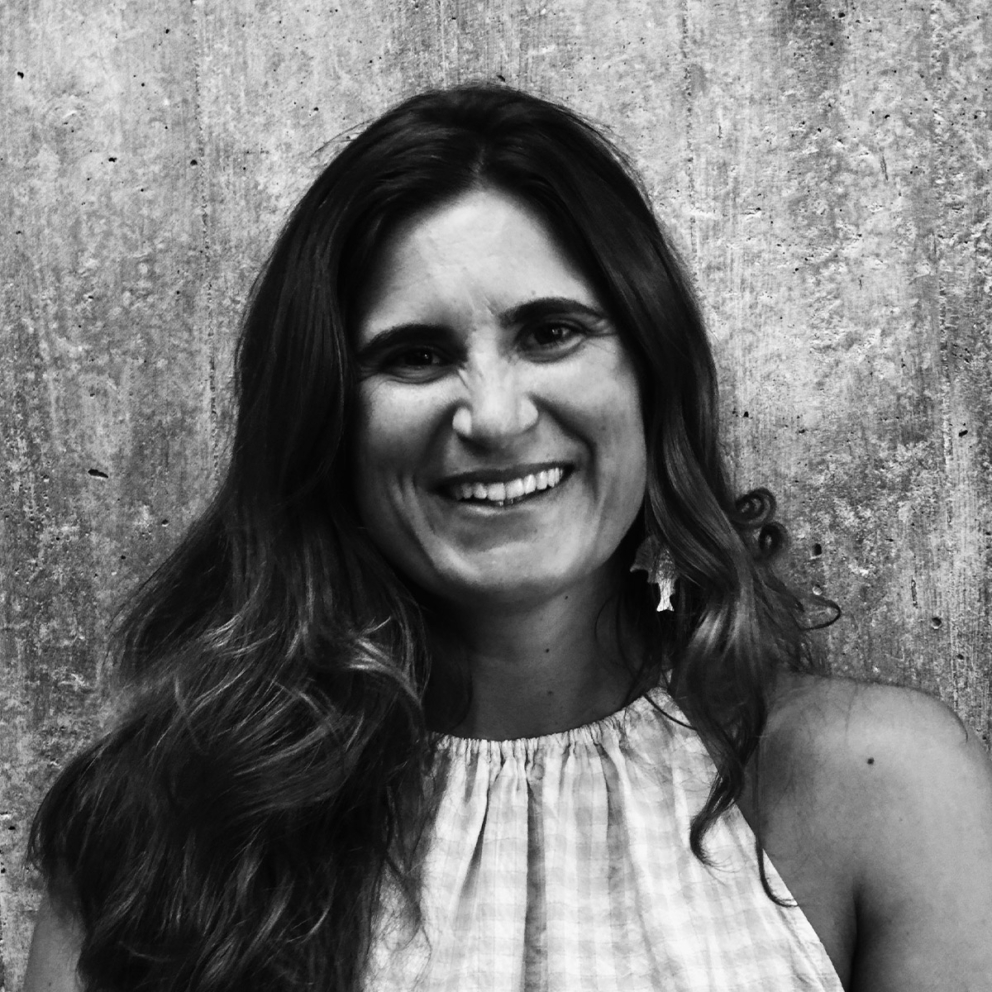
Vera Mariz
Research curator at the Calouste Gulbenkian Museum. She holds a PhD in Art History and studies 19th- and 20th-century collecting and art markets, focusing on transnational networks. She held two postdoctoral positions at the University of Lisbon. Her work has appeared in the Journal of the History of Collecting, the Getty Research Journal, The Rijksmuseum Bulletin, Ge-conservación, and MDCCC 1800. She is head of the Portuguese chapter of the Society for the History of Collecting.
-
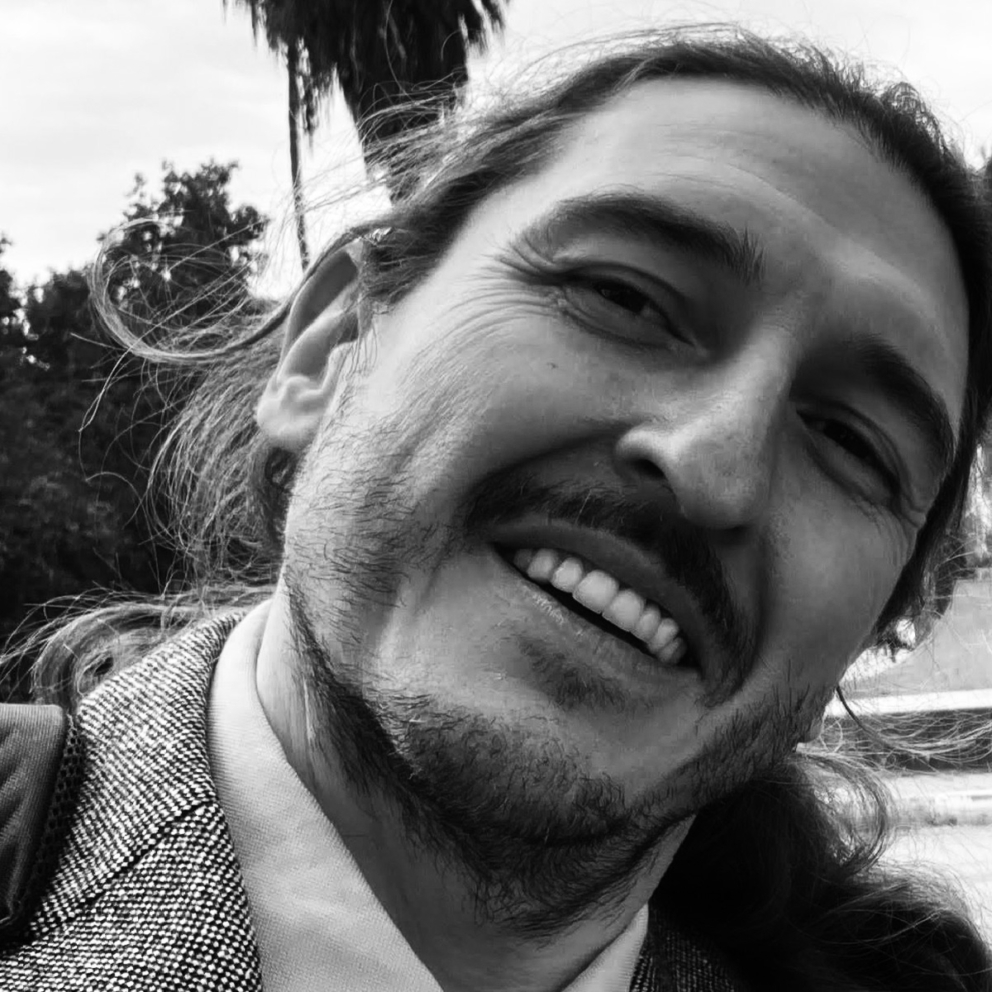
Yaşar Tolga Cora
Associate Professor at Bogazici University, Istanbul. He has published on the social and cultural history of the Armenian communities in the late Ottoman Empire. His works appeared in journals including the Journal of the Economic and Social History of the Orient and the International Review of Social History. His current research is on the Armenians’ role in the commodification of Ottoman textiles and their transformation into identity markers in the late nineteenth century.
-
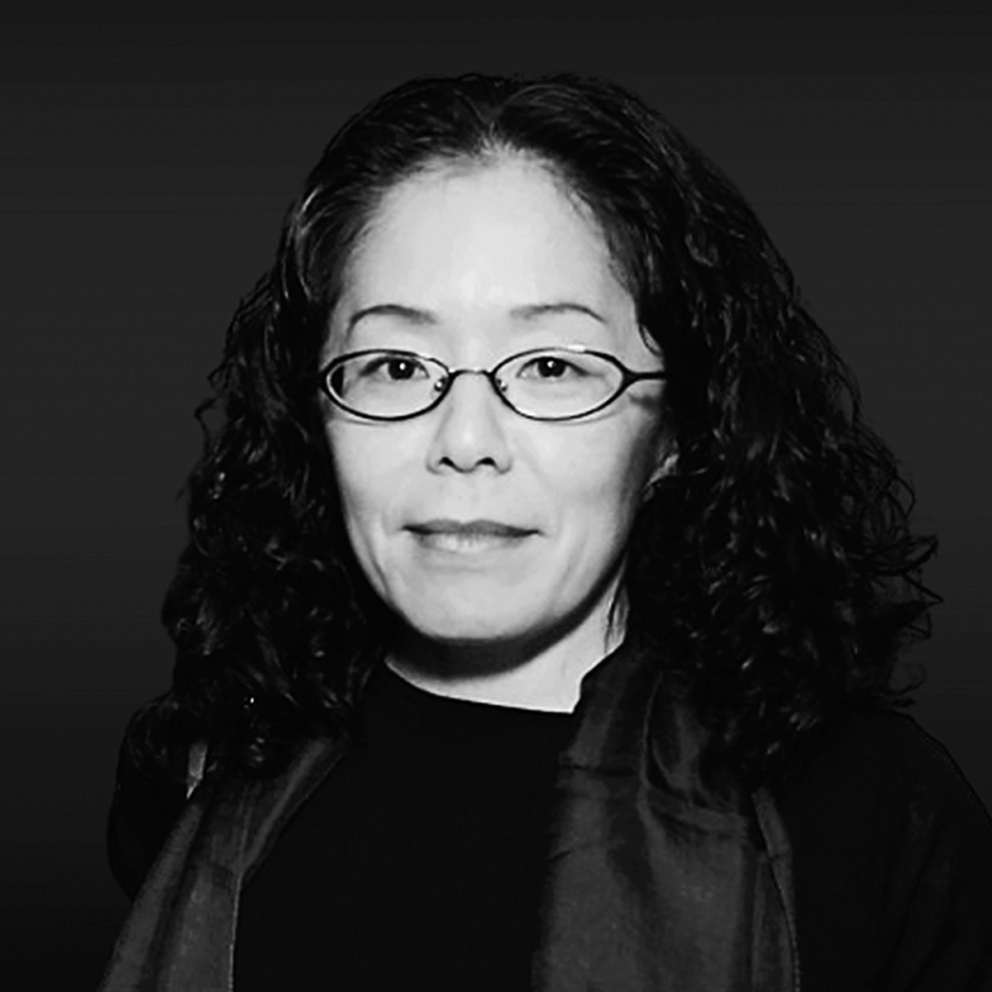
Yuka Kadoi
Art historian currently directing the project ‘Persica Centropa: Cosmopolitan Artefacts and Artifices in the Age of Crises (1900-1950)’, at the University of Vienna. Her research interests lie in the mobility of artefacts, history of collecting and critical museology. She is the author or editor/co-editor of seven books, as well as the author of more than sixty articles. She is finalising her second monograph, ‘The History and Historiography of Persian Art, 1900-1935’.
Programme
17:30 / Registration
18:00 / Welcome
Keynote
18:15 / Of Photography’s Silence: Nevarte Essayan Gulbenkian as the Ephemeral Sitter, the “Master” Hostess, & the Posthumous Patron in Transnational Networks of Diplomacy
Anchoring its argument in the vast archives at the Calouste Gulbenkian Foundation, this keynote address makes a case for Nevarte Essayan Gulbenkian’s pivotal role in the staggering success of her husband’s wealth that enabled his art collection and patronage as well as his global charity within and beyond Armenian communities. Calouste’s economic capital – and the tropes of Western high society that both fueled and sustained it – were conditioned on a highly disciplinary, even retributive, control, domesticated by protocol and paperwork. Deploying feminist and critical race theories on the discursive use of the invisible, and thus, ‘master’ hostess, we demonstrate that through strategies historically related to the ‘female domain’, Nevarte navigated the power politics between the Essayan-Gulbenkian’s Armenian value-identity and their European bourgeois value-lifestyle. Barred from Calouste’s patriarchal privileges, she engaged her women-to-women diplomatic network, hosted flawless ‘parties’, forewent public life, particularly career and cameras, donating upon her death the only asset at her disposal – her jewels – to fund Armenian children’s education. Our keynote address, thus, exposes the critical role of minoritized ‘wives’ such as Nevarte, who enabled her oil magnate husband’s rise to riches, rendering his art dealing and collecting possible.
09:30 / Registration
10:00 / Opening speech
Panel 1 – Dealers Origins and Networks of Trust
Moderation
10:20 / From Merchant, to Dealer, to Collector: Anatolian Origins, Business Practices, and Trust in Calouste Gulbenkian’s Early Career
Calouste Gulbenkian moved to London in the 1890s but did not leave the Ottoman Empire behind. One of the most striking resources of the Gulbenkian Archives is correspondence with family running businesses ‘back home’. From these letters, we get a sense of activities and networks, including trade in what would now be classified as art objects, alongside wool, mohair, opium, grain, oil, textiles, and other things. The late 1890s also coincided with bringing substantial family items to London, including antiquities.
This communication takes in hand the transition of Calouste from a merchant, working on behalf of his family, to setting up himself as an independent actor. We investigate procurement of artworks in London (from Christies, Gimpel and so on). Yet, we also chart relationships with fellow Anatolian Armenians, – Hagop Kevorkian, Kirkor Minassian and Dikran Kelekian, – involving collaborative businesses, discrete assignments, and bank rolling. Had Calouste not left the business after all?
10:45 / The Ispenian Clan and the Salvage Trade in Twentieth-Century Cairo
The ascension of the Ispenians illustrates a successful family business in the trade of antiquities, from a modest shop in an Istanbul bazar to a showy gallery by the Pyramids in Cairo after 1936. One important line of their business was the trade in, and repurpose of, salvaged material at a time when reuse was being practiced in Cairo on a large scale. Using documents provided by a descendant, and scattered records, the presentation will situate Kevork Ispenian and his son Boghos (later Paul) Ispenian within the burgeoning scene of antiques dealing in 20th-century Cairo, and will focus on Paul Ispenian (1884-1970) who cut a distinctive figure of dealer/decorator-diplomat/patron navigating effectively between Cairo, Paris and Venice.
— Intermission 20 min. —11:30 / Jews and Armenians as Dealers of Islamic Art: Perspectives from Constantinople and Paris
Although Ottoman Armenians and Jews alike were prominent in the Islamic art and antiquities trade of the modern era – often working in the same fields, in the same neighborhoods, on the same streets, and even in the same buildings – we still know almost nothing about their social or working relations.
Using clues scattered across a variety of archives, this talk explores the tantalizing, if fragmentary, evidence of Armenian-Jewish partnerships forged during the final decades of Ottoman rule, from the imperial capital to new diasporic centers like Paris.
11:55 / Banking and the Antiquities Trade: Translating Artefacts into Assets
Financial information is part of the art historical substrate. Invoices, receipts, and insurance records are a major part of the document trail, and we sometimes even have stock books and business accounts to work with. The archives are full of artefacts that have been transformed into financial values attached to identifying documents and photographic reproductions. Although we have come to think of this as the natural condition of collected objects, it is in part an outcome of the close relationship between international banking and the late colonial antiquities trade, industries that developed and expanded in symbiosis during the late nineteenth and early twentieth centuries. This presentation identifies and explores instances where the finance industry and the Middle Eastern antiquities trade overlapped within the same families and even in the activities of individuals, asking how the continuum between colonial-era banking and antiquities brought about the miraculous transubstantiation of artefacts into assets.
12:25 / Debate
— Intermission 90 min. —Panel 2 – Dealing, Collecting, Diplomacy and War
Moderation
14:00 / Gulbenkian(s), Armenians and Persia: Art and Diplomacy 1919-1941
This paper examines Calouste Gulbenkian’s extensive and multifaceted connections with Iran between 1919 and 1941. Based exclusively on documents preserved in the Calouste Gulbenkian Archives in Lisbon, it investigates his close and multilayered collaboration with the Iranian Embassy in France, where he served as Commercial Attaché, and contrasts his methods and strategies with those of his son, Nubar, who held the same post in the United Kingdom.
The study highlights how Calouste’s approach wove together strategic diplomacy, commercial expertise, and a far-reaching Armenian network. It culminates with a case that may be seen as emblematic of Gulbenkian himself: his acquisition of European paintings for the Imperial Court of Iran on the eve of the Second World War.
14:25 / Dealing and Collecting Antiquities During the German Occupation of France
The rise of Paris as the capital of the antiquities trade at the beginning of the 19th century was due not least to Armenian dealers. Although the objects they sold can today be found in almost every major museum worldwide, very little is still known about them.
This research gap is particularly problematic with regard to wartime transactions. During the German Occupation, the Berlin State Museums acquired numerous antiquities from the Parisian art market. Their provenance has recently been examined for the first time. The results may help us better understand the importance of Armenian dealers for the antiquities trade and their networks. At the same time, they can also illustrate the specific challenges associated with researching the provenance of antiquities. In this context, the holdings of the Calouste Gulbenkian Foundation are particularly relevant – due to the lack of preserved dealer archives – not only as a museum, but as the archive of a collector who, due to his origins, maintained a close relationship with those Armenian dealers, and whose own collection was partially located in Paris during the Occupation.
14:50 / Gulbenkian’s ‘battleship’: The Collector’s House in Wartime
Calouste Gulbenkian described his house to Kenneth Clark as having been ‘built like a battleship, my friend.’ The collector was referring not only to the complexity of the renovation at 51 Avenue d’Iéna, but also to the guiding objective of the project: to ensure privacy, security, and the protection of his collection. By the time he acquired this hôtel particulier, Gulbenkian had already experienced one world war as a collector.
However, the Second World War presented an entirely different challenge: beyond bombings, the house and the collection now faced the threat of seizure by Nazi forces. This presentation examines the particularities of the collector’s house during the war, the risks encountered, and the measures implemented by Gulbenkian – first in Paris and, subsequently, from Vichy and Lisbon – to safeguard the collection. This approach will also highlight figures habitually overlooked, such as the domestic staff, whose actions proved decisive during this critical period in the history of the collection.
15:15 Debate
— Intermission 20 min. —15:55 / Roundtable – Behind the Scenes: The Calouste Sarkis Gulbenkian Archives and the Making of the Conference
Moderation
09:30 / Registration
Panel 3 – Exhibitions, Mobility and Politics
Moderation
10:00 / Dikran Kelekian and His Collections at the World’s Fairs: Chicago, Paris, and St. Louis
Born in 1868 in the Ottoman Empire into an elite Armenian family, Kelekian descended from three generations of antique dealers and was equipped with cultural and economic means that enabled him to cross borders easily and establish transnational and transatlantic networks with nodes in Istanbul, Cairo, Tehran, London, Paris, and New York.
Over his lifetime, Kelekian amassed a large and eclectic collection of antiquities and artworks spanning the periods from ancient and medieval to early modern and modern. Drawing on previously untapped sources, textual and visual, this paper explores Kelekian’s early experiences as an Ottoman Armenian collector within an emerging global art market, focusing on his participation in the World’s Fairs of Chicago (1893), Paris (1900), and St. Louis (1904) against the backdrop of the late Ottoman political landscape, the rising interest in Islamic art, and the complex dynamics of self-fashioning, exile, and belonging.
10:25 / Paris and Munich as Hubs for Creating Stable Networks Between Collectors, Museum Experts, and Dealers for Half a Century
The 1910 exhibition of masterworks of Islamic art in Munich was a turning point for the young collector Calouste Gulbenkian. The organizer of the Munich 1910 exhibition, Dr. Hugo von Tschudi (1851-1911) sent him an eloquent invitation to participate with his collection of Islamic art works, in this major event, referring to Parisian collectors participating as well. It will be the first time that Gulbenkian participates officially in an international exhibition with his fine but still small art objects of so-called oriental art. Gulbenkian, impressed by the quality of the Munich show, later acquired some of the objects exposed and would participate regularly in exhibition of Islamic/oriental art.
Gulbenkian met dealers, collectors and experts at the Munich event, some from Paris, but also the young German conservator Ernst Kühnel (1882-1964) who published a comprehensive catalogue of the Gulbenkian collection in 1963. This network and transactions in Munich and Paris will be the topic of this talk.
— Intermission 20 min. —11:10 / The Union of Armenian Artists, 1916-1921: A Mobile Exhibitionary Institution and Nascent Armenian Art Market
In the Autumn of 1915, four Armenian artists re-met near Ējmiatsin, where thousands of Ottoman Armenians sought refuge from massacre, famine, and epidemic disease. The three Russian Armenian painters, Vardges Sureniants, Yeghishe Tadevossian and Martiros Sarian arrived to distribute relief. Ottoman Armenian Panos Terlemezian fled his native Van, crossing imperial borderlands as a refugee himself.
The international humanitarian response to the Armenian Genocide has inspired significant scholarship. In contrast, a broad network of diasporic Armenian artists convened a cultural response: the Union of Armenian Artists (UAA). Between 1916 and 1921, the UAA mounted six major and several smaller exhibitions, debated the role of art in nation-building in the popular press, and forged a nascent art market. This paper argues that the UAA founders, galvanized by genocidal violence, materialized a ‘state-like’ institution, largely forgotten today, that presaged the formation of the Armenian Republic (1918-20), and negotiated a framework for private as well as public art sales, leading to commercial collection-building for an eventual state museum.
11:35 / London 1931: Trajectories of Calouste Gulbenkian's Persian Objects
International exhibitions and loans of purposely selected artworks are often considered tools of cultural diplomacy, closely linked to state-sponsored, ideologically motivated projects. While fostering international perceptions, these events are deeply embedded in the complex web of interacting agents, not only curators, museum professionals, scholars and collectors, but also those who supplied artefacts in the first instance – namely, vendors.
By tracking down the trajectories of loans from Gulbenkian to the Second International Exhibition of Persian Art in London in 1931, this presentations intends to shed further light on the network of Persian art dealership that flourished during the first three decades of the 20th century. This network, chiefly operated by those with Armenian and Jewish backgrounds, exerted a far-reaching consequence on the shaping of Gulbenkian’s ‘connoisseurial’ grounding for what was then vaguely yet subtly categorized as ‘Persian art’.
12:00 / Debate
— Intermission 90 min. —Panel 4 – Art, Benevolence and Philanthropy: Rebuilding Networks
Moderation
14:00 / The Gulbenkian Hereke Carpet, Expositions, and the Broader Network of Armenian Carpet Production in the Ottoman Empire
This communication examines the Armenian carpet production in the Ottoman Empire, with a particular focus on the participation in the universal and imperial exhibitions. It specifically examines the networks of production which Armenian officials, merchants, designers and workers had put together in the late Ottoman Empire. These different Armenian actors contributed to the improvement of quality and design of the oriental rugs in state-owned and private companies and strived for development of the international market for the Ottoman rugs. This presentation shows the pivotal role that these Armenian actors played in the expansion of the Ottoman carpet market before the Armenian genocide without whose participation its growth would not have been possible.
14:25 / Visual Cultures of Giving In and Around the Calouste Gulbenkian “Charity” Papers
Existing writing about Calouste Sarkis Gulbenkian would suggest that the charitable giving of ‘Mr. Five Percent’ was always in step with his approach to business: ambitiously aimed at consolidating and internationalizing and only cynically engaged with the concerns of his fellow Armenians in diaspora. The more than fifty folders in the Gulbenkian Art Library and Archives labeled ‘Charity’ indicate otherwise. Between the Armenian Genocide, often described as the first international humanitarian movement, and the establishment of the Calouste Gulbenkian Foundation in 1956, Gulbenkian and his staff responded – occasionally with suspicion and frequently fatigued but often with compassion – to thousands of appeals for charitable assistance from individuals, localized associations, and supranational relief organizations, many but not all of which benefited Armenian people.
This paper analyzes the photographs and other visual material that sometimes accompanied correspondence to reflect on the ways in which the Gulbenkian ‘Charity’ papers manifest the many cultures of giving – i.e. Christian charity and ‘amira’ beneficence, humanitarian aid, and altruistic philanthropy with its attendant bureaucracy – that were at play in the response to the violence of the early twentieth century and its harrowing aftereffects.
14:50 / Images of Despair and Suffering: Revisiting an Exhibition of Sarkis Katchadourian’s Armenian Genocide Paintings in 1923 Paris
This presentation explores the selection of paintings shown at a solo exhibition held by the Malatya-born Ottoman Armenian painter Sarkis Katchadourian (1886-1947) on the rue Tronchet in Paris in 1923. Many of these works were purchased by wealthy art collectors, including Calouste Gulbenkian, and are currently held in several private collections. A prolific artist with a truly global reach, the Rome-educated Katchadourian is best remembered today for his joyful Iranian and Indian mural ‘reproductions’ made during the 1930s and 1940s. This paper focuses on his earlier, lesser-known, ‘Armenian period’, where many of the eyewitness artist’s works emerged from direct observation and engagement with genocide survivors seeking refuge in Transcaucasia in 1915 and 1916. Widely circulated across Europe and beyond to great acclaim throughout the 1920s via exhibitions and print, many of Katchadourian’s often-harrowing post-1915 images capture the lives and convey the despair of these refugees in the aftermath of the Armenian Genocide.
15:15 / Debate
— Intermission 20 min. —15:55 / Roundtable – The Provenance Puzzle: New Directions and Unresolved Questions
Moderation
16:25 / Closing
Credits
Organization
Jessica Hallett – Deputy Director, Calouste Gulbenkian Museum
Alyson Wharton-Durgaryan – Senior Lecturer, University of Lincoln
Vera Mariz – Research Curator, Calouste Gulbenkian Museum
This event is a joint initiative of the Calouste Gulbenkian Museum, the Armenian Communities Department of the Calouste Gulbenkian Foundation, and the University of Lincoln. The Gulbenkian Art Library and Archives supported the extensive research for this conference during two workshops held in 2024 and 2025.
Image
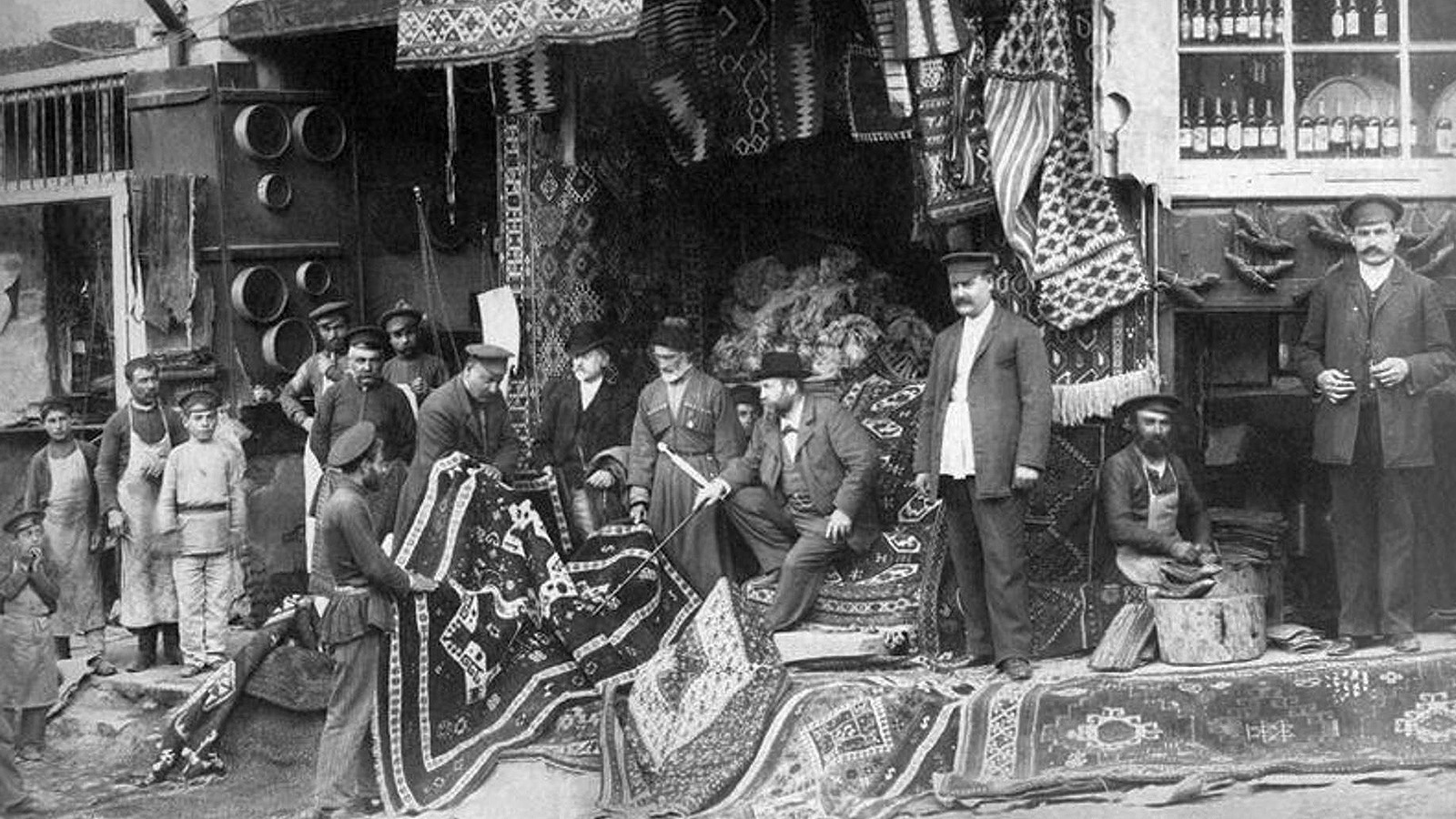
Carpet dealers, Tbilisi, c. 1900. Photograph: Dmitri Yermakov.