


Art Deco at the Centenary of the 1925 Exhibition
Event Slider
Date
- 09:25 / Cancelled 09:25 / Sold out Monday, 09:25
Location
Auditorium 3 Calouste Gulbenkian Foundation
Inspired by the centenary of the 1925 exhibition and the «Gulbenkian Collection. Great Works» exhibition, the Gulbenkian Museum hosts a conference centred on Art Deco.
The International Exhibition of Modern Decorative and Industrial Arts, held in Paris in 1925 with the aim of stimulating the French economy after World War I, later gave its name to one of the artistic languages that marked the first decades of the twentieth century: Art Deco.
Calouste Gulbenkian was not indifferent to this style, having acquired a sculptural group and a buffet that were displayed in the exhibition, and commissioning artists who were prominent in the event – René Lalique and Edgar Brandt – to decorate his mansion in Paris, renovated between 1923 and 1927.
The Collector was equally fascinated by the more intimate size of some of the most sophisticated pieces produced according to the Art Deco principle, for example the lacquer screen by Jean Dunand and a series of richly illustrated and bound books, as well as objects for personal use, such as jewellery and cases for cigarettes, matches or lipstick, which can currently be seen in the exhibition Gulbenkian Collection. Great Works.
In this conference, researchers and experts from Portugal and abroad will reflect on the role of Art Deco during the first decades of the twentieth century, analysing the way it balanced luxury and industry and exploring its relationships with power and propaganda, particularly through the 1925 exhibition and subsequent colonial exhibitions.
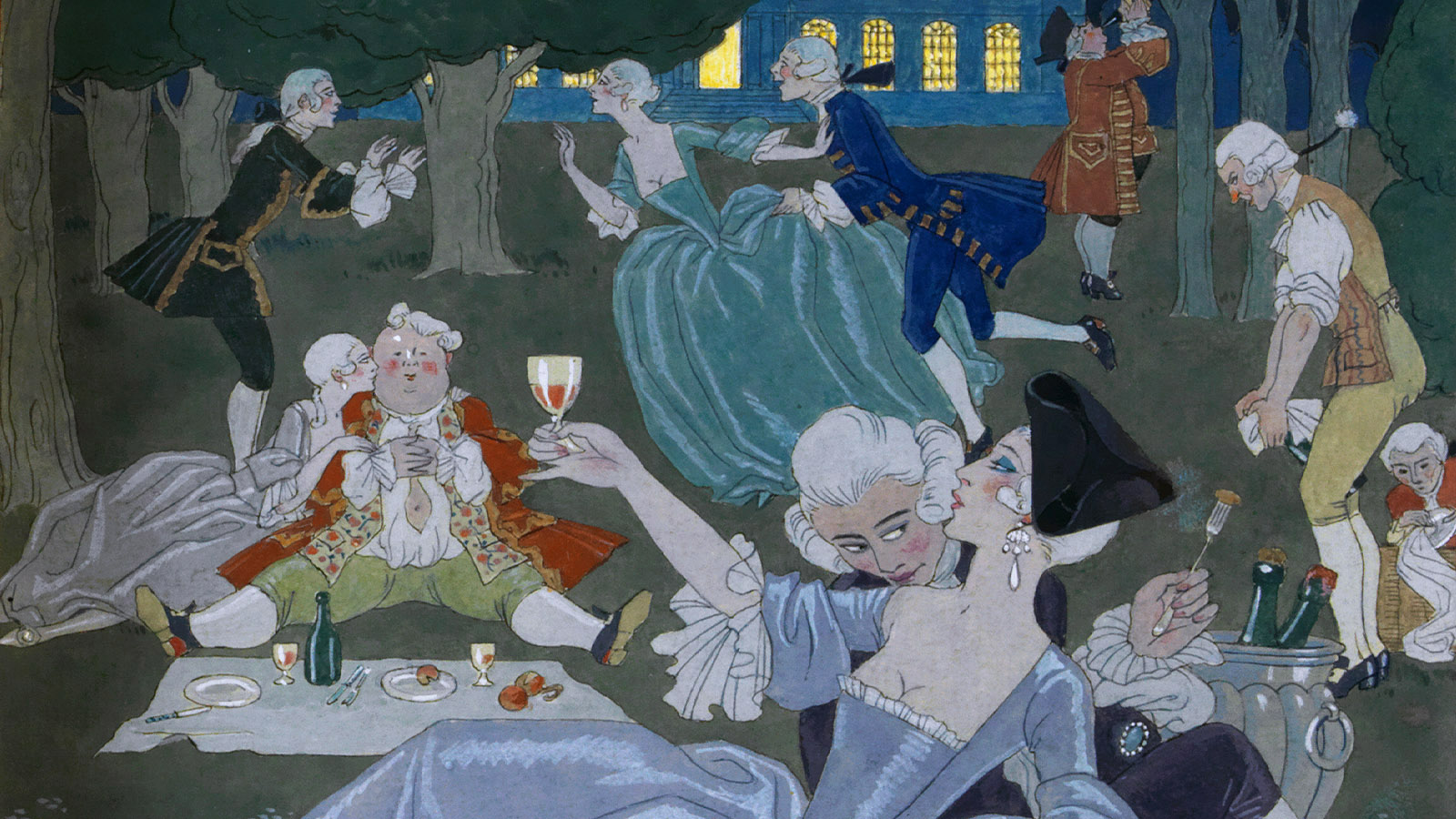
Header image: Paul Verlaine, ‘Fêtes Galantes’. Illustrations by George Barbier. Paris: H. Piazza et Cie, Éditeurs, 1928. Calouste Gulbenkian Museum, inv. LM426.
Speakers
-
Ana Barata
Ana Barata has degree in History, specializing in Art History, and a master’s degree in Contemporary Art History from FCSH-NOVA. Postgraduate diploma in Conservation and Restauration of Buildings and Monuments, in Documentary Sciences (Library option) and in Cultural Management in Cities. She is a librarian at the Gulbenkian Art Library (1997-). She has published articles on information sciences and Lisbon’s urban history and is a researcher at CHAIA-University of Évora.
-
Ana Maria Campino
With a degree in Art History from Universidade Nova de Lisboa and a Master’s in Museology from the École du Louvre (Paris), Ana Maria Campino is curator of European books and graphic documents at the Calouste Gulbenkian Museum. Between 2011 and 2022, she was responsible for producing exhibitions (until 2016) and editing printed and online content for the Museum’s publications, sometimes in partnership with other institutions (‘Amadeo de Souza-Cardoso (1887-1918)’, 2016, Grand Palais, Paris).
-
André das Neves Afonso
Curator of silverware and jewellery at the Calouste Gulbenkian Museum. He was assistant curator of silverware and jewellery at the Museu Nacional de Arte Antiga. His research and curatorial practice focus on silverwork, gold boxes, and electrotypes. PhD candidate in Art History at the Faculty of Arts and Humanities, University of Lisbon. His doctoral thesis explores the collection of gold boxes at the Calouste Gulbenkian Museum. He is a researcher at ARTIS – Institute of Art History (FLUL).
-
Evelyne Possémé
Honorary Chief Curator at the Musée des Arts décoratifs, Paris. Responsible for the Art Nouveau–Art Deco department from 1987 to 2018 and for the creation of the Galerie des Bijoux, she later became curator of the Antique and Modern Jewellery department. She contributed to numerous publications and curated several major exhibitions in the field of jewellery. She is currently working on the catalogue of Art Nouveau jewellery at the museum.
-
Filipa Lowndes Vicente
Historian. Researcher at the Institute of Social Sciences, University of Lisbon. She holds a PhD from the University of London. Her thesis formed the basis for her first book, ‘Viagens e Exposições: D. Pedro V na Europa do Século XIX’.She was a visiting professor at King’s College, University of London in 2015 and Brown University, USA in 2016. Her research focuses on nineteenth- and twentieth-century themes, particularly the production and circulation of knowledge in colonial contexts.
-
Jérémie Cerman
Professor of Contemporary Art History at the University of Artois. A specialist in Art Nouveau and Art Deco, his research has explored wallpaper, industrial design, shopfront art, the relationship between art and sport, and the work of Maurice Dufrène. He co-organised the symposium ‘L’Art déco dans les territoires dévastés. Le décor au temps de la première Reconstruction’ and co-edited the ‘Heritage and Legacy of Art Deco’ issue of ‘In Situ. Revue des Patrimoines.’
-
Rui Afonso Santos
Master’s degree in Contemporary Art History from FCSH-UNL. Art and design historian, and curator at the Museu Nacional de Arte Contemporânea do Chiado (MNAC). Author of over two hundred publications and curator of thirty exhibitions, including books such as ‘O Design e a Decoração em Portugal, 1900-1994, A Cadeira Contemporânea em Portugal’, ‘Cadeiras Portuguesas Contemporâneas’, and the exhibition ‘O Modernismo Feliz: Art Déco em Portugal. Pintura, Desenho, Escultura, 1912–1960’ (MNAC, 2017).
-
Rui Galopim de Carvalho
Honorary Chief Curator at the Musée des Arts décoratifs, Paris. Responsible for the Art Nouveau–Art Deco department from 1987 to 2018 and for the creation of the Galerie des Bijoux, she later became curator of the Antique and Modern Jewellery department. She contributed to numerous publications and curated several major exhibitions in the field of jewellery. She is currently working on the catalogue of Art Nouveau jewellery at the museum.
-
Susana S. Martins
Assistant Professor of Contemporary Art and Museology in the Department of Art History, and Researcher at the Art History Institute (IHA, NOVA-FCSH/IN2PAST). She holds a PhD in Photography and Cultural Studies from Katholieke Universiteit Leuven. Her research focuses on topics such as photobooks, city portraits, propaganda, and world exhibitions. In the field of Museology, she has worked on virtual heritage, exhibition histories, and pre-photographic visual cultures. -
Vera Mariz
Research curator at the Calouste Gulbenkian Museum, where she focuses on the history of the collection and its founder. With a PhD in Art History, her work focuses on collecting and art markets in the 19th and 20th centuries, with emphasis on transnational networks. Researcher at ARTIS – Institute of Art History (FLUL), she has carried out postdoctoral projects in these fields, funded by the Foundation for Science and Technology. She regularly contributes to international publications and conferences.
Programme
09:30 / Registration
10:00 / Opening
10:15 / Introduction
Panel 1 – Art Deco and Power: from the 1925 Exhibition to the Colonial Exhibitions
Moderation
10:35 / Maurice Dufrène in 1925: A Stroll Through the International Exhibition of Modern Decorative and Industrial Arts
After revisiting the context behind the organisation of the 1925 International Exhibition of Modern Decorative and Industrial Arts in Paris, and highlighting some of its most emblematic ensembles, this presentation will focus on the contribution of decorator Maurice Dufrène (1876–1955) to the event.
Having begun his career during the Art Nouveau period, Dufrène would go on to become a leading figure of the Art Deco movement, with the 1925 Exhibition marking one of the high points of his career. President of Class 7, dedicated to furniture ensembles, he also created ‘Rue des boutiques’, which spanned the Pont Alexandre III bridge, and served as artistic director of the ‘La Maîtrise’ Pavilion for the Galeries Lafayette. He contributed to other projects, such as ‘Une Ambassade française’ for the Société des Artistes Décorateurs, and the Grenoble Glove-Making Pavilion.
— Intermission 25 min. —11:40 / Aesthetics and Power: Colonial Exhibitions Between the World Wars
Porto, Paris, Lisbon, Marseille, London, Luanda – numerous cities hosted colonial exhibitions during the 1920s and 1930s. Whereas in the 19th century the word ‘universal’ was commonly paired with ‘exhibition,’ during the interwar period the term ‘colonial’ came to predominate. Despite their temporary nature, these exhibitions represented major investments by nations seeking to promote and legitimise their colonial identities to both national and international audiences.
Their lasting impact is evident in the extensive written and visual documentation produced for these events. Photographic postcards, brochures, catalogues, reports, photographs, newspaper articles, and posters – now housed in various archives – continue to circulate in the commercial sphere, where these legacies of the past are available for purchase. Though thousands visited the physical exhibitions, their ideological and visual impact extended far beyond, reaching distant audiences who read descriptions and saw images in print. What aesthetic and ideological choices shaped these exhibitions?
12:05 / Not All That Glitters Is Glass. Lalique at the ‘Hôtel’ Gulbenkian
In 1926, during the final phase of the extensive renovation of his residence on avenue d’Iéna in Paris, Calouste Gulbenkian expressed to René Lalique his ‘great desire to possess many of your works in my hôtel.’ This reiteration of esteem and admiration for the artist’s work at that time reflects Lalique’s position at the peak of his career as a master glassmaker. Although this surge in prominence – stemming from the success at the 1925 International Exhibition of Modern Decorative and Industrial Arts – favoured Gulbenkian, who had been collecting Lalique’s works since 1898, it also disrupted the progress of ongoing projects, particularly those intended for his hôtel particulier.
Moving beyond the traditional focus on jewellery and glass that have typically characterized their relationship, this presentation proposes to analyse the full range of commissions made for the Gulbenkian residence: from the front door to the garden terrace, including the dining room sideboard and the sumptuous bathroom of the discerning owner.
12:30 / Debate
— Intermission 90 min. —Panel 2 – Deco Objects: Luxury and Industry
Moderation
14:30 / Art Deco in France. A Style and a Period
Art Deco’ is the term used to describe the decorative arts movement of the interwar period, spanning from the 1910s to the late 1930s.
The name was coined retrospectively in the 1960s, inspired by the title of the International Exhibition of Modern Decorative and Industrial Arts, which took place in Paris in 1925.
This global event was entirely dedicated to decorative arts and modernity, with admission committees being established for each artistic domain to ensure that imitations of older styles were eliminated in advance.
Originally conceived in the 1910s, the exhibition was repeatedly postponed due to international tensions and the outbreak of World War I (1914-1918). Indeed, the movement itself began in that decade, at a time when the last proponents of Art Nouveau coexisted with those advocating a new style marked by a return to French tradition, in reaction to the rather more international and open nature of Art Nouveau. Thus, the 1925 Exhibition was more of a mid-point assessment, serving as an inventory of an already well-established movement encompassing numerous, often contradictory, artistic trends.
15:10 / ‘Vanity Cases’ and Jewellery from Calouste Gulbenkian’s Vault. Legacy, Research Perspectives and Gemmological Highlights
The Calouste Gulbenkian Museum holds a relatively little-known collection of ‘vanity cases’ and jewellery, with a remarkable selection of Deco pieces produced between the 1910s and 1930s by the prestigious houses of Boucheron, Cartier, and Van Cleef & Arpels. These works represent the ‘remnants’ of a broader assortment acquired by Calouste Gulbenkian for various purposes – whether for personal use or as gifts – though they were never formally included in his art collection.
Nevertheless, the significance of this assemblage demands systematic study and dissemination, whether through more regular inclusion in exhibitions or through a deeper understanding of the circumstances surrounding each object’s acquisition, alongside a detailed analysis of its stylistic and material qualities.
A recently conducted gemmological study marks a significant phase in this process, confirming the outstanding quality of materials used in several of these artefacts. Notable examples include the extraordinary translucency of the rock crystal in a cigarette case, the coloured diamonds used in various jewellery pieces, the precious opals stored in a case or set in a pendant, and the impressive baroque pearl adorning a hatpin.
— Intermission 25 min. —16:00 / The 1920s Through Magazines in the Calouste Gulbenkian Library
The ‘Roaring Twenties’ began under the auspices of peace and hope. One of the events of the decade was the International Exhibition of Modern Decorative and Industrial Arts, which opened in Paris in April 1925. Until it closed, the exhibition made headlines in newspapers and magazines, which included an increasing number of specialized publications, some more generalist, others for professionals or people with specific interests, such as art collectors.
Calouste Gulbenkian fell into this category and had a number of art magazines in his library that he subscribed to. Among these titles were the most prestigious magazines of the time on art and its history, such as The Burlington magazine for connoisseurs, or La revue de l'art ancien et moderne. Knowing his art collection, the absence of magazines such as L'Esprit Nouveau, or Minotaure, a surrealist-inspired magazine, is not surprising. Surprising - or possibly not - is the existence of some of the most exquisite women's fashion magazines of the 1920s: Les succés d'A. G.B. : revue d'art des plus belles modes de Paris and Très parisien.
16:25 / Franz Torka, Master of Art Deco in Portugal
The Austrian Art Deco aesthetic made its way directly to Portugal through Franz Torka (1888–1953), a Viennese architect and decorator and a distinguished disciple of Otto Wagner. In 1920, Torka settled in Lisbon, taking up the role of technical and artistic director at Grandes Armazéns Alcobia, overseeing the design of its stores and factories. Notably, he was responsible for the decoration and furnishings at the Teatro do Ginásio (1925).
Throughout the 1920s and 1930s, Torka shaped some of the most distinctive and creative commercial offerings of the era. His work spanned architectural designs, interior decoration, and exquisitely crafted furniture featuring geometric or figurative inlays in exotic woods, brass or lacquer. He also designed lamps, ornaments, carpets, wallpapers, and upholstery fabrics, creating the finest expressions of Portuguese Art Deco.