
EEA Grants: Celebrating 30 years of Cooperation in Portugal
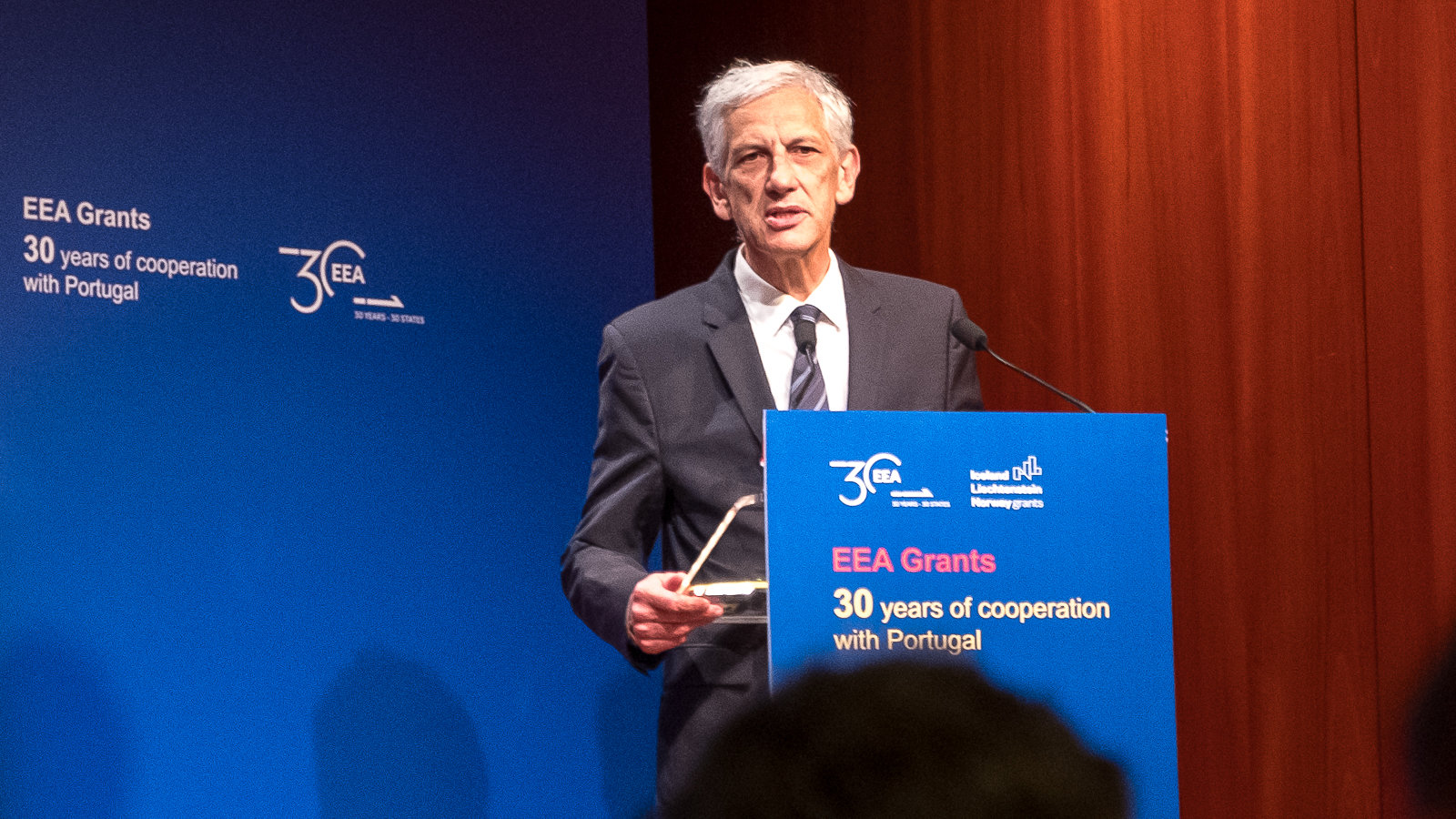
On the 23rd of October, the conference “EEA Grants – 30 years of cooperation with Portugal” took place in Lisbon, in the Auditorium 2 of the Calouste Gulbenkian Foundation. It was organized by the National Management Unit of the European Economic Area Financial Mechanism (EEA Grants).
More than just a conference, it was a celebration of the end of a cycle and a reflection on the achievements and ongoing cooperation between Portugal and Norway, Iceland and Liechtenstein.
“Today we celebrate 30 years of EEA Grants, 30 years of cooperation between Portugal and the Donor States,” said Maria Mineiro, Coordinator of the EEA Grants National Management Unit.
The event brought together leading figures from the Donors and Portugal, as well as representatives of the various projects and programmes that are the raison d’être of this cooperation.
Since 1994, EEA grants have focused on reducing social and economic disparities, strengthening cross-border cooperation and defending democracy and human rights.
“There are many examples of how we have come closer together as two nations with much in common, and how we have worked together to strengthen the fundamental values of the European Union, which we have used to strengthen our countries and Europe’s competitiveness,” said Maria Varteressian, Norwegian State Secretary for Foreign Affairs.
Notably, for the 2014-2021 funding period alone, more than €102 million have been allocated to programmes covering civil society, blue growth, environment, gender equality and innovation. “After three decades of cooperation, there are many success stories and projects to choose from,” said Una Jóhannsdóttir, Deputy Head of Mission at the Icelandic Embassy in Paris.
Regarding the support given to citizen participation and civil society organizations, the President of the Calouste Gulbenkian Foundation, Prof. António M. Feijó, highlighted the fruitful and unique contribution of the Active Citizenship Programme (2013-2016) and the Active Citizens Programme (2018-2024).
In both cases, the Calouste Gulbenkian Foundation was chosen as the Fund Operator. In the last funding period, the Gulbenkian Foundation shared this role with the Bissaya Barreto Foundation, a collaborative model that has proven to be successful.
During these two periods, €20.2 million have been granted to 413 NGOs and 295 projects have been funded. These projects mobilized 146,200 beneficiaries, some of whom were able to influence, for example, 35 laws and public policies. In addition, 360 supported NGOs reported improvements in their operational capacity, with more than 10,000 of their leaders, staff and volunteers receiving training during this period.
An example of a successful social project is “Mezze-Escola”. With the support of the Active Citizens Programme, the Pão a Pão Association trained 20 migrants and refugees (especially women and young people between the ages of 18 and 50) in the restaurant and hotel sector. The trainees were integrated into the labor market by opening Mezze, a restaurant serving middle eastern cuisine. During her visit to Lisbon, the Norwegian State Secretary for Foreign Affairs had lunch at this unique restaurant. Her impression was excellent, and her conclusion was that projects like this are worthy of replication.
The celebration of 30 years of cooperation was an occasion to commemorate past achievements, but also to reaffirm the commitment to the future. Portugal has made significant progress over the past 30 years, but the work is far from finished. Continued support and cooperation will be essential to ensure that Portugal continues to progress towards a more sustainable and equitable future. EEA grants will continue to be a key factor in shaping Portugal’s resilience, competitiveness and global success in the years to come.