


History of Music in 60 minutes
Sunday Concerts
Event Slider
Date
- 11:00 / Cancelled 11:00 / Sold out Sunday, 11:00
- 15:00 / Cancelled 15:00 / Sold out Sunday, 15:00
Location
Grand Auditorium Calouste Gulbenkian Foundation- Conductor
- Presenter
-
Gulbenkian Orchestra
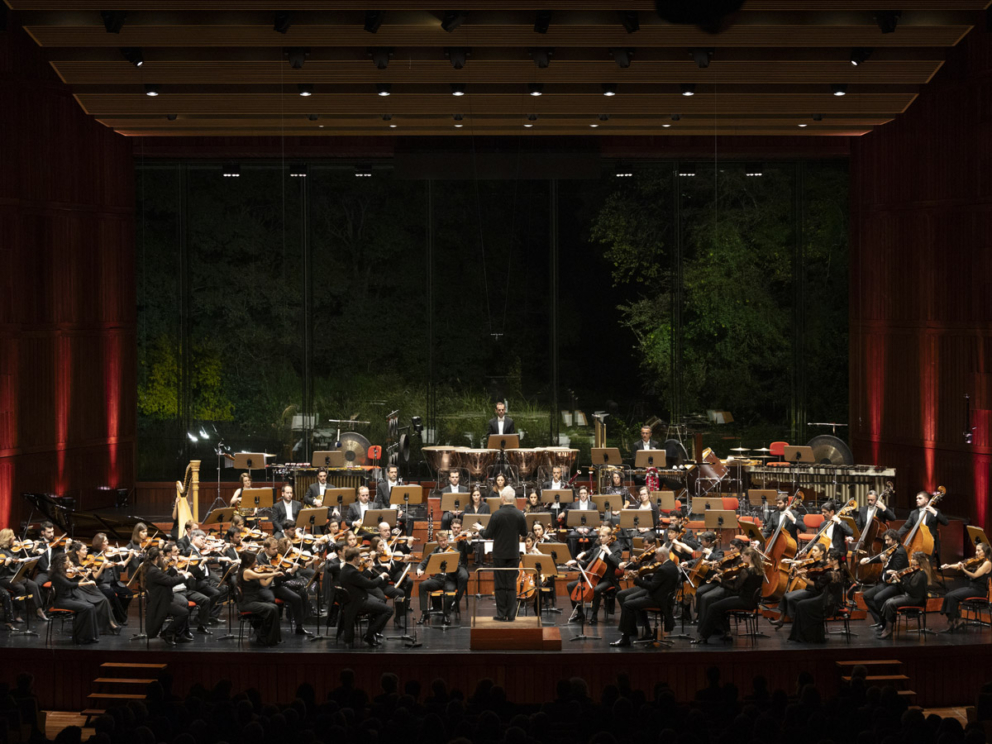
In 1962, the Calouste Gulbenkian Foundation decided to establish a permanent orchestral ensemble. Originally with only twelve musicians (strings and continuo) it was named “Orquestra de Câmara Gulbenkian”. This collective was successively enlarged and today the “Orquestra Gulbenkian” (the name it has adopted since 1971) has a permanent body of sixty instrumentalists, a number that can be expanded depending on the repertoire.
This structure allows the Gulbenkian Orchestra to interpret works from the Baroque and Classical periods, a significant part of 19th century orchestral literature and much of the music of the 20th century, including works belonging to the current repertoire of the traditional symphonic orchestras. In each season, the orchestra performs on a regular series of concerts at the Gulbenkian Grand Auditorium in Lisbon, where it has had the opportunity of working together with some of leading names of the world of music (conductors and soloists). It has also performed on numerous locations all over Portugal, in an effort to decentralize music and culture.
The orchestra has been constantly expanding its activities in the international level, performing in Europe, Asia Africa, and the Americas. In the recording field, Orquestra Gulbenkian is associated to labels as Philips, Deutsche Grammophon, Hyperion, Teldec, Erato, Adès, Nimbus, Lyrinx, Naïve and Pentatone, among others, and this activity was recognized with several international prizes.
-
José Eduardo Gomes
Conductor
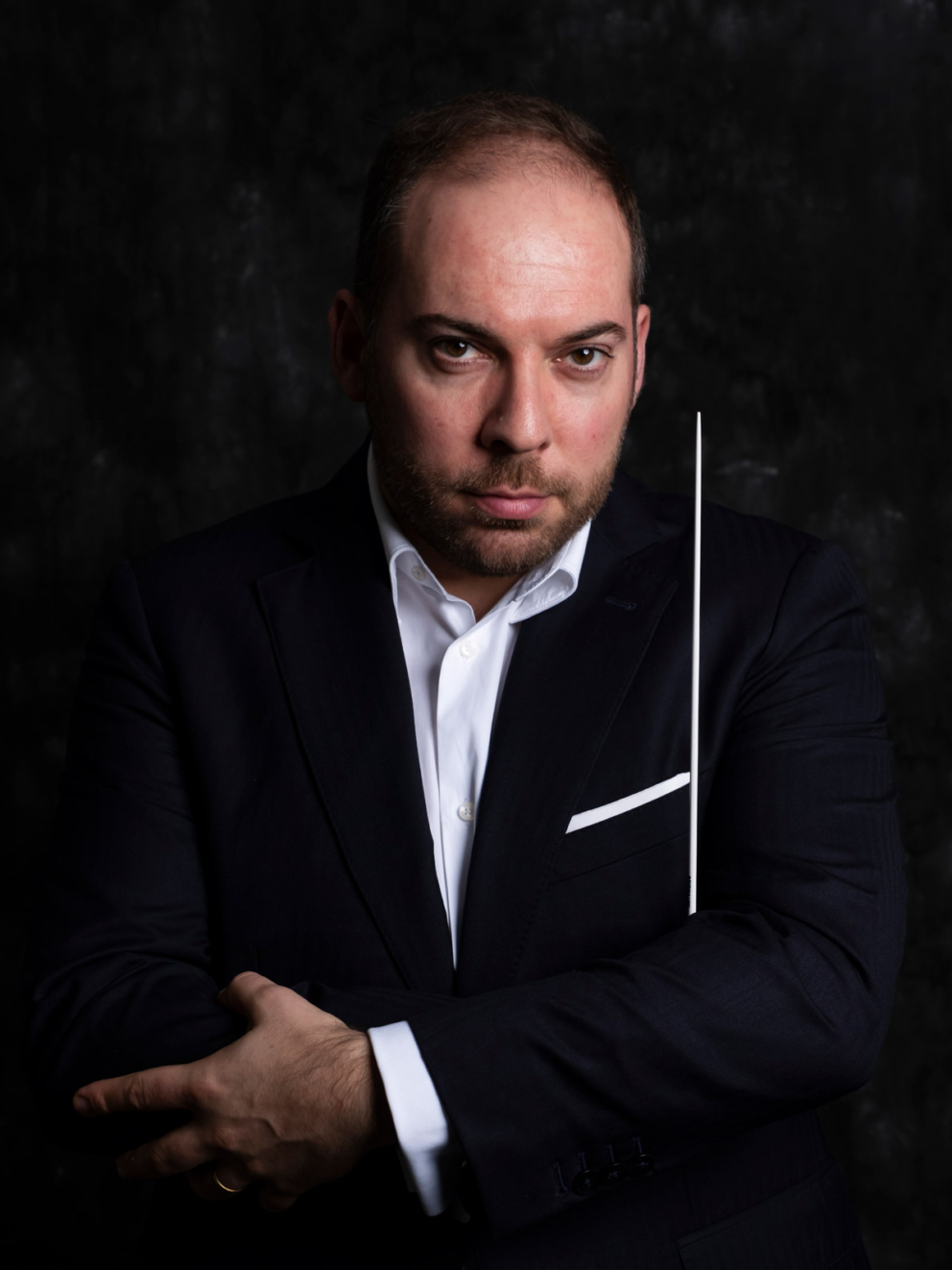
José Eduardo Gomes recently won the 1st Prize in the European Union Conducting Competition, and the Beethoven Prize in the same competition. He’s Principal Conductor of FEUP Orchestra (Porto – Portugal) and also Professor in the Lisbon Music University and Porto Music University, as a Principal Conductor of the School Orchestra.
He was Principal Conductor of Center Classical Orchestra (Coimbra – Portugal), Associate Conductor of the Orquestra Clássica do Sul (Faro – Portugal), Principal Conductor of the Orchestre Chambre de Carouge, in Switzerland and principal conductor of the Circulo Portuense de Opera Choir (Porto-Portugal).
He began his musical studies with the clarinet in his born town V. N. Famalicão. Later he continued his studies in ARTAVE and ESMAE - Porto, where he graduated in Antonio Saiote’s class. He followed his studies in Orchestral Conducting at the Haute École de Musique de Genève (Switzerland), with Laurent Gay, and choral conducting with Celso Antunes.
He was distinguished in several competitions: “RTP Antena 2 Young Musicians Award”, Portugal; ”Competition Marcos Romão” Portugal and "International Competition Villa de Montroy", Valencia (Spain), in clarinet and chamber music, and in the Portuguese competition “Prémio Jovens Músicos” in orchestral conducting, with the 2nd prize and the special Orchestra Prize, and also Semi Finalist in the “1º Concorso Citta di Brescia Giancarlo Facchinetti” (Italy).
José Eduardo is founder of the clarinet ensemble Quarteto Vintage and Serenade Ensemble.
In the past few years he has been invited to work with the main Portuguese Orchestras, such as Gulbenkian Orchestra, Orquestra Sinfónica do Porto Cdm, Orquestra SInfónica Portuguesa, with soloist such as Maria João Pires, Diemut Poppen, Maria Elisabeth Lott, Sebastian Klinger, Adriana Ferreira, among others and performing in important festivals, such as Dias da Música, Festival de Sintra, Festival PJM, Festival Cantabile, Festival das Artes, Festival de Música de Leiria, FIMA, Música no Colégio, Festival Internacional de Música Religiosa de Guimarães, among others.
In Opera, he conducted some productions, such as Mozart “Don Giovanni” and “Cosi Fan Tutte”, Marcos de Portugal “La Donna di Genio Volubile”, Haydn “Lo Speziale”.
Another important part of his work is dedicated to youth orchestras, all over the country.
In 2018, he was awarded with the “Medalha de Mérito Cultural”, by his hometown, V.N. Famalicão.
Since 2019, José Eduardo is the Artistic Director of JOF (Jovem Orquestra Famalicão), a young symphonic orchestra, with some of the most prominent young Portuguese musicians.
-
Vera Dias
Bassoon
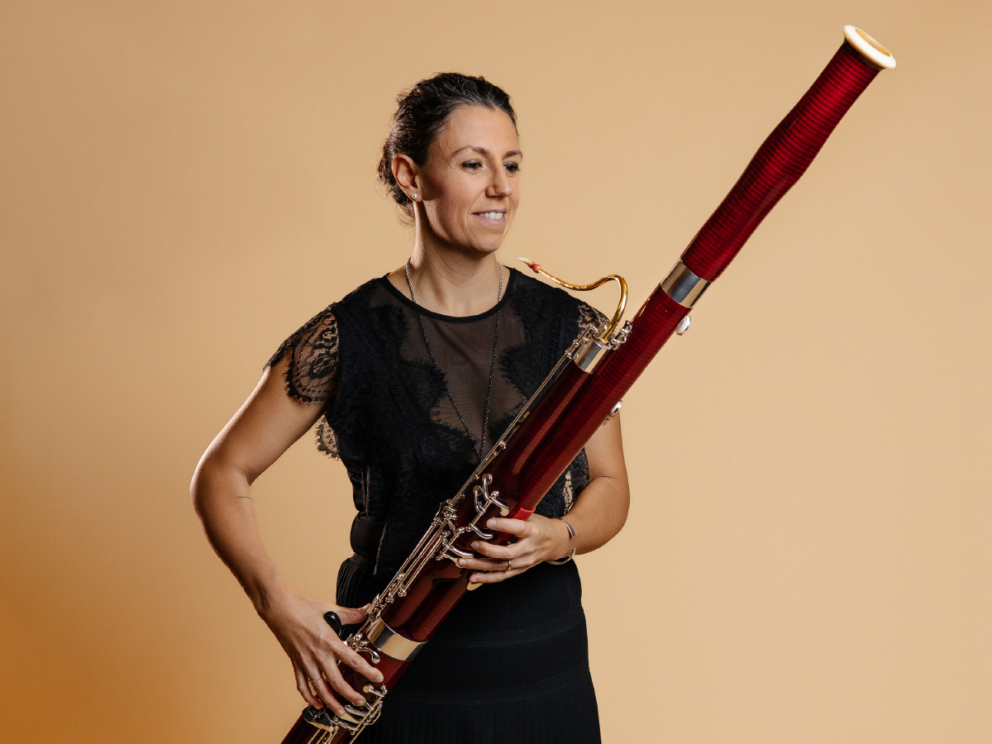
Vera Dias was born in Guimarães. She started at the Escola Profissional Artística do Vale do Ave at the age of twelve, where she began her musical studies learning bassoon with Jesus Coelho. Later, she studied with Paulo Martins, with whom she finished the Wind Instrumentalists Course, winning the Dr Manuela Carvalho Prize. At the age of eighteen she was admitted to the Staatliche Hochschule für Musik - Karlsruhe, studying bassoon with Günter Pfitzenmaier. She graduated in 2008 from Escola Superior de Música.
She has played with the Orquestra Portuguesa das Escolas de Música, the Orquestra Aproarte, the Orquestra Sinfónica Portuguesa, the Staatliche Hochschule für Musik - Karlsruhe Chamber Orchestra, the Pforzheim Chamber Orchestra and the Stuttgart Chamber Orchestra, and has given concerts throughout Europe and the East.
In 2003 and 2004, she was selected to join the European Union Youth Orchestra summer school, which she attended only in 2004. In 2003 she declined that opportunity to be able to compete for the Young Musicians Prize, in which she received 1st Prize in the Bassoon category. In 2004, she won 2nd Prize in the Landespolizei competition, in Karlsruhe.
She had a scholarship from the Calouste Gulbenkian Foundation from 2003 to 2006. She has been 1st Assistant Soloist with the Gulbenkian Orchestra since September 2006.
Marc-Antoine Charpentier
Te Deum: Prelude
Johann Sebastian Bach
Air from the Suite No. 3, BWV 1068
Wolfgang Amadeus Mozart
Symphony No. 40, K. 550 (1st movement)
Ludwig van Beethoven
Symphony No. 5, op. 67 (1st movement)
Piotr Ilitch Tchaikovsky
White Adagio from Swan Lake
Giuseppe Verdi
Nabucco: Overture
Igor Stravinsky
The Firebird: Finale
Total approximate duration: 60 min. / Concert without intermission
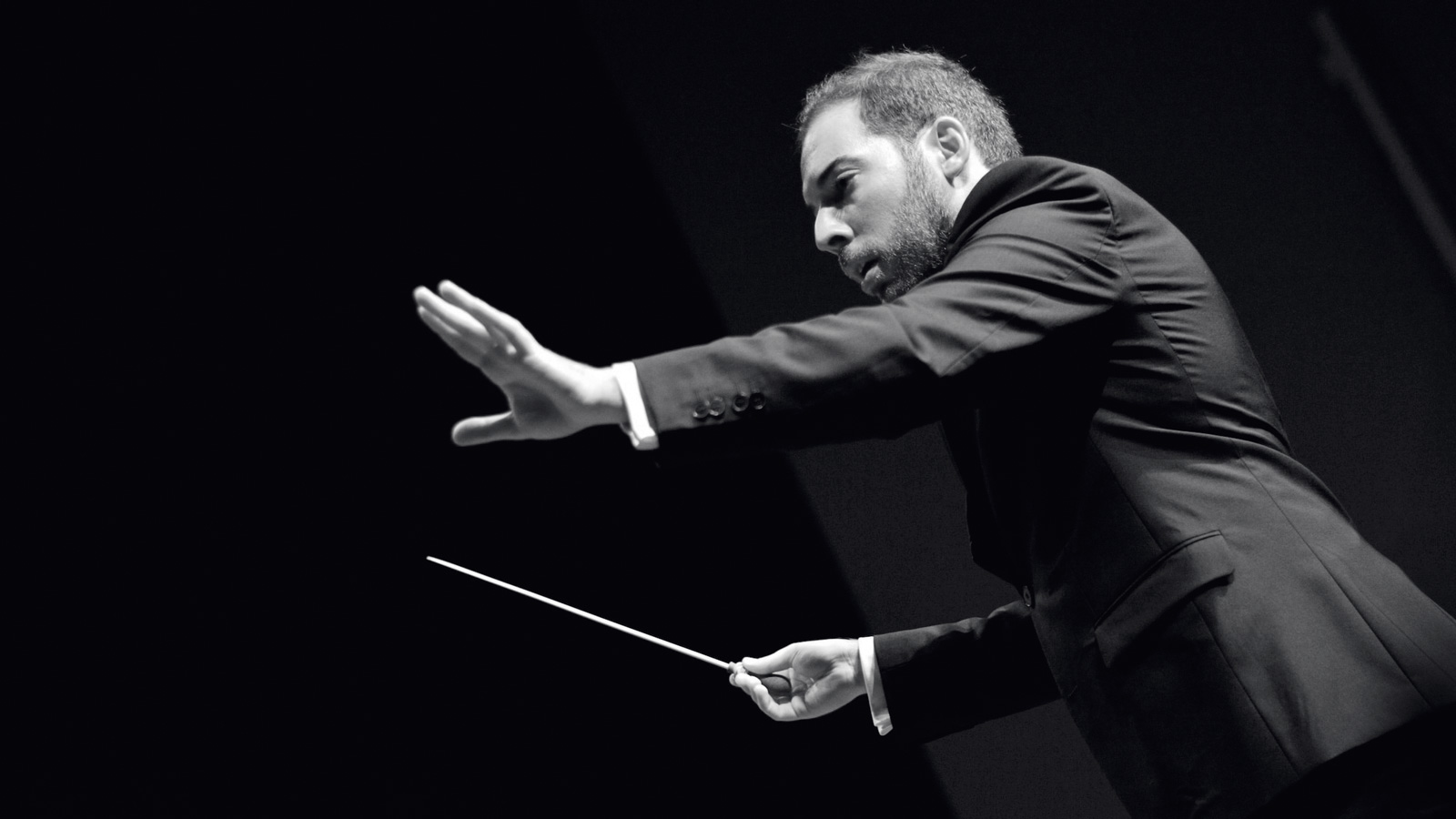
If Phileas Fogg travelled Around the world in 80 days, conductor José Eduardo Gomes directs A History of Music in 60 Minutes. In these concerts aimed at a family audience and in an informal setting, the journey through history will take in baroque, classical, romantic, operatic and modern music, through composers such as Charpentier, Bach, Mozart, Beethoven or Stravinsky, from the end of the 17th century to the beginning of the 20th century. An expanded portrait of symphonic music through the years, illustrated by performances of some major works in the repertoire.
Sponsor Gulbenkian Music
The Calouste Gulbenkian Foundation reserves the right to collect and keep records of images, sounds and voice for the diffusion and preservation of the memory of its cultural and artistic activity. For further information, please contact us through the Information Request form.
Related
No results were found for your criteria.