
Boy Blowing Bubbles
Gallery
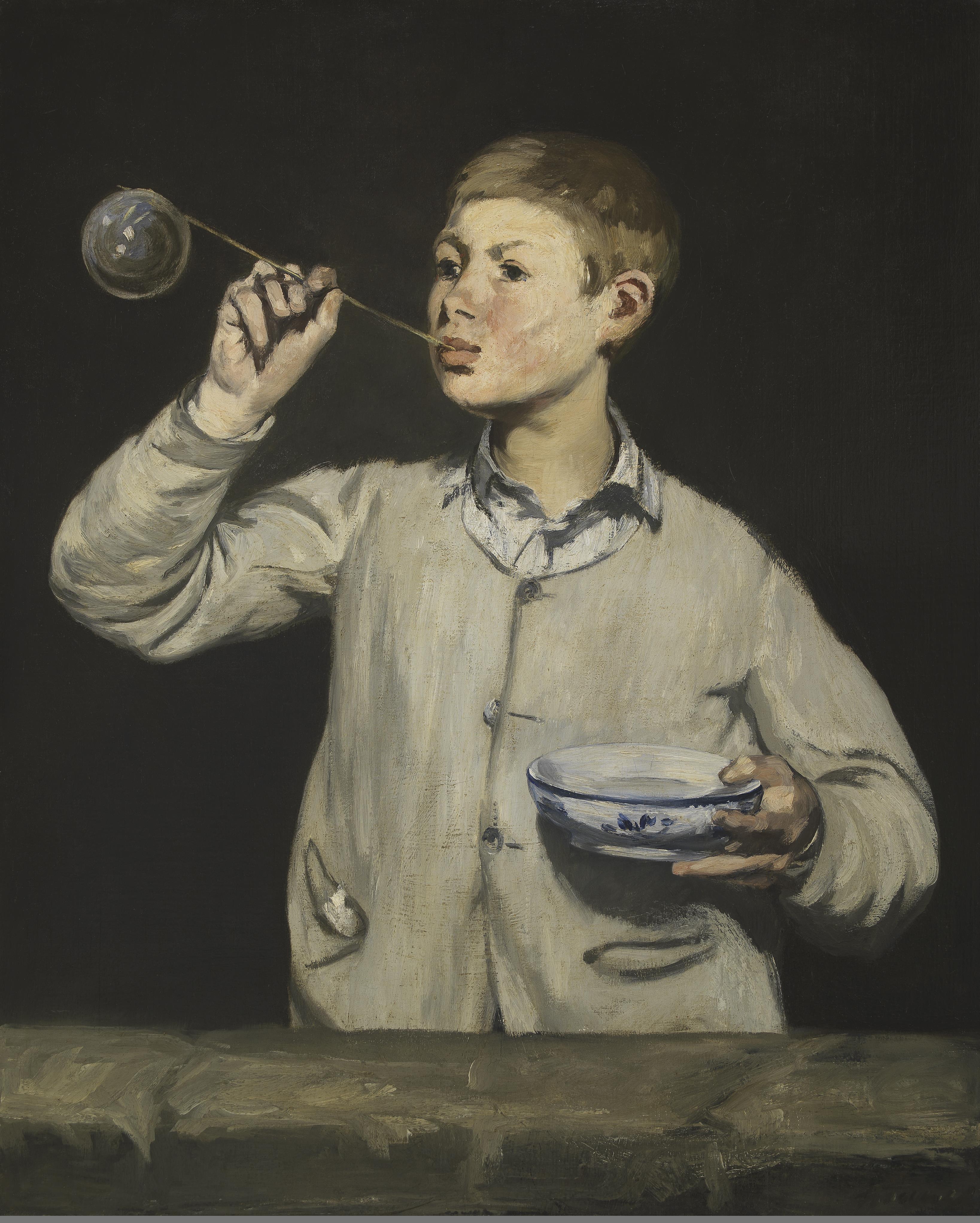
The painting’s theme, vanitas, the sense of ephemeral existence, symbolised by soap bubbles, is given a unique interpretation by Manet. Aspects such as the dark background and the sobriety of the composition seem to evoke a work with the same title from around 1734 by Jean-Siméon Chardin (The Metropolitan Museum of Art, New York).
The allegorical content does not, however, override the plastic autonomy of the narrative. Manet focuses on a dispassionate and naturalistic observation of the subject. The boy’s lack of expression transforms him into a painting object, which is a hallmark of the artist’s modernist style. Manet develops his own distinctive expression, using the motif as a means to assert his sensory perception. The free and direct style of composition, with a well-defined outline of the figure, accentuated by a strong counterpoint between light and dark, brings to mind old masters such as Murillo and Frans Hals.
The model for the painting, Léon-Édouard Koëlla, Manet’s stepson, appears frequently in other famous works by the artist. The possibility of the painting being the artist’s reflection on the perennial nature of art itself cannot be excluded.
Object details
- Author(s)
- Édouard Manet (1832 – 1883), Painter (artist)
- Title
- Boy Blowing Bubbles
- Origin
- France
- Date
- 1867
- Technique
- Oil on canvas
- Materials
- Canvas; Oil
- Dimensions
- Height 100,00 cm; Width 81,00 cm
- Inventory no.
- 2361
Provenance
Incorporation
- Type
- Purchased
- Place
- New York
- Provenance
- Adolph Lewinsohn
- Intermediary
- André Weil
- Date
- November 1943