
Footed basin with Ottoman arabesques and Chinese lotus
Gallery
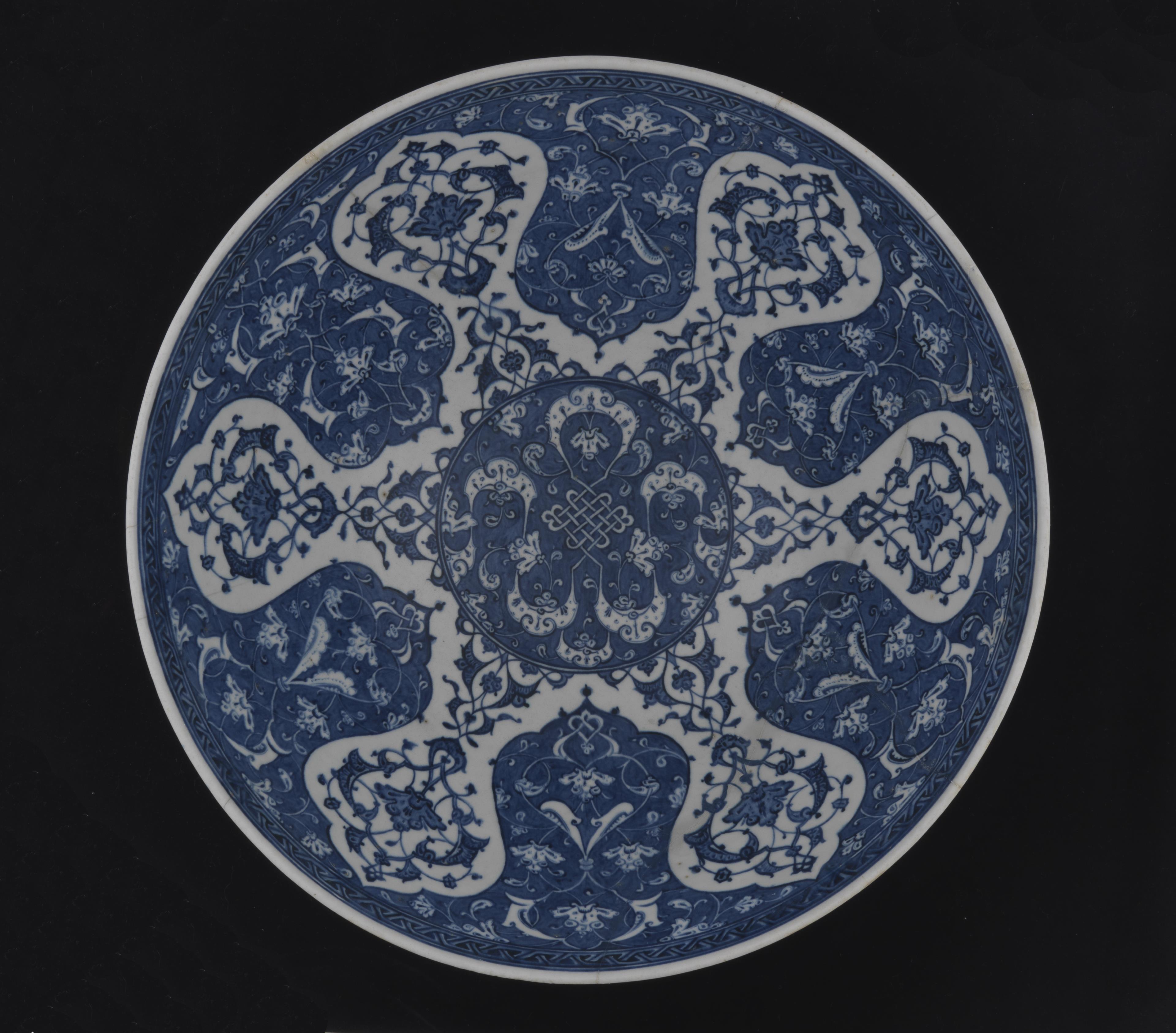
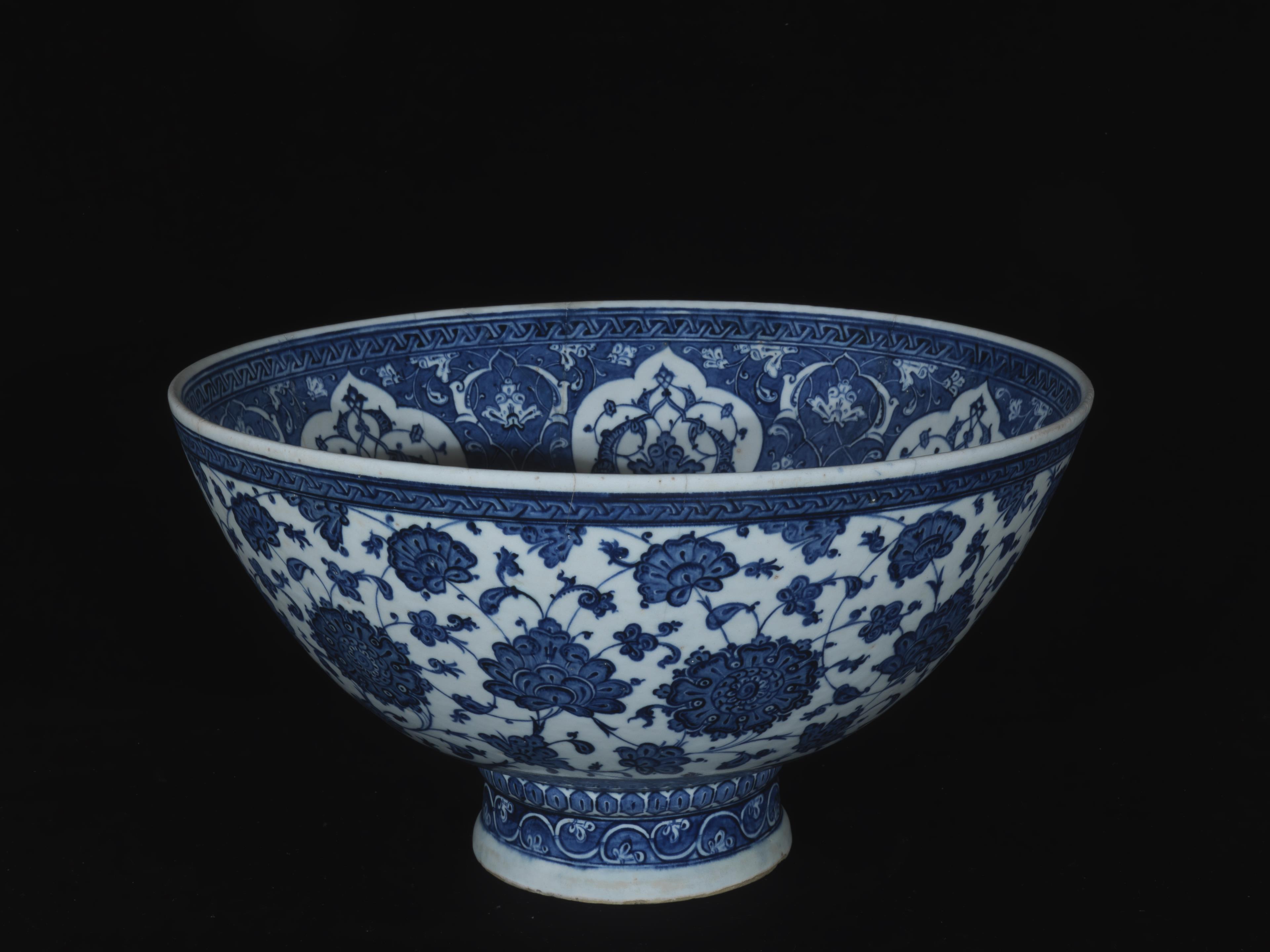
This monumental footed basin is a technical tour de force and among the most ambitious creations of the potters at Iznik, located 140 kilometres north of Istanbul. Known as ayak tasi, the bowl was probably accompanied by an ewer and used for ritual ablutions by the Ottoman elite. The fine painting offers clear evidence of the impact of Ming Blue and White porcelain on Ottoman art by the end of the fifteenth century.
The exterior has hatayi-type decoration with garlands of stylised flowers of Chinese inspiration painted in blue on a white ground. The interior, by contrast, is divided into a compositional scheme of six radiating arcades alternating in white or blue, each filled with arabesques or rumi decoration.
The elaborate knot motif in the centre is characteristic of a group of blue-and-white Iznik wares, thought to have been made in the same workshop, under a ‘Master of the Knots’.
Object details
- Title
- Footed basin with Ottoman arabesques and Chinese lotus
- Origin
- Iznik
- Date
- Ottoman period, c. 1510
- Technique
- Stonepaste painted under the glaze
- Materials
- Stonepaste
- Dimensions
- Diameter 42,00 cm; Height 22,00 cm
- Inventory no.
- 211
Incorporation
- Type
- Purchased
- Provenance
- Coleção Brower de Nice
- Intermediary
- M.Pollak
- Date
- 16 Feb 1929