


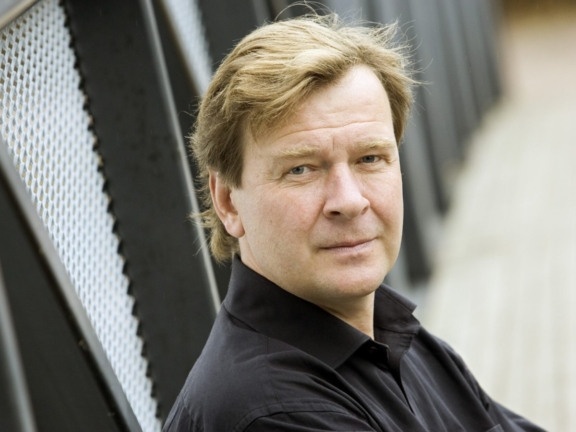
The Valkyrie
Gulbenkian Orchestra and Choir
Event Slider
Date
- 20:00 / Cancelled 20:00 / Sold out Thursday, 20:00
- 19:00 / Cancelled 19:00 / Sold out Friday, 19:00
Location
Grand Auditorium Calouste Gulbenkian FoundationPricing
25% – Under 30
10% – Over 65
Cartão Gulbenkian:
50% – Under 30
20% – Over 65
10% – 30 to 65
- Conductor
- Soprano
- Tenor
- Bass
-
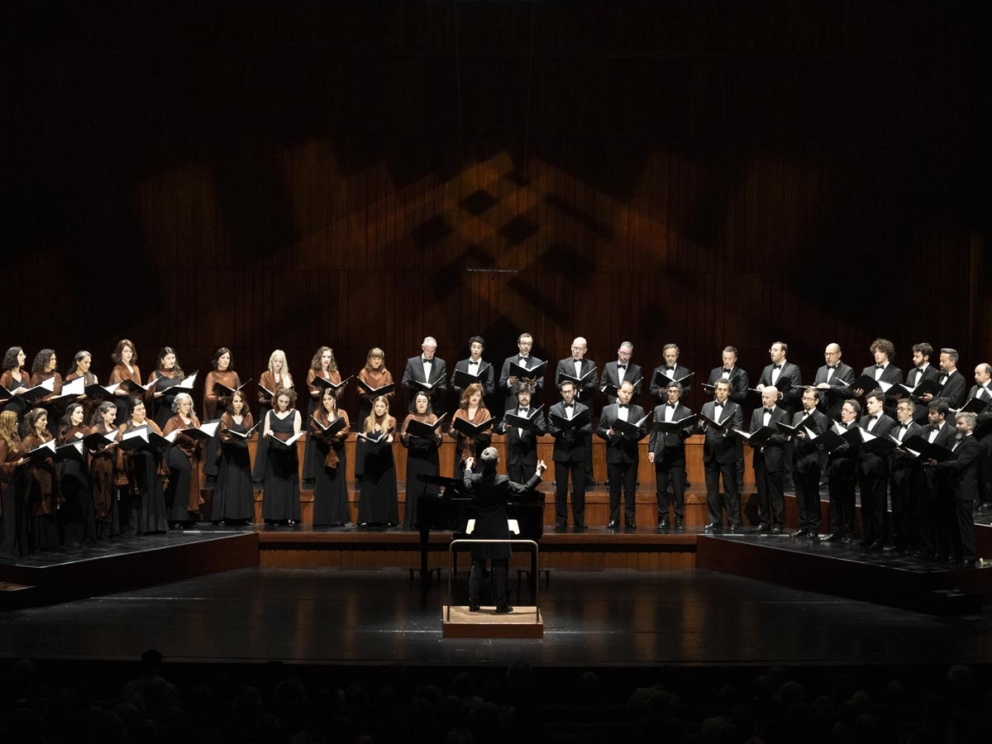
Gulbenkian Choir
Coro Gulbenkian was founded in 1964 by the Calouste Gulbenkian Foundation as a full symphonic body of around 100 singers. The choir joins the Orquestra Gulbenkian and other orchestras to perform Classical, Romantic and Contemporary choral-symphonic repertoire, but can also perform a cappella. It has performed – and often premiered – many 20th century works by Portuguese and international composers.
Coro Gulbenkian has been invited to collaborate with major international orchestras, under the direction of conductors such as Claudio Abbado, Colin Davis, John Nelson, Emmanuel Krivine, Esa-Pekka Salonen, Frans Brüggen, Franz Welser-Möst, Gerd Albrecht, Michael Gielen, Michael Tilson Thomas, Rafael Frübeck de Burgos, René Jacobs and Leonard Slatkin, among others.
Besides its regular season of concerts in Lisbon and frequent national tours, Coro Gulbenkian has repeatedly toured Argentina, Belgium, Brazil, Canada, Denmark, France, Germany, Hungary, India, Iraq, Israel, Italy, Japan, Macao, Malta, Monaco, Netherlands, Spain, the United Kingdom, the United States of America and Uruguay.
Coro Gulbenkian has recorded extensively for Philips, Deutsche Grammophon, Erato, Cascavelle, Musifrance, as well as FNAC-Music, performing a wide range of repertoire, from Early-Renaissance polyphony to Xenakis. Several of these albums received international awards.
Michel Corboz was the Principal Conductor between 1969 and 2019. Jorge Matta and Inês Tavares Lopes are currently the Associate and Assistant conductors, respectively.
-
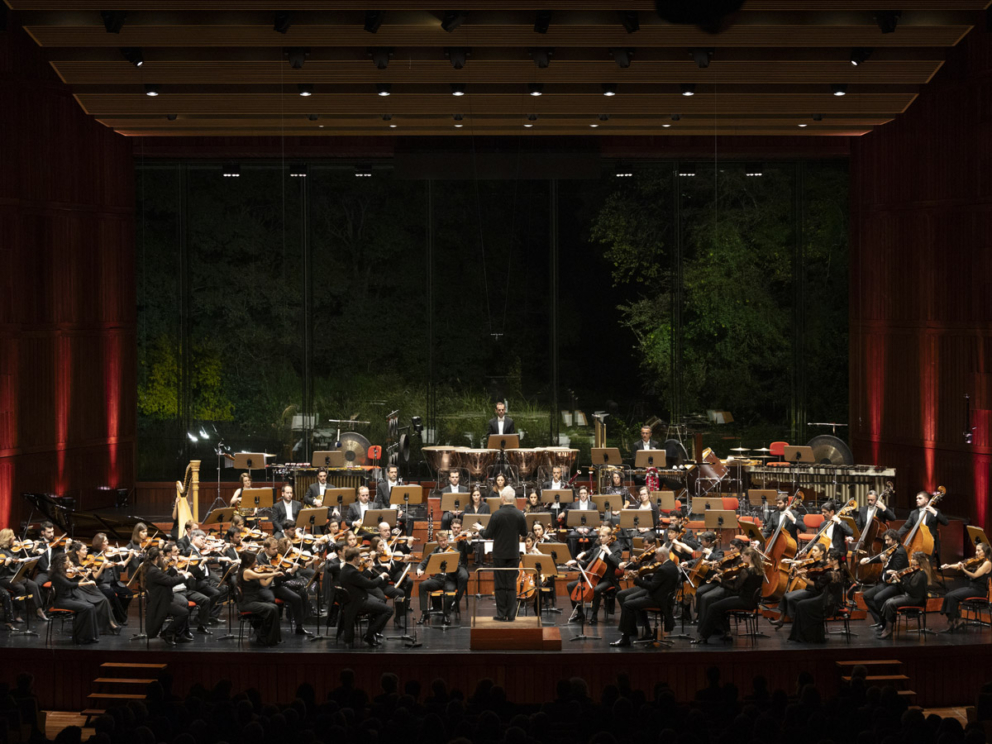
Gulbenkian Orchestra
In 1962, the Calouste Gulbenkian Foundation decided to establish a permanent orchestral ensemble. Originally with only twelve musicians (strings and continuo) it was named “Orquestra de Câmara Gulbenkian”. This collective was successively enlarged and today the “Orquestra Gulbenkian” (the name it has adopted since 1971) has a permanent body of sixty instrumentalists, a number that can be expanded depending on the repertoire.
This structure allows the Gulbenkian Orchestra to interpret works from the Baroque and Classical periods, a significant part of 19th century orchestral literature and much of the music of the 20th century, including works belonging to the current repertoire of the traditional symphonic orchestras. In each season, the orchestra performs on a regular series of concerts at the Gulbenkian Grand Auditorium in Lisbon, where it has had the opportunity of working together with some of leading names of the world of music (conductors and soloists). It has also performed on numerous locations all over Portugal, in an effort to decentralize music and culture.
The orchestra has been constantly expanding its activities in the international level, performing in Europe, Asia Africa, and the Americas. In the recording field, Orquestra Gulbenkian is associated to labels as Philips, Deutsche Grammophon, Hyperion, Teldec, Erato, Adès, Nimbus, Lyrinx, Naïve and Pentatone, among others, and this activity was recognized with several international prizes.
-
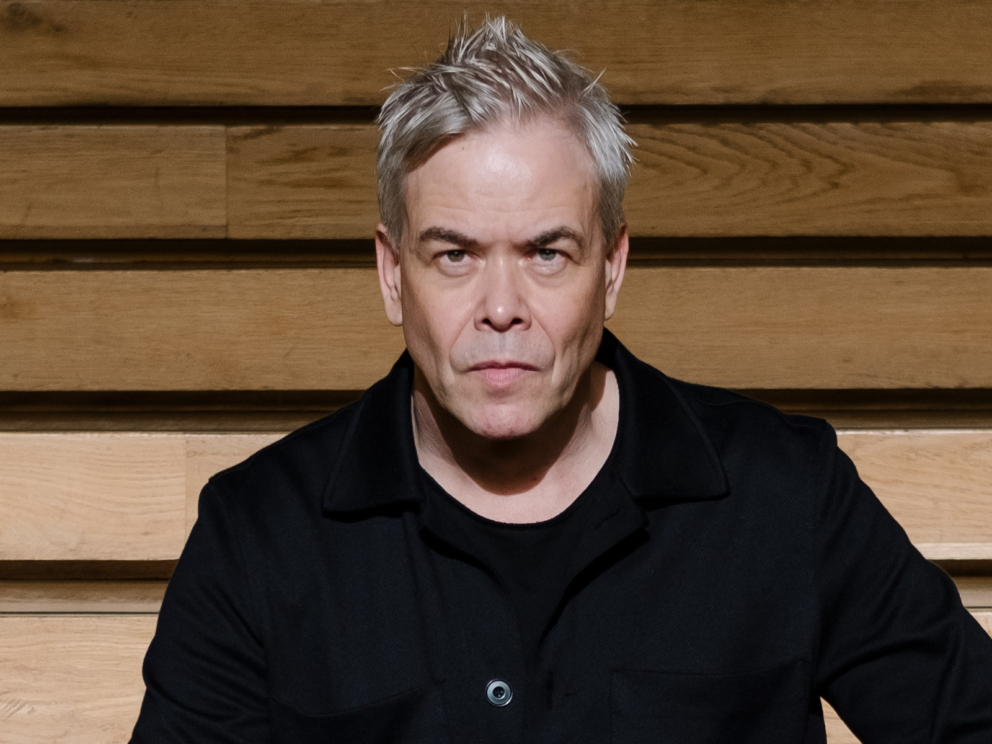
Hannu Lintu
Music Director
“Dynamic and sharp on the podium” (Bachtrack) and with an “extreme clarity of purpose, every detail worth noting” (Los Angeles Times), Hannu Lintu maintains his reputation as one of the world’s finest conductors. This season Lintu continues his tenures as Music Director of Orquestra Gulbenkian and Chief Conductor of Finnish National Opera and Ballet, proving himself a master of both symphonic and operatic repertoire, as well as beginning his tenures as Artistic Partner of the Lahti Symphony Orchestra and Artistic Director of the International Sibelius Festival.
Last season also saw Lintu’s appointment as Music Director of Singapore Symphony Orchestra from 2026/27, where he will appear this season for several performances, including for Haydn’s Nelson Mass and Shostakovich’s 7th Leningrad Symphony. Other highlights include returns to the BBC, St Louis, Toronto, Baltimore and Detroit Symphonies, as well as productions of Strauss’ Elektra and a world premiere of Sebastian Fagerlund’s The Morning Star at Finnish National Opera.
Symphonic highlights of recent years have seen Lintu conduct the Chicago Symphony, New York Philharmonic (including an immediate re-invitation from the orchestra to perform at Bravo! Vail Festival), Berliner Philharmoniker, The Cleveland Orchestra, Bavarian Radio Symphony Orchestra, Orchestre National de Radio France, Boston Symphony Orchestra, Swedish Radio Symphony Orchestra, BBC Symphony, Deutsches Symphonie-Orchester Berlin, Radio Filharmonisch Orkest, London Philharmonic, Atlanta Symphony Orchestra, Konzerthausorchester Berlin, St Louis Symphony, and Orchestre Symphonique de Montréal.
As an expert in both operatic as well as symphonic repertoire, Lintu’s recent opera highlights have included Enescu’s Œdipe with the Vienna Symphony at Bregenz Festspiele, Wagner’s Der fliegende Holländer at Opera de Paris and Debussy’s Pelléas et Mélisande at Bayerische Staatsoper as a guest conductor, as well as multiple productions at Finnish National Opera and Ballet, including a recent multi-season Ring Cycle, Poulenc’s Dialogues des Carmélites, Mozart’s Don Giovanni, a choregraphed reimagining of Verdi’s Messa da Requiem, Puccini’s Turandot, Richard Strauss’ Salome, and Britten’s Billy Budd.
Lintu has made several recordings for Ondine, BIS Records, Naxos, Avie Records and Hyperion Records. His diverse discography comprises recordings of Magnus Lindberg’s orchestral works, the complete Beethoven Piano Concertos with Stephen Hough, and Lutoslawski’s Symphonies Nos. 1-4, all with Finnish Radio Symphony Orchestra. His often-gilded work boasts two International Classical Music Awards and several nominations for Gramophone and GRAMMY awards in recognition of recording projects such as Bartók’s Violin Concertos with Christian Tetzlaff, works by Sibelius featuring Anne Sofie von Otter, Rautavaara’s Kaivos, and the Violin Concertos of Sibelius and Thomas Adès with Augustin Hadelich and Royal Liverpool Philharmonic Orchestra.
Lintu studied cello and piano at the Sibelius Academy, where he also later studied conducting with Jorma Panula. He participated in masterclasses with Myung-Whun Chung at L’Accademia Musicale Chigiana in Siena, Italy, and took first prize at the Nordic Conducting Competition in Bergen in 1994.
-

Marita Sølberg
Soprano
Depois de vencer o Concurso Internacional Rainha Sonja, na Noruega, em 2001, o Arendalsposten afirmou que a soprano norueguesa Marita Sølberg: “é uma voz de dimensões quase místicas… como se fosse trazida de uma fonte secreta e profunda”.
Marita Sølberg estreou-se profissionalmente em 2002, como Pamina em A flauta mágica, na Ópera Nacional Norueguesa. Desde então, afirmou-se como uma das mais apreciadas vozes de soprano lírico da atualidade. Muito solicitada, trabalhou com maestros como John Fiore, Marc Minkowski, Zubin Mehta, Michel Plasson, Rinaldo Alessandrini, Manfred Honeck, Neeme Järvi, Phillip Herreweghe, Michael Hofstetter, Enrique Mazzola, Bruno Weil, Andreas Spering, Olaf Henzold, Konrad Junghänel, Miquel Ortega, Peter Neumann, Raphael Frühbeck de Burgos, Christoph König, Roman Brogli-Sacher ou Shao-Chia Lü.
Destaques no domínio da ópera incluem: Mimì, em La bohème, na Ópera Estadual de Viena; Antonia, em os Contos de Hoffmann, na Royal Opera House - Covent Garden; Pamina, na Ópera de Los Angeles; a Princesa de Werdenberg, em O Cavaleiro da Rosa, na Semperoper Dresden; a Condessa, em As bodas de Figaro, no Teatro La Fenice; e Sieglinde, em A Valquíria, na Ópera Real de Estocolmo, interpretação pela qual foi nomeada para o Prémio de Ópera Sueco 2026.
O repertório de concerto de Marita Sølberg inclui as grandes obras como a 9.ª Sinfonia de Beethoven, a 8.ª Sinfonia de Mahler, o Requiem de Mozart, as Quatro Últimas Canções de R. Strauss, o Requiem de Verdi ou Peer Gynt de Grieg.
-
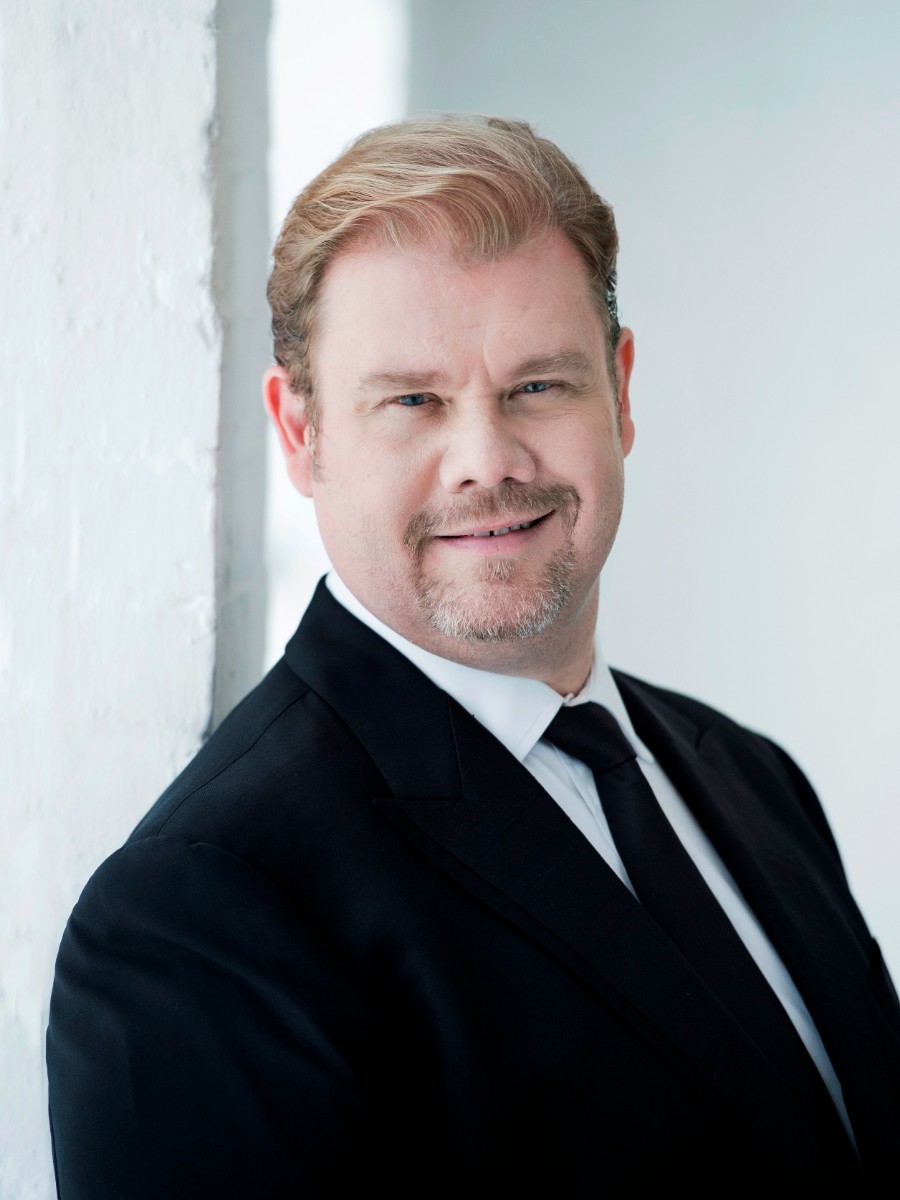
Stuart Skelton
Tenor
Stuart Skelton é um dos mais empolgantes tenores da atualidade, sendo aclamado pela crítica pela sua musicalidade excecional e pela intensidade dramática das suas interpretações.
A música de Richard Wagner é central na temporada 2025/26. Stuart Skelton estreia-se com a Ópera Nacional Coreana numa nova produção de Tristão e Isolda, dirigida pelo seu colaborador de longa data Jaap van Zweden. A nova temporada inclui outros grandes concertos Wagner, incluindo A Valquíria (Ato I), com a Orquestra Gulbenkian e com a Sinfónica de Antuérpia, concertos de gala, com a Sinfónica da Islândia, a soprano Nina Stemme e a maestra Eva Ollikainen, e Tristão e Isolda, com a Filarmónica da Radio France e a Sinfónica de Houston.
Recentemente, o calendário de concertos de Stuart Skelton incluiu, entre outras obras: A Canção da Terra de Mahler, com Andrew Davis e a Sinfónica de Melbourne, Esa-Pekka Salonen e a Orquestra do Met de Nova Iorque, e Simon Rattle e a Sinfónica da Rádio da Baviera, bem como a Sinfónica de Londres; a Sinfonia Fausto de Liszt, com Vladimir Jurowski e a Sinfónica da Rádio de Berlim; a Missa Solemnis de Beethoven, com Gianandrea Noseda e a Filarmónica da BBC, bem como David Robertson e a Sinfónica de St. Louis; e a Sinfonia n.º 9 de Beethoven, com Antonio Pappano e a Accademia Nazionale di Santa Cecilia, bem como Franz Welser-Möst e a Orquestra de Cleveland.
No seu primeiro álbum a solo, Shining Knight (Wagner, Griffes e Barber) Stuart Skelton é acompanhado por Asher Fisch e a Orquestra Sinfónica da Austrália Ocidental. O extenso catálogo de gravações inclui ainda Tristão e Isolda de Wagner, Peter Grimes de Britten, Gurre-Lieder de Schönberg, a Missa Glagolítica de Janáček, nomeada para um Grammy, com Edward Gardner e a Filarmónica de Bergen, A Valquíria de Wagner, com Simon Rattle e a Sinfónica da Baviera, bem como contribuições para quatro gravações de O Anel do Nibelungo de Wagner.
-
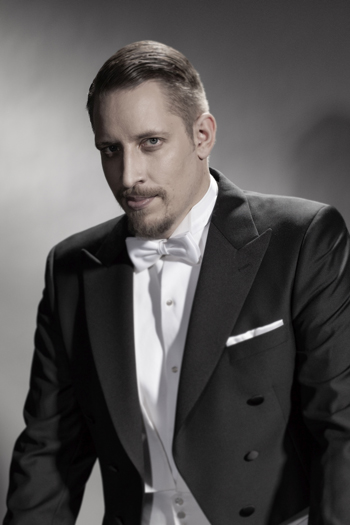
Mika Kares
Bass
Mika Kares has established himself as one of today's internationally most sought-after basses. His vast repertoire covers all the great Italian and German composers such as Verdi, Wagner and Mozart, in addition to the most important roles of the slavic and Finnish tradition.
Distinguished by his colourful bass voice, Kares regularly guests at the most renowned houses and festivals worldwide and has worked with conductors including Christian Thielemann, Simone Young, Teodor Currentzis, Nikolaus Harnoncourt, Fabio Luisi, Marc Minkowski, Zubin Mehta, Riccardo Muti, Franz Welser-Möst, Sebastian Weigle, François-Xavier Roth, Klaus Mäkelä, Kent Nagano, Kirill Petrenko, Marco Armiliato, Thomas Guggeis and Tarmo Peltokoski.
Recent seasons' opera highlights include i.a. Hagen/Götterdämmerung at the Bayreuth Festival, the Vienna State Opera and Berlin State Opera (where he also sang Fasolt and Hunding, as well as Vodník/Rusalka, Ivan/Khovanshchina and Zaccaria/Nabucco in new productions), Bluebeard/Bluebeard's Castle at the Salzburg Festival, Sarastro/Die Zauberflöte at the Royal Opera House Covent Garden and Munich's Bavarian State Opera, Il Commendatore/Don Giovanni at The Lyric Opera of Chicago and the Salzburg and Savonlinna Festivals, Daland/The Flying Dutchman at the Lyric Opera, Jacopo Fiesco/Simon Boccanegra at the Opéra National de Paris, King Heinrich/Lohengrin, King Marke/Tristan und Isolde, Padre Guardiano/La forza del destino and Balthazar/La Favorite at the Bavarian State Opera, Gremin/Eugene Onegin at the Vienna State Opera, Landgraf Hermann/Tannhäuser at the Royal Opera House Covent Garden and the Zurich Opera, Zaccaria/Nabucco at Deutsche Oper Berlin, Inquisitor/The Fiery Angel at Teatro Real de Madrid, Great Inquisitor/Don Carlo at Teatro alla Scala, and Ramfis/Aida at Théâtre Royale de La Monnaie in Brussels.
In addition, Mika Kares is very sought after as a concert singer, his broad repertoire including key works such as Mozart's Requiem, Rossini's Stabat Mater, Beethoven's Symphony No 9 and Missa Solemnis, Verdi's Messa da Requiem, Mahler's Symphony No 8, as well as Shostakovich's Symphonies No 13 and 14.
Recent concert highlights include concerts with Tchaikovsky's Iolanta/King René with Kirill Petrenko and the Berliner Philharmoniker, Strauss' Capriccio/La Roche with Christian Thielemann, and Adriana Lecouvreur/Prince de Bouillon with Anna Netrebko and Marco Armiliato, both at the Salzburg Festival, Beethoven's Symphony No. 9 with the hr-Sinfonieorchester as well as at the BBC Proms under the baton of Sakari Oramo, Verdi's Requiem with the Gewandhausorchester under Franz Welser-Möst, Mozart's Requiem with the Chicago Symphony Orchestra (Riccardo Muti) and the Vienna Philharmonic, Shostakovich's Symphony no 14 under Klaus Mäkelä with the Oslo Philharmonic, Mahler's Symphony No 8 with the Finnish Radio Symphony Orchestra and Hannu Lintu, as well as a concert performance of Bluebeard's Castle with the Helsinki Philharmonic Orchestra and Susanna Mälkki, which was released on CD (BIS Records) and nominated for the 2022 Grammy Award.
In season 2024-25 his projects include his return to the Opéra national de Paris as Fafner/Rheingold in the new RING production by Calixto Bieito, as well as the main roles of Paavo/The Last Temptations (J. Kokkonen) at Tampere Opera and Antti/The Horseman (A. Sallinen) at the Finnish National Opera.
Furthermore he can be heard on concert stages in Vienna, Helsinki, Copenhagen and Rotterdam.In the summer of 2025, Kares will perform the role of Paavo as well at the Savonlinna Opera Festival, where he will also make his debut as Boris Godunov. Subsequently, he will return to the Bayreuth Festival as Hagen/Götterdämmerung and Heinrich der Vogler/Lohengrin.
Mika Kares was shortlisted as Male Singer of the Year at the 2023 International Opera Awards.
Magnus Lindberg
Graffiti
(Portuguese premiere)
— Intermission of 20 min. —Richard Wagner
Die Walkure (Act I)
Total approximate duration: 120 min.
In his third season as Chief Conductor of the Gulbenkian Orchestra, Hannu Lintu will merge two splendid creations in the same programme: Graffiti by M. Lindberg and The Valkyrie by R. Wagner. The second part of The Ring of the Nibelung tetralogy, The Valkyrie embodies the essence of Wagner’s operatic genius. For its part, Graffiti is one of the few works by Lindberg to be included in the choral repertoire, based on inscriptions found on the walls of the ancient city of Pompeii. In an interview, Lindberg explained his attraction to the glimpse of “a 2,000-year-old society that suddenly ceased to exist”.
Sponsor Gulbenkian Music
The Calouste Gulbenkian Foundation reserves the right to collect and keep records of images, sounds and voice for the diffusion and preservation of the memory of its cultural and artistic activity. For further information, please contact us through the Information Request form.