
Mozart's Requiem
Participatory Concerts
Event Slider
Date
- 18:00 / Cancelled 18:00 / Sold out Saturday, 18:00
- 18:00 / Cancelled 18:00 / Sold out Sunday, 18:00
Location
Grand Auditorium Calouste Gulbenkian FoundationPricing
25% – Under 30
10% – Over 65
Cartão Gulbenkian:
50% – Under 30
15% – Over 65
- Participatory Choir
- Conductor
- Bárbara Barradas Soprano
- Mezzo-Soprano
- Marco Alves dos Santos Tenor
- Hugo Oliveira Baritone
-
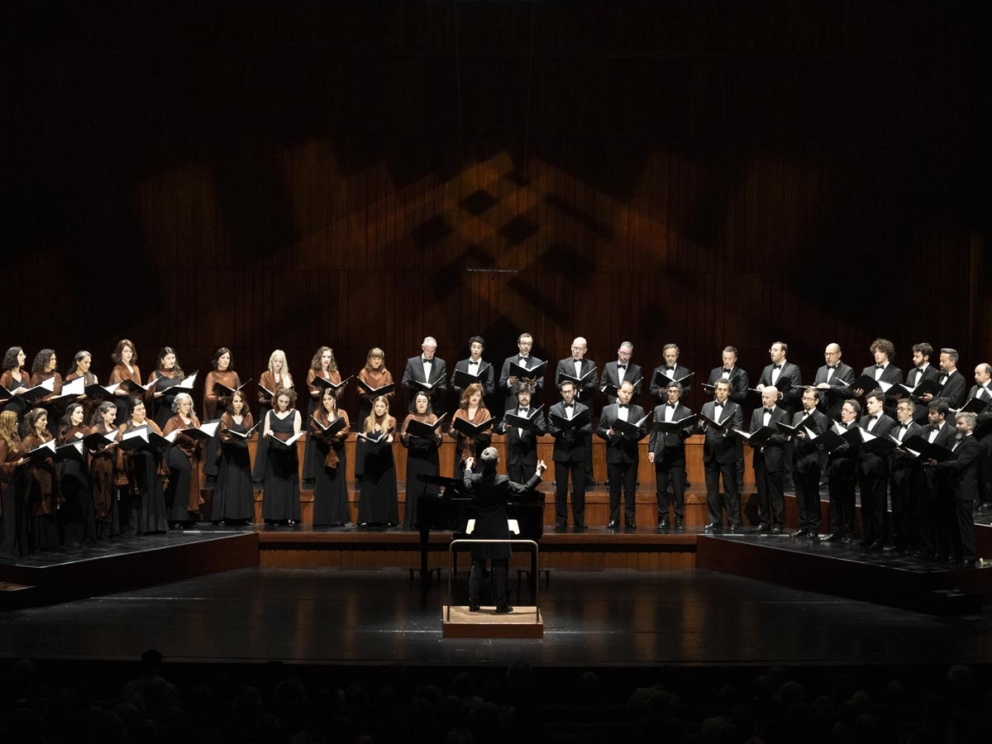
Gulbenkian Choir
Coro Gulbenkian was founded in 1964 by the Calouste Gulbenkian Foundation as a full symphonic body of around 100 singers. The choir joins the Orquestra Gulbenkian and other orchestras to perform Classical, Romantic and Contemporary choral-symphonic repertoire, but can also perform a cappella. It has performed – and often premiered – many 20th century works by Portuguese and international composers.
Coro Gulbenkian has been invited to collaborate with major international orchestras, under the direction of conductors such as Claudio Abbado, Colin Davis, John Nelson, Emmanuel Krivine, Esa-Pekka Salonen, Frans Brüggen, Franz Welser-Möst, Gerd Albrecht, Michael Gielen, Michael Tilson Thomas, Rafael Frübeck de Burgos, René Jacobs and Leonard Slatkin, among others.
Besides its regular season of concerts in Lisbon and frequent national tours, Coro Gulbenkian has repeatedly toured Argentina, Belgium, Brazil, Canada, Denmark, France, Germany, Hungary, India, Iraq, Israel, Italy, Japan, Macao, Malta, Monaco, Netherlands, Spain, the United Kingdom, the United States of America and Uruguay.
Coro Gulbenkian has recorded extensively for Philips, Deutsche Grammophon, Erato, Cascavelle, Musifrance, as well as FNAC-Music, performing a wide range of repertoire, from Early-Renaissance polyphony to Xenakis. Several of these albums received international awards.
Michel Corboz was the Principal Conductor between 1969 and 2019. Jorge Matta and Inês Tavares Lopes are currently the Associate and Assistant conductors, respectively.
-
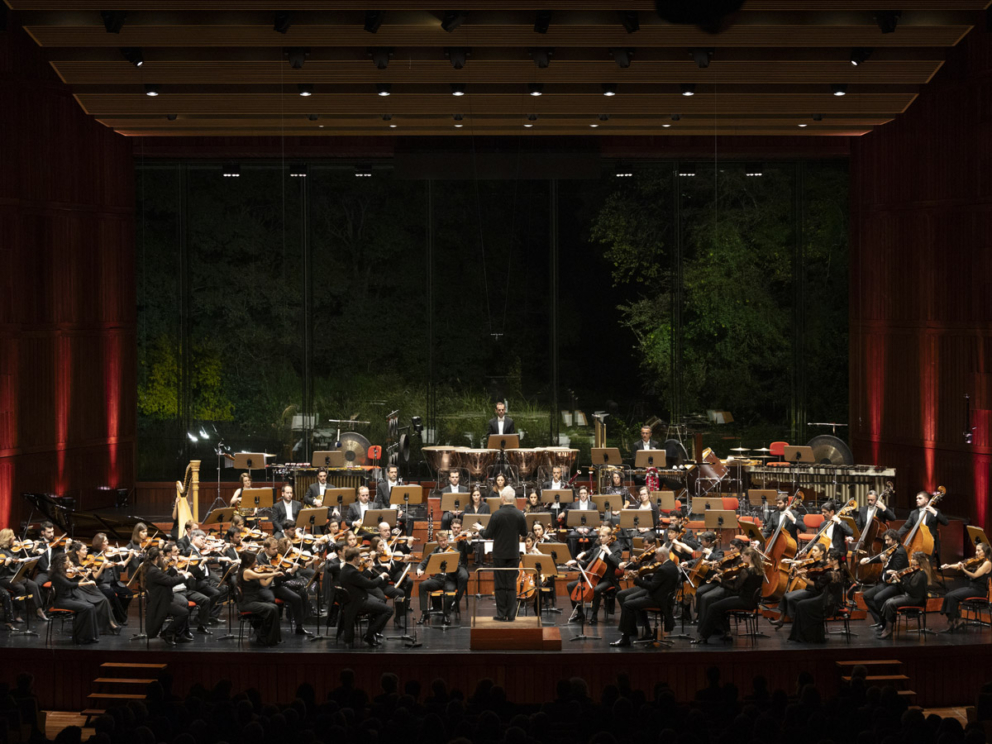
Gulbenkian Orchestra
In 1962, the Calouste Gulbenkian Foundation decided to establish a permanent orchestral ensemble. Originally with only twelve musicians (strings and continuo) it was named “Orquestra de Câmara Gulbenkian”. This collective was successively enlarged and today the “Orquestra Gulbenkian” (the name it has adopted since 1971) has a permanent body of sixty instrumentalists, a number that can be expanded depending on the repertoire.
This structure allows the Gulbenkian Orchestra to interpret works from the Baroque and Classical periods, a significant part of 19th century orchestral literature and much of the music of the 20th century, including works belonging to the current repertoire of the traditional symphonic orchestras. In each season, the orchestra performs on a regular series of concerts at the Gulbenkian Grand Auditorium in Lisbon, where it has had the opportunity of working together with some of leading names of the world of music (conductors and soloists). It has also performed on numerous locations all over Portugal, in an effort to decentralize music and culture.
The orchestra has been constantly expanding its activities in the international level, performing in Europe, Asia Africa, and the Americas. In the recording field, Orquestra Gulbenkian is associated to labels as Philips, Deutsche Grammophon, Hyperion, Teldec, Erato, Adès, Nimbus, Lyrinx, Naïve and Pentatone, among others, and this activity was recognized with several international prizes.
-
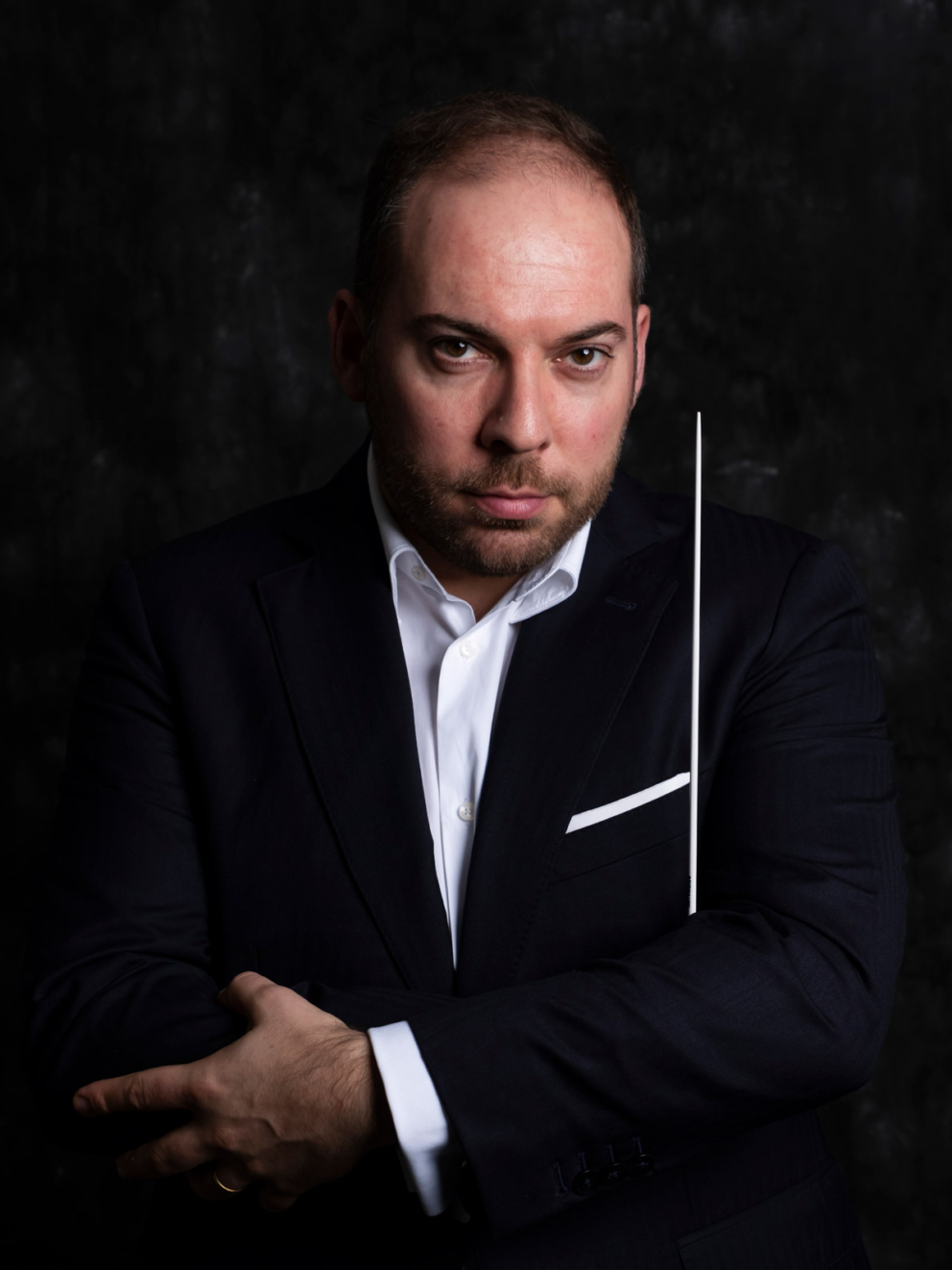
José Eduardo Gomes
Conductor
José Eduardo Gomes recently won the 1st Prize in the European Union Conducting Competition, and the Beethoven Prize in the same competition. He’s Principal Conductor of FEUP Orchestra (Porto – Portugal) and also Professor in the Lisbon Music University and Porto Music University, as a Principal Conductor of the School Orchestra.
He was Principal Conductor of Center Classical Orchestra (Coimbra – Portugal), Associate Conductor of the Orquestra Clássica do Sul (Faro – Portugal), Principal Conductor of the Orchestre Chambre de Carouge, in Switzerland and principal conductor of the Circulo Portuense de Opera Choir (Porto-Portugal).
He began his musical studies with the clarinet in his born town V. N. Famalicão. Later he continued his studies in ARTAVE and ESMAE - Porto, where he graduated in Antonio Saiote’s class. He followed his studies in Orchestral Conducting at the Haute École de Musique de Genève (Switzerland), with Laurent Gay, and choral conducting with Celso Antunes.
He was distinguished in several competitions: “RTP Antena 2 Young Musicians Award”, Portugal; ”Competition Marcos Romão” Portugal and "International Competition Villa de Montroy", Valencia (Spain), in clarinet and chamber music, and in the Portuguese competition “Prémio Jovens Músicos” in orchestral conducting, with the 2nd prize and the special Orchestra Prize, and also Semi Finalist in the “1º Concorso Citta di Brescia Giancarlo Facchinetti” (Italy).
José Eduardo is founder of the clarinet ensemble Quarteto Vintage and Serenade Ensemble.
In the past few years he has been invited to work with the main Portuguese Orchestras, such as Gulbenkian Orchestra, Orquestra Sinfónica do Porto Cdm, Orquestra SInfónica Portuguesa, with soloist such as Maria João Pires, Diemut Poppen, Maria Elisabeth Lott, Sebastian Klinger, Adriana Ferreira, among others and performing in important festivals, such as Dias da Música, Festival de Sintra, Festival PJM, Festival Cantabile, Festival das Artes, Festival de Música de Leiria, FIMA, Música no Colégio, Festival Internacional de Música Religiosa de Guimarães, among others.
In Opera, he conducted some productions, such as Mozart “Don Giovanni” and “Cosi Fan Tutte”, Marcos de Portugal “La Donna di Genio Volubile”, Haydn “Lo Speziale”.
Another important part of his work is dedicated to youth orchestras, all over the country.
In 2018, he was awarded with the “Medalha de Mérito Cultural”, by his hometown, V.N. Famalicão.
Since 2019, José Eduardo is the Artistic Director of JOF (Jovem Orquestra Famalicão), a young symphonic orchestra, with some of the most prominent young Portuguese musicians.
-

Carolina Figueiredo
Mezzo-Soprano
Carolina Figueiredo graduated from the Lisbon Conservatory of Music in 2005, after which she studied with Manuela de Sá and currently with Joana Siqueira. She was a member of the Gulbenkian Choir from 1998 to 2011.
She has performed in concert with major national choirs and orchestras, in the country’s main concert halls, such as the Gulbenkian Foundation, the Lisbon Opera House, the CCB, Coliseu dos Recreios and Porto, under the direction of Leonardo García Alarcón, Michael Corboz, Joana Carneiro, Lorenzo Viotti, Cesário Costa, João Paulo Santos, Pedro Amaral, Osvaldo Ferreira, José Eduardo Gomes, Martim Sousa Tavares and Nuno Coelho, among others.
She has taken part in several opera productions at the Lisbon Opera House, the Gulbenkian Foundation, the CCB, Teatro D. Luiz and Teatro D. Maria II, singing the roles of Madrigalista (Blimunda), Larina (Evgeni Onegin), Countess Rosina (Beaumarchais), Gertrude (Roméo et Juliette), Annina (La Traviata), Kate Pinkerton (Madama Butterfly), Licori (L'Angelica) and Assuero (Ester), among others.
She regularly gives recitals of Baroque and Romantic music and is also invited by various chamber music groups, such as Ensemble Darcos (Nuno Corte-Real), Músicos do Tejo (Marcos Magalhães), Americantiga Ensemble (Ricardo Bernardes), Ensemble MPMP (Jan Wierzba), Concerto Campestre (Pedro Castro) and Camerata Atlântica (Ana Manzanilla), with whom she has performed both in Portugal and abroad.
In August 2022, she recorded the role of Nina from Pergolesi’s "Il Frate 'Nnamorato" with the ensemble Músicos do Tejo. She has participated in productions of contemporary music, premiering and recording works by Carlos Marecos, Anne Victorino de Almeida, Nuno da Rocha, Luís Soldado, Hugo Ribeiro, Ana Seara e Jorge Salgueiro.
In parallel with her work as a musician, Carolina also pursues a carrier as a legal translator, having graduated in Law and holding a postgraduate Dip Trans qualification from the Chartered Institute of Linguists.
Wolfgang Amadeus Mozart
Requiem in D minor, K. 626
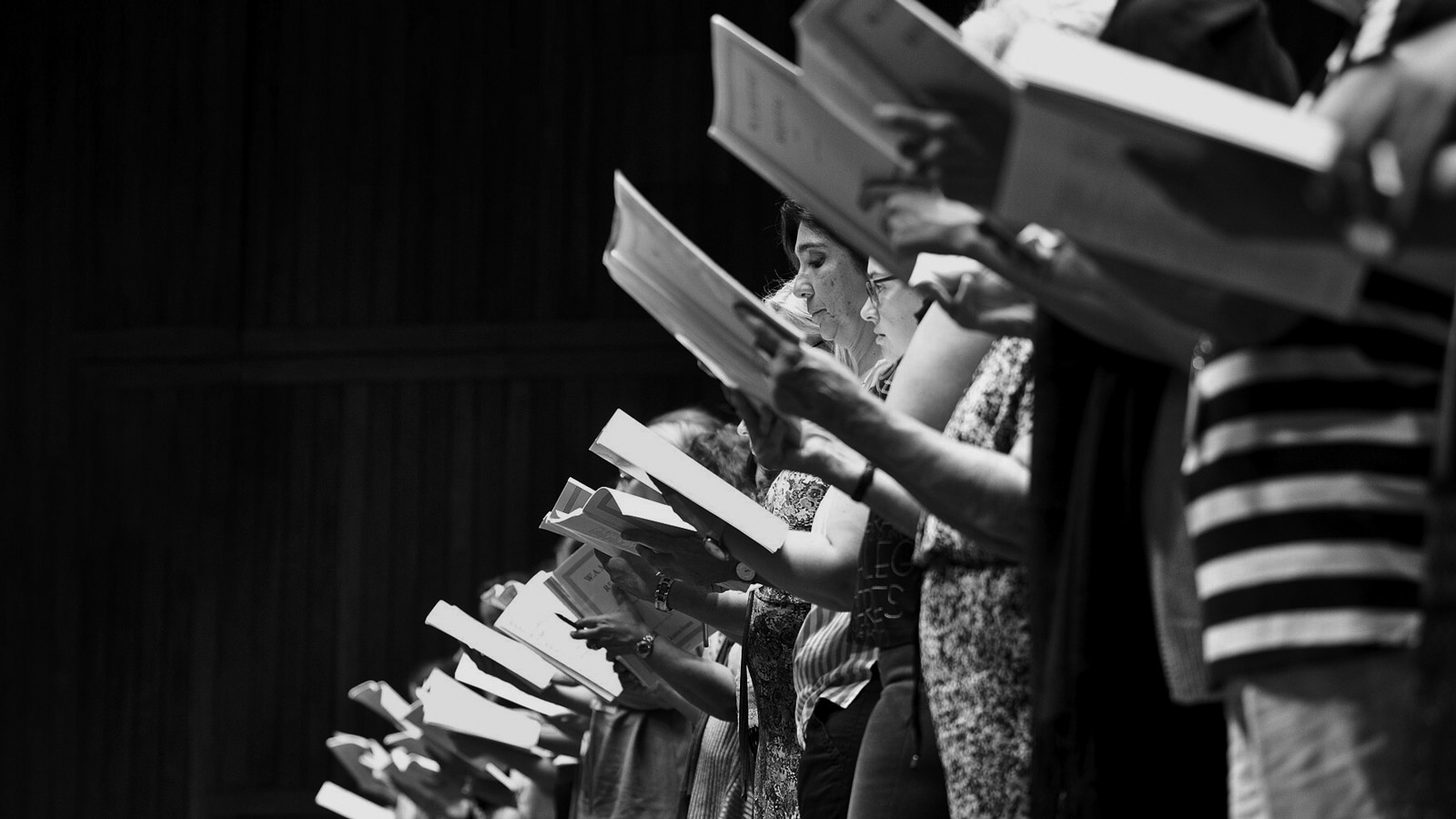
Gulbenkian Música resumes the popular Participatory Concerts. A new occasion for amateur choir singers to join the Gulbenkian Choir and Orchestra in preparing and performing a fundamental piece of the repertoire – in this case Mozart’s famous Requiem, the Austrian composer’s sublime final work. The initiative also aims to bring the public and professional musicians closer together, allowing participants to experience the usual rehearsal process and finally collaborate in the concert performance in the Grand Auditorium.
Sponsor Gulbenkian Music

The Calouste Gulbenkian Foundation reserves the right to collect and keep records of images, sounds and voice for the diffusion and preservation of the memory of its cultural and artistic activity. For further information, please contact us through the Information Request form.