
Mahler's 3rd
Gulbenkian Orchestra and Choir / Frédéric Chaslin
Event Slider
Date
- 20:00 / Cancelled 20:00 / Sold out Thursday, 20:00
- 19:00 / Cancelled 19:00 / Sold out Friday, 19:00
Location
Grand Auditorium Calouste Gulbenkian FoundationPricing
50% – Under 30 years old
15% – Over 65 years old
- Conductor
- Contralto
-
Gulbenkian Choir
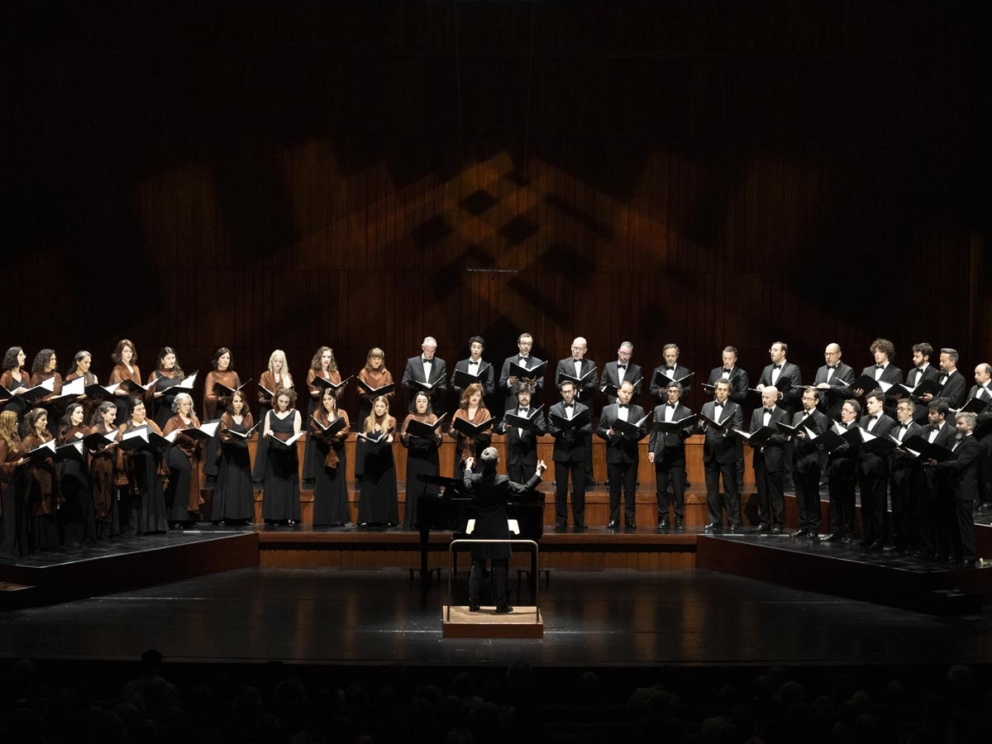
Coro Gulbenkian was founded in 1964 by the Calouste Gulbenkian Foundation as a full symphonic body of around 100 singers. The choir joins the Orquestra Gulbenkian and other orchestras to perform Classical, Romantic and Contemporary choral-symphonic repertoire, but can also perform a cappella. It has performed – and often premiered – many 20th century works by Portuguese and international composers.
Coro Gulbenkian has been invited to collaborate with major international orchestras, under the direction of conductors such as Claudio Abbado, Colin Davis, John Nelson, Emmanuel Krivine, Esa-Pekka Salonen, Frans Brüggen, Franz Welser-Möst, Gerd Albrecht, Michael Gielen, Michael Tilson Thomas, Rafael Frübeck de Burgos, René Jacobs and Leonard Slatkin, among others.
Besides its regular season of concerts in Lisbon and frequent national tours, Coro Gulbenkian has repeatedly toured Argentina, Belgium, Brazil, Canada, Denmark, France, Germany, Hungary, India, Iraq, Israel, Italy, Japan, Macao, Malta, Monaco, Netherlands, Spain, the United Kingdom, the United States of America and Uruguay.
Coro Gulbenkian has recorded extensively for Philips, Deutsche Grammophon, Erato, Cascavelle, Musifrance, as well as FNAC-Music, performing a wide range of repertoire, from Early-Renaissance polyphony to Xenakis. Several of these albums received international awards.
Michel Corboz was the Principal Conductor between 1969 and 2019. Jorge Matta and Inês Tavares Lopes are currently the Associate and Assistant conductors, respectively.
-
Gulbenkian Orchestra
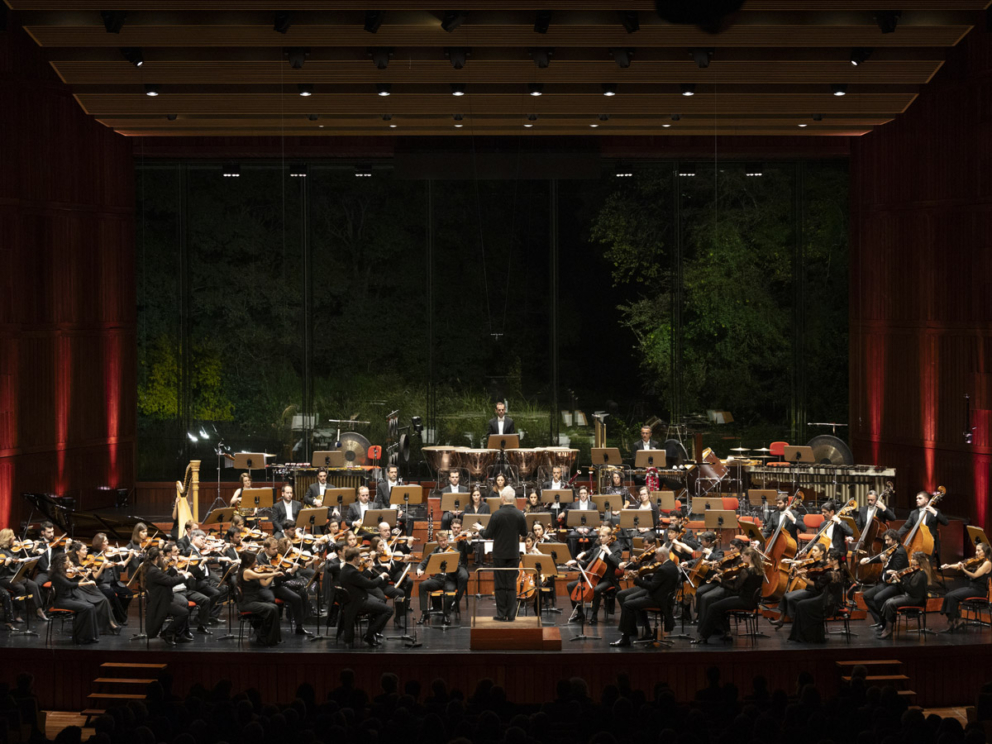
In 1962, the Calouste Gulbenkian Foundation decided to establish a permanent orchestral ensemble. Originally with only twelve musicians (strings and continuo) it was named “Orquestra de Câmara Gulbenkian”. This collective was successively enlarged and today the “Orquestra Gulbenkian” (the name it has adopted since 1971) has a permanent body of sixty instrumentalists, a number that can be expanded depending on the repertoire.
This structure allows the Gulbenkian Orchestra to interpret works from the Baroque and Classical periods, a significant part of 19th century orchestral literature and much of the music of the 20th century, including works belonging to the current repertoire of the traditional symphonic orchestras. In each season, the orchestra performs on a regular series of concerts at the Gulbenkian Grand Auditorium in Lisbon, where it has had the opportunity of working together with some of leading names of the world of music (conductors and soloists). It has also performed on numerous locations all over Portugal, in an effort to decentralize music and culture.
The orchestra has been constantly expanding its activities in the international level, performing in Europe, Asia Africa, and the Americas. In the recording field, Orquestra Gulbenkian is associated to labels as Philips, Deutsche Grammophon, Hyperion, Teldec, Erato, Adès, Nimbus, Lyrinx, Naïve and Pentatone, among others, and this activity was recognized with several international prizes.
-
Frédéric Chaslin
Conductor
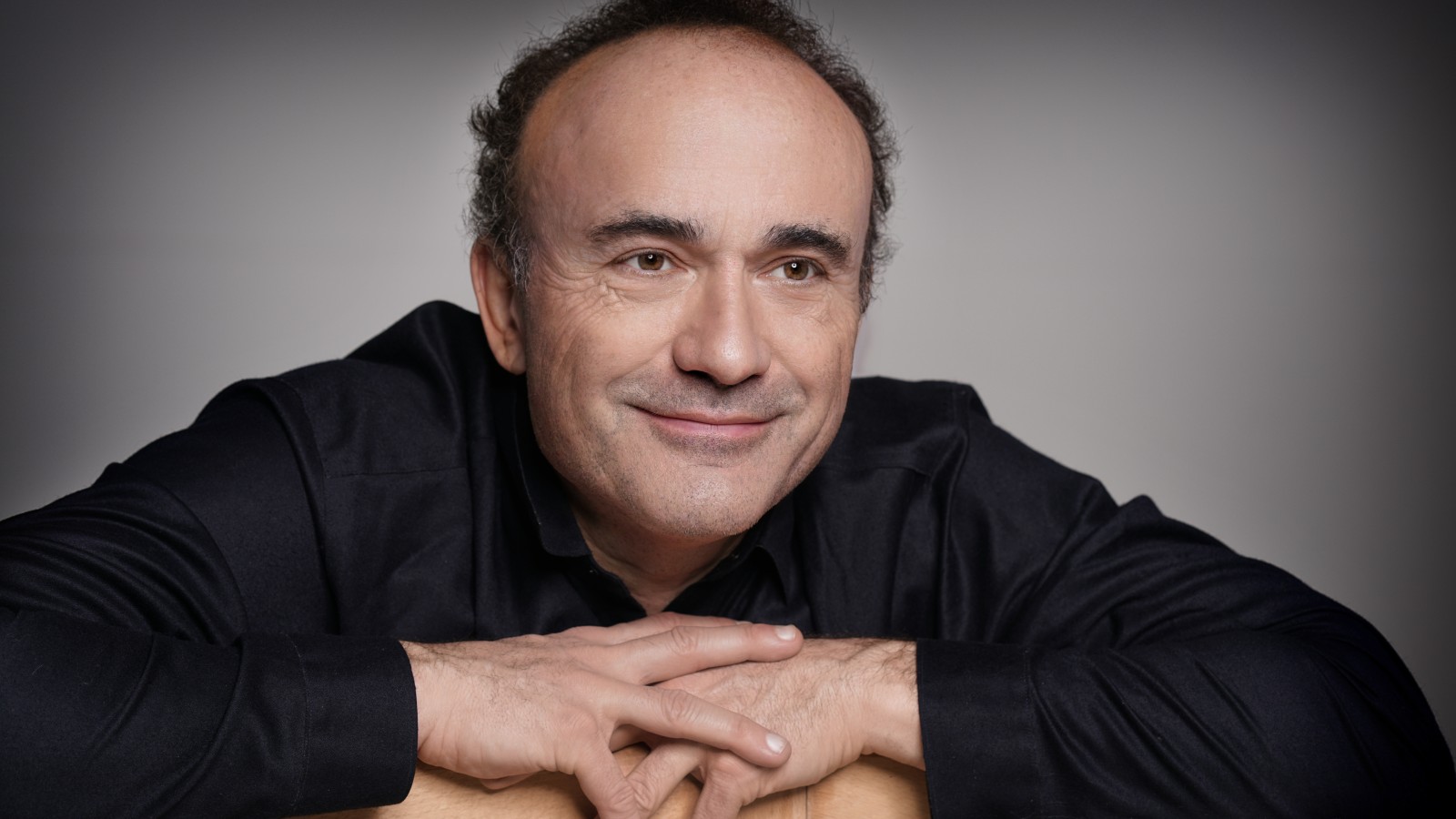
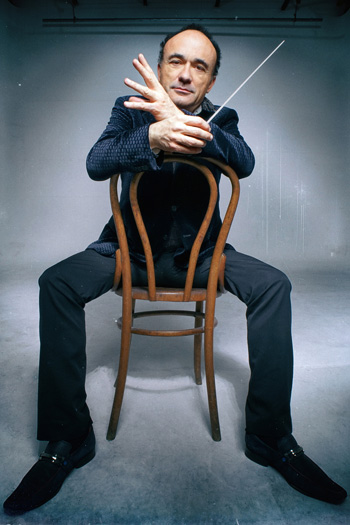
Conductor, composer, pianist and author, Frédéric Chaslin was born in Paris and educated at the Paris Conservatoire and the Salzburg Mozarteum. He began his conducting career in 1989 as assistant to Daniel Barenboim in Paris and Bayreuth. He became Pierre Boulez’s assistant at the Ensemble Intercontemporain in Paris in 1991. He became successively Music Director of the Opera in Rouen (1991-94), the Jerusalem Symphony Orchestra (1998-2001), the Mannheim Nationaltheater (2004-2007), the Santa Fe Opera (2009-2013) and for his second tenure, the Jerusalem Symphony (since 2011) Frederic Chaslin divides his activities equaly between operatic and symphonic performances. At the opera, he conducted the major companies in the world, New York Metropolitan (since 2002), Los Angeles Opera, Berlin Deutsche Oper, Munich Bayerische Staatsoper, as well as Leipzig, Dresden, Madrid, Bologna, Roma, Venice, Torino, Tokyo, Oslo, Copenhagen.
In 1993, Frederic Chaslin made his debuts at the Bregenzer Festspiele for Nabucco (93, 94) and Fidelio (95, 96). This started his austrian carreer, followed by the Vienna State Opera were he’s conducted since 1997 over 200 performances. In the symphonic repertoire, he’s conducted all major french orchestras (Orchestre de Paris, Orchestra National, Radio-France Philharmonic, Paris Opera Orchestra), the Milan Scala Philharmonic, Torino Rai, Manchester Hallé, London Philhramonia, London Symphony, Vienna Symphony, Vienna Philharmonic, Spain National Orchestra, Gulbenkian Foundation Orchestra (Lisbon), Israel Philharmonic, Nagoya Philharmonic.
He performed several piano concertos as a conductor/pianist (Ravel 2 piano concertos, Beethoven 5 piano concertos, No 5 with the Vienna Philharmonic in 2001 at the Vienna State Opera).
As a composer, Frederic Chaslin wrote 3 operas and over 50 melodies for soprano, mezzo and baritone. Excerpts of this operas have been sung and recorded by the most famous sopranos (Netrebko, Dessay, Peretyatko, and Damrau who recorded some arias in her CD « Damrau Forver»).
Symphonic compositions include the « Gipsy Dance » for violon and orchestra and a cello concerto. As an author, Frederic Chaslin wrote an essay, « Music in Every Sense » published in Paris (France-Empire) and Germany (Böhlau). He also released a novel based on the life of Gustav Mahler, together with his own orchestration of Mahler’s 10th symphony.
Major recent appearences were two new productions of Tales of Hoffman in Dresden and Copenhagen; Faust, L’Elisir d’Amore, Turandot, Don Pasquale at the Wiener Staatsoper; La damnation de Faust in Lisbon; concerts with Jerusalem Symphony Orchestra.
-
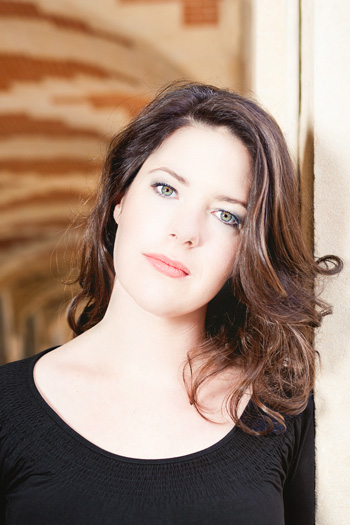
Wiebke Lehmkuhl
Contralto
Born in Oldenburg, Germany, alto Wiebke Lehmkuhl received her vocal training from Ulla Groenewold and Hanna Schwarz at the Hochschule für Musik und Theater in Hamburg. After guest engagements at the Kiel Opera and the Hamburg and Hanover State Operas, Wiebke Lehmkuhl received her first permanent engagement at the Zurich Opera House while still a student. In 2012 she made her debut at the Salzburg Festival under Nikolaus Harnoncourt. Her extraordinary versatility gives Wiebke Lehmkuhl a broad repertoire ranging from Monteverdi, Handel and Bach to Romantic oratorios, Mahler and Wagner, making her a much sought-after soloist on the international concert podium and opera stage. She is a regular guest with major orchestras such as the Berlin Philharmonic, Cleveland Orchestra, Tonhalle Zurich, Gewandhaus Leipzig, Bavarian Radio Symphony Orchestra, Bamberg Symphony, Orchestre de Paris and Swedish Symphony, where she has worked with conductors such as Kirill Petrenko, Klaus Mäkelä, Daniel Hardig and Riccardo Chailly. She is also a welcome guest at festivals such as the Schleswig-Holstein, Rheingau and Lucerne Festivals.
Wiebke Lehmkuhl has appeared at the Salzburg and Bayreuth Festivals. She made her debut at the Nederlandse Opera in Amsterdam in Handel's Jephta. Her absolute key role, however, is without doubt Erda in Wagner's Rheingold and Siegfried: "And with Wiebke Lehmkuhl's Erda, an operatic miracle happened in the third act: a performance that had long been very good with very good singers was raised to a lonely world level by a very special singer. Weighing every word and yet weaving every word into the legato line, the registers of her dreamlike alto voice melting together like ebony - this is how Wiebke Lehmkuhl's grandmother deserves the crown of the evening. (Peter Krause, "OPERN-KRITIK: GRAND THÉÂTRE DE GENÈVE - SIEGFRIED - Poesie statt Politik", www.concerti.de; 15 February 2019) This role has since taken her to the stages of the Bavarian State Opera in Munich, the Grand Théâtre de Genève, the Opéra de Bastille in Paris and the Royal Opera House Covent Garden in London, with conductors such as Yannick Nézet-Séguin, Marek Janowski and Philippe Jordan. She will also be heard as Erda at the Royal Opera House Covent Garden under Antonio Pappano in the new London Ring, which opens in the 23/24 season with Rheingold. She then accepted an invitation from the Opéra nationale de Paris to sing Cornelia in Handel's Giulio Cesare.
In the concert repertoire, Wiebke Lehmkuhl's heart beats above all for Baroque music, and in particular for Johann Sebastian Bach. She has been invited to perform the alto arias from the St John Passion with the Concertgebouw Orchestra under Trevor Pinnock. However, the works of Gustav Mahler and Ludwig van Beethoven are always in the foreground. In Lisbon and Valencia, Mahler's Symphony No. 2 and the Rückert Lieder are on the programme. Wiebke Lehmkuhl returns to the Teatro alla Scala di Milano for Beethoven's Symphony No. 9 under Riccardo Chailly, before closing the season with the Missa Solemnis at the Auditorio Nacional de la Musica Madrid under David Afkham.
Wiebke Lehmkuhl has made numerous recordings, including J.S. Bach's Christmas Oratorio with the Gewandhausorchester zu Leipzig under Riccardo Chailly (Decca) and C.P.E. Bach's Magnificat with the RIAS Kammerchor and the Akademie für Alte Musik Berlin under Hans-Christoph Rademann (Harmonia Mundi).
Gustav Mahler
Symphony No. 3, in D minor
* Due to reasons of force majeure, conductor Pablo Heras-Casado will be replaced by Frédéric Chaslin.
In his Symphony No. 3, his longest and most expansive, Mahler was inspired by a passage from Nietzsche’s Thus Spake Zarathustra and a series of folk poems which he set to music while writing the symphony. Finding links in the sounds of nature, representatives of a world in tumult, Mahler wished to allude to the turbulent life on Earth before the arrival of eternal paradise. At Gulbenkian Música, he will play with the acclaimed Wiebke Lehmkuhl, a regular performer at the Bayreuth Festival, conducted by Frédéric Chaslin.
Gulbenkian Music Sponsor

Gulbenkian Orchestra Sponsor

The Calouste Gulbenkian Foundation reserves the right to collect and keep records of images, sounds and voice for the diffusion and preservation of the memory of its cultural and artistic activity. For further information, please contact us through the Information Request form.