
Les nuits d’été
Gulbenkian Choir and Orchestra
Event Slider

Date
- 20:00 / Cancelled 20:00 / Sold out Thursday, 20:00
- 19:00 / Cancelled 19:00 / Sold out Friday, 19:00
Location
Grand Auditorium Calouste Gulbenkian FoundationPricing
- 28,00 € – 56,00 €
25% – Under 30
10% – Over 65
Cartão Gulbenkian:
50% – Under 30
20% – Over 65
10% – 30 to 65
- Conductor
- Mezzo-Soprano
-
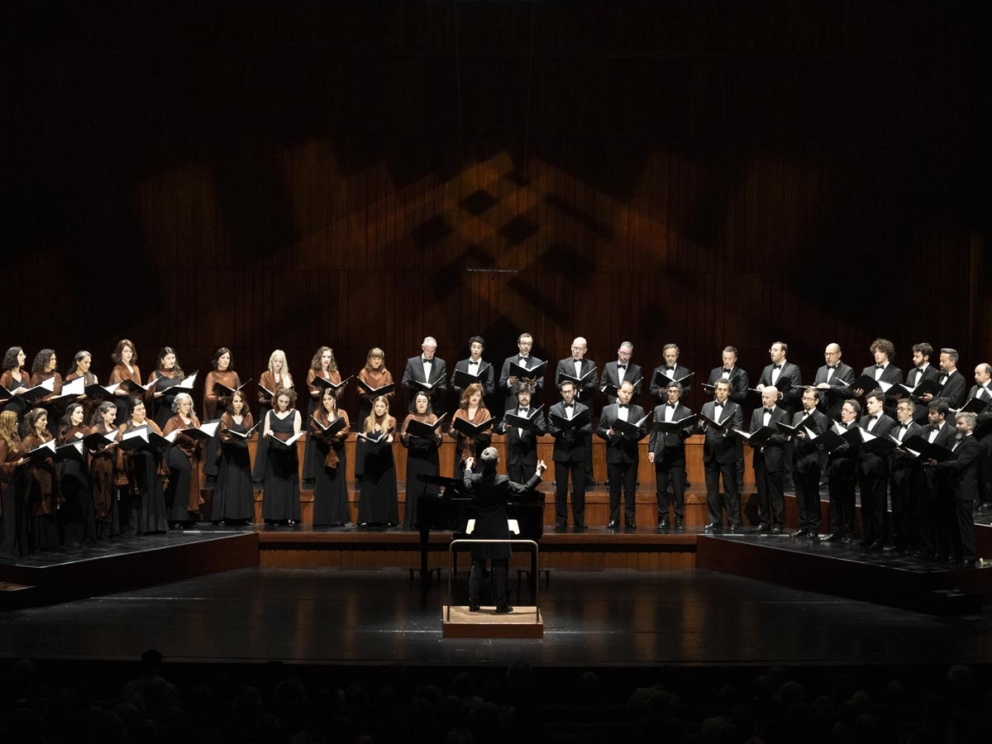
Gulbenkian Choir
The Gulbenkian Choir was founded in 1964 by the Calouste Gulbenkian Foundation as a full symphonic body of around 100 singers. The choir joins the Orquestra Gulbenkian and other orchestras to perform Classical, Romantic and Contemporary choral-symphonic repertoire, but can also perform a cappella. It has performed – and often premiered – many 20th century works by Portuguese and international composers.
The Gulbenkian Choir has been invited to collaborate with major international orchestras, under the direction of conductors such as Claudio Abbado, Colin Davis, John Nelson, Emmanuel Krivine, Esa-Pekka Salonen, Frans Brüggen, Franz Welser-Möst, Gerd Albrecht, Michael Gielen, Michael Tilson Thomas, Rafael Frübeck de Burgos, René Jacobs and Leonard Slatkin, among others.
Besides its regular season of concerts in Lisbon and frequent national tours, the Gulbenkian Choir has repeatedly toured Argentina, Belgium, Brazil, Canada, Denmark, France, Germany, Hungary, India, Iraq, Israel, Italy, Japan, Macao, Malta, Monaco, Netherlands, Spain, the United Kingdom, the United States of America and Uruguay.
The Gulbenkian Choir has recorded extensively for Philips, Deutsche Grammophon, Erato, Cascavelle, Musifrance, as well as FNAC-Music, performing a wide range of repertoire, from Early-Renaissance polyphony to Xenakis. Several of these albums received international awards.
Martina Batič is the current Principal Conductor, succeeding Michel Corboz (1969–2019), Inês Tavares Lopes the Associate Conductor and Jorge Matta the artistic consultant.
-
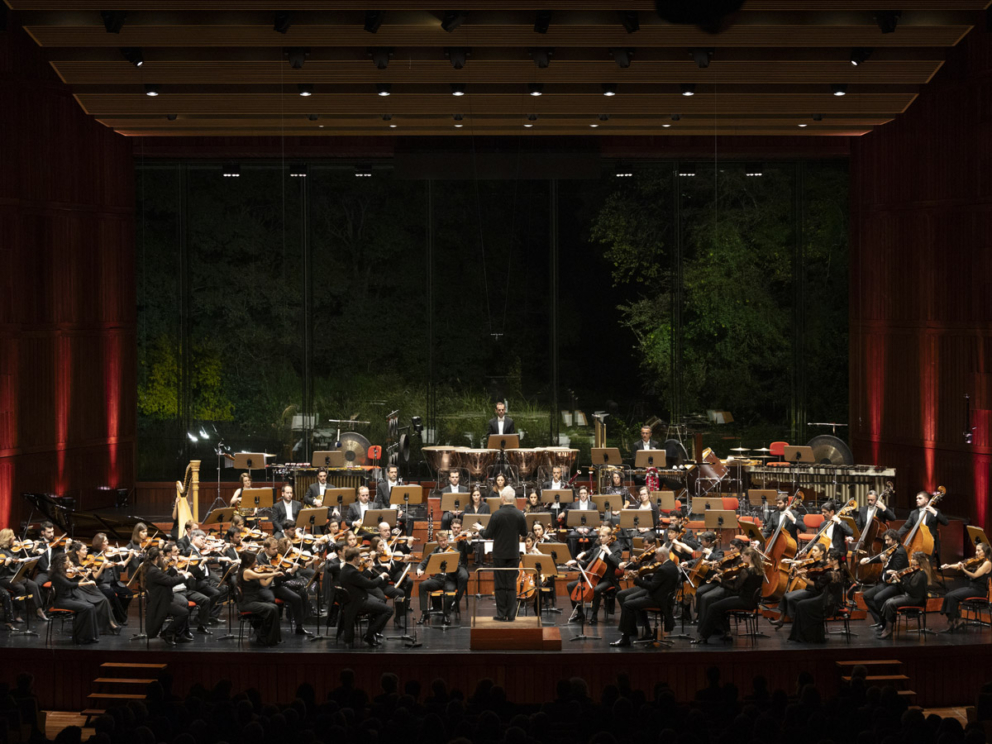
Gulbenkian Orchestra
In 1962, the Calouste Gulbenkian Foundation decided to establish a permanent orchestral ensemble. Originally with only twelve musicians (strings and continuo) it was named “Orquestra de Câmara Gulbenkian”. This collective was successively enlarged and today the “Orquestra Gulbenkian” (the name it has adopted since 1971) has a permanent body of sixty instrumentalists, a number that can be expanded depending on the repertoire.
This structure allows the Gulbenkian Orchestra to interpret works from the Baroque and Classical periods, a significant part of 19th century orchestral literature and much of the music of the 20th century, including works belonging to the current repertoire of the traditional symphonic orchestras. In each season, the orchestra performs on a regular series of concerts at the Gulbenkian Grand Auditorium in Lisbon, where it has had the opportunity of working together with some of leading names of the world of music (conductors and soloists). It has also performed on numerous locations all over Portugal, in an effort to decentralize music and culture.
The orchestra has been constantly expanding its activities in the international level, performing in Europe, Asia Africa, and the Americas. In the recording field, Orquestra Gulbenkian is associated to labels as Philips, Deutsche Grammophon, Hyperion, Teldec, Erato, Adès, Nimbus, Lyrinx, Naïve and Pentatone, among others, and this activity was recognized with several international prizes.
Hannu Lintu is the Music Director of the Gulbenkian Orchestra since 2023.
-
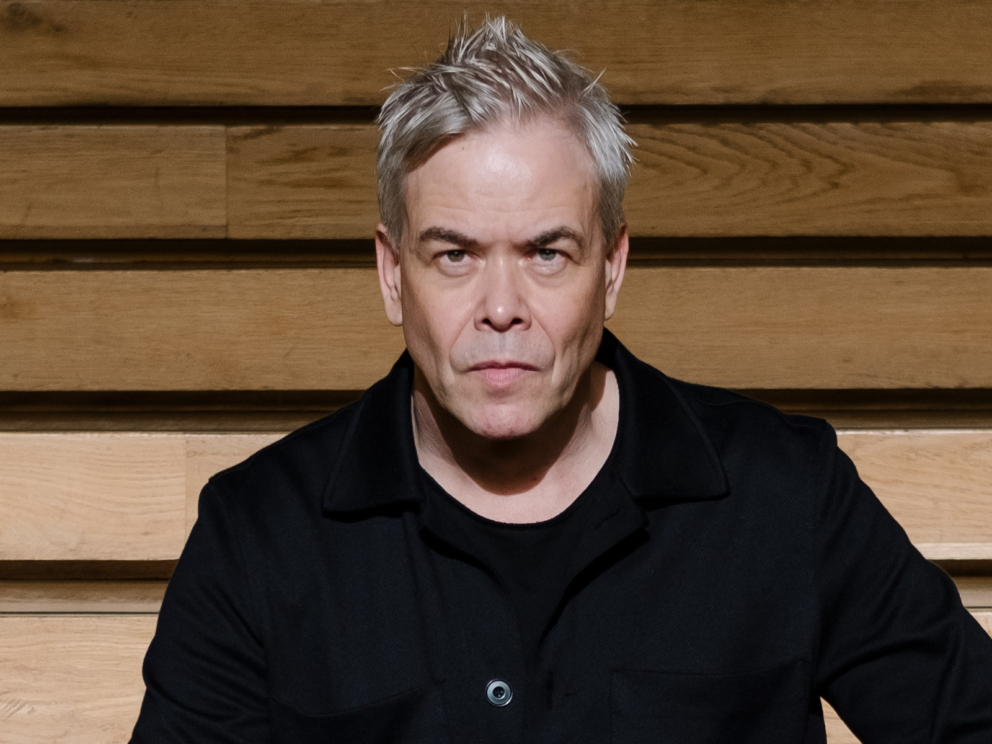
Hannu Lintu
Music Director
“Dynamic and sharp on the podium” (Bachtrack) and with an “extreme clarity of purpose, every detail worth noting” (Los Angeles Times), Hannu Lintu maintains his reputation as one of the world’s finest conductors. This season Lintu continues his tenures as Music Director of Orquestra Gulbenkian and Chief Conductor of Finnish National Opera and Ballet, proving himself a master of both symphonic and operatic repertoire, as well as beginning his tenures as Artistic Partner of the Lahti Symphony Orchestra and Artistic Director of the International Sibelius Festival.
Last season also saw Lintu’s appointment as Music Director of Singapore Symphony Orchestra from 2026/27, where he will appear this season for several performances, including for Haydn’s Nelson Mass and Shostakovich’s 7th Leningrad Symphony. Other highlights include returns to the BBC, St Louis, Toronto, Baltimore and Detroit Symphonies, as well as productions of Strauss’ Elektra and a world premiere of Sebastian Fagerlund’s The Morning Star at Finnish National Opera.
Symphonic highlights of recent years have seen Lintu conduct the Chicago Symphony, New York Philharmonic (including an immediate re-invitation from the orchestra to perform at Bravo! Vail Festival), Berliner Philharmoniker, The Cleveland Orchestra, Bavarian Radio Symphony Orchestra, Orchestre National de Radio France, Boston Symphony Orchestra, Swedish Radio Symphony Orchestra, BBC Symphony, Deutsches Symphonie-Orchester Berlin, Radio Filharmonisch Orkest, London Philharmonic, Atlanta Symphony Orchestra, Konzerthausorchester Berlin, St Louis Symphony, and Orchestre Symphonique de Montréal.
As an expert in both operatic as well as symphonic repertoire, Lintu’s recent opera highlights have included Enescu’s Œdipe with the Vienna Symphony at Bregenz Festspiele, Wagner’s Der fliegende Holländer at Opera de Paris and Debussy’s Pelléas et Mélisande at Bayerische Staatsoper as a guest conductor, as well as multiple productions at Finnish National Opera and Ballet, including a recent multi-season Ring Cycle, Poulenc’s Dialogues des Carmélites, Mozart’s Don Giovanni, a choregraphed reimagining of Verdi’s Messa da Requiem, Puccini’s Turandot, Richard Strauss’ Salome, and Britten’s Billy Budd.
Lintu has made several recordings for Ondine, BIS Records, Naxos, Avie Records and Hyperion Records. His diverse discography comprises recordings of Magnus Lindberg’s orchestral works, the complete Beethoven Piano Concertos with Stephen Hough, and Lutoslawski’s Symphonies Nos. 1-4, all with Finnish Radio Symphony Orchestra. His often-gilded work boasts two International Classical Music Awards and several nominations for Gramophone and GRAMMY awards in recognition of recording projects such as Bartók’s Violin Concertos with Christian Tetzlaff, works by Sibelius featuring Anne Sofie von Otter, Rautavaara’s Kaivos, and the Violin Concertos of Sibelius and Thomas Adès with Augustin Hadelich and Royal Liverpool Philharmonic Orchestra.
Lintu studied cello and piano at the Sibelius Academy, where he also later studied conducting with Jorma Panula. He participated in masterclasses with Myung-Whun Chung at L’Accademia Musicale Chigiana in Siena, Italy, and took first prize at the Nordic Conducting Competition in Bergen in 1994.
-
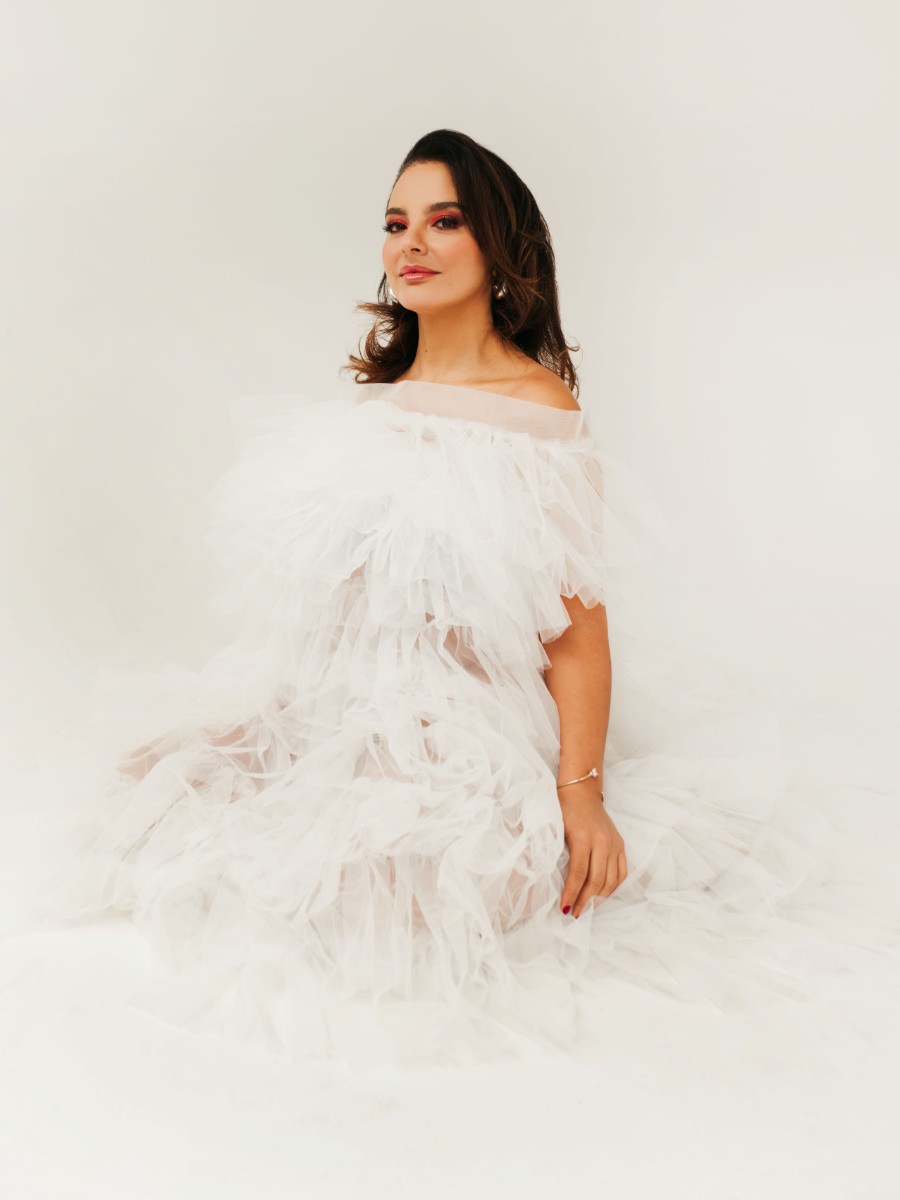
Rihab Chaieb
Mezzo-Soprano
Tunisian-Canadian mezzo-soprano Rihab Chaieb is capturing international attention with her compelling stage presence and vocal versatility.
The 25/26 season sees Chaieb make a series of house debuts, including Nefertiti in Glass’ Akhnaten, for the Gran Teatre del Liceu, the title role in Bizet’s Carmen for Montreal Opera and Charlotte in Massenet’s Werther for the Teatro Cervantes de Málaga. Elsewhere Chaieb returns to the Bayerische Staatsoper as Maddalena in a new production of Verdi’s Rigoletto and to the Atlanta Opera for Cherubino in Mozart’s Le Nozze di Figaro.
On the concert platform, Chaieb will perform her debut Mahler’s Symphony No.2 with the Atlanta Symphony Orchestra cond. Stutzmann, Mahler’s Symphony No.3 with the Vancouver Symphony Orchestra cond. Tausk, Ravel’s L’Enfant et les Sortilèges with the Orquesta Sinfonica de Barcelona cond. Morlot and gives a recital at the Life Victoria Barcelona with Brian Zeger.
In the last season, Chaieb returned to LA Opera as Dorabella in Mozart’s Cosi Fan Tutte, the Metropolitan Opera as Maddalena in Verdi’s Rigoletto, Canadian Opera Company as Fenena in Verdi’s Nabucco, made her house debut with Opera Australia as title role Carmen and returned to the Bayerische Staatsoper as Lola in a new production of Mascagni’s Cavalleria Rusticana. In huge demand on the concert platform, Chaieb performed at Le Concert de Paris with the Orchestre National de France, made her debut with the Bregenzer Festspiele in Ravel’s Scheherezade with the Wiener Symphoniker cond. Elim Chan, performed Beethoven Symphony No. 9 with the Philadelphia Orchestra & Orchestre Metropolitain Montreal both cond. Nézet- Séguin, along with further performances of Beethoven Symphony No. 9 with the Los Angeles Philharmonic cond. Dudamel and Vancouver Symphony Orchestra, Carmen in concert with the Los Angeles Philharmonic cond. Dudamel & Kalamazoo Symphony, Mozart’s Requiem with the Orchestre Symphonique de Quebec cond.Sousa and Beethoven’s Missa Solemnis with the Washington National Symphony Orchestra cond. Noseda.
Recent operatic highlights include the title role in a new production of Carmen at Glyndebourne Festival and for the BBC Proms, Chaieb’s debut at Opernhaus Zürich as Charlotte in Massenet Werther, Fenena Nabucco under Daniele Rustioni in Chaieb’s debut for the Bayerische Staatsoper and for Deutsche Oper Berlin, her LA
Opera debut as Cherubino Le nozze di Figaro under James Conlon, her debut at Washington National Opera & Seiji Ozawa Music Academy as Dorabella Così fan tutte and Nefertiti in Glass Akhnaten for The Metropolitan Opera.
Other operatic successes include title role Carmen for Canadian Opera Company, Palm Beach Opera, Oper Köln & Calgary Opera, Lola Cavalleria Rusticana with Dutch National Opera cond. Lorenzo Viotti, Dorabella Così fan tutte for Santiago de Chile, Maddalena Rigoletto & Offenbach Fantasio for Opéra National de Montpellier, Rosina in Rossini Il barbiere di Siviglia at Cincinnati Opera & Kasturbai in Glass Satyagraha & Charlotte Werther for Opera Ballet Vlaanderen.
Elsewhere, Chaieb has sung Penelope Il ritorno d’Ulisse in patria on tour and for a recording with Ensemble I Gemelli and Carmen in concert for her debut with the Quincena Musical de San Sebastián. She has created the role of Claire in the world premiere of Melancholia with the Royal Swedish Opera, La mère Meryem in Jost Voyage vers l’espoir for Grand Théâtre de Genève & gave the world premiere of Tarik O’Regan’s The Phoenix in her debut for Houston Grand Opera.
On the concert platform, Chaieb has sung Beethoven Symphony No.9 & Verdi Requiem with the Los Angeles Philharmonic cond. Dudamel, Beethoven 9 with Nézet- Séguin and The Philadelphia Orchestra at Carnegie Hall, Verdi Requiem with the Bergen Philharmonic Orchestra cond. Gardner, Mahler Lieder eines fahrenden Gesellen cond. Debus & a Rossini Gala cond. Nagano with the Orchestre symphonique de Montréal, Handel Messiah cond. Gimeno with the Toronto Symphony Orchestra and with the Philharmonia Baroque Orchestra cond. Egarr, Berlioz’s Les nuits d’été with the Vancouver Symphony Orchestra, de Falla El sombrero de tres picos with both Vancouver Symphony Orchestra and Bournemouth Symphony Orchestra cond. Prieto & Mozart Requiem with Les Violons du Roi cond. Labadie. Her various recital appearances have included Vocal Arts DC with pianist Brian Zeger and for the National Arts Center's #CanadaPerforms series with pianist Jennifer Szeto.
As a recording artist, Chaieb has appeared on Jonathan Tetelman’s ‘The Great Puccini’ album for Deutsche Grammophon, and has recorded both Bach’s Mass in B minor & Beethoven Symphony No.9 with Orchestre Métropolitain under Music Director Nézet-Séguin, the latter released on Deutsche Grammophon’s DG Stage.
As a former member of the The Metropolitan Opera’s Lindemann Young Artist Program, Chaieb appeared in numerous productions there, including Zulma L’italiana in Algeri, Laura Luisa Miller, Lola Cavalleria Rusticana, and Sandmännchen Hänsel und Gretel. Chaieb returned to the Met as a guest with Zerlina Don Giovanni under Cornelius Meister.
Hector Berlioz
Franz Liszt
It was perhaps on the shores of Lake Como that Franz Liszt immersed himself in reading Dante Alighieri’s Divine Comedy, nurturing for almost twenty years the ambition of creating a symphony inspired by the Italian writer’s masterpiece. Advised by Wagner to abandon the movement dedicated to Paradise – as it would be impossible to portray it in music – Liszt concentrated on composing music inspired by Hell and Purgatory. Berlioz, too, was inspired by literature for the composition of his magnificent song cycle Les nuits d’été – in this case, the poetry collection La Comédie de la Mort by his friend Théophile Gautier.
Sponsor Gulbenkian Music

The Calouste Gulbenkian Foundation reserves the right to collect and keep records of images, sounds and voice for the diffusion and preservation of the memory of its cultural and artistic activity. For further information, please contact us through the Information Request form.