
Brahms' Symphony No. 2
Gulbenkian Orchestra
Event Slider
Date
- 20:00 / Cancelled 20:00 / Sold out Thursday, 20:00
- 19:00 / Cancelled 19:00 / Sold out Friday, 19:00
Location
Grand Auditorium Calouste Gulbenkian FoundationPricing
25% – Under 30
10% – Over 65
Cartão Gulbenkian:
50% – Under 30
20% – Over 65
10% – 30 to 64
- Conductor
- Soprano
-
Gulbenkian Orchestra
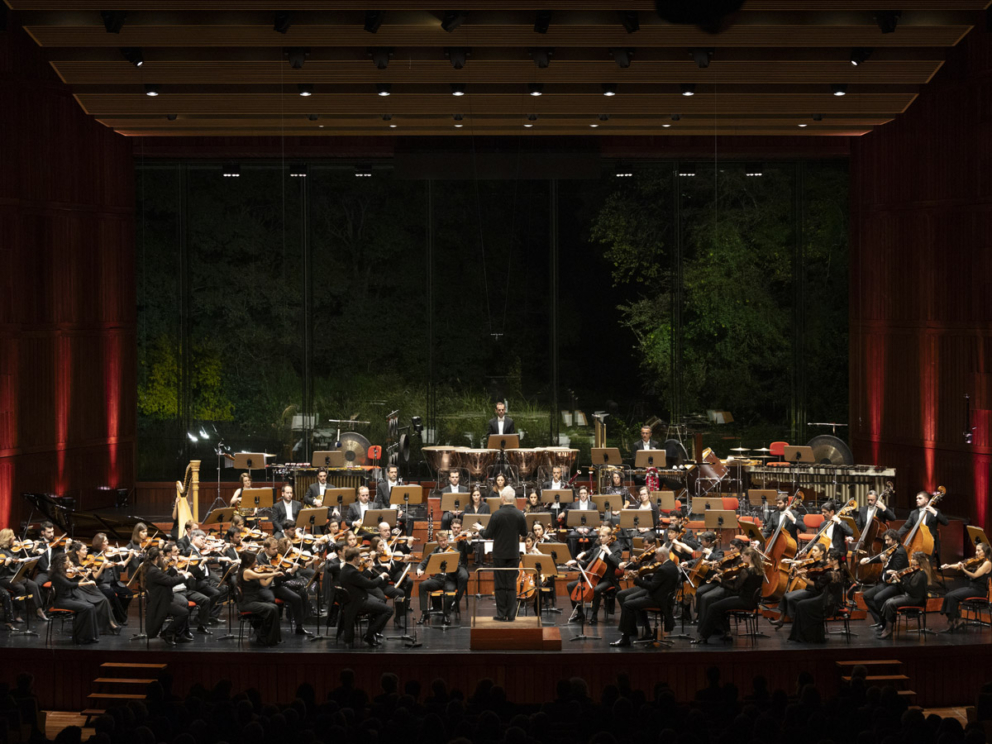
In 1962, the Calouste Gulbenkian Foundation decided to establish a permanent orchestral ensemble. Originally with only twelve musicians (strings and continuo) it was named “Orquestra de Câmara Gulbenkian”. This collective was successively enlarged and today the “Orquestra Gulbenkian” (the name it has adopted since 1971) has a permanent body of sixty instrumentalists, a number that can be expanded depending on the repertoire.
This structure allows the Gulbenkian Orchestra to interpret works from the Baroque and Classical periods, a significant part of 19th century orchestral literature and much of the music of the 20th century, including works belonging to the current repertoire of the traditional symphonic orchestras. In each season, the orchestra performs on a regular series of concerts at the Gulbenkian Grand Auditorium in Lisbon, where it has had the opportunity of working together with some of leading names of the world of music (conductors and soloists). It has also performed on numerous locations all over Portugal, in an effort to decentralize music and culture.
The orchestra has been constantly expanding its activities in the international level, performing in Europe, Asia Africa, and the Americas. In the recording field, Orquestra Gulbenkian is associated to labels as Philips, Deutsche Grammophon, Hyperion, Teldec, Erato, Adès, Nimbus, Lyrinx, Naïve and Pentatone, among others, and this activity was recognized with several international prizes.
Hannu Lintu is the Music Director of the Gulbenkian Orchestra since 2023.
-
Paweł Kapuła
Conductor
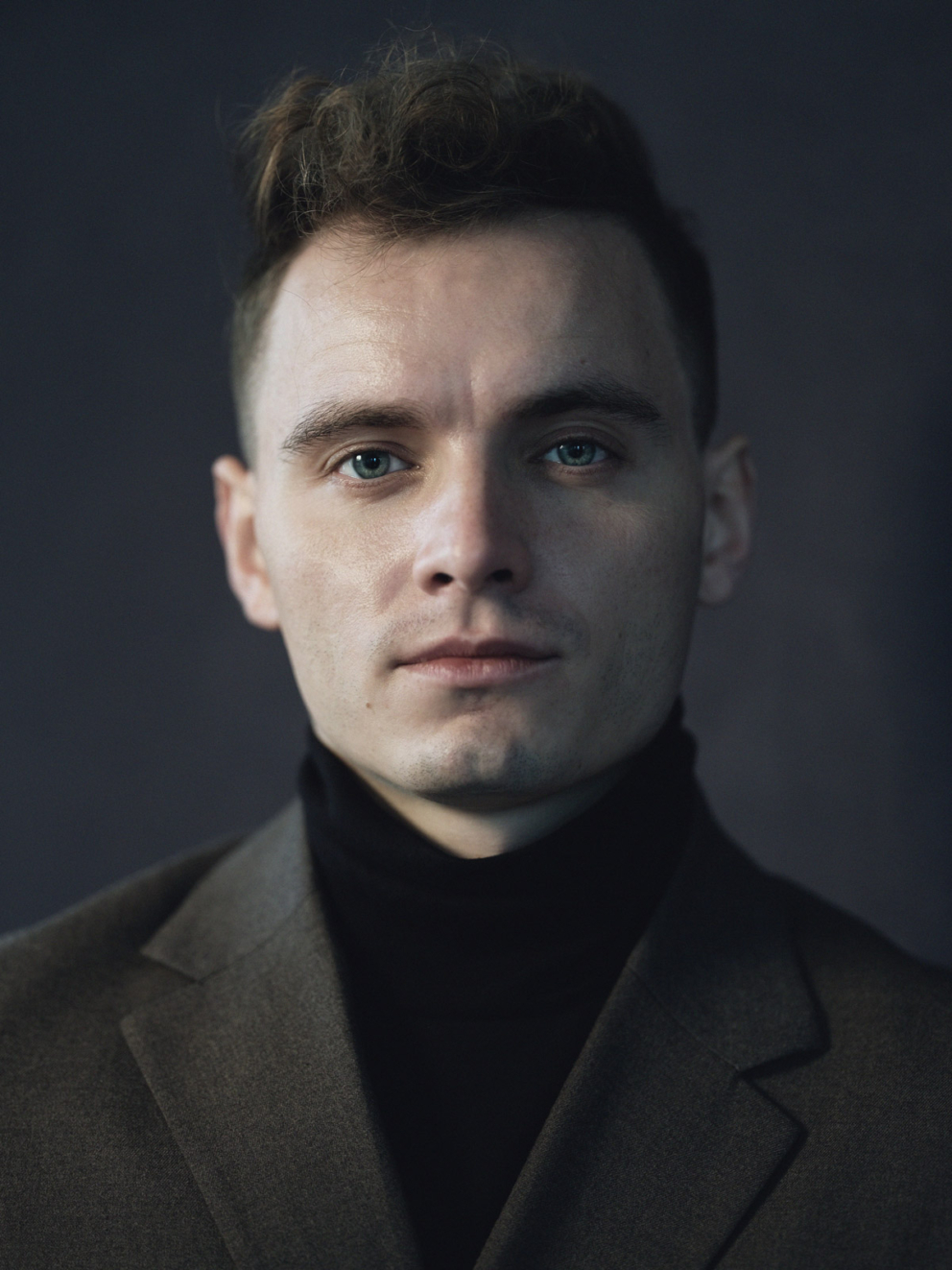
Paweł Kapuła, described by Polish Radio as “a true hope for Polish conducting”, is one of the most spectacular conductors of the younger generation and is celebrated for his exciting, fresh and captivating interpretations and his excellent conducting technique. His programmes demonstrate a high degree of finesse and creativity, whilst never shying away from a challenge. His infectious energy, combined with a meticulous study of the score, has contributed to his steadily growing reputation across Europe and beyond.
The 2026/2027 season will see Paweł Kapuła conduct renowned orchestras, including the BBC Scottish Symphony Orchestra, with which the young conductor has already kicked off the current season and made his sensational and acclaimed debut at the BBC Proms in London’s iconic Royal Albert Hall in early September 2026. He will also appear with orchestras such as Deutsche Staatsphilharmonie Rheinland-Pfalz, Copenhagen Philharmonic, MDR Symphony Orchestra and, once again, Hamburg Symphony Orchestra, as well as returning to the Orquestra Gulbenkian, following his highly successful debut there last season, which resulted in an immediate invitation to return.
More recently, Paweł Kapuła has made highly acclaimed debut appearances with orchestras such as the Japan Philharmonic Orchestra, the Oslo Opera Orchestra, the Bremen Philharmonic, the Mainz State Orchestra, the NDR Radio Philharmonic and the Aarhus Symphony Orchestra, as well as with the Sibiu Philharmonic and the Transylvanian State Philharmonic Orchestra in Romania, and the Gothenburg Opera Orchestra and the Basel Symphony Orchestra.
In February 2021, Paweł Kapuła was appointed Principal Guest Conductor of the Pomeranian Philharmonic in Bydgoszcz. Since then, he has led the orchestra in programmes with such sophistication and sensitivity that this has attracted the interest of other Polish orchestras, including the Polish National Radio Symphony Orchestra in Katowice, the Warsaw Philharmonic and the Baltic Philharmonic in Gdańsk.
Kapuła’s latest recording project, featuring all of Beethoven’s piano concertos, performed with the Prague Philharmonic Orchestra at the Rudolfinum in Prague, has recently been released internationally. Paweł Kapuła is also a champion of neglected Polish composers, as he has demonstrated in numerous recordings for Polish radio.
Paweł Kapuła began taking piano lessons at the age of seven. He studied conducting with Tadeusz Strugala and Stanisław Krawczyński at the Academy of Music in Kraków. He was a finalist and winner of the Distinction Award at the 1st Adam Kopyciński Student Conducting Competition in Wrocław in 2013. He is a graduate in musicology from the Jagiellonian University in Kraków.
-

Juliana Zara
Soprano
After the riotous critical success of her role debut as Lulu, the “grandiose soprano” (FAZ) has been nominated for both prestigious German Theater Prize “Der Faust” for that portrayal, and Opus Klassik’s Singer of the Year for her interpretation of Bubikopf in her recording of Der Kaiser von Atlantis. Juliana Zara was featured on the cover of the May 2023 edition of Opernwelt Magazine.
At the beginning of the 2025/26 opera season, she made her house debut at Theater an der Wien as the Cheshire Cat in Unsuk Chin’s Alice in Wonderland. In concert this season, Zara gave her role debut as Woglinde in Das Rheingold with the Wuppertal Symphony Orchestra under the baton of Patrick Hahn. She also revived Unsuk Chin’s Puzzles and Games from Alice in Wonderland, a work she debuted at Carnegie Hall the previous season, this time performing with the Munich Chamber Orchestra under Enrico Onofri at the Prinzregententheater. Additional highlights this season are her house debut at the Royal Theatre Copenhagen as Sœur Constance in Barrie Kosky’s production of Dialogues of the Carmélites. In March, she makes her debut in Mahler’s Symphony No. 4 with the Ann Arbor Symphony Orchestra under the baton of Earl Lee.
Juliana recently performed Shoko in Thomas Larcher’s Das Jagdgewehr at Bavarian State Opera, Zerbinetta in Ariadne auf Naxos with Dutch Touring Opera, and Najade in Ariadne auf Naxos at Zurich Opera House. She also made her house debut at Bonn Theater as Adina in L’elisir d’amore and returned to Darmstadt State Theater for a revival of the same role. Most recently she sang Leonard Bernstein’s Wonderful town at the National Theater Sao Carlos in Lisbon.
In concert, Juliana sang a New Year’s Gala with the Scottish Chamber Orchestra, premiered Matias Vestergård’s Melodrama with the Copenhagen Philharmonic, and gave a recital with pianist Marlene Heiss at the Berlin Philharmonic Hall. She also performed the Cheshire Cat in Alice in Wonderland with the Dutch Radio Philharmonic at the Concertgebouw in Amsterdam. Further, she made her North American debut at Carnegie Hall with the Sejong Soloists, performing Unsuk Chin’s Puzzles and Games.
A passionate interpreter of contemporary music, Juliana Zara has performed György Ligeti’s Mysteries of the Macabre with the Wuppertal Symphony Orchestra and starred in the world premieres of Fabià Santcovsky’s Transstimme at Munich Biennale and Miroslav Srnka’s Singularity at the Bavarian State Opera. She also debuted as Tinkerbell in the world premiere of Frank Schwemmer’s Peter Pan with the Luxembourg Philharmonic and covered the title role in the world premiere of Stefan Wirth’s Girl with the Pearl Earring at Zurich Opera House. From 2021 to 2023, Juliana Zara was a member of the ensemble at Darmstadt State Theater, where she performed a range of roles, including Olympia in Les contes d’Hoffmann and Morgana in Alcina.
From 2019 to 2021, Juliana Zara was a member of the Opera Studio at Bavarian State Opera, where she performed a variety of roles, including Frasquita (Carmen), Philine (Mignon), and Mercedes (Schön ist die Welt).
She is a graduate of Oberlin Conservatory of Music and the Conservatory of Music “Hanns Eisler” in Berlin.
Unsuk Chin
Johannes Brahms
* Due to health reasons, soprano Hanna-Elisabeth Müller will be replaced by Juliana Zara.
Following a highly acclaimed appearance with Gulbenkian Music in 2025, the Polish conductor Paweł Kapuła now applies his contagious energy and interpretative intelligence to Brahms’s Symphony No. 2. After taking around fourteen years to complete his First Symphony, the composer whom Schumann proclaimed Beethoven’s musical successor produced his second symphonic work in just one year, inspired by a summer holiday by Lake Wörthersee in Austrian Carinthia. It may well have been this idyllic landscape that shaped the work’s luminous and melodic character.
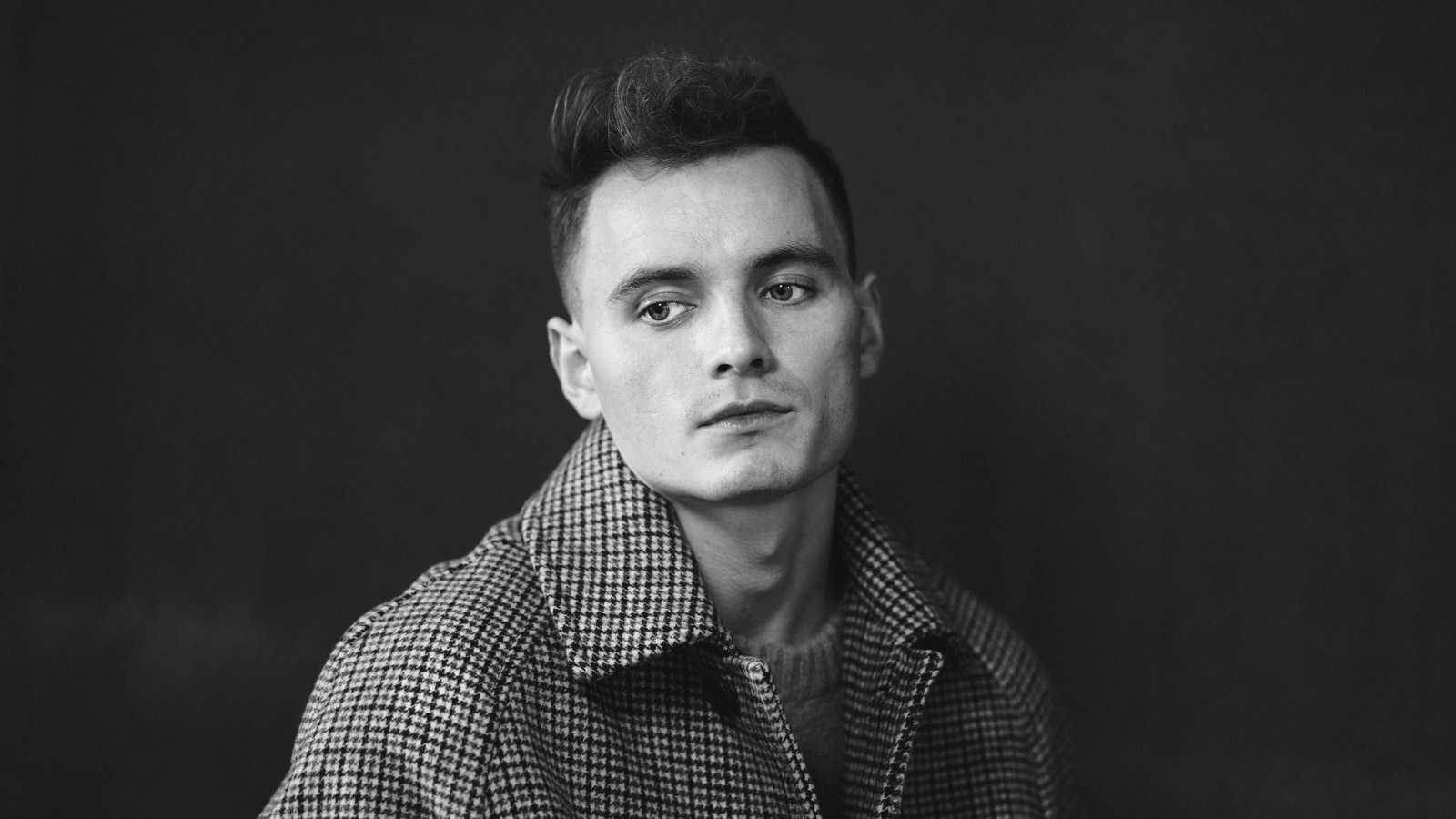
Photo © Kamil Szkopik
Sponsor Gulbenkian Music

The Calouste Gulbenkian Foundation reserves the right to collect and keep records of images, sounds and voice for the diffusion and preservation of the memory of its cultural and artistic activity. For further information, please contact us through the Information Request form.