
Brahms 4th
Gulbenkian Orchestra
Event Slider

Date
- 20:00 / Cancelled 20:00 / Sold out Thursday, 20:00
- 19:00 / Cancelled 19:00 / Sold out Friday, 19:00
Location
Grand Auditorium Calouste Gulbenkian FoundationDue to reasons of force majeure, the live broadcast of this concert has been cancelled.
Pricing
25% – Under 30
10% – Over 65
Cartão Gulbenkian:
50% – Under 30
15% – Over 65
- Conductor
- Oboe
-
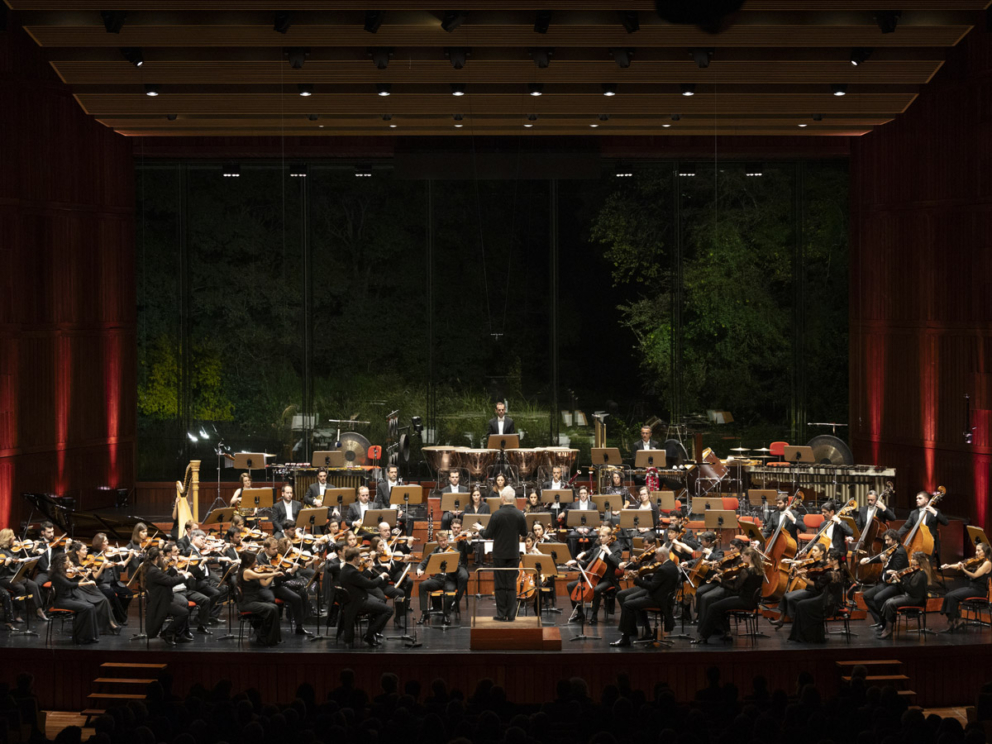
Gulbenkian Orchestra
In 1962, the Calouste Gulbenkian Foundation decided to establish a permanent orchestral ensemble. Originally with only twelve musicians (strings and continuo) it was named “Orquestra de Câmara Gulbenkian”. This collective was successively enlarged and today the “Orquestra Gulbenkian” (the name it has adopted since 1971) has a permanent body of sixty instrumentalists, a number that can be expanded depending on the repertoire.
This structure allows the Gulbenkian Orchestra to interpret works from the Baroque and Classical periods, a significant part of 19th century orchestral literature and much of the music of the 20th century, including works belonging to the current repertoire of the traditional symphonic orchestras. In each season, the orchestra performs on a regular series of concerts at the Gulbenkian Grand Auditorium in Lisbon, where it has had the opportunity of working together with some of leading names of the world of music (conductors and soloists). It has also performed on numerous locations all over Portugal, in an effort to decentralize music and culture.
The orchestra has been constantly expanding its activities in the international level, performing in Europe, Asia Africa, and the Americas. In the recording field, Orquestra Gulbenkian is associated to labels as Philips, Deutsche Grammophon, Hyperion, Teldec, Erato, Adès, Nimbus, Lyrinx, Naïve and Pentatone, among others, and this activity was recognized with several international prizes.
Hannu Lintu is the Music Director of the Gulbenkian Orchestra since 2023.
-
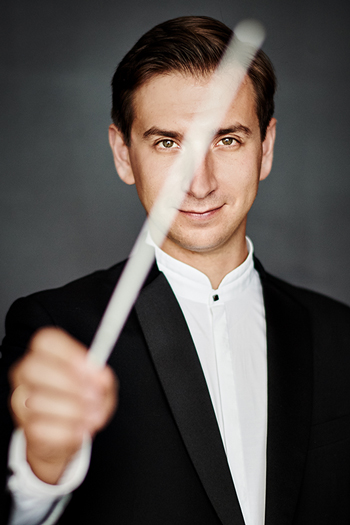
Mihhail Gerts
Conductor
Hailed by critics for his “astonishing precision, highly expressive gestures and warmth” as “a name to remember”, the Estonian conductor Mihhail Gerts has made a name for himself following recent successful debuts with the Orchestra Sinfonica dell'Accademia Nazionale di Santa Cecilia, Royal Liverpool Philharmonic, BBC Symphony Orchestra, Antwerp Symphony, and Orchestre Philharmonique de Radio France with acclaimed baritone Matthias Goerne as soloist. Other recent highlights have included debuts with the Orchestre Philharmonique de Luxembourg, Orchestre Philharmonique de Marseille, Helsinki Philharmonic, Stavanger Symphony, Orchestre National des Pays de la Loire, Bremer Philharmoniker and Beethoven Orchester Bonn.
Gerts has established a regular collaboration with orchestras such as RTÉ National Symphony Orchestra, Sinfonia Varsovia, National Philharmonic of Russia and Estonian National Symphony Orchestra, with whom he recently conducted a tour of Germany with violinst Nicola Benedetti. Forthcoming dates include performances with the Shanghai and Guangzhou Symphony Orchestras.
Highlights from the last seasons include a successful debut with the Ulster Orchestra, return to Oulu Sinfonia, where he conducted Hans Rott’s rarely-performed First Symphony, and debut with Opera Saint-Etienne in Benjamin Godard’s Dante, as well as debuts with NHK Symphony Orchestra, Osaka Philharmonic Orchestra and Orchestre National de Lille.
In addition to his symphonic concert career, Gerts has also gained extensive operatic experience as First Kapellmeister and deputy GMD of the Hagen Theater (2015 to 2017) and resident conductor of the Estonian National Opera (2007 to 2014). During these years, he conducted over forty different productions of opera and ballet, most recently a new production of The Flying Dutchman. As a guest conductor, he has appeared at the Teatro la Fenice, Teatro delle Muse, Mikhailovsky Theater St. Petersburg, Belarus National Opera, and many others.
Gerts studied conducting at the Estonian Academy of Music and the Hochschule für Musik Hanns Eisler, Berlin. In 2011 he received his PhD. From 2013 to 2017 he was a Stipendiate of the Dirigentenforum Programme of the German Music Council, and in 2014 was a finalist in the London Symphony Orchestra’s Donatella Flick Competition and Evgeny Svetlanov Conducting Competition.
-
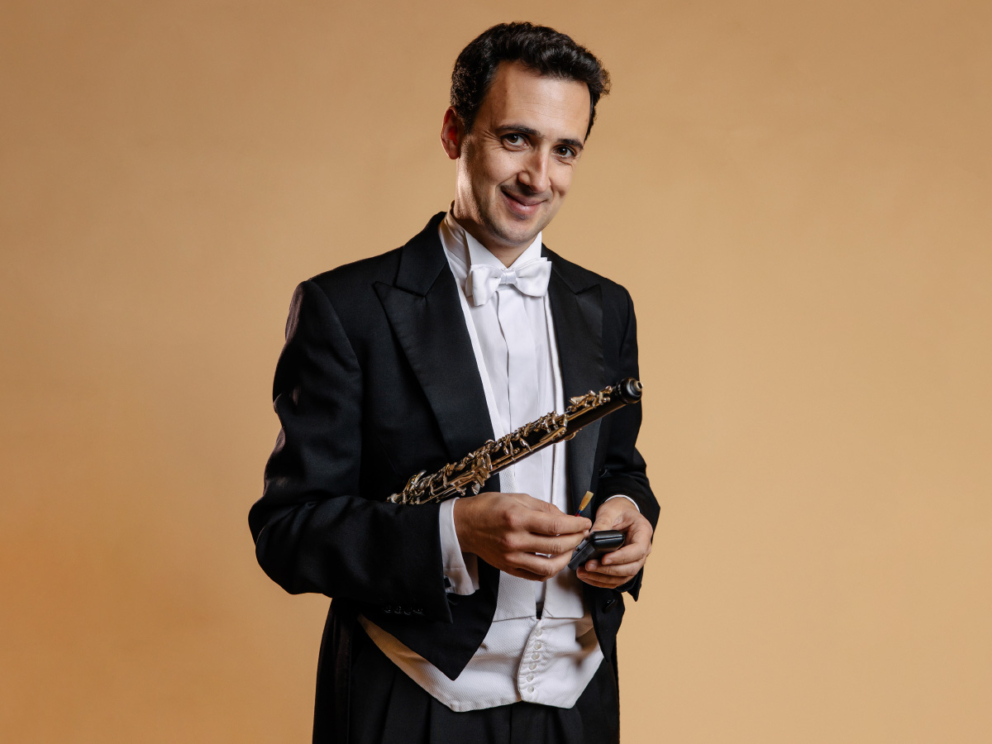
Pedro Ribeiro
Oboe
Pedro Ribeiro began his oboe studies at the Escola Profissional Artística do Vale do Ave, with Saúl Silva, and completed his degree at Escola Superior de Música do Porto under Ricardo Lopes. He won 1st Prize of Juventude Musical Portuguesa (Portuguese Musical Youth), the Young Musicians Prize, the Maestro Silva Pereira Prize and the Ribeiro da Fonte Revelation Prize. He has taught at the University of Aveiro, at Escola Superior de Música do Porto and at the Academia Nacional Superior de Orquestra.
He is a member of the Opus Ensemble, with which he recorded the CD, 2007. He is also a member of Trivm de Palhetas and Camerata Senza Misura, and also the quintet Quinteto Artziz, with whom he performed on a tour of India and Macau. He has premièred several chamber music works by Portuguese composers and recorded the CD, Contemporary Portuguese Music, with the Ensemble Mediterrain.
He has played solo with the Gulbenkian Orchestra, the Filarmónica da UNAM philharmonic (Mexico), the Zurich Symphony Orchestra, the Landesjugendkammer Orchester Nordrhein-Westfalen, Musique Militaire du Luxembourg, Sinfonieta de Lisboa, the Orquestra do Algarve and Filarmonia das Beiras. In addition to national music festivals, he has also participated in Jeunes Solistes Europeénnes (Luxembourg) and the Stellenbosch International Chamber Music Festival (South Africa).
He has been a member of the Gulbenkian Orchestra since 2000, taking the position of 1st Oboe in 2006. In 2005, he joined the City of Birmingham Symphony Orchestra as guest 1st Oboe, and has given concerts in Birmingham and at the BBC Proms in London.
Richard Wagner
Prelude and Liebestod from Tristan und Isolde
Richard Strauss
Oboe Concerto in D major
— Intermission 20 min —
Johannes Brahms
Symphony No. 4, in E minor, op. 98
It is hard to imagine music that so perfectly represents love and desire, uncertainties and romantic raptures, as the Prelude to Tristan und Isolde. Nor is it easy to find such poignant notes for the tragic death of one of the lovers as the one we hear in Liebestod. A sumptuous and intense symphonic dive which is then enhanced by the virtuoso musical discourses of the Oboe Concerto by R. Strauss and Brahms’ Symphony No. 4.
Sponsor Gulbenkian Music

The Calouste Gulbenkian Foundation reserves the right to collect and keep records of images, sounds and voice for the diffusion and preservation of the memory of its cultural and artistic activity. For further information, please contact us through the Information Request form.